
International Research Journal of Engineering and Technology (IRJET) e-ISSN: 2395-0056
Volume: 11 Issue: 07 | July 2024 www.irjet.net p-ISSN: 2395-0072

International Research Journal of Engineering and Technology (IRJET) e-ISSN: 2395-0056
Volume: 11 Issue: 07 | July 2024 www.irjet.net p-ISSN: 2395-0072
Fariz
Bhai1 , Durgesh Kumar Sahu2 , Pushpendra Sahu3
M.Tech. Scholar1, Assistant Professor2 , Assistant Professor3 Department of Civil Engineering
Shri Rawatpura Sarkar University, Raipur Chhattisgarh
Abstract
Due to the increase in energy costs and emission problems associated with hot mix asphalt (HMA), there has been significant interest in developing warm mix asphalt (WMA) technology for pavement construction. This method in bituminous pavingtechnologyallowsfortheproductionandplacementofbituminous mixesatlower temperaturesthan HMA, utilizing an environmentally friendly production process with organic additives, chemical additives, and waterbasedtechnologies.Thisstudyinvestigatesthepreparationofwarmmixesbypre-coatingstonechipswithmediumsetting bitumen emulsion (MS) and then mixing the coated aggregates with VG 30 bitumen at reduced temperatures. The two bindersareusedinequalproportionstoformthebinder.
Three mixing temperatures were examined: 110°C, 120°C, and 130°C. Marshall samples were prepared using dense bituminous macadam (DBM) and bituminous concrete (BC) grading according to MORTH specifications. The main objectivesweretodeterminetheoptimaltypeoffiller,emulsionsettingtime,mixpreparationtemperature,andbitumenemulsion binder composition. The study found that mixes prepared at 120°C with an 80:20 bitumen-emulsion compositionforDBManda70:30compositionforBCexhibitedthehighestMarshallStabilityandindirecttensilestrength (ITS),whilealsomeetingotherMarshallparameters.
The optimum bindercontentsfor warmmixes wereidentifiedas5.1% withan80:20 bitumen-emulsion composition for DBMand4.9%witha70:30bitumen-emulsioncompositionforBC,bothpreparedat120°C.Thetensilestrengthratioand retainedstabilityparameterswerealsofoundtobesatisfactoryinthesewarmmixes.Theperformanceof thewarmmixes wascomparabletothatoftraditionalHMA,demonstratingtheirpotentialassustainablepavingsolutions.
Keywords: Warm Mix Asphalt (WMA), Hot Mix Asphalt (HMA), Medium Setting Emulsion, Marshall Properties, Indirect TensileStrength,TensileStrengthRatio,RetainedStability.
1. Introduction
1.1 General
WarmMixAsphalt(WMA)isafastemergingtechnology,nowacceptedworldwide.Theideaofuseoflowertemperatures toproduceasphaltmixesis notnew.WMAisdefinedastheasphalt
used to manufacture and spread asphalt mixes at lower temperature than conventional Hot Mix Asphalt (HMA) by decreasing the asphalt viscosity.WMA is produced, placed and compacted at temperature10°C to 40°C lower than the conventionalHotMixAsphalt(D’Angeloet.al,2008).Itisatechnologythatallowsloweringoftheproductionandpaving temperature of Hot Mix Asphalt (HMA) by reducing the viscosity of binder which helps in increasing the workability of mixture without compromising the performance of asphalt. It reduces energy consumption, carbon dioxide emission, oxidativehardeningofAsphalt,overheadandtotalcostsoftheAsphaltindustrybyloweringtheproductiontemperature thereby creating a better working environment. However, the lower mixing temperatures have raised concerns on the performance of the mixtures. So there is need to thoroughly evaluate and characterize the WMA mixtures to ensure adequateperformance
1.2 Objective and Present Study
Themainobjectivesofthepresentstudyare:
Todevelopaprocedureforwarmmixasphaltusingmediumsettingemulsion(MS).
International Research Journal of Engineering and Technology (IRJET) e-ISSN: 2395-0056
Volume: 11 Issue: 07 | July 2024 www.irjet.net p-ISSN: 2395-0072
To investigate and study the effects of varying temperatures on mix preparation and emulsion concentration in termsofMarshallPropertiesforboththetypesofmixes(BCandDBMmixes).
Todecidethebestmixparameterssuchastemperatureforthepreparationofwarmmix,emulsionconcentration inbinderandoptimumbindercontent.
TostudytheeffectsofIndirectTensileStrengthTest(ITS)ofwarmmixesatdifferenttemperatures.
To study the moisture susceptibility characteristics of mixtures in terms of their tensile strength ratio and retainedstabilityvalues.
2. Literature Review
2.1 Introduction
Warm Mix Asphalt (WMA) developed in Europe in the mid 1990’s. This technology is known as warm asphalt mixes in areas throughout Europe, generally been referred as Warm Mix Asphalt in the United States. Warm Mix Asphalt has not only been successful in its intended purpose of lowering asphalt fumes and emissions through lowering mixing and compaction temperatures, but has also been found to possess numerous other benefits for the asphalt paving industry. Warm Mix Asphalt may also act as a compaction aid for stiffer mixes that are more difficult to compact, such as Stone MatrixAsphalt,whenused attypicalcompactiontemperatures.Enormousresearchanddevelopmenthave beendoneon warm mix asphalt by number of researchers. After review of literatures on the subjects some of the important research contributionsarepresentedbelow.TheReviewofliteratureisdividedintotwoparts.Thefirstpartgivesdetailideaabout thevarioustechnologiesinvolvedintheformationofWMAalongwiththecontributionofvariousresearchersunderthat particular technology who have used wide varieties of additives for making warm mixes, which is sub categorized into three parts basing on organic additive, chemical additive, and foaming technology. Finally, the second part consists of variousliteraturesonmixdesignprocessofwarmmixes.
Maccarone et al. (1994) Studied about Warm-Mixed asphalt-based foamed bitumen with very high binder content emulsions and concluded that the use of mixes for use on roads was gaining acceptance worldwide due to energy efficiencyandloweremissions.
Jenkins et al. (1999) introduced a new process involving half-warm foamed bitumen. He explored the concepts and possible benefits of heating wide variety of aggregates to temperatures below 212°F before the application of foamed bitumen. Preheating aggregates enhanced particle coating, mix cohesion, tensile strength, and compaction. This is particularlybeneficialformixescontainingreclaimedasphaltpavement(RAP)ordenselygradedcrushedaggregates.
Harrison and Christodulaki, (2000) observedthatbyaddingAspha-mintothemixatthesametimeasthebinder,avery finewatervapouriscreated.Thisreleaseofwatercreatesavolumeexpansionofthebinderthatresultsintheformation ofasphaltfoam,allowingincreasedworkabilityandaggregatecoatingatlowertemperatures.
Koenders (2002) introducedfoamedWMAtechnologiestoproduceasphaltmixturesatlowertemperatures.
Hurley and Prowell (2005) stated that the addition of Aspha-min lowered the air voids measured in the gyratory compactor.Itimproves the compaction ability of both thesuperpose andvibratory compactor. Statistical analysisoftest resultsindicatedanaveragereductioninairvoidsof0.65%usingthevibratorycompactor.
Goh et al. (2007) evaluatedtheperformanceofwmaaftertheadditionofAspha-min,basedontheMEPDG.Thepredicted rut depths from the MEPDG simulations demonstrated that WMA could decrease rutting, and the greatest difference of ruttingbetweenwmaanditscontrolHMAcouldbeupto44%.
Basedonreviewofliteraturethefollowingscopeshavebeenidentifiedforthepresentstudy.
SelectionofallmaterialsusednormallyusedinIndiancontext,forpreparationofwarmmixesincludingaggregate grading.
Conductofseveraltrialsstartingwithprincipleofpartialcoatingofaggregateswiththehelpofbitumenemulsion followed by mixing with bitumen at warm temperatures, with the objective of development of a procedure for preparationofwarmmixes.
Selection of filler type, setting time of emulsion, bitumen-emulsion composition for the preparation of specified warmmixes.
International Research Journal of Engineering and Technology (IRJET) e-ISSN: 2395-0056
Volume: 11 Issue: 07 | July 2024 www.irjet.net p-ISSN: 2395-0072
EvaluationofwarmmixesproducedintermsofMarshallPropertieswithseveralvariablessuchastemperatureof mixpreparationandbitumen-emulsioncomposition.
Deciding the best mix parameters such as temperature of mix preparation, emulsion concentration in binder, optimumbindercontentforthepreparationofwarmmixes.
Evaluation of warm mixes in terms of Marshall Properties, Indirect Tensile Strength and moisture susceptibility characteristics.
3. Experimental Investigation
3.1 Materials Used
3.1.1 Aggregates
The coarse aggregatesand fine aggregates(retained on 0.075 mmISsieve)inclusiveofdust, werecollected froma local crusher. For preparation of two types of bituminous mixes (DBM, BC) aggregates gradations were considered as per MORTH (2013), given in Table 3.1 and Table 3.2 respectively. The physical properties of coarse aggregates are given in Table 3.3andthespecificgravityofcoarseandfineaggregatesare2.75and2.6respectively.
3.1 Gradation
International Research Journal of Engineering and Technology (IRJET)
Volume: 11 Issue: 07 | July 2024 www.irjet.net
Table 3.3 Physical Properties of Coarse Aggregates
3.2.2 Filler
The materials passing through 0.075 mm ARE sieve is filler. It fills the voids, stiffens the binder and offers better impermeability.InthisexperimentalWMAwork,stonedustandcementwereusedasfillerwhosespecificgravityfoundin laboratorytobe2.7and3.0respectively.
3.2.3 Binder
Generallybitumenactsasa bindingagenttotheaggregates,finesandstabilizersthebituminousmixtures.Bitumenmust be treated as a visco-elastic material as it exhibits both viscous as well as elastic properties at the normal pavement temperature. At low temperature it behaves like an elastic material and at high temperatures its behaviour is like a viscous fluid. Conventional VG30 grade bitumen, collected from local government depot has been used in this research studytopreparethetwotypesofbituminousmixtures.ThephysicalpropertiesofVG30bitumenispresentedintable3.4.
Table 3.4 Physical Properties of VG 30 Bitumen
3.2.4 Bituminous Emulsion
AnEmulsioncan bedefined asthedispersion ofsmall dropletsofone liquid inanother. Bituminous emulsions generally belong to oil - in -water type where bitumen is dispersed in water with small quantity of emulsifying agent. Chemically stabilized bituminous emulsion has three necessary components bitumen, water and emulsifying agent. The asphalt cement is used for cementing or bonding of aggregates and standing up to traffic, environmental conditions and climate temperature. The emulsifying agent is called surfactant which is chemically composed of large molecules. Some of the benefits of bituminous emulsions are reduce energy needs and fume production, water based emulsions mix easily with aggregates,Emulsion mixes can be mixed on site, in portable plant orat central mixing plant and Emulsion mix overlays improvesstructuralcapacityofroads.
According to the setting of emulsion these can be categorized as Rapid Setting Emulsion(RS), MediumSetting Emulsion (MS),andSlowSettingEmulsion(SS).
RapidSettingEmulsion(RS)aretheleaststableemulsionandbreakrapidlywhencomeincontactwithaggregates. Thishasnoabilitytomixtheaggregates.Thesearegenerallyusedforsprayapplications.
Medium Setting Emulsion (MS) are designed to mix with aggregates. Depending on the design medium setting emulsionremainworkablefromfewminutestoseveralmonths.
Slow Setting Emulsion (SS) are designed to work with the fine aggregates to allow forthe maximum mixing time andextendedworkability.Thesearethemoststableemulsion.Thesecanbeused indensegradedaggregatebases, soilstabilizationandforsomeslurryseals.
International Research Journal of Engineering and Technology (IRJET) e-ISSN: 2395-0056
Volume: 11 Issue: 07 | July 2024 www.irjet.net p-ISSN: 2395-0072
ThephysicalpropertiesofMediumsettingemulsion,alsocollectedfromlocalgovernmentdepotarepresentedintable3.5.
Table 3.5 Physical Properties of Bituminous Emulsion (MS)
Property
ViscositybySayboltFurolViscometerat50°C(Sec) IS:8887-2004 120
Residuebyevaporation(%) IS:8887-2004 65.4
ResiduePenetrationat25°C(0.1mm) IS:8887-2004 84
ResidueDuctilityat27°C (cm) IS:8887-2004 95
4. Results and Discussion
4.1 Parameters Used
Interms of volumetric in warm mixture analysisas per Dasand Chakroborty(2010),the definitions and other formulae usedincalculationshereafterareasfollows:
Bulk Specific Gravity of Aggregate ( � )
WhereMagg=massofaggregate
Effective Specific Gravity of Aggregate (� )
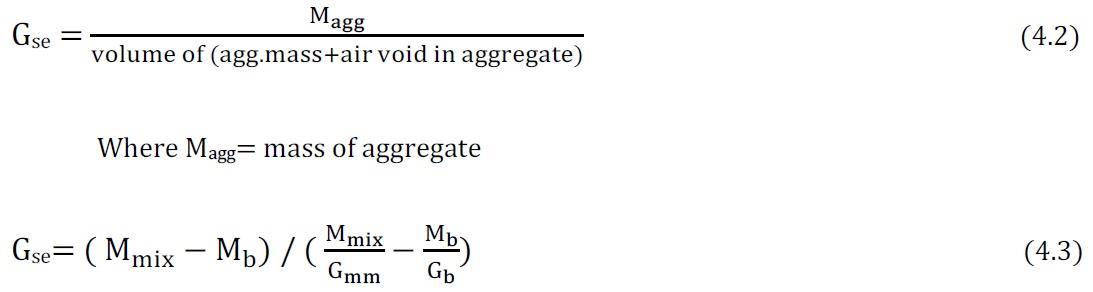
WhereMb=massofbitumenusedinmix
���� =specificgravityofbitumen
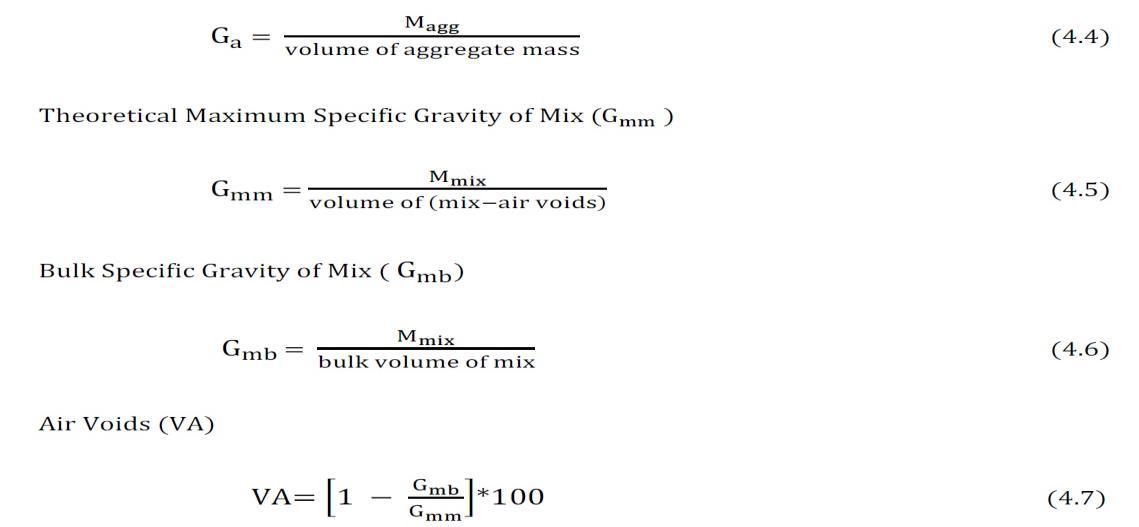
Apparent Specific Gravity (����)
2024, IRJET | Impact Factor value: 8.226 | ISO
International Research Journal of Engineering and Technology (IRJET) e-ISSN: 2395-0056
Volume: 11 Issue: 07 | July 2024 www.irjet.net p-ISSN: 2395-0072
VoidsinMineralAggregates(VMA)
WherePs=percentageofaggregatepresentbytotalmassofmix
Voids Filled With Bitumen (VFB)
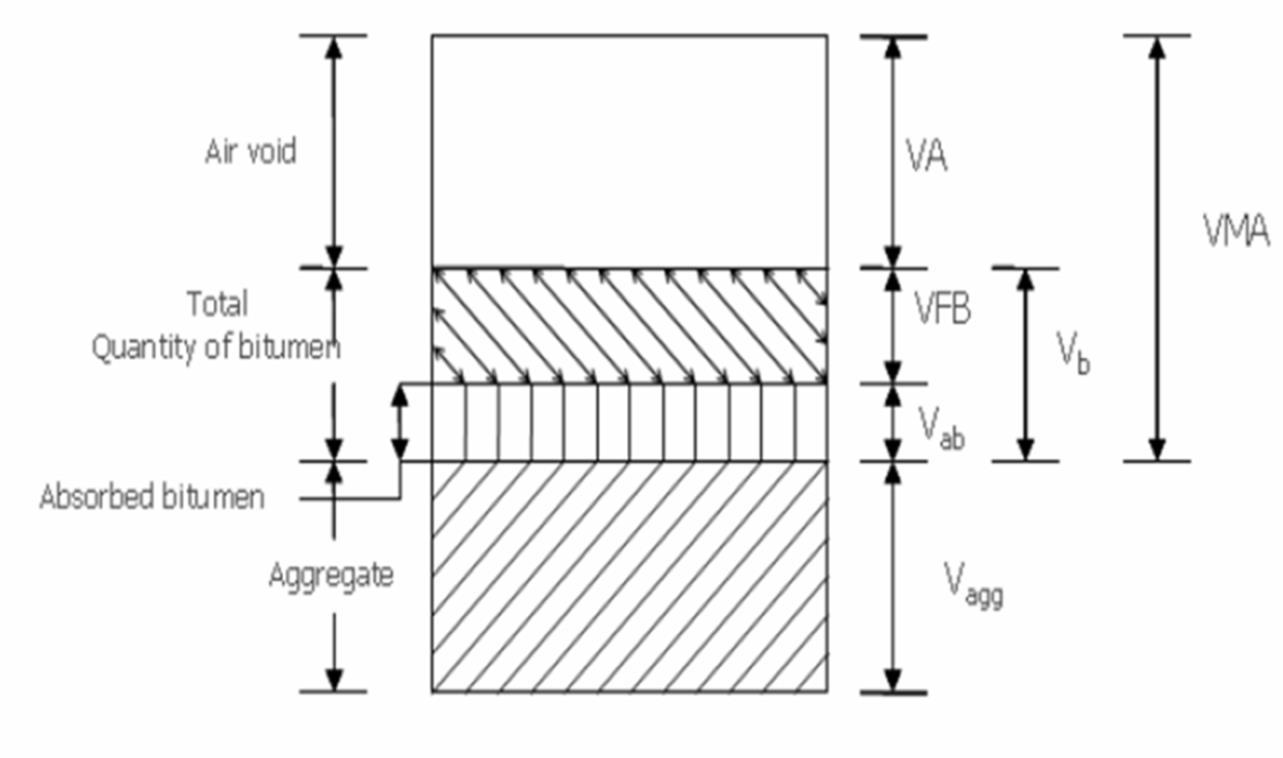
Fig. 4.1 Phase Diagram of bituminous mix (Das and Chakroborty 2010)
4.4.3 Comparison of Marshall Properties of DBM and BC Warm Mixes Prepared At Optimum Binder Content and Composition
Theoptimum bindercontentfor DBMandBC warm mixesat eachtemperatureof 110°C,120°Cand130°C isobtained by takingaveragevalueoffollowingthreebindercontentfoundfromabovegraphsi.e.
Bitumencontentcorrespondtomaximumstability
Bitumencontentcorrespondtomaximumunitweigh
Bitumencontentcorrespondingtothemedianofdesignedlimitsofpercentageairvoidsintotalmix
Table 4.1 Maximum Marshall Values for DBM and BC at their OBC
© 2024, IRJET | Impact Factor value: 8.226 | ISO 9001:2008 Certified Journal | Page1108
International Research Journal of Engineering and Technology (IRJET) e-ISSN: 2395-0056
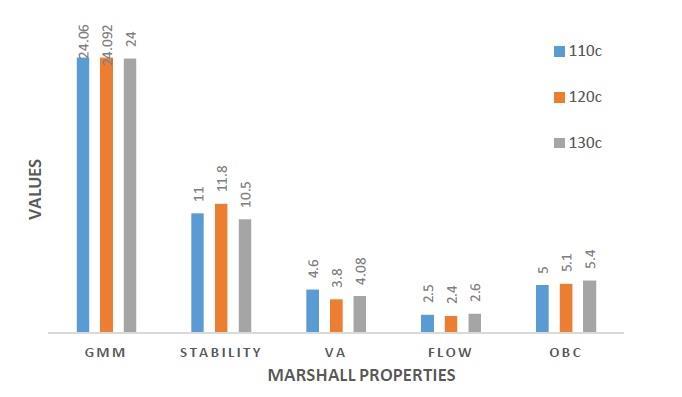
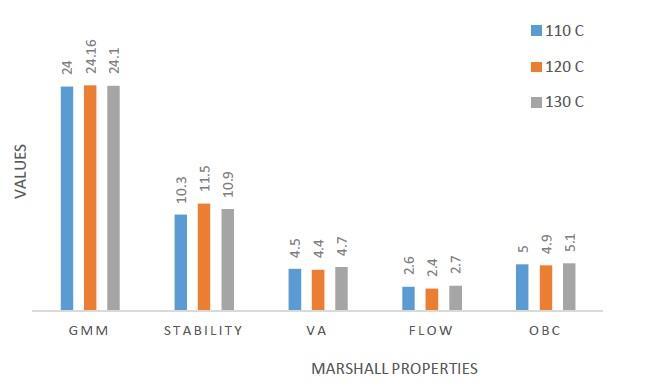
Thetestresultsasshownabovearealsopresentedintheformofabarchartshownbelowinfig4.50andfig4.51.Itisseen that the DBM warm mix prepared at 120°C taking 80B:20E binder content shows better Marshall Properties having the higheststabilityandunitweightandlessairvoidsascomparedtosampleswithothermixingtemperatures.Similarlyfor BCwarmmixthemixespreparedat120°Ctaking70B:30EbindercontentshowsbetterMarshallProperties.
4.5 Other Engineering Properties of Warm Mixes
4.5.1 Indirect Tensile Strength (ITS) For DBM and BC Mixes at Various MixingTemperatures
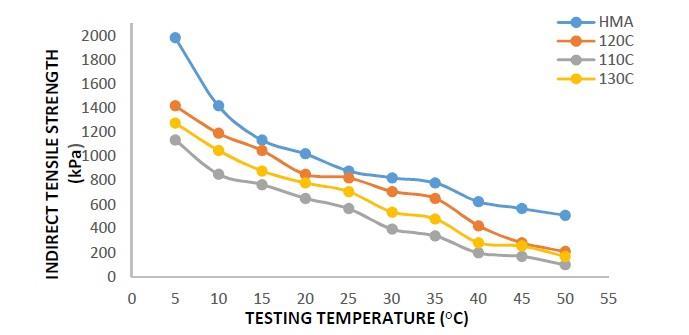
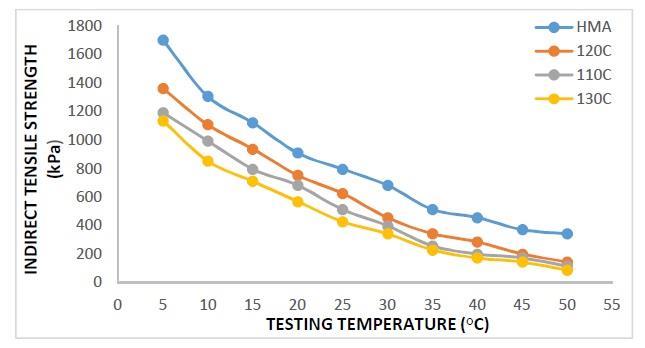
Static indirect tensile test is used to determine the direct tensile strength (ITS) of the mix which helps to find out the resistance to thermal cracking. The static indirect tensile tests are carried out on DBM and BC mixes prepared at their optimumbitumenemulsioncontentat eachmixingtemperaturesof110°C,120°C,130°C.Theeffectsofemulsionbitumen binderaswellastemperatureonboththemixesarestudied.
Volume: 11 Issue: 07 | July 2024 www.irjet.net p-ISSN: 2395-0072 © 2024, IRJET | Impact Factor value: 8.226 | ISO 9001:2008 Certified Journal | Page1109
International Research Journal of Engineering and Technology (IRJET) e-ISSN: 2395-0056
Volume: 11 Issue: 07 | July 2024 www.irjet.net p-ISSN: 2395-0072
BelowFig4.52andFig4.53showthevariationsofindirecttensilestrengthwithrespectto temperatureforbothmixesof BCandDBM.ItisseenthattheITSvaluedecreaseswith increaseintemperature.TheBCwarmmixpreparedat120°Cby takingits70B:30EasoptimumemulsionbindercontentshowshigherITSvaluefollowedbymixespreparedat 110°Cand 130°C. SimilarlyDBM mix preparedat 80B:20E binder content shows higherITSvalueascompared to other DBMwarm mixes.TheITSvalueofBCandDBMHMAmixesshowshighestITSvaluesascomparedtoitsrespectivewmamixes.
4.5.2
Thetensilestrengthratio(TSR)measurestheresistanceofapavingmixtomoisture-induceddamage.Table4.2presents the TSR of Dense Bituminous Macadam (DBM) and Bituminous Concrete (BC) mixes, calculated at various mixing temperatures using the optimum binder content for each mix. The BC mix prepared at 120°C with a 70B:30E emulsion bindercontentshowsahigherTSRvaluecomparedtoothertemperatures.Similarly,theDBMmixpreparedat 120°Cwith an 80B:20E binder content also exhibits a higher TSR value than other DBM warm mixes. Both BC and DBM Hot Mix Asphalt(HMA)demonstratehigherTSRvalues.
Bitumenviscosity,indicatingresistancetoflow,affectstheworkabilityanddeformation resistanceofthemixture.Inthis study, bitumen is used in two stages: emulsion in the initial stage and heated bitumen in the final stage. While higher temperatures typically benefit bituminous mixes, at 130°C, the residual bitumen from pre-coating can flow and interact with additional conventional bitumen. However, the resulting binder lacks the necessary viscosity to coat aggregate particlesadequately,leadingtoinferiorengineeringpropertiesinthewarmmixes.
International Research Journal of Engineering and Technology (IRJET) e-ISSN: 2395-0056
Volume: 11 Issue: 07 | July 2024 www.irjet.net p-ISSN: 2395-0072
Table 4.2 Tensile Strength Ratio Values of Different Mixes
Minimum80%(asperMORTHTable 500-17)
Minimum 80%(as per MORTHTable 500-17)
4.5.3 Retained Stability for DBM and BC mixes
Another way of assessing the moisture induced damage to a paving mix is by determining theretained stability of the concernedmix.ThishasbeencalculatedforbothDBMandBCmixesatmixingtemperaturesof110°C,120°C,130°Cattheir respective optimum binder contents. The results of this study are presented in Table 4.3. It is seen that the retained stability of DBM shows better results as compared to BC mixes. DBM and BC warm mixes prepared at 120°C taking OptimumEmulsionBinderof80B:20Eand70B:30Erespectivelyshowshigherretainedstabilityvalues.
Table 4.3 Retained Stability for DBM and BC Mixes at Various Mixing Temperatures
Types of Mixwith temperature
Avg. stabilityafter half an hour in waterat 60 °c (kN)
Avg. stabilityafter 24 hours in water at 60 °c (kN)
Avg. retained Stability, in % Design Requirement
Minimum75%(asper MORTHTable500-17)
4.6
ThelaboratorystudyonwarmmixespreparedonDBMandBCaggregategradationatthree differentmixingtemperature of 110°C, 120°C, and 130°C using medium setting emulsion (MS) and VG30 binder in various Binder Emulsion ratio of 50B:50E, 60B:40E, 70B:30E, 80B:20E, 90B:10E, 100B:0E and cement as filler. DBM and BC mixes prepared using three differentmixingtemperaturesandsixdifferentEmulsionBinderproportionforeachmixingtemperaturefinallyevaluates, thatDBM and BC warm mixes prepared at 120°C using 80B:20E and 70B:30E Binder Emulsion proportion shows better Marshall properties as compared to other DBM and BC warm mixes prepared using other binder emulsion contents and mixingtemperatures.TheIndirectTensileStrengthTest(ITS),TensileStrengthRatio(TSR),andRetainedStabilityresults of DBM, BC warm mixes prepared at 120°C using 80B:20E, 70B:30E shows better results as compared to other warm mixesofbothgradations.
International Research Journal of Engineering and Technology (IRJET) e-ISSN: 2395-0056
Volume: 11 Issue: 07 | July 2024 www.irjet.net p-ISSN: 2395-0072
Hence for the preparation of warm mixes of DBM and BC 120°C temperature and bitumen- emulsion composition of 80B:20E,70B:30Erespectivelycanbeconsideredforbetterwarmmixdesign.
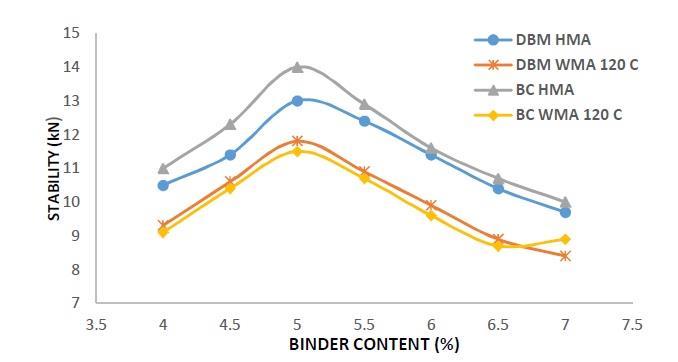
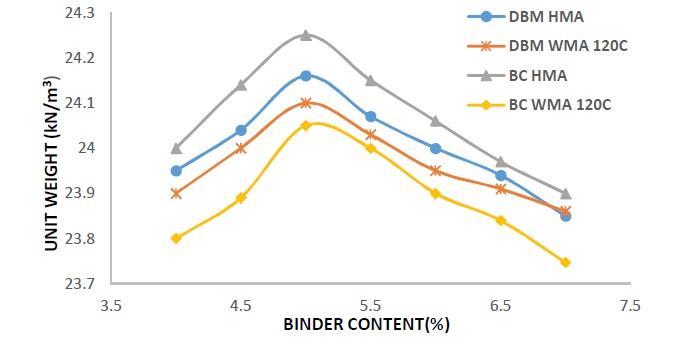
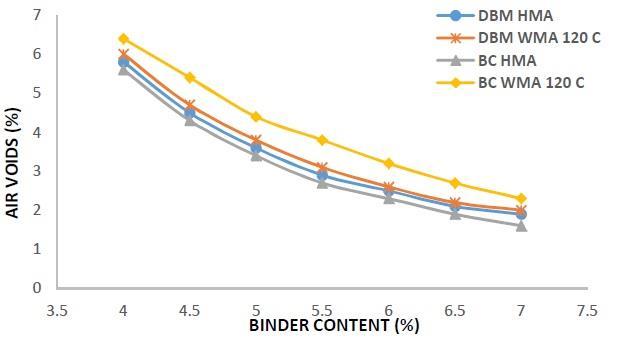
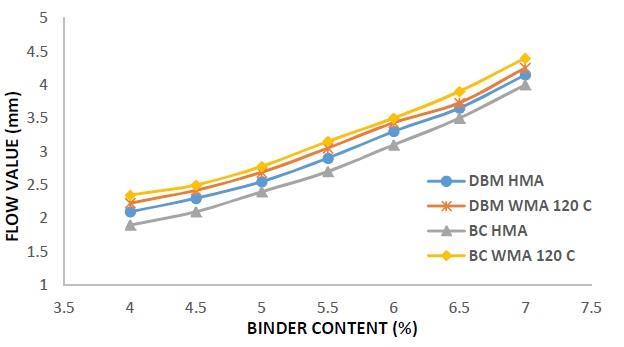
TheoverallstudyoftheresearchworkrevealsthatwarmmixesofDBMandBCusing80B:20E,70B:30Ebinderemulsion contentrespectivelyat120°CshowsbetterMarshallPropertiesintermsofstability,Unitweight,AirVoids.Hencewarm mixes of DBM and BC prepared at 120°C is compared with normal HMA of both the mixes for Marshall Properties comparative study .The graphs shows comparison of DBM and BC warm mixes prepared at 120°C using bitumen Emulsioncontentof80B:20Eand70B:30ErespectivelywithnormalHMA.MarshallPropertieslikeStability,UnitWeight, andAirVoid,FlowvaluesofbothDBMandBCwarmmixesarecomparedwithnormalHMA.
© 2024, IRJET | Impact Factor value: 8.226 | ISO 9001:2008 Certified Journal | Page1112
International Research Journal of Engineering and Technology (IRJET) e-ISSN: 2395-0056
Volume: 11 Issue: 07 | July 2024 www.irjet.net p-ISSN: 2395-0072
5. Conclusion and Future Scope
5.1 Introduction
Inthisstudy,anattempthasbeenmadetopreparewarmmixeswithmediumsetting(MS)emulsionasinitialcoatingofstone chipsfollowedbyapplicationofconventionalVG30bitumen.AsaresultofextensivelaboratorytestsconductedonMarshall warmmixspecimenswithDBMandBCgradationtostudyvariousparameters,thefollowingconclusionsaredrawn.
5.2 DBM Mixes
Based on Marshall Properties of mixes with DBM gradation, the optimum setting time of emulsion and type of filler were foundtobe9hoursandcementrespectively.Theseparametershavebeenconsideredinsubsequentstudies.
BasedonMarshallTests,forwarmmixespreparedat110°CforDBMwarmmixesoptimumbindercomposition i.e. bitumen emulsion ratio in binder is found to be 70:30 and optimum binder content is observed to be 5%. Similarly for mixes prepared at 120°C and 130°C, for DBM warm mixes the optimum binder content and optimumbindercompositionarefoundtobe5.1%,80:20;and5.5%,90:10respectively.
SatisfactoryMarshallCharacteristicsareobservedformixespreparedatallthreetemperaturesattheiroptimum bindercontentsandbindercompositions.
Themaximumindirecttensilestrengthvalueisobservedforwarmmixespreparedat1200C.
ThetensilestrengthratioandretainedstabilityvaluesforDBMwarmmixat120°Cisobservedtobehigheras comparedtootherDBMwarmmixespreparedat110°C,130°C.
International Research Journal of Engineering and Technology (IRJET) e-ISSN: 2395-0056
Volume: 11 Issue: 07 | July 2024 www.irjet.net p-ISSN: 2395-0072
Outofthethreetemperaturestriedinthisstudy,itisobservedthatthemixespreparedat1200CforDBMwarm mixofferhigheststabilityandindirecttensilevaluessatisfyingotherMarshallparameters.Hencethespecificmix i.e. mix prepared at 5.1% binder content and 80:20 bitumen emulsion composition considered to be the most suitablewarmmixwhichis normallycomparablewithnormalHMA.
BasedonMarshallPropertiesofmixeswithBCgradation,theoptimumsettingtimeofemulsionandtypeoffillerwerefound tobe9hoursandcementrespectively.Theseparametershavebeenconsideredinsubsequentstudies.
BasedonMarshallTests,forwarmmixespreparedat110°CforBCwarmmixesoptimumbindercompositioni.e. bitumen emulsion ratio in binder is found to be 60:40 and optimum binder content is observed to be 5%. Similarlyformixespreparedat120°Cand130°C,forBCwarmmixestheoptimumbindercontentandoptimum bindercompositionarefoundtobe4.9%,70:30;and5.1%,80:20respectively.
SatisfactoryMarshallCharacteristicsareobservedformixespreparedatallthreetemperaturesattheiroptimum bindercontentsandbindercompositions.
Themaximumindirecttensilestrengthvalueisobservedforwarmmixespreparedat1200C.
The Tensile Strength Ratio and Retained Stability value for BC warm mix at 120°C is observed to be higher as comparedtootherBCwarmmixespreparedat110°C,130°C.
Out of thethreetemperatures triedinthis study, it is observedthatthe mixes preparedat 1200Cfor BC warm mixes offerhigheststabilityandindirecttensilevaluessatisfyingotherMarshallparameters.Hencethespecific mixi.e.mixpreparedat4.9%bindercontentand70:30bitumenemulsioncompositionconsideredtobethemost suitablewarmmixwhichis normallycomparablewithnormalHMA.
Hence it can be concluded in general that for preparation of bituminous emulsion based warm mixes of DBM and BC gradation the optimum temperature for the preparation in both types of mixes is 120°C. The optimum bitumen-emulsion compositionforwarmmixeswithDBMandBCgradationsarefoundtobe80:20and70:30respectively.
5.4
1. ManypropertiesofBCandDBMmixessuchasMarshallProperties,statictensilestrength,tensilestrengthratio, retainedstabilityhavebeenstudiedinthisinvestigationbyusingVG30penetrationgradebitumenandmedium settingemulsion(MS).However,someofthepropertiessuchasfatigueproperties,resistancetorutting,dynamic indirecttensilestrengthcharacteristicsanddynamiccreepbehaviourneededtobeinvestigated.
2. In present Study Medium Setting Emulsion and VG 30 binder have been used. The research can further be enhancedbyvaryingproportionsoftheEmulsionBitumencontent.
3. Variation of temperatures can be considered for the warm mix preparation so lower temperatures can also be studiedformixpreparation.
4. Various other types of aggregate grading, Filler, Binder, Emulsion and Additive can be considered for further studies.
References
1. ASTMD6931(2007),“IndirectTensile(IDT)StrengthforBituminousMixtures.”
2. AustermanA.J.,MogawerW.S.,andBonaquistR.(2009).“EvaluatingtheEffectsofWarmMixAsphaltTechnology Additive Dosages on the Workability and Durability of Asphalt Mixtures Containing Recycled Asphalt Pavement.” TransportationResearchBoardAnnualMeetingCROM, TransportationResearchBoardoftheNational Academies, Washington,D.C.,USA,pp.09-1279.
3. Blanco, (2004a). “Maintenance of Porous Wearing Courses by Using Warm Open- Graded Mixes with PolymerModifiedMediumSettingEmulsions.”Proceedings,3rdEuroasphalt&EurobitumeCongress,Vienna,Austria,pp.560567.
4. ButtonJ, W., Estakhri, C. and Wimsatt, A. (2007). “A Synthesis of Warm-Mix Asphalt.” Publication FHWA/TX-07/05597-1.FHWAandTexasDepartmentofTransportation,USA.
5. Buss,A.,Rashwan,M.,Breakah,T.,Williams,R.C.andKvasnak,A.(2009).“InvestigationofWarm-MixAsphaltUsing the Mechanistic-Empirical Pavement Design Guide.” Mid Continent Transportation research Symposium, Ames, Iowa,USA.
6. Bonaquist, R. (2009). “NCHRP 9-43 Mix Design Practices for Warm Mix Asphalt.” Interim Report-National CooperativeHighwayResearchProgramProject943.
International Research Journal of Engineering and Technology (IRJET) e-ISSN: 2395-0056
Volume: 11 Issue: 07 | July 2024 www.irjet.net p-ISSN: 2395-0072
7. Chowdhury, A. and Button, J. (2008). “A Review of Warm Mix Asphalt.” Technical report, National Technical InformationService,TexasTransportationInstituteSpringfield,Virginia,USA.
8. D’Angelo, J., Harm, E. Bartoszek, J., Baumgardner, G., Corrigan, M., Cowsert, J., Harman, T., Jamshidi, M., Jones, W., Newcomb, D., Prowell,B.,Sines,R.,and Yeaton, B.(2008).“WarmMix Asphalt: European PracticeAmerican Trade Iniatives.”U.SDepartmentofTransportation,WashingtonDC,USA.
9. Diefenderfer, S.andHearon, A.(2008).“LaboratoryEvaluationofa WarmAsphalt TechnologyforUseinVirginia.” VTRC09-R11FinalReport,VirginiaTransportationResearchCouncil,Charlottesville,VA.
10. Das,A.andChakrobortyP.(2010).“PrinciplesofTransportationEngineering.”PrenticeHallofIndia,NewDelhi,pp 294-299.
11. Kar,D.(2012),”AlaboratorystudyofBituminousmixesusinganaturalfiber.”UnpublishedM.techThesis,National InstituteofTechnology,Rourkela,Odisha,India.
12. Olesen, E. M.Sc. (Chem.Eng.), personal conversation. Project manager, Research and Development department, DanishRoadInstitute,Denmark.
13. Nielsen,E.M.Sc.(Chem.Eng.),personalconversation.ResearchandDevelopmentdepartment,DanishRoadInstitute, Denmark.
14. Els,H.,(2004). “Cold/Warm Processes and Recycling Moderator’s.” Report, Part 2A,” Proceedings (CD), 3rd Eurasphalt&EurobitumeCongress,Vienna,Austria.
15. Goh, S.W., Zhanping, Y. and Van Dam, T.J. (2007), “Laboratory Evaluation and Pavement Design for Warm Mix Asphalt.”Mid-ContinentTransportationresearchSymposium,Ames,Iowa,USA.
16. Goh,S.W.andYou,Z.(2008a).“Mechanicalpropertiesofwarmmixasphaltusingaspha-min.”Proc.,Transportation ResearchBoard87thAnnualMeeting.Washington,DC,USA
17. Goh, S.W. and You, Z., (2008b), “WMA using Sasobit: Field and Laboratory Experience.” Proceedings of the MidContinentTransportationResearchForum,Madison,Wisconsin.
18. Harrison, T., and Christodulaki, L. (2000). "Innovative processes in asphalt production and applicationstrengtheningasphalt'spositioninhelpingbuildabetterworld."FirstInternationalConferenceofAsphaltPavement, Sydney,Australia.
19. Hurley, G.C. and Prowell, B.D. (2005a). “Evaluation of Aspha-Min® Zeolite for Use in Warm Mix Asphalt.” Report NCAT05-04,NationalCenterforAsphaltTechnology,AuburnUniversity,Auburn,Alabama,USA.
20. Hurley,G.C.andProwell,B.D.(2005b).“EvaluationofSasobit®forUseinWarmMixAsphalt.”ReportNCAT05-06, NationalCenterforAsphaltTechnology,AuburnUniversity,Auburn,Alabama,USA.
21. Hurley,G.C.andProwell,B.D.(2006).“EvaluationofPotentialProcessforuseinWarmMixAsphalt.”Journalofthe AssociationofAsphaltPavingTechnology,Vol.75,pp.41-90.
22. Hurley, G. C. and Prowell, B. D. (2006). “Evaluation of Sasobit for Use in Warm-mix Asphalt.”NCAT Report 05-06, AuburnUniversity,NationalCenterforAsphaltTechnology,Auburn,USA.