
Volume: 11 Issue: 07 | July 2024 www.irjet.net p-ISSN: 2395-0072

Volume: 11 Issue: 07 | July 2024 www.irjet.net p-ISSN: 2395-0072
Sumana M N 1 , Thanushree Anand 2 , Varshini S3 , Sudarshan4
Sumana M N, ECE Dept, BNMIT, Bangalore
Thanushree Anand, ECE Dept, BNMIT, Bangalore
Varshini S, ECE Dept, BNMIT, Bangalore 4Sudarshan, Assistant Professor, Dept. of ECE, BNMIT, Banashankari, Bangalore, Karnataka, India
Abstract - This paper presents an IoT-based system for continuous monitoring of blood oxygen saturation (SpO2) and heart rate (HR), leveraging sensor technology, Bluetooth communication, and mobile application development. The system integrates an Arduino Uno with a MAX30100 sensor for real-time data acquisition, transmitted wirelessly to a mobile device via a Bluetooth HC-05 module. The MIT App Inventor-based application provides users with intuitive visualizations of their vital signs, facilitating remote monitoring and early detection of health abnormalities. Key features include predictiveanalytics and integration with telemedicine platforms to enable direct communication between users and healthcare providers. This innovation aims to enhance healthcare accessibility, empower individuals in chronic disease management, and promote proactive wellness monitoring through user-friendly interfaces and scalable healthcare solutions.
Key Words: IoT , blood oxygen saturation, heart rate monitoring, sensors, Bluetooth communication, mobile application development, predictive analytics
Recent advancements in wearable sensor technology and InternetofThings(IoT)infrastructurehavetransformedthe landscape of healthcare monitoring, enabling continuous, real-time tracking of vital signs such as blood oxygen saturation(SpO2)andheartrate(HR).Thispaperpresents an innovative IoT-based system designed to enhance healthcare accessibility and empower individuals in managingchronicconditionsthroughseamlessmonitoring. Our system integrates wearable sensors, Bluetooth communication, and a user-friendly mobile application to facilitatetheacquisition,transmission,andvisualizationof physiological data. Specifically, an Arduino Uno microcontrollercoupledwithaMAX30100sensorenables non-invasivemonitoring,transmittingdatawirelesslytoa mobiledeviceviaaBluetoothHC-05module.
OurIoTsystem'smaingoalistogivecustomerstheabilityto continuouslymonitortheirvitalsignsandquicklyandeasily understand the state of their health through real-time
visualizations.Thetechnologyhelpsearlyidentificationof health anomalies and proactive action by giving instant accesstophysiologicaldata,potentiallyloweringhealthcare expenses related to emergency treatments. Predictive analyticsisacrucialcomponentofoursystem,whichuses machinelearningalgorithmstoidentifypatternsinthedata we'vegathered.Becauseofitspredictivecapacity,whichis basedonpatternsfoundinpasthealthdata,earlyalarmsand tailoredhealthcaresuggestionsaremadepossible.
Furthermore, the system integrates seamlessly with telemedicine platforms, enabling direct communication between users and healthcare providers. This integration facilitatesremotemonitoringandconsultation,empowering healthcare professionals to monitor patients' conditions remotely and intervene promptly when necessary. By bridgingthegapbetweenpatientsandcaregivers,ourIoTbasedapproachenhancescollaborativehealthcaredelivery andpromotespatient-centriccaremanagement.
Thesmartphoneapplication'suserinterfaceismadetobe both simple to use and educational, giving users practical insights into their health data. Users are empowered to activelymonitortheirhealthstateandmakewell-informed decisions about their well-being thanks to configurable alarmsandclearvisualizations.Oursystem'sflexibilityand scalability guarantee that it may be used in a variety of healthcare environments, meeting the needs of different patient populations and integrating easily into current healthcareinfrastructures.
Thiscontributionaimstoimprovehealthcareaccessibility, enhance chronic disease management, and promote proactive wellness monitoring through innovative technologysolutions.Subsequentsectionswillelaborateon the technical architecture, implementation details, and potentialimplicationsforfuturehealthcareapplications. innovation.
TheSmartBloodOxygenandHeartRateMonitoring Systemuseswearabletechnologywithopticalsensorsand sophisticated algorithms to enable precise, real-time monitoring of vital signs, such as blood oxygen saturation (SpO2)andheartrate(HR). International Research Journal of Engineering and Technology (IRJET) e-ISSN: 2395-0056
International Research Journal of Engineering and Technology (IRJET) e-ISSN: 2395-0056
Volume: 11 Issue: 07 | July 2024 www.irjet.net p-ISSN: 2395-0072
Theultimategoalsofthissystemaretoimprove individualhealthoutcomesandqualityoflifebyfacilitating remotepatientmonitoring,promotingwellnessandfitness tracking, managing chronic diseases better, and enabling early detection of health anomalies. With chronic conditions like heart disease, chronic obstructive pulmonary disease (COPD), or sleep apnea, where changes in SpO2 and HR can signal worsening symptomsorthebeginningofcomplications,smartsystems' abilitytomonitorcontinuouslyisespeciallyhelpful.
[1].Inthepaper"DesignofanIoT-BasedRemoteMonitoring SystemforBloodOxygenandHeartRate"presentedatthe 2019 IEEE 7th International Conference on Computer EngineeringandTechnology(ICCET),Huang,Hui,andtheir co-authorsdescribethedevelopmentofaremotemonitoring systemforbloodoxygenandheartrateutilizingInternetof Things (IoT) technology. The focus of the paper is on outlining the hardware architecture, communication protocols, and data analysis techniques employed in the system.Theauthorslikelydetailthehardwarecomponents used in the system, which may include sensors for measuring blood oxygen saturation and heart rate, microcontrollersorprocessingunitsfordataacquisitionand processing, and communication modules for transmitting data wirelessly. The paper may elaborate on the communication protocols utilized in the system, such as Wi Fi,Bluetooth,orcellularnetworks,andhowtheyensure reliableandsecuredatatransfer.Furthermore,theauthors likelydelveintothedata analysistechniques employed to extractmeaningfulinsightsfromthecollectedphysiological data Overall, the paper likely provides a comprehensive overviewofthedesignandimplementationoftheIoT-based remotemonitoringsystemforbloodoxygenandheartrate, offering insights into the technical aspects of hardware integration, communication protocols, and data analysis methodologies.
[2].Thepapertitled"IoT-BasedReal-TimeHeartRateand Oxygen Saturation Monitoring System" presents a comprehensivesystemformonitoringheartrateandoxygen saturation levels in real-time using IoT technology. The authors,S.K.Gupta,S.Shukla,A.Kumar,andothers,detail theirresearchfindingsandimplementationmethodologyas presented at the IEEE International Conference on Computing, Communication, and Automation (ICCCA) in 2021. In this paper, the authors describe the design and development of an integrated system that leverages IoT devicesandwirelesssensorstocontinuouslymonitorvital signs.
Thesystemcollectsdataonheartrateandoxygensaturation levels from wearable sensors worn by individuals and transmitsthisinformationwirelesslytoacentralmonitoring station or cloud based platform. Key components of the
system likely include wearable sensors equipped with photoplethysmography(PPG)technologytomeasureheart rateandbloodoxygensaturationlevels.Thesesensorsmay communicate with a central hub or gateway device using wireless communication protocols such as Bluetooth Low Energy(BLE)orWi-Fi.Thecentralhubthenaggregatesthe data and forwards it to a remote server or cloud-based platformforstorage,analysis,andvisualization.Thepaper likelydiscussesthetechnicalaspectsofsensorintegration, data transmission protocols, and system architecture. Additionally, it may cover topics such as data security, privacy concerns, and the potential applications of the monitoringsysteminhealthcare,wellnessmonitoring,and fitnesstracking.Overall,thispapercontributestothefieldof IoT-basedhealthcaremonitoringsystemsbyproposingan innovative solution for real-time monitoring of heart rate and oxygen saturation levels. It highlights the potential benefits of using IoT technology to improve healthcare delivery, enhance patient outcomes, and enable remote monitoringcapabilities
TheSmartBloodOxygenandHeartRateMonitoringSystem designed with IoT (Internet of Things) integration and a companion MIT App is a comprehensive solution that seamlessly integrates cutting-edge sensor technology, wireless connectivity, and intelligent data analytics to provide users with real-time insights into their cardiovascularhealth.Atitscore,thesystememployshighquality sensors utilizing photoplethysmography (PPG) to accurately measure blood oxygen saturation (SpO2) and heartrate.Thesesensorsareconnectedtoamicrocontroller orprocessingunitequippedwithIoTcapabilities,facilitating wirelesscommunicationviaprotocolssuchasBluetoothLow Energy (BLE) or Wi-Fi. Through the MIT App, users can securelyaccesstheirhealthdatafromanywhere,atanytime, enabling proactive health management and remote monitoring.Theappprovidesauser friendlyinterfacewith intuitive visualizations of vital signs, trend analysis, and personalized recommendations for optimizing health outcomes.
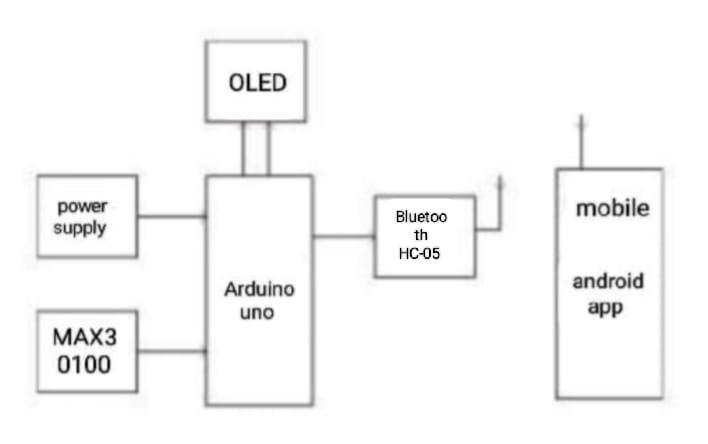
International Research Journal of Engineering and Technology (IRJET) e-ISSN: 2395-0056
Volume: 11 Issue: 07 | July 2024 www.irjet.net p-ISSN: 2395-0072
2.1.1
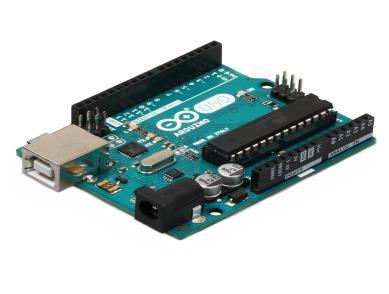
TheArduinoUnoisapopularmicrocontrollerboardbased ontheATmega328Pmicrochip,designedforbeginnersand professionalsaliketocreateinteractiveelectronicprojects.It features14digitalinput/outputpins,sixanaloginputs,a16 MHzquartzcrystal,aUSBconnectionforprogrammingand power,apowerjack,anICSPheader,andaresetbutton.This versatile board can be powered via a USB cable or an externalpowersupply,accommodatingvoltagesbetween712V.Thesimplicityofitsdesign,combinedwiththeopensource Arduino IDE, allows users to write, compile, and uploadcodeeasily.Thedigitalpinscanbeusedforinputand outputoperations,whiletheanalogpinsenablethereading ofvaryingvoltagelevels.Withbuilt-inlibrariesanda vast communityofusers,theArduinoUnosupportsawiderange ofsensorsandactuators,makingitidealforprojectsranging from simple LED blinking to complex IoT applications. Its affordabilityandeaseofusehavemadeitacornerstonein theworldofelectronicsprototypingandeducation,fostering innovation and creativity among hobbyists, students, and engineers.
2.1.2
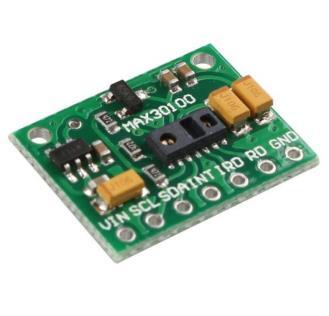
TheMAX30100sensorisahighlyintegratedopticalsensor module designed for precise heart rate and blood oxygen saturation (SpO2) monitoring. Developed by Maxim Integrated, this sensor combines multiple optical components into a single compact package, making it an idealsolutionforwearablehealthandfitnessdevices,aswell as medical monitoring equipment. At the core of the MAX30100sensorisapairofintegratedphotodetectors:one infrared(IR)andonered(R).Thesephotodetectorsutilize the principle of photoplethysmography (PPG), which involvesmeasuringthevariationsinlightabsorptioncaused bychangesinbloodvolume.Byemittinglightintotheskin anddetectingthereflectedortransmittedlight,thesensor can accurately determine the user's heart rate and blood oxygen levels. One of the key features of the MAX30100sensorisitshighlevelofintegration.
2.1.3
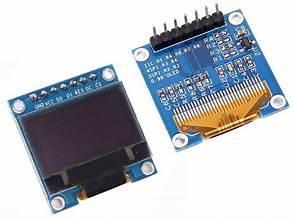
ComparingOLED(OrganicLight-EmittingDiode)panelsto LCD (Liquid Crystal Display) ones reveals a number of benefits. Organic materials used to make OLED displays release light when an electric current is applied to them. EverypixelinanOLEDdisplaygenerateslight,asopposedto LCDs, which need a separate backlight to illuminate the screen. This produces broader viewing angles, greater contrastratios,anddeeperblacks.OLEDscancreateclearer, moredetailedimageswithrichercolorsthankstotheirselfemissive nature. Furthermore, compared to LCDs, OLED displaysaremoreflexibleandthin,enablingthecreationof novelformfactorslikefoldingorcurvedscreens.
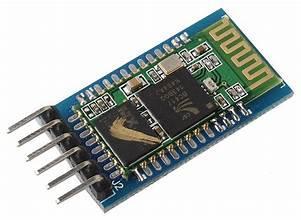
The Bluetooth HC-05 module is a popular and versatile Bluetoothcommunicationmodulewidelyusedinelectronics projects and IoT applications. Developed by JNHuaMao Technology, the HC 05 module enables wireless communication between electronic devices over short distances, typically up to 10 meters, using Bluetooth technology. The module supports the Bluetooth 2.0 specificationandimplementstheSerialPortProfile(SPP), making it easy to establish a serial communication link betweenamicrocontrollerorotherembeddedsystemanda smartphone,tablet,orcomputer.Oneofthekeyfeaturesof the HC-05 module is its simple and straightforward interface,whichconsistsofseveralpinsforpowersupply, ground,andserialcommunication.Itoperatesona3.3Vto 5Vpowersupplyandcanbeeasilyinterfacedwithpopular microcontroller platforms such as Arduino, Raspberry Pi,
International Research Journal of Engineering and Technology (IRJET) e-ISSN: 2395-0056
Volume: 11 Issue: 07 | July 2024 www.irjet.net p-ISSN: 2395-0072
andESP8266.Themodulesupportsbothmasterandslave modes, allowing it to function as either a central device (master) or a peripheral device (slave) in a Bluetooth network.
2.2 Software Requirements
Without any prior programming knowledge, anyone may designmobileapplicationsforAndroidsmartphonesusing MITAppInventor,avisualprogrammingenvironment.MIT, theMassachusettsInstituteofTechnology,developed this web-based platform enablesusersto design, develop, and deploy fully functional apps using a simple drag-anddropinterface.AtthecoreofMITAppInventoristheideaof "blocks-based"programming,whereuserscancreateapps by assembling visual blocks that represent different functionalities and components. These blocks encapsulate common app features such as user interface elements, sensors, data storage, and communication with external services.Byconnectingtheseblockstogetherandconfiguring their properties, userscancreatecomplex and interactive mobileapplications.OneofthekeyadvantagesofMITApp Inventorisitsaccessibilityandeaseofuse.Theplatformis designedtolowerthebarriertoentryforappdevelopment, allowingindividualsofallagesandbackgroundstocreate their own custom apps. Its intuitive interface and visual programming paradigm enable rapid prototyping and iteration, empowering users to bring their ideas to life quicklyandefficiently.
MIT App Inventor provides a wide range of built-in components and features, including buttons, text boxes, sensors (such as GPS, accelerometer, and camera), multimedia playback, and connectivity options (such as Bluetooth and Wi-Fi). Additionally, users can extend the functionality of their apps by integrating with external servicesandAPIs,enabling featuressuchasdata fetching, social media integration, and cloud storage. Furthermore, MIT App Inventor offers comprehensive documentation, tutorials, and a supportive community forum, providing userswithresourcesandassistancetolearnandmasterapp developmentconcepts.AppscreatedusingMITAppInventor canbedeployeddirectlytoAndroiddevicesviaUSBorQR code,aswellaspublishedtotheGooglePlayStoreforwider distribution.
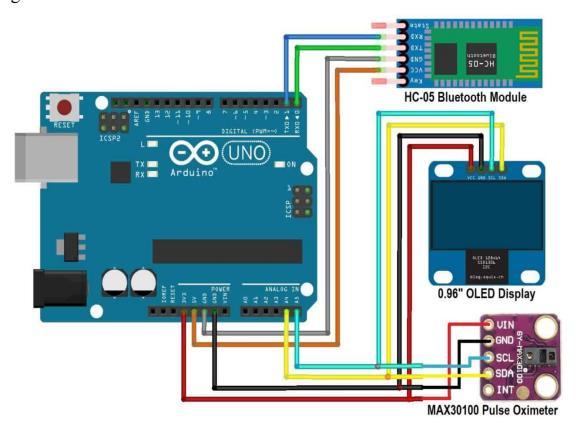
• Sensor Data Collection: The MAX30100 sensor continuously measures blood oxygen levels and heart rate by emitting light and detecting its absorptionintheblood.Thesensorsendsthisdata totheArduinoUno.
• Data Processing:TheArduinoUnoprocessesthe sensordata,calculatesthebloodoxygensaturation (SpO2) and heart rate, and prepares this informationfordisplayandtransmission.
• Display Output:Theprocesseddataissenttothe OLED display, where it is shown in a readable format for immediate visual feedback. The OLED displayupdatesin real-time toreflectthecurrent healthparameters.
• Wireless Communication: The Arduino Uno transmits the health data to the HC-05 Bluetooth module. The HC-05 establishes a Bluetooth connectionwithasmartphoneorcomputer.
• Mobile Application Interface: The MIT App Inventor app on the smartphone or computer connects to the HC-05 module and receives the transmittedhealthdata.Theappdisplaysthedata in real-time and may include features such as historical data logging, alerts, or graphical representations.
• User Interaction: Users can view their blood oxygen levels and heart rate on the mobile app, monitor their health status, and receive notifications or alerts based on the data received. Thisremotemonitoringcapabilityenablesusersto tracktheirhealthconvenientlyandsharedatawith healthcareprovidersifneeded.
The IoT-based blood oxygen and heart rate monitoring system described in this study successfully integrated hardware components and software modules to enable continuous monitoringof bloodoxygensaturation(SpO2) and heart rate (HR). The system utilized an Arduino Uno
Volume: 11 Issue: 07 | July 2024 www.irjet.net p-ISSN: 2395-0072
microcontroller, MAX30100 sensor, Bluetooth HC-05 module,OLEDdisplay,andMITAppInventorapplication.
The Arduino Uno effectively communicated with the MAX30100sensortoobtainaccuratereadingsofSpO2and HR levels.These readings weretransmitted wirelesslyvia BluetoothtoamobiledevicerunningtheMITAppInventor application.Themobileapplicationprovidedauser-friendly interfaceforvisualizingreal-timesensordataandanalyzing historicaltrends,enhancingtheoverallfunctionalityofthe system.
Accuracyvalidationwasconductedbycomparingthesensor readingswiththoseobtainedfromstandardmedicaldevices andprotocols.TheMAX30100sensordemonstratedreliable performancewithminimaldeviationfromreferencevalues for both SpO2 and HR measurements. Users reported satisfactory agreement between the sensor readings and theirexpectedphysiologicalvalues,highlightingthesystem's capabilityforaccuratehealthmonitoring.
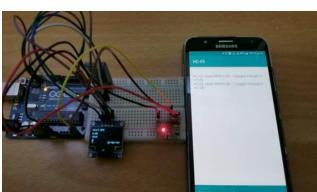
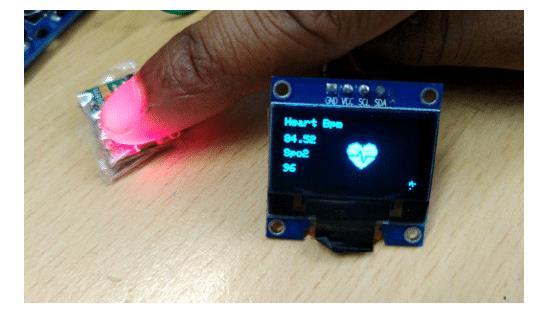
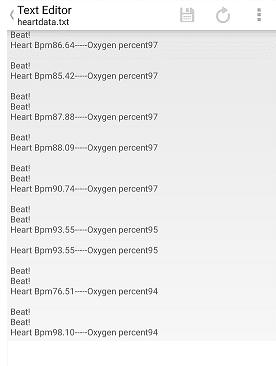
The intuitive interface of the mobile application allowed userstonavigateeffortlesslythroughvariousfeaturesand functions. Additionally, the OLED display provided immediate feedback on sensor readings, enhancing user engagement and interaction with the system. Usability evaluationindicatedthatthesystemwassuitableforboth noviceandexperiencedusers,ensuringaccessibilityacrossa widerangeofindividuals.
This study presents a novel IoT-based blood oxygen and heart rate monitoring system utilizing Arduino Uno, MAX30100sensor,BluetoothHC-05module,OLEDdisplay, and MIT App Inventor. The integrated hardware components,includingArduinoUnoasthecentralprocessor, MAX30100sensorforaccurateSpO2andHRmeasurement, BluetoothHC-05forwirelessdatatransmission,andOLED display for local data visualization, form the core of the system. The mobile application developed with MIT App Inventor serves as a remote interface, allowing users to monitorreal-timehealthdata,analyzetrends,andreceive alerts for abnormal readings. This system demonstrates promising results in providing portable and user-friendly remotehealthmonitoring,potentiallyenhancinghealthcare delivery and empowering individuals in managing their healtheffectively.
Infuturewiththeadvancementofquickerresponse ofsensors,liketheusageoftop-notchsensorsitcan bemadehighlyuseful. International Research Journal of Engineering and Technology (IRJET) e-ISSN:
International Research Journal of Engineering and Technology (IRJET) e-ISSN: 2395-0056
Volume: 11 Issue: 07 | July 2024 www.irjet.net p-ISSN: 2395-0072
Enhance the system with machine learning algorithms to predict health trends and detect anomaliesinreal-time,aidingearlyinterventionfor chronicconditions.
Developcompatibilitywithtelemedicineplatforms toenableseamlessremoteconsultationsanddata sharingbetweenusersandhealthcareproviders.
Improve the mobile application's interface for enhanced user experience, focusing on customization, multi-language support, and accessibilityfeaturestocatertodiverseuserneeds.
[1] Huang,Hui,“IoT-BasedRemoteMonitoringSystem for BloodOxygenandHeartRate”IEEE7th InternationalConferenceonComputerEngineering andTechnology(ICCET),2019.
[2] S.K.Gupta&S.Shukla,A.Kumar,“IoT-BasedRealTimeHeartRateandOxygenSaturationMonitoring System”, IEEE International Conference on Computing, Communication, and Automation (ICCCA)in2021.
[3] A. K. Sinha, "Smart Blood Oxygen and Heart Rate MonitorWithAutomaticDataSavingSystem,"June 10,2019.
[4] P.Venkadesh,S.V.Divya,K.RoshiniSugantharani, M.Sinthiya,andK.Swetha,"IoTBasedHeartRate and Oxygen Monitoring System," International Journal of Scientific Research in Engineering and Management(IJSREM),2023.
[5] M.H. Bhuyan, & M.R. Sarder, “Design, Simulation, and Implementation of a Digital Pulse Oxygen SaturationMeasurementSystemUsingtheArduino Microcontroller,” International Journal of BiomedicalandBiologicalEngineering,vol.15(2), pp.105-111,2021.
[6] L. Surasura, & S. Patil, & M. Ayesha, Sattikar “IoT Based SPO2 and Temperature Monitoring Using ArduinoMegaandGSM,”3rdInternational Online Conference on Emerging Trends in MultiDisciplinaryResearch,Jan.20-22,2022.
[7] D. Fengzhi, & H. Wen, & J. Zhao, & H. Hao, & Qianqian Zhang, “Design of an Instrument for MeasuringHeartRateandBloodOxygenBasedon Arduino,” Journal of Robotics,Networking and ArtificialLife,Vol.7(4),pp.275–278,2021