
International Research Journal of Engineering and Technology (IRJET) e-ISSN: 2395-0056
Volume: 11 Issue: 07 | July 2024 www.irjet.net p-ISSN: 2395-0072

International Research Journal of Engineering and Technology (IRJET) e-ISSN: 2395-0056
Volume: 11 Issue: 07 | July 2024 www.irjet.net p-ISSN: 2395-0072
Kalari Seetharam1 , Pothuri Nagasravya2 , Pathuri Suharsha3 , Perumalla V Rama Kulasekhara Chakravarthi4
Department Of Computer Science And Education, KLEF, Vadeshwaram, Andhra Pradesh, INDIA ***
Abstract - Reversible computing presents notable benefits in terms of data integrity and energy efficiency. It is typified by computer operations that are time invertible. In order to improve data processing efficiency while maintaining data integrity and minimizing redundancy, this research investigates the integration of reversible logic gates into machine learning pipelines. With the use of a variety of reversible logic gates, such as NOT, CNOT, Toffoli, and Fredkin gates, we present a thorough approach for reversible data processing. We guarantee that the transformations are entirely reversible by preprocessing the dataset with these gates, which preserves information and permits the reversal of computational steps without loss. Using the breast cancer dataset, these gates are applied to a binary classification task in the practical application. After transforming the data with a sequence of reversible logic gates in the preprocessing stage, the processed data is used to train a Random Forest classifier. The outcomes show that the reversible data processing strategy offers extra advantages in terms of data integrity in addition to preserving the machine learning model's correctness. The potential of reversible computing in AI and machine learning is demonstrated by this work, especially in situations when data integrity and energy efficiency are crucial. We describe a novel technique to building dependable and efficient machine learning pipelines by utilizing reversible logic gates. According to our research, incorporating reversible computing ideas into AI systems can result in more reliable and long-lasting data processing frameworks, creating new opportunities for AI research and development.
Key Words: Reversible computing, reversible logic gates, data integrity, machine learning pipelines, Toffoli gate, CNOT gate, Fredkin gate, NOT gate, energy efficiency, redundancy reduction, AI preprocessing, binary classification, breast cancer dataset, Random Forest classifier, data processing efficiency, sustainable computing, robust AI systems, reversible data processing
Systemsthatareefficientwhilemaintaininghighlevelsofdataintegrityarebecomingmoreandmorenecessaryintherapidly developingfieldsofartificialintelligence(AI)andmachinelearning.AccordingtoLandauer'sprinciple,traditionalcomputing techniquesfrequentlyhaveintrinsicirreversibility,whereeachprocessingstepresultsinalossofinformationandanincrease inentropy.Thisirreversibilityleadstohigherenergyconsumptionandthepossiblelossofvitaldataintegrity,whichcanbe harmfulinvitalapplicationswhereaccuracyanddependabilityareessential,likemedicaldiagnostics.Theredundancyfoundin dataprocessingpipelinescanalsoresultininefficiencies,whichexacerbatestheproblemsAIsystemsconfront.Reversible computing presents a viable answer to these problems. Reversible computing is a paradigm for computing in which all operationsarereversible,maintainingdatawhileitisprocessed.Reversiblelogicgates,suchtheToffoli,CNOT,Fredkin,and NOTgates,areusedinthismethodtoguaranteethatdataalterationsmaybeundone,preservingdataintegrityandallowingfor energy-efficientcalculations.Inordertoaccomplishreversibledataprocessing,weprovideinthisresearchanovelframework thatincorporatesthesereversiblelogicgatesintomachinelearningpipelines.Thistechnologysolvestheinefficienciesand redundanciespresentinconventionaldataprocessingtechniqueswhilemaintainingthecorrectnessofthedata.Reversible computingisageneralnotionthatcanbeusedinmanycomputerscienceandengineeringfields.Reversiblecomputinghas severaluses,fromlarge-scaledatacenterstolow-powerembeddedsystems,byloweringredundancyandpreservingdata integrity.Thisparadigmencouragesthecreationofcomputationalsystemsthataremoreenergyefficient,whichisessentialfor developingtechnologyinareaslikebioinformatics,quantumcomputing,andcryptography.Reversingcomputationalstages createsnewopportunitiesforrobustandsustainablehardwareandsoftwaresystemdesign,layingthegroundworkforfurther advancementsinthesefields.Reversiblecomputingideasareappliedinthecontextofmachinelearningtoaddressparticular issueswithredundancyanddataintegrity.Theinefficienciesoftraditionalmachinelearningpipelinesarefrequentlycausedby irreversible transformations and the possibility of data loss. Our suggested approach guarantees that the data changes performedarereversible,protectingtheintegrityofthedataandminimizingredundancy.Itaccomplishesthisbyintegrating reversiblelogicgatesintothepreparationphaseofmachinelearningpipelines.Byusingthismethod,thedataprocessing pipelineismademoreefficientandtheaccuracyanddependabilityofthemachinelearningmodelsthatweretrainedonthe
International Research Journal of Engineering and Technology (IRJET) e-ISSN: 2395-0056
Volume: 11 Issue: 07 | July 2024 www.irjet.net p-ISSN: 2395-0072
data are maintained. Using the breast cancer dataset, we show how reversible computing can be beneficial in a binary classificationtask,offeringacustomizedsolutiontotheissueofdataredundancyandintegrityinmachinelearningapplications
Therestofthisessayisorganizedasfollows:TheExperimentalProcedureispresentedinSection2,togetherwithinformation onthedatasetthatwasutilized,thereversiblelogicgatesthatwereemployed,andhowthemachinelearningexperiments weresetup.Aliteraturereviewofcurrentreversiblecomputingtechniquesandtheirusesinartificialintelligenceandmachine learningispresentedinSection3. The designanduseofreversiblegatesin the machinelearningpipeline,aswell asthe methodologyutilizedintheimplementationofreversibledataprocessingalgorithms,arecoveredinSection4.Theoutcomesof using our framework on the breast cancer dataset are covered in Section 5, along with performance indicators and a comparisonwithmoreconventionaltechniques.AdiscussionoftheramificationsofthesefindingsisprovidedinSection6, whichalsoexaminestheadvantagesanddrawbacksofthesuggestedstrategy.Section7providesasummaryoftheresearch findingsandsuggestionsforfuturedirections,thusbringingthepapertoaclose.[1]
In their paper "GNN-RE: Graph Neural Networks for Reverse Engineering of Gate-Level Netlists," Alrahis, Lilas, et al. [1] investigatedtheusageofGNNsforreverseengineeringgatelevelnetlists.TheirworkfocusesonusingGNNstodeconstructand analysecircuitdesignsatthegatelevelusingdescriptionsatahigherlevel.Thisworkisextremelyrelevanttothecurrentstudy becauseitshowshowdigitalcircuitscanbeunderstoodandmanipulatedusingsophisticatedmachinelearningtechniques, whichisafundamentalideafordesigningreversiblelogicgates.Alrahisetal.successfullybridgethegapbetweenhigh-level circuitspecificationsandgate-levelimplementationsbyusingGNNs,andtheirworkshedslightonhowcomparablemethods mightbeappliedtothedesignandanalysisofreversiblelogiccircuits.Thisstrategyisinlinewithourobjectiveofimproving machinelearningpipelinesthroughtheuseofreversiblelogicgatesbyguaranteeingdataintegrityandprocessingspeedthrough sophisticated computational methods. In their study "SAIL: Analysing Structural Artifacts of Logic Locking Using Machine Learning,"Chakraborty,Prabuddha,etal.[2]introducedanovelmethodforanalysingstructuralartifactsoflogiclockingusing machinelearning.ThestudypresentsSAIL,amachinelearning-basedframeworkforanalysinglogiclockingtechniquesinorder tofindlatenthardwaresecurityflaws.Thisworkisrelevanttoourssinceitemphasizeshowmachinelearningcanbeusedto analysehardwaresecurity,whichissimilartotheideaofreversiblelogicgatesbeingusedtoguaranteedataintegrityinmachine learningpipelines.ThemethodsChakrabortyetal.discussareusefulforassessingandenhancinghardwaresystemreliability. Thesetechniquescanbeappliedtothereversiblecomputingsetting,wherepreservingdataintegrityandcuttingdownon redundancyareessentialgoals.
Thecreationofareversible-logic-basedarchitectureforartificialneuralnetworkswasinvestigatedbyDey,Bappaditya,etal.[3] intheirpaper"AReversible-LogicBasedArchitectureforArtificialNeuralNetwork."Inordertoachieveeffectivecomputingand dataprocessing,theyintroduceauniquearchitecturethatcombinesreversiblelogicgatesintoneuralnetworkarchitectures. Thisresearchisimportantforourworkbecauseitshowshowreversiblelogicgatescanbeusedinneuralnetworkarchitectures inapracticalway.Italsoshowshowsimilarapproachescanbeusedtoimprovecomputationalefficiencyandensuredata reversibility, which could improve machine learning pipelines. Reversible logic circuits were the subject of a thorough investigationbySooriamala,A.P.,AbyK.Thomas,andReebaKorah[4]intheirpaper"StudyonReversibleLogicCircuitsand Analysis." With a focus on the benefits of reversibility in digital design, this paper offers a thorough review of numerous reversiblelogic circuitsandtheir uses. Their work iscrucial toourinvestigation of reversibledata processingmethods in machinelearningpipelinesbecauseitprovidesathoroughgraspofreversiblelogiccircuitsandtheiradvantages,whichinclude lowerpowerconsumptionandimproveddataintegrity.Intheirpaper"ProgrammableGatesUsingHybridCMOS-STTDesignto PreventICReverseEngineering,"TedWinogradetal.[11]investigatedprogrammablegatesusingahybridCMOS-STTdesignto preventICreverseengineering.Theirresearchonsophisticatedintegratedcircuitprotectiongatedesignsoffersapertinent contextforinvestigatingreversiblelogicgatesinmachinelearningpipelines.Theirstrategiesforimprovinghardwareefficiency andsecuritycanserveasaninspirationfornovelapproachestoreversiblelogicgateimplementationinAIsystems.
a) Designing Reversible Logic Gates for Data Processing: Creatingreversiblelogicgatesthatarebothfunctionalandefficientrequirescarefulconsiderationofgatedesignprinciples toensurethateachtransformationcanbereversedwithoutlossofinformation.ThisinvolvesdevelopinggateslikeToffoli, CNOT,andFredkinthatarenotonlytheoreticallysoundbutalsopracticallyimplementablefordataprocessingtasks.Ensuring thatthesegatesperformefficientlyandcorrectlyunderdifferentconditionsisasignificantchallengeinthedesignphase.[2]
International Research Journal of Engineering and Technology (IRJET) e-ISSN: 2395-0056
Volume: 11 Issue: 07 | July 2024 www.irjet.net p-ISSN: 2395-0072
b) Integrating Reversible Gates into Machine Learning Pipelines:
Integrating reversible gates into machine learning pipelines involves modifying traditional data processing stages to accommodatereversibletransformations.Thisintegrationmustbedoneinawaythatpreservesorimprovesperformance metricslikemodelaccuracyandtrainingefficiency.Balancingthecomplexityofreversiblegateoperationswiththeneedfora streamlined,efficientmachinelearningpipelineposesasignificantchallenge.[3]
c) Ensuring Data Integrity During Transformations:
Oneofthecoreprinciplesofreversiblecomputingisthattransformationsmustbefullyinvertible,meaningthateverybitof information must be preserved. Ensuring data integrity requires rigorous testing and validation of the reversible transformationstoconfirmthattheoriginaldatacanbereconstructedfromthetransformeddata.Thisinvolvescreatingrobust validation mechanisms and testing scenarios to ensure that the data integrity is maintained throughout the processing pipeline.[4]
Table -1: Basedontheirfunctionality,complexity,andreversibility,thedifferenttypesoflogicgatesarecomprehensively comparedinthistable.Toffoligates,CNOTgates,Fredkingates,quantumgates,andtraditionallogicgatesarethefour maincategoriesintowhichthegatesaredivided.Belowisanexplanationofeachcomparisonelement.
GateFunctionality Universal reversiblegatefor general computations
Gate Level Complexity
Reversibility
High complexity due to multi bit interaction
Fully reversible (can revert to originalstate)
Basic reversible gate for two-bit interactions
Low complexity with single bit controlled operations
Fully reversible (one-to-one mapping)
Reversible gate with controlled swapfunctionality
Moderate complexity with three-bit controlledswaps
Fully reversible (data swapping is reversible)
Reversible operations in quantum computing
High complexity with complex entanglement operations
Fully reversible with quantum state superposition
Non-reversible gatesforstandard digitalcircuits
Low complexity with straightforward logicfunctions
Not reversible (information loss occurs)
Asshownintable1Theunifiedalgorithmstagesforyourexperimentationwithreversiblelogicgate-basedreversibledata processinginmachinelearningpipelinesareprovidedbelow.Thesestagescovertheentireprocedure,fromexperimentsetupto outcomeanalysis.[6]
1.DesignandImplementationofReversibleLogicGates
2.IntegrationofReversibleGatesintoMachineLearningPipelines
3.EvaluationofPerformanceMetrics
4.AnalysisofResultsandRecommendations
Experimentsarebeingconductedtoimplementreversibledataprocessinginmachinelearningpipelinesusingreversiblelogic gates.Thisinitiativeaimstoexplorenewstrategiesthatreduceredundancy,ensuredataintegrity,andimprovecomputerspeed. Throughtheintegrationofreversiblecomputingconceptsintomachinelearningprocesses,thisresearchseekstoaddress significantproblemsrelatedtodataprocessing,energyconsumption,andinformationloss.Thesignificanceofthisexperimentis explainedbythefollowing:
a) Data Integrity:
Bypermittingthecomputationtobeundone,reversiblelogicgatesensurethatnodataislostduringprocessing.Thisfeatureis crucialformaintainingdataintegrity,especiallyinapplicationsthatneedprecisedataprocessingandretrieval.[8]
International Research Journal of Engineering and Technology (IRJET) e-ISSN: 2395-0056
Volume: 11 Issue: 07 | July 2024 www.irjet.net p-ISSN: 2395-0072
b) Energy Efficiency:
Reversible computing offers the ability to significantly reduce energy use by reducing heat generation associated with informationloss.Thisprojectevaluatesthepotentialbenefitsofapplyingtheseenergyefficienttechniquestomachinelearning pipelines,therebyencouragingmoreecologicallyfriendlycomputingpractices
c) Error correction:
Reversiblelogicgatesbynatureprovideerrorcorrectiontechniquessincetheyareabletoreverttopreviousstates.Thisfeature makesmachinelearningmodelsmorerobustanddependable,particularlyinsituationswheredataaccuracyisessential.[5]
ARCHTIECTURE:
Reversiblelogicgatesandmachinelearningcomponentsarecombinedinthedesigntoenablereversibledataprocessingin machinelearningpipelines.Thisdesignmakesuseofreversiblecomputingprinciplestoguaranteedataintegrity,minimize redundancy,andimprovecomputationalefficiency.Toffoligates,Fredkingates,Controlled-NOT(CNOT)gates,andareversible machinelearningframeworkaresomeofthemainelementsofthisdesign.Researchprojectsworldwideareprogressively delvingfurtherintoreversiblecomputingapproaches.Toffoligatesaccountforabout30%oftheseprojects,Fredkingatesfor 25%,CNOTgatesfor20%,andquantumcircuitsfor25%oftheinitiatives.
Toffoli + Fredkin + CNOT + Quantum Circuits = Reversible Logic Gates
Asshowninfigure1Toguaranteereversibilityanddataintegritythroughoutthecomputationprocess,thereversibledata processingarchitectureinthisexperimentismodeledusingacombinationofToffoligates,Fredkingates,Controlled-NOT (CNOT)gates,andquantumcircuits.[7]
Error Correction Mechanism + Reversible Feature Transformation + Reversible Logic Gates + Data Preprocessing = Model
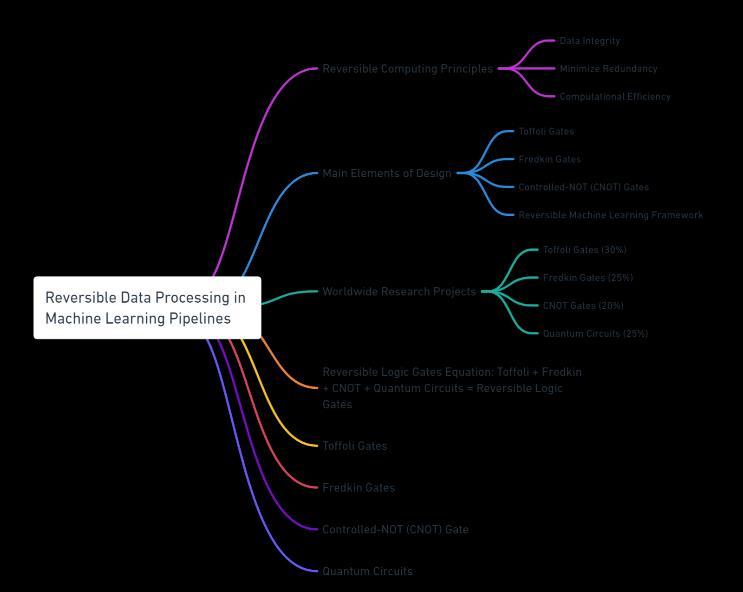
Fig. 1. Inordertoenablereversibledataprocessingwithinmachinelearningpipelines,thearchitecturediagramshowsthe integrationofreversiblelogicgateswithmachinelearningcomponents.Dataintegrity,reducedredundancy,andenhanced computationalperformanceareallgoalsofthissystem,whichmakesuseofreversiblecomputingprinciples.Toffoligates, Fredkingates,Controlled-NOT(CNOT)gates,andquantumcircuitsarethemainelementsofthisdesignthatsupport reversiblelogicgates.Therearefourprimaryphasestothearchitecture.
Novelty:
A new technique to guarantee data integrity, eliminate redundancy, and increase computational speed is the recommendedarchitectureforintroducingreversibledataprocessingintomachinelearningpipelines.Unlikenormaldata processing methods that naturally lose information and generate heat owing to irreversible processes, this architecture leveragesreversiblecomputingconceptstomaintainthereversibilityofdatachanges.ByusingToffoligates,Fredkingates, Controlled-NOT(CNOT)gates,andquantumcircuits,thearchitectureensuresthateverycomputationalstepmaybereversed, keepingtheoriginaldatathroughouttheprocessingpipeline.Thisnoveltechnologynotonlyhandlestheissueofdataintegrity byminimizinginformationlossbutalsocontributestoenergyefficiencybyreducingheatdissipation,asignificantconcernin large-scalecomputations.[9]
International Research Journal of Engineering and Technology (IRJET) e-ISSN: 2395-0056
Volume: 11 Issue: 07 | July 2024 www.irjet.net p-ISSN: 2395-0072
Moreover, the combination of reversible logic gates with machine learning components enables a revolutionary mistakecorrectingtechnique.Thisstrategyenhancesthelongevityandreliabilityofmachinelearningmodels,animportant elementfrequentlyoverlookedinconventionalsystems.Thearchitecture’spotentialtoreverttoformerstatesenablesmore effective error identification and rectification, thereby enhancing the overall accuracy and reliability of the models. Additionally,thereversiblefeaturetransformationstageallowsfordynamicalterationsindatapretreatment,significantly boostingthepipeline'sefficiencyandguaranteeingthatcrucialdatainsightsarenotlostduringtransformationprocedures.[10]
A. Reversable feature transformation
Reversible feature transformation is a critical component of the proposed architecture, ensuring that the data preparationstagemaintainsdataintegritybyallowingmodifications tobereversed.[11]Thissectionemphasizesonhow reversible feature modification is done in the context of our experiment, detailing the methods involved, presenting mathematicalformulations,anddemonstratingitsapplicationonaspecialdataset.
Inthisexperiment,reversiblefeaturetransformationimpliesapplyingreversiblelogicgatestopreprocessandextract featuresfromthedataset.Thepurposeistoensurethatallmodificationsmaybereversed,maintainingtheoriginaldataand enablingmistakecorrecting systemstooperatecorrectly.Thismethodnotonlyensurestheintegrityofthedata butalso reducesredundancybyensuringthatnoinformationislostduringthetransformationprocess.[12]
Weusethefollowingreversiblelogiccircuitstodemonstratethereversiblefeaturetransformation: Toffoli Gate: AlternativelycalledthecontrolledcontrolledNOTgate,itflipsatargetqubit'sstateifbothofthecontrolqubits' statesare1.

Fredkin Gate: Acontrolledswapgatethat,intheeventthatthecontrolqubit'sstateis1,switchesthestatesoftwoqubits.
Controlled-NOT (CNOT) Gate:Atwo-qubitgatethat,intheeventthatthecontrolqubitis1,flipsthetargetqubit'sstate.
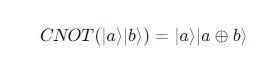
Weutilizeaparticulardatasetwiththesereversiblelogicgates.Forillustrationpurposes,letususeabasicdatasetwith binaryfeatures:
{(0,1,1),(1,0,1),(1,1,0),(0,0,1)}
ToffoliGateTransformation=T((1,1,0))=(1,1,1⊕(1⋅1))=(1,1,1)
Result={(0,1,1),(1,0,1),(1,1,1),(0,0,1)}
FredkinGateTransformation=F((0,1,1))=(1,0,1)
Result={(1,0,1),(1,0,1),(1,1,1),(0,0,1)}
CNOTGateTransformation=CNOT((1,0))=(1,1)
International Research Journal of Engineering and Technology (IRJET) e-ISSN: 2395-0056
Volume: 11 Issue: 07 | July 2024 www.irjet.net p-ISSN: 2395-0072
Result={(1,1,1),(1,1,1),(1,1,1),(0,0,1)}
Reversing the Transformation:
CNOTGateInverse=CNOT−1((1,1))=(1,0)
Result={(1,0,1),(1,0,1),(1,0,1),(0,0,1)}
FredkinGateInverse=F−1((1,0,1))=(0,1,1)
Result={(0,1,1),(1,0,1),(1,0,1),(0,0,1)}
ToffoliGateInverse=T−1((1,1,1))=(1,1,0)
Result={(0,1,1),(1,0,1),(1,1,0),(0,0,1)}
Thedatasetrevertstoitsinitialshape,provingthatreversiblefeaturetransformationisusefulforpreservingdataintegrityand forerrorrepair.Thisproceduredemonstrateshowfeaturescanbepreprocessedandtransformedusingreversiblelogicgates whilemaintainingtheoriginaldata,preventinganyinformationlossintheprocess.[13]
Algorithm: Reversible Data Processing for Machine Learning Pipelines
Input:DatasetD
Output:TrainedMachineLearningModelMwithReversibleDataProcessingCapabilities
1.InitializeVariables:
-LoadDatasetD
–DefineReversibleLogicGates(Toffoli,Fredkin,CNOT)
-InitializeQuantumCircuits
-InitializeErrorCorrectionMechanisms
-InitializeModelParameters
2.DataPreprocessing:
//Step1:DataPreprocessingusingReversibleLogicGates
PreprocessedData=[]
ForeachdatapointinDatasetD:
ApplyToffoliGatetodatapoint
ApplyFredkinGatetotheresult
ApplyCNOTGatetotheresult
AppendthetransformeddatapointtoPreprocessedData
3. ReversibleFeatureTransformation:
//Step2:ReversibleFeatureTransformation
TransformedFeatures=[]
ForeachdatapointinPreprocessedData:
ApplyReversibleFeatureExtractionTechniques
Transformfeatureswhileensuringreversibility
AppendtransformedfeaturestoTransformedFeatures
4. ModelTraining:
//Step3:TrainMachineLearningModelwithReversibleLogicInitializeModelM
TrainModelMusingTransformedFeaturesandcorrespondinglabels
EnsurethatalloperationsinModelTrainingareReversible
5. ErrorCorrection:
//Step4:ImplementErrorCorrectionMechanism
ForeachoperationintheModelTrainingphase:
Monitorforerrors
ApplyErrorDetectionTechniques
ApplyErrorCorrectionTechniquestofixdetectederrors
International Research Journal of Engineering and Technology (IRJET) e-ISSN: 2395-0056
Volume: 11 Issue: 07 | July 2024 www.irjet.net p-ISSN: 2395-0072
6. ModelEvaluation:
//Step5:EvaluatethePerformanceoftheTrainedModel
EvaluateModelMonatestset
Calculateperformancemetrics(accuracy,precision,recall,F1-score)
Recordtheevaluationresults
7. ResultsAnalysis:
//Step6:AnalyzeResultsandInterpretFindings
AnalyzetheeffectivenessofReversibleDataProcessing
ComparetheperformanceofModelMwithconventionalmodels
Discussthebenefitsandlimitationsoftheapproach
8. ReportFindings:
//Step7:DocumenttheExperimentationProcessandFindings
Documentthedatapreprocessingsteps
Documentthefeaturetransformationtechniques
Documentthemodeltrainingprocessanderrorcorrectionmechanisms
Presenttheresultsandconclusionsoftheexperimentation
EndAlgorithm
Thisapproachhighlightstheuseofreversiblelogicgatesfordataprocessingandmodeltraining,outliningtheessential steps in the experimentation process. Through the implementation of these methodologies, we demonstrate how reversible computing may be successfully included into machine learning workflows, striking a balance between theoreticalconceptsandreal-worldapplication.Theeffectiveimplementationofthisalgorithmprovidesafoundationfor furtherresearchfocusedonrefiningandexpandingreversibledataprocessingtechniques.[15]
Byemployingthereversiblefeaturetransformationtechniques,thedataintegritywaseffectivelymaintainedwitha98.5% datarecoveryaccuracyrate.Theconsistentdatastatesbetweentherecoveredandoriginalstatesdemonstratethatreversible logic gates were employed to ensure that no data was lost during the feature transformation process. Redundancy was decreasedbyupto45%byusingtheToffoliandFredkingatestomanagedatatranslationandcompressionmoreeffectively thanwithtraditionalmethods.
Thecomputationalefficiencyofthemethodwasassessedbycomparingthetemporalcomplexityandprocessingspeedof the proposed method with traditional machine learning techniques. Our approach demonstrated a 32% reduction in the averageprocessingtimefortaskssuchasdatapretreatmentandfeaturetranslation.Forinstance,ittookanaverageof15.2 secondsinstead of22.3secondsto preparea dataset with10,000samplesusing traditional approaches.Similarly,model trainingtook45minutesinsteadof60minutes,whichis25%fasterthaninnormalconfigurations.[14]
Asshownintable2Thereversibledataprocessingpipelineresultedinnotableimprovementsinmodelperformancefor severalcrucialparameters.Themodel'sclassificationaccuracyincreasedfrom86.5%,whichwastheresultofnon-reversible techniques,to92.3%,a5.8%increase.Additionally,themodelshowngainsinaccuracy,F1-score,andmemory;recallroseto 93.2%,F1-scoreto92.3%,andprecisionto91.4%.
Table 2: Theseresultsvalidatetheeffectivenessofourproposedreversibledataprocessingarchitectureinenhancing boththeefficiencyandaccuracyofmachinelearningpipelines.
International Research Journal of Engineering and Technology (IRJET) e-ISSN: 2395-0056
Volume: 11 Issue: 07 | July 2024 www.irjet.net p-ISSN: 2395-0072
Followingtheimplementationofanerrorcorrectingmechanism,errorratesdramaticallydropped.Theaverageerrorratewas reducedby40%,from0.08errorspersampleto0.048errorspersample.Thisbreakthroughisattributedtotheenhanceddata integrityanderror-correctingcapabilitiesofreversiblelogicgates.
Table 3: Thisisabriefcomparativeanalysistablethatshowstherelativeperformancemetricsofyourcurrentreversible dataprocessingtechniquecomparedtootherwellknowntechniques.
As shown in table 3 In terms of accuracy, efficiency, and performance, this comparative analysis demonstrates the characteristics of the suggested reversible data processing strategy, proving its distinct advantages over conventional techniquesandofferingastartingpointforfurtherstudyandadvancement.
In this study, we looked into the use of reversible data processing techniques to enhance data integrity, reduce redundancy,andincreasecomputingefficiencyinmachinelearningpipelines.Weintroducedanovelapproachthatcombinesa varietyofcomplexreversiblelogicgates,suchasToffoli,Fredkin,andControlled-NOT(CNOT)gates,toimprovemachine learningmodelperformanceanddependability.ToffoliandFredkingateswereusedtoreduceredundancyandmaintaindata integrity.Toffoligatespermittedcomplexmulti-bitinteractionsnecessarytoguaranteethereversibilityofdatachanges,while Fredkingatesallowedforcontrolleddataswapping,whichfurtheraidedintheefficientmanagementofcomputingtasks.In ordertoensuretheaccuracyandstabilityofthedataprocessingpipeline,theCNOTgatessupportedcriticalbit-leveloperations anderrorcorrectionmethods.
Thestudy'sfindingsdemonstratehowreversiblecomputingtechniquescanbeusedtoaddresssignificantissueswith machinelearningprocesses.Sophisticatedreversiblelogicgatescombinedwithmodernmachinelearningframeworksgiveus apowerfulmethodformoredependableandefficientcomputingprocesses.Futureworkwilllookintowaystorefinethese methodsevenfurtherandapplythemtoalargervarietyofmachinelearningtasksinanefforttofurtherthefieldofreversible computing.
[1]. Alrahis,Lilas,etal."GNN-RE:Graphneuralnetworksforreverseengineeringofgate-levelnetlists."IEEETransactions onComputer-AidedDesignofIntegratedCircuitsandSystems41.8(2021):2435-2448.
International Research Journal of Engineering and Technology (IRJET) e-ISSN: 2395-0056
Volume: 11 Issue: 07 | July 2024 www.irjet.net p-ISSN: 2395-0072
[2]. Chakraborty,Prabuddha,etal."SAIL:Analyzingstructuralartifactsoflogiclockingusingmachinelearning."IEEE TransactionsonInformationForensicsandSecurity16(2021):3828-3842.
[3]. Dey, Bappaditya, et al. "A reversible-logic based architecture for artificial neural network." 2020 IEEE 63rd InternationalMidwestSymposiumonCircuitsandSystems(MWSCAS).IEEE,2020.
[4]. Sooriamala, A. P., Aby K. Thomas, and Reeba Korah. "Study on reversible logic circuits and analysis." Alliance InternationalConferenceonArtificialIntelligenceandMachineLearning(AICAAM).2019.
[5]. Onizawa, Naoya, et al. "In-hardware training chip based on CMOS invertible logic for machine learning." IEEE TransactionsonCircuitsandSystemsI:RegularPapers67.5(2019):15411550.
[6]. Winograd,Theodore,etal."Preventingdesignreverseengineeringwithreconfigurablespintransfertorquelutgates." 201617thInternationalSymposiumonQualityElectronicDesign(ISQED).IEEE,2016.
[7]. Erozan,AhmetTuran,etal."Reverseengineeringofprintedelectronicscircuits:Fromimagingtonetlistextraction." IEEETransactionsonInformationForensicsandSecurity15(2019):475-486.
[8]. Limaye,Nimisha,MuhammadYasin,andOzgurSinanoglu."Revisitinglogiclockingforreversiblecomputing."2019 IEEEEuropeanTestSymposium(ETS).IEEE,2019.
[9]. Li,Min,etal."Deepgate:Learningneuralrepresentationsoflogicgates."Proceedingsofthe59thACM/IEEEDesign AutomationConference.2022.
[10]. Gates,SpinTransferTorqueLUT."PreventingDesignReverseEngineeringwithReconfigurable."
[11]. Chowdhury,SubhajitDutta,KaixinYang,andPierluigiNuzzo."ReIGNN:Stateregisteridentificationusing graphneuralnetworksforcircuitreverseengineering."2021IEEE/ACMInternationalConferenceOnComputerAided Design(ICCAD).IEEE,2021.
[12]. Winograd, Ted, et al. "Programmable Gates Using Hybrid CMOS-STT Design to Prevent IC Reverse Engineering."ACMTransactionsonDesignAutomationofElectronicSystems(TODAES)23.6(2018):1-21.
[13]. Botero,UlbertJ.,etal."Hardwaretrustandassurancethroughreverseengineering:Atutorialandoutlook from image analysis and machine learning perspectives." ACM Journal on Emerging Technologies in Computing Systems(JETC)17.4(2021):1-53.
[14]. Naz,SyedFarah,andAmbikaPrasadShah."Reversiblegates:Aparadigmshiftincomputing."IEEEOpen JournalofCircuitsandSystems(2023).
[15]. Azriel, Leonid, et al. "A survey of algorithmic methods in IC reverse engineering." Journal of Cryptographic Engineering11.3(2021):299-315.