
International Research Journal of Engineering and Technology (IRJET) e-ISSN: 2395-0056
Volume: 11 Issue: 07 | July 2024 www.irjet.net

International Research Journal of Engineering and Technology (IRJET) e-ISSN: 2395-0056
Volume: 11 Issue: 07 | July 2024 www.irjet.net
1UG student Dept of mechanical Engineering at government college of Engineering, India
2UG student Dept of mechanical Engineering at government college of Engineering, India
Abstract - The demands of cooling energy & thermal comfortrequirementsarerapidlyincreasingdaybydaydue to the global warming effect. The temperature of Tropical andSubtropicalregionsisashighas50℃insummer,andit isaslowasbelow10℃inwinter.Sowemayutilizethefact that the temperature of the earth at a depth of 2–3 m is constantthroughouttheyearirrespectiveoftheseason,and that constant temperature is called earth undistributed temperature(EUT)sothismaybeutilizedforheatrejection ofairinthesummerforcoolingpurpose(heatsource)and heat addition of air in the winter for the heating purpose Thecurrentsetupisdevelopedtoexplorethepossibilityof EATHEinstallationforheatingandcoolinginthisregionto curb the demand for energy Consumption In the present experiment,asetupisestablished.ItconsistsofPVC/Copper pipesandablower.ToanalyzetheperformanceofEATHEof thecurrentsetup,measurementofatmospherictemperature andinsidetemperatureofsoilatadepthof6feetinsummer isdone.Calculationsoftheamountofheattransferandwork input to the blower were done by applying suitable thermodynamic formulae and data. Calculation of the coefficientofperformancewasalsodone.
Key Words: Earth-air heat exchanger, Ambient air, Buried pipes, geothermal, exchanger.
Withincreaseindemandofthermalcomfortandcooling theuseofelectricityandenergyareincreasingdaybyday. Duetothelimitedsourcesofenergy,itisnecessarytofind outthealternatesourceoftopreservetheconventionalfuels and to save the energy of earth. The best alternatives are adopting passive design strategies The earth air heat exchangers are considered as an effective replacement for heating or cooling of buildings. Worldwide, it is estimated that the residential buildings, offices, and stores consume around40%ofourenergyand70%ofourelectricity.Heating and cooling for residential, commercial, And industrial purposes account for a large share of total final energy demand. To lessen the burden on the active systems transformingrenewableenergyintothethermalorelectrical energy, a necessary first step is to apply the optimal combination of passive design strategies, foremost among thempassivesolardesignstrategies.Geothermalenergyis considered a renewable source of energy (never-ending source of energy). Traditional heating and cooling system required compressor, condenser, and evaporator setup. While Earth tube heat exchanger is an underground heat
exchangerthatcancaptureheatfromthegroundforheating purposes and dissipate heat to the ground for cooling purposes.Earthtubeheatexchangerisacreativewaytouse thegeothermalenergytoouradvantage,bothforheatingand cooling inside the living area. Earth tube heat exchanger requiredblowertomovetheairthroughoutthesetupofthe ground loop heat exchanger. Heat is extracted from or rejectedtothegroundthroughaburiedpipe,throughfluid flow. This simple setup helps in reducing cost, electricity consumption for the system. This system eliminates the compressor,condenser,andevaporatorcostbysimplyusing geothermalenergy.
There are two major types of earth tube heat exchanger system.
1)OPEN-TYPE EARTH TUBE HEAT EXCHANGER
Intheopen-typeearthtubeheatexchangersystem,the air from the atmosphere passes through tubes that are buriedinthegroundwheretheheattransferbetweentheair andthetubetakesplaceduetotemperaturedifferences.
2) Closed-type earth tube heat exchanger
Intheclosed-typeearthairheatexchangersystem,the airfromtheroompassesthroughtubesthatareburiedin thegroundwheretheheattransferbetweentheairandthe tubetakesplaceduetotemperaturedifferences.
EFFECTS OF VARIOUS PARAMETERS
1) Material Effect: Inthebeginning,EATHEwasbuiltusing steelpipes,butafterthat,numerouskindsofmaterialswere experimented with. According to research, PVC materials havethesameimpact.Becauseofthis,PVCmaybeusedin placeofmoreexpensivematerials,andtheproductwilllast longer. A slight difference in air temperature at the pipe outlet between copper and PVC may be attributed to the betterconductivityofcopper
2) Effect of Velocity of Air inside Pipe: Researcherstested theimpactandfoundthatincreasingtheairvelocityfrom2.0 to5.0decreasedthetemperatureoftheairexitingthetube. Aircontactwiththegroundisdiminished2.5times,while the convective intensity move coefficient ascends by 2.3 times.Toputitanotherway,thehigherthewindspeed,the smallerthetemperatureincreasesaresincethelatterimpact ismoredominating.Athighspeeds,thereducedcontacttime resultsinpoorperformance.
International Research Journal of Engineering and Technology (IRJET) e-ISSN: 2395-0056
Volume: 11 Issue: 07 | July 2024 www.irjet.net p-ISSN: 2395-0072
3) Tube Length's Effect: Wecanconcludethatsomelength is important and no performance improvement is seen beyondacertainlength,regardlessoflength.Fromthis,we canconcludethatalengthofabout10misinsufficientforall consideredclimaticzones,accordingtoLeeKH,StrandRK, butthelengthisIfitexceeds70m,thereisnobigadvantage.
4) Effect of Tube Depth: Outdoor conditions and soil composition, as well as their thermal and water content, influencethetemperatureofthesoil.Thetemperatureofthe oceanfloorvaries,butiteventuallybecomesstable.Thisis the same year-round temperature. Since this temperature stabilizesafteradepthof1.5meters,itcanbeconcludedthat the depth should be higher. According to depths greater than3.5metersarenotallowed.
5) Tube Length, Diameter, and Air Flow Rate Impact: The coolingcapacityofasystemisdirectlyproportionaltothe overallarea,whichisthefoundationofthedesign.Changing the pipe's length or diameter has two effects on this. The massflowratedecreasesasthediameterisincreased,but the pressure drops and fan output rises as the length is extended. EPEC 2002 recommends that parallel pipes of appropriatelengthanddiameterbeused.Theairreachesthe groundtemperaturequickly,sonolargepipesareneeded. Generally,150-450mmpipesareused.
A) DESIGN PARAMETERS
1. Pipe Length: Increasingthepipelengthallowsforgreater heatexchangebetweentheairandthesoil,resultinginmore significant temperature conditioning. There's a point of diminishing returns however, as excessively long pipes contribute to higher pressure drops and fan energy requirements.
2. Pipe Diameter: Pipediameterplaysaroleinbalancing friction losses and heat transfer. Wider pipes provide less resistance to airflow but offer less surface area for heat exchange.Conversely,narrowerpipescreatemorefriction and require stronger fans, but they promote better heat transferduetoincreasedsurfacearea.
3. Burial Depth: The ground temperature remains more stable with increasing depth. Shallower depths can be advantageous in heating applications as they capture warmer ground temperatures, while deeper trenches are moresuitableforcoolingastheyaccesscoolersubsurface soil.
4. Airflow Rate: The rate of airflow through the pipes determineshowmuchairgetsconditionedandhowquickly. Higherairflowratesleadtogreatertemperaturechangesbut alsorequiremorepowerfulfans,impactingsystemenergy consumption.
5. Soil Type: Different soil types have varying thermal conductivities. Sandy soils tend to have lower thermal
conductivity compared to moist clays. So denser, moister soilsgenerallyperformbetterforEATHEsystems.
6. Pipe Material: Thematerialofthepipesinfluencesheat transfer efficiency. Copper offers superior thermal conductivity but comes at a higher cost. PVC is a more budget-friendlyoptionwithdecentthermalproperties,but might not be ideal for applications demanding maximum efficiency.
1.Copperhasathermalconductivityof385W/mk.
2.Aluminumhasathermalconductivityof205W/mk.
3.Brasshasathermalconductivityof109W/mk.
4.Ironhasathermalconductivityof79.5W/mk.
5.Steelhasathermalconductivityof50.2W/mk.
6.PVChasathermalconductivityof0.19W/mk.
We take Copper and PVC pipes as tube material for our analysis.
METHODOLOGY AND SIMULATION
The experimental setup is an open loop flow system has been designed and fabricated to conduct experimental investigation on the temperature difference for inlet and Outletsection,heattransfer,andcoefficientofperformance andfluidflowcharacteristicsofapipeinparallelconnection. Theexperimentaldataaretobeusedtofindtheincreaseof coolingrateforthesummercondition,andheatingrateof winter condition heat transfer coefficient the cool air for requiredplaceinsummerclimateandhotairrequiredplace inwinter.
Assumptions:
Thesurfacetemperatureofthegroundisdefinedasequal to the ambient air temperature, which equals the inlet air temperature.
ThePVCpipeusedintheEAHEisofuniformcrosssection.
ThethicknessofthepipeusedintheEAHEisverysmall; hence,thermalresistanceofpipematerialisnegligible.
Thetemperatureonthesurfaceofthepipeisuniformin theaxialdirection
ThedesignofETHEisconsideredonthebasisofuses,for commercialbuildingsaswellasindividualresidentialhouses ofsmallarea.ThisistheverycompactdesignofETHE,which canbeeasilysetupinsmallarealand.Thewholedesignof ETHE is designed on the solidwork software with more precisionandaccuracyandexportedtosimscaleforfurther
International Research Journal of Engineering and Technology (IRJET) e-ISSN: 2395-0056
Volume: 11 Issue: 07 | July 2024 www.irjet.net p-ISSN: 2395-0072
analysis.Therearemanyadvantagesofthiscompactdesign, suchas:
Itcanbesetupinsmalllandareaduetoitscompact design.
Itssetuplabour’scostwillminimum,mostprobablyin thoseresidentialbuildingswithbasement.Itmustbe setupininitialstageofconstruction.
Itcanbesetupinnon-commercialhouses.
Lowmaintenancechargeduetoitstubematerialwhichis aluminium
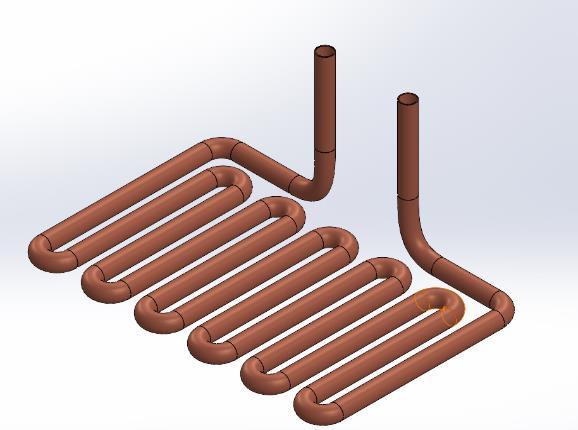
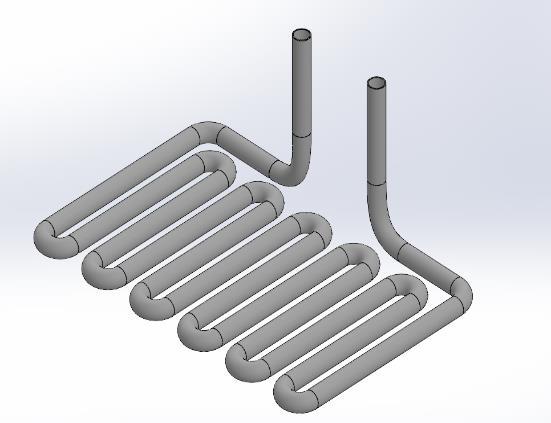

Computational fluid dynamic (CFD), well known as a powerfulmethodtostudyheatandmasstransferformany years. CFD codes are structured around the numerical algorithmsthatcantacklefluidflowproblems.Itprovides
numerical solutions of partial differential equations governing airflow and heat transfer in a discretised form. Complicatedfluidflowandheattransferprocessesinvolved in any heat exchanger can be examined by CFD software, Simscale packages include sophisticated user interfaces to inputproblemparametersandtoexaminetheresults.CFD codes in simscale contain three main elements: (i) a preprocessor, (ii) a solver and (iii) a post-processor. PreprocessingconsistsoftheinputofaflowproblemtoaCFD programbymeansofdefinitionofthegeometryoftheregion ofinterest:thecomputationaldomain,gridgeneration the subdivision of the domain into a number of smaller, nonoverlappingsub-domains:agrid(ormesh)ofcells(orcontrol volumesorelements),selectionofthephysicalandchemical phenomena that need to be modelled, definition of fluid properties,specificationofappropriateboundaryconditions atcellswhichcoincidewithortouchthedomainboundary. Solverusesthefinitecontrolvolumemethodforsolvingthe governing equations of fluid flow and heat transfer. Postprocessorshowstheresultsofthesimulationsusingvector plots,contourplots,graphs,animations.
The main objective of the CFD study was to investigate the effect of buried pipe material on the performanceoftheETHEsystem(forthistwomaterials,mild steelandPVCwereconsidered)andalsotostudytheeffectof airvelocityontheperformanceoftheEPAHEsystem.Inthe studyitwasassumedthatairisincompressibleandsubsoil temperatureremainsconstantsincethepenetrationofthe heatfromthesurfaceofthesoil
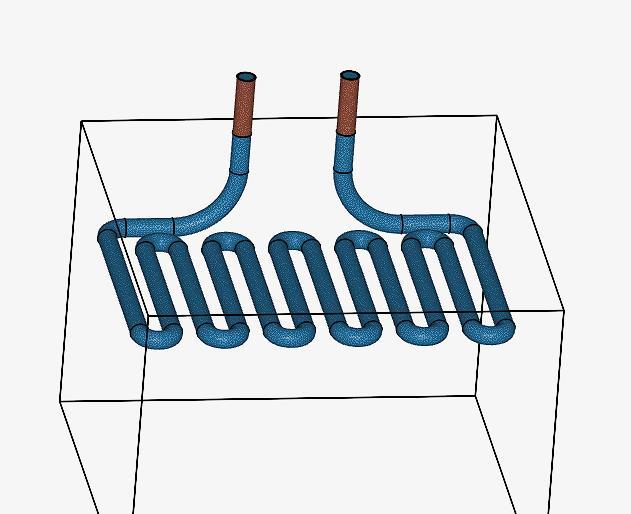
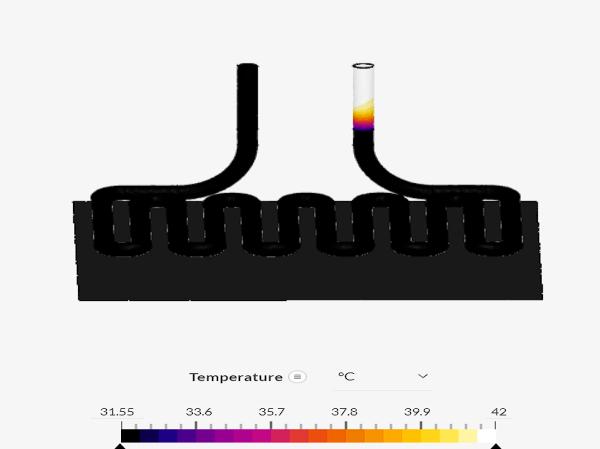
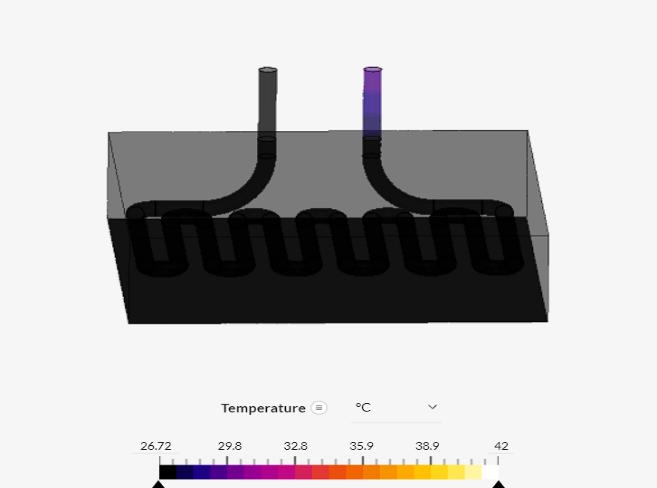
The 3D model has been developed in SOLIDWORKS software’s,version-2023.Afteracreating3Dmodel.Analysis of the earth tube heat exchanger is done with SIMSCALE software.Itshowstheflowoffluidandrateofheattransfer (heattransferbetweensoilandfluid)inETHE.Thefluidgoes throughbasicsetupofthewizard,addinglidsontheinlet& outlet,assigninggoalsforthetemperaturedrop,andviewing a few results.Heat transfer betweensoiltoearthtubes to
International Research Journal of Engineering and Technology (IRJET) e-ISSN: 2395-0056
Volume: 11 Issue: 07 | July 2024 www.irjet.net p-ISSN: 2395-0072
fluidisobservedasshownintheaboveanalyticalmodel.A temperaturedropsof26°Cwasobservedbythissimulation
CONCLUSIONS:-
In designing an earth heat tube exchanger, the choice of materialsignificantlyimpactsboththecostandeffectiveness ofthesystem.Foraneconomical solution,PVCpipesarea viableoptionduetotheiraffordability,easeofinstallation, and satisfactory thermal conductivity for many residential applications. PVC is durable and resistant to corrosion, making it a cost-effective choice for budget-conscious projectswithoutcompromisingbasicperformance.
However, for those seeking higher effectiveness and superior thermal performance, copper tubes are the preferred choice. Copper's excellent thermal conductivity ensuresmoreefficientheattransfer,leadingtobetteroverall systemefficiency.Althoughtheinitialcostishighercompared toPVC,thelong-termbenefitsofenhancedperformanceand durability can justify the investment, particularly in applicationswheremaximizingenergyefficiencyiscritical.
References
[1]Duffin,R.J.,&Knowles,G.(1981).Temperaturecontrolof buildingsbyadobewalldesign.SolarEnergy,
[2] Coffman, R., Agnew, N., Austin, G., &Doehne, E. (1990, October).Adobemineralogy:characterizationofadobesfrom around the world. In 6th International Conference on the ConservationofEarthenArchitecture:Adobe90preprints: LasCruces,NewMexico,USA,October
[3] Working document of a project proposal on energyefficient and renewable energy sources project India, Document TA3 –DAARUN – 95001/1PDC, Development Alternatives,NewDelhi,1995.
[4] Lamrani, M., Laaroussi, N., Khabbazi, A., Khalfaoui, M., Garoum,M.,&Feiz,A.(2017).Experimentalstudyofthermal properties of new ecological building material based on peanut shells and plaster. Case studies in construction materials,7
[5] Jannot, Y., Remy, B., &Degiovanni, A. (2009). Measurement of thermal conductivity and thermal resistance with a tiny hot plate. High Temperatures-High Pressures,
[6] Tarigh, A. D., Tarigh, F. D., &Nikranjbar, A. (2012). A SurveyofEnergy-EfficientPassiveSolarHouses.IPCBEE© IACSITPress,Singapore,
[7] Reddy, B. V., &Jagadish, K. S. (2003). The embodied energy of common and alternative building materials and technologies.EnergyandBuildings,
[8]AkshayM.Pudke,KartikS.Shire,YogeshR.Borkar(2017), ComparativeStudyonPassiveSolarBuilding,IARJSETAGNIPANKH16,Vol.4,Specialissue.
[9] Santamouris, M., Argiriou, A., &Vallindras, M. (1994). Designandoperationofalowenergyconsumptionpassive solaragriculturalgreenhouse.Solarenergy