
International Research Journal of Engineering and Technology (IRJET) e-ISSN: 2395-0056
Volume: 11 Issue: 07 | July 2024 www.irjet.net p-ISSN: 2395-0072

International Research Journal of Engineering and Technology (IRJET) e-ISSN: 2395-0056
Volume: 11 Issue: 07 | July 2024 www.irjet.net p-ISSN: 2395-0072
Ashish Pawar1 , Shamal Sen2
1Student, RGPV University, IPS Academy, Indore (M.P.)
2Assistant Professor, Department of Chemical Engineering, IPS Academy, Indore, (M.P.)
Abstract – The manufacturing of the artificial leather particularly polyvinyl chloride (PVC) represents on the advancement of the material science and engineering by offering a versatile and cost-effective alternative to natural leather.Ithasexploredonthecomprehensiveprocesseswhich involve theproductionofthe PVCbasedartificial leatherthat emphasizes on the basic fabric preparation which includes polymer coating, lamination, finishing and quality control. It has suitably selected the substrates of the typically woven, knitted, non-woven fabrics to the crucial adhesion and achieving the desired properties for the products. It has process on the polymer coating where primary use of the application includes transfer coating, direct coating, and castingtoachievetherequiredthicknessandtexture.Thiscan include multiple layers to which the material softness and flexibility can be included with the embossing, product category and export growth rate of 6.88% during five years where U.S. imports of apparel increased. It can be increasing the lower-cost offshore providers and growth in the market.
Key Words: Synthetic leather, polymer coating, sheet materials, filler, stabilizer, flame retardant, neutralizing agent.
Theartificialleatheralsoknownassyntheticleatherwhere versatile material which includes automotive, fashion and upholstery Polyvinylchloride(PVC)isaprimarycomponent withproductionofartificialleatherwhichcanremarkson thecost-effectiveness,durability,andflexibility.Thepaper discussestheessentialrawmaterialusedinmanufacturing processofPVCbasedartificialleatherandtheirfunctions.
APlasticizerissubstancewhichaddsonthepolymerto enhance their flexibility and workability. It reduces the intermolecularforcesbetweenpolymerchains,increasingthe materialselasticityandpliability.Ithasalsofunctiononthe plasticizers to improve flexibility, elongation, and ease of processing of polymers. The common types of phthalate esters,adipates,citratesandtrimellitates.Theapplications usedintheproductionofflexibleplasticslikePVC,adhesives, elastomers and coating. It has increase in the free volume between polymers chain and enhancing the flexibility and workability. Some plasticizers such as phthalates are scrutinizedforpotentialhealthandenvironmentimpactand promptingthedevelopmentofsaferalternatives.
Fillers have added on the solid particles to modify and enhanceonthestrength,stiffnessandthermalconductivity. Themechanicalandphysicalcharacteristicssuchasstrength and stiffness. The inorganic (silica, calcium carbonate), organic(woodflour,carbonblack)andmineralfillersandare usedintherubber,plastics,constructionmaterials,paints, coatingsandpharmaceuticals.Itcanincreasestiffnessand reducethermalexpansionandimprovedimensionalstability. Thiscanreducecost-savingmeasureswhereamountforthe expensivebasematerial.
Stabilizers have added to materials to prevent or slow undesirablechangeswithdegradationfromenvironmental factors.IthasaddedontheapplicationslikeUVstabilizers, heat stabilizers, oxidation stabilizers, antioxidants, metal stabilizers,lightstabilizers,polymerizationinhibitorsandpH stabilizersandbiocides.
Antimony trioxide (Sb2O3) where flame retardants and enhancefireresistanceinmateriallikeartificialleather.The propertiesandcompositionhavewhitecrystallinepowder withdensityof5.2g/cm3.Itaddsontheworkssynergistically with halogenated compounds and preventing ignition and slow fire spread. The application used in automotive, furniture and aviation industries to enhance on the resistance. It has improved the durability and lifespan for leatherproductsandattractingthefire-relateddamage.
Dolomite have added as a neutralizing agent in leather industry.Ithasaddedonthepropertiesandcompositioni.e., white to off-white powder with chemical formula of CaMg(CO3)2 It has regulated on pH during the chrome tanning process and ensuing on the effectiveness with penetrationoftanningsalts.Thefillersandwhiteningagents improve texture, color, feel and brightness of leather. The cost-effectiveness reduces production costs by replacing more expensive fillers. The environmental considerations help in treating effluents and generating during leather processingandmakingwastelesstoxic.
AccordingtoBraun(2008)havecoveredthePVCintrinsic properties to tailor on the resistance and flexibility and durabilitywerepreferredbasepolymersinartificialleather production.PVCshasachievedonthespecificperformance characteristicsdesiredintheartificialleather.Thepolymer adaptabilityandeaseoftheprocessingfurtherenhanceits appealintheapplication.
International Research Journal of Engineering and Technology (IRJET) e-ISSN: 2395-0056
Volume: 11 Issue: 07 | July 2024 www.irjet.net p-ISSN: 2395-0072
Carraher(2017)haveinvolvedtheplasticizerstoimparton theflexibilityandworkabilitytoPVC.Diallylphthalate(DAP) forshowcasingtheglasstransitiontemperatureofPVCand enhancingtheflexibility(RahmanandBrazel,2004).Wilkes et al (2005) highlights on the choice of the plasticizer through mechanical properties and durability of the final products. It has allowed on the DAP with the soft, pliable artificialleathersuitableforvariousapplicationsincluding upholsteryandfashion.
Titow(1984)haveroleofstabilizersinPVCformulationsis topreventdegradationduringprocessingandextendonthe materialslifespan.Ithasincludedthestabilizerswhereheat and UV resistance and aesthetic functional properties of artificial leather over time. It has underscores the importances of selecting stabilizers with the thermal stabilityandresistancetoamineswhichcanbedetrimental topolymersintegrity.
TherawmaterialsincludeDAPDiallylphthalate(Plasticizer forpasteapplication)forindeformableafterformingwiththe gooddimensionalstability.Thiscanaddonthegoodthermal stability. It has included on the bending strength in unchanged sustainably used for 150-2000C. The chemical erosionresistanceandsolventextractionresistancewiththe aging resistance to molecular formula C14H14o4. The molecularweighthas246.3andboilingpointalongwiththe range 1560C. The flash point includes >121 and vapor pressure3000Fandrelativedensityto1.277.
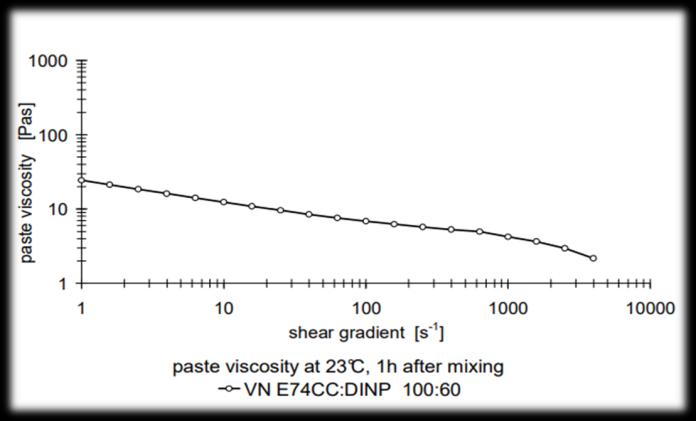
VinnolitE74CCisafineparticlealongwiththehomopolymer givingplastisols with the mediumviscosityandgoodshelf life.Ithasaddedonthecontentwithpseudoplasticoverthe entireshearrange.
Table
Size distribution on 0.063mmscreen
VolatileMatter ≤0.5 % 1269
EmulsifierContent Medium - -
Foggingcharacteristics (gravimetric) ≤0.5 Mg 75201
Similarly,BaerostabASM711byBaerlocheractsonthecostabilizerinthecombinationwithBaZnandCaZnwherethe heatageingresistancewithtemperaturerangeof120-1500C. it has pointedon theamineresistance with the backed-up pastemakingemulsionhomopolymerwithmediumviscosity aregoodshelf.
The production of artificial leather involves on the mixing methodstoachieveahomogenousmixturewhichincludes therawmaterialsthatutilizestheequipment.
Themechanicalagitatorsorstirrerstomixsubstances.Italso combines dry or liquid ingredients to form a homogenous mixture by blending. The shaking or tumbling agitates materials by shaking or tumbling in containers (Lu et al.2002)
Highshearmixingappliesintensemechanicalforcestocreate ontheuniformmixtures.Ithasutilizedfluidizedbedmixing through upward-flowing fluid for granulation and coating. Thepowdermixing(Drymixing)combineswithdrypowder foruniformity.
ThedescriptionofDiallylphthalate(DAP)haveaddedonthe characteristicsaslowviscous,colorlesstransparentliquid, stable at room temperature. It adds on the properties i.e., good dimensional stability, electrical insulation, thermal stabilityandchemicalresistanceandheatresistance.Vinnolit E74CC-PVCwherefineparticleshaveremarkonthegood shelfandlowfoggingvaluesandexcellentembossretention andgoodfoamability.
BaerostabASM711stabilizeractsasaco-stabilizerforheat ageing and amine resistance and improve discoloration resistance.Thephysicalandchemicalpropertieshavebeen addedonoff-whitepowder,odorlessmeltingpoint>1000C partlysolubleinwater.
International Research Journal of Engineering and Technology (IRJET) e-ISSN: 2395-0056
Volume: 11 Issue: 07 | July 2024 www.irjet.net p-ISSN: 2395-0072
The flame retardant i.e., antimony trioxide has improved durability and performance attain on the white crystalline powder and synergistic with halogenated compounds and improve durability and performance. The melting point 6560Cslightlysolubleinwater.Dolomitefillershaveutilized the neutralizing agents improves texture and whitening agentstomeetwiththechemicalformulaanddensityat2.84 g/cm3 whereslightsolubleinwater.
ThePVCmixtureishighlypreparedutilizingtheplasticizers, stabilizers, resin of PVC and fillers with the desired formulation.Ithascertainlymixedtheingredientsinaroll millormixeruntilahomogeneouspasteisobtained.Ithas alsoincludeddissolutionofthehomogenousmixturewith theTHFsolventtocreateaPVCsolution.
Thecoatingofthefabricshasbeencutandreinforcedwith thepolyestertomeetthedimensionsandcleanfabricsfor theimpuritiesorcontaminants.Thecoatingprocessfabrics iscastingmoldorframe.
The curing heat press or Oven set to an appropriate temperature to around 1500C. The testing and characterization have included mechanical testing which provide the elasticity of artificial leather. It conducts abrasion test to assess the durability of the coating. The physical test includes the durability of coating which measuresthethicknessandweightoftheartificialleather wherethesurfacefinishandflexibilityisevaluated.
Table 2: TestedProjectedResults
The artificial leather has synthesized the use of PVC exhibitingonthesatisfactorymechanicalpropertieswhere abrasion resistance and thickness are processed with the specifications and formulation to the process parameters wereenhancingofthequalityoftheartificialleathercanbe takenplace.
The manufacturing of artificial leather using polyvinyl chloride(PVC)involvesacarefulselectionofrawmaterials andeachcontributingtothefinalproductperformanceand properties.Ithasenhancedtheflexibilityandworkabilityof PVC to use DAP and Vinnolit E74 CC provides a stable polymer base with excellent emboss retention and
foamability.Antimonytrioxideusedaflameretardantthat improveonthesafetyprofileoftheproduct.Ithasdolomite acts on the fillers for contributing on the texture feel and whitening and synergistic effects of component result in high-quality, durable, and versatile materials suitable for various applications. The process highlights the desired characteristics of artificial leather demonstrating on the complexities and precision in required modern manufacturingprocesses.Thishasbeenrecommendedthat the future alternative plasticizers can improve the environmental sustainabilityoftheprocessandconducta long-termdurabilityofthestudyundervariousconditions.
[1]. Albrecht,E.(2013).AdvancesinPVCCompounding andProcessing.
[2]. Altindag, I. A., & Akdogan, Y. (2021). Spectrophotometriccharacterizationofplasticizer migration in poly (vinyl chloride)-based artificial leather. Materials Chemistry and Physics, 258, 123954.
[3]. Braun, D. (2008). PVC: The Formulation and PreparationofPVCCompounds.
[4]. Carraher, C. E. (2017). Introduction to Polymer Chemistry.
[5]. Chen,Y.,Zhou,S.,Pan,S.,Zhao,D.,Wei,J.,Zhao,M.,& Fan, H. (2022). Methods for determination of plasticizer migration from polyvinyl chloride synthetic materials: a mini review. Journal of Leather Science and Engineering, 4(1),8.
[6]. Iijima, M., et al. (2009). PVC Stabilization Mechanisms:HeatandLightStabilizers.
[7]. Lu, S. Y., & Hamerton, I. (2002). Recent Developments in the Chemistry of Halogen-Free FlameRetardantPolymers.
[8]. Mouna,S.,Waalid,C.,Sondes,G.,Riadh,Z.,&Slah,M. (2023,November).ProductionofaFullyFireproof PVC Synthetic Leather Article. In International Conference of Applied Research on Textile and Materials (pp. 185-192). Cham: Springer Nature Switzerland.
[9]. Rahman,M.,&Brazel,C.S.(2004).ThePlasticizer Market:AnAssessmentofTraditional Plasticizers andResearchTrendstoMeetNewChallenges.
[10]. Searle, M. D. (2018). Fillers and ReinforcementsforAdvancedApplications.
[11]. Titow,W.V.(1984).PVCTechnology.
International Research Journal of Engineering and Technology (IRJET) e-ISSN: 2395-0056
Volume: 11 Issue: 07 | July 2024 www.irjet.net p-ISSN: 2395-0072
[12]. Weil,E.D.,& Levchik,S.V. (2009).Flame RetardantsforPlasticsandTextiles.
[13]. Wilkes,C.E.,Summers,J.W.,&Daniels,C.A. (2005).PVCHandbook.
[14]. Wypych,G.(2016).HandbookofFillers.
[15]. Xu,M.,Cao,C.,Hu,H.,Ren,Y.,Guo,G.,Gong, L.,...&Yao,H.(2022).Perspectiveonthedisposalof PVC artificial leather via pyrolysis: Thermodynamics, kinetics, synergistic effects and reactionmechanism. Fuel, 327,125082.