
International Research Journal of Engineering and Technology (IRJET) e-ISSN: 2395-0056
Volume: 11 Issue: 06 | June 2024 www.irjet.net p-ISSN: 2395-0072
ENHANCING DURABILITY AND SUSTAINABILITY OF CONCRETE BY EXPERIMENTING ON M40 GRADE WITH GLASS POWDER (GP), MUNICIPAL SOLID WASTE (MSW) AND STONE DUST.
Budharapu Neha Guruswami1 , Nandini2
1PG Student, Bheema Institute of Technology and Science, Adoni
2Associate Professor, Dept. of Civil Engineering, Bheema Institute of Technology and Science, Andhra Pradesh, India
Abstract - Concrete is highly versatile and extensively used materialinconstructionduetoitsnotablestrength,durability, and adaptability. Traditional concrete composed of aggregates, cement and water, can be molded into various shapes and sizes, making it suitable for a wide range of constructionapplications, frombuildingsandbridgestoroads and sidewalks.
Glass is a prevalent material utilized in the building and construction sectors, with a substantial volume being pulverized on a daily basis. However, the disposal of glass wasteposes environmentalchallenges, necessitatingeffective management strategies.
Presently, theconstructionindustryseekseconomicallyviable materials to augment the structural integrity of concrete infrastructure. In recent decades, there has been extensive globalresearch intotheeffectiveutilizationofMunicipalSolid Waste Incineration (MSWI) residues. One promising avenue involves incorporating MSWI ashes into concrete production, akin to utilization of coal combustion products. Additionally, glass powder and municipal solid waste with particle sizes smaller than 600µm exhibit pozzolanic properties, further enhancing their potential for application in concrete formulations.
As seen in recent years the availability of the sand is also decreasing. Stone dust, a by-product of stone crushing processes has emerged as a promising additive in concrete production.
This project investigates methods to enhance the durability and sustainability of concrete through experimental analysis on M40 grade concrete. The study explores the effects of replacing traditional constituents with alternative materials such as glass powder, municipal solid waste incineration byproducts, andstonedust.Throughsystematicexperimentation andanalysis, theprojectaimstoidentifyoptimalcombinations that improve concrete’s durability while promoting sustainability in construction practices.
Key Words: Concrete, Durability, Sustainability, Glass waste, Structural integrity, MSWI residues, Pozzolanic properties,Stonedust,Alternativematerials.
1. INTRODUCTION
Over the past 50 years, high-strength concrete has seen significantevolution.Initiallydefinedbystrengthsover40 MPa,modernhigh-strengthconcreteoftenexceeds60MPa. Itfeaturesadensercementpastematrixwithfewercapillary voids, resulting in less micro-cracking. Achieving these properties requires a higher binder content, superplasticizers, and a low water-to-binder ratio (below 0.30 by weight), which ensures low permeability and a discontinuous capillary pore structure shortly after hydration.
Mixdesigniscrucial tobalancingstrength,durability,and cost.Historically,strengthsbetween35MPato45MPawere common in prestressed structures, but higher strengths becamewidespreadinthe1990s,especiallyinprojectslike the Konkan Railway. Today, high-strength concrete is commoninhigh-risebuildingsinmajorIndiancities,with strengthsrangingfrom45MPato60MPa.
Weareexploringalternativeindustrialmaterialsaspartial replacements for fine aggregate in concrete, including manufactured sand (M sand). Produced through crushing suitablesourcematerials,Msandaddressesenvironmental concernsrelatedtonaturalquarryoverexploitation.Thisis particularly important in developing countries with high concretedemandduetorapidinfrastructuredevelopment. In this project, M sand is sourced from Swathi Precast ConstructionsinAdoni.
Additionally,weareinvestigatingthepartialreplacementof cementwithalternativewastematerialslikemunicipalsolid waste(MSW)andglasspowder.Thesematerialscanserveas supplementary cementitious materials, reducing environmental impact, managing waste efficiently, and loweringcosts.Properlyprocessed,thesematerialsenhance concrete properties such as strength, durability, and workability.ByoptimizingtheuseofMSWandglasspowder in concrete, this research aims to develop sustainable, resource-efficientconstructionpracticesthatmeetstructural requirementsandmitigateenvironmentalimpact.
International Research Journal of Engineering and Technology (IRJET) e-ISSN: 2395-0056
Volume: 11 Issue: 06 | June 2024 www.irjet.net p-ISSN: 2395-0072
2. Objective of this study:
Toassesstheworkability,overallstrength,andtherateof strengthdevelopmentacrossdifferentwater-cementratiosin concrete compositions featuring glass powder, municipal solidwaste,anda10%substitutionofsandwithstonedust.
Analyze and contrast the outcomes obtained from concretecompositionscontaining glass powder, municipal solid waste, and stone dust with those of a traditional concretemix.
To examine the compressive, split tensile, and flexural strengthsofconcreteutilizingglasspowder,municipalsolid waste(MSW),andstonedust.
Assessingconcrete durability withglass powder,MSW, and 10%stone dust enhances strength, sustainability,and chemical resistance via Supplementary Cementitious Materials.
3. Accumulation of materials
Theprojectrequiresseveralkeymaterials:Cement,Fine Aggregate,CoarseAggregate,Water,ManufacturedSand(M sand),glasspowder,MunicipalSolidWasteIncinerationAsh (MSWI),andAdmixtures,allsourcedlocally.
OrdinaryPortlandCement(OPC)of53grade(IS1489-11991)wasusedforitsbindingefficacy.Fineaggregatewas natural river sand (IS 383-1970), air-dried and sieved for optimal grading. Coarse aggregate consisted of crushed natural granite (IS 383-1987) in a 60:40 ratio, passing througha25mmsieveandretainedona12.5mmsieve.
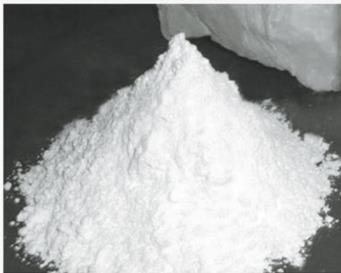
Potablewater,compliantwithIS:456-2000,wasusedfor mixingandcuring.MsandfromSwathiPrecastConstructions wassieved(4.75mm)andusedtopartiallyreplacenatural fine aggregate. Glass powder, procured online from IndiaMART, enhances the concrete's density and reduces permeabilityduetoitsfineparticlesize.
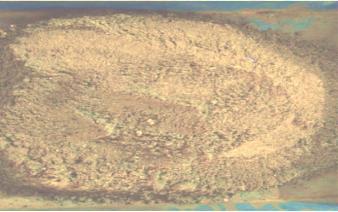
MSWI ash, when processed,servesas a supplementary cementitious material, improving strength, durability, and chemical resistance, while reducing the demand for traditionalcementandlandfillwaste.Superplasticizers,such as CONPLAST SP430, were incorporated to achieve selfleveling, self-compacting concrete with enhanced strength andworkability.
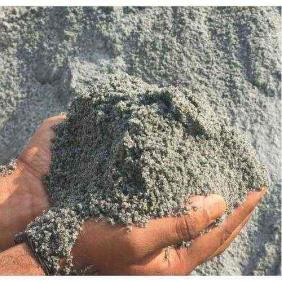
1 M sand from Swathi Precast Constructions
4. Actual Proportion of the Mix
FinaltrialmixforM40gradeconcreteis 1:1.4413:2.8935:0.45atW/Cof0.40.
5. Result and Analysis
5.1 Workability
5.1.1 Slump cone test:
Slump in mm for M40 Grade Concrete

International Research Journal of Engineering and
(IRJET) e-ISSN: 2395-0056 Volume: 11 Issue: 06 | June 2024 www.irjet.net
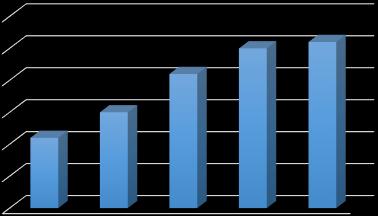
5.1.2 Compaction Factor Test
5.2 Strength of Concrete
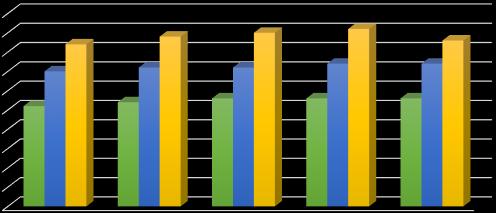
5.2.1 Compressive strength of concrete
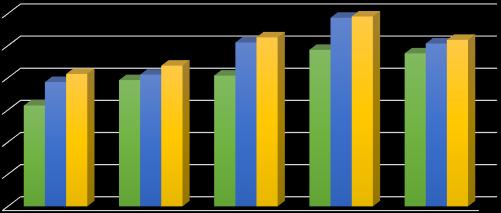
5.2.2 Split tensile strength of Concrete
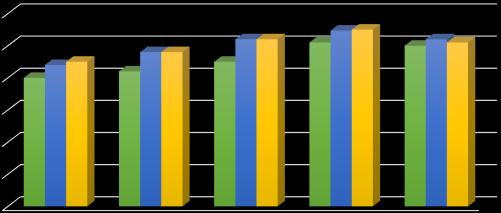
5.2.3 Flexural strength of Concrete
5.3 Durability of Concrete
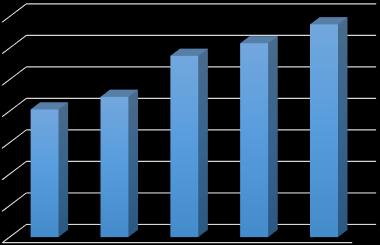
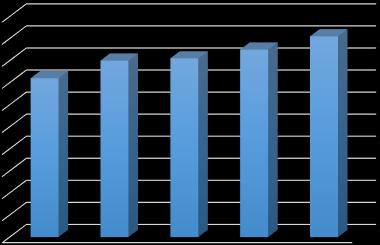
5.3.1 Acid Attack
5.3.2 Alkaline Attack
International Research Journal of Engineering and Technology (IRJET) e-ISSN: 2395-0056
Volume: 11 Issue: 06 | June 2024 www.irjet.net p-ISSN: 2395-0072
1. Optimal Material Replacement for M40 Concrete**: Experiments indicate that replacing up to 15% of cement withMSWI,15%withGPW,and10%ofsandwithstonedust isbeneficialforM40gradeconcrete,balancingperformance andcost.
2. Impact on Workability and Strength**: Increasing replacementpercentagesdecreasesworkability,asshownby slump cone and compaction factor tests. However, compressivestrengthtestsshowthattheMD4mixhasthe bestload-bearingcapacityovertime,andMD4alsoexhibited thehighestsplittensileandflexuralstrengths.
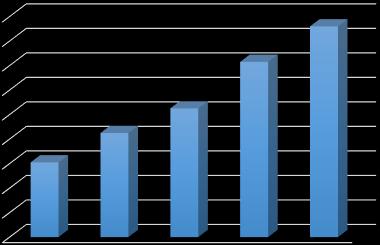
3. Durability Under Chemical Attacks**: Durability tests revealedvaryingsusceptibilitytoacid,alkaline,andsulphate attacks. MD5 mix showed the highest weight and compressive strength losses across these tests, indicating poorresistancetochemicaldegradation.
4.NeedforMaterialOptimization**:Thefindingsemphasize the importance of selecting appropriate materials and construction practices to enhance concrete durability. Incorporating supplementary cementitious materials or chemical-resistantadditivescouldmitigatevulnerabilityto chemicalattacks.
5.GuidanceforFutureResearchandDevelopment**:These experiments provide valuable insights into concrete performance, guiding the development of more resilient constructionmaterials.Furtherresearchisneededtocreate concrete mixes with enhanced durability for diverse environmentalconditions.
References
SyamPrakash.V(2007)“READYMIXEDCONCRETEUSING MANUFACTUREDSANDASFINEAGGREGATE”Article OnlineId:100032053Theonlineversionofthisarticle canbefoundat:http://cipremier.com/100032053
Nimitha Vijayaraghavan. Et al (2013) “Effects of Manufactured Sand on compressive Strength and Workability of Concrete” IJSCER ISSN 2319 – 6009 www.ijscer.com,Vol.2,No.4,November2013
Zbysek Pavlik, Et al (2010)“Use of municipal solid waste incinerationwastematerialsasadmixturesinConcrete”https://www.researchgate.net/publication/282256798
K Tarun Kumar, Et al (2020) “Study on strength and durabilityofconcretebyusingglasspowder(GP)and municipal solid waste (MSW)” - ISSN NO: 0886-9367, TheInternationaljournalofanalyticalandexperimental modalanalysis,VolumeXII,IssueVII,July/2020
2024, IRJET | Impact Factor value: 8.226 |
Veena V. Bhat, N. Bhavanishankar Rao, et al (2014) “InfluenceofGlassPowderonthePropertiesofConcrete ", International Journal of Engineering Trends and Technology(IJETT),V16(5),196-199Oct2014.ISSN: 2231-5381.https://www.ijettjournal.org./publishedby seventhsenseresearchgroup
M. H. Maher, et al Transportation Research Record 1295 “Properties of Municipal Solid Waste Ash-Cement Composite”,Rutgers,theStateUniversityofNewJersey, Piscataway,N.J.08855
Utpal Singh, et al (2018) “STUDY ON PROPERTIES OF CONCRETE (M40) USING STONE DUST AND DEMOLISHED CONCRETE WASTE AS PARTIAL REPLACEMENTOFFINEANDCOARSEAGGREGATE:A REVIEW” - International Research Journal of EngineeringandTechnology(IRJET)e-ISSN:2395-0056 Volume:05Issue:05|May-2018www.irjet.netp-ISSN: 2395-0072
Murali Krishnan.S. (2015) “Investigation on Durability Properties of Concrete Using Manufactured Sand and Admixtures” IJMCCE, Vol.1, Issue.4, September 2015 ISSN(Online):2394-8868
Md.Safiuddin,MohdZaminJumaat,M.A.Salam,M.S.Islam, R. Hashim, “Utilization of solid wastes in construction
6. Conclusion materials”,InternationalJournalofthePhysicalSciences Vol.5(13),pp.1952-1963,18October2010.
ChevulaSurender,K.AnandGoud,ShruthiKaviti,“Behavior of Geopolymer Concrete by using Steel Fibers”, International Journal of Innovative Technology and Exploring Engineering’, Volume-9 Issue-4, pp.24222429,February2022