
International Research Journal of Engineering and Technology (IRJET) e-ISSN:2395-0056
Volume: 11 Issue: 06 | Jun 2024 www.irjet.net p-ISSN:2395-0072
International Research Journal of Engineering and Technology (IRJET) e-ISSN:2395-0056
Volume: 11 Issue: 06 | Jun 2024 www.irjet.net p-ISSN:2395-0072
1College of Environmental Science and Engineering, Tongji University, Shanghai, China
2State Key Laboratory of Pollution Control and Resources Reuse, College of Environmental Science Engineering, Tongji University, Shanghai, China ***
ABSTRACT
Everyday,millionsofpeoplearoundtheworldreceivecleandrinkingwaterfromtheirdrinkingwatertreatmentplants.The most widely used disinfectants in use today are chlorine, ozone, chlorine dioxide, and chloramines; each generates a unique setofDBPsindrinkingwater.Oxidationby-products(OBPs)arecreatedwhenchlorinereactswithorganicmatterordissolves organiccarbon(DOC)inthewater.Theoxidantsreactwiththeorganicstoformoxidationby-products(OBPs),whicharetoxic andharmfultohumanbeings.
TheobjectiveofthisstudyistoremoveOBPsfromdrinkingwatertreatmentplantsusingchemicaloxidationandcoagulation treatmentmethodstoremoveoxidationby-products
The samples were analyzed using Fluorescence’s Spectrophotometer Sampling Analyser (EEM) to record the fluorescence spectral of OBPs in the water samples; TOC was analyzed using Shimzu to detect the dissolved organic carbon (DOC) using standardprocedure5310D;UV254nmwasusedtoabsorbtheDOCspectrum;andAgilent8890chromatography(GC)wasalso usedtodeterminetheretentiontime(RT),responses,andpropertiesofTrihalomethaneTHMs(EPA551.1).
Coagulants, such as aluminum chlorohydrate, polymerized ferrous sulfate, and ferric chloride were used, during the experimentalconditionaluminumchlorohydrate provedtobeveryeffectiveinremovingoxidationby-products,similarlyfor oxidants sodium hypochlorite and potassium permanganate helped destabilize and aggregating fine particles, including organicmatterinthewater,andalsoaidinginremovingsuspendedparticles,andoxidationby-product
The change in the emission spectrum would indicate that the chemical composition of the solution has been successfully changedbytheoxidationprocess.Moreover,standardsampleresultsofTrihalomethanesretentiontime(Rt), andpeakareas are good for removing Trihalomethanes species. The TOC removal efficiency of OBPs is higher which indicates that sodium hypochlorite is effective in removing OBPsfrom drinking water. origin. These findingshighlight the importance of removing andcontrollingoxidationby-productsindrinkingwatertreatmentplantsthathaveformedsediments
Keywords: Drinking Water Treatment Plant, Excitation-Emission Matrix, Coagulation, Oxidation By-product OBPs. Trihalomethane.
When chlorine combines with organic materials (Liu, 2021) or dissolves organic carbon (DOC) in water (Kumari, 2022; Nikolaou, 2004), oxidation by-products (OBPs) are produced. Additionally, the oxidants and organics may react to create hazardous compounds known as OBPs that are detrimental to human health (Gallard, 2002). To ensure the security of the water supply, OBPs must be controlled and removed from drinking water (Wee, 2023). To make water suitable for human consumption,itmustbetreated(Khalifa,2018).ThemainOBPsthataregeneratedinwateraretrihalomethanes(THMs) and haloaceticacids(HAAs)(Sinha,2021).Bothconventionalcoagulationtreatmentandchemicaloxidationtreatmenttechniques areeffectiveineliminatingOBPs(Titchou,2021)
Significant amounts of known OBPs have been found, however, there are still significant amounts that are unknown (de CastroMedeiros,2019).Drinkingwaterthathasbeenchlorinatedwastrihalomethanes(THMs)wereinitiallyfound(Liu,2019; Mazhar,2024). Chlorination producesa variety of OBPS,suchas THMs, HAAs, and HBQF(Zhang, 2020).As a result, OBPs in
International Research Journal of Engineering and Technology (IRJET) e-ISSN:2395-0056
Volume: 11 Issue: 06 | Jun 2024 www.irjet.net p-ISSN:2395-0072
drinking water systems are getting more and more attention. By maximizing the dose of oxidants, both OBPs and organic mattercanbeeffectivelyeliminated(Qu,2010).Thiswouldraisetheefficacyoftreatmentandlowerthechanceofdeveloping OBP.Itisnoteworthythatoxidationby-productconcentrationsindrinkingwaterareregulatedbywatertreatmentfacilitiesto guaranteethattheyremainwithinsafebounds(Giannakis,2021;Kumar,2023)
Over the years, the effort has been made to prevent oxidation by-products by using so many techniques and methods. For instance,chlorination,enhancedcoagulation,watermanagementpracticesozone,ultraviolet,Granularactivatedcarbon(GAC), and Advanced oxidation process (AOPs) to prevent the production of OBPs (Rekhate, 2020; Zainudin, 2018). Disinfectants such as bromide or iodide, Natural Organic Matter, bacteria, chlorine dioxide, chloramine, sodium hypochlorite, and ozone interactwiththeseagentstoformdistinctclassesofOBPsthatarehighlyharmful (Richardson,2007).Severalcountrieshave adopted particular sets of rules to limit some individuals or groups of OBPs or DBPs, because of OBPs carcinogenicity, cytotoxic, and genotoxic effects (Richardson, 2007). China and certain European Nations have imposed extremely strict thresholds for total THMs, HAAs, and HBQs (Giuseppe et al., 2005). The uses of coagulation strategies and other treatment methodslikeabsorption,andmembranefilteringareoftenemployedto reduceOBPsinDWTP(A.Bhatnagar,&Sillanpää,M., 2017) However, the above literature only focused on the formation and removal of OBPs from drinking water and not the removalofOBPsfromsludgewaterbeforedischarge.
The chemical compounds used in the treatment process reduce the contaminants from the water treatment plant to be immediately deposited in the community's hydric bodies. Consequently, it is not a good choice since it could lead to the unintendedformationofmuddepositsandcontaminationofrainfallanditsdispersalinaquaticbodies(Monteiroetal.,2007). However several OBPs, including HBQ, THMs, and HAAs, might be present in the sedimentation tanks, which would be extremelydangerousforboththeenvironmentandthedischargesystem(Padhi,2019).Numerouschemicalcompoundsfound intheresidualfromthedrinkingwatertreatmentprocessaretoxicandresistanttoremediation(Qrenawi,2021;Rak,2009). Suspendedparticlesandnaturallyoccurringironandaluminumsaltsareaddedaschemicalcoagulants
In addition to the added chemical coagulant, the WT sediment also contains minerals and other elements from the source water(Qrenawi, 2021).Manytechniques,suchasmembrane filtrationand biological removal,havebeen developed recently toremoveharmfulorganicchemicalsfromdrinkingwater(A.Bhatnagar,&Sillanpää,M.,2017;Bibi,2017;Cevallos-Mendoza, 2022; Matilainen, 2011). Residual water may contain certain hazardous disinfection by-products, although the majority of research on OBPs concentrates on the drinking water treatment procedure and OBPS prevention rather than the water residueorsedimentsitself(Cai,2016;Kozari,2020;Srivastav,2020).Thesophisticatedwatertreatmentmethodcaneliminate some of the OBPs in the effluent, but some may still be present in the sediments, which presents a serious risk to the discharging water system It is crucial to develop new technologies that can efficiently extract oxidation byproducts from drinking water treatment facilities (Von Gunten, 2018). Large volumes of sludge known as treatment residuals, or water treatment residuals containing both organic and inorganic elements, are produced by water treatment plants (EPA, 2011). Chemical recovery from DWTP can yield benefits from the recoverable compounds themselves, reduce the quantity of produced contaminants, and enhance the sludge treatment process (Anuththara, 2022; Qrenawi, 2021). The quantity and propertiesofthecontaminantsdictatetheproceduresandexpensesrelatedtotreating,moving,andfinallydisposingof them (Ahmad,2016).Asaresult,creatingacomprehensivetreatmentprocessforaparticularkindofcontaminantrequireshavinga solid understanding of the appropriate and accessible processing techniques for that kind of sludge (Qrenawi, 2021). DWTP contaminant's residual managementisimportant becauseofitscomposition,amount, andcostandtheremust be regulatory criteriatoadheretowatertreatmentsludgehandling(Nguyen,2022;Price,2018).
Theapplicationofwatertreatmenttechnologiesisessentialtohumanhealthandenablespeopletoprofitfromdrinkingwater and other uses (Li, 2018; Von Gunten, 2018). Strict treatment standards for drinking water are enforcing in addition to OBP lawto decreaseDBPprecursorsviacoagulation,absorptiongranularandactivatedcarbon ((NPDWR),2024;Kroehler,2014; Pérez-Lucas,2022;Tsaridou,2021;Zazouli,2017) Toextracttheseby-productsfromdrinkingwatercoagulation,flocculation, absorption, and occasionally oxidation can be used (Ahmad & Azam, 2019). Chemical oxidants have several practical advantagesinthepracticeoftreatingdrinkingwater (Leeetal.,2023).Itisultimatelyamulti-objectiveprocessthathelpsto raisetheoverallqualityofdrinking waterandservesavarietyofimportantfunctions(Duanetal.,2021).Chemicaloxidation reactions may significantly reduce the concentration of many of these organic in drinking water, but the chemical products createdbytheoxidationreactionscouldalsobeharmfultothepublic'shealth(Titchouetal.,2021a,2021b).Theresearchon pre-oxidationcoagulationcouldraisethestandardofwaterquality(Ghernaout,2020).Itappearsthatbothorganicmatterand
International Research Journal of Engineering and Technology (IRJET) e-ISSN:2395-0056
Volume: 11 Issue: 06 | Jun 2024 www.irjet.net p-ISSN:2395-0072
OBPscanbesuccessfullyremovedbyoptimizingtheoxidantsdose.thiswouldimprovetherapyeffectivenessanddecreasethe riskofOBPformation(Hanetal.,2022)
Therefore, it makes sense to look into the elimination of OBPs using pre-oxidation coagulation methods (Han et al., 2022) Using Gas Chromatography System (GC), Fluorescence excitation-emission matrix (EEM) spectroscopy Total organic carbon analysis. Therefore, the purpose of this study was to use Chemical pre-oxidation coagulation techniques to remove the Formation of Oxidation By-Products from drinking water treatment process and, examine the formation of Oxidation byproducts formation of THMs, and HBQF, other common OBPs in conventional coagulation methods potential for removing pollutantsfromdrinkingwatertreatment plants.Italsoevaluatedthevariationofthemicrobialcommunitystructureduring the water treatment process under coagulation pre-oxidation recycling practice. Using Sodium hypochlorite (NaOCl) and potassium permanganate (KMnO4) oxidant on NOM, the effect of OBP recovery on microbiological safety was examined. Chemical oxidation has been extensively investigated for the elimination of OBPs, TOC, and micro-pollutants with Preoxidation being one of the most efficient and cost-efficient processes the elimination of OBPS from sediments or water sludge before discharge. The DWT sludge is a blend of solid and liquid that can be disposed of as garbage. Even while it occasionallyqualifiesasanaturalresource,itisfrequentlyanunwelcomestrainontheenvironmentandtheeconomy.
Suzhoudrinkingwatertreatmentplant(DWTP)inJiangsuprovince,China,isthemainsamplesourceforthisexperiment.One of the primary drinking water supplies for Shanghai city currently serves roughly 5,000,000 people but can supply up to 10,000,000 m3/d. The following treatment techniques were used: After pre-ozonation, coagulation, sedimentation, sand filtration (SF), post-ozonation, and biological activated carbon (O3-BAC) at Suzhou DWTP, the drinking water quality was further enhanced by the application of nanofiltration technology (Wei, 2022; Chen, 2021). Deionize Milli-Q is also used to perform experimental work and to prepare different coagulant concentrations. Sodium alginate, humic acid, and tannic acid (Aldrich, sodium form) were used for the initial investigations (i.e., TOC, UV, and EEM) (Kaczmarek, 2020). Then, aqueous solutions of organic precursors that reacted as representative structural units of humic compounds or aromatic compounds were used in the experiments. The following model compounds were utilized in these experiments: methanol (e.g., Baker, reagentgrade),dichloromethane(CH2Cl2)(Mallinckrodt,99.8%);Aluminumchlorohydrate(Aldrich,98%);polyferricchloride (Aldrich, 98%); and polymerized ferrous sulfate (Aldrich, 21%); Methyl tert butyl ether (CH3OC(CH3)3 abbreviated as MTBE bakerreagentgrade);andSodiumchloride(NaCI):premiumgradepure.Ammoniumchloridesolution(NH4CI)andsulphuric acid (H2SO4) were used to prepare a standard solution. and chlorine was obtained from sodium hypochlorite (Aldrich, >5% accessible chlorine). The abovementioned commercial products were used to make stock solutions, and the actual concentration of accessible chlorine in the stock solution was determined by TOC and UV-254nm. To eliminate the organic matter, basic sodium hypochlorite (NaOCl) was used for this experiment to remove organic matter (Wang, 2018). TOC was analyzed(Shimizu)todetectthedissolvedorganic carbon(DOC)perthestandardprocedure5310D,andUV254nmwasused to absorb the DOC spectrum (Zhang, 2009). The DOM distributed in the WTP with heterogeneous mixtures and complex components is believed to be the primary precursor for the formation of THMs and toxic DBPs in the WTP (Bedner, 2006; Wang, 2011) In the most extensively used water treatment methods, such as coagulation, sedimentation, filtration, and disinfection, the coagulation process is set up so that the coagulant chemicals are removed using sodium hypochlorite concentration(Xie,2024).Theexperimentswerecarriedoutforconcentration,retentiontime,pH,andcoagulantandchlorine dosewiththechlorineconcentrationsof0.5mg/L,1mg/L,1.5mg/L,2mg/L,and2.5mg/L)(Kumari,2022).OBPsindrinking water are formed when organic matter (DOM) and natural organic matter (NOM) react with an oxidant or chlorination treatment process in water (Zainudin, 2018a). DOM is a wide range of chemicals, including amino acids, carboxylic acids, humicsubstances,andtannicacids(Hua,2007;Thurman,2012).Severalindividual(DOM)compoundsweretestedforOBPs, including hydrophilic and hydrophobic acids, bases, and neutral compounds, using the techniques developed by (Imai et al., 2002;Wei,2022).
2.1 Sample preparation and reagents used in the test
Allchemicalsemployedintheexperimentwereofreagentgrade andspecifieddifferently.Thewaterusedinthisstudyhasa pHrangingbetween6and7and7.244μS/cmconductivitycontrol,respectively.Aseparatemixtureof0.08gofsodium,tannic acid,andhumicacidsatdifferentconcentrationsinabeakerfilledwith1200mlofSuzhouwatertreatmentplant(DWTP).The solutionwasvigorouslyagitatedfor30minutesat250rpmusinganMYP13-2Smagneticstirrertomixproperlyanddissolve organiccompounds.Theflocksdevelopedatthebottomofthecontainer,0.45µmispouredinPVDFmembranefilterstofilter
International Research Journal of Engineering and Technology (IRJET) e-ISSN:2395-0056
Volume: 11 Issue: 06 | Jun 2024 www.irjet.net p-ISSN:2395-0072
the sample solution, and it is kept at 4°C (Uman, 2020; Yuan, 2021). And 800 ml of the solution was transferred into five distinct,cleanbottles.withdifferentsodiumhypochloriteconcentrations(NaOCl)(i.e.,0.5mg/L,1mg/L,1.5mg/L,2mg/l,and 2.5mg/L),weremeasuredusing200transferredpipettes,anditwaschlorinatedwithsodiumhypochlorite.800 millilitersof these water samples were poured into five clean containers labeled respectively (Reckhow et al., 1990). The samples were testedforTOC,UV,andEEMconcentrationsusingtheTotalOrganicAnalyzer(TOC).Seefigure4
Fluorescence’sSpectrophotometerSamplingAnalyzerEEM(modelF-7100,HitachiJapan)wasusedtorecordthefluorescence spectra of water samples. EEM scans were obtained by scanning at a speed of 12,000 nm/min over excitation (Ex) wavelengths of 200–500 nm and over-emission (Em) wavelengths of 200–550 nm. The intervals for Ex and Em were both fixed at 5 nm. To eliminate Raman scatter peaks, the fluorescence signal of the pure water sample from Suzhou DWTP and Milli-QwaterwasremovedfromtheEEMs.Ramanunit
Fluorescentdissolvedorganicmatter(FDOM)hasbeenextensivelycharacterizedandtrackedusingfluorescencespectroscopy (EEM). this technique offers a non-destructive nature, high sensitivity, speed, and affordability (Hudson et al, 2007 Systems, 2009; Fellman et al, 2010). Using all of the wavelength-dependent fluorescence intensity data from EEMs quantitatively analyses.Seefigure2and3.
Agilent 8890 chromatography (GC) was used to investigate the molecular weight (MW) distribution and properties of DOM fractions(EPA551.1Trihalomethanes;EPA552.2Halo-aceticAcid)standardsfordisinfectionby-products(Cohenetal.,1990). THMsandHAAsinthesamplesweredeterminedusingUSEPAmethods551.1.THMscompoundswereextractedusingMTBE by liquid-liquid extraction and analyzed by Agilent 8890 chromatography (GC) equipped with an electron capture detector andDB-5fusedsilicacapillarycolumn(30m×0.53mm,1.5mmfilmthickness).Detailedprocessandinstrumentsettingscan be found in the support information (figure 1). Suzhou DWTP and Milli-Q Pore Water were prepared as stock solutions quenched withsodiumsulfates,methanol,andMBTE to examine THMs andHAAs.Thesampleswerethenanalyzedusingan Agilent8890GC-ECDapparatus.
The standard sample was prepared and stored to be used for the detection of DBPs, the standard sample containing Trihalomethanecompounds.
i) Samplepreparation
The standard materials adopt dichloromethane, monobromodichloromethane, dibromochloromethane as a solute with accurate purity, pure methanol as solvent was prepared by weight volumetric methods in a clean laboratory at room temperature20oC
ii) Traceabilityandvaluationmethods
Standard values for the concentration of the reference substance, are the prepare values and the quantitative values are checkedbythegasphasespectrum(FD),thetraceabilityoftheCRMcanbeguaranteed byusingthepreparationmethodsof measurementandthemeasuringinstrumentswhichmeetthedomainofmetrologicalproperties
iii) Characteristic and extended uncertainty, the extendeduncertaintyofstandardvaluesismainlycomposedof the uncertaintyofrawmaterials,purityweighingconstantvolume,uniformity,andstability
iv) preparationofaStandardsampletostorethestandardsolutionofTrihalomethanesstandard.Seefigure1
200µlofTrihalomethanesstandardsample,titratedwithmethanolto10mlmarkofflaskbottletobeusedforthedetectionof DBPs.ThispreparedsamplewasusedinthedifferentwatersamplesfromSuzhouWTP.SeeTable1
International Research Journal of Engineering and Technology (IRJET) e-ISSN:2395-0056
Volume: 11 Issue: 06 | Jun 2024 www.irjet.net p-ISSN:2395-0072
Table 1. SixstandardsamplesolutionswerepreparedfortheLiquid-liquidextractiontodetectOBPsorDBPsfromthewater samples.
SuzhouWTPsamples
StandardSolution(SS)
3.1 standard sample analysis using Agilent 8890 Chromatography (GC) for the detection of DBPs
THMs andHAAsinthesamplesweredeterminedusing USEPAmethods551.1and 552.2respectively. THMs andHAAswere extracted using MTBE by liquid-liquid extraction and analyzed by Agilent 8890 gas chromatography (GC) equipped with an electron capture detector and a fused silica capillary column (30 m × 0.53 mm, 1.5 mm film thickness) a very sensitive detectorforelectrophiliccompoundssuchashalogenatedorganiccompounds. Astandardsamplesubstancewaspreparedto store, and be used for the detector of DBPs, a standard sample containing Trihalomethanes, four standard samples of Dichloromethane, Fluorobromomethane, Dibromochloromethane, and Bromoform as solutes with accurate purity, pure methanolassolventwerepreparedbyweightofvolumetricmethodsinacleanstatepollutionlaboratoryatroomtemperature 200C,the standardvalues forthe concentration of the referencesubstance is prepared tovalue and the quantitativevalue is checked by the gas phase spectrum (FD). THM standards were made, and the peak height or peak area for each THM component from the chromatogram was plotted as a function of concentration to provide calibration plots for the GC-ECD method.
Thesampleresultshowsthatthehomogeneityconformstotheruleofthetestandthestabilitytestisgood,basedonthegiven retentiontimes
I. Trichloromethane(chloroform)hasaretentiontimeof2.149
II. Fluorobromomethanehasaretentiontimeof3.074
III. Dibromochloromethanehasaretentiontimeof5.148and
IV. Bromoformhasaretentiontimeof9.723.
This retention time indicates the elution order and the relative retention time of the compounds during the gas chromatographanalysis,theelutionorderisdeterminedbytheinteractionbetweenthecompoundsandthestationaryphase insidetheGCColum.lowerretentiontimeindicatesthecompoundelutesearlierandhasahighervolatilityontheotherhand higher retention time indicates that the compound elutes later and has a lower volatility. Therefore, the results suggest that trichloromethane (chloroform) is the most volatile compound and elutes earliest followed by Fluorobromomethane, dibromochloromethane,andfinallybromoformwhichistheleastvolatileandelutesthelatest
Figure1. FourTrihalomethanecompoundsshowdifferentretentiontimesandresponses THMstandardsweremade,andthe peak height or peak area for each THMs component from the chromatogram was plotted as a function of concentration to provide calibration plots for the GC-ECD method (a) Showing standard curve of retention time and response areas of Trichloromethane (Rt) is 2.149 mins (b) Fluorobromomethane retention time is 3.074 mins (c) Dibromochloromethane retentiontimeis5.148minsand(d)Bromoformretentiontimeis9.723min.Thecurveobtainedfromthestandardcurvecan be used toshowtherelationship betweentheconcentrationof trihalomethane compoundsand thecorrespondingsignalsor responses obtained from the GC chromatography, this curve can be used to quantify the amounts of trihalomethanes in the water samples by comparing the response of the sample with a standard curve, the curve can be used to determine the
International Research Journal of Engineering and Technology (IRJET) e-ISSN:2395-0056
Volume: 11 Issue: 06 | Jun 2024 www.irjet.net p-ISSN:2395-0072
concentration of trihalomethanes in the water sample, evaluates the effectiveness of the disinfection process, and assess potentialhealthrisksassociatedwiththepresenceofthesecompoundsindrinkingwater.
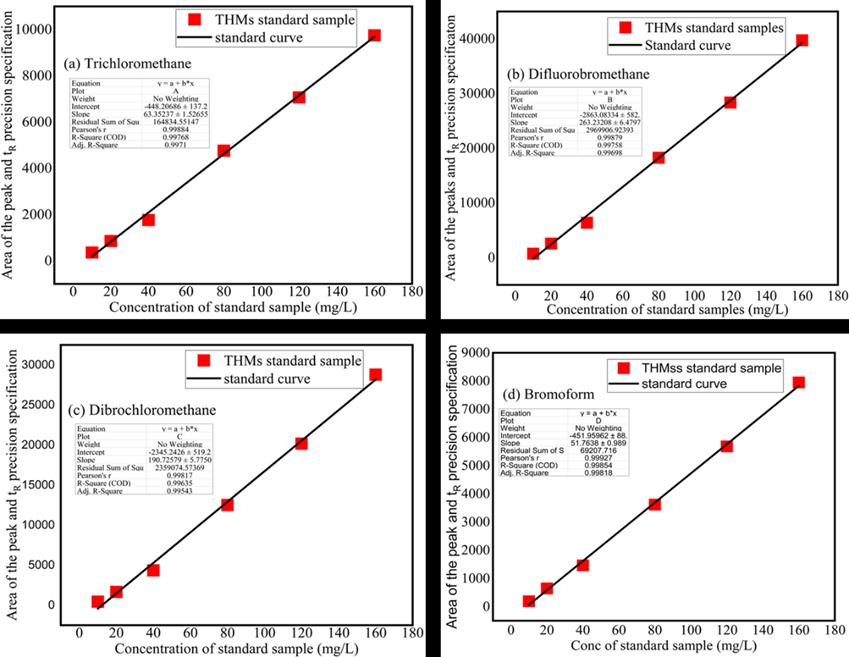
Figure 1 Standardcurveofretentionandpeakareaoffourtrihalomethanespecies
3.2 fluorescence Spectrophotometer Using Integration method excitation emission matrix-parallel factor analysis (EIFA) Scan analysis of spectral peak of OBPs
Thefluorescencespectrophotometer(modelF-7100,Hitachi,Japan)recordstheresultsoforganics(tannicacids,humicacids, and sodium alginate). The removal of disinfectant by-products (DBPs) in the WTP using humic acids, with concentration of sodium hypochlorite, a spectrophotometer was determined comparing the results with blank distilled water to zero, to estimate the concentration of organic compounds and DBPs in the water, the techniques provides estimate not direct measurement of DBPs concentration, as the concentration of NaOCl increases the excitations wavelength peaks spectral decreases, indicates that the organic materials present in the solution which resulted in a decrease in the level of several regulated DBPs see Figure 2. A fluorescence spectrophotometer (model F-7100, Hitachi, Japan) was used to record the fluorescence spectra. By periodically monitoring the emission (Em) spectra in the 200 nm–500 nm range and the excitation wavelengths(Ex)inthesamerangeat5nmintervalsintheexcitationdomain,six-dimensionalspectrawereproduced.Thesix spectrahavedifferentconcentrationsofNaOClstartingfrom0.5mg/L,1.0mg/L,1.5mg/L,2mg/L,2.5mg/L,and3mg/L.The excitation-emission matrix (EEM) data was processed using MatLab or (MathWorks). The ratio of fluorescence intensity at different emissionsand excitations.can beusedtocomputeafluorescenceindex(FI)basedontheEEMdata(McKnightetal 2001).Organicmatterwithanancestral(microbial)originis representedbyagreaterFI(>2.5),whileorganicmatterwithan allochthonous(terrestrial)originisrepresentedbyalowerFI(<1.3).Figure2EmissionsandExcitationsmatrixofpotassium permanganate (KMnO4) oxidant and organic sodium alginate spectral peaks. New peaks are seen as the concentration of KMnO4 oxidantsincreases,thiscanbeobservedfromthepeaksbelow.
a. Emission (Ex) 300 nm - Ex 370 nm and Excitation Ex 250 nm – Em 270 nm, related aromatic content of organic pollutants
b. Emission(Ex)350nm–Ex450nm,andEm250nm–Em340nmconnectedtohumiccompounds.
International Research Journal of Engineering and Technology (IRJET) e-ISSN:2395-0056
Volume: 11 Issue: 06 | Jun 2024 www.irjet.net p-ISSN:2395-0072 © 2024, IRJET | Impact Factor value: 8.226 | ISO 9001:2008 Certified Journal | Page624
c. At peak Ex 380 nm – Ex 400 nm and Em 250 nm - 280 nm pollutants started to break down by potassium permanganateacids(KMnO4),thearomaticorganicprotein
d. AtthepeakofEx350nm-400nmandEm250nm-280nm,theorganicpollutantscontinuetobreakdown,andmost oftheparticlesaredestroyedastheconcentrationofpotassiumpermanganateacids(KMnO4)increases.
e. At the peak of Ex 250 nm – 380 nm and Em 250 nm – 275 nm most of the organic pollutants were removed as the concentrationofpotassiumpermanganate(KMnO4)increasedtherearenewchangesinthepeaks.
f. Between350nm-370nmandEm250nm- 210nm,thepeakoforganicpollutantsdecreasesdrastically,no organic pollutantswereseen,andtheywerecomplexlyremovedfromthesolution.
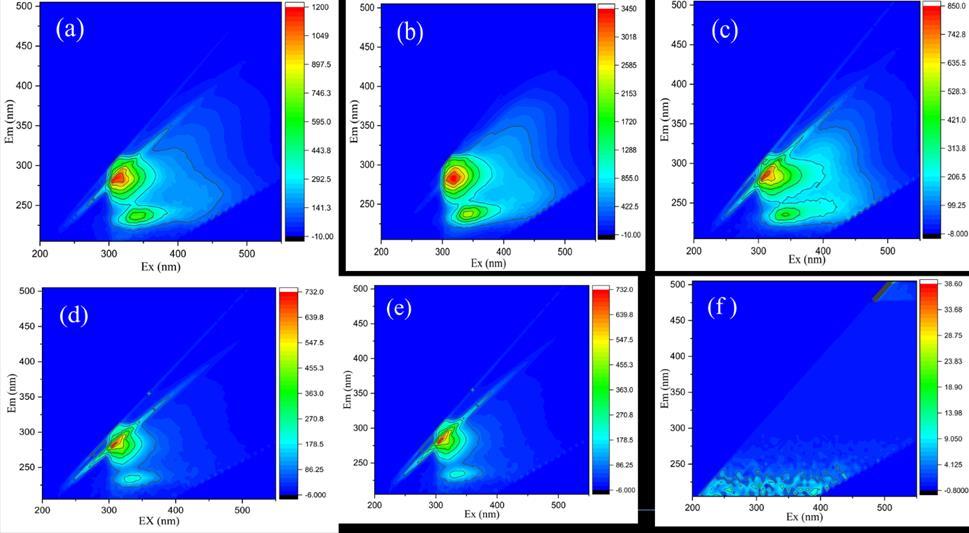
Figure 2 Excitationemissionofsix(3-Dscan)spectralpeaksoforganicsodiumalginateafterpotassiumpermanganate (KMnO4)oxidation
In the analysis of organic humic acids and sodium hypochlorite (NaOCl) solution using fluorescent emission excitation for oxidation by-products and other impurities, the emission spectral is observed to see a shift in the peak intensities and emissionwavelengthandtherearenewappearanceofspectralpeaksseeFigure3
a. The peaks Ex 300 nm -400 nm and Em 250 nm -300 nm, the peak was not seen because the sodium hypochlorite (NaOCl) concentration was0.5mg/L it wasa verylow concentration,thereforenot effectiveinbreakingtheorganic materials,oxidationby-products,andotherimpurities.
b. ThepeakEx300nm–Em400nmandEm200nm–300nm,theconcentrationofNaOClwas1mg/Lsomehowstrong and the peaks started to break certain organic compounds, oxidation by-products, and the organic materials and certainoxidationby-productsstarteddisappearanceduetostrongoxidantsconcentration.
c. Ex320nm-400nm,andEm200nm-230nmthepeakbreakdowncompletely,theconcentrationNaOClconcentration applied was 1.5 mg/L and was able to break down most of the organic materials, oxidation by-products, and other impuritiesdisappearedfromthewater.
d. Ex 300 nm -350 nm, and Em 230 nm-270 nm, 2 mg/L of the concentration of NaOClapplied to the organic, the concentrationoftheoxidantwashigh,itsbreakdownalmostalltheorganicmaterialspresentinthewater,removalof oxidationby-products,andotherimpuritiescontinues,astheconcentrationincreasesthemoreeffectivetheoxidants toremoveimpuritiesandoxidationby-productsfromthewater.
International Research Journal of Engineering and Technology (IRJET) e-ISSN:2395-0056
Volume: 11 Issue: 06 | Jun 2024 www.irjet.net p-ISSN:2395-0072
e. Ex340nm–450nm,Em260-450nm,theconcentrationofNaOClwas2.5mg/L,noorganicmaterialsandimpurities were seen, clear solution, finally concluded that as the concentration of NaOCl increases the more effective the oxidantsreducesorremovedoxidationby-productsfromthewater
f. AtthepeakofEx350nm-400nmandEm250nm-280nm,theorganicpollutantscontinuetobreakdown,andmost oftheparticlesaredestroyedastheconcentrationofsodiumhypochloriteacidsincreases.
g. AtThepeakofEx250nm–380nmandEmnm250nm–275nmmostoftheorganicpollutantswereremovedasthe concentrationofsodiumhypochloriteincreased,thiscanbeobservedfromthepeak.
h. Between350nm-370nmandEm250nm- 210nm,thepeakoforganicpollutantsdecreasesdrastically,noorganic pollutants were seen, and they were complexly removed from the water. A significant alteration in the emission spectralonewouldsuggestthattheoxidationprocesshasbeeneffectiveinremovingthechemicalcompositionofthe organicmaterialsandoxidationby-products.SeeFigure3.
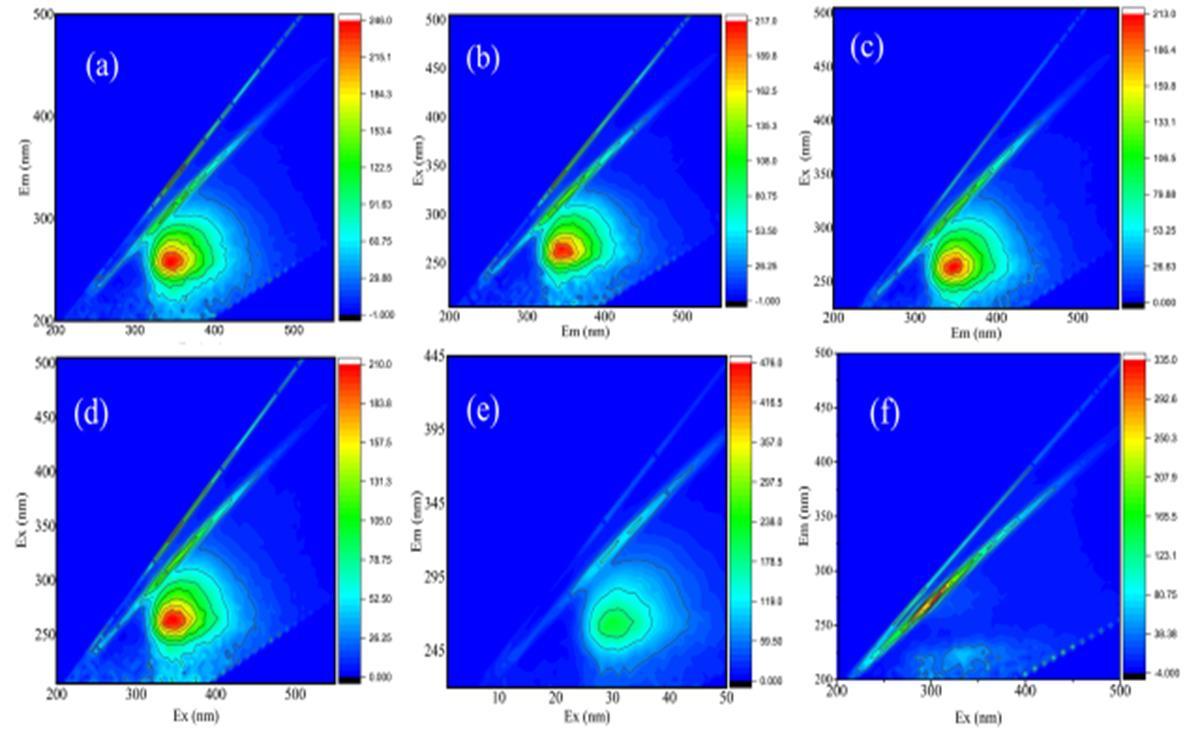
3 3 Organics compounds after coagulation of sodium hypochlorite oxidation to remove total organic matter and oxidation by-products in drinking water treatment plant (WTP).
Total Organic Carbon (TOC) of Tannic Acids, Humic Acids, and Sodium Alginate using sodium hypochlorite as an oxidant to remove oxidation by-products(OBPs).TOC analysisisvital inassessing organiccarboncontent in diverse samples,aidingin waterqualityassessmentandprocesscontrol.Organicmatterwasformedinthewater,andsodiumhypochloriteoxidizedthe organic materials. Tannic acids, humic acids, and sodium alginate were used as organic compounds to react with sodium hypochlorite oxidants during the coagulation filtration process. 0.8 g of different organics was placed in 1200 milliliters of watersample,whichwasstirredinamagneticstirreratabout300rpmfor30 min,fortheoxidationtotakeplace,800mlof thewatersamplewaspreparedusingSuzhouwatertreatmentplantandMilli-Qpore-deionizedwater,differentoxidantswas added to the water sample, with five different concentration mark 0.5 mg/L, 1 mg/L. 1.5 mg/l. 2 mg/L and 2.5mg/L. 100 milliliters was utilized, filter with 0.45 µm membrane, 10 milliliters of each sample was inserted into the TOC analyzer togetherwiththedistilledwatersample.
The TOC analyzer measures the concentration of organic content and oxidation by-products in the sample solution. NaOCl concentrationsweremarkedat0.5mg/l,1mg/L,1.5mg/L,2mg/L,and2.5mg/Lforeachseparatesolution.Theexperiment was performed on three separate sample solutions (i.e., humic acid, tannic acid, and sodium alginate solution). The data for
International Research Journal of Engineering and Technology (IRJET) e-ISSN:2395-0056
Volume: 11 Issue: 06 | Jun 2024 www.irjet.net p-ISSN:2395-0072
thisexperimentisshowninFigure4.ThediagramsclearlyshowthatNaOClwassuccessfulinremovingOBPsfromthewater samples.ThegraphclearlyshowshowcontaminantsweresuccessfullyremovedastheconcentrationofNaOClincreasedfrom 0.5mg/Lto2.5mg/L.Organicmaterialsweresuccessfullyremovedfromthewatersamplesprovided;seeFigures4
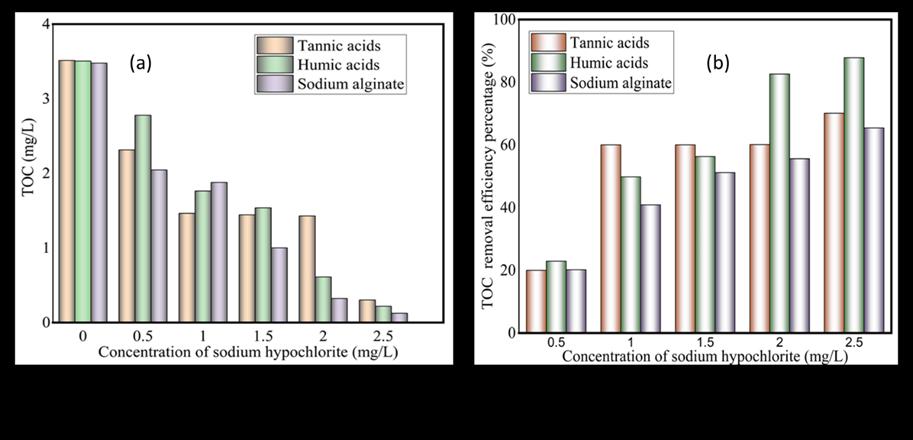
Figure 4.TOCoforganicandremovalefficiencypercentagesaftersodiumhypochloriteoxidation.
Organic compounds (Tannic acids, humic acids, and sodium alginate to determine TOC concentration in the solution, from figure 4 (a) TOC at zero (0) i.e. no NaOCl was added, the TOC was high 3.5 mg/L, the addition of NaOCl concentration to organic solution the TOC started decreasing, from 3.5 mg/L to 0.2 mg/L, indicating that NaOCl can reduce organic TOC and otherimpurities.Graph(b)removalefficiencyfrom0.5mg/Lto2.5mg/Lconcentration,thatisorganicsodiumalginate,tannic acids, and humic acids were 20 %, 20 %, and 22 % respectively as the concentration of NaOCl increases, the removal percentagesincreasefrom20%,20%,22%totheremovalefficiencyof64%,tannicacids,sodiumalginate68%andhumic acids to 85 % after treatment. these indicate that the concentration of NaOCl is effective in reducing the TOC and increasing theremovalefficiencyandotheroxidationby-productsinthewater.However,NaOCl'shighconcentrationcanalsocontribute tooxidationby-productformation.caremustbetakenandregularmonitoringofWTPduringthecoagulationprocess.
KMnO4 reacting with Humic acids and Sodium alginate solution concentration of KMnO4 are as 0.8g of sample of different organic(tannicacid,humicacids,andsodiumalginate)wastreatedwith0.5mg/L,1mg/L,1.5mg/L,2mg/Land2.5mg/Lin the solution of tannic acids humic acids and sodium alginate respectively with potassium permanganate. During the TOC analysis,KMnO4 oxidizestheorganiccarboncompoundspresentinthesampleconvertingthemintocarbon,aftercoagulation and nanofiltration processes. TOC was analyzed by a Total Organic Carbon Analyzer (TOC-V CPN) machine autos ampler ShimadzuTOCanalyzer.Theresultisplotted,andthedatashowshowKMnO4 reducesdissolvedorganicmatter(DOM)inthe solution.SeeFigure5(a)and(b).
International Research Journal of Engineering and Technology (IRJET) e-ISSN:2395-0056
Volume: 11 Issue: 06 | Jun 2024 www.irjet.net p-ISSN:2395-0072
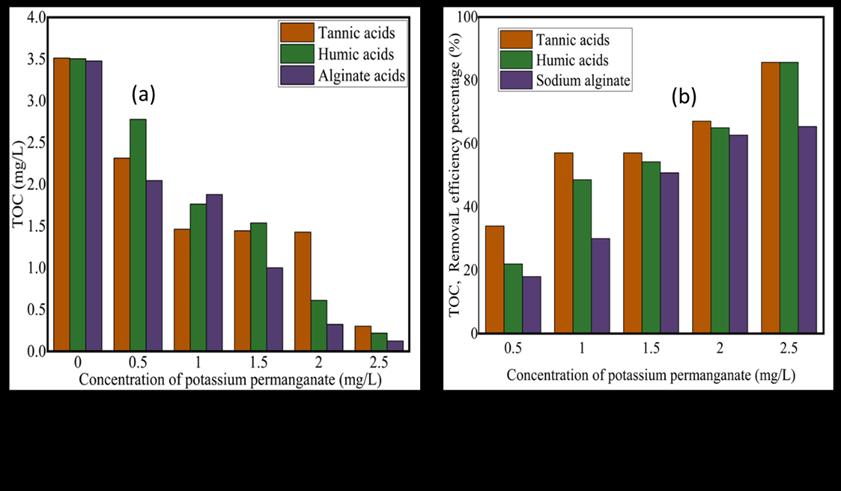
Figure 5.TOCoforganicandremovalefficiencypercentageafterpotassiumpermanganatescoagulation.
From graph 5(a) above the TOC after potassium permanganates oxidation, the TOC of the different organics results reduces from 0.0 mg/L with TOC of 3.5 mg/L of KMnO4 to the concentration of 2. 5 mg/L with TOC values of 0.001 mg/L, indicating thatKMnO4 iseffective in removing TOC,andoxidation by-products. Figure 5(b)showsTOC removal efficiency percentages fromthegraphthepercentageincreasesfrom18%to65%forsodiumalginate,20%to82%forhumicacids,and36%to82% for tannic acids. the concentration of KMnO4 with the lowest percentage being sodium alginate because of its organic composition, and structure, is not very active with KMnO4 Compared to tannic and humic acids which are very active with KMnO4.TOCresultscanprovidethemeasuredamountoforganiccarboninthewatersample,thisinformation iscomparedto regulatorystandardsorusedasabaselineforfurtherwatertreatment,thisinformationcanhelpyouunderstandthepresence andbehavioroforganiccompoundsinwaterandthequalityofwateryouhave.
3.4 Total organic carbon of organic coagulants after coagulation using sodium hypochlorite
Polymerizedferroussulfate,polyferricchloride,andaluminumchlorohydratecoagulantusingsodiumhypochlorite(NaOCl)as oxidant after coagulation to determine TOC, and to remove OBPs in drinking water treatment plants. Coagulants, such as aluminum chlorohydrate, polymerized ferrous sulfate, and ferric chloride used in water treatment destabilize and aggregate fine particles, including organic matter in the water, and also help to remove suspended particles and organic matter they formflocsthatsettleoutbysodiumhypochloriteontheotherpartitsoxidizingagents,disinfectthewaterandkillspathogen andbacteria,thishelpssedimentationoffiltrationforremoval.Sodiumhypochloriteasanoxidantisusedtooxidizeandbreak downorganiccompoundsintosmaller more easilytreatableforms.Itcanalsohelpindisinfection bykilling microorganisms presentinthewater.
During the treatment processes using chemical oxidation, by-products are formed as a result of the reaction between the coagulants and the organic matter present in the water. The presence of these oxidation by-products can be assessed using TOC(totalorganiccarbonanalysisisamethodusedtomeasurethetotalorganiccarbonpresentinthewatersample,theTOC analyzermeasurestheamountsofcarbonthatispresentinorganicmoleculesinthewatersolution,boththeorganicandthe contaminantsandanyoxidationby-productsthatisformduringthetreatmentprocesses.measuringTOChelpstodetermine theeffectivenessofthecoagulantsandoxidantsinremovingorganicmatterfromthewater.Theexperimentperformedusing TOCanalysisledtothereductionoforganiccarbonconcentration,thisindicatesthatthecoagulantiseffectiveandoxidantin removingorganicmatterfromthewater.
International Research Journal of Engineering and Technology (IRJET) e-ISSN:2395-0056
Volume: 11 Issue: 06 | Jun 2024 www.irjet.net p-ISSN:2395-0072 © 2024, IRJET | Impact Factor value: 8.226 | ISO 9001:2008 Certified Journal | Page628
Figure6(a-c)below.Onecanobservefromthedisplaygraphresultsthatasthedosageofthecoagulantsandoxidantsincrease from 10 mg/L to 50 mg/L leads to the reduction of TOC from higher to lower concentration, this can furthermore kill microorganismswiththereactionofNaOCl,Oxidationby-productcanalsobeeffectivelyremovedfromthewater,seefigure6.
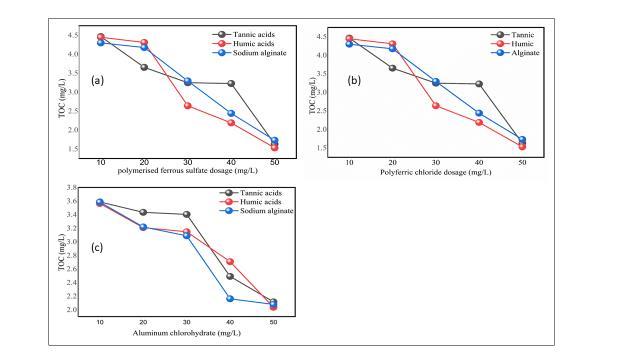
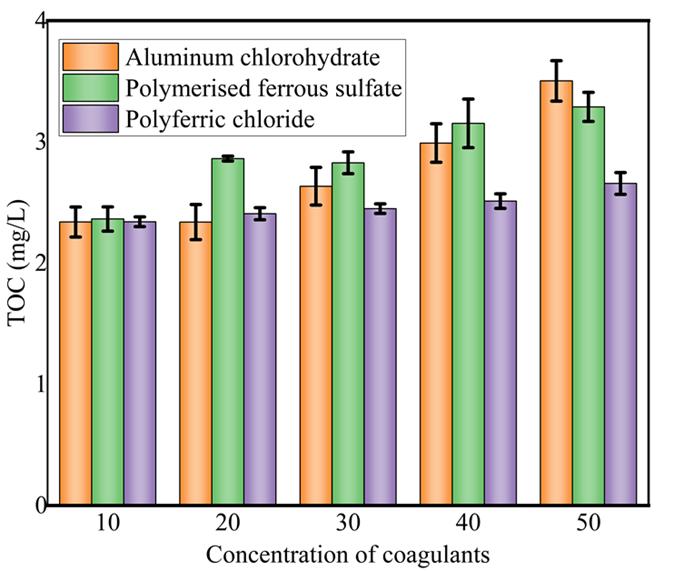
Figure7showsdifferentorganiccoagulantconcentrationsaftercoagulation
International Research Journal of Engineering and Technology (IRJET) e-ISSN:2395-0056
Volume: 11 Issue: 06 | Jun 2024 www.irjet.net p-ISSN:2395-0072
Figure 7 the bar chart above depicting the performance of the three organic coagulants aluminum chlorohydrate, polyferric chloride, and polymerized ferrous sulfate coagulant, reveals valuable insights into their effectiveness. Aluminum chlorohydratehasthehighestbarindicatingthatitexhibitedthemostsignificantcoagulationefficiencyinthetestedcondition oftheexperimentandpolymerizedferroussulfateshowscommendablelevelsofcoagulationperformance.
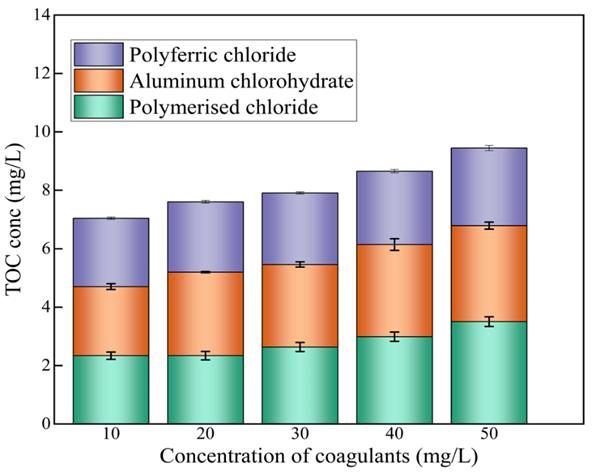
Figure 8 shows the three different levels of coagulant concentration; these indicate the trends at which the TOC is been increasingfromtheconcentrationof10mg/Lto50mg/LatdifferentTOCs.
3.5 The analytical signal (peak area), retention time, response, and evaluation of four THMs compounds using GC–ECD to detect the concentration of THMs in drinking water
The concentration range under investigation and the corresponding correlation coefficients (r) for calibration curves with every THM species are displayed in Table 2 -4. And figure 8-9. The findings indicate that the concentration ranges typically evaluated in drinking water have generally satisfactory linearity and conformity. The measuring instrument meets with the metrological properties, i.e. concertation, peak areas, retention time, pressure, and temperature, and to study the response, andpeakareasandmakeforecaststohelpdetectTHMs,thisgraphcanbeusedtoquantifytheamountsof THMsinthewater samples by comparing the samples response area with the concentration, the chart can be used to determine the concentration of trihalomethanes in the water sample, evaluates the effectiveness of the disinfection process, and assess potentialhealthrisksassociatedwiththepresenceofthesecompoundsindrinkingwater,thefourcompoundsareasfollows
1. Trichloromethane(CHCl3)
2. Bromodichloromethane(CHBrCl)
3. Dibromochloromethane(CHClBr2)and
4. Tribromomethane(CHBr3)
International Research Journal of Engineering and Technology (IRJET) e-ISSN:2395-0056
Volume: 11 Issue: 06 | Jun 2024 www.irjet.net p-ISSN:2395-0072
Table4.4showstheresultsofretention,peakarea,concentration,andresponsesfromtheGCECDtest.
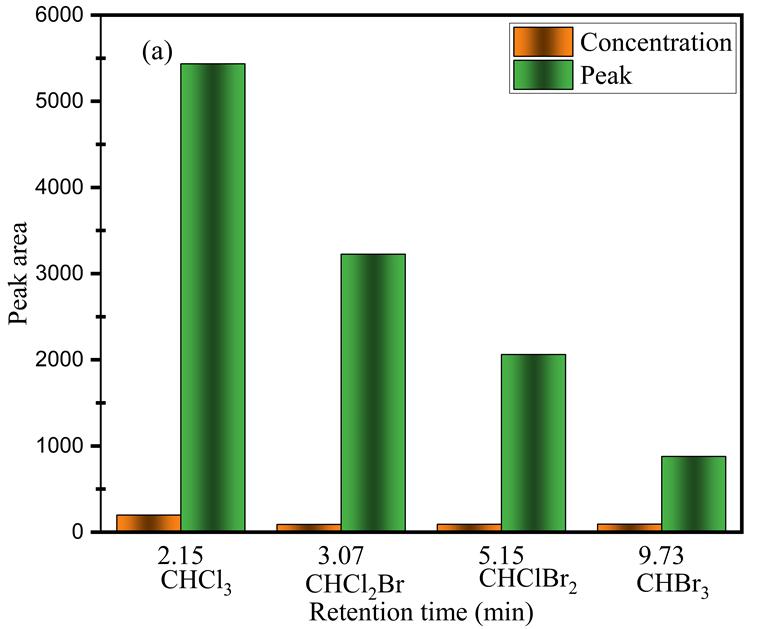
Figure 9 displays the results from Table 2 Showing the peak area and concentration of four THMs species in drinking water treatment.Fromtheresultdisplay,CHCl3 attheretentionof2.15minstheconcentrationof322(ug/L)washighandthepeak wasveryhighduetoafewtimesreactionasthetimeincreasestheconcentrationofCHCl3 decreasedtogetherwiththepeaks alsodecreasedindicatingverygoodlinearityandbetterremovaloftheCHCl3,CHCl2,CHC2Br,andCHBr3 speciesinthewater.
International Research Journal of Engineering and Technology (IRJET) e-ISSN:2395-0056
Volume: 11 Issue: 06 | Jun 2024 www.irjet.net p-ISSN:2395-0072
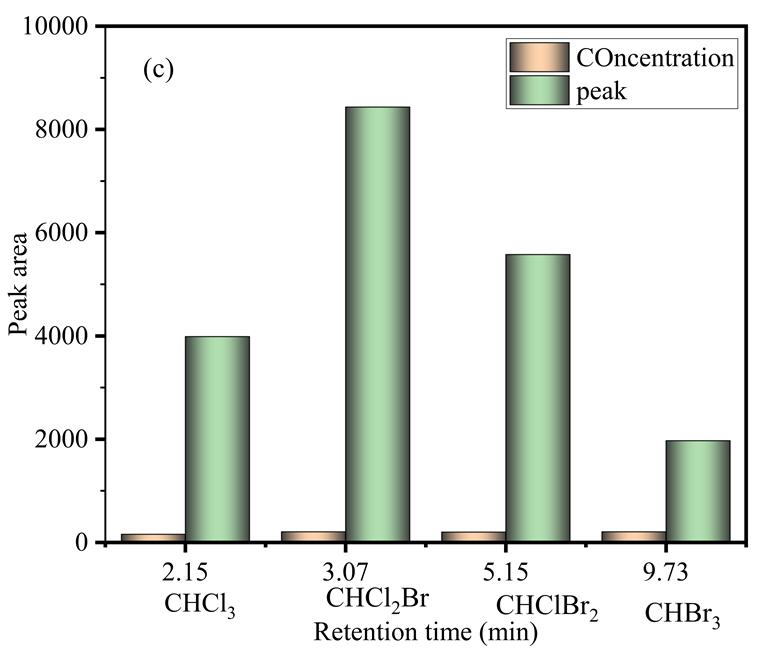
10.Thepeakareaandretentiontimeof
speciesinwater
6 WATER QUALITY ANALYSIS
Table3.DifferentwaterparametersandcoagulantswithSuzhouwatertreatmentsamplesanalysis
7. Conclusion
THMstandardsweremade,andthepeakheightorpeakareaforeachTHMscomponentfromthechromatogramwasplotted as a function of concentration to provide calibration plots for the SCMS-GC-ECD method. For the detection of DBPs, the standardsamplescontainingTHMs. Thestandardcurveof thechromatographshowsthattheinstrument isgoodforthetest and the solute with accurate purity, pure methanol was prepared by weight volumetric methods in a clean laboratory at a room temperature of 20 C. The standard values of the concentration of the reference substance are prepared value and the
International Research Journal of Engineering and Technology (IRJET) e-ISSN:2395-0056
Volume: 11 Issue: 06 | Jun 2024 www.irjet.net p-ISSN:2395-0072
quantitative value is checked by the gas phase spectrum for the standard samples, and the measuring instrument meets the domainofthemetrologicalproperties
Theconcentrationsare10ppm,20ppm,40ppm,80ppmand120ppmretentiontimeforfourTHMsstandardsamplesareas follows2.149,3,074,5.148and9.723.theresultshowsthatthehomogeneityconformstotheruleofthetestandthestabilityis good. This retention time indicates the elution order and the relative retention time of the compounds during the gas chromatographanalysis,theelutionorderisdeterminedbytheinteractionbetweenthecompoundsandthestationaryphase insidetheGCColum.Ingeneral,alowerretentiontimeindicatesthecompoundelutesearlierandhasahighervolatilityonthe other hand higher retention time indicates that the compound elutes later and has a lower volatility. Therefore, the results suggest that trichloromethane (chloroform) is the most volatile compound and elutes earliest followed by Fluorobromomethane,dibromochloromethane,andfinallybromoformwhichistheleastvolatileandelutesthelatest
Fluorescentdissolvedorganicmatter(FDOM)hasbeenextensivelycharacterizedandtrackedusingfluorescencespectroscopy (EEM),usingallofthewavelength-dependentfluorescenceintensitydata fromEEMsquantitativelyanalyses, FDOMisoneof the benefits of the FRI approach. It effectively captures the heterogeneity found in FDOM. Moreover, in comparison to other fractionationmethodsthattakedaystocomplete
Theproblemofoxidationby-productsindrinkingwatersludgeisaprimaryconcerntoeveryone,becauseoftheemergenceof oxidation by-products pollutants in DWTP TMMs and HAAs, at present, it is obvious that the chemical composition of the coagulantandorganicmatterfromthesourcewatermustbeeffectivelytreatedbeforedischargeinthecommunity.Treatment facilitiesmustberegularlycheckedatleasttwicepermonth,toknowtheoxidationby-productslevelintheDWTP.
Agriculture,as well asdomesticactivities of the human population.As mentioned in the introduction, wastewater treatment plants have been identified as one of the main sources of organic pollution. Thus, much more effort should be made for the improvementofsludgewater,andcleaningprocesses.TheauthorsinvolvedinthepreparationofthisSpecialIssuedescribed theresultsofexaminations,atalaboratoryresults,oftheefficiencyofchemicalaswellasphysicalprocessesforthe removal ordegradationofoxidationby-productsandmicro-pollutants.However,itshouldbenotedthattheextensionoftheproposed processesfortechnologicalscalerequiresintenseadditionalstudies.
Environmental studies, especially those concerning the determination of THMs, HAAs, and HBQF by-products, require effectivetreatmentandconcentration.
ThereagentsusedforthispurposemeettherequirementsofWHO,EPA,andChinastandards,aswellas
The issue seems to be proper for environmental studiesasthey are effective and environmentallyfriendly in environmental safety.
Author Contributions:Theauthorsmadefairlyequal contributionstothispaper.draftedexperimental procedureandparts draftedtheAbstractandotherpartsofSectionsandBothauthorsmaderevisionsandeditsofthemanuscript.
Acknowledgments: Theauthors, whoservedasthe guest editors ofthis Special Issue,highlyappreciate the journal editors, allauthorssubmittingpapers,andtheanonymousreviewersfortheirvaluablecomments.
Conflicts of Interest:Theauthorsdeclarenoconflictofinterest.studyinthecollection,analysis,orinterpretationofdata;in thewritingofthemanuscript,orinthedecisiontopublishtheresults.
References
1. Ahmad,A.,vander Wens,P.,Baken, K.,de Waal,L.,Bhattacharya,P.,&Stuyfzand,P.(2020).Arsenicreductionto<1 µg/LinDutchdrinkingwater.EnvironmentInternational,134,105253
2. Alexandrou, L., Meehan, B. J., & Jones, O. A. (2018). Regulated and emerging disinfection by-products in recycled waters.ScienceoftheTotalEnvironment,637, 1607-1616.
3. Antonopoulou, M., Evgenidou, E., Lambropoulou, D., & Konstantinou, I. (2014). A review of advanced oxidation processesfortheremovaloftasteandodorcompoundsfromaqueousmedia.WaterResearch,53,215-234.
International Research Journal of Engineering and Technology (IRJET) e-ISSN:2395-0056
Volume: 11 Issue: 06 | Jun 2024 www.irjet.net p-ISSN:2395-0072
4. Anuththara,E.M.S.,&Samarakoon,M.B.(2022).StudyofIssuesinSludgeDisposalandManagementinWastewater TreatmentPlants.
5. Beneficial reuse of water treatment sludge in the context of circular economy. Environmental Technology & Innovation,28,102651
6. Bourgin,M.,Beck,B.,Boehler,M.,Borowska,E.,Fleiner,J.,Salhi,E.,...&McArdell,C.S.(2018).Evaluationofafull-scale wastewatertreatmentplantupgradedwithozonationandbiologicalpost-treatments:Abatementofmicropollutants, formationoftransformationproducts,andoxidationby-products.WaterResearch,129,486-498.
7. Blatchley III, E. R., Margetas, D., & Duggirala, R. (2003). Copper catalysis in chloroform formation during water chlorination.WaterResearch,37(18),4385-4394.
8. Bretzler, A., Berg, M., Winkel, L., Amini, M., Rodriguez-Lado, L., Sovann, C., ... & Johnson, A. (2017). Chapter A2. Best PracticeGuide,153.
9. Bond, T., Gosling, E. H., Parsons, S. A., & Jefferson, B. (2011). Treatment of disinfection by‐product precursors. Environmentaltechnology,32(1),1-25.
10. Bedner,M., &MacCrehan, W.A.(2006). Transformationofacetaminophen bychlorinationproducesthe toxicants1, 4-benzoquinone,andN-acetyl-p-benzoquinoneimine.Environmentalscience&technology,40(2),516-522
11. Bro,R.(1997).PARAFAC.Tutorialandapplications.Chemometricsandintelligentlaboratorysystems,38(2),149-171.
12. Bhatnagar, Amit, and Mika Sillanpää. "Removal of natural organic matter (NOM) and its constituents from water by adsorption–areview."Chemosphere166(2017):497-510.
13. Cedergren,M.I.,Selbing,A.J.,Löfman,O.,&Källen,B.A.(2002).Chlorinationbyproductsandnitrateindrinkingwater andriskforcongenitalcardiacdefects.EnvironmentalResearch,89(2),124-130.
14. Coleman,H.M.,Marquis,C. P.,Scott,J.A.,Chin,S.S., &Amal,R.(2005).Bactericidal effectsoftitaniumdioxide-based photocatalysts.ChemicalEngineeringJournal,113(1),55-63.
15. Coleman,H.M.,Marquis,C. P.,Scott,J.A.,Chin,S.S., &Amal,R.(2005).Bactericidal effectsoftitaniumdioxide-based photocatalysts.ChemicalEngineeringJournal,113(1),55-63.
16. Chhipi-Shrestha, G., Rodriguez, M., & Sadiq, R. (2018). Unregulated disinfection By-products in drinking water in Quebec:Ameta-analysis.JournalofEnvironmentalManagement,223,984-1000.
17. Cevallos-MendozaJ,AmorimCG,Rodríguez-DíazJM,MontenegroMDCBSM.RemovalofContaminantsfromWaterby Membrane Filtration: A Review. Membranes (Basel). 2022 May 30;12(6):570. doi: 10.3390/membranes12060570. PMID:35736277;PMCID:PMC9229562
18. Chen,Y.,Li,H.,Pang,W.,Zhou,B.,Li,T.,Zhang,J.,&Dong,B.(2021).PilotStudyontheCombinationofDifferentPreTreatments withNanofiltrationforEfficientlyRestrainingMembraneFoulingWhile Providing High-QualityDrinking Water.Membranes,11(6),380.
19. Chu, W. H., Gao, N. Y., Deng, Y., & Krasner, S. W. (2010). Precursors of dichloroacetamide, an emerging nitrogenous DBPformedduringchlorinationorchlorination.EnvironmentalScience&Technology,44(10),3908-3912
20. Chen,Y.,Li,H.,Pang,W.,Zhou,B.,Li,T.,Zhang,J.,& Dong,B.(2021).PilotStudyontheCombinationofDifferentPreTreatments withNanofiltrationforEfficientlyRestrainingMembraneFoulingWhile Providing High-QualityDrinking Water.Membranes,11(6),380.
21. Cevallos-Mendoza,Jaime,etal."Removalofcontaminantsfromwaterbymembranefiltration:areview."Membranes 12.6(2022):570
22. Dalrymple, O. K., Stefanakos,E., Trotz, M. A., & Goswami, D. Y. (2010). A review ofthe mechanisms and modeling of photocatalyticdisinfection.AppliedCatalysisB:Environmental,98(1-2),27-38.
23. Griffini,O.,&Iozzelli,P.(1996).TheinfluenceofH2O2inozonationtreatment:Experienceofthewatersupplyservice ofFlorence,Italy
24. Guilherme,S.,&Rodriguez,M.J.(2014).Occurrenceofregulatedandnon-regulateddisinfectionby-productsinsmall drinkingwatersystems.Chemosphere,117,425-432
25. Giannakis, S., Lin, K. Y. A., & Ghanbari, F. (2021). A review of the recent advances in the treatment of industrial wastewater by Sulfate Radical-based Advanced Oxidation Processes (SR-AOPs). Chemical Engineering Journal, 406, 127083
26. Hua, G., & Reckhow, D. A. (2007). Comparison of disinfection byproduct formation from chlorine and alternative disinfectants.WaterResearch,41(8),1667-1678.
27. Kaczmarek,B.(2020).Improvingsodiumalginatefilmpropertiesbyphenolicacidaddition.Materials,13(13),2895.
28. Kesari,K.K.,Soni,R.,Jamal,Q.M.S.,Tripathi,P.,Lal,J.A.,Jha,N.K.,...&Ruokolainen,J.(2021).Wastewatertreatment andreuse:areviewofitsapplicationsandhealthimplications.Water,Air,&SoilPollution,232,1-28
International Research Journal of Engineering and Technology (IRJET) e-ISSN:2395-0056
Volume: 11 Issue: 06 | Jun 2024 www.irjet.net p-ISSN:2395-0072
29. Krasner, S. W., Weinberg, H. S., Richardson, S. D., Pastor, S. J., Chinn, R., Sclimenti, M. J., ... & Thruston, A. D. (2006). Occurrenceofanewgenerationofdisinfectionbyproducts.Environmentalscience&technology,40(23),7175-7185
30. Kumari, M., & Gupta, S. K. (2022). Occurrence and exposure to Trihalomethanes in drinking water: a systematic reviewandmeta-analysis.ExposureandHealth,14(4),915-939.
31. Khalifa,M.,&Bidaisee,S.(2018).Theimportanceofcleanwater.SchJApplSciRes,1(7),17-20.
32. Kumari,M.,&Gupta,S.K.(2022).Occurrenceandexposuretotrihalomethanesindrinkingwater:asystematicreview andmeta-analysis.ExposureandHealth,14(4),915-939.
33. Kroehler, C. J. (2014). Potable water quality standards and regulations: a historical and world overview. Potable Water:EmergingGlobalProblemsandSolutions,1-36.
34. Liu, Z., Liang, Z., Li, K., Huang, T., Ma, J., & Wen, G. (2021). Degradation of system: A critical review. Water, 13(21), 3126
35. Lee,Y.,Sedlak,D.L.,&vonGunten,U.(2023).OxidativeWaterTreatment:TheTrackAhead.EnvironmentalScience& Technology,57(47),18391-18392.
36. Milot, J., Rodriguez, M. J., & Sérodes, J. B. (2000). Modeling the susceptibility of drinking water utilities to form high concentrationsoftrihalomethanes.Journalofenvironmentalmanagement,60(2),155-171
37. Monteiro,S.N.,Alexandre,J.,Margem,J.I.,Sánchez,R.,&Vieira,C.M.F.(2008).Incorporationofsludgewastefromthe watertreatmentplantintoredceramic.ConstructionandBuildingMaterials,22(6),1281-1287.
38. Matilainen,A.,Gjessing,E.T.,Lahtinen,T.,Hed,L.,Bhatnagar,A.,& Sillanpää,M.(2011).Anoverviewofthemethods used in the characterization of natural organic matter (NOM) in drinking water treatment. Chemosphere, 83(11), 1431-1442
39. Marais, S. S., Ncube, E. J., Msagati, T. A. M., Mamba, B. B., & Nkambule, T. T. (2018). Comparison of natural organic matter removal by ultrafiltration, granular activated carbon filtration, and full-scale conventional water treatment. JournalofEnvironmentalChemicalEngineering,6(5),6282-6289.
40. Mancini, G., Roccaro, P., & Vagliasindi, F. G. (2005). Water intended for human consumption Part II: Treatment alternatives,monitoringissues,andresultingcosts.Desalination,176(1-3),143-153.
41. 49.Murphy,K.R.,Stedmon,C.A.,Graeber,D.,&Bro,R.(2013).Fluorescencespectroscopyandmulti-waytechniques. PARAFAC.Analyticalmethods,5(23),6557-6566
42. Nguyen,M.D.,Thomas,M.,Surapaneni,A.,Moon,E.M.,&Milne,N.A.(2022).
43. Price, J.I.,&Heberling,M.T.(2018).The effectsofsourcewaterqualityondrinking watertreatment costs:a review andsynthesisofempiricalliterature.EcologicalEconomics,151,195-209.
44. Pablos, C., Marugán, J., van Grieken, R., & Serrano, E. (2013). Emerging Micropollutant Oxidation During Disinfection ProcessesUsingUV-C,UV-C/H2O2,UV-A/TiO2andUV-A/TiO2/H2O2.WaterResearch,47(3),1237-1245.
45. Priyadarshini, M., Das, I., Ghangrekar, M. M., & Blaney, L. (2022). Advanced oxidation processes: Performance, advantages,andscale-upofemergingtechnologies.JournalofEnvironmentalManagement,316,115295.
46. Padhi,R.K.,Subramanian,S.,&Satpathy,K.K.(2019).Formation,distribution,and speciationofDBPs(THMs,HAAs, ClO2−,andClO3−)during treatmentofdifferentsource waterwithchlorineandchlorinedioxide.Chemosphere,218, 540-550.
47. Pestana,CarlosJ.,PetraJ.Reeve,EmmaSawade,CamilleF.Voldoire,KellyNewton,RadistiPraptiwi,LeaCollingnon,et al. "Fate of cyanobacteria in drinking water treatment plant lagoon supernatant and sludge." Science of the Total Environment565(2016):1192-1200
48. Qrenawi, L. I., & Rabah, F. K. (2021). Sludge management in water treatment plants: literature review. International JournalofEnvironmentandWasteManagement,27(1),93-125.
49. Rook,J.J.(1972).Formationofhaloformduringchlorinationofnaturalwater.WaterTreatmentandExamination,21, 259
50. Roccaro, P., Chang, H. S., Vagliasindi, F. G., & Korshin, G. V. (2008). Differential absorbance study of effects of temperature on chlorine consumption and formation of disinfection by-products in chlorinated water. Water Research,42(8-9),1879-1888
51. Rekhate,ChhayaV.,andJ.K.Srivastava."Recentadvancesinozone-basedadvancedoxidationprocessesfortreatment ofwastewater-Areview."ChemicalEngineeringJournalAdvances3(2020):100031
52. Richardson, S. D., Plewa, M. J., Wagner, E. D., Schoeny, R., & DeMarini, D. M. (2007). Occurrence, genotoxicity, and carcinogenicity of regulated and emerging disinfection by-products in drinking water: a review and roadmap for research.MutationResearch/ReviewsinMutationResearch,636(1-3),178-242.
International Research Journal of Engineering and Technology (IRJET) e-ISSN:2395-0056
Volume: 11 Issue: 06 | Jun 2024 www.irjet.net p-ISSN:2395-0072
53. Rak, J. R., & Kucharski, B. O. G. U. M. I. Ł. (2009). Sludge management in water treatment plants. Environment ProtectionEngineering,35(2),15.
54. Sillanpää, M., Ncibi, M. C., Matilainen, A., & Vepsäläinen, M. (2018). Removal of natural organic matter in drinking watertreatmentbycoagulation:Acomprehensivereview.Chemosphere,190,54-71
55. Shanmugam, Sasirekha. (2023). Re: Methods for removal of Total Organic Carbon (TOC) in water? Retrieved from: https://www.researchgate.net/post/Methods-for-removal-of-Total-Organic-Carbon-TOC-inwater/643db46995ad598c3b064ed8/citation/download
56. Schollée, J. E., Bourgin, M., von Gunten, U., McArdell, C. S., & Hollender, J. (2018). Non-target screening to trace ozonation transformation products in a wastewater treatment train including different post-treatments. Water research,142,267-278.
57. Sinha, R., Gupta, A. K., & Ghosal, P. S. (2021). A review on Trihalomethanes and Haloacetic acids in drinking water: Global status, health impact, insights of control and removal technologies. Journal of Environmental Chemical Engineering,9(6),106511
58. TariqueAhmad,T.A.,KafeelAhmad,K.A.,AbdulAhad,A.A.,&MehtabAlam,M.A.(2016).Characterizationofwater treatmentsludgeanditsreuseascoagulant
59. Tian, C., Liu, R., Liu, H., & Qu, J. (2013). Disinfection by-products formation and precursors transformation during chlorination and chloramination of highly-polluted source water: significance of ammonia. Water Research, 47(15), 5901-5910
60. Tentscher, P. R., Lee, M., & von Gunten, U. (2019). Micropollutant oxidation studied by quantum chemical computations: Methodology and applications to thermodynamics, kinetics, and reaction mechanisms. Accounts of chemicalresearch,52(3),605-614.
61. Titchou, F. E., Zazou, H., Afanga, H., El Gaayda, J., Akbour, R. A., Nidheesh, P. V., & Hamdani, M. (2021). Removal of organicpollutantsfromwastewaterbyadvancedoxidationprocessesanditscombinationwithmembraneprocesses. ChemicalEngineeringandProcessing-ProcessIntensification,169,108631
62. Thurman,E.M.(2012).Organicgeochemistryofnaturalwaters(Vol.2).SpringerScience&BusinessMedia.
63. Tsaridou, C., & Karabelas, A. J. (2021). Drinking water standards and their implementation A critical assessment. Water,13(20),2918.
64. VonGunten,U.(2018).Oxidationprocessesinwatertreatment:areweontrackEnvironmentalscience&technology, 52(9),5062-5075
65. Wei,Zheng,YanHe,Xing Wang,Zheyang Chen,Xing Wei,YuanyuanLin,ChengjinCao,MinshengHuang,andBinghui Zheng."AcomprehensiveassessmentofupgradingtechnologiesofwastewatertreatmentplantsinTaihuLakeBasin." EnvironmentalResearch212(2022):113398.
66. Wang, W., Ma, Y., Zhou, Y., Huang, H., Dou, W., & Jiang, B. (2021). Investigation into the content and formation of trihalomethanes and molecular change of dissolved organic matter from a typical water plant in south China. Environmental
67. Wang,D.,Xu,Z.,Zhao,Y.,Yan,X.,&Shi,J.(2011).Changeofgenotoxicityforrawandfinishedwater:roleofpurification processes.Chemosphere,83(1),14-20.
68. Wang,Z.,Ding,J.,Xie,P.,Chen,Y.,Wan,Y.,&Wang,S.(2018).Formationofhalogenatedby-productsduringchemical cleaningofhumicacid-fouledUFmembranebysodiumhypochloritesolution.ChemicalEngineeringJournal,332,7684
69. Wee, S. Y., & Aris, A. Z. (2023). Revisiting the “forever chemicals”, PFOA, and PFOS exposure in drinking water. NPJ CleanWater,6(1),57.
70. Xie,Z.,Guan,J.,Lei,X.,Fan,M.,Qiu,J.,&Yang,X.(2024).Advancesintoxicityassessmentofdrinkingwaterdisinfection byproducts.TrACTrendsinAnalyticalChemistry,117545.
71. Ye,B.,Wang,W.,Yang,L.,Wei,J.,&Xueli,E.(2009).Factorsinfluencingdisinfectionby-productformationindrinking waterofsixcitiesinChina.JournalofHazardousMaterials,171(1-3),147-152.
72. Ye BiXiong, Y. B., Wang Wuyi, W. W., Yang LinSheng, Y. L., Wei JianRong, W. J., & E XueLi, E. X. (2009). Factors influencingdisinfectionby-productformationindrinkingwaterofsixcitiesinChina
73. Zhao, Y., Anichina, J., Lu, X., Bull, R. J., Krasner, S. W., Hrudey, S. E., & Li, X. F. (2012). Occurrence and formation of chloro-andbromo-benzoquinonesduringdrinkingwaterdisinfection.WaterResearch,46(14),4351-4360.
74. Zainudin,F.M.,Hasan,H.A.,&Abdullah,S.R.S.(2018).Anoverviewofthetechnologyusedtoremovetrihalomethane (THM), trihalomethane precursors, and trihalomethane formation potential (THMFP) from water and wastewater. Journalofindustrialandengineeringchemistry,57,1-14.
2024, IRJET | Impact Factor value: 8.226 | ISO 9001:2008
International Research Journal of Engineering and Technology (IRJET) e-ISSN:2395-0056
Volume: 11 Issue: 06 | Jun 2024 www.irjet.net p-ISSN:2395-0072 © 2024, IRJET | Impact Factor value: 8.226 | ISO 9001:2008
75. Zazouli, M. A., & Kalankesh, L. R. (2017). Removal of precursors and disinfection by-products (DBPs) by membrane filtrationfromwater;areview.JournalofEnvironmentalHealthScienceandEngineering,15,1-10.
76. Zhang,H.,Qu,J.,Liu,H.,&Zhao,X.(2009).Characterizationofisolatedfractionsof
77. Zhang, X., Chen, Z., Shen, J., Zhao, S., Kang, J., Chu, W., ... & Wang, B. (2020). Formation and interdependence of disinfection byproducts during chlorination of natural organic matter in a conventional drinking water treatment plant.Chemosphere,242,125227
78. Zainudin,F.M.,Hasan,H.A.,&Abdullah,S.R.S.(2018).Anoverviewofthetechnologyusedtoremovetrihalomethane (THM), trihalomethane precursors, and trihalomethane formation potential (THMFP) from water and wastewater. Journalofindustrialandengineeringchemistry,57,1-14