
International Research Journal of Engineering and Technology (IRJET) e-ISSN:2395-0056
Volume: 11 Issue: 06 | Jun 2024 www.irjet.net p-ISSN:2395-0072
International Research Journal of Engineering and Technology (IRJET) e-ISSN:2395-0056
Volume: 11 Issue: 06 | Jun 2024 www.irjet.net p-ISSN:2395-0072
Swatantra Prakash Verma1, Dipti Ranjan Tiwari2
1Master of Technology, Computer Science and Engineering, Lucknow Institute of Technology, Lucknow, India
2Assistant Professor, Department of Computer Science and Engineering, Lucknow Institute of Technology, Lucknow, India
Abstract - In the rapidly evolving realm of data management, the fusion of Service-Oriented Architecture (SOA)principleswithNoSQLdatabaseinfrastructuresoffersa compelling pathway for organizations seeking efficient and adaptable solutions to their data integration obstacles. By embracing key SOA tenets like modularity, flexibility, and reusability,intandemwiththeversatilityofNoSQLdatabases inhandlingvarious data types andworkloads, organizations can unlock fresh opportunities for automating data transfer processes. This harmonious relationship facilitates seamless interaction between SOA-based services and NoSQL data repositories, fostering agile data integration and enabling organizations to easily adjust to changing business requirements.Nevertheless,fullyrealizingthepotentialofthis integration necessitates thoughtful consideration of architectural frameworks, messaging protocols, and integration methodologies, as well as addressing challenges pertaining to data coherence, transaction management, scalability, and performance enhancement. Through a comprehensive examination of these subjects, this review articleaimstoprovideorganizationswiththeknowledgeand optimal strategies required to effectively leverage SOA principlesinconjunctionwithNoSQLdatabases,empowering them to fully exploit their data assets in an increasingly digitizedenvironment.
Key Words: Service-Oriented Architecture (SOA), NoSQL databases, data integration, automated data transfer, interoperability, modularity, flexibility, reusability, architecturalpatterns.
ThegenesisofNon-SQL,commonlyknownasNoSQL (Not OnlySQL),isintricatelylinkedtotheemergenceofinternet behemothslikeGoogle,Amazon,andFacebookintheearly 2000s.Duringthisperiod,theexponentialproliferationof webapplicationsposedchallengesin efficientlymanaging vast amounts of data. Conventional relational databases encountereddifficultiesinhorizontallyscalingandhandling the varied, unstructured data types generated by these platforms.Inresponse,GoogleunveiledBigtablein2006,a distributedstoragesystemtailoredforextensivestructured data. This groundbreaking development, coupled with
Amazon's introduction of Dynamo in 2007, a highly accessibleanddistributedkey-valuestore,ignitedasurgeof interest in alternative database technologies. NoSQL databasessurfaced,providingfunctionalitiescustomizedfor specific use cases, such as key-value stores, document databases,column-familystores,andgraphdatabases.These databases emphasized scalability, performance, and adaptability over the stringent consistency assurances of relational databases, rendering them well-suited for distributedenvironmentsandreal-timeanalytics.Although NoSQL databases garnered favor among enterprises grappling with large-scale web applications, they do not offerauniversalremedy.Somehaveprogressedtointegrate featuresfromtraditionalrelationaldatabases,whilehybrid strategies have emerged to cater to diverse application requirements.
NoSQL databases have become a popular choice over traditional relational databases, particularly in situations wherethereisaneedtoefficientlymanagelargeamountsof unstructured or semi-structured data. Unlike relational databasesthatrelyonthestructuredquerylanguage(SQL) andhaveapredeterminedschema,NoSQLdatabasesprovide more versatility by allowing data to be stored in different formats such as key-value pairs, document-oriented, column-oriented, or graph-based structures. This adaptabilitymakesthemidealforhandlingavarietyofdata types, including social media updates, IoT sensor information,andreal-timeanalytics.NoSQL databasesare alsodesignedforhorizontalscaling,enablingthemtoeasily distribute data across multiple servers to accommodate increasingworkloadswithoutcompromisingperformance. Nonetheless, thisflexibility comes with trade-offs,such as eventual consistency and limited support for intricate transactions, underlining the importance of selecting the appropriateNoSQLdatabaseforspecificusecases.
International Research Journal of Engineering and Technology (IRJET) e-ISSN:2395-0056
Volume: 11 Issue: 06 | Jun 2024 www.irjet.net p-ISSN:2395-0072
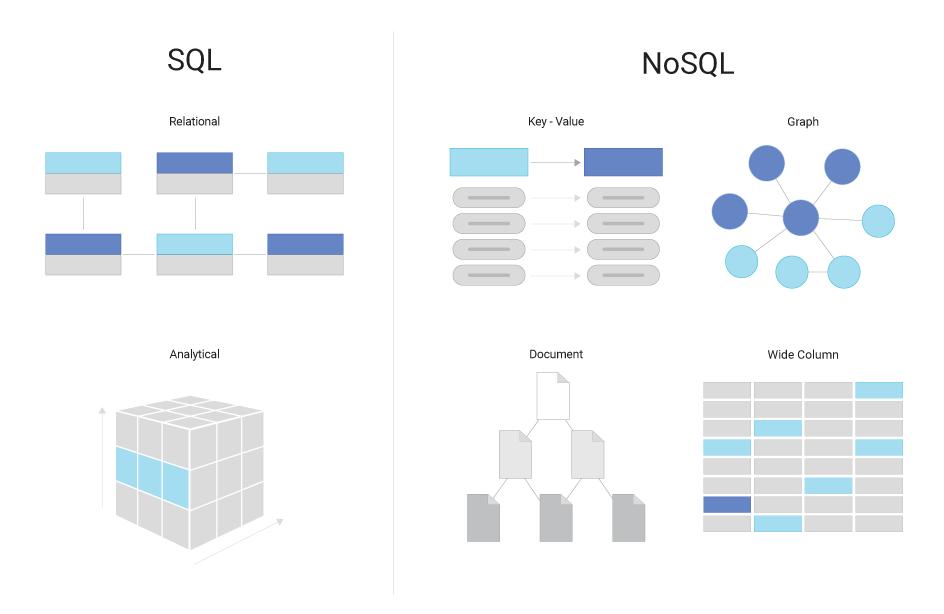
SQLdatabases,alsoreferredtoasrelationaldatabases,are sophisticateddatastoragesystemsrootedintherelational model.Theycategorizedataintotablescomprisedofrows and columns, where each row denotes a record and each columnsignifiesaspecificattributeorfield.SQL(Structured Query Language) is utilized to interact with and oversee these databases, offering a standardized approach to executingoperationssuchasquerying,inserting,updating, anddeletingdata.ApivotalaspectofSQLdatabasesistheir backing for ACID (Atomicity, Consistency, Isolation, Durability)transactions,whichguaranteesdataintegrityand dependabilityevenwhenfacedwithconcurrentoperations and system breakdowns. This characteristic renders SQL databases ideal for applications necessitating strong consistency and intricate transactional needs, such as financial systems, e-commerce platforms, and enterprise resource planning (ERP) systems. Furthermore, SQL databasescommonlyimposeaschema,establishingthedata structure beforehand, which can furnish stability and uniformitybutmightalsorestrictflexibilityincomparisonto NoSQLalternatives.Inessence,SQLdatabasespersistasa fundamentaltechnologyfornumerouscriticalapplications, offeringresilience,scalability,andawell-developedarrayof toolsandassistance.
The core tenet of NoSQL databases centers around their adaptability, scalability, and efficiency in managing vast amounts of varied and frequently unorganized data. In contrast to traditional SQL databases, which adhere to a strict schema and relational structure, NoSQL databases embrace a schema-less approach, allowing for more fluid anddynamicdatastorage.Theyarecraftedtohandleawide arrayofdataformats,suchaskey-valuepairs,documents, columns, and graphs, making them highly suitable for contemporaryapplicationsthathandlesemi-structuredor unstructureddata,suchassocialmedia,IoT,andreal-time analytics.NoSQLdatabasesprioritizehorizontalscalability,
enablingthemtodistributedataacrossnumerousnodesor serverseffortlessly,thusaccommodatinggrowingworkloads withoutcompromisingonperformance.Additionally,many NoSQLdatabasesoffereventualconsistencymodels,where dataconsistencyisrelaxedinfavorofhighavailabilityand partitiontolerance,ensuringfaulttoleranceandresiliencein distributedenvironments.Thisadaptabilityandscalability, however, come with trade-offs, such as less stringent consistency models and limited support for intricate transactions,necessitatingthoughtfulconsiderationofthe specific use case when selecting a NoSQL solution. In essence, the core principle of NoSQL databases revolves aroundprovidingaflexible,scalable,andeffectivestorage solution for contemporary applications that grapple with diverseandever-changingdatarequirements.
SeamlessintegrationwithNoSQLdatabasesnecessitatesthe creation of robust frameworks, libraries, and APIs that facilitatesmoothcommunicationbetweendifferentsoftware components and the underlying NoSQL data stores. One method to achieve this integration is through the developmentofdriversorclientlibrariesthatabstractthe complexitiesofinteractingwithvariousNoSQL databases, offering a unified interface for developers. These drivers commonly provide functionalities like CRUD operations (Create,Read,Update,Delete),indexing,querying,anddata serialization/deserialization.Anotherkeyaspectofseamless integration is the provision of support for popular programminglanguagesandframeworks.NoSQLdatabases frequently offer official or community-supported libraries for languages such as Python, Java, Node.js, and others, allowingdeveloperstoutilizefamiliartoolsandworkflows during application development. Moreover, many NoSQL databasesenableintegrationwithotherdataprocessingand analytics frameworks, including Apache Spark, Apache Hadoop, and Elasticsearch. This capability enables organizationstoharnesstheadvantagesofNoSQLdatabases fordatastorageandretrievalwhilesmoothlyincorporating withothercomponentsoftheirdatainfrastructurefortasks such as batch processing, real-time analytics, and full-text search.Additionally,supportforindustry-standardprotocols andformatssuchasRESTfulAPIs,JSON,andBSONenhances interoperability and simplifies integration with existing systemsandapplications.
Service-Oriented Architecture (SOA) is a software design methodologythatorganizesapplicationsasanassortmentof looselyinterconnected,reusable,andinteroperableservices. Theseservicesencapsulatedistinctbusinessfunctionalities andarecraftedtobeautonomouslydeployable,scalable,and manageable.WithintherealmofSOA,servicesinteractwith oneanotherthroughstandardizedprotocols,suchasHTTP ormessagequeues,utilizingwell-definedinterfacestypically
International Research Journal of Engineering and Technology (IRJET) e-ISSN:2395-0056
Volume: 11 Issue: 06 | Jun 2024 www.irjet.net p-ISSN:2395-0072
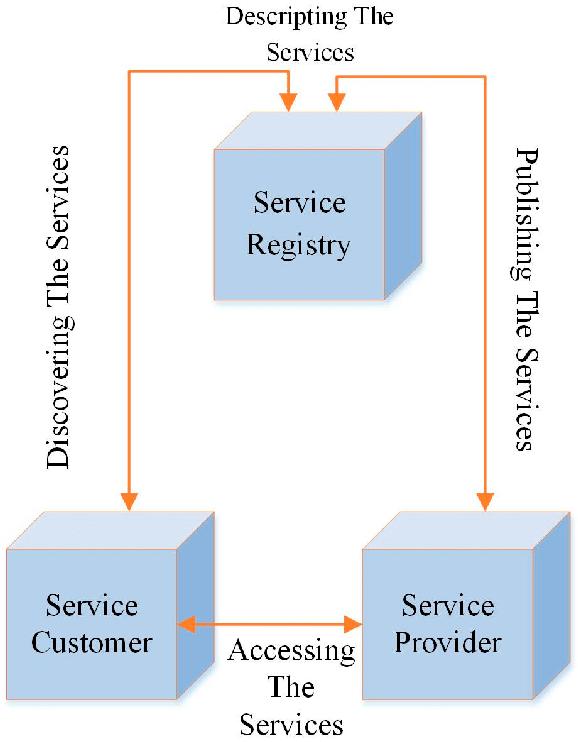
based on standards like SOAP (Simple Object Access Protocol) or REST (Representational State Transfer). The fundamentaltenetofSOAistodisassembleintricatesystems into smaller, modular components (services) that can be developed, deployed, and maintained autonomously. This approach fosters flexibility, agility, and reusability, as services can be composed and recomposed to address evolving business needs. Furthermore, SOA promotes interoperabilitybyenablingservicestobeimplementedin diversetechnologiesandlanguages,providedtheyadhereto thespecifiedinterfaces.SOAencouragestheestablishment of service registries and repositories, where metadata regarding available services, their capabilities, and usage guidelines are stored. This framework empowers service consumers to dynamically discover and invoke services, thereby encouraging service reuse and diminishing development endeavors. SOA harmonizes effectively with distributedcomputingparadigms,allowingorganizationsto constructscalableandrobustsystemsbydeployingservices acrossmultipleserversorwithincloudenvironments.This distributed architecture also bolsters fault tolerance and loadbalancing,augmentingthesystem'soverallreliability andperformance.
5.COMPONENTS OF SERVICE-ORIENTED ARCHITECTURE(SOA)
Service-OrientedArchitecture(SOA)encompassesavariety of essential elements that collaborate to streamline the development, implementation, and oversight of services withinacompany.Theseelementsconsistof:
5.1.Services
Services are the core components of Service-Oriented Architecture (SOA), serving as the foundational elements that encapsulate distinct business functionalities. These services are meticulously crafted to be self-contained, allowing them to be easily reused and operated as independententitieswithinthesystem.Theyalsoprovide well-defined interfaces that enable seamless access and invocation by other services or client applications, promoting interoperability and scalability across the architecture. In essence, services play a crucial role in enablingthemodularandflexiblenatureofSOA,facilitating efficientcommunicationandcollaborationbetweendifferent componentswithinthesystem.
5.2.ServiceProvider
The service provider plays a crucial role in the implementationandhostingofserviceswithintheServiceOriented Architecture (SOA) environment. Their responsibilities include ensuring that the services are not onlyimplementedbutalsohostedinawaythatmakesthem available,easilyaccessible,andperformingoptimallyinline with the defined service level agreements (SLAs). The serviceprovidermustconstantlymonitorandmaintainthe services to meet the agreed-upon standards and ensure smoothoperationswithintheSOAframework.
Serviceconsumersplayacrucialroleintheserviceindustry astheyaretheentitiesthatengagewithandmakeuseofthe servicesofferedbyserviceproviders.Theseconsumerscan takeonvariousformssuchasotherservices,applications,or individual users who rely on the services to meet their unique needs and requirements. By interacting with the servicesprovided,serviceconsumersareabletoaccessthe functionalities made available by the service provider, ultimatelyenablingthemtoachievetheirdesiredoutcomes effectivelyandefficiently.
TheserviceregistryservesasavitalcomponentintheSOA ecosystem,functioningasacentralizeddatabasethatstores essential information and descriptions about the various servicesthatareavailable.Itsprimaryroleistostreamline theprocessofservicediscoveryforconsumersbyenabling them to easily search for and identify the most suitable services based on specific criteria such as functionality, interface,andqualityofservice(QoS)attributes.Byactingas acentralrepository,theserviceregistryplaysacrucialrole in enhancing the efficiency and effectiveness of serviceoriented architectures. Additionally, it helps in promoting interoperabilityandseamlessintegrationofserviceswithin the ecosystem, ultimately leading to improved overall performanceanduserexperience.
International Research Journal of Engineering and Technology (IRJET) e-ISSN:2395-0056
Volume: 11 Issue: 06 | Jun 2024 www.irjet.net p-ISSN:2395-0072
Theservicerepositoryisacomprehensivestoragesystem that houses a wide range of artifacts essential for service development. These artifacts include service contracts, detailed implementation information, documentation, and policies. By serving as a centralized hub, the service repositoryplaysacrucialroleineffectivelymanagingand overseeing the entire lifecycle of services within an organization.Itfacilitatesthepromotionofreuseofservice components,whilealsoensuringthatthereisconsistencyin service delivery across the organization. This centralized approachnotonlystreamlinesthedevelopmentprocessbut also enhances the overall efficiency and effectiveness of servicemanagementpractices.
TheservicebusplaysacrucialroleintheService-Oriented Architecture (SOA) environment by serving as a central communicationbackbonethatenablesseamlessinteraction and message exchange between different services and service consumers.One of itskeyfunctions isto decouple communicationbetweenservices,allowingforflexibilityand scalability in the system. Additionally, the service bus provides essential features such as message routing, transformation, and mediation, which help streamline the flow of information between various components. Furthermore, it supports advanced functionalities like messagequeuing,ensuringreliabledeliveryofmessages,as well as security measures to protect sensitive data and monitoringcapabilitiestotracktheperformanceandhealth ofthesystem.Inessence,theservicebusactsasarobustand versatile tool that enhances the overall efficiency and effectivenessoftheSOAenvironment.
Service orchestration is a crucial aspect of business operations that involves the seamless coordination and synchronizationofvariousservicestosuccessfullyexecutea specificbusinessprocessorworkflow.Thisprocessallows fortheintegrationofmultipleservicesintolarger,composite services or business processes, thereby enabling the implementationofcomplexfunctionalities.Byorchestrating the execution of individual services in a well-organized manner,organizationscanstreamlinetheiroperationsand enhanceoverallefficiency.Serviceorchestrationplaysavital role in optimizing performance and achieving business objectives by ensuring that all services work together harmoniously towards a common goal. It is a strategic approach that enables businesses to adapt to changing marketdemandsandremaincompetitiveintoday'sdynamic businessenvironment.
Service-Oriented Architecture (SOA) provides numerous advantages for facilitating data integration and exchange withinanorganization:
Service Oriented Architecture (SOA) is a software design approach that emphasizes the creation of modular and reusableservices,witheachserviceencapsulatingaspecific business functionality. By breaking down data integration tasks into smaller components, SOA makes it easier to develop, maintain, and reuse data integration solutions acrossvarioussystemsandapplications.Thismodularitynot only enhances the efficiency of software development but alsoimprovestheoverallagilityandflexibilityofthesystem. With SOA, organizations can adapt to changing business requirements more effectively and streamline their operationsbyleveragingexistingservicesinnewways.By promotingtheseparationofconcernsandtheencapsulation ofbusinesslogic,SOAenablesamorescalableandadaptable architecturethatcanevolvewiththeneedsofthebusiness.
Services in Service-Oriented Architecture (SOA) are intentionallycreatedtobelooselycoupled,whichessentially meansthattheyoperateindependentlyofoneanotherand interact through standardized interfaces. This design principle of loose coupling is essential in reducing dependencies between different systems, thereby simplifying the process of integrating and sharing data across various platforms and technologies. By embracing this approach, organizations can seamlessly connect disparate systems and enable smooth communication betweenthem,regardlessoftheunderlyingtechnologiesor platforms being used. This level of flexibility and interoperabilityiscrucialintoday'scomplexanddynamic business environment, where the ability to adapt and collaborateefficientlyiskeytosuccess.
Service-OrientedArchitecture(SOA)playsacrucialrolein enhancing interoperability among various systems by implementing standardized communication protocols and dataformats.Theseprotocols,suchasSOAP(SimpleObject Access Protocol) and REST (Representational State Transfer),enableservicestoeffectivelycommunicatewith oneanother.Thisseamlesscommunicationallowssystems built with different technologies and programming languagestoexchangedataeffortlessly,leadingtoimproved efficiency and productivity in the digital landscape. By leveraging SOA principles, organizations can ensure that their diverse systems can work together harmoniously,
International Research Journal of Engineering and Technology (IRJET) e-ISSN:2395-0056
Volume: 11 Issue: 06 | Jun 2024 www.irjet.net p-ISSN:2395-0072
ultimatelydrivinginnovationandcollaborationacrossthe board.
Service-Oriented Architecture (SOA) is a design approach that commonly incorporates mechanisms for service discovery. Service discovery allows for services to be dynamicallylocatedandinvokedbasedontheircapabilities andinterfacedescriptions.Thismeansthatdataconsumers are able to easily discover and access the necessary data services within the organization, even if they do not have priorknowledgeofwheretheservicesarelocatedorhow they are implemented. This capability streamlines the processofaccessingdataservices,makingitmoreefficient and user-friendly for all parties involved. By leveraging service discovery within the framework of SOA, organizations can enhance their data accessibility and improveoveralloperationalefficiency.
Service-Oriented Architecture (SOA) is a design approach that allows for the scalability of individual services. This means that each service can handle varying loads and performancerequirementsindependently,whichisessential forensuringoptimal performance.Byenablingscalability, SOA ensures that data integration solutions can grow and evolve to accommodate increasing volumes of data and workloadswithoutsacrificingperformance.Thisflexibilityis crucialintoday'sfast-pacedanddata-drivenworld,where businessesneedtoadaptquicklytochangingdemandsand technologyadvancements.Inessence,SOAprovidesasolid foundationforbuildingrobustandefficientsystemsthatcan scalewiththeneedsoftheorganization.
Service-OrientedArchitecture(SOA)offersorganizationsthe ability to be more flexible and agile when it comes to designingandimplementingdataintegrationsolutions.With SOA, new data sources or consumers can be seamlessly integratedintothe current architecture byeithercreating new services or repurposing existing ones. This flexibility enablesorganizationstoquicklyadjusttoevolvingbusiness needsandmarketconditions,ensuringtheystaycompetitive andresponsivetochange.ByleveragingSOA,companiescan efficiently manage their data integration processes and easilyscaletheirsystemsasneeded,allwhilemaintaininga highlevelofadaptabilityandefficiency.
Service-OrientedArchitecture(SOA)playsacrucialrolein enabling organizations to effectively govern and manage their data integration solutions. By leveraging service registries,repositories,andmanagementtools,SOAallows for a centralized approach to managing data integration
processes.Thiscentralizedgovernanceensuresthatthereis consistency,security,andcompliancemaintainedacrossthe organization.Additionally,itprovidesvisibilityandcontrol over the data integration processes, allowing for better decision-makingandoptimizationofresources.Overall,SOA serves as a foundation for efficient and effective data managementwithinanorganization.
NoSQL databases present numerous advantages over traditional relational databases, especially in scenarios involvinglargeamountsofunstructuredorsemi-structured data and distributed computing environments. Initially, NoSQLdatabasesofferenhancedflexibilityindatamodeling, enablingschema-lessorschema-flexibledesigns.Thisallows fordatastorageinvariousformatssuchaskey-valuepairs, document-oriented, column-oriented, or graph-based structures,accommodatingdiversedatatypesandevolving schemas more effectively than the inflexible schema of relationaldatabases.Furthermore,NoSQLdatabasesexcelin scalability,particularlyhorizontalscalability,wheredatacan beeffortlesslydistributedacrossmultipleserversornodes to handle increasing workloads without compromising performance.ThismakesNoSQLdatabaseswell-suitedfor modernapplicationsrequiringhighavailability,scalability, and fault tolerance, such as social media platforms, IoT systems, and real-time analytics. Additionally, NoSQL databasesoftenprovidesuperiorperformanceforspecific types of operations, such as read and write-intensive workloadsorcomplexqueriesonunstructureddata,dueto their optimized data storage and retrieval mechanisms. Nevertheless, it is crucial to consider trade-offs such as eventual consistency, limited support for complex transactions,andthenecessityformeticulousdatamodeling when selecting between NoSQL and relational databases basedonspecificusecasesandrequirements.
VariouspopularNoSQLdatabaseshaveemergedtocaterto the diverse data storage and retrieval needs of contemporary applications. One prevalent category is document-oriented databases, typified by MongoDB and Couchbase, which store data in flexible, JSON-like documents. Thesedatabasesare well-suited formanaging semi-structured data and provide robust querying capabilitiesandschemaflexibility.Anothernotablecategory is key-value stores, represented by Redis and Amazon DynamoDB, which store data as uncomplicated key-value pairs and excel in high-performance data retrieval and caching scenarios. Column-oriented databases, such as Apache Cassandra and Apache HBase, structure data into columnsratherthanrows,makingthemparticularlysuitable for analytics and time-series data. Graph databases, like Neo4j and Amazon Neptune, specialize in modeling and
International Research Journal of Engineering and Technology (IRJET) e-ISSN:2395-0056
Volume: 11 Issue: 06 | Jun 2024 www.irjet.net p-ISSN:2395-0072
queryingrelationshipsbetweendataentities,makingthem ideal for social networks, recommendation engines, and networkanalysis.EachtypeofNoSQLdatabaseoffersunique advantagesinscalability,performance,anddatamodeling, enablingdeveloperstoselectthemostappropriatesolution basedonthespecificrequirementsoftheirapplications.
In this section of the literarature curvey, we have study previousresearchworkbased ontheNoSQL,andsummary ofthepreviousresearchworkisgivenbelow:
Marcel et al. Inthisdetailedarticle,theauthorsintroducea sophisticated automated framework designed to handle a wide range of clinical care data, such as free texts and genetic information, within a top-tier university hospital setting. The primary goal is to ensure thatthis data is not onlyeasilydiscoverable,accessible,andinteroperable,but also reusable for research purposes, following the FAIR principles. The paper delves into a proposed generic architectureframeworkspecificallytailoredforautomating the processing of data. This innovative framework is designed to streamline and scale up the automation of various tasks within a medical research data service unit, ultimately enhancing efficiency and productivity in healthcareresearchendeavors.
Halrong & Ezra. Inthisresearchpaper,theauthorsdelve intoadetailedanalysisofvariousarticlesthatfocusonthe important topics of cloud data portability and interoperability. They also explore the intricate software architectures of both SQL and NoSQL databases, with a particularemphasisonfactorssuchasscale,performance, availability,consistency,andsharding.Itisworthnotingthat thepaperdoesnotspecificallydiscussthetransitionfrom relational databases to NoSQL databases, but rather emphasizes the importance of selecting a Database ManagementSystem(DBMS)basedonspecificrequirements andneeds.Thiscomprehensiveexaminationshedslighton the complexities and considerations involved in making informeddecisionsregardingdatabasetechnologiesinthe contextofcloudcomputing.
Sreejith & Senthil. ThegroundbreakingsemanticfeaturedrivenNoSQLintrusionattack(NoSQL-IA)detectionmodel designedspecificallyforinteroperablee-Healthcaresystems hasbeenintroduced.Thisinnovativemodelshowcasesthe effectiveness of utilizing Word2Vec features SKG in conjunction with VTFS feature selection and SMOTE resampling,allprocessedthroughthebootstrappedrandom forest classifier to deliver optimal performance. The proposed semantic feature-driven NoSQL intrusion attack detection model is tailored to enhance database security within the realm of interoperable e-Healthcare systems, achievingremarkableaccuracy,F-Measure,andAUCmetrics. This model represents a significant advancement in
safeguardingsensitivehealthcaredatafrompotentialcyber threats.
Davy & Wouter. The assessment illustrates that by incorporating a middleware support layer into NoSQL storage systems, the architecture, implementation, and evaluation process can effectively adjust to unforeseen workloadsindata-intensiveapplications.Thismiddleware layerautomatestheconfigurationofvarioustypesofNoSQL systemsinreal-timetoenhancetheoverallperformanceand scalability of these applications. Additionally, supervised machinelearningisutilizedtodeterminethemostsuitable strategies for evolving workloads, further optimizing the system's performance. In summary, the integration of middlewarenotonlystreamlinestheconfigurationprocess but also ensures that the system can adapt and perform efficientlyindynamicenvironments.
Aftab et al. The study put forth a novel approach for the automatic conversion of a NoSQL database to a relational database, which was then thoroughly evaluated for its efficiency. The results of the evaluation demonstrated exceptional performance when compared to the current state-of-the-artmethodsinthefield.Theproposedmethod successfully and efficiently converts NoSQL databases to relational databases without the need for manual intervention, showcasing promising potential for future applicationsindatabasemanagement.Thefindingsofthis researchhighlightthesignificanceofexploringinnovative techniquesfordatabasetransformationtoenhanceoverall systemperformanceanddataaccessibility.
Abubakar et al. The model that is being proposed is designedtoprovideahigh-levelrepresentationofschemas duringtheearlyphaseofsystemdevelopment,takinginto accountthesystemrequirementsdefinedbytheuseraswell as CRUD operations, among other factors. This model has shownsignificantenhancementsintermsofsecurityandthe speed of read-write queries. By utilizing this proposed model, the challenges associated with data modeling are minimized, leading to a decrease in errors during implementation. The schemas that are produced through this model are not only more secure but also exhibit improvedperformanceintermsofwrite-speed.
Nadeem et al. Inthisdetailedexplanation,wewilldelveinto amiddleware-basedschemamodeldesignedtofacilitatethe storageofreal-timedatafromANT+sensorsinatemporalorientedmanner.Thisinnovativeapproachinvolvesstoring the data as hierarchical documents, ensuring efficient organizationandretrieval.Thekeyfocusisonutilizingan algorithm-basedstrategytoenabletheseamlessevolutionof the schema model within a document-oriented database, specifically MongoDB. By implementing this middleware schemamodel,userscaneffectivelystoreandmanagerealtime ANT+ sensor data, while also benefiting from the flexibility and scalability offered by MongoDB's schema evolution capabilities. This algorithm-based approach not
International Research Journal of Engineering and Technology (IRJET) e-ISSN:2395-0056
Volume: 11 Issue: 06 | Jun 2024 www.irjet.net p-ISSN:2395-0072
onlystreamlinesthestorageprocessbutalsoenhancesthe overallefficiencyandperformanceofthedatabasesystem.
Mathlas et al. Inthisarticle,thefocus ison exploringthe practicality of implementing an automated system to efficiently transform and transfer complex, detailed data obtainedfromaclinicalprospectivecohortstudywithina hospitalinformationsystemtotheelectronicdatacapture systemspecifictothestudy.Thisinvolvesensuringthatthe transfer process takes into consideration the unique data requirements and visit schedules of the study. The study foundthatautomatingthetransferofmedicaldatafromthe hospital information system to the study's databases is a feasible and effective approach. It was also observed that maintaining consistent high-quality data throughout the studyiscrucialforitssuccessandreliability.
Patrick et al. In this comprehensive article, the authors present a compelling argument in favor of NewSQL technology. They delve into the fundamental principles behinddistributeddatabasesystemsandprovidedetailed examples using cutting-edge platforms like Spanner and LeanXcale.Thesesystemsareattheforefrontofinnovation whenitcomestomanagingscalabletransactionseffectively. NewSQL represents a revolutionary approach that seamlesslymergesthescalabilityandavailabilityfeaturesof NoSQLdatabaseswiththeconsistencyanduser-friendliness of traditional SQL databases. It is important to note that NewSQLsystemsarebuiltuponthefoundationalconceptsof distributeddatabasesystems,ensuringrobustperformance andreliabilityinhandlingcomplexdataoperationsacross variousnodes.
Andrea et al. The methodology of self-adapting data migration is a revolutionary approach that is designed to automatically adjust migration strategies and their parameters in accordance with the specific migration scenario and service-level agreements. This innovative method plays a crucial role in the self-management of databasesystemsandprovidesinvaluablesupportforagile developmentpractices.Bydynamicallyadaptingstrategies basedonSLAs,thismethodologyensuresthatdatamigration processesareoptimizedforefficiencyandeffectiveness.One concrete implementation of this complexity-adaptive strategy has demonstrated promising advantages, showcasing the potential benefits of this cutting-edge approach in the field of data migration and database management.
Amal et al.This paper introduces a novel method for automatically extracting a physical model from a NoSQL databasethatisdocument-oriented.Theapproachincludes establishingconnectionsbetweenvariouscollectionswithin thedatabaseandleveragestheEclipseModelingFramework environment for implementation. The proposed method streamlinestheprocessofextractingtheschemaofaNoSQL database through automation, utilizing the principles of Model Driven Architecture to facilitate model
transformations. By automating these tasks, the efficiency and accuracy of extracting physical models from NoSQL databases can be significantly improved, ultimately enhancingtheoveralldatabasemanagementprocess.
Changqing & Jianhua. Theintegrationapproachdiscussed involves supporting a hybrid database architecture that encompassesMySQL, MongoDB,andRedis. Thisapproach enables users to query data from both relational SQL systemsandNoSQLsystemssimultaneouslyusingasingle SQLquery.Byutilizingthisintegrationapproach,developers are able to streamline the process of querying data from MySQL,MongoDB,andRedis,therebyreducingdevelopment complexityandenhancingefficiencyinacloudenvironment. This seamless integration of different database systems allows for a more versatile and efficient data querying process, ultimately leading to improved performance and productivityforusers.
Silverio et al.This article introduces a novel approach to dataintegrationusingontology-basedtechniquestoaddress the diverse nature of data sources, enabling real-time decision-makingwithinsoftwareorganizationsandensuring transparency for various stakeholders. Despite the complexities involved, automating the integration of data frommultiplesourcesremainsasignificantchallenge.The implementation of a dynamic approach for creating dashboards with actionable analytics is proposed as a solution to this issue, allowing for more efficient and effectiveutilizationofintegrateddataforinformeddecisionmaking.
Fatma et al. This paper delves into the intricacies of designing and implementing transformation rules to facilitate the migration process from a traditional SQL relationaldatabasetoacutting-edgeBigDatasolutionwithin the realm of NoSQL. By leveraging these transformation rules,itispossibletoseamlesslytransitionfromastructured SQL environment to a more flexible and scalable NoSQL databasearchitecture. Oneofthekeyhighlightsofthispaper istheabilitytogenerateCQL(CassandraQueryLanguage) codedirectlyfromaclassdiagram,whichcanthenbeusedto create a column-oriented NoSQL database. This process streamlines the migration journey and ensures that the databaseschemaisefficientlytranslatedintoaformatthatis optimized for the specific requirements of a NoSQL environment. In essence, this paper not only outlines the importanceofdesigningtransformationrulesformigrating between SQL and NoSQL databases but also provides a practicaldemonstrationofhowtheserulescanbeappliedin real-worldscenarios.Byfollowingtheguidelinespresented in this paper, organizations can successfully navigate the complexities of database migration and harness the full potentialofBigDatasolutionswithinaNoSQLframework.
Alza et al. This paper introduces a novel method for seamlesslytransforminganexistingrelationaldatabasefrom any database management system into various types of
International Research Journal of Engineering and Technology (IRJET) e-ISSN:2395-0056
Volume: 11 Issue: 06 | Jun 2024 www.irjet.net p-ISSN:2395-0072
NoSQLdatabases,allwhileensuringthatthedataisstoredin the most efficient structure possible. This approach eliminatestheneedtodefinetheschemaoftablesandthe relationshipsbetweenthem,makingthemigrationprocess much simpler. The algorithm employed in this method effectivelytransferstherelationaldatatoaNoSQLdatabase without the requirement of specifying a schema. The end resultisadocument-orientedNoSQLdatabasethatprovides auser-friendlyandefficientstoragesolution.
Fatma et al. This paper introduces a novel approach that leveragesMDAbasedtechniquestoautomatethetranslation ofconceptualmodelsrepresentedintheUnifiedModeling Language(UML)intophysicalmodelsforNoSQLdatabases. Byutilizingthismethod,usershavetheflexibilitytoselect the system type that aligns most effectively with their specificbusinessrequirementsandtechnicallimitations.The proposedautomatictransformationprocessstreamlinesthe conversion of UML diagrams into NoSQL database structures,whilealsoincorporatinganintermediatelogical modeltoassistindeterminingtheoptimalsystemtypefor implementation.Thisinnovativeapproachnotonlyenhances theefficiencyofmodeltranslationbutalsoempowersusers to make more informed decisions when designing and implementingtheirdatabasesystems.
Ronald et al.Inthisacademicarticle,theauthorsintroducea novelmethodtoaddresscomplexissuesbyutilizingcuttingedge Big Data technologies and a specialized software for automatically converting relational data models into RDF format. This innovative approach enables the effective managementoflargevolumesofdatasourcedfromvarious sources,whetherstructuredorsemi-structured.Theprocess involvestheautomatedconversionofbothstructuredand semi-structured data into RDF format with the aid of advancedbigdatatoolsandD2RQ.TheresultantRDFdata canthenbeaccessedandutilizedthroughwebservicesor SPARQL queries, thereby facilitating seamless integration andanalysisofdiversedatasets.
Kay et al. Thestandardizationofinteroperabilitybetween design and construction (D&C) and operation and maintenance(O&M)systemsiscontingentupontheproper and knowledgeable authoring of building models, as demonstratedinthetest.Achievinginteroperabilitybetween D&C and O&M systems necessitates authors to be wellinformed. In some cases, manual transfer of data may be requiredwhentransferringinformationbetweenmodels.It is crucial for authors to have a comprehensive understandingofthesystemsinordertoensureseamless communicationanddataexchangebetweenD&CandO&M systems.
In conclusion, the fusion of Service-Oriented Architecture (SOA)principleswithNoSQLdatabaseframeworksoffersa promising avenue for automating data transfer. In this
analysis, we have delved into the various obstacles and opportunities related to this fusion, emphasizing its advantages in terms of scalability, adaptability, and efficiency.ByembracingSOAconceptssuchasdecoupling, abstraction,andreusability,companiescanstreamlinethe data transfer process among different systems, ultimately boosting the interoperability and flexibility of their IT infrastructure.Moreover,utilizingNoSQLdatabasesallows for the management of a wide range of data types and structures, catering to the changing demands of contemporary applications. Nevertheless, it is crucial to recognize the complexities involved in merging SOA with NoSQLdatabases,includingissuesrelatedtodatacoherence, security, and governance. Overcoming these challenges necessitates meticulous planning, robust architectural planning, and continuous maintenance to ensure the dependabilityandconsistencyoftheinterconnectedsystem.
1. Abdelhedi, F., Brahim, A. A., Atigui, F., & Zurfluh, G. (2017). UMLtoNoSQL: Automatic Transformation of Conceptual Schema to NoSQL Databases. https://ieeexplore.ieee.org/xpl/conhome/8308223/pr oceeding.https://doi.org/10.1109/aiccsa.2017.76
2. Aftab, Z., Iqbal, W., Almustafa, K. M., Bukhari, F., & Abdullah, M. (2020). Automatic NoSQL to Relational Database Transformation with Dynamic Schema Mapping. Scientific Programming, 2020, 1–13. https://doi.org/10.1155/2020/8813350
3. Brahim, A., Ferhat, R., & Zurfluh, G. (2019). Model drivenextractionofNoSQLdatabasesschema:Caseof MongoDB. https://www.scitepress.org/ProceedingsDetails.aspx?I D=T4KTibRgTuo=&t=1. https://doi.org/10.5220/0008176201450154
4. Hillenbrand, A., Störl, U., Nabiyev, S., & Klettke, M. (2021).Self-adaptingdatamigrationinthecontextof schemaevolutioninNoSQLdatabases.Distributedand Parallel Databases, 40(1), 5–25. https://doi.org/10.1007/s10619-021-07334-1
5. Imam, A. A., Basri, S. B., Ahmad, R., Watada, J., & González-Aparicio, M. T. (2018). Automatic schema suggestion model for NoSQL document-stores databases. Journal of Big Data, 5(1). https://doi.org/10.1186/s40537-018-0156-1
6. Kaspar, M., Fette, G., Hanke, M., Ertl, M., Puppe, F., & Störk,S.(2022).Automatedprovisionofclinicalroutine data for a complex clinical follow-up study: A data warehousesolution.HealthInformaticsJournal,28(1), 146045822110580. https://doi.org/10.1177/14604582211058081
International Research Journal of Engineering and Technology (IRJET) e-ISSN:2395-0056
Volume: 11 Issue: 06 | Jun 2024 www.irjet.net p-ISSN:2395-0072
7. Khan,W.,Kumar,T.,Zhang,C.,Raj,K.,Roy,A.M.,&Luo, B. (2023). SQL and NoSQL Database Software ArchitecturePerformanceAnalysisandAssessments ASystematicLiteratureReview.BigDataandCognitive Computing, 7(2), 97. https://doi.org/10.3390/bdcc7020097
8. Li,C.,&Gu,J.(2018).Anintegrationapproachofhybrid databases based on SQL in cloud computing environment. Software, Practice & Experience/Software,PracticeandExperience,49(3), 401–422.https://doi.org/10.1002/spe.2666
9. Mahmood,A.A.(2018).AutomatedAlgorithmforData Migration from Relational to NoSQL Databases. Mağallaẗal-NahraynLi-l-ʿulūmAl-handasiyyaẗ,21(1), 60.https://doi.org/10.29194/njes21010060
10. Martínez-Fernández, S., Jovanovic, P., Franch, X., & Jedlitschka, A. (2018). Towards Automated Data IntegrationinSoftwareAnalytics.TowardsAutomated Data Integration in Software Analytics. https://doi.org/10.1145/3242153.3242159
11. Mehmood, N. Q., Culmone, R., & Mostarda, L. (2017). ModelingtemporalaspectsofsensordataforMongoDB NoSQL database. Journal of Big Data, 4(1). https://doi.org/10.1186/s40537-017-0068-5
12. Parciak,M.,Suhr,M.,Schmidt,C.,Bönisch,C.,Löhnhardt, B., Kesztyüs, D., & Kesztyüs, T. (2023). FAIRness through automation: development of an automated medicaldataintegrationinfrastructureforFAIRhealth data in a maximum care university hospital. BMC Medical Informatics and Decision Making, 23(1). https://doi.org/10.1186/s12911-023-02195-3
13. Preuveneers, D., & Joosen, W. (2020). Automated configuration of NoSQL performance and Scalability Tactics for Data-Intensive Applications. Informatics, 7(3),29.https://doi.org/10.3390/informatics7030029
14. Rogage, K., & Greenwood, D. (2020). Data transfer between digital models of built assets and their operation & maintenance systems. Journal of InformationTechnologyinConstruction,25,469–481. https://doi.org/10.36680/j.itcon.2020.027
15. Sreejith, R., & Senthil, S. (2022). Dynamic data infrastructuresecurityforinteroperablee-Healthcare systems:aSemanticFeature-DrivenNOSQLIntrusion Attack Detection Model. BioMed Research International, 2022, 1–26. https://doi.org/10.1155/2022/4080199
16. Valduriez, P., Jimenez-Peris, R., & Özsu, M. T. (2021). DistributedDatabaseSystems:thecaseforNewSQL.In Lecture notes in computer science (pp. 1–15). https://doi.org/10.1007/978-3-662-63519-3_1
17. Fatma, Abdelhedi., Amal, Ait, Brahim., Faten, Atigui., Gilles,Zurfluh.(2018).TowardsAutomaticGeneration ofNoSQLDocument-OrientedModels. 47-53.
18. Ronald,Gualán.,Renán,Freire.,Andrés,Tello.,Mauricio, Espinoza., Victor, Saquicela. (2016). Automatic RDFizationofbigdatasemi-structureddatasets. 7:117-127.