
International Research Journal of Engineering and Technology (IRJET) e-ISSN: 2395-0056
Volume: 11 Issue: 06 | June 2024 www.irjet.net p-ISSN: 2395-0072
International Research Journal of Engineering and Technology (IRJET) e-ISSN: 2395-0056
Volume: 11 Issue: 06 | June 2024 www.irjet.net p-ISSN: 2395-0072
Md. Arifur Rahman1† , Md. Tamzid Hossain Rifat2†, Sanjana Fyruj Ananna3† , Palash Chandra Paul4
1†,2†,3†B.Sc. Graduate, Department of Mechanical and Production Engineering (MPE), Ahsanullah University of Science and Technology (AUST), Dhaka, Bangladesh. 4Bachelor of Pharmacy, Lovely Professional University, Jalandhar - Delhi, Grand Trunk Rd, Phagwara, Punjab 144001, India
Abstract - Sulfur dioxide (SO2) emissions pose significant environmental and health hazards, necessitating effective mitigation strategies. This thesis explores the design and development of a novel SO2 capturing system tailored for scenarios where the availability ofpureSO2 isrestricteddueto regulatory constraints. The absence of pure SO2 presents a challenge, as conventional absorption methods rely on its direct utilization. However, by leveraging alternative sources and enhancing absorption efficiency, this study proposes a viable solution. The addition of calcium carbonate (CaCO3) to the absorption process is a key component of this study. One easily accessible compound, CaCO3, shows promise as a catalyst for SO2 absorption reactions, making up for the absence of pure SO2. The study methodology includes theoretical modeling, experimental validation, and system optimization to elucidate the mechanisms underlying the enhanced absorption kinetics enabled by CaCO3. The thesis clarifies the function of CaCO3 in catalyzing the reaction kinetics by first looking at the basic ideas guiding SO2 absorption mechanisms. By means of extensive testing, the effects of different parameters. The results of this study advance our knowledge ofSO2 capturetechnologies,especially in situations where the availability of pure SO2 is limited. The importance ofCaCO3 as a catalyst inSO2 absorptionreactions is highlightedinthis work, which offers insightful information for the planning and creation of effective and long lasting SO2 mitigationtechniques. Inthe end, the suggestedsystem might provide a viable way to address SO2 emissions andlessentheir detrimental effects on the environment and public health.
Key Words: Sulphur Dioxide, Emissions, Air pollution, Greenhouse Gases, Industrial Processes, Calcium Carbonate, Ionic Solutions, Environmental Pollution
Sulfurdioxides,likenitrogenoxides,carbonmonoxide,and non-methane volatile organic compounds (VOCs), are classifiedasindirectgreenhousegases.Throughachemical processorbyalteringtheEarth'sabilitytobalanceradiative radiation, an indirect greenhouse gas contributes to atmospheric warming. A growing number of people are interested in developing workable strategies to lower air
pollutionbecauseofconcernsaboutenvironmentalpollution and its negative effects on ecosystems and public health. Emissionsofsulfurdioxide,orSO2,whicharemostlycaused by industrial processes and the burning of petroleum and otherfossilfuels,areamajorcauseofairpollutionandacid rain. In this regard, lowering these environmental issues now depends on removing and absorbing sulfur dioxide. Human-causedemissionsintheUnitedStatesasof2020are primarily from burning fuel, accounting for around 1.8 millionshorttonsofsulfurdioxideannually(comparedto slightly over 6 million short tons in 2011). The largest emitters of emissions are power plants, commercial and institutional boilers, internal combustion engines, manufacturing, and industrial processes like metal processingandpetroleumrefining.Dieselenginesfoundin old buses and trucks, locomotives, ships, and off-road equipment like construction vehicles are next in line for emissions.Overthenextyears,whenmanyofthesesources arecleanedup,sulfurdioxideemissionswilldecrease.This thesisexaminesthesignificanceofusingcalciumcarbonate to trap sulfur dioxide, with a focus on the project's background, problem statement, aims, and scope. In this context, this report aims to provide a comprehensive overviewoftheSO2 capture processusingionicsolutions, highlighting the various aspects of the process from the preparationofthematerialstothereactorvesselsetupand theefficiencyofthesystem.Thereportwillalsodiscussthe results and recommendations for future research in this area. In a fixed bed reactor, the mechanism of activated carbon-basedSO2 removalwasstudied.OnSO2 adsorption, theeffectsofconcentrationsofSO2,O2,andH2Oaswellas adsorption temperature were investigated. The findings indicatethattheinitial adsorptionrateofSO2 risesasSO2 concentration rises, but falls as adsorption temperature rises.ForSO2,thereactionorderis0.896whenSO2ispulled inat65°C.TheinitialadsorptionrateconstantofSO2andits reaction order steadily decrease as adsorption proceeds. temperature rising and the SO2 initial adsorption stage activation energy of -16.344 kJ/mol, suggesting that SO2 adsorption is unfavorable at higher temperatures on activatedcarbon,andtherate-limitingstepisSO2adsorption [1].
International Research Journal of Engineering and Technology (IRJET) e-ISSN: 2395-0056
Volume: 11 Issue: 06 | June 2024 www.irjet.net p-ISSN: 2395-0072
AbsorptionofCO2 inaqueoussuspensionsofCa(OH)2 with theadditionofasuitableadditiveat27°Cand1barresulted inhighsurfaceareaandporousCaCO2particles.Theprimary particles'sizeandshapeplayedamajorroleindetermining theCaCO2 surfacearea.TheCaCO3 surfaceareavariedwith the initial Ca(OH)2 concentration in the absence of any additive, reaching its maximum value (19.6 m2/g) at 2.4 weight percent Ca(OH)2 The CaCO3 surface area declined with increasing solution temperature (27–45°C) and was largelyunaffectedbytheCO2 flowrate(1.0–3.5L/min).The type,quantity,andtimingoftheadditionallhadasignificant impact on the CaCO3 surface area. For every addition, the ideal circumstances for increasing the CaCO3 surface area werefound.DispelA40andN40weremoreeffectiveamong the six additives tested (ammonium stearate, stearic acid sodium,sodiumbis(2-ethylhexyl)sulfosuccinate,Disponer 926). Enhancing the formation of fine CaCO3 primary particles and their loose aggregation was an effective addition in increasing the CaCO3 surface area and pore volume.WhenanefficientadditivewasaddedafterCO2was bubbling into the Ca(OH)2 suspension, high surface area CaCO3 wasproduced[2].
Thearticle“Experimentalexaminationofsulfurdioxidedry removalfromamixtureofgasesbycalciumoxide,calcium carbonate and dolomite” shows an experiment of SO2 absorption to the three different sorbents: calcium-oxide (CaO), calcium-carbonate (CaCO3) and dolomite 7 (CaMg(CO3)2).Thestudyfoundthatinthereactorunderthe conditionofoxidationatmospherewiththemassofsorbent (sample)of100gwithfractionalcompositionof500-700μm, the gas temperature varied from 200°C and 400°C. The examinations indicated that the highest degree of sorbent utilization of 14 % was determined for dolomite (CaMg(CO3)2)andthebindingdegreeofSO2,from65-80% and the lowest for calcium oxide (CaO) of 4% and the binding degree of SO2 from 34-60% at the reaction temperature of 200°C. When the reaction temperature is 400°Cthedegreeofsorbentutilizationisabitlower[3].
The utilization of calcium carbonate (CaCO3) presents a viablestrategyforremovingsulfurdioxide(SO2)fromgas streamsbymeansofareactionthatcanyieldcalciumsulfite (CaSO3) as the intended byproduct. However, the efficacy and feasibility of this approach may be impeded by the possibility of partial conversion and the creation of less advantageouscalciumsulfate(CaSO4).Inordertomaximize the formation of CaSO3, improve the efficiency of SO2 removal, reduce operational costs related to byproduct management,andlessenequipmentproblemsbroughtonby CaSO4 precipitation, this thesis will examine the factors influencing the product distribution in the CaCO3–SO2 reaction
Developing a deeper understanding of the factors influencing the product distribution in the CaCO3-SO2 reactionwillenable:
•ImprovedSO2CaptureEfficiency:Byoptimizingreaction conditions and potentially using additives, the system's capacitytoremoveSO2fromgasstreamscanbesignificantly enhanced.
•ReducedOperationalCosts:StrategiestominimizeCaSO4 formation can lead to lower water consumption for byproduct removal and less frequent equipment cleaning, resultingincostsavings.
• Mitigated Equipment Issues: Minimizing CaSO4 precipitation can prevent scaling and equipment damage, leading to improved operational efficiency and reduced downtime.
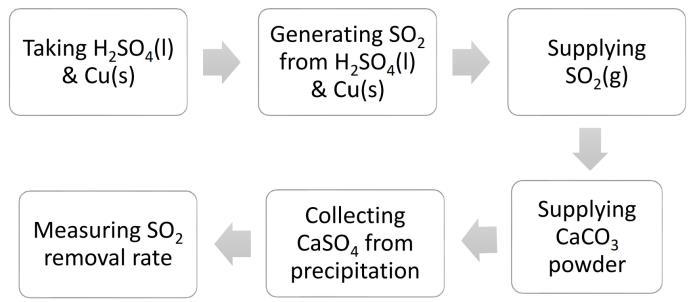
Fig -1:MethodologyinFlowChart
Thereactioncanberepresentedas:
In the presence of heat, concentrated sulfuric acid can decompose to release sulfur dioxide gas (SO2). The decompositionreactionofsulfuricacidcanberepresented as:
This step occurs simultaneously with the formation of coppersulfateandisfavoredathightemperatures.
OverallReaction:
International Research Journal of Engineering and Technology (IRJET) e-ISSN: 2395-0056
Volume: 11 Issue: 06 | June 2024 www.irjet.net p-ISSN: 2395-0072
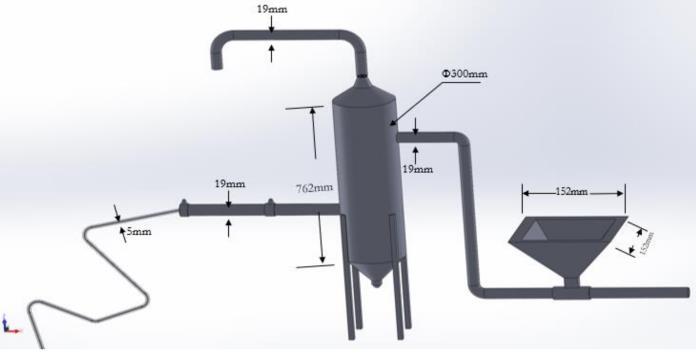
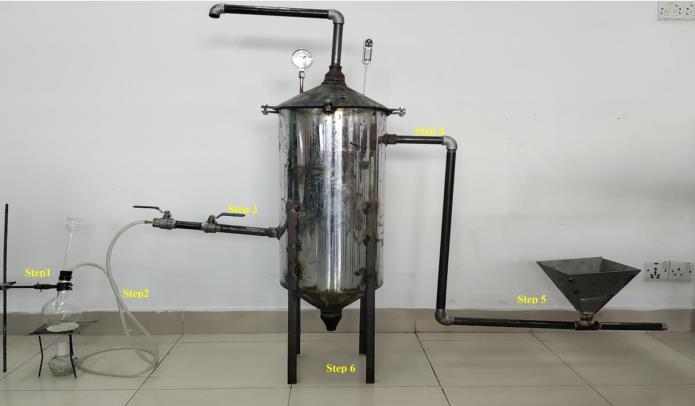
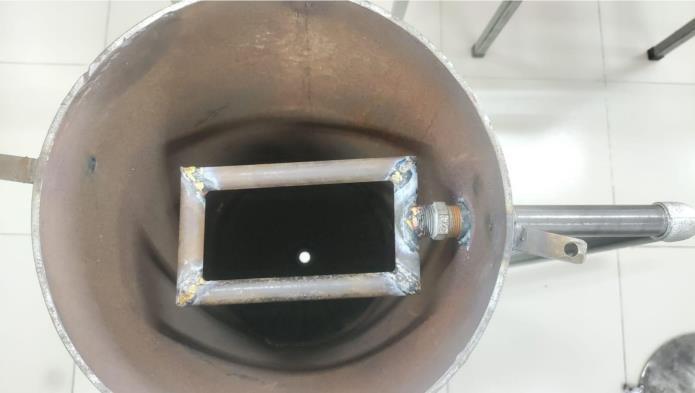
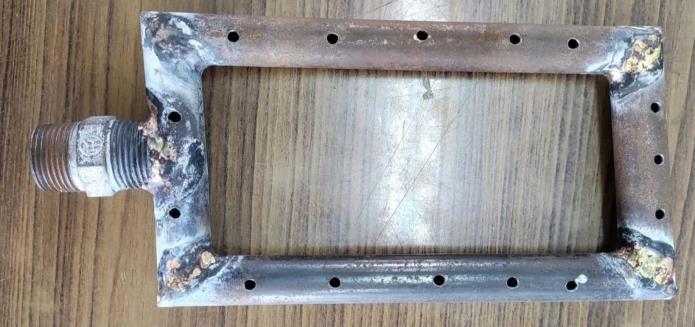
Researchfacedchallengesduetotheunavailabilityofpure SO2,whichisa banneditem. Asaresult,theabsorptionof SO2 in the developed system was significantly lower than anticipated.Despitethesechallenges,aseriesoftestswere conducted to evaluate the performance of the system in capturingSO2fromsimulatedgasstreams.Theexperiments involved varying the opening of inlet valve for supplying ��������3, concentration of ��������3 & amount of Cu. Each test was meticulously conducted to ensure reliability and accuracy of the data obtained. The absorption rates & reactiontimewererecordedandanalyzedtounderstandthe system'sefficiencyincapturingSO2
Table -1: AbsorptionResults(Datatablebyvaryinginlet valveopening)
Thefirstreaction,where128gm(1M)��������3wasintroduced into the system for the reaction, resulted in a SO2 capture rateof2.34%.Theamountofprecipitationafterthereaction was 25, 125gm which indicated that only 3 gm ��������3 reacted with SO2 and turned into the products (CaSO4 & CO2)fromwhichtheabsorptionratewasdetermined.
����������������������������= (3÷128)×100=2.34%
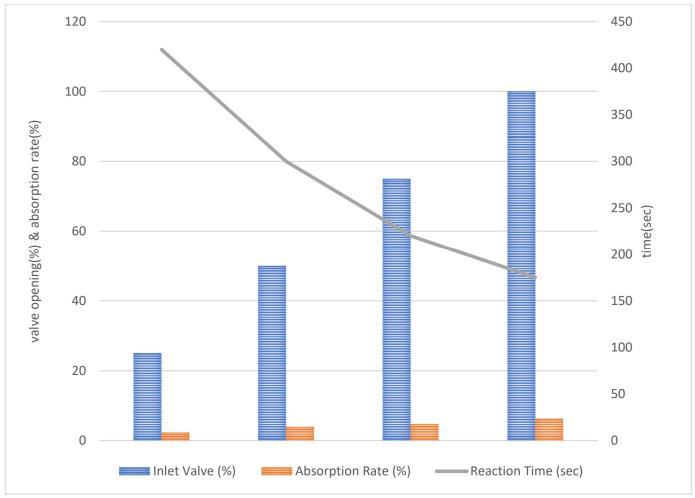
Chart -1:AbsorptionRatevsValveOpening (parameterizedbyreactiontime)
International Research Journal of Engineering and Technology (IRJET) e-ISSN: 2395-0056
Volume: 11 Issue: 06 | June 2024 www.irjet.net p-ISSN: 2395-0072
Chart1showstheinverserelationshipbetweenabsorption rate and reaction time which is noteworthy. As the inlet valveopeningincreases, the reactiontimedecreases.This indicates that higher inlet valve opening facilitate faster absorption of SO2, resulting in shorter reaction times. Shorterreactiontimesaredesirableinpracticalapplications as they contribute to higher throughput and system efficiency
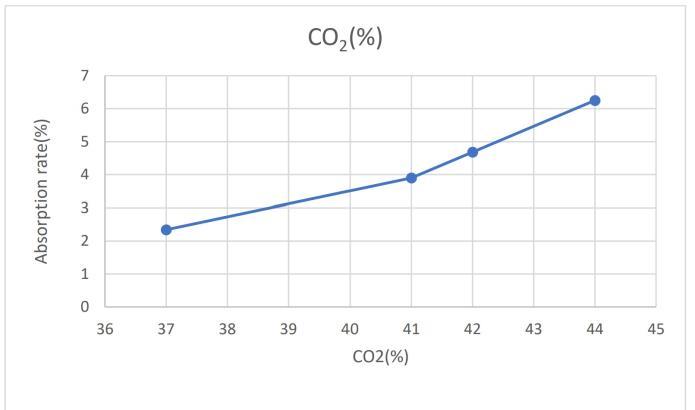
-6:Absorptionrate(%)vsCO2 (%)
Fig 6 illustrates the relationship between both the absorptionrateandtheconcentrationofCO2 intheexhaust gas.
Table -2: AbsorptionResults(Datatablebydifferent concentrationofCaCO3)
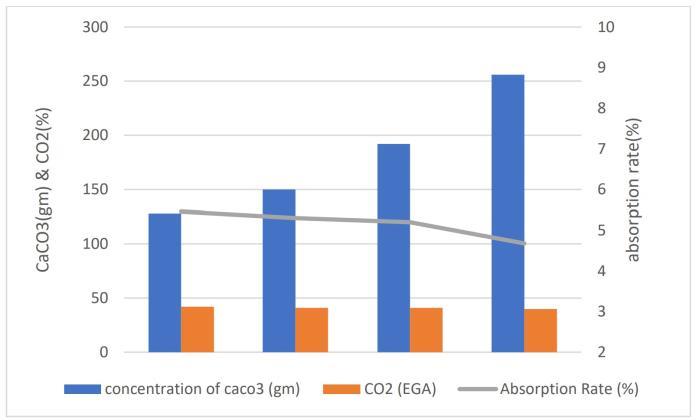
-2:Concentration��������3 vsCO2 (parameterizedby Absorptionrate)
Chart 2 illustrates the relationship between the concentrationof��������3(expressedingrams),theabsorption rate,andtheconcentrationofCO2 intheexhaustgas.
Table -3: AbsorptionResults(Datatablebydifferent amountofCu)
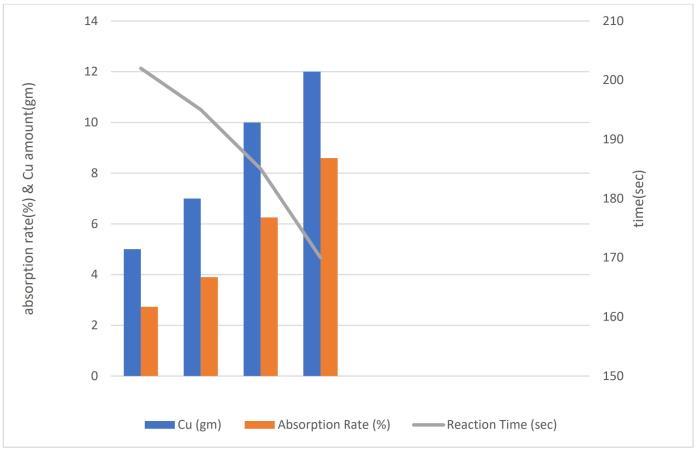
Chart -3:AbsorptionRatevsAmountofCu (parameterizedbyreactiontime)
InChart3,Thereactiontimealsodecreaseswithincreasing amount of Cu. This indicates that higher amounts of Cu facilitate quicker absorption of SO2 into the system. The decreaseinreactiontimecanbeattributedtotheenhanced reactivityofCuwithSO2 athigherconcentrations.
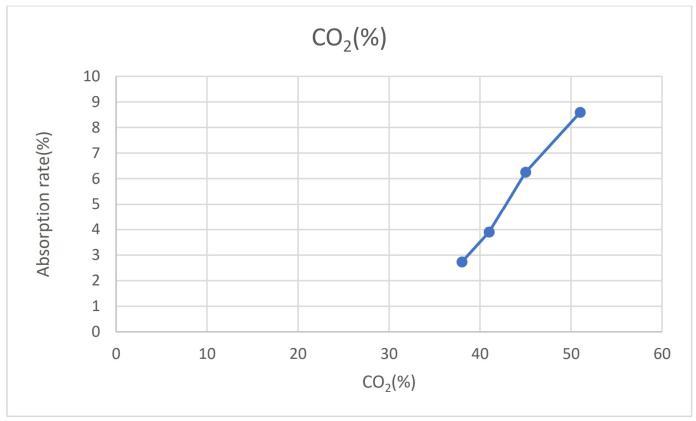
-7:CO2 vsAbsorptionRate
International Research Journal of Engineering and Technology (IRJET) e-ISSN: 2395-0056
Volume: 11 Issue: 06 | June 2024 www.irjet.net p-ISSN: 2395-0072
Fig7illustratestherelationshipbetweentheabsorptionrate and the concentration of CO2 in the exhaust gas. As the concentrationofCuincreasesfrom5gmto12gm,therewas acleartrendofincreasingabsorptionrate,indicatingamore efficient absorption process for removing SO2 from the exhaust gas. Additionally, the concentration of CO2 also increases from 38% to 51% as the concentration of Cu increases. This suggests that higher concentrations of Cu lead to both greater absorption of SO2 and subsequent productionofCO2throughthereactionbetweenCuandSO2 TherelationshipbetweenCuconcentration,absorptionrate, andCO2 concentrationindicatesthepotentialroleofCuin enhancingtheefficiencyoftheabsorptionprocessandthe productionofCO2 intheexhaustgas.
Overall, the results of these reactions suggests that the optimalcombinationofmaterialsforSO2 absorptionisfor themaximuminletvalveopening(100%)keepingallother parameters constant which is 6.25%. For varying CaCO3 keepingotherparametersconstantconcentrationthelower theconcentrationofCaCO3 highertherateofabsorptionof SO2 whichis5.46%for128gmofCaCO3 andforvaryingcu amountkeepingotherparametersconstantthehigherthe amount of cu higher the absorption rate of SO2 which is 8.59% for 12 gm of Cu & the maximum efficiency of the system is when inlet valve is 100% open, CaCO3 supply is 128gmthroughtheinletvalve&12gmCureactswith98ml H2SO4 forgeneratingSO2.
Intheinvestigationofasulfurdioxide(SO2)capturesystem using various parameters such as inlet valve opening, calciumcarbonate(CaCO3)concentration,andcopper(Cu) amount,challengesaroseduetotheunavailability ofpure SO2.Despitethesehurdles,rigorousexperimentationyielded valuable insights into system efficiency and provided a foundation for further optimization. Initially, results demonstrated a clear relationship between inlet valve opening and SO2 absorption rate. As the valve opening increased, allowing for a higher flow rate of CaCO3, a corresponding rise in SO2 absorption was observed. However,thisrelationshipexhibiteddiminishingreturnsat veryhighflowrates,suggestingtheimportanceofbalancing flow rate and contact time with the absorbent for maximizing absorption efficiency. Moreover, investigation into varying CaCO3 concentrations revealed an intriguing trend.Contrarytoexpectations,higherCaCO3concentrations led to decreased SO2 absorption rates, indicating the existence of an optimal concentration for efficient SO2 capture.Theroleofcopper(Cu)intheabsorptionprocess proved significant, with increasing Cu concentrations correlatingpositivelywithhigherSO2absorptionrates.This observation was further supported by the decrease in reactiontimewithincreasingCuconcentrations,highlighting theimportanceofreactionkineticsinoptimizingSO2capture systems. Analysis of CO2 concentration further supported
thesefindings,indicatingaclearindicationineverycasethat the amount of CO2 found in Exhaust Gas Analyzer was increasing with increasing absorption rate. Beyond these quantitative findings, the study underscores the critical importance of reaction time in assessing system performance. Shorter reaction times, facilitated by factors such as higher Cu concentrations, not only contribute to increased throughput and system efficiency but also offer practicaladvantagesinreal-worldapplications.Combining theinsightsfromtheseexperiments,thestudyidentifiedthe optimaloperatingconditionsformaximizingSO2absorption efficiency,includingmaintainingtheinletvalvefullyopen, supplying specific amounts of CaCO3 and Cu. Under these conditions,thesystemexhibitedthehighestabsorptionrate. Despitethelimitationsimposedbytheunavailabilityofpure SO2 andotherexperimentalconstraints,thestudyprovides valuableinsightsintothefactorsinfluencingSO2absorption efficiencyandlaysthegroundworkforfurtheroptimization of SO2 capture technology. In conclusion, the findings highlightthepotentialofthedevelopedSO2 capturesystem while acknowledging its current operational limitations. Throughcontinuedrefinementandoptimization,informed bytheinsightsgainedfromthisstudy,advancementsinSO2 capturetechnologycanbeachieved,fosteringenvironmental sustainabilityandairqualityimprovementinitiatives.
[1] 5th International Conference on Energy and Environment Research, ICEER 2018 Study on the mechanism of SO2 removal by activated carbonBing Lia,*, Chunyuan Ma b, ring Laboratory for Coal-fired Pollutants Emission Reduction, Shandong University, Jinmperature function for a long-term district heat demandforeDOI:10.1016/j.egypro.2018.10.063.
[2] PreparationofhighsurfaceareaCaCO3 forSO2removal byabsorptionofCO2inaqueoussuspensionsofCa(OH)2 Author links open overlay panelJung-Hsin Yang, ShinMin Shih, Chi-Ing Wu, Clifford Y-Der Tai. Powder Technology. Volume 202, Issues 1–3, 25 August–10 October 2010, Pages 101-110. DOI: 10.1016/j.powtec.2010.04.024
[3] Experimental Examination of Sulfur Dioxide Dry Removal from a Mixture of Gases by Calcium Oxide, Calcium Carbonate and Dolomite. Iran. J. Chem.Chem. Eng.Vol.3,No.2,2012.http://www.ijcce.ac.ir/article_5988 _ccc4a6a0109a12157b888f3c8c19f02e.pdf