
International Research Journal of Engineering and Technology (IRJET) e-ISSN:2395-0056
Volume: 11 Issue: 06 | Jun 2024 www.irjet.net p-ISSN:2395-0072
International Research Journal of Engineering and Technology (IRJET) e-ISSN:2395-0056
Volume: 11 Issue: 06 | Jun 2024 www.irjet.net p-ISSN:2395-0072
Aayra Nain1, Kavita Chahal2*
Heera Lal Public School, Delhi- 110081
Central University of Haryana Mahendergarh- 123029
Abstract
A Formula One team is allowed to spend a maximum of $135 million (€128m) on materials and activities related to car performance each year, and about 15-20 million dollars alone on the sports car. The engine of this car is expected to last only for 7 races. The most important component of making a Formula One (F 1) car is aerodynamics i.e., the study of forces and the motion of the objects through the air. Now, the study allows us to measure forces that are lift, drag, thrust and downforce. Many technologies used in F1 cars are the same that are used by NASA or SpaceX, would use to design their rockets Also, it is used in a way that the car goes around the racetrack. Now an F1 car requires two things, make super quick turns and go extremely fast in a straight line. The challenge is that what makes a car good at one makes it harder for the other one, so the car has to do both of the things all together to make it a winning car. In this article we will know the fundamental requirements of the car, covering the aerodynamical part of the manufacturing.
Keywords: Formula 1 car, Aerodynamics, Sports car, Forces
Formula 1 got its name due to the ‘FORMULA’ which is the rules of the sport established by FIA (Federation Internationale de L’Automobile – International Automobile Federation). The first ever race recorded under the FIA was in the year 1950, marking the beginning of the sport [1]. A Formula One team is allowed to spenda maximum of $135 million (€128m) on materials and activities related to car performance each year, and about 15-20 million dollars alone on the sportscar.Theengineofthiscarisexpectedtolastonly for 7 races. The sport not only focuses on the driver or thecarasanindividualrespectivelybutasawhole,both ofthefactorsareimportant apartfromthepitcrewalso playingasignificantroleintheraceaswell[2].Thesport might seem useless and money consuming to many peoplebutdespitealowermarginofprofittotheteams participating in the race, many huge manufacturers we forcedtowithdrawthemselvesfromthesportduetothe high cost cut off, such as Honda withdrew itself in 2010 [1].Themainconceptfora formula carisaerodynamics which helps to attain the speed and stability of the car. Aerodynamics consists of two words aero which means
airanddynamicswhichmeansforceactingona moving body, so altogether it means forces acting on the forces acting on a body with its motion in the air [3]. The race car consists of many components, and each component hasitssignificance,throughtheyearsofevolutionmany innovations and changes have occurred in the car, as aerodynamic studies got advanced the cars could go up toahigherspeedwiththesameenginecomparedtothe initial days of the sport [1]. The main aim of aerodynamics in this sport is to reduce the drag, and noise emission and also prevent the unnecessary lift acting on the car. The most complicated and interesting part of this subject is that ‘the downforce and drag are both inversely proportional’ causing the car to slow down one way or the other, that is what aerodynamics helps the most. Since every part of the car is important for the aerodynamics to work engineers spend a lot of time testing each component of the car as well for the testingofthecar,itiskeptinwindtunnelswhichcreates the exact inverse conditions to produce the adequate amount of minimum drag but at the same time the maximum amount of the downforce [3]. Apart from the car, it is also the driver skill as well as the pit crew efficiencythatleadstoawin[2].SincetheGforcesofthe car are high during the city races even the manholes need to be welded down because the downforce affects them and leads to them shooting up in the air if not welded into place. This also makes us concerned about thedriverasthedownforce issohugethatitcausesthe drivertoloseabout4kgofmassinjustonesingleraceof the sport [1]. The environmental factors play a significant role in the driver i.e., temperature, toxicant exposure,humidity. Some main effectsonthedriver are thegforces,andtheheat(whichisinevitableasitisthe bioproduct of all the forces acting on the car the temperatureisnormallyfrom 50°Cto65°Candcanalso reach up to 82°C depending upon the surroundings and the current temperature of the race track). Now, since a Formula1carisanopenwheelracingcarandtheengine is behind the driver. This also leads to the exposure of noiseandcarbonmonoxidesideincontrastwithheatto the racers. Now the sport also does not allow the teams to refuse their tanks during the race which reduces the health threats to the driver as well as the pit crew in comparison to other racing sports, such as IndyCar and NASCAR. During the sport, the air quality is also decreasedduetotheexhaustfusefromtheracecarsand theelectricgeneratorsusedinthegarageandputareas,
International Research Journal of Engineering and Technology (IRJET) e-ISSN:2395-0056
Volume: 11 Issue: 06 | Jun 2024 www.irjet.net p-ISSN:2395-0072
buttheexposuretocarbonmonoxidealsodependsupon somegeneralfactorsthatastheraiseddurationnumber of cars on the track, what is the proximity between the cars. The control of the car is designed for a driver to know the precise control and get feedback on how the car handles. The main goal of the control system is also to ensure that the steering system as well as the suspension geometry are working together smoothly and giving the driver clear, physical sensations and feedback. A survey of 40 professional drivers also revealed that the upper body and the arm strength that is required to control and steer the car are the major physical demands during the race. The fatigue of the hand and arm can cause neuropathies i.e., when the nurses that are located outside of the brain and spinal codearedamaged,thiscausesweakness,numbness,and pain to the driver. Due to all the circumstances, a driver has to face during a race. Therefore, they are already during the training are assessed to be habitual of the atmospheric temperatures and also how to use their eyes during the race, but apart from the physical problems, a driver is also mentally challenged so their mind also needs to be trained so that they can achieve their best performance, spatial awareness is also important [2] The sport Formula One also led to a significant innovation that is commonly used in sports cars nowadays, which is the invention of carbon fibre Nowcarbonfibre isproduced withthree differenttypes of material that is viscose, polyacrylonitrile and pitch. Innovationslikethesecontributetothereasonwhyhuge manufacturingcarcompaniessuchasMercedes,Ferrari, etcetera,despiteaverylowmarginofprofitinthesport, takepartintheraces[4].
AFormula1carisasingleseatedcarsincethebeginning ofthesport[5].Thecarhasanopencockpitchassisunit, thewheelsarealsouncovered.Somecomponentshelpin cooling the air to engine water, and brakes [6]. The car alsomainlyworksonaerodynamicsasmentionedbefore intheintroduction.
In this review article, we understand the role of aerodynamics, i.e., the study of forces on a body that is actinguponabodyinmotionthroughair(afluid),inour case the object in the Formula 1 car, we understand the role of aerodynamics at a basic level for everyone to understand. There are Broadly for forces acting on the body concerned by aerodynamics that is lift, drag, downforce and thrust [3]. If we define these forces in basic,itis
1. Lift: It is an upward force that acts perpendicular to the direction of motion of the objectthatmovesthroughafluid(liquidorgas). Thisforceactsinanupwarddirectiontocounter
the gravitational force that acts downwards. If this force is surrounded by air as a fluid, it is called aerodynamic force in water or any other liquid.Itiscalledahydrodynamicforce. An object doesn't need to be in motion. Therefore, if the object is stationary, the force still acts on the body. This course is mostly associatedwithwingsorfixedwingsaircraftbut is also used in steam bodies and racing car wings. In a Formula 1 car, this force acts upon the car wings. These forces act on both the car wingspresentatthefrontaswellastheback.
2. Drag: apart from the developed engine, drag of the car. Drag is a dynamic resistance or force that works against the direction of the vehicle. themoretheareaofacarintheair,themorethe resistance or drag against the car as it goes in motion. The less, the drag, the more, the car wouldattainspeed.themanufacturersofthecar put a great effort to minimise the drag as much aspossible. InmodernF1 cars,the rear and the frontwingsareresponsibleforabout50to60% drag generation. There is a movable flap on the carrearwingthatisdesignedtohelpreducethe aerodynamic drag that increases the speed of thecarmovinginastraightline.
3. Downforce: This force is perpendicular to an object, this force is also a counterforce to lift. It isveryessential inFormula 1asitstabilisesthe car and also helps in maintaining contact with thegroundaround 3 to4 timesdown forceacts upon the car,compared to itsweight. Togivean idea of if a car moves around 150 km/h. The downforceatactsonthebodyisalmostequalto 795KGatmaximumspeed. Thisforceisaround five times this value. Downforce is very important as it helps the car to maintain its speed during the corners of a race track. The aerodynamical design of the car pays attention to increasing the down. Force may need the threecomponentsofthecar,thefloor,frontwing and the rear wing is pay specific attention to. The main concern is how to control and manipulatethedownforcethatactsonthecarit is achieved by the help of rear and front wings by changing the size and angle of the wing elements. In conclusion, it helps in improving thegripandtraction.Throughthecorners.
4. Thrust: It is a counter force to drag this force, helps the object to move, this force is produced by the engine of the car as it forces, the car to moveforward
International Research Journal of Engineering and Technology (IRJET) e-ISSN:2395-0056
Volume: 11 Issue: 06 | Jun 2024 www.irjet.net p-ISSN:2395-0072
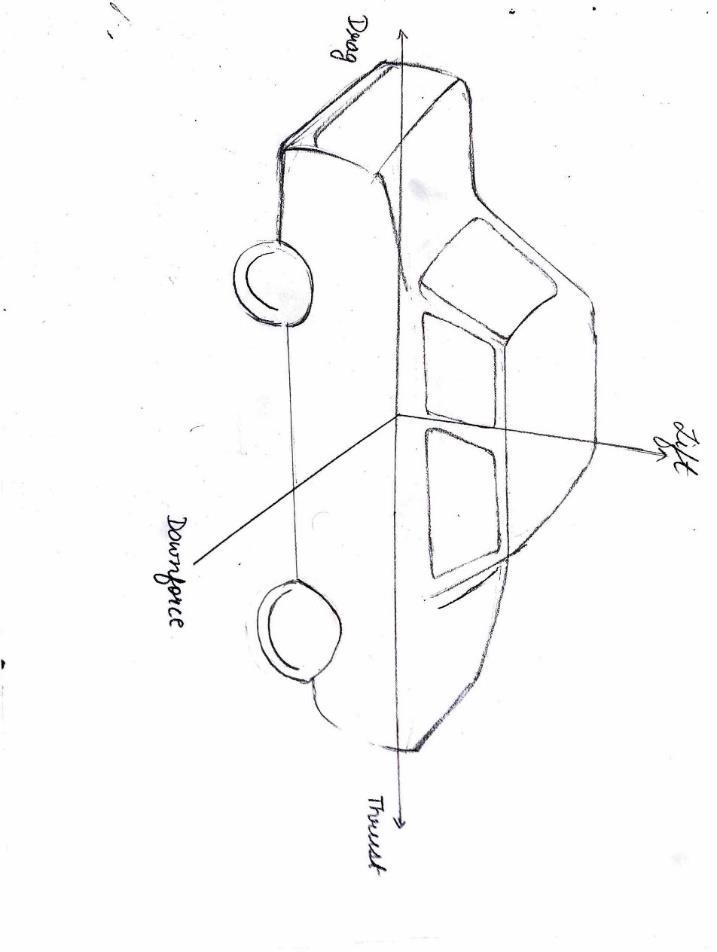
Figure 1 depictstheforcesthatareactingonthebodyas itmovesthroughtheair.
The fundamental aim of aerodynamics is to createasmuchasdownforcepossibleonthecar. Withaerodynamicdownforceatthetopspeedof a Formula 1 car, can achieve about 2.5 times downforce compared to the weight of the car. The vortical structures that are induced by the aerodynamicsinthecarareusuallythekeythat helps with the greatest effect on the car performance. Now determine the effects of the forces on the car measurements by CFD and WTT. Fluid dynamics is a part of, mathematical studiesofobjects,movinginliquidand gas.The fundamental of this study is the “Navier-Stokes equation” equation, which cannot be solved without the help, of powerful computers as it is averycomplexequation, whichmakesitharder tobesolveddirectly.
Computationalfluiddynamicsisthesciencethat predictsthefluid-flowphenomena based onthe conservationlaws,whichgovernfluidmotion.In anF1car,CFDbuildsa 3Dmodel ofthecarand predicts and applies all the forces that will act on the body, using the laws of physics. It also predicts how the car will react to external
factorssuchaswindconditionsandthedifferent roadsurfacesthecarwillrunon[3,7,8].
Wind Tunnel Testing is used to help manufacturersgetabetterunderstanding ofthe natureoftheflowofairaroundthecarandalso the effects caused by it. The tunnel creates an inverse of the condition in real life [3,9]. In reality, the car moves with a great velocity throughtheair,inthetunnelthecarisfixedata positionandtheairismovedoveritbyblowing windfromalargefan.
As mentioned before in the introduction each part of the car plays a significant role in the functioning of the car. Some important aerodynamicpartsofthecararelistedbelow
The front wing of the car is the first part to meet the airflow across the car, therefore making it the most crucial aerodynamic component. It mainly consists of the main plane,twoaerofoilflapsandtheendplates. The main plain provides the rectangular shape of the wing which furthermore helps in the flow of air to the aerofoil. the front wing also generates 1/3rd of the downforce of the total car [10,11]. The most efficient function of the front wing is therefore to guidetheairtotherestofthebody.
2. Rear wings
The rear wings consist of 2 components which arethe2 sets ofairfoilsconnected to the endplate. The frontal area is reduced as the structure benefits from the reduction of drag.Around30-35%ofthetotaldownforce isproducedbytherearwing[12,13].
3. Rear fans
2 rear fans are present under the car to suckalltheairfromthefloortocreatelow pressure, this helps in attaining more speedduringtheraceasitgeneratesmore downforce.
4. Wheels
A Formula 1 car is an open wheeled car whichmeansthatthewheelsofthecarare highly exposed to the surroundings, and thus have a very complicated aerodynamics[14,15].
International Research Journal of Engineering and Technology (IRJET) e-ISSN:2395-0056
Volume: 11 Issue: 06 | Jun 2024 www.irjet.net p-ISSN:2395-0072
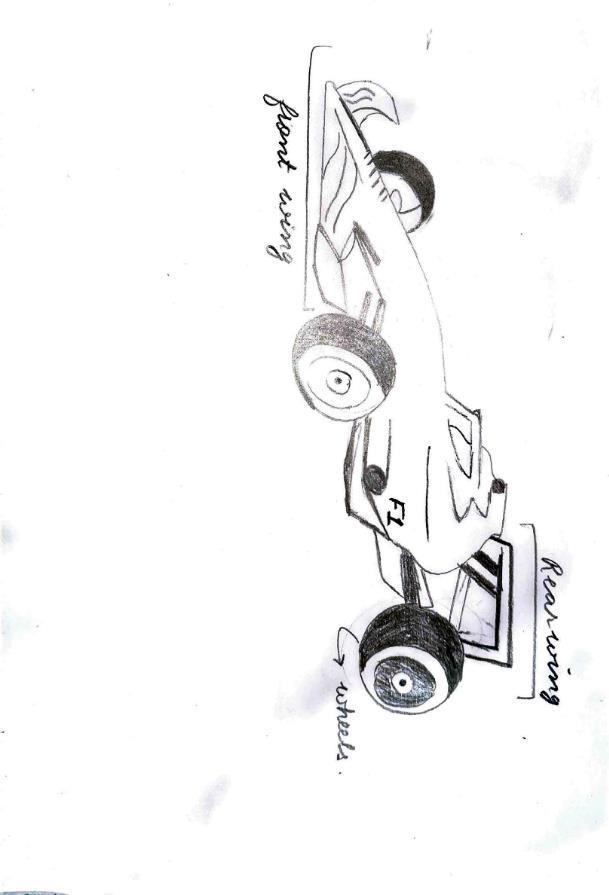
Figure 2 isaFormula1carandalltheexternal componentsofthecar
5. Ground Effect
theairflowcontactswiththefloorofthecarbetweenthe front wings and the open wheels. The lower surface of the front wheel is close to the road surface, causing the air to be sucked and accelerates between the wing and the road, resulting in a static low pressure generated at thebottomofthecar[3,16,17].
6. Diffuser
Thisincreasesthesuctionwhichresultsin more generation of downforce. It consists of many tunnels and splitters that help in controloftheairflow.
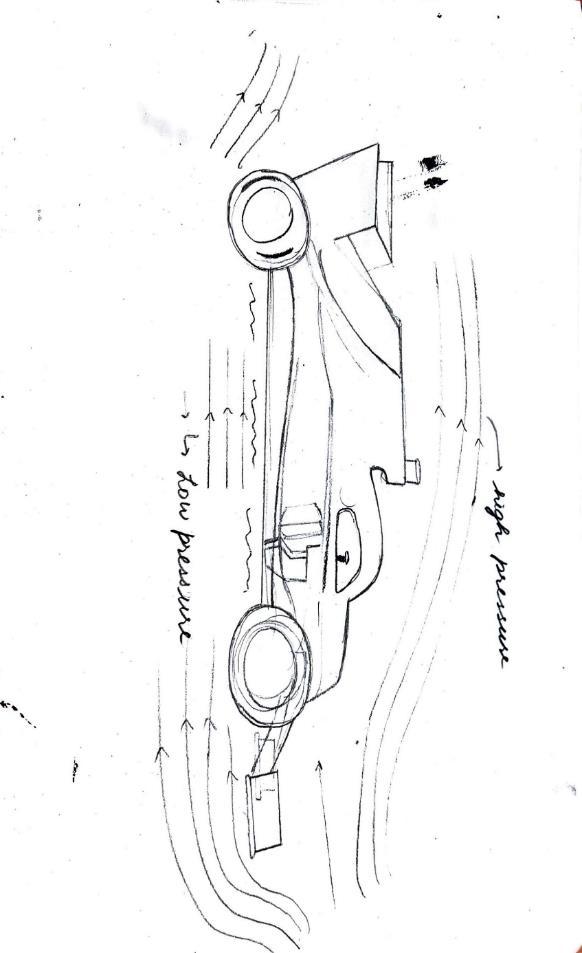
Figure 3 showsthepressureofairwhichhelpsthecarto speedup(highpressureonthetopofthecar)andatthe sametimemaintainstabilitywiththeground(low pressureatthebottomofthecar
From the aforesaid, we can conclude that aerodynamics plays a very important role in the sport car of Formula. The car is among the most aerodynamic motor vehicles. The sport plays a role in boosting the Europe GDP as well. It also creates tourism as well, all of this has been possible because of the growth in this sport with the advancement in aerodynamics. With the help of aerodynamics, the speed of the car has increased moreover also increases the stability of the car with the ground.
1. Fields, J., (2015). How Advancements in Aerodynamics Improves the Performance of Formula1Racecars
2. Reid, M. B., Lightfoot, J. T., (2019). The physiology of auto racing: a brief review.Med SciSportsExerc,51(12),2548-62.
3. Kumar, N. P., (2014). International Journal of Research in Advent Technology.International JournalofResearch,2(1).
International Research Journal of Engineering and Technology (IRJET) e-ISSN:2395-0056
Volume: 11 Issue: 06 | Jun 2024 www.irjet.net p-ISSN:2395-0072
4. Yin, H. T., Lang, M. M., Zhao, Y. N., (2014). Research on carbon fiber composite materials and F1 racing automobile design.Applied MechanicsandMaterials,454,263-267.
5. Savage, G. (2010). Formula 1 composites engineering.Engineering failure analysis,17(1), 92-115.
6. Wright, P. G. (1982). The influence of aerodynamics on the design of Formula One racing cars.International Journal of Vehicle Design,3(4),383-397.
7. Bhaskaran, R., & Collins, L. (2002). Introduction to CFD basics.Cornell University-Sibley School ofMechanicalandAerospaceEngineering,1-21.
8. Zawawi,M.H.,Saleha,A.,Salwa,A.,Hassan,N.H., Zahari, N. M., Ramli, M. Z., & Muda, Z. C. (2018, November). A review: Fundamentals of computational fluid dynamics (CFD). InAIP conference proceedings(Vol. 2030, No. 1). AIP Publishing.
9. Ehirim, O. H., Knowles, K., & Saddington, A. J. (2019). A review of ground-effect diffuser aerodynamics.Journal of Fluids Engineering,141(2),020801.
10. Tyrrell, D. (2023). Race-Car Front Wings: A LiteratureReviewwithF1CaseStudies.
11. Tyrrell, D. (2023). Race-Car Front Wings: A LiteratureReviewwithF1CaseStudies.
12. Kellar, Pearse, & Savill (1999). Formula 1 car wheel aerodynamics.Sports Engineering,2(4), 203-212.
13. Bottasso, C. L., Campagnolo, F., & Petrović, V. (2014). Wind tunnel testing of scaled wind turbine models: Beyond aerodynamics.Journal of wind engineering and industrial aerodynamics,127,11-28.
14. Sprot,A.J.,Sims-Williams,D.B.,&Dominy,R.G. (2012). The aerodynamic characteristics of a fully deformable formula one wind tunnel tyre.SAE International Journal of Passenger Cars-MechanicalSystems,5(2).
15. Bhatnagar, U. R. (2015). Formula 1 race car performance improvement by optimization of theaerodynamicrelationshipbetweenthefront andrearwings.
16. Shahid, M. S. M. (2010).Study of F1 Car Aerodynamics Rear Wing Using Computational
Fluid Dynamic (CFD)(Doctoral dissertation, UMP).
17. Storm, R. K., Jakobsen, T. G., & Nielsen, C. G. (2020). The impact of Formula 1 on regional economies in Europe.Regional Studies,54(6), 827-837.