
International Research Journal of Engineering and Technology (IRJET) e-ISSN:2395-0056
Volume: 11 Issue: 06 | Jun 2024 www.irjet.net p-ISSN:2395-0072
International Research Journal of Engineering and Technology (IRJET) e-ISSN:2395-0056
Volume: 11 Issue: 06 | Jun 2024 www.irjet.net p-ISSN:2395-0072
Sujata V. Patil1, Dr. Sonam Mhetre2 , Dr. Prakash S. Bandgar3 , Dr. A. A. Sawant4 , Dr. Shubhangi D Shelar5
1 Ph.D student, Agricultural Engineering Section, D Y Patil Agriculture & Technical University, Talsande Email id: mrs.svpatil@gmail.com mbl no: +91 9823905789
2Assistant Professor, Agricultural Engineering Section, D Y Patil Agriculture & Technical University, Talsande
3Assistant Professor & Head Department of renewable Energy Engineering, Dr. D. Y. Patil, College of Agricultural Engineering & Technology, Talsande, Kolhapur
4 Associate Professor, Department of Process & Food Engineering, College of Agricultural Engineering & Technology, Dr. BSKKV, Dapoli
5 Jr. Plant Engineer, Mahabeej, Ashta, Tal. Walwa ***
Abstract: One of the most economical methods of preserving foods of all kinds is drying, which entails the elimination of water through the use of heat. Drying is a key unit activity utilized in many industries and is well known in industrialized countries as a major industrial consumer of fossil fuel-derived energy. As the level of life improves in the developing world, so will the demand for energy-efficient, quicker, ecologically friendly, and cost-effective drying solutions. Numerous technological developments have been made in the areas of pre-treatments, methods, equipment, and quality as well as the economical drying of food. The current work points to and highlights recent drying techniques in important revolutionary drying procedures in the food industry. Because the industry tries to provide advantages such as enhanced energy efficiency, lower cost, higher product quality and reduced environmental impact in the possibilities of revolutionary drying and food preservation technologies. These technologies may replace, at least in part, the traditional entrenched preservation methods. This paper presents a number of drying techniques that have vital role for use in food drying research and development.
Keywords-Drying, fruits, vegetables, preservation, energy efficient.
1.0Introduction
India's diverse climate conditions lead cultivated area of fruits stood at 7.05 million hectares while vegetables stood at 11.35 million hectares. It ranks second in fruits and vegetable production in the world, after China. As per National HorticultureDatabase(3rdAdvanceEstimates)publishedbyNationalHorticultureBoard,during2021-22,Indiaproduced 107.24 million metric tonnes of fruits and 204.84 million metric tonnes of vegetables. The vast production base offers Indiatremendousopportunitiesforexport.During2022-23,IndiaexportedfreshfruitsandvegetablesworthRs.13185.30 crores which comprised Fresh Fruits worth Rs. 6,219.46 crores and vegetables worth Rs. 6,965.83 crores (www.Apeda.com). But India’s share in global market is insignificant. It is 1.7% in vegetables and 0.5% in fruits. Fresh foods,suchasfruitsandvegetables,havebetween80and95%ofmoisturecontent;afactorthatcontributestotheirrapid degradation,generatingahighvolumeoflossesandfoodwaste(Prosapio&Norton,2018;Waghmare,2021).Toavoidthis issueanalternativesolutionistheuseofdrying,whichistheoldestconservationmethoddevelopedbymankind(Acaret al.,2020).
Food drying is a method of food preservation that involves removing water from the food by a mass and heat transfer process. Essentially, free water, which is responsible for water activity, is what allows microbes to grow and multiply. Therefore, drying increases the shelf life of food productslike vegetables by reducing the water content to a manageable level.Thefinalproduct'squalityisinfluencedbythedrying process,temperature,andwateractivity.Airtemperature,air velocity,andthesurfaceareaofthefoodmaterialareamongthevariablesthatinfluencethetransferofenergyfordrying. The following are crucial goals that drying procedures must achieve: 1. maintaining fresh food supplies to ensure yearroundavailability2.Makingthegoodslighterandsmallerinsizeforeasierstorageandtransportation3.
Preserving the nutritive valueand standards of food products.4. It should be a sustainable manner with reduced energy use, which is why modern drying processes are being applied in the field of food commodities today. 4. It has to be sustainable.
The food industry has adopted novel drying methods that include microwave drying, spray drying, refractance window technology, radio frequency drying, ultrasonic drying, infrared drying, osmotic drying, freeze drying, Low-pressure
International Research Journal of Engineering and Technology (IRJET) e-ISSN:2395-0056
Volume: 11 Issue: 06 | Jun 2024 www.irjet.net p-ISSN:2395-0072
superheatedsteamdrying,heatpumpdryer,ExplosionpuffdryingandPulsedelectricfield(PEF)drying.Thesetechniques arealsousedincombinationbecausetheyhavebenefitslikefasterdryingtimes,operational safety,betterproductquality, non-polluting operations, and higher economics. Researchers have developed novel drying techniques to address issues withtraditionaldryingtechniqueslikesundrying,hotairdrying,andovendryingthatresultinreduced qualityattributes liketextural change, nutrientloss, browningofthe driedfood product, etc. while requiring more time and energy.Hence sucha novel drying techniques nowadays commonly used everywhere. This review paper basicallydescribes recent new dryingtechniqueusedbydifferentresearchersfordryingoffruitsandvegetables.
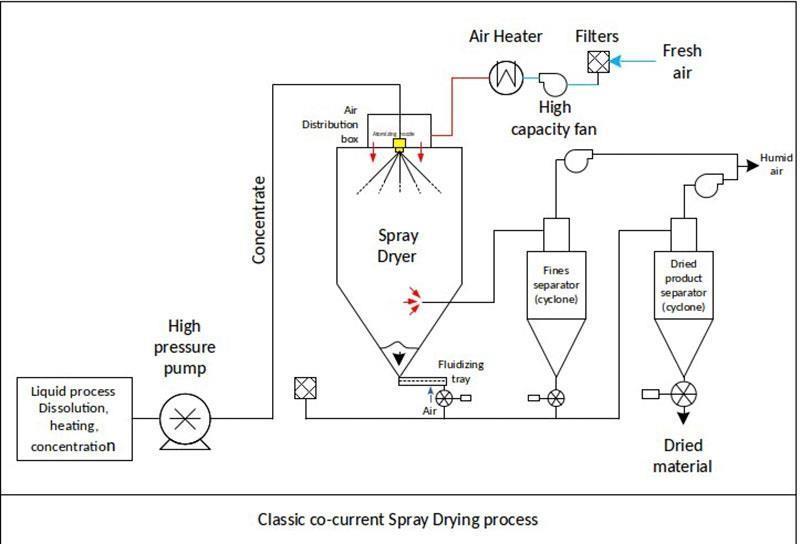
(WengYetal2023)Spraydryingisaflexiblemethodforencapsulatingenzymestoincreasetheirshelflifeandstabilityin thefoodsector.Anoverviewofcurrentdevelopmentsandadvancementsinspray-driedenzymeencapsulationisprovided in this publication. A summary is provided of newly developed spray drying methods as well as innovative spray drying chamber and atomizer designs. The purpose of the apparatus was to atomize liquids to increase their concentration and drying.Fruitorvegetablejuiceisshotviaanatomizingvalve,resultingintinydropletsthatareevenlydistributedarounda large drying chamber and let to fall into heated air that is blowing upward (Mercer, 2014; Tontul and Topuz, 2017). It is possible to achieve the necessary level of drying by adjusting variables such particle diameter, air temperature, and air speed, among others, so that when the droplets strike the bottom of the dryer, they have transformed into tiny powder particles (Mercer, 2014). Due to the intense shear force that occurs during atomization, the approach might not be appropriateforfoodsthataredelicatetomechanicaldamage.Foodbeneficialchemicalsarelostduringthedryingprocess, andmealshighinsugaradheretotheequipmentmoreeasily.Thesizeoftheapparatusandtheexpenseofinstallationare alsosignificant.Hencefruitandvegetablejuicesarefrequentlypreservedaspowdersbyspraydrying.Themaingoalisto obtainpremiumfruitandvegetablepowders,whichcallsforidealspraydryingconditions.
Electronicandmagneticfieldsareusedtospreadmicrowavesthroughoutspace.Becauseitrequireslesstimeandheatto lower food moisture content, microwave heating is helpful. (Kahyaoglu et al., 2012). Microwave drying is based on the volumetric heating that happens when electromagnetic waves pass through a medium, forcing its molecules to oscillate.
International Research Journal of Engineering and Technology (IRJET) e-ISSN:2395-0056
Volume: 11 Issue: 06 | Jun 2024 www.irjet.net p-ISSN:2395-0072
This oscillation generates thermal energy, which is then applied to remove water from the moist meal. The most used frequencies in the food drying sector are 915 and 2450 MHz. However, according to Gitanjali Behera, et al (2021), comparing the two drying methods, the samples that were dried in the microwave had a higher rehydration ratio. Additionally, compared to samples dried by hot air, microwave-dried carrot samples had the lowest dehydration ratio. Slicesofcarrotthathadbeendriedinthemicrowaveperformedbetteronasensorytestthanthosethathadbeendriedby hot air in terms of color and shape. In order to dry carrot slices more efficiently and with less energy, the microwave methodmaybesuggested.Duetothevolumetricheating,thisdryingtechnologyisabletoproducedriedgoodsofexcellent quality at cheaper costs and with greater energy efficiency than conventional methods. Due to the lower moisture level neartheconclusionofthedryingprocess,microwave-driedfruitsandvegetablesaremorelikelytoburn.Asaresult,ithas been recommended that it be used in combination with other techniques, such as the use of vacuum and microwaves (Joardderetal.2013).

Oneofthepromisingdryingtechniquesforfoodgoodsisinfrared(IR) drying.Foodgoodswithhighmoisturecontentare dried using infrared radiation; after penetrating the materials briefly, the energy is transformed into heat. Because IR heatinghasobviousadvantagesoverconventionalheating,itisbecomingmoreandmorecommoninthefoodprocessing industry. Some of the key benefits of IR drying include quicker and more effective heat transmission, cheaper processing costs,uniformproductheating,andimprovedorganolepticandnutritionalvalueofprocessedmaterial.(AkanshaBishtetet al,2021)When a fresh fruit or vegetable is exposed to electromagnetic radiation witha wavelength range of 0.8-1000m, infrared drying takes place. The wavelength range of infrared is 0.75 to 1000 m (Askari et al., 2013). Infrared radiation transferstheheatfromtheheatingsourcetothefoodsurface.Ontheotherhand,thetechniquehasnoimpactontheairin the vicinity. Due to the ease of equipment and energy savings, this method is one of the best for combining with conventionaldryingprocesses.Additionally,itisadvisedtotransferheatquicklyandefficientlybecausethisincreasesthe item's organoleptic and nutritional value and promotes uniform cooking and lower final costs (Boudhrioua et al., 2009). Infraredradiationresultsintheaccumulationofchargeintheelectronicstate,aswellasinthevibrationalandrotational states,attheatomicandmoleculelevels.Asaresult,thefood'stemperatureriseswhiletheairsurroundingitmaintainsits constant temperature. Infrared drying has been used to dry agricultural products such carrots, sweet potatoes, and tomatoes(Boudhriouaetal.,2009). :
International Research Journal of Engineering and Technology (IRJET) e-ISSN:2395-0056
Volume: 11 Issue: 06 | Jun 2024 www.irjet.net p-ISSN:2395-0072

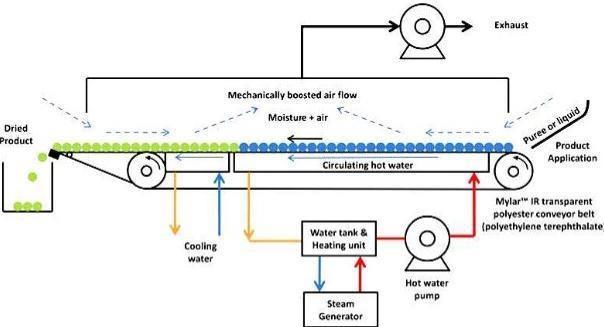
A novel drying technique called "refractance window drying" circulates water at atmospheric pressure while heating dehydrated food (Pragati and Preeti, 2014; Niakousari, 2018; Kigozi et al., 2021). Fruits and vegetables that need to be driedinliquidformarespreadoutonaclearplasticconveyerbelt,andanyexcessheatisrecycled.Unlikehot airtrayor tunnel dryers, which can take several hours or even longer to dry food, moving belt dryers can dry food in a matter of minutes. The three types of heat transmission mechanisms used in this drying method are convection, conduction, and radiation. An energy-efficient drying process resulted from a combination of all of these heat transfer techniques. Food mustbeliquidorsemi-liquidinordertobetreated.Thesubstanceisoftenputto thesurfaceofaconveyerbeltandisan infrared translucent plastic material that floats on the heated circulating water area. The water surface's refractive property acts as a window when infrared energy flows through it. Infrared radiation can be transmitted directly to the materialwhenmoistfoodandclearplasticcomeintocontact,creatinganinfraredwindow.Incomparisontoconventional methodslike spray-drying, hotair, andfreeze-drying(Acaret al., 2020; Celli et al., 2016),itis a less expensive technique that is used to ensure the quality of dehydrated items. It is also environmentally friendly if used with renewable energy sources like solar. This technique has arisen as a unique, less expensive choice for dehydrating fruits and vegetables, accordingtoNindo&Tang(2007).Theprocessisaffectedbythesamplethicknessanddryingtemperature,though.Using this technique, berry puree and slices can be dried and turned into powder, flakes, or sheets. In the last few years, RW™ dryinghas beenextensively usedfordifferentfoodapplications.Thisdryingtechniqueprovidesseveral benefitsinterms of retention of quality characteristics of dried food, higher energy efficiency, inactivation of most vegetative bacterial pathogens.DespitetheextensivebenefitsofRW™drying,limitationsofthistechnologycannotbeignored.Theimportant disadvantage is the higher plastic surface area of belt required for large amount of sample for drying. (Roji Waghmare 2021)
International Research Journal of Engineering and Technology (IRJET) e-ISSN:2395-0056
Volume: 11 Issue: 06 | Jun 2024 www.irjet.net p-ISSN:2395-0072
Thistechnologycanbeutilizedforfoodpreparationinadditiontowirelesscommunication.AccordingtoCaln-Sanchezet al. (2020), radio frequency heating is the interaction of a radio frequency generator's electromagnetic field with a substance's molecular species. The outcome is that the food sample is sandwiched between two electrodes that are exposed to an electric field that changes 40,000,000 times per second. Like the polar molecules in the food, the electric fields alternate, causing friction and heating the whole thing. Water evaporates and warms up because it is bipolar by nature(Babuetal.,2018).Significantdrawbacksincludelargerequipmentandexpensiveoperatingcosts.Forhorticulture productslikeappleslicesandsnackfoods,radiofrequencyhasbeenwidelyresearchedasapotentialreplacementforthe standardhotairdryingprocess(Marraetal.,2009).Inordertoquicklyandeffectivelyheatfoodfordryingpurposes,radio frequency drying uses radio frequency energy to heat food (Sisquella et al., 2014). This method has gained popularity recently.Basedonthecombinedmechanismsofdipolerotationandconductioneffects,radiofrequencyradiationhasbeen demonstrated to volumetrically release heat within food, accelerating the drying process of food products (Alfaifi et al., 2014).Nonetheless,ithasbeennotedthatradiofrequencythermaltreatmentslessenthedeteriorationofthermalquality indryingitems(Alfaifietal.,2014).Theprimarydrawbacksofradiofrequencyheating,however,includeunevenheating and overheating in the center, edges, and corners of the food, particularly in foods with intermediate to high moisture contents(Alfaifietal.,2014).

International Research Journal of Engineering and Technology (IRJET) e-ISSN:2395-0056
Volume: 11 Issue: 06 | Jun 2024 www.irjet.net p-ISSN:2395-0072
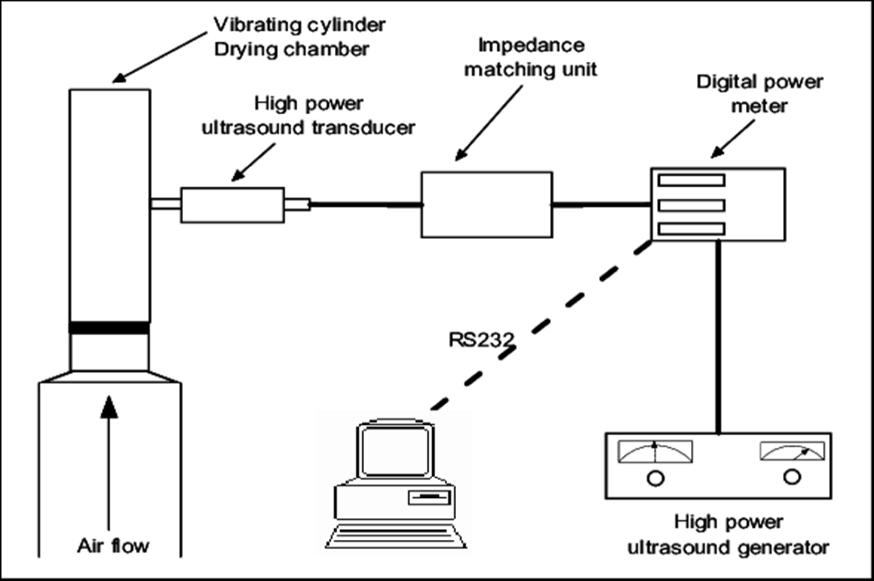
Whencomparedtotraditionalhotairdrying,thequalitiesandqualityoffoodcouldbeimprovedbyultrasound.Bothalone and in combination with other energies, such as hot air, ultrasonic energy can be used. By lowering the temperature or lengthofthetreatment,ultrasoundenhancesthequalityofthefinalproduct.Theuseofultrasoundtodryfoodaccelerates the drying process and uses less energy overall, according to Musielak et al., 2016. They noticed that the resulting items had greater quality than those produced by control operations without ultrasonic enhancement due to the slight "temperatureeffect."AccordingtoMusielaketal.(2016),themainbarriertothe industrialimplementationofultrasound technologywastheabsenceofanefficientmethodforproducingpowerultrasoundinair.
Bell pepper was dried by Schossler et al. (2012) using an integrated ultrasound freeze drying system that might also be used to dry other food items. They discovered that the items were heated when ultrasound was applied continuously,evenatlowambientpressure.Theyalsodiscoveredthatusingultrasoundcutdryingtimeby11.5%.
Fruitsandvegetablescan bepartiallydriedoutbybeingsubmergedina hypertonicsolutioncontainingsorbitol,glycerol (highosmoticpressuresugars),orsalt.Thisprocessisknownasosmoticdehydration.Solutesfromthesolutionpermeate intothetissueoffruitsandvegetableswhentheyareimmersedinahypertonicsolution(Mehtaetal.,2013).Withtheuse of gentle heat treatments, the pretreatment maintains the food's color, flavor, and nutritional value. As a result, the total dehydrationprocessrequireslessenergyoverall.Afewoftheproblemsthatmustbesolvedaretheinabilitytoforecastthe product's final chemical composition and flavor, wasteful osmotic solution use, and leaching out of color, acids, carbohydrates, minerals, and vitamins. Osmotic drying "also increases resistance to heat treatment, prevents enzymatic browning, and inhibits activities of polyphenol oxidase," according to Rastogi et al., (2005). The cost-effectiveness of the osmoticdryingprocessdependsonanumberoffactors,includingthegeometryofthefoodmaterialandthetemperature andconcentrationoftheosmoticsolution(Kahyaogluetal.,2012;Sisquellaetal.,2014;Sheteetal.2018).
The process includes the freezing of the food, sublimation of the ice, and extraction of bound water molecules. Lack of liquid water results in the development of a higher-quality final product and entirely halts the majority of microbemediated processes at freezing and low temperatures (Falade and Igbeka, 2007). The food is first frozen (at - 20°C), and thenacontrolledamountofheatisappliedundervacuumtoinducesublimation,inwhichiceisinstantlytransformedinto vaporandthencondensesasiceonarefrigerationcoil,whichistypicallymaintainedat -55°C(Claussenetal.,2007).The ability of freeze-dried fruits to rehydrate is one of their most important qualities. The enormous cost and energy consumption during the freezing, drying, and condensing operations are drawbacks of freeze-drying products. Because
International Research Journal of Engineering and Technology (IRJET) e-ISSN:2395-0056
Volume: 11 Issue: 06 | Jun 2024 www.irjet.net p-ISSN:2395-0072
techniquerequiresdehydrationatlowtemperaturesthroughfreezingatlowerpressurefollowedbysublimationoftheice, freezedryingisalsoknownaslyophilisationorcryodesiccation(Prosapioetal.,2017).
When compared to other drying techniques, freeze-drying produces dried foods of the finest quality since flavor and structural integrity are maintained (Rey and May, 2016, Fellows, 2017; Prosapio et al., 2017). Although expensive, freeze drying is used to preserve high-value goods including coffee, seasonal fruits and vegetables, and food for the military,astronauts/cosmonauts,and/orhikers(ReyandMay,2016;Fellows,2017;Prosapioetal.,2017).
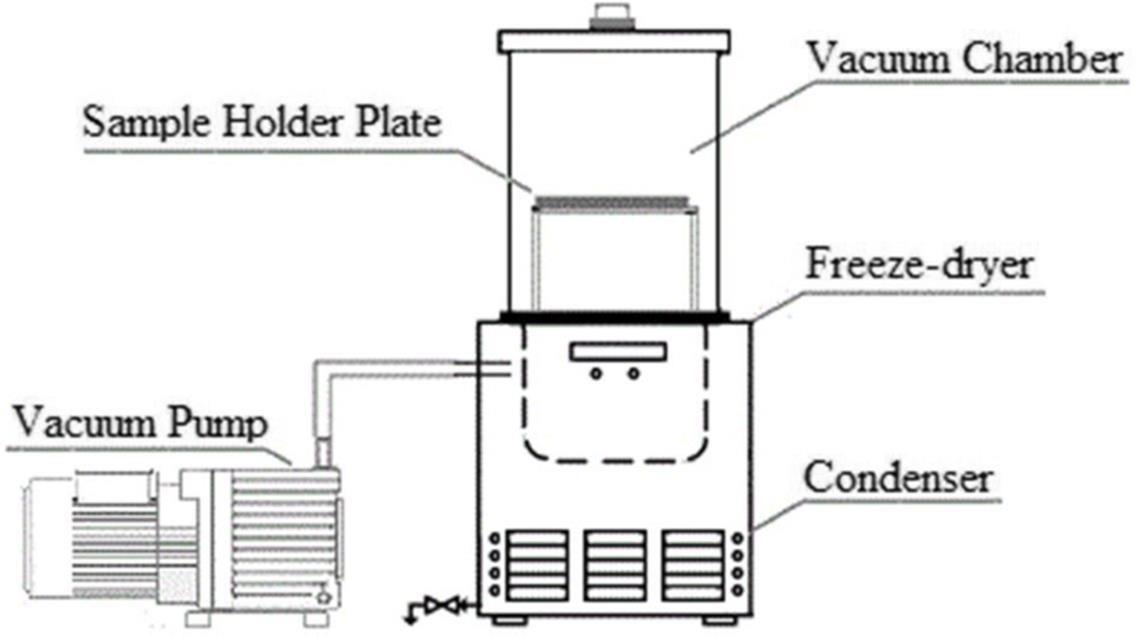
Avacuumpumpkeeps the lowpressureinsidethesealed dryingchamberduringthedehydration process. The reservoir thatreceivesthedryingagentfromtheboilerhasasteamtrapbuiltinordertostopexcessivesteamcondensation.During the start-up cycle, the first steam condensation is significantly decreased when a heater equipped with a temperature controldeviceisused.Todispersesteaminthedryingchamber,Calín-Sanchezetal.(2020)recommendedusinganelectric fan with variable speed. Sehrawat et al. (2016) state that the procedure leads to less oxidative alterations and improved retention of bioactive components. Nevertheless, the steam gathers particulates, dust, and other particles from the raw materialduringdrying.AccordingtoSehrawatandNema(2018),thismethodhasbeeneffectiveindryingonions.
International Research Journal of Engineering and Technology (IRJET) e-ISSN:2395-0056
Volume: 11 Issue: 06 | Jun 2024 www.irjet.net p-ISSN:2395-0072
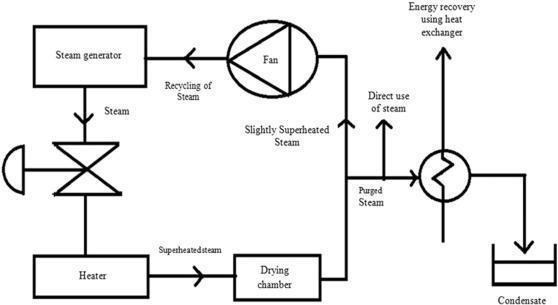
Low-pressuresuperheatedsteamdryingsetup.Source:Adaptedfrom;Sehrawatetal.(2016).
Hot air drying uses a lot of energy and is inefficient. This has led to the development of several strategies that center on recovering exhaust air during the manufacturing process. This goal guided the creation of the heat pump drier (CalínSanchez et al., 2013). This kind of dryer uses water condensation and a refrigerator to recover latent heat. Humid air is releasedfromtheproductasaresultoftheprocedure,whichprovidesitwithdryhotair.Theairiscondensedintheheat pump evaporator, enabling the drying air to be warmed by the latent heat of vaporization. Heat pump dryers reduce the need for fossil fuels while increasing energy efficiency (Fayose and Huan, 2016). Because of the decreased relative humidity, this drying process has an advantage over a typical hot air dryer in terms of reduced time and temperature (Moses et al., 2014; Rahman, 2020). In addition to being simpler to construct and requiring less time to dry than other dryingtechnologies,heatpumpdryingisperfectforlow-technationsintheSub-Saharanregion(FayoseandHuan,2016). Combiningheatpumpdryingtechnologywithotherdryingmethodshashelpedtoovercomesomeofitsshortcomingsand produce better products with lower energy costs and higher thermal efficiency. Examples of heat pump assisted drying methods include chemical heat pump assisted drying, air freeze drying, infrared drying, fluidized bed drying, microwave drying, and radio frequency drying. For heat-sensitive materials, such as fruits and vegetables, which only need a low temperature,thisisparticularlyimportant(FayoseandHuan,2016).

International Research Journal of Engineering and Technology (IRJET) e-ISSN:2395-0056
Volume: 11 Issue: 06 | Jun 2024 www.irjet.net p-ISSN:2395-0072
The components of explosive puff drying equipment are the steam generator, air compressor, decompression valve, vacuumchamber, puffing chamber,andvacuum pump(Calín-Sanchez etal.,2013). Once thefood hasbeen placed within thepuffingchamber,thedecompressionvalveisshut.Usingsteamfromthesteamgenerator,fruitorvegetablesamplesare heatedto95°Candheldthereforfiveminuteswhiletheaircompressorincreasestheinternalpressureoftheapparatusto 0.2mPa.Puffsamplescanbevacuumdriedbyopeningthedecompressionvalve,whichlowerspressure(Fengetal.,2021). Inordertoofferalessexpensiveoptiontofreeze-driedproducts,thisprocesscombineshotairdryingandvacuumfreeze drying (Zou et al., 2013; Chen et al., 2017). Poor product quality is caused by inadequate knowledge of the hygroscopic characteristics of the fruit or vegetable to be dried. According to Feng et al. (2021), another major drawback of the approachistheloss ofnutrientscaused bythehigh temperaturesinvolved invacuumdrying. Withchoppedcarrots,puff dryingproducesaproductthatrehydrateseffectivelyinwaterandbrownsminimally(Kerr,2013).
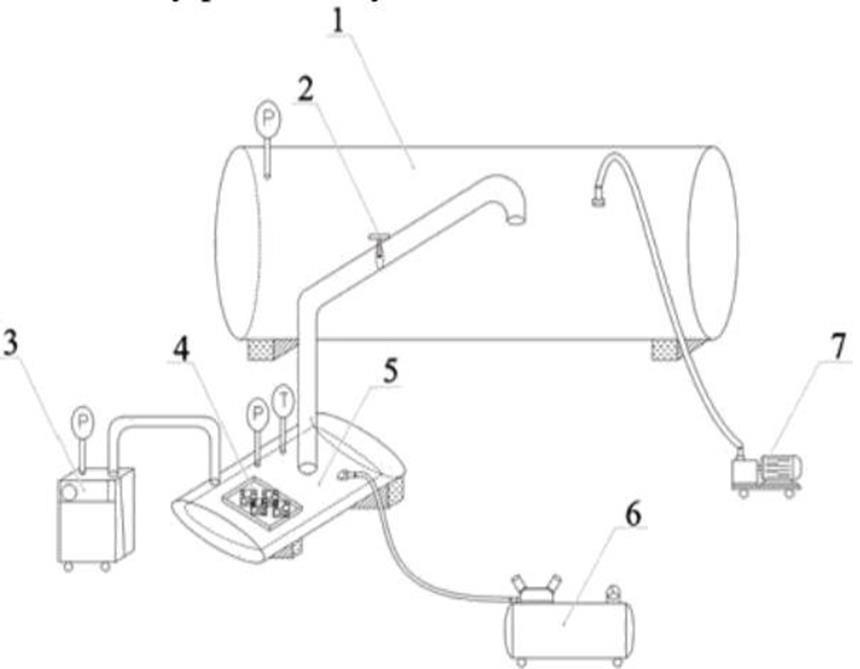
Fig:Schematicdiagramofexplosionpuffdryingdeviceandaccessories.Source:Fanetal.(
1 = Vacuum chamber, 2 = Decompression valve, 3 = Steam generator, 4 = Food samples, 5 = Puffing chamber. 6 = Air compressor,7=Vacuumpump.2018).
1.12 Pulsed electric field (PEF) drying
PEF is a relatively new method that can permeabilize fruit and vegetable tissue cells without raising the product's temperatureorcausingthetissuetodeterioratetoomuch.Essentiallyanon-thermaltechnology,pulsedelectricfieldshave numeroususesinthefoodprocessingindustry.Foodtissuesaresubjectedtoanexternalelectricalfieldformicroseconds duringPEFtreatments,whichresultsinthedisruption ofcellmembranesandlocalstructuralalterations.theapplication of a pulsed electric field as a temperature-controlled pre-treatment during dehydration, which boosts product mass transfer. The impact of temperature, pulse count, and electric field strength oncell disintegration on product qualityand drying time has not been investigated. When compared to dehydration, the pulsed electric field aids in dehydration with reducedenergyuse.Examinetheeffectsoftemperature,thenumberofpulsesappliedduringtreatment,andthestrength ofthepulsedelectricfieldonthevegetables.Adjustthesefactorsbasedontheresultsofenergyinput,celldisintegration, anddryingtime(AkanshaBishtetal,2022).
International Research Journal of Engineering and Technology (IRJET) e-ISSN:2395-0056
Volume: 11 Issue: 06 | Jun 2024 www.irjet.net p-ISSN:2395-0072

The oldest preservation technique is drying, which involves removing water by the use of heat and mass transfer. Free water, which is essentially what causes water activity, is what allows microbes to proliferate and multiply. Therefore, drying increases the shelf life of food products like vegetables by reducing the water content to a manageable level. The following are the key goals that drying techniques must achieve: preserving fresh food commodities so that they are available throughout the year; reducing the weight and volume of the product for easy transportation and storage; maintaining the nutritional and quality aspects of food commodities; and being an energy-efficient method. As a result, novel drying techniques are being used in today's society. Due to the industry's desire to become more environmentally andeconomicallysustainable, novel dryingandfood preservation techniqueshave attracted increased industrial interest andmayeventuallyreplace,atleastinpart,thetraditionalmethodscurrentlyused.
Researchershavedevelopednoveldryingtechniquestoaddressissueswithtraditionaldryingtechniqueslikesun drying, hot air drying, and oven drying that result in reduced quality attributes like textural change, nutrient loss, browningofthedriedfoodproduct,etc.whilerequiringmoretimeandenergy.
Itsfeasibilitycanbe easilyascertained.Dryingoffruits/vegetables makesthemavailableevenduringoffseason andhencegetsbetterprice.Thiscouldhelptoincreasetheprofitability.Theimportanceofdryingthoughknowntomany farmers because of drawbacks of traditional methods it doesn’t got popularized but now with the help of these novel dryingmethodseconomicalandviabilityissueshasbeenaddressed.Thereisneedinfutureindesigningsustainableuser friendlyhybridandeconomicallymoreviabledryersforuseoffarmersinthecountrylikeIndia.
International Research Journal of Engineering and Technology (IRJET) e-ISSN:2395-0056
Volume: 11 Issue: 06 | Jun 2024 www.irjet.net p-ISSN:2395-0072
Drying Technique
Microwave Drying
Table-1:Advantages,limitationsandutilityofvariousrecentdryingtechniques
Advantages
Less time and heat required to lower food moisture conent with excellent qualityofdriedfoods
SprayDrying Long shelf life, low moisture content,highqualityproducts
Refractance Window technology
Unique and less expensive ,more energy efficient, less time, environmentallyeffective
Radio frequency drying
Ultrasonic drying
Infrared drying
Osmotic drying
Fastandeffectivethermaltreatment
Reduce adverse effects such as shrinking, discoloration, breaking, and nutritional alterations a lowcost andenergyefficientsystem,
One of promising technique with improved organoleptic & nutritional valueofprocessedfood
Disadvantages Utility
Slowandexpensive,itshould be used with conjuction with othermethods
Expensive and might loss of bioactive compounds due to hightemperature
The important disadvantage is the higher plastic surface areaofbeltrequiredforlarge amountofsamplefordrying
Overheating in intermediate and high moisture foods due tononuniformheating
Oxidation offats, inactivation of valuable enzymes, and denaturation of proteins are themainproblemsappearing inultrasonication
limited capacity to penetrate and product burning and overheating
Long shelf life, high quality products, energysaving overcome by adding fruit acid in the solution, Sugar coating is not desirable in certain products, time taking process
Freeze drying prevents the spread of harmful bacteria. Food storage without a cold chain
expensiveequipment Itrequiresmoretime increased energy consumptionisnecessary
High value added products
Premium fruits vegetables powder production ,Production ofinstantpowder
heat-sensitive products such as fruit and vegetable juices, purees, slices into powders or flakesorsheetform
post-baking drying of bakedproducts
Drying of fruit, vegetables, meat, and fish
Drying of grains fruits vegetablesandseafood
Fruitsandvegetables
Dairy industry food industry,petfood,
Preserve the food's sensory and nutritional qualities. It permits the food's weight and organoleptic characteristics to be restored by rehydration.
International Research Journal of Engineering and Technology (IRJET) e-ISSN:2395-0056
Lowpressure superheated steam drying
Heat pump dryer
Explosion puffdrying
Dryer exhaust is steam so it is possibletorecover alllatentheat,toxic&organicliquids canberecoveredeasily
Low energy consumption, no vents required, low cost, good product quality
In addition to providing a crispy texture and improved rehydration properties, EP drying offers a porous structure Furthermore, in comparison to traditional drying techniques, EP dried goods showed strongantioxidantactivityandahigh preservationofphenolics.
Pulsed electric field (PEF) drying
Boosttheeffectivenessofdrying
Lower the drying temperature. An increaseinthediffusivityofmoisture
Greaterabilitytorehydrate
Reducedshrinking
Increasednutritionalcompound retention
More complex than hot air, more time required to dry, limitedindustrialexperience
Maintenance cost is high, highcapitalcost
Foods high in protein cannot have the anticipated puffing structure produced by EP. Consequently, using EP in meals high in protein is challenging.
High capital cost, The processing parameters need to be carefully modified basedonthekindofproduct.
Onion drying, Sugar beet drying,
Volume: 11 Issue: 06 | Jun 2024 www.irjet.net p-ISSN:2395-0072 © 2024, IRJET | Impact Factor value: 8.226 | ISO 9001:2008 Certified
Useful in high sensitive products
food preservation, extraction of valuable compounds, and transformation/conversi onreactionsinthefood
Fruits ,vegetables and meatproducts
1) Acar,C.,Dincer,I.,&Mujumdar,A.(2020).Acomprehensivereviewofrecentadvancesinrenewable-baseddrying technologies for a sustainable future. Drying Technology, 1-27. http://dx.doi.org/10.1080/07373937.2020.1848858
2) Acar,C.,Dincer,I.,&Mujumdar,A.(2020).Acomprehensivereviewofrecentadvancesinrenewable-baseddrying technologies for a sustainable future. Drying Technology, 1-27. http://dx.doi.org/10.1080/07373937.2020.1848858
3) Akansha Bisht, Ashmeet Kaur, Prakash Singh, Pranshu and Ferheen Alam (2022) Study on the dehydration of vegetablesusingnoveldryingtechniquesThePharmaInnovationJournalSP11(1):97
4) Alfaifi, B., Tang, J.M., Jiao, Y., Wang, S.J., Rasco, B., Jiao, S.S. and Sablani, S. (2014). Radio frequency disinfestation treatmentsfordriedfruit:Modeldevelopmentandvalidation.JournalofFoodEngineering.120:268-276.8-989.
5) Askari GR, Emam-Djomeh Z, Mousavi SM (2013). Heat and mass transfer in apple cubes in a microwave assisted fluidizedbeddryer.FoodandBioproductsProcessing91(3):207-215.
6) Babu A, Kumaresan G, Raj VAA, Velraj R (2018). Review of leaf drying: Mechanism and influencing parameters, dryingmethods,nutrientpreservation,andmathematicalmodels.RenewableSustainableEnergyReview90:536556.
7) Boudhrioua N, Bahloul N, Ben SI, Kechaou N (2009). Comparison on the total phenol contents and the color of freshandinfrareddriedoliveleaves.IndustrialCropsandProduction29(23):412-419.
8) Cal K, Solohub K (2009). Spray drying technique: Current applications in pharmaceutical technology. Journal of PharmaceuticalSciences99(2):587-97.
9) Calín-Sanchez A, Figiel A, Szarycz M, Lech K, Nuncio-Jauregui N, Carbonell-Barrachina A (2013). Drying kinetics andenergyconsumptioninthedehydrationofpomegranate(PunicagranatumL.)arilsandrind.FoodBioprocess Technology7(7):2071-2083.
10) Calín-SanchezA,LeontinaL,MarinaC,AbdolrezaK,KlaudiaM,AngelA, CarbonellB,AdamF(2020).Comparison oftraditionalandnoveldryingtechniquesanditseffectonqualityoffruits,vegetablesandaromaticherbs.Foods 9(9):1261.
International Research Journal of Engineering and Technology (IRJET) e-ISSN:2395-0056
Volume: 11 Issue: 06 | Jun 2024 www.irjet.net p-ISSN:2395-0072
11) Celli, G. B., Khattab, R., Ghanem, A., & Brooks, M. S. (2016). Refractance WindowTM drying of haskap berry: Preliminaryresultsonanthocyaninretentionandphysicochemicalproperties.
12) Food Chemistry, 194, 218-221. PMid:26471547. http://dx.doi.org/10.1016/j.foodchem.2015.08.012
13) Claussen IC, Ustad TS, Strommen I., Walde PM. (2007). Atmospheric freeze drying a review. Drying Technology 25(6):947-957.
14) Falade KO, Igbeka JC (2007). Osmotic dehydration of tropical fruits and vegetables. Food Reviews International 23(4):373-405.
15) Fayose F, Huan Z (2016). Heat pump drying of fruits and vegetables: principles and potentials for Sub-Saharan Africa.InternationalJournalofFoodScience2016:9673029.
16) Fellows, P. (Peter) (2017). Freeze Drying and Freeze Concentration. Food Processing Technology: Principles and Practice (4th ed). Kent: Woodhead Publishing/Elsevier Science. pp. 929- 940. ISBN 978-0081005231. OCLC 960758611.
17) Feng L, Xu Y, Xiao Y, Song J, Li D, Zhang Z, Zhou C. (2021). Effects of pre-drying treatments combined with explosion puffing drying on the physicochemical properties, antioxidant activities and flavor characteristics of apples.FoodChemistry338:128015.
18) Kahyaoglu L.N, Sahin, S. and Sumnu, G. (2012). Spouted bed and microwave assisted spouted bed drying of parboiledwheat.FoodandBio-productsProcessing.90:301-08
19) Kahyaoglu LN, Sahin S, Sumnu G (2012). Spouted bed and microwave assisted spouted bed drying of parboiled wheat.FoodandBioproductsProcessing90(2):301-308.
20) KerrWL(2013).FoodDryingandEvaporationProcessingOperations.In:MyerK.(Ed.),HandbookofFarm,Dairy andFoodMachineryEngineering(2ndEdition).NewYork,USA:Elsevierpp.317-340.
21) Marra F,ZhangL, Lyng J(2009).Radio frequency treatment of foods:Review of recentadvances. Journal of Food Engineering91(4):497-508.
22) MehtaBK,JainSK,SharmaGP(2013).ResponseSurfaceOptimizationofosmoticdehydrationprocessparameters forbuttonmushroom(Agaricusbisporus).FocusingonModernFoodIndustry2(2):91-102.
23) MercerDG(2014).Anintroductiontothedehydrationanddryingoffruitsandvegetables.DonaldG.Mercer.
24) Moses JA, Norton T, Alagusundaram K, Tiwari B (2014). Novel drying techniques for the food industry. Food EngineeringReviews6:43-55.
25) Musielak, G., Mierzwa, D., Kroehnke, J. (2016). Food drying enhancement by ultrasound-A review trends in food scienceandtechnology.56:126-141.doi.org/10.1016/j.tifs.2016.08.003.
26) Nindo, CI, Tang J (2007). Refractance window dehydration technology: A novel contact drying method. Drying Technology25(1):37-48.
27) Pragati S Preeti B (2014). Technological revolution in drying of fruit and vegetables. International Journal of ScienceandResearch3(10):705-711.
28) Prosapio, V., & Norton, I. (2018). Simultaneous application of ultrasounds and firming agents to improve the qualitypropertiesofosmotic+freeze-driedfoods.LWT,96,402-410.http://dx.doi.org/10.1016/j.lwt.2018.05.068
29) Prosapio, Valentina, Norton, Ian, D. Marco, Iolanda (2017). Optimization of freeze-drying using a Life Cycle Assessment approach: Strawberries’ case study. Journal of Cleaner Production. 168:1171-1179. doi:10.1016/j.jclepro.2017.09.125.ISSN0959-6526.
30) Rastogi, N.K., Raghavarao, K.S.M.S. and Niranjan, K. (2005). 9- Developments in Osmotic Dehydration, Editor(s): Da- Wen Sun, Emerging Technologies for Food Processing, Academic Press, 221-249. ISBN 9780126767575, https://doi.org/10.1016/B978-012676757-5/50011-6.
31) Rey, Louis and May, Joan (2016). Freeze-Drying/Lyophilization of Pharmaceutical and Biological Products (Third ed.).Informahealthcare.
32) Roji Waghmare (2021) Refractance window drying: A cohort review on quality characteristics Trends in Food Science&TechnologyVolume110,April2021,Pages652-662,https://doi.org/10.1016/j.tifs.2021.02.030
33) Schossler, K., Jager, H., Knorr, D. Novel. (2012). Contact ultrasound system for accelerated freeze-drying of vegetables.InnovativeFoodScienceandEmergingTechnologies.18:433-45.
34) Sehrawat R, Nema PK (2018). Low pressure superheated steam drying of onion slices: kinetics and quality comparisonwithvacuumandhotairdryinginanadvanceddryingunit. Journal of FoodScienceand Technology 55(10):4311-4320.
35) Sehrawat R, Nema PK. and Kaur BP (2016). Effect of superheated steam drying on properties of foodstuffs and kineticmodeling.InnovativeFoodScienceandEmergingTechnologies34:285-301.
36) Shete, Y.V, Chavan, S.M, Champawat, P.S and Jain, S.K. (2018).Reviews on osmotic dehydration of fruits and vegetables.JournalofPharmacognosyandPhytochemistry.7(2):1964-1969.
International Research Journal of Engineering and Technology (IRJET) e-ISSN:2395-0056
Volume: 11 Issue: 06 | Jun 2024 www.irjet.net p-ISSN:2395-0072
37) Sisquella,M.,Vinas,I., Picouet, P., Torres,R. and Usall,J. (2014).Effect of host and Monilinia spp. variables on the efficacyofradiofrequencytreatmentonpeaches.PostharvestBiolTec.87:6-12.
38) Tontul I, Topuz, A (2017). Spray-drying of fruit and vegetable juices: Effect of drying conditions on the product yieldandphysicalproperties.TrendsinFoodScienceandTechnology63:91-102.
39) Weng Y, Li Y, Chen X, Song H, Zhao CX. Encapsulation of enzymes in food industry using spray drying: recent advances and process scale-ups. Crit Rev Food Sci Nutr. 2023 Mar 27:1-18. doi: 10.1080/10408398.2023.2193982.
40) ZouK,TengJ,HuangL,DaiX,WeiB(2013).Effectofosmoticpretreatmentonqualityofmangochipsbyexplosion puffingdrying.LWTFoodScienceandTechnology51(1):253-259.
2024, IRJET | Impact Factor value: 8.226 | ISO 9001:2008