
International Research Journal of Engineering and Technology (IRJET) e-ISSN: 2395-0056
Volume: 11 Issue: 06 | Jun 2024 www.irjet.net p-ISSN: 2395-0072
International Research Journal of Engineering and Technology (IRJET) e-ISSN: 2395-0056
Volume: 11 Issue: 06 | Jun 2024 www.irjet.net p-ISSN: 2395-0072
Rishabh Kumar
PG Student (Masters of Integrated Technology) Department of Computer Science and Engineering Noida Institute of Engineering and Technology Greater Noida Affiliated to AKTU Lucknow
Abstract - Customer churn prediction is a criticalaspectfor businesses aiming to retain their client base in competitive markets. It is easier to retain a customerthantoconvertanew customer successfully This study applies advanced machine learning techniques to predict customer churn, leveraging a rich dataset with featuresincludingdemographic information, service usage patterns, and customer account information. The analysis achievesrobustpredictionaccuracybyemploying methods such as SMOTE-Tomek resampling to address the class imbalance, and utilizing algorithms like LightGBM, Random Forest, Xgboost, etc. Feature importance techniques, including permutation importance and SHAP values, are employed to identify key factors influencing churn. This comprehensive approach provides actionable insights for targeted retention strategies, ultimately aiming to reduce churn rates and enhance customer satisfaction.
Key Words: SMOTE-Tomek, Xgboost, LightGBM, Random forest, SHAP values, Hyperparameter tuning.
The globalization and advancements in the telecommunication industry have significantly increased marketcompetitionbyintroducingnumerousoperators.To maximize profits, companies adopt strategies such as acquiring new customers, up-selling, and extending the retention period of existing customers. Among these, retainingcurrentcustomersisthemostcost-effective.
Theprimarygoalofcustomerchurnpredictionistodevelop strategies for customer retention. With growing market competition, the risk of churn rises, making it essential to track loyal customers. Churn prediction models aim to identifyearlysignsofchurnandforecastcustomerslikelyto leave,helpingcompaniesleveragetheirvaluabledatabases tomaintaincustomerloyaltyandmitigatechurn.
• Performed EDA on churn datset to find out relationshipsbwvariousfeaturesthatexistandconducted variousstatisticaltestsliket-test,anovatestetctoconfirm therelationships.
• Churn prediction decreases withtenure , people who spendmoretimewiththecompanyarelikelytochurnless.
•Peoplewhousefiberopticsarelikelytochurnmostly.
•Peoplehavingmonth-to-monthcontractpreferpaying by Electronic Check mostly or mailed check. The reason mightbeshortsubscriptioncancellationprocesscomparedto automaticpayment.
•Peoplewithnointernetserviceareleastlikelytochurn followed by people who have online security and at last comes people who have highest chances of churning are those people who don’t have any online security despite havinginternetservices:
Random forest classifier:
• Random Forest is an ensemble learning method that buildsmultipledecisiontreesandmergesthemtogetamore accurateandstableprediction.Inchurnprediction,itworks bycreatingalargenumberofdecisiontreesduringtraining andoutputtingtheclassthatisthemodeoftheclassesofthe individualtrees.
•ItsrobustnesstooverfittingandabilitytohandlehighdimensionaldatamakeRandomForestareliablealgorithm for identifying churn patterns and predicting customer behavior.
International Research Journal of Engineering and Technology (IRJET) e-ISSN: 2395-0056
Volume: 11 Issue: 06 | Jun 2024 www.irjet.net p-ISSN: 2395-0072
Xgboost:
• XGBoost, or Extreme Gradient Boosting, is a highly efficientandscalableimplementationofgradientboosting. In churn prediction, it constructs an ensemble of decision treesinasequentialmanner,whereeachtreecorrectserrors madebyitspredecessors.
• Its ability to handle large datasets and optimize performancewithtechniqueslikeregularizationandparallel processingmakesXGBoostapopularchoiceforidentifying customers at risk of churn, offering high accuracy and robustness
LightGBM:
• LightGBM, or Light Gradient Boosting Machine, is designedforspeedandefficiency.Ituseshistogram-based algorithmstobucketcontinuousfeaturevalues,significantly reducing memory usage and increasing training speed. In churnprediction,LightGBMexcelswithlargedatasetsand high-dimensional data, providing fast and accurate predictions.
• Itsabilitytohandlecategoricalfeaturesnativelyandits advanced optimization techniques make it an excellent choiceforchurnanalysis.
SVM:
•SupportVectorMachineisasupervisedlearningmodel thatfindstheoptimalhyperplanewhichbestseparatesthe classesinthefeaturespace.Inchurnprediction,SVMaimsto classify customers into churners and non-churners by maximizingthemarginbetweenthetwoclasses.Weneeda hyperplanewhichhaslargestmargin.
•Withkernels,SVMcanhandlenon-linearrelationships, making it suitable for complex datasets where the relationshipbetweenfeaturesandchurnisnotpurelylinear. Its strength lies in high-dimensional spaces and smaller datasets.
1. Introduction
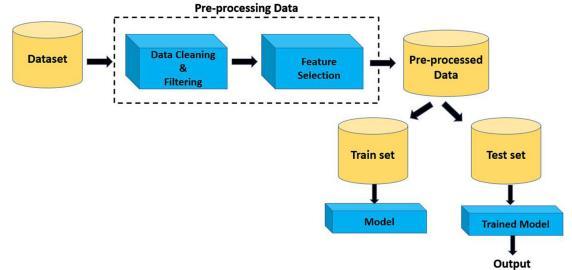
Theobjectiveofthisstudyistodevelopapredictivemodel forcustomerchurnusingmachinelearningtechniques.The methodologyinvolvesseveralkeysteps:datapreprocessing, feature engineering, dimensionality reduction using Principal Component Analysis (PCA), model training with various algorithms, hyperparameter tuning, and model evaluation.
2. Data Collection
The dataset used in this study consists of customer data, including demographic information, account information,
and service usage patterns. The target variable is 'Churn,' indicatingwhetheracustomerhaschurned.
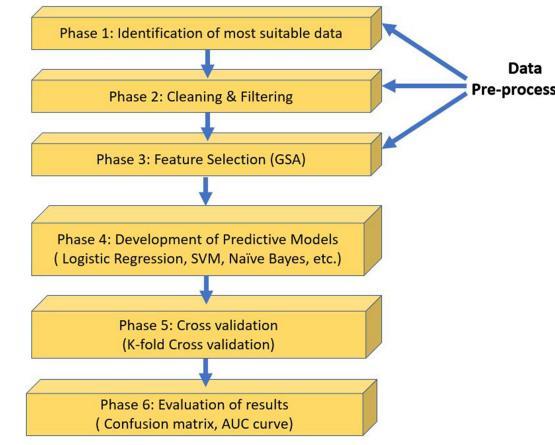
Fig2.Phasemodelfordevelopingacustomerchurn managementframework.
Data preprocessing involved the following steps:
Handling Missing Values: Missing values were imputed using appropriate methods such as mean imputation for numerical features and mode imputation for categorical features.
Encoding Categorical Variables: Categorical variables wereencodedusingone-hotencodingtoconverttheminto numericalform.
Feature Scaling: Features were standardized using StandardScalerfrom`sklearn preprocessing`toensurethat allfeatureshaveameanof0andastandarddeviationof1.
4. Dimensionality Reduction using PCA
Toaddresstheissueofhighdimensionalityandtoimprove theefficiencyofthemachinelearningalgorithms,PCAwas applied:
Standardization: The dataset was standardized before applyingPCAtoensurethateachfeaturecontributesequally totheprincipalcomponents.
PCA Application: PCAwasappliedtoreducethedatasettoa lower-dimensional space while retaining 95% of the variance. This step helps in noise reduction and improves theperformanceofthemachinelearningmodels.
Several machine learning algorithms were considered for trainingthepredictivemodel,including:
-LogisticRegression
International Research Journal of Engineering and Technology (IRJET) e-ISSN: 2395-0056
Volume: 11 Issue: 06 | Jun 2024 www.irjet.net p-ISSN: 2395-0072
-RandomForestClassifier -SupportVectorMachine(SVM) -XGBoostClassifier
6. Hyperparameter Tuning
Foreachalgorithm,hyperparametertuningwasperformed using `GridSearchCV` to identify the optimal set of hyperparameters.Thisprocessinvolveddefininga grid of hyperparameters and evaluating the model performance using cross-validation. The scoring metric used for evaluationwastheareaundertheROCcurve(AUC).
7. Model Evaluation
Performance indicators
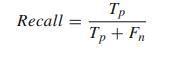
5.1.2 Recall
It is the ratio of real churners (i.e. True Positive), and is calculated under the following:
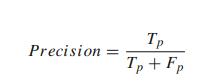
5.1.3 Precision
It is the ratio correct predicted churners, and is calculated under the following:
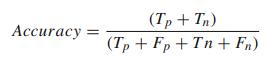
5.1.4 Accuracy
It is ration of number of all correct predictions, and is calculated under the following:
5.1.5 F-Measure
It is the harmonic average of precision and recall, and it is calculated under the following:
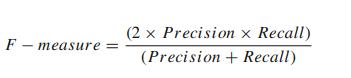
A better combined precision and recall achieved by the classifier is implied due to a value closer to on
Theperformanceofeachmodel wasevaluatedonthetest datasetusingthefollowingmetrics:
Accuracy:Theproportionofcorrectlyclassifiedinstances.
AUC-ROC: The area under the receiver operating characteristic curve, which provides a measure of the model'sabilitytodistinguishbetweenclasses.
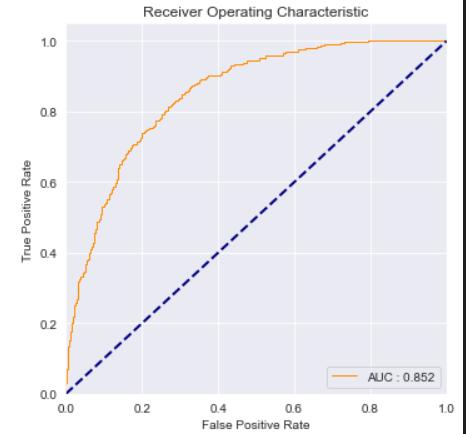
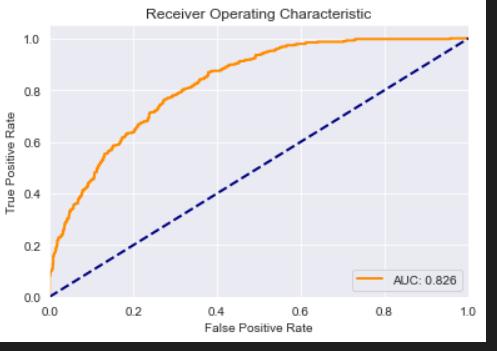
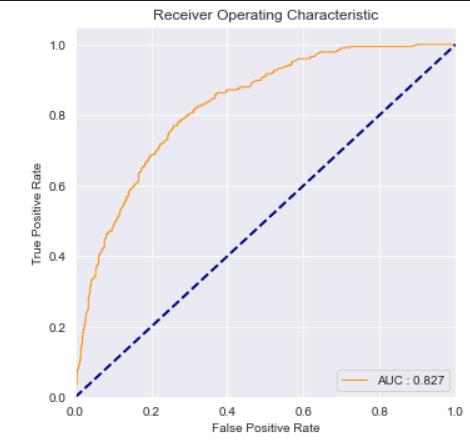
Auc Curve Analysis:
To quantify the models performance on positive and negativeclassesofthetestset,
AUCcurvehasbeenused.HigherthevalueoftheAUCscore, thebetterthemodelperformsonbothpositiveandnegative classes. The obtained AUC scores of different predictive models which are used to predict the target variable , graphicallyrepresentstheobtainedAUCscoresofLogistic Regression,Logis ticRegression,DecisionTrees, (Extra Trees) , Random Forest, SVM Linear, Logistic Regressionrespectively.
S.no Model Accuracy Precision Recall
Table1. Result analsyis.
XGBoost Classifier outperforms over other respective algorithmsonthetestsethavinganAUCscoreof85%.
The XGBoost Classifier achieved the highest performance with an accuracy of 80.2% and an AUC score of 0.852 along with SVM (Same results).
The results indicate that the XGBoost Classifier, with the application of PCA and hyperparameter tuning, outperformed the other algorithms. The key findings are summarizedasfollows:
Logistic Regression:Achievedanaccuracyof80.4%andan AUCof0.851
Random Forest Classifier: Achievedanaccuracyof79.5% andanAUCof0.83
International Research Journal of Engineering and Technology (IRJET) e-ISSN: 2395-0056
SVM: Achievedanaccuracyof80.1%andanAUCof0.852.
XGBoost Classifier: Achievedanaccuracyof80.2%andan AUCof0.852,makingitthebest-performingmodel.
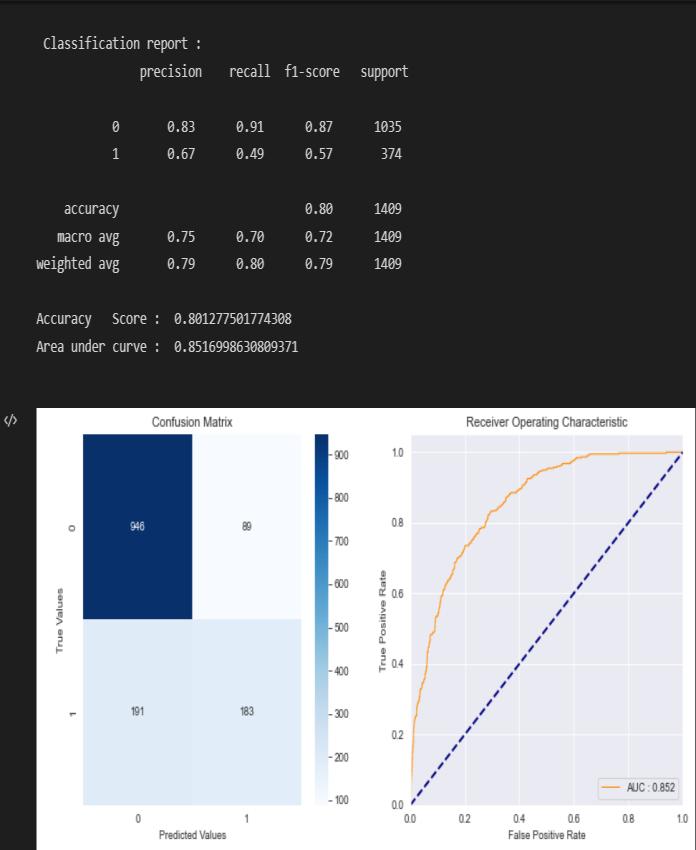
Fig 3. Results of model XGBoost.
AUC curves of all models analysis:
XgBoost:
4.
Volume: 11 Issue: 06 | Jun 2024 www.irjet.net p-ISSN: 2395-0072 © 2024, IRJET | Impact Factor value: 8.226 | ISO 9001:2008 Certified Journal | Page225
LightGBM:
5.
Logitsic Regression:
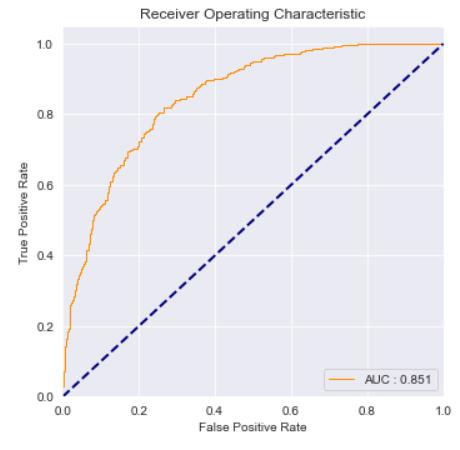
Figure 6.
Random Forest:
7.
International Research Journal of Engineering and Technology (IRJET) e-ISSN: 2395-0056
Volume: 11 Issue: 06 | Jun 2024 www.irjet.net p-ISSN: 2395-0072
This study demonstrates the effectiveness of PCA for dimensionality reduction and the importance of hyperparameter tuning in improving model performance. The XGBoost Classifier emerged as the most accurate and reliablemodelforpredictingcustomerchurninthisdataset. Future work could explore additional feature engineering techniques and the use of ensemble methods to further enhancemodelperformance.
Xgboost with hyperparameter tuning has best auc results whichis85.2%andherearethereasonsforthis:
• Robustness to Noisy Data: Churn prediction datasets often contain noisy and complex information. XGBoost's robustness helps it handle such noisy data effectively, enabling it to extract meaningful patterns even from intricatedatasets.
• Handling Non-linear Relationships:Customerbehavior, which influences churn, often exhibits non-linear relationships with various predictors. XGBoost's ability to capturecomplexinteractionsbetweenpredictorsallowsitto modelthesenon-linearrelationshipsaccurately.
• Feature Importance: XGBoost provides insights into featureimportance,indicatingwhichfactorshavethemost significant influence on churn prediction. This helps businessesunderstandthe keydriversof churn and focus theireffortsaccordingly.
• Ensemble Learning: XGBoost is an ensemble learning methodthatcombinesthepredictionsofmultipleindividual models (trees) to produce a robust and accurate final prediction.Thisensembleapproachmitigatesoverfittingand improves generalization performance, crucial for reliable churnprediction.
1. Customer churn prediction system: a machine learning approach Praveen Lalwani1 · Manas Kumar Mishra1 · JasroopSinghChadha1·PratyushSethi1Received:19June 2020/Accepted:12January2021©TheAuthor(s),under exclusive licence to Springer-Verlag GmbH, AT part of SpringerNature2021.
2. T. Mitchell. Machine Learning. WCB/Mc Graw Hill, Boston,etal.,1997
3. Customer churn prediction in telecommunications BingquanHuang⇑,MohandTaharKechadi,BrianBuckley School of Computer Science and Informatics, University CollegeDublin,Belfield,Dublin4,Ireland.
4. Customer churn prediction system: a machine learning approach Praveen Lalwani1 · Manas Kumar Mishra1 ·
JasroopSinghChadha1·PratyushSethi1Received:19June 2020/Accepted:12January2021©TheAuthor(s),under exclusive licence to Springer-Verlag GmbH, AT part of SpringerNature2021
5. Petrison LA, Blattberg RC, Wang P (1997) Database marketing: Past, present, and future. Journal of Direct Marketing11(4):109–125
6.. Qureshi, S.A., Rehman, A.S., Qamar, A.M., Kamal, A., Rehman, A.: Telecommunication subscribers’ churn prediction model using machine learning. In: Eighth International Conference on Digital Infor mation Management(ICDIM2013),pp.131–136.IEEE(2013)
7.RadosavljevikD,vanderPuttenP,LarsenKK(2010)The impactofexperimentalsetupinprepaidchurnpredictionfor mobiletelecommunications:Whattopredict,forwhomand does the customer experience matter? Trans. MLDM 3(2):80–99
8. Rajamohamed R, Manokaran J (2018) Improved credit card churn prediction based on rough clustering and supervised learning techniques. Cluster Computing 21(1):65–77
9RodanA,FarisH,AlsakranJ,Al-KadiO(2014)Asupport vectormachineapproachforchurnpre dictionintelecom industry.Internationaljournaloninformation17(8):3961–3970
10.ShaabanE,HelmyY,KhedrA,NasrM(2012)Aproposed churnpredictionmodel.InternationalJournalofEngineering ResearchandApplications2(4):693–697