
International Research Journal of Engineering and Technology (IRJET) e-ISSN:2395-0056
Volume: 11 Issue: 06 | Jun 2024 www.irjet.net p-ISSN:2395-0072

International Research Journal of Engineering and Technology (IRJET) e-ISSN:2395-0056
Volume: 11 Issue: 06 | Jun 2024 www.irjet.net p-ISSN:2395-0072
Anshul Kumar1 , Prashant Sharma2, Avinash3, Pummy4 Harish Kumar5, Shiva Garg6
1,2,3,4B. Tech (CSE) IV Year, H.R. Institute of Technology, Ghaziabad, India 5,6 Professor CSE, H.R.Institute of Institution, Ghaziabad, India
Abstract – AnIDSIntrusionDetectionSystemplaya crucialrolein moderncybersecurity, whichfigureout andoutputs to unauthorized access and cyberattacks within a network or internet. IDS aims to enhance flexibility and adaptability in detecting diverse intrusion attempts. This approach allows for seamless integration into existing infrastructures, minimizing deployment complexities By using advance machine learning tools and techniques, IDS use to analyze network traffic patterns, system logs, and behavioral anomalies to identify the strengthen behavior in live scenarios. This proactive stance enables timely responses to potential threats, reducing the risk of data breaches and system compromises. Moreover, easy customization and scalability, empowering organizations to tailor IDS solutions to their specific security requirements. This adaptability ensures efficient threat detection across varying network environments and evolving cyber threats. Overall the abstractconceptofintrusiondetectionsystemimplementationrepresentsasignificantadvancementincybersecurity,offering enhanceddetectioncapabilitiesandoperationalflexibilitytosafeguarddigitalassetsandpreservedataintegrity.
Inthisgrowinginterconnecteddigitalera,ensuringtheintegrityofcomputernetworksandsystemshasbecomeanimperative concernfororganizationsinallovertheworld.Withtheexponentialgrowthofcyberthreatsandadvanceattackstrategy,the need for robust intrusion detection mechanisms has never been more critical. Intrusion Detection Systems (IDS) serve as a frontline defense, persistently surveilling network activities and system activities to recognize and respond to malicious behavior promptly addressing Traditional IDS solutions often face challenges in terms of flexibility, scalability, and adaptability to evolving threats. However, recent advancements in technology have led to the development of IDS architectures that offer greater freedom in deployment and configuration. One such innovation is the concept of free-form plug-and-play intrusion detection systems. This research paper explores the concept of free-form plug-and-play IDS and its implicationsfor enhancingcybersecuritydefenses.Bybreakingawayfromrigidarchitecturesand embracinga moreflexible approach,free-formplug-and-playIDSsystems offer several potential benefits.Theseinclude easierintegration into existing network infrastructures, reduced deployment complexity,and improved scalabilitytoaccommodate changing organizational needs. Furthermore, the incorporation of machine learning algorithms and advanced analytics techniques empowers freeform plug-and-play IDS to adapt dynamically to emerging threats. By analyzing network traffic patterns, system logs, and behavioralanomalies,thesesystemscandetectandpromptlyaddressingunauthorizedaccessattemptsand maliciousactivity inrealtimeThe FinalgoalofthispaperistofurnishathoroughunderstandingofIDSprinciples,anditspracticalimplications for cybersecurity research and practice. Through the review of existing literature, case studies, and empirical analyses, we focus to evaluate the effectiveness and feasibility of implementing such IDS architectures in diverse organizational contexts. Ultimately, this research paper seeks to contribute to the ongoing discourse on intrusion detection systems and advance the development of innovative cybersecurity solutions capable of addressing the evolving threat landscape effectively. By harnessingthepotentialoffree-formplug-and-playIDS,organizationscanbolstertheircyberdefensesandsafeguardcritical assetsagainstsophisticatedcyberattacks.
[1]"A Survey of Intrusion Detection Systems: Techniques, Challenges, and Future Trends" by Alazab et al. (2012):This comprehensive survey provides an synopsis of different intrusion detection techniques, including Anomaly-based and signature-basedtechniques.ItdiscussesthechallengesfacedbytraditionalIDSsolutionsandexploresemergingtrends,such as machinelearning and data mining, in enhancing detection capabilities.[2]"Intrusion Detection Systems: A Review and Comparative Study" by Garcia Teodoro et al. (2009):The paper presents a comparative analysis of different intrusion
International Research Journal of Engineering and Technology (IRJET) e-ISSN:2395-0056
Volume: 11 Issue: 06 | Jun 2024 www.irjet.net p-ISSN:2395-0072
detection systems, highlighting their strengths, weaknesses, and performance metrics. It covers both network-based and host-based IDS solutions, offering insights into their effectiveness in detecting and mitigating cyber threats.[3]"AnomalyBased Intrusion Detection: Techniques, Challenges, and Opportunities" by Patcha and Park (2007):Focusing on anomaly-basedintrusion detectiontechniques,this paper exploresthe principles, methodologies,andchallengesassociated with detecting abnormal behavior in network traffic. It discusses the potential of anomaly detection in addressing zero-day attacks and emerging threats.[4]"Machine Learning Techniques for Intrusion Detection: A Review" by Muda et al. (2011):Thisresearch paperusestheapplicationofmachinelearningalgorithmsinintrusiondetectionsystems.It workson various machine learning methodology including the neural networks, support vector machines, and decision trees, and evaluates the efficiency in identifying the intrusion and anomalies.[5]"A Survey of Intrusion Detection Systems Utilizing Machine Learning Techniques" byAlazabetal.(2011):Focusingspecificallyonmachinelearning-basedIDSsolutions,this survey explores the use of supervised, unsupervised, and semi-supervised learning algorithms in detecting and classifying intrusions. It discusses the advantages and limitations of different machine learning approaches in real-world deployment scenarios.[6]"Intrusion Detection Systems: A Review" by Darwish et al. (2010):[7]This review provides an in-depth analysisofintrusiondetectionsystems,coveringtheirarchitecture,components,anddetectionmechanisms.Itdiscussesthe evolutionofIDStechnologiesovertimeandevaluatestheirefficacyinmitigatingvarioustypesofcyberthreats.[7]"A Review of Intrusion Detection Systems Based on Machine Learning Techniques" by Siddiqui et al. (2019):Focusing on recent advancements in intrusion detection systems, this review paper examines the role of machine learning techniques in enhancing detection accuracy and reducing false positives. It discusses the integration of deep learning and ensemble learning approaches in IDS solutions.[8]"Intrusion Detection Systems: A Review" by Hameed and Hussain (2016):This review provides an overview of intrusion detection systems, covering their classification, detection techniques, and evaluation methodologies. It discusses the importance of real-time monitoring and response capabilities in modern IDS architectures.
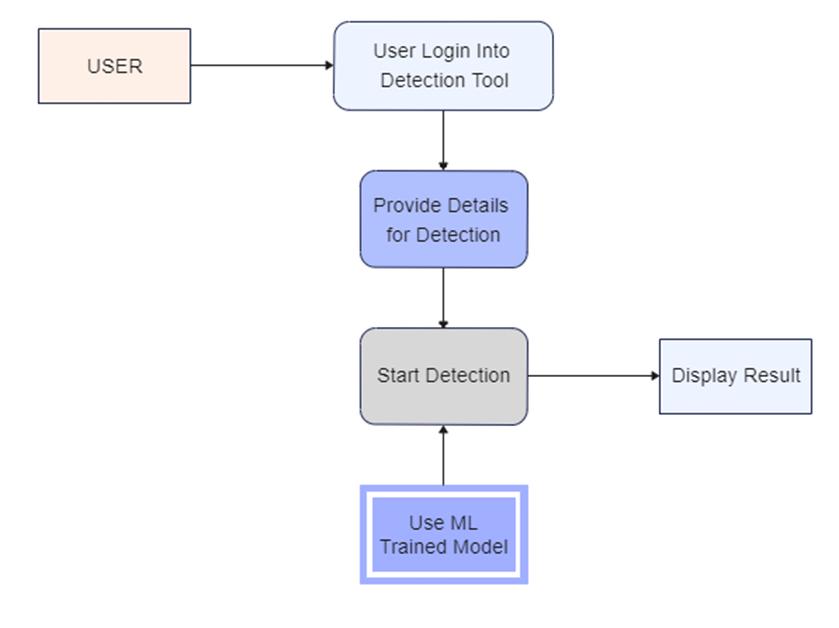
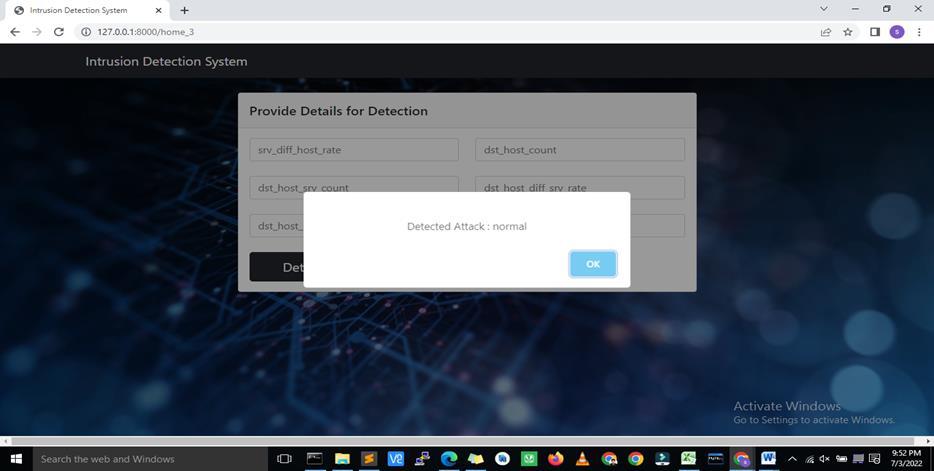
WemadeanIDSwhichworksonreal-timerole-basedscenarioswhichaccessthedatafromtheDatasetthatwouldfirstopen theuser to login, then further user withlogin, after the successful loginuser will be able to passthe input credentials tothe machine learning model. After passing the details the user has a start detection button to starting the detection. After successfuldetectiontheuserwillgetonepopuponthescreenabouttheinformationof whattypeofattackidentifiedwhichis shownwiththehelpofinputdata.
4.1.
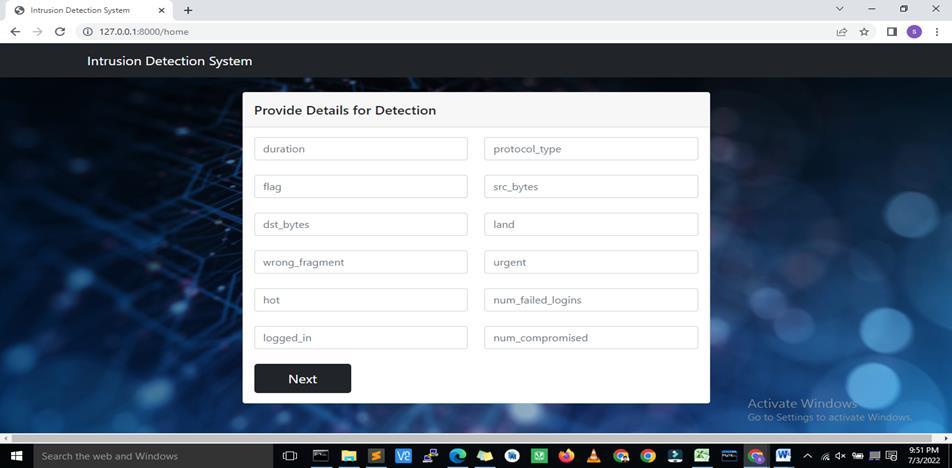
Fromthestartingoftheuserinterfacedesigntherearefivefilepagesareasfollow,HTMLfileswhichareusedforthewebsite – index, dashboard, home, home_2, and home_2 page. When user get the successful login then, user will get the dashboard whereuserwillfound theinformationorinsightoftheKDDdatasetwhichisnecessary forthedetectionoftheattackandon thesamescreenthereisabuttonwhichisprovidedtostartthedetection,afterclickingonthatbuttonuserwill directedtothe nextscreenwhichishomescreenwhereuserwillhavetoprovidetherequireddataorinformationtodetectthecyberattack. Similarlyafterthehomepageuserwilldirectedtohome_2andhome_3tofillthemoredetailsforthefurtherdetection.Atthe end,afterenteringalldetailstheusercanstartthedetectionbysimplyclicking onthebutton,thisbuttonis connectedwith thefunctionswhichwillprovidetheinputdataorinformationoftheattackintotheMLtrainedmodelandwillshowtheresult onthesamescreenusingpopup windowwhichalreadycontainstheinformationofthetypeofdifferent-different intrusion attack.
4.2. Django as Framework: This Ids model is based on Django framework, Django uses the high-level Python web framework that is used for the rapid development and clear, sensible design. Every Web app which we create in Django is known as project; and a project is a combination of applications. Set of code file is known as application relying on the MVT pattern.Forexample,supposewewanttobuildawebsite,thewebsiteisourprojectandtheforum,news,contactengineare applications.Everyapplicationisindependentbecausethisstructuremakesiteasiertomoveanapplicationbetweenprojects. FollowingstructureistheoutputofeveryDjangoweb-app.
4.3.Application UI Design or Output: ThebelowFig4.1showstheuserloginpagewhereuserswillenterthecredentials tologintotheIDSwhichistheloginpageofoutput
International Research Journal of Engineering and Technology (IRJET) e-ISSN:2395-0056
Volume: 11 Issue: 06 | Jun 2024 www.irjet.net p-ISSN:2395-0072

These2Fig4.2areshowingthedata,likeprotocoltypeandattacktypeatdifferent-differenttime,whicharestoredinsideourdatasetKDD99 Whichislearnedbyustoourmodel
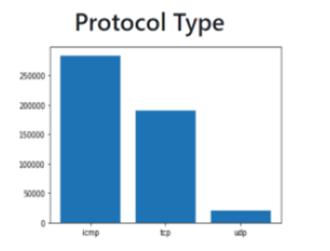
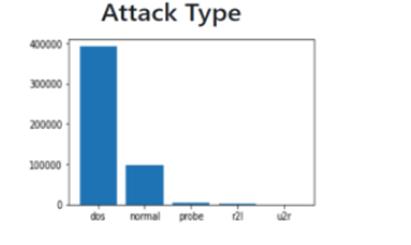
Fig 4.2 Dashboard page with type of protocol used and what type of attack is
International Research Journal of Engineering and Technology (IRJET) e-ISSN:2395-0056
Volume: 11 Issue: 06 | Jun 2024 www.irjet.net p-ISSN:2395-0072
ThisbelowfirstFig4.3providingthedetailslikewhattypeofattackourprojectwillshowalongwiththecountofattackinthe respectivefieldslike Dos, normal, probe, r21, u2r, second Fig 4.3 is showing the testing and training score of the model, means how efficient our modelis.

International Research Journal of Engineering and Technology (IRJET) e-ISSN:2395-0056
Volume: 11 Issue: 06 | Jun 2024 www.irjet.net p-ISSN:2395-0072
ThebelowFig4.5isaskingfortheotherrequireddetailsneededduringthedetectionoftheattack
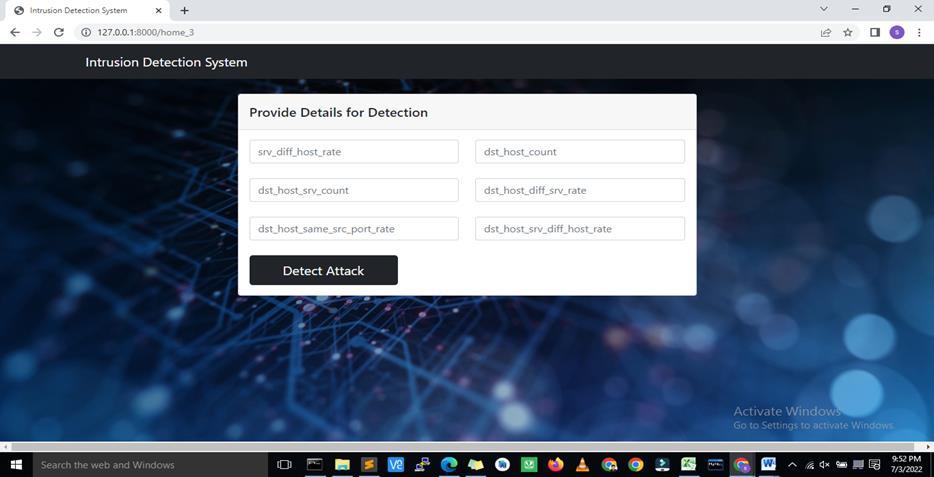
Fig 4.5 is asking for the further Details required in detection of the attack type with start button
ThegivenFig4.6isshowingthefullimplementationoftheprojectthatwhatisrequiredforthedesigningoftheprojectand howallthealgorithmsareworkingand displaythefinaloutputofthedetectedresult.
Implementation
International Research Journal of Engineering and Technology (IRJET) e-ISSN:2395-0056
Volume: 11 Issue: 06 | Jun 2024 www.irjet.net p-ISSN:2395-0072
TheIDSdemonstrateshighaccuracyindetectingattacktype,normal,advance,ordocbyputting differentvaluesforchecking thecorrectoutputaswerequire.Userfeedbackindicatesapositiveexperiencewithdesiredoutput.
FutureimportancecouldincludeimplementingIDSfor personalandnormalopentoalluse.
Now at the end, output of this project Intrusion Detection System is valuable during finding out the type of attack over the networkorInternet Thistoolcanbeusedbyanyuser veryeasilybecauseitsUserInterfaceiscompletely user-friendlyand responsiveduetothatreasonusercanworkeasilyonthistoolandeasilyunderstandthe behavior ofthetool.Moreover,this idsystemhavegoodaccuracywhichisourultimaterequirementforany typeofdetectionusingthistoolandthistypeoftool. WiththehelpofrandomforestalgorithmandKDDCUP99dataset Weareabletodetectthefivedifferenttypesofattacks. In the upcoming future we can do some enhancement in this tool to make it more productive and fast so it can solve multiple problemofthedifferentusersatthetimeofneed:
oFacilitytoonboardadditionalusers
oMoreengaginguserinterface
oFacilitiestoidentifythealternativeformsofattacks
oInthefutureweaimtoenhanceprecisionforbetteroutcomes
oMaketheapplicationlivesothateveryonecanusethis.
International Research Journal of Engineering and Technology (IRJET) e-ISSN:2395-0056
Volume: 11 Issue: 06 | Jun 2024 www.irjet.net p-ISSN:2395-0072
[1]"ASurveyofIntrusionDetectionSystems:Techniques,Challenges,andFutureTrends"byAlazabetal.(2012)
[2]"IntrusionDetectionSystems:AReviewandComparativeStudy"byGarciaTeodoroetal.(2009)
[3]"Anomaly-BasedIntrusionDetection:Techniques,Challenges,andOpportunities"byPatchaandPark(2007)
[4]"MachineLearningTechniquesforIntrusionDetection:AReview"byMudaetal.(2011)
[5]"ASurveyofIntrusionDetectionSystemsUtilizingMachineLearningTechniques"byAlazabetal.(2011)
[6]"IntrusionDetectionSystems:AReview"byDarwishetal.(2010)
[7]"AReviewofIntrusionDetectionSystemsBasedonMachineLearningTechniques"bySiddiquietal.(2019)
[8]"IntrusionDetectionSystems:AReview"byHameedandHussain(2016)