
International Research Journal of Engineering and Technology (IRJET) e-ISSN:2395-0056
Volume: 11 Issue: 06 | Jun 2024 www.irjet.net p-ISSN:2395-0072
International Research Journal of Engineering and Technology (IRJET) e-ISSN:2395-0056
Volume: 11 Issue: 06 | Jun 2024 www.irjet.net p-ISSN:2395-0072
Ankit Singh1, Dipti Ranjan Tiwari2
1Master of Technology, Computer Science and Engineering, Lucknow Institute of Technology, Lucknow, India 2Assistant Professor, Department of Computer Science and Engineering, Lucknow Institute of Technology, Lucknow, India
Abstract - This comprehensive review paper thoroughly examines the intricate relationship between artificial intelligence (AI) and the evolution of coding languages. Through a detailed analysis of various literature and case studies, it uncovers the significantimpactofAItechnologieson the development of programminglanguages.Thepapertraces the historical origins of AI incoding languages and delvesinto the latest advancements that have reshaped the landscape of software development. It highlights how AI-driven tools and methods have revolutionized programming approaches,from compilers to interpreters, and programming environments. The incorporationof AI algorithms inthese aspectshasshown immense potential in optimizing code performance and enhancing developer efficiency. By exploring these advancements, the paper sheds light on the transformative power of AI in the coding world. Additionally, it addresses the complexities and ethical dilemmas that accompany the evolution of AI-driven languages, providing valuable insights for future research in this rapidly evolving field. The review paper serves as a comprehensive guide to understanding the impact of AI on coding languages and the opportunities it presents for innovation in software development.
Key Words: Artificialintelligence(AI),Codinglanguages, Evolution, Software development, Machine learning, Programmingparadigms.
The historical narrative of the convergence of artificial intelligence (AI) and programming languages is a saga of ingenuity, cooperation, and progression. It commenced in the 1950s when visionaries such as John McCarthy and Marvin Minsky laid the foundation for AI using languages like LISP. This marked the inception of AI programming, where languages were meticulously designed for AI operations.AsAIresearchadvanced,novelcodinglanguages surfaced,suchasProlog,customizedforlogicprogramming. Inthe1980sand1990s,withtheadventofexpertsystems, languageslikeCandC++gainedeminencefortheirefficacy inimplementingAIalgorithms.The21stcenturywitnesseda resurgenceofenthusiasmforAI,propelledbyadvancements inmachinelearninganddeeplearning.Python,renowned for its user-friendly nature and robust libraries like TensorFlow and PyTorch, emerged as the predominant language for AI development. Presently, AI and
programminglanguagescontinuetointersect,withongoing endeavorstodevelopmorespecializedlanguagesoptimized for distinct AI operations, as well as incorporating AI functionalitiesintomainstreamlanguagestodemocratizeAI development. This extensive chronicle underscores the mutually beneficial relationship between AI and programming languages, molding the technological landscapeandusheringinarealmoffutureinnovations.
Artificialintelligence(AI)hashadaprofoundimpactonthe developmentofcodinglanguages,fundamentallyalteringthe approach that developers take to problem-solving and algorithmcreation.Onenotableconsequenceisthegrowing needforlanguagesspecificallytailoredformachinelearning and data analysis tasks. Python, renowned for its userfriendly nature and extensive library support such as TensorFlowandPyTorch,hasemergedasthepredominant languageinAIdevelopment.TheproliferationofAIhasalso catalyzedinnovationsinlanguagearchitecture,resultingin theemergenceofnovellanguagesandframeworksdesigned to tackle unique AI-related challenges. For example, languages like Julia have garnered attention for their exceptional performance in scientific computing, while languageslikeR havebecomeindispensableforstatistical analysis and data visualization. Furthermore, AI-powered toolslikecodecompletionandrefactoringassistants,fueled by machine learning algorithms, are revolutionizing the coding process by streamlining development efforts and increasingaccessibility.AsAItechnologyprogresses,coding languages are likely to undergo further evolution, incorporating more advanced AI capabilities to automate tasks, boost efficiency, and unlock novel opportunities in softwaredevelopment.
Comprehending the influence of AI on the evolution of coding languages is essential for developers and technologists alike,givenits profoundimpactonsoftware development practices. Initially, it offers insights into the evolving landscape of programming languages, allowing developers to keep pace with emerging trends and technologies.ByunderstandinghowAIinfluenceslanguage
International Research Journal of Engineering and Technology (IRJET) e-ISSN:2395-0056
Volume: 11 Issue: 06 | Jun 2024 www.irjet.net p-ISSN:2395-0072
design and usage patterns, developers can make wellinformed decisions regarding language selection, tooling adoption,andskilldevelopmenttoremaincompetitiveinthe fast-changing tech industry. Additionally, grasping the impactofAIoncodinglanguagesstimulatesinnovationby sparking the creation of new languages, frameworks, and tools designed to tackle emerging AI challenges and opportunities. This knowledge equips developers to effectively utilize AI-driven solutions, enhancing the performance, scalability, and maintainability of their codebases. Moreover, it promotes interdisciplinary collaboration between AI researchers and programming languagedesigners,encouragingthedevelopmentofhybrid approachesthatcombinethestrengthsofAIandtraditional programming paradigms. Ultimately, a profound understandingofAI'sinfluenceontheevolutionofcoding languages empowers developers to fully leverage the potential of AI technologies, propelling advancements in softwaredevelopmentandshapingthefutureoftechnology.
Traditional coding languages are the established programming languages that have been utilized for many yearsbeforetheriseofartificialintelligence(AI)inthetech industry.
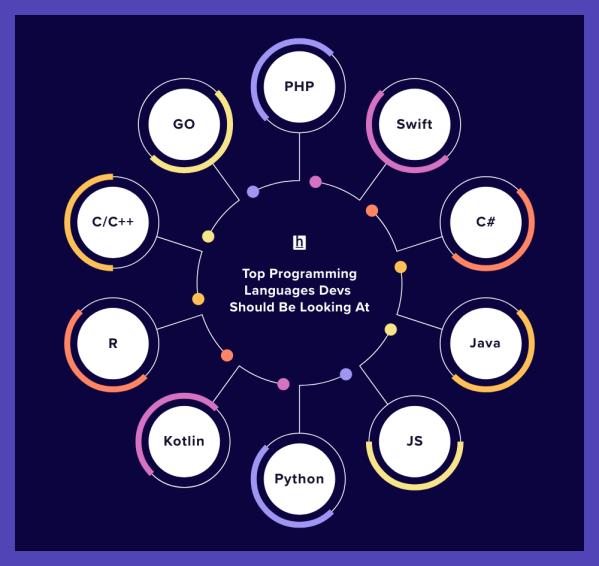
Theselanguages,suchasC,C++,Java,JavaScript,Python,and Ruby,werecreatedtocatertodifferentapplicationdomains likesystemprogramming,webdevelopment,andenterprise software.
They are known for their syntax, semantics, and programmingparadigms,whichcanbeprocedural,objectoriented,functional,ordeclarative.
ItiscrucialtounderstandhowAIhasimpactedtraditional codinglanguages,asAItechnologieshaveinfluencedtheway theselanguagesareusedandexpanded.
Forinstance,integratingAI librariesand frameworksinto languageslikePythonhasalloweddeveloperstoincorporate machine learning, natural language processing, and computervisioncapabilities seamlesslyintotheir existing codebases.
This integration has opened up new possibilities for developers to enhance their projects and build more advancedapplications.
The integration of AI-driven tools, such as static code analysis, automated testing, and code generation, has significantly improved the productivity and efficiency of developers who work with conventional programming languages. With the continuous advancement of AI technology,traditionalcodinglanguagesarealsoevolvingto integrateAI-specificfunctionalitiesandenhancements.For example,newerversionsofprogramminglanguagesarenow equipped with features like built-in support for parallel computing,distributedsystems,andoptimizedalgorithms, which are crucial for the development of large-scale AI applications.Itisimperativefordeveloperstocomprehend theinfluenceofAIontraditionalcodinglanguagesinorder to effectively utilize AI tools, enhance their programming abilities,andstayabreastofthechanginglandscapeofthe softwaredevelopmentindustry.
Theemergenceofartificialintelligence(AI)hassignificantly impactedcodinglanguagesinvariousways:
Inrecentyears,therehasbeenanoticeableincreaseinthe creation of specialized programming languages that are specifically designed for artificial intelligence (AI) and machinelearningpurposes.Theselanguages,suchasPython, R, and Julia, have become increasingly popular because of theirvastlibrariesandframeworksthatarecustomizedfor AI development. This trend highlights the growing importance and demand for languages that cater to the uniqueneedsofAIandmachinelearningprojects.
International Research Journal of Engineering and Technology (IRJET) e-ISSN:2395-0056
Volume: 11 Issue: 06 | Jun 2024 www.irjet.net p-ISSN:2395-0072
4.2.Integration
Inrecentyears,mainstreamprogramminglanguagessuchas Python,Java,andC++havebegunincorporatingAI-related features and libraries to enhance their capabilities. For instance, Python boasts popular libraries like TensorFlow andPyTorchthatcatertodeeplearningtasks,scikit-learn for machine learning purposes, and NLTK for natural language processing applications. This integration of AI functionalities into these languages has opened up new possibilities for developers to create sophisticated and intelligent software solutions. The availability of these librarieswithintheecosystemsofPython,Java,andC++has madeiteasierforprogrammerstoimplementAIalgorithms and techniques seamlessly, thereby accelerating the development of AI-powered applications across various domains.Asaresult,theintersectionofAIandmainstream programminglanguageshassignificantlycontributedtothe advancementoftechnologyandinnovationinthedigitalera.
Artificial intelligence (AI) has revolutionized the way softwaredevelopmentisdonebyintroducingtoolsthathave the ability to automatically generate code based on highleveldescriptionsorrequirementsprovidedbydevelopers. These tools leverage advanced techniques like natural language processing (NLP) and machine learning to comprehendthespecificationsgiventothem,enablingthem tonotonlygeneratecodesnippetsbutalsoentireprograms. Thisadvancementintechnologyhasgreatlyimprovedthe efficiency and speed of software development, allowing developers to focus more on the creative aspects of their workratherthantherepetitiveandtime-consumingtaskof coding.WithAI-poweredcodegenerationtools,developers cannowbringtheirideastolifemorequicklyandaccurately thaneverbefore.
Artificial intelligence (AI) has revolutionized the way programmers write code by providing powerful development tools that can significantly enhance productivityandefficiency.Oneofthekeyadvancementsin thisfieldistheintegrationofAIalgorithmsintointegrated developmentenvironments(IDEs)toofferfeatureslikecode suggestion and auto-completion. These AI-powered tools analyze coding patterns, understand context, and provide programmers with relevant suggestions to speed up the coding process and ensure the quality of the code being written.ByleveragingthecapabilitiesofAI,developerscan now write better code in less time, leading to improved softwarequalityandfasterdevelopmentcycles.
Artificial intelligence (AI) techniques are currently being utilizedinthefieldofsoftwaredevelopmenttoenhancecode
optimization and improve overall performance. These techniques encompass a range of functionalities such as automatic parallelization, memory management, and algorithm optimization. By implementing AI-driven solutions,developerscansignificantlyboosttheefficiencyof their programswithout the need for manual intervention. This integration of AI into code optimization processes marks a significant advancement in the realm of software engineering, offering developers innovative tools to streamlinetheirworkflowsanddeliverhigh-quality,highperformancesoftwareproductstoend-users.
Artificial intelligence (AI) has revolutionized the field of natural language programming by allowing developers to write code using human language. This breakthrough simplifies complex programming tasks, making it more accessibletoindividualswhomaynothaveformaltraining in coding. With AI, the barrier to entry into the world of programming has been significantly lowered, opening up new opportunities for innovation and creativity. This technologicaladvancementhasthepotentialtoempowera wider range of individuals to engage in software development and contribute to the ever-evolving digital landscape.
Artificialintelligence(AI)hasamultitudeofapplicationsin programming languages, elevating different facets of software development. Presented below are some noteworthyexamples:
5.1.Code
ArtificialIntelligence(AI)hasthecapabilitytoautomatically create code by interpreting high-level requirements or specifications.Thisprocesscaninvolvegeneratinganything frombasiccodesnippetstocompleteprograms.AImodels, including language models and neural networks, have the abilitytoanalyzeexistingcodebasesandthenproducecode that is both syntactically accurate and semantically meaningful. By leveraging AI in this way, developers can streamline the coding process and potentially increase efficiencyinsoftwaredevelopmentprojects.
Artificial intelligence (AI) techniques have the ability to enhance code in terms of performance, efficiency, and resourceutilization.ThroughtheuseofAIalgorithms,code patternscanbethoroughlyanalyzedtopinpointbottlenecks andrecommendvariousoptimizations.Theseoptimizations mayincludeenhancementstoalgorithms,implementationof parallelization, or utilization of memory management techniques. By leveraging AI in the optimization process, developerscansignificantlyimprovetheoverallqualityand
International Research Journal of Engineering and Technology (IRJET) e-ISSN:2395-0056
Volume: 11 Issue: 06 | Jun 2024 www.irjet.net p-ISSN:2395-0072
effectiveness of their code, leading to better software performanceandresourceutilization.
Artificialintelligence(AI)poweredtoolshavethecapability toaidinthedetectionandresolutionofsoftwarebugs.These toolsworkbyanalyzingvariousaspectsofthecodesuchas structures,executiontraces,andruntimebehavior.Through theuseofsophisticatedAIalgorithms,potentialissuescan bepinpointed,fixescanberecommended,andinsomecases, bugscanevenbeautomaticallypatchedwithinthecodebase. This advanced technology is revolutionizing the way developers approach bug detection and debugging processes,ultimatelyleadingtomoreefficientandreliable softwaredevelopmentpractices.
5.4.Code
Artificial intelligence (AI) has the capability to assist developers in the process of refactoring code by automatically reorganizing and enhancing its structure without altering its outward functionality. This involves a range of tasks like adjusting variable names, isolating methods, streamlining imports, and simplifying intricate expressions. By leveraging AI technology, developers can efficientlyenhancetheoverallqualityandreadabilityoftheir codebase, leading to more maintainable and scalable softwaresolutions.
Artificialintelligence-poweredcodeeditorsandintegrated development environments (IDEs) are equipped with advancedcapabilitiesthatgobeyondsimpletextediting.By harnessingthepowerofAI,thesetoolsofferintelligentcode completion and suggestion features that significantly enhancethecodingexperiencefordevelopers. Oneofthe key benefits of AI-driven code editors is their ability to analyzethe contextofthecodebeing written. This means thatthetoolscanunderstandthestructureandpurposeof the code, allowing them to suggest relevant keywords, functions, or even entire code snippets. By doing so, developerscansavetimeandeffort, aswell asreducethe likelihood of errors in their code. In addition to providing suggestions,AI-drivencodeeditorscanalsoofferreal-time feedbackoncodequalityandbestpractices.Thisfeedback canhelpdevelopersimprovetheircodingskillsbypointing outpotentialissuesorareasforoptimization.Furthermore, thesetoolscanadapttotheindividualcodingstyleofeach developer, providing personalized recommendations that catertotheirspecificneeds.AI-drivencodeeditorsandIDEs representasignificantadvancementinthefieldofsoftware development. By leveraging the capabilities of artificial intelligence,thesetoolshavethepotentialtorevolutionize thewaycodeiswritten,makingtheprocessmoreefficient, accurate,andenjoyablefordevelopers.
Artificial intelligence (AI) has revolutionized the way developersinteractwithcodethroughtheadventofnatural language programming. This innovative approach allows developers to communicate with computer systems using humanlanguage,makingthecodingprocessmoreaccessible andintuitive.Naturallanguageprocessing(NLP)techniques playacrucialroleinthisprocess,astheyareusedtoanalyze andinterpretnaturallanguagecommandsorqueries.These commands are then translated into executable code, enablingdeveloperstoseamlesslytransformtheirideasand instructionsintofunctional softwareapplications. Overall, AI-powerednaturallanguageprogramminghassignificantly enhancedtheefficiencyanduser-friendlinessofthecoding process,openingupnewpossibilitiesforcollaborationand innovationinthefieldofsoftwaredevelopment.
Artificial intelligence (AI) models have the ability to automatically create summaries and documentation for codebases. Through the analysis of code structure, comments,andusagepatterns,AIalgorithmsarecapableof generating concise summaries, detailed function descriptions,orcomprehensivedocumentationpages.This technology assists developers in comprehending and navigatingcodemoreeffectivelyandefficiently.
ArtificialIntelligence(AI)hasthecapabilitytorevolutionize software testing procedures through the automation of various tasks. By utilizing AI algorithms, test cases can be automaticallygenerated, edgecasescanbeidentified,and potentialfailurescanbepredictedwithhigheraccuracy.AIdriventestingtoolshavetheabilitytoenhancetestcoverage by exploring different scenarios, detect regressions by comparingcurrentandprevioustestresults,andultimately ensure the reliabilityand robustnessof softwaresystems. With AI technology, the testing process becomes more efficient,thorough,andeffective,ultimatelyleadingtohigher qualitysoftwareproducts.
Inthissegmentoftheliteraturereview,wehaveexamined the prior scholarly endeavors surrounding the fusion of artificial intelligence with programming languages, and a synopsis of the aforementioned research is presented as follows:
Praveendra. Thispaperdelvesintotheintriguingpattern thathasbeenuncoveredthroughresearchthatdelvesinto the intersection of artificial intelligence and sound symbolism. It has been found that machine learning algorithms are highly adept at learning sound symbolism, however,theyhaveatendencytoexhibitabiastowardsone
International Research Journal of Engineering and Technology (IRJET) e-ISSN:2395-0056
Volume: 11 Issue: 06 | Jun 2024 www.irjet.net p-ISSN:2395-0072
categoryovertheother.Thisphenomenonshedslightonthe complexrelationshipbetweenAIandlanguage,highlighting theneedforfurtherexplorationandunderstandinginthis field.
Ermira et al. Artificial intelligence, such as the highly advanced GPT-3 developed by OpenAI, plays a significant role in shaping the evolution of coding languages. By improvinglanguageunderstandingandfosteringcreativity, AItechnologieslikeGPT-3arerevolutionizingthewaywe interact with machines and raising intriguing questions about the future of human-machine symbiosis. The emergence of various creative and business applications powered by natural language processing (NLP) engines, exemplifiedbyOpenAI'sGPT-3,issparkinganewwaveof discussions on the intricate relationship between humans andmachines.Aswehurtletowardsthefuture,thedynamics of communication between humans and AI are constantly evolving,pavingthewayforafuturewheretheboundaries betweenmanandmachinebecomeincreasinglyblurred.
Jess et al. The authors of this paper delve into the social implicationsofawidelyusedAItoolknownasalgorithmic response suggestions, also referred to as "smart replies". Throughtheirresearch,theydiscoveredthattheutilization ofalgorithmicresponsesleadstoenhancedcommunication efficiency,ahigherfrequencyofpositiveemotionallanguage being used, and more favorable evaluations from communication partners. This sheds light on how AI technology can impact interpersonal interactions in a positivemannerbystreamliningcommunicationprocesses andfosteringamorepositivetoneinconversations.
Adetiba et al. The field of AI programming languages, includingpopularoneslikeLISP,PROLOG,andothers,has undergone significant evolution over the years. These advancementshavebeenstronglyinfluencedbytheprogress madeinArtificialIntelligence,whichhasplayedakeyrolein shaping the capabilities, limitations, and applications of these languages across different domains. This paper presentsathoroughsystematicliteraturereviewthatdelves into the evolution of AI programming languages, offering valuable insights into the year of implementation, development teams involved, as well as the specific capabilities, limitations, and applications associated with eachlanguagediscussed.Thiscomprehensiveanalysissheds lightontheprogressionofAIprogramminglanguagesand theirimpactonthebroaderfieldofArtificialIntelligence.
Sayat et al. Thisresearchdelvesintothegeographicalaspect oflanguagediffusionwithinaconfinedspace,analyzinghow differentlanguagespeciesspreadatasmallscale.Thestudy demonstrates that the proposed framework effectively mirrorsreal-worldlinguisticpatterns,whichareinfluenced byboththeTuringinstabilityandaprocessofspontaneous pattern formation seen in various natural systems. This work sheds light on the intricate dynamics of language
evolution and distribution, offering insights into how languagesevolveandadaptwithinspecificenvironments.
Urma. Artificial intelligence plays a significant role in shaping the evolution of coding languages by driving changesinresponsetovariousfactorssuchasuserneeds, advancementsinhardware,anddevelopmentsinresearch. This dynamic process often necessitates developers to constantly adapt their code in order to support the new versions of programming languages. In addition to this, researchsuggeststhatdeveloperscanbenefitfrommachine supportthatspecificallyfocusesonthesearchaspectofhow programming languages evolve over time. As a practical example of this concept, a new optional run-time type system has been designed for Python. This innovative system allows developers to manually specify contracts, enabling them to identify and address semantic incompatibilities between Python 2 and Python 3. By incorporatingmachinesupportandimplementingnewtools liketherun-timetypesystem,developerscannavigatethe complexities of language evolution more effectively and efficiently.
Risto & Xun. The experimental findings indicate that the Evolutionary Reinforcement Learning-based Population ObservationModel(ERL-POM)hasproventobesuccessful insimulatingtheevolutionoflanguageinaspecificcontext. This research demonstrates that artificial languages can develop and evolve within a controlled environment, particularlywhencommunicationisacrucialcomponentin completingtasksassignedtotheagents.Thestudyhighlights thesignificanceofcommunicationindrivingtheevolutionof language and emphasizes the importance of situational contextinlanguagedevelopment.
Silvia. This paper delves into the fascinating realm of applying Darwinian principles to the evolution of programminglanguages.By exploringtheextentto which biologicalevolutionarymechanismscanbeadaptedtothe worldofcomputerlanguages,itrevealsthatthereareindeed several key evolutionary building blocks that can be identified in this field. Through a detailed analysis and comparison, it becomes evident that the evolution of programminglanguagesfollowsasimilarpatterntothatof biologicalevolution,showcasingtheremarkableadaptability and innovation that occurs within the world of computer science.
Ruoxuan. Theauthorsconductedacomprehensiveanalysis of AI language from various perspectives, including linguistics and philosophy. Through this analysis, they identifiedtheshortcomingsinAIlanguageandhighlighted areasthatrequireimprovement.Additionally,theauthors provided valuable insights and recommendations on enhancing the intelligence levels of current AI language. TheirsuggestionsaimtopropelAIlanguagetonewheights ofsophisticationandeffectivenessintoday'stechnological landscape.
International Research Journal of Engineering and Technology (IRJET) e-ISSN:2395-0056
Volume: 11 Issue: 06 | Jun 2024 www.irjet.net p-ISSN:2395-0072
Samuel. Assoftwarecontinuestoadvanceincomplexity,the integration of artificial intelligence has become crucial in streamlining and automating coding processes, as highlighted by the authors. This innovative technology is provingtobeavaluabletoolinsimplifyingtheintricaciesof codingtasks,ultimatelyenhancingtheoverallefficiencyof softwaredevelopment.Byharnessingthepowerofartificial intelligence, developers can now tackle complex coding challengeswithgreatereaseandprecision,leadingtomore robustandreliablesoftwareproducts.Theimplementation of AI-driven solutions is paving the way for a new era in softwaredevelopment,whereproductivityandqualityare significantlyimprovedthroughintelligentautomation.
Chowdhary. This paper introduces a series of innovative experimentallanguagesthathavethepotentialtodominate the programming language landscape in the era of new multi-corearchitectures.Theaimistoprovidecompelling evidence that these new languages are not only more resilient than their predecessors but also successfully incorporatea blendoffeatures fromolderlanguages.It is believed that these languages will revolutionize the way softwareisdevelopedandpavethewayformoreefficient andeffectiveprogrammingpracticesinthefuture.
Zejie et al. The Abrams-Strogatz model of language competition,originallydesignedfortwolanguages,hasbeen expanded to consider multiple languages in a new study. This model was put to the test by examining the shifts in languageusagebehaviorsoverthepastfewdecadesinboth Singapore and Hong Kong. The research revealed the presence of tipping points in language dominance, where multiple attractors were identified. This suggests that the dynamics of language competition in these regions are complexandinfluencedbyvariousfactors.Thefindingsshed lightontheintricatenatureoflanguageevolutionandthe importance of considering multiple languages in studying languagedynamics.
Erik et al. This research project utilizes both manual techniquesandnon-GPArtificialIntelligenceapproachesto extractvaluableinsightsfromsynthesisproblemdefinitions. Theseinsightsarethenleveragedtoinformthedevelopment ofthegrammaremployedbyGrammaticalEvolution,aswell as to enhance its fitness function. By combining various methodsandtechnologies,this work aimstooptimizethe performanceandeffectivenessoftheGrammaticalEvolution systemthroughtheintegrationofknowledgeextractedfrom problemdefinitions.
Huang et.al:In this research paper, a novel method is introducedfordesigningerrorcorrectioncodes(ECC)using artificial intelligence technology. The approach involves utilizing AI algorithms to construct the error correction codes,whilealsoincorporatingacodeevaluatortomeasure the performance metrics of the codes. This innovative technique aims to enhance the efficiency and accuracy of errorcorrectionincommunicationsystemsbyharnessing
thepowerofartificialintelligence.ByleveragingAI-driven solutions, this research opens up new possibilities for improving the reliability and effectiveness of error correctionmechanismsinvariousapplications.
Luc. This report provides an in-depth analysis of a significantandongoingprojectthatfocusesonconducting extensive experiments with evolutionary language games. The project aims to explore the dynamics of language evolutionoveranextendedperiodoftimeandhasalready yieldedsubstantialfindings.Thereportdelvesintothekey outcomesandmilestonesthathavebeenreachedthusfar, sheddinglightontheprogressandimpactofthe research endeavor.
Rob. The computational model of an artificial creative systemdiscussedinthisstudybuildsuponexistingmodels by incorporating a linguistic component. This linguistic componentplaysacrucialroleinfacilitatingthecreationand dissemination of artistic works along with their accompanyingdescriptions.Byintegratinglanguageintothe computationalframework,thesystemisabletogeneratea richer and more nuanced understanding of the creative process. This innovative approach not only enhances the system'sabilitytoproduceoriginalworksbutalsoenablesit to effectively communicate the intent and context behind each piece of art. Ultimately, the inclusion of a linguistic componentinthecomputationalmodelofartificialcreative systems opens up new possibilities for exploring the intersectionoflanguageandcreativityinthedigitalage.
Peter & Rowlands. The theory of nilpotent quantum mechanics,whichisdiscussedinthefollowingparagraphs, hasthepotentialtoprovidephysicistswiththelong-awaited 'TheoryofEverything'.ThistheoryisbasedontheNUCRS foundationaluniversalorganizationprinciple,whichaimsto unifyallfundamentalforcesandparticlesintheuniverse.By incorporating the concept of nilpotency into quantum mechanics, scientists hope to develop a comprehensive framework that can explain the behavior of matter and energyonboththemicroscopicandmacroscopicscales.This groundbreaking approach could revolutionize our understandingofthephysicalworldandleadtosignificant advancementsinvariousscientificfields.
Ana Maria. This research paper delved into the intricate relationshipbetweenartificialintelligence(AI)andlanguage acquisitionwithintheframeworkoftheeducation4.0era.It emphasized the transformative impact of AI on language learning by introducing cutting-edge technologies and innovativeapproachesinthefieldofeducation.Thepaper thoroughlyanalyzedhowAIisreshapingthelandscape of languageeducation,pavingthewayformorepersonalized and effective learning experiences for students. Furthermore,itdiscussedtheimplicationsofintegratingAI into language learning curricula, exploring the potential benefits and challenges that arise from this technological advancement.Overall,thepaperprovidedacomprehensive
International Research Journal of Engineering and Technology (IRJET) e-ISSN:2395-0056
Volume: 11 Issue: 06 | Jun 2024 www.irjet.net p-ISSN:2395-0072
overview of the intersection between AI and language education in the context of the evolving educational landscape.
Inconclusion,thesymbioticrelationshipbetweenartificial intelligence (AI) and coding languages has significantly transformed the programming landscape. Our thorough examination in this comprehensive review paper demonstratesthatAItechnologieshavenotonlychangedthe waycodeiswritten,buthavealsointroducedentirelynew programming paradigms. The impact of AI on coding languagesisprofound,withthedevelopmentofAI-powered tools for code generation and optimization, as well as the creationoflanguagestailoredformachinelearninganddata science. The integration of AI and coding languages is expected to deepen further as AI capabilities advance, resultingintheestablishmentofmoreintelligent,adaptive, andhuman-likeprogrammingenvironments.Nevertheless, this evolution comes with challenges, such as ethical considerationsrelatedtoAI-generatedcodeandtheneedfor developers to continuously learn and adapt. Successfully navigatingthesechallengeswhileseizingtheopportunities offeredbyAIisessentialfordrivingtheongoingevolutionof codinglanguagestowardsafuturethatischaracterizedby efficiency,inclusivity,andinnovation.
1. Jess,Hohenstein.,Dominic,DiFranzo.,René,F.,Kizilcec., Zhila, Aghajari., Hannah, Mieczkowski., Karen, Levy., Mor, Naaman., Jeffrey, T., Hancock., Malte, F., Jung. (2021).Artificialintelligenceincommunicationimpacts language and social relationships.. arXiv: HumanComputerInteraction,
2. Emmanuel, Adetiba., Temitope, M., John., Adekunle, Akinrinmade., Funmilayo, S., Moninuola., Oladipupo, Akintade.,Joke,A.,Badejo.(2021).Evolutionofartificial intelligencelanguages,asystematicliteraturereview.. arXiv:ArtificialIntelligence,
3. Kornack and P. Rakic, “Cell Proliferation without NeurogenesisinAdultPrimateNeocortex,”Science,vol. 294, Dec. 2001, pp. 2127-2130, doi:10.1126/science.1065467.
4. M.Young,TheTechnicalWriter’sHandbook.MillValley, CA:UniversityScience,1989.
5. R. Nicole, “Title of paper with only first word capitalized,”J.NameStand.Abbrev.,inpress.
6. Coulin,C.,Zowghi,D.,&Sahraoui,A.(2010).MUSTER:A Situational Tool for Requirements Elicitation. In F. Meziane, & S. Vadera (Eds.), Artificial Intelligence Applications for Improved Software Engineering Development:NewProspects(pp.146-165)
7. Harmain,H.M.,&Gaizauskas,R.(2003).CM-Builder:A naturallanguage-basedCASEtoolforobject-oriented analysis. Automated Software Engineering Journal, 10(2),157–181
8. Hewett, Micheal, and Rattikorn Hewett (1994). 1994 IEEE 10th Conference on Artificial Intelligence for Applications.
9. Hull, E., Jackson, K., & Dick, J. (2005). Requirements Engineering.Berlin:Springer.
10. Kof, L. (2010). From Textual Scenarios to Message Sequence Charts. In F. Meziane, & S. Vadera (Eds.), Artificial Intelligence Applications for Improved Software Engineering Development: New Prospects (pp.83-105).
11. Smith,T.J.(1993).READS:arequirementsengineering tool.ProceedingsofIEEEInternationalSymposiumon Requirements Engineering, (pp. 94–97), San Diego. SSBSE (2010). http://www.ssbse.org, checked 10.5.2011.
12. Vadera, S., & Meziane, F. (1994). From English to Formal Specifications. The Computer Journal, 37(9), 753–763.
13. GeorgeFLudger“ArtificialIntelligenceStructureand strategies for complex problem solving” 5th Edition Pearson,2009
14. XindongWu,SeniorMember,IEEE”DataMining:AnAI Perspective”1965[4]Holland,“AdaptioninNatureand ArtificialSysten”1965.
15. Searle (1990).The Brain Mind Computer Program? ScientificAmerica,262,pp.
16. T kamba “A Web Marketing With Automatic Pricing” Computernetworkvol33775-788(2000)
17. KevinWarwick“ArtificialIntelligence:TheBasic”2011.
18. John E.Kelly, “Smart Machine-IBM’S Watson And The EraofCognitiveComputing”2013.