
International Research Journal of Engineering and Technology (IRJET) e-ISSN:2395-0056
Volume: 11 Issue: 06 | Jun 2024 www.irjet.net p-ISSN:2395-0072
CONTINUOUS MONITORING AND TRACING OF OBJECTS IN REAL-TIME FOR DETECTION: A REVIEW
Abhay Kumar Srivastava1, Dipti Ranjan Tiwari2
1Master of Technology, Computer Science and Engineering, Lucknow Institute of Technology, Lucknow, India 2Assistant Professor, Department of Computer Science and Engineering, Lucknow Institute of Technology, Lucknow, India
Abstract - Continuous surveillance and monitoring of objects in real-time are now essential in various sectors such assurveillance,transportation,andmanufacturing.Despiteits importance,detectingobjectsindynamicenvironmentsposes significant challenges, including obstructions, changing lighting conditions, and complex backgrounds. This review delves into the progression of computer vision algorithms, particularly highlighting the shift in approach brought by deep learning techniques like convolutional neural networks (CNNs) and recurrent neural networks (RNNs), which have greatly enhanced the accuracy of object detection. Additionally, it explores the incorporation of sensor technologiessuchasLiDAR,radar,andinfraredsensors,which enhance detection performance, especially in difficult environmental conditions. Data fusion methods are also examined for their ability to combine data from different sensors, thereby improving the precision of object tracking. Moreover,thearticleemphasizestheimportanceofreal-time processing and edge computing, facilitating the implementation of object detection systems in environments withlimitedresourcesandstrictlatencyrequirements.Italso discusses the growing applications in fields like autonomous vehicles,smartcities,andInternetofThings(IoT)devicesthat are driving the need for effective real-time object detection solutions. Lastly, the review outlines current unresolved researchchallengesandsuggestsfutureresearchdirectionsto advance the field, focusing on areas such as improving detection accuracy in complex scenarios, strengthening defense against adversarial attacks, and developing energyefficient algorithms for edge deployment.
Key Words: Objectdetection,Real-timemonitoring,Deep learning, Sensor fusion, Convolutional neural networks (CNNs),Recurrentneuralnetworks(RNNs).
1.HISTORY
Thecontinuoussurveillanceandtrackingofobjectsinrealtimefordetectionhaveexperiencedaremarkableevolution duetotechnologicaladvancementsandindustrydemands. Thispracticecanbetracedbacktothedevelopmentofradar systems during World War II, which established the foundationforcontinuousobjecttrackingusingelectronic sensors.Intime,variousindustriesbegantoadoptsimilar principlesfortrackinggoodswithinsupplychains,withthe assistanceofinnovationssuchasbarcodetechnology.The
introduction of RFID technology further transformed tracking capabilities, allowing for real-time monitoring withouttheneedforline-of-sightscanning.Theriseofthe InternetofThings(IoT)broughtaboutaneweraofreal-time monitoring across different sectors, as interconnected devices equipped with sensors became prevalent. Subsequently, machine learning and artificial intelligence (AI) have bolstered these systems, facilitating predictive analyticsandanomalydetection.Theintegrationwithcloud computinghasalsobroadenedscalabilityandaccessibility. Presently,continuousmonitoringandtrackingsystemsare utilizedinvariousindustriestoensureefficiency,safety,and security. Looking ahead, ongoing innovations in sensor technology,dataanalytics,andconnectivityaresettodrive further advancements to meet the increasing demand for real-timevisibilityandcontrol.
2.REAL TIME DETECTION
Instantaneous identification, a crucial capability spanning various industries, allows for immediate recognition and responsetounfoldingcircumstancesoralterationswithout any notable delay. It forms the foundation in security, healthcare, finance, and manufacturing, where swift identification of irregularities or trends is essential for prompt decision-making and implementation. Security applicationsutilizeinstantaneousidentificationtoanalyze video feeds, sensor data, or network traffic, prompting alarmsornotificationsinthepresenceofpotentialdangers or questionable activities. In the healthcare sector, continuous monitoring of vital signs and physiological parametersenablesearlydetectionofmedicalcrises,leading to timely interventions and enhanced patient outcomes. Financial institutions utilize instantaneous identification systems to analyze transactions and market data for the prevention of fraud and to capitalize on market opportunities. Similarly, in manufacturing, instantaneous identificationenhancesoperationalefficiencybymonitoring equipment performance and predicting maintenance requirements,thusreducingdowntime.Withadvancements in sensor technology, data analytics, and artificial intelligence, instantaneous identification systems have becomemoreproficientatswiftlyandaccuratelyrecognizing events or patterns of interest. Integration with cloud and edge computing further enhances scalability and adaptability,enablingthese systemstoeffectivelymanage
Volume: 11 Issue: 06 | Jun 2024 www.irjet.net p-ISSN:2395-0072
vastamountsofdataanddynamicenvironments.Essentially, instantaneous identification drives proactive decisionmaking, risk mitigation, and performance improvement acrossindustries,fosteringinnovationandresilienceinan ever-changinglandscape.
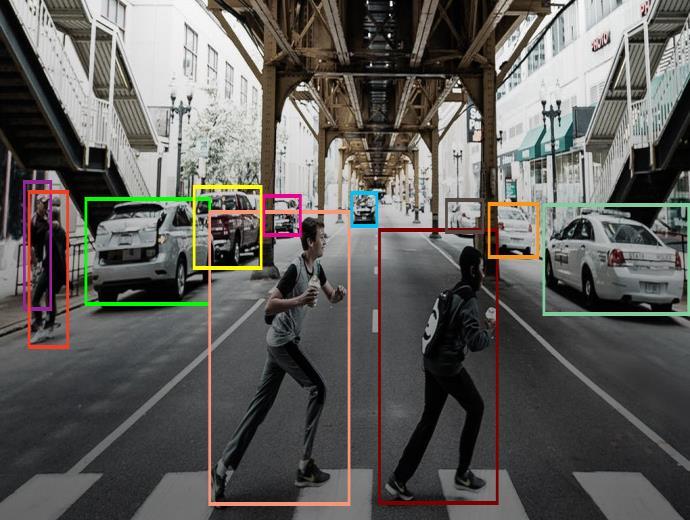
2.1.Importance of real-time detection
Theimportanceofreal-timedetectioncannotbeoverstated in various industries, as it offers immediate insights and enablespromptresponsestodynamicsituations.Itsvalue lies in the timely awareness it provides regarding events such as security breaches, medical emergencies, financial irregularities,andoperationalchallenges.Byidentifyingand resolvingtheseissuesinreal-time,organizationscanreduce losses,managerisks,andenhanceperformance.Real-time detection improves situational awareness by equipping decision-makerswithup-to-dateinformationtomakewellinformed decisions and implement effective strategies promptly.Furthermore,itplaysacrucialroleinpreventing losses and damages, optimizing operational effectiveness, and ensuring safety and security. In industries where compliance and regulations are paramount, real-time detection assists in upholding standards by swiftly recognizingandaddressingdeviations.Ultimately,real-time detection is essential for fostering customer satisfaction, sustaining competitiveness, and bolstering resilience in today'srapidlychangingbusinessenvironment.
3.OBJECT DETECTION TECHNIQUES
Object detection methodologies pertain to the intricate algorithmsandstrategiesemployedtodiscernandpinpoint objects within digital images or video frames. These methodologiesplayapivotalroleinamyriadofapplications, suchassurveillance,autonomousvehicles,medicalimaging,
andindustrialautomation.Herearesomeprevalentobject detectionmethodologies:
3.1.Traditional Computer Vision Techniques
3.1.1.Haar
Cascade Classifiers
HaarCascadeClassifiersepitomizeatraditionalmethodin the field of computer vision for detecting objects, notably popularized by Viola and Jones in their groundbreaking work. These classifiers are founded on a feature-based strategy that involves analyzing intensity patterns within images.Theyfunctionbyapplyingaseriesofclassifiersto different regions of an image in a sequential manner, eliminating non-object regions early on to concentrate computational resources on potentially relevant areas. Utilizing simple rectangular patterns known as Haar-like featuresasthefoundation,thismethodefficientlycaptures texture and shape variations by evaluating intensity discrepanciesbetweenadjacentrectangularregionswithin an image. Despite being less precise compared to contemporarydeeplearningtechniques,thisapproachoffers benefitsintermsofcomputationalefficiencyandsimplicity, renderingitsuitableforreal-timeapplicationswithlimited computational capabilities. Haar Cascade Classifiers have beenutilizedinavarietyoffields,suchasfacialdetectionin images and videos, pedestrian detection in surveillance systems, and even in basic object recognition tasks. However,theireffectivenessmaybeconstrainedincomplex environmentswithsubstantialvariationsinlighting,pose,or occlusion, where more advanced methods like deep learning-basedobjectdetectorsthrive.
3.1.2.Histogram of Oriented Gradients (HOG)
The Histogram of Oriented Gradients (HOG) is a sophisticatedfeaturedescriptormethodutilizedforobject detectioninimages.Itfunctionsbycalculatinghistogramsof gradientorientationswithinlocalizedregionsofanimage. These histograms effectively capture the distribution of gradientorientations,offeringasuccinctportrayalofobject shapeandtexture.Throughtheanalysisofgradients,HOG demonstrates resilience to changes in illumination and furnishesinvariantrepresentationsofobjects'appearances. Thisapproachprovesespeciallyadeptatidentifyingobjects withdistinctedgesandtextures,suchashumansorvehicles. HOG has found widespread application in diverse fields, encompassing pedestrian detection, face recognition, and image categorization, thereby making a substantial contributiontotherealmofcomputervision.
3.2.Deep Learning-based Techniques
3.2.1.Convolutional
Neural Networks (CNNs)
Convolutional Neural Networks (CNNs) epitomize a revolutionary breakthrough in the realm of deep learning andcomputervision.Drawinginspirationfromtheintricate structure of the visual cortex in living beings, CNNs are
International Research Journal of Engineering and Technology (IRJET) e-ISSN:2395-0056
Volume: 11 Issue: 06 | Jun 2024 www.irjet.net p-ISSN:2395-0072
meticulouslycraftedtoefficientlyprocessvisualdata.They compriseamultitudeoflayers,encompassingconvolutional layers, pooling layers, and fully connected layers. By leveragingconvolutionalfilters,CNNspossessthecapability toautonomouslyacquirehierarchicalfeaturesfromimages, capturing progressively more abstract representations as they delve deeper into the layers. This process of hierarchicalfeatureacquisitionempowersCNNstoadeptly identifypatternsandobjectswithinimages,renderingthem exceedinglyproficientintaskssuchasimageclassification, objectdetection,andsegmentation.Acrossdiversedomains, includingmedicalimaging,autonomousvehicles,andnatural language processing, CNNs have showcased exceptional performance, solidifying their status as a fundamental technologyincontemporaryartificialintelligence.
3.2.2.Single Shot Multibox Detector (SSD)
The Single Shot Multibox Detector (SSD) is a cutting-edge object detection algorithm lauded for its rapidity and precision.Byamalgamatingthecapabilitiesofdeeplearning withefficiency,SSDfunctionsbysimultaneouslyforecasting object bounding boxes and class probabilities across numerous spatial scales in a single forward pass of a convolutionalneuralnetwork(CNN).Throughtheutilization of a series of default boxes with diverse aspect ratios and scales,SSDattainsresilienceinidentifyingobjectsofvarying sizesandshapes.Thisintegratedapproachallowsforrealtimeobjectdetectioninbothimagesandvideos,rendering SSD particularly suitable for applications that necessitate swiftandaccurateperformance,suchasautonomousdriving andsurveillancesystems.
3.2.3.You Only Look Once (YOLO)
TheYouOnlyLookOnce(YOLO)algorithmisarevolutionary real-time object detection method celebrated for its exceptionalspeedandprecision.Incontrasttoconventional techniques that depend on intricate multi-stage systems, YOLO conceives object detection as a singular regression challenge.Bysegmentingtheinputimageintoagrid,YOLO canforecastboundingboxesandclassprobabilitiesdirectly fromgridcells.ThismethodologyempowersYOLOtodeliver remarkabledetectioncapabilitieswhileupholdingreal-time processing speeds, rendering it well-suited for tasks necessitating swift and accurate object detection, such as surveillance,autonomousvehicles,andaugmentedreality. YOLOhasemergedasafundamentalcomponentincomputer visionresearchandapplications,propellingprogressinthe field.
4.CONTINUOUS MONITORING SYSTEMS
Continuousmonitoringsystemsplayacrucialroleinvarious industries, providing real-time supervision of processes, environments, and assets. These systems function by continuously gathering and analyzing data, offering immediate insights into ongoing operations and potential
irregularities.Whetherusedinindustrialsettingstomonitor production metrics and equipment performance, in healthcare for patient surveillance, or in environmental monitoringtodetectchangesinairqualityorwaterlevels, continuousmonitoringsystemsofferproactivemonitoring and early detection capabilities. By utilizing sensors, data analytics, and often integrated with cloud computing technologies, these systems empower organizations to upholdoperationalefficiency,ensuresafetyandregulatory compliance, and promptly address emerging issues. The adaptability and versatility of continuous monitoring systemsmakethemessentialassetsinmodernoperations, facilitating productivity, resilience, and well-informed decision-making.
4.1.Principle of Continuous Monitoring System
ThefoundationalconceptbehindaContinuousMonitoring System(CMS)involvestheongoingandreal-timemonitoring ofdiverseparameterswithinagivensystemorenvironment. This system operates by continuously gathering data without any interruptions, thereby ensuring a comprehensiveunderstandingofthesystem'sbehaviorover an extended period. This data is then promptly analyzed either in real-time or near real-time, allowing for the immediateidentificationofanomaliesordeviationsfromthe standard operating conditions. Automated alerts are activatedwhenpre-establishedthresholdsaresurpassedor irregular patterns are detected, facilitating swift intervention.Byintegratingwithcontrolsystems,automatic adjustments can be made based on the analyzed data, thereby further enhancing system performance. Visual representationssuchasgraphsanddashboardsareutilized to present the gathered data, assisting operators in recognizing trends or abnormalities. The CMS is meticulously designed to be scalable and adaptable to systems of varying sizes and complexities, adhering to industryregulationsandstandardsgoverningdatacollection andprivacy.Ultimately,continuousmonitoringofferstimely andactionableinsightstoimproveefficiency,reliability,and safety.
5.REAL-TIME TRACING ALGORITHMS
Real-timetrackingalgorithmsarecomputationaltechniques developedtomonitorthemovementoralterationsofobjects orentitiesinreal-time.Thesealgorithmsplayavitalroleina varietyoffieldsincludingsurveillance,robotics,augmented reality,andlogistics.Real-timetrackingalgorithmstypically entail processing input data, which can take the form of video streams, sensor readings, or other data types, and continuouslyupdatingtheposition,trajectory,orattributes oftheobjectsbeingtracked.Dependingonthespecificuse case,thesealgorithmsmayemploymethodssuchasmotion estimation,featuretracking,objectdetection,ordatafusion to precisely track objects in dynamic settings. The effectivenessandprecisionofreal-timetrackingalgorithms are crucial for facilitating prompt decision-making and
International Research Journal of Engineering and Technology (IRJET) e-ISSN:2395-0056
Volume: 11 Issue: 06 | Jun 2024 www.irjet.net p-ISSN:2395-0072
responsesinsituationswhereswiftandaccuratetrackingis imperative. As technology progresses, these algorithms adapt to meet the escalating requirements of real-world applications,propellinginnovationandadvancementacross variousdomains.
6.APPLICATIONS OF OBJECT DETECTION AND TRACING
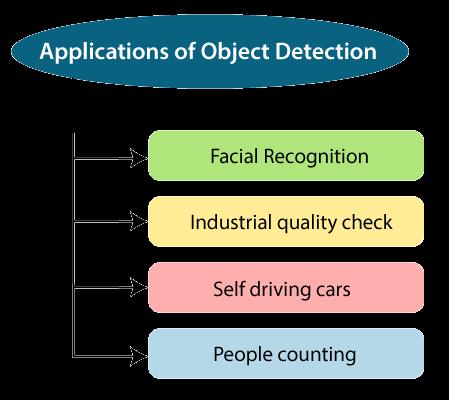
Objectrecognitionandtrackinghavebecomeessentialtools in a wide range of industries, fueling advancements and streamliningoperationsinvarioussectors.Intherealmof surveillanceandsecurity,thesetechnologiesfacilitaterealtime monitoring of individuals, vehicles, and items, bolstering safety measures and response capabilities to potentialthreats.Withintherealmofautonomousvehicles and drones, object recognition and tracking play a crucial role in ensuring secure navigation by identifying and followingobstaclesandothervehicles.Retailestablishments harnessthesetechnologiestoanalyzeconsumerbehavior, optimize store layouts, and enrich the overall shopping experience.Inthefieldofhealthcare,objectrecognitionand tracking assist in monitoring patients and conducting surgicalprocedures,thusenhancingpatientcareandsafety. Industrial automation reaps the benefits of these technologiesfortaskssuchasqualityassurance,inventory management, and process enhancement. Traffic control systemsrelyonobjectrecognitionandtrackingtooversee traffic patterns and effectively manage congestion. Moreover, object recognition and tracking have diverse applications in augmented reality, environmental monitoring, logistics, and human-computer interaction, propellingprogressandyieldingfavorableoutcomesacross amultitudeofdomains.
7.LITERATURE REVIEW
Inthissegmentoftheliteraturereview,wehaveanalyzed prior research papers focused on object detection using
various methodologies. The overview of the preceding researchendeavorsispresentedasfollows:
Alhayani. Real-time object detection and tracking play a crucialroleincontinuousmonitoringandtracingofobjects, especiallyinapplicationsliketrafficsurveillance.Byutilizing advanced image processing techniques, such as deep learning algorithms and computer vision, real-time object detectionandtrackingcanbeachievedwithhighreliability andperformance. Inthisarticle,anovelapproachtorealtime object detection and tracking for traffic surveillance wasintroduced.Theresultsofthestudydemonstratedthe effectiveness of the proposed techniques, with a frame processingtimeofaround30milliseconds,showcasingthe capabilitytoachievereal-timeperformance.Byleveraging thepowerofimageprocessingtechnologies,monitoringand tracking objects in real-time can be done seamlessly and efficiently.
Bharathi et al. A cutting-edge real-time deep learning technique employs YOLOv5 and MOTSORT to facilitate ongoing surveillance and tracking of various objects for detection, with a special emphasis on identifying social distanceviolationsintrafficsurveillancevideos.YOLOv5,as elaboratedbytheresearchers,representsastate-of-the-art computervisionmodelthatisadeptatidentifying,tracking, and recognizing individuals, specifically aimed at gauging social distancing in road traffic videos captured by surveillance cameras. By harnessing the power of these advancedtechnologies,continuousmonitoringandtracingof objectsinreal-timebecomesafeasibleandefficientprocess, ultimately enhancing the overall effectiveness of traffic surveillance systems in maintaining public safety and compliancewithsocialdistancingregulations.
Serban et al. The process of real-time detection involves identifying unfamiliar objects, such as pallets found in logistics warehouses, by utilizing semantic segmentation technology.Thisallowsforthecontinuousmonitoringand tracking of objects, even in the face of obstacles like complexity and occlusions. In a recent study, researchers employedsemanticsegmentationtospecificallytargetthe detectionofpalletswithinalogisticswarehousesetting.By considering factors such as the location and stationary natureofnewlyaddedobjectswithintheenvironment,the study found that the proposed method was successful in accurately identifying these objects, regardless of the intricaciesoftheobjectitselfanditscontents.
Shyamkhi et al. The paper introduces a sophisticated automated monitoring system that utilizes video surveillancetechnologyforreal-timeobjectdetection.The main focus is on minimizing the need for human involvement by implementing Convolutional Neural Network(CNN)modelsforaccurateobjectrecognition.The proposed system is designed to establish a platform that streamlinesmonitoringprocessesbyincorporatingaCCTV camera-basedautomatedmonitoringsystem.Thissystemis
International Research Journal of Engineering and Technology (IRJET) e-ISSN:2395-0056
Volume: 11 Issue: 06 | Jun 2024 www.irjet.net p-ISSN:2395-0072
equippedwithautomationcapabilitiestoefficientlydetect objects and trigger actions such as automatically opening doors or gates upon object recognition. By leveraging advancedtechnology,thesystemaimstoenhancesecurity measuresand optimizeoperational efficiency by reducing relianceonmanualintervention.
Ingle & Young. Real-time abnormal object detection is a critical task for ensuring safety and security in various environments.Inparticular,thedetectionofobjectssuchas guns and knives is of utmost importance for preventing potentialthreats.Toaddressthisissue,anovelapproachhas been developed that utilizes a resource-constrained lightweightsubclassdetectionmethod.Thismethodisbased onconvolutionalneuralnetworks,whichareknownfortheir abilitytoeffectivelyclassifyandlocateobjectsinreal-time. Byleveragingthepowerofconvolutionalneuralnetworks, the proposed method is able to efficiently detect different typesofgunsandknives,eveninchallengingenvironments. Thistechnologyenablescontinuousmonitoringandtracing ofobjects,allowingforquickandaccurateidentificationof potentialthreats.Overall,thisinnovativeapproachprovides a reliable solution for enhancing security measures and ensuringthesafetyofindividualsinvarioussettings.
Lesole et al. The research paper introduces a novel approachthatintegratestheuseofHistogramofOriented Gradients(HOG)andConvolutionalNeuralNetworks(CNN) to facilitate real-time tracking of multiple objects. By combiningthesetwoadvancedtechnologies,theproposed method aims to enhance the detection quality rates of objects across different non-overlapping cameras. This innovativetechniquenotonlyimprovesdataassociationsfor trackingmultipleobjectssimultaneouslybutalsoachievesa higher level of precision and specificity in the tracking process. In essence, this paper presents a cutting-edge paradigmthataddressesthechallengesofobjecttrackingby leveragingthesynergiesbetweenCNNandHOGdescriptors tooptimizethetrackingperformanceandaccuracy.
Qingbo et al Thepaperpresentsaninnovativeapproachto continuousobjectmonitoringandtracingthroughtheuseof a real-time embedded system. This system combines the efficiency of single-shot multibox detection with the accuracy of kernel correlation filters, resulting in robust tracking performance. The authors introduce a novel algorithm specifically designed for embedded systems, whichseamlesslyintegratestheobjectdetectioncapabilities ofsingle-shotmultiboxdetectionwiththeadvancedtracking algorithmbasedonkernelcorrelationfilters.Byleveraging the power of deep convolution networks and fieldprogrammablegatearrays,thisalgorithmensuresreal-time target detection and tracking with high precision and reliability. The proposed system represents a significant advancement in the field of object monitoring, offering a comprehensive solution for continuous surveillance and trackingapplications.
Zhou et al. Inthisstudy,theresearchershavesuccessfully demonstrated the capability of real-time detection and tracking of fast-moving objects through an innovative approach that does not require image reconstruction. By utilizing a single-pixel detector in conjunction with Hadamardpatternillumination,theteamwasabletoachieve efficient continuous monitoring and tracing of objects in motion.TheHadamardpatternwasusedtoilluminatethe fast-movingobjectviaaspatiallightmodulator,allowingfor the collection of light signals by the single-pixel detector. This novel technique opens up new possibilities for enhancedsurveillanceanddetectionsystems,withpotential applications in various fields such as security, transportation,androbotics.
Xiang et al. Thepaperdelvesintothetopicofcontinuous objectrecognitioninMobileAugmentedReality,focusingon theabilitytodetectobjectsinreal-timewithouttheneedfor retraining. It highlights the use of continual learning and edgecomputingaskeystrategiestominimizelatency.The studyintroducesauniqueMARsystemthataimstoimprove scalabilitythroughcontinuallearninginpracticalsituations. The research showcases how this system effectively identifies objects without the necessity of starting the training process from the beginning. Additionally, the utilizationofedgecomputingisshowntoplayacrucialrole inreducinglatencyforthecontinuousrecognitionofobjects.
Ambrosi et. al. Ideal observer analysis is a powerful tool used in continuous tracking experiments to effectively monitor stimuli such as numerosity and size in real-time. This analytical approach provides researchers with a structuredframeworkforinvestigatingdeviationsinhuman behaviorfromidealtrackingstandards.Thestudydetailedin thispaperintroducesanidealobservermodeldesignedto analyze results based on the efficiency of converting stimulusstrengthintoresponses,aswellastheidentification of both early and late sources of noise in the tracking process.Byemployingthismethod,researchersareableto gain valuable insights into the underlying mechanisms of perception and response in tracking tasks, ultimately enhancing our understanding of cognitive processes involvedinvisualperceptionanddecision-making.
Huiying et al. The paper introduces a novel approach for detectinglinearstructureobjectsinreal-timebycombining mean shift segmentation with heuristic search. This innovativemethodaimstoimprovetheefficiencyofobject detectionbyavoidingtheneedforshapematchingtraversal, which can be time-consuming. The heuristic detection algorithmisspecificallytailoredtotheuniquecharacteristics of linear structure objects, effectively addressing the traversal problem and enabling real-time detection. By implementingthisalgorithm,thedetecttimecanbereduced byanaverageofover70%whilemaintaininghighdetection accuracy.Thisresearchprovidesavaluablecontributionto the field of object detection, offering a more efficient and
International Research Journal of Engineering and Technology (IRJET) e-ISSN:2395-0056
Volume: 11 Issue: 06 | Jun 2024 www.irjet.net p-ISSN:2395-0072
accuratesolutionforidentifyinglinearstructuresinvarious applications.
Oliver et al. Thepaperintroducesacutting-edgemethodfor real-time tracking in surveillance situations by utilizing a rapid Siamese network to create unique identifiers from detected objects. This innovative approach allows for ongoing monitoring and tracking of various entities. The studydetailsamodifiedfastSiamesenetworkthatoperates inlineartime,asopposedtothetraditionalquadratictime, to efficiently generate these identifiers from detections. TheseidentifiersarethenlinkedtoKalmanfiltersbasedon severaltrackingmetricsincludingthecosinesimilarityofthe identifiers,theIntersectionoverUnionmetric,andthepixel distance ratio in the image. This method enhances the accuracy and speed of object tracking in surveillance scenarios, providing valuable insights for improving surveillancesystems.
Quazi et al. Theper-framemeanaverageprecision(mAP) prediction method is a valuable tool that allows for the continuousmonitoringofobjectdetectionsystemswithout therelianceongroundtruthdata.Thismethodensuresthat real-timetrackingandmonitoringofobjectscanbeachieved during deployment, providing valuable insights into the performance of the system. In the paper, the authors introduce an introspection approach to performance monitoring,whicheliminatestheneedforgroundtruthdata. Byanalyzingthedetector'sinternalfeatures,thesystemcan predict when the per-frame mAP drops below a critical threshold. This approach enhances the efficiency and effectiveness of object detection systems, allowing for proactiveadjustmentstobemadebeforeperformanceissues arise.
Zhao et al. The paper introduces a cutting-edge object tracking algorithm that seamlessly integrates local correlationfilteringandglobalre-detectiontechniques.This innovative approach allows for continuous real-time monitoringandtracingofobjectswithexceptionalaccuracy and robustness. Through rigorous experimentation, it has been demonstratedthatthis trackingalgorithmsurpasses existing methods in terms of accuracy and robustness, particularly in challenging scenarios such as object deformation,occlusion,andtargetloss.Theresultshighlight the effectiveness of this novel algorithm in addressing complex tracking challenges, making it a valuable tool for various applications requiring precise and reliable object monitoring.
Kadim et al. Astate-of-the-artconvolutionalneuralnetwork (CNN) object tracker has been specifically designed to provide continuous monitoring and real-time object detection in night surveillance scenarios. This advanced technology has been fine-tuned to deliver optimal performance by utilizing specific training data configurations. The CNN-based object tracker for night surveillanceisagroundbreakingsolutionthatharnessesthe
power ofdeepfeaturerepresentationto accuratelydetect and track objects in low-light conditions. By employing a binaryclassifierapproach,thisinnovativesystemisableto distinguishobjectsfromtheirbackgroundclasseswithhigh precision and efficiency. This cutting-edge development marksasignificantadvancementinthefieldofsurveillance technology, offering enhanced capabilities for monitoring andsecurityapplicationsduringnighttimeoperations.
Naman et al. Real-timegenericobjectdetectionandtracking is a sophisticated process that involves the constant monitoringandtracingofvariousobjectsinordertodetect interactions and predict behaviors. This technology is particularly essential for applications such as self-driving cars,wheretheabilitytoaccuratelydetectandtrackobjects inreal-timecanmeanthedifferencebetweenasafejourney andapotentialaccident.Themaingoalofthisprocessisto detect and track generic objects in real-time, while also gaining a deep understanding of how these objects are moving in relation to the camera. By doing so, it becomes easiertorecognizeandinterprettheinteractionsbetween different objects, ultimately leading to safer and more efficientautonomoussystems.
Alessio et al. T-RexNet is an innovative system that leveragesa hardware-aware neural network toeffectively detect small moving objects in real-time. This technology significantly improves the efficiency of object detection in videos,particularlythosewithstaticframing,makingitideal for use in embedded systems. The unique aspect of TRexNet,asdetailedintheresearchpaper,isitsintegrationof the strengths of single-shot detectors with a specialized feature-extractionnetwork.Bydoingso,T-RexNetisableto addressthelimitationstypicallyassociatedwithsingle-shot detectors when it comes to accurately detecting small objects. This groundbreaking approach showcases the potentialforadvancementsinobjectdetectiontechnology that can have far-reaching applications across various industries.
Beibei & Charles. In this research paper, the authors present a systematic algorithm that integrates frame difference and background subtraction techniques with Laplace filters and edge detectors to achieve a highly efficient real-time moving object detection system for continuousmonitoringandtrackingpurposes.Theproposed approach combines the frame difference method (FD), background subtraction method (BS), and optical flow method (OFT) to enhance the accuracy and speed of detectingandtrackingmovingobjectsinreal-timescenarios. Byleveragingthestrengthsofeachmethodandintegrating them seamlessly, the algorithm is able to provide reliable and precise results for various applications requiring continuoussurveillanceandobjecttracing.
Ihor et al. Theprimaryobjectiveofthepaperistodiscuss the advancement of technology aimed at automatically detectingandaccuratelytrackingaerialobjectsinreal-time.
International Research Journal of Engineering and Technology (IRJET) e-ISSN:2395-0056
Volume: 11 Issue: 06 | Jun 2024 www.irjet.net p-ISSN:2395-0072
This innovation allows for the seamless and effective continuousmonitoringandtracingofobjectsinthesky.The article delves into the outcomes of the research and development of digital video processing technology specificallydesignedfordetectingandtrackingaerialobjects inbothvisibleandinfraredfrequencybandsinreal-time.It highlights that the implementation of the FieldProgrammableGateArray(FPGA)algorithmensuresthatthe processing time for each frame remains consistent regardless of factors such as object shape, background details, or frame complexity. This breakthrough in technology paves the way for improved surveillance and monitoringsystemsthatcanoperatewithhighprecisionand efficiencyintrackingaerialobjects.
8.CONCLUSION
In conclusion, the examination of continuous surveillance and tracking of objects in real-time for detection in this review paper emphasizes its essential role across diverse sectors.Theintegrationofcurrentresearchshedslighton themultifacetedimportanceofthesesystemsinenhancing security, streamlining logistics, enhancing healthcare outcomes,andpropellingnumerousotherfieldsforward.As demonstrated bythewidearrayoftechnologies explored, ranging from sensor advancements to sophisticated data analytics, there exists a diverse array of tools and methodologies to facilitate real-time object detection. However, despite the progress made, challenges such as maintaining privacy, ensuring system scalability, and achievingseamlessintegrationremainkeyareasforfuture research efforts. Addressing these obstacles necessitates interdisciplinarycooperationandaunifiedcommitmentto balancingtechnologicalprogresswithethicalconsiderations. Nevertheless,thepotentialsocietaladvantagesofenhanced object monitoring and tracking are extensive, offering the promiseofincreasedsafety,operationaleffectiveness,and resourceoptimization.Asresearcherspersistininnovating andrefiningthesesystems,itiscrucialtoremainmindfulof the broader societal consequences and strive towards solutions that are not only technically robust but also ethicallysoundandsociallyresponsible.
REFERENCE
1. Al-Hayani,M.H.A.(2023).Real-Timeobjectsdetection, tracking, and counting using image processing techniques. Mağallaẗ al-Nahrayn Li-l-ʿulūm Alhandasiyyaẗ, 26(1), 24–30. https://doi.org/10.29194/njes.26010024
2. Bharathi, G., & Anandharaj, G. (2022). A Conceptual Real-Time Deep Learning Approach for Object Detection, Tracking and Monitoring Social Distance usingYolov5.IndianJournalofScienceandTechnology, 15(47), 2628–2638. https://doi.org/10.17485/ijst/v15i47.1880
3. Bodla,N.,Singh,B.,Chellappa,R.,&Davis,L.S.(2017). Soft-NMS ImprovingObjectDetectionwithOneLine ofCode.IEEE.https://doi.org/10.1109/iccv.2017.593
4. Carata,S.,Ghenescu,M.,&Mihăescu,R.(2023).RealTime detection of unrecognized objects in logistics warehouses using semantic segmentation. Mathematics, 11(11), 2445. https://doi.org/10.3390/math11112445
5. Chen,Y.,Yang,X.,Zhong,B.,Pan,S.,Chen,D.,&Zhang,H. (2016). CNNTracker: Online discriminative object tracking via deep convolutional neural network. Applied Soft Computing, 38, 1088–1098. https://doi.org/10.1016/j.asoc.2015.06.048
6. Ghosh, S. R., Pemmaiah, A. B., Bharti, S., Gopika, D., & Joshy, .(2022).intelligentautomatedmonitoring systemusingvideosurveillance asedrecognition. nternational ournalof ealthSciences( S)(n ea), 1 –1989. https://doi.org/10.53730/ijhs.v6ns6.10098
7. Iguernaissi, R., Merad, D., Aziz, K., & Drap, P. (2018). People tracking in multi-camera systems: a review. Multimedia Tools and Applications, 78(8), 10773–10793.https://doi.org/10.1007/s11042-018-6638-5
8. Kalake, L., Dong, Y., Wan, W., & Hou, L. (2022). Enhancing Detection Quality Rate with a Combined HOGandCNNforReal-TimeMultipleObjectTracking across Non-Overlapping Multiple Cameras. Sensors, 22(6),2123.https://doi.org/10.3390/s22062123
9. Li,H.,Li,Y.,&Porikli,F.(2016).DeepTrack:Learning Discriminative Feature Representations Online for robust visual tracking. IEEE Transactions on Image Processing, 25(4), 1834–1848. https://doi.org/10.1109/tip.2015.2510583
10. Lin, T., Dollár, P., Girshick, R., He, K., Hariharan, B., & Belongie, S. (2017). Feature Pyramid Networks for Object Detection. Science. https://doi.org/10.1109/cvpr.2017.106
11. Wang,Y.,Shi,W.,&Wu,S.(2018).RobustUAV-based tracking using hybrid classifiers. Machine Vision and Applications, 30(1), 125–137. https://doi.org/10.1007/s00138-018-0981-4
12. Wu, Y., Lim, J., & Yang, M. (2015). Object Tracking Benchmark.IEEETransactionsonPatternAnalysisand Machine Intelligence, 37(9), 1834–1848. https://doi.org/10.1109/tpami.2014.2388226
13. Zhang,H.,Zhang,Z.,Zhang,L.,Yang,Y.,Kang,Q.,&Sun, D.(2019).ObjecttrackingforasmartcityusingIoTand edge computing. Sensors, 19(9), 1987. https://doi.org/10.3390/s19091987
International Research Journal of Engineering and Technology (IRJET) e-ISSN:2395-0056
Volume: 11 Issue: 06 | Jun 2024 www.irjet.net p-ISSN:2395-0072
14. Zhang,K.,Guo,Y.,Wang,X.,Yuan,J.,&Ding,Q.(2019). Multiple feature reweight DenseNet for image classification. IEEE Access, 7, 9872–9880. https://doi.org/10.1109/access.2018.2890127