
International Research Journal of Engineering and Technology (IRJET) e-ISSN:2395-0056



Volume: 11 Issue: 06 | Jun 2024 www.irjet.net p-ISSN:2395-0072
International Research Journal of Engineering and Technology (IRJET) e-ISSN:2395-0056
Volume: 11 Issue: 06 | Jun 2024 www.irjet.net p-ISSN:2395-0072
Prof. V.V Shelar1 Ms. Unnati Kasar2 Prof. V.S Shingade3
Assistant Professor1 Department of Civil Engineering, TCOER- Pune, P.G Student2 Department of Civil Engineering, TCOER- Pune, Assistant Professor3 Department of Civil Engineering, TCOER- Pune.
Abstract - Framed structures built on slopes exhibit distinct behaviors compared to those on flat terrain. These structures are often asymmetrical, leading to uneven load distribution due to varyingcolumn heights andlengths. This study examines a multistoried building's seismic performance with different structural configurations, specifically step back set back structures and H-shaped structures. Utilizing time history analysis, seismic responses were assessed using advanced software tools. The analysis revealed that step back set back structures without shear walls perform better than H-shaped structures. However, H-shaped structures with both internal and external shear walls demonstrated superior performance compared to step backsetbackstructures.
Keywords:Multistoreybuilding,HillSlopeangle,Stepback set back structure (SBSB), H shape structure, Shear wall, Timehistoryanalysis(THA).
Reinforcedconcrete(RC)framedstructuresfacesignificant challenges when situated on hill slopes, particularly in seismic-prone regions. Historical seismic events like the Bhuj earthquake (2001), Chamoli earthquake (1999), and Uttarkashi earthquake (1991) have underscored the vulnerabilityof buildings in hillyterrain. For instance, the Bhujearthquakeresultedinastaggeringlossofover35,000 lives and extensive structural damage, while the Chamoli earthquake caused 103 fatalities and the Uttarkashi earthquake claimed over a thousand lives, causing widespread devastation in the Garhwal Himalayas. To address seismic risks, various bracing techniques such as momentframes,shearwalls,andbracedframesareutilized. Step-back and setback configurations have demonstrated superior performance on sloping terrains compared to conventional designs. However, despite their potential advantages,thereremainsadearthofcomprehensivestudies on multistoried buildings on slopes, especially those incorporating shear walls in diverse locations. Further researchisimperativetodeepenourunderstandingofthe behavior of these structures and to formulate effective designstrategies.

1. To analyze the seismic performance of different structuralconfigurations,includingstepbacksetbackand H-shapedstructures,onslopingground.
2. To investigate structural parameters such as storey shear,baseshear,andstorystiffnessinresponsetoseismic forcesonslopes.
3. Toidentifythemostsuitablestructuralconfiguration formultistoriedbuildingsonslopinggroundbyevaluating various design options and considering seismic performance,stability,andstructuralintegrity.
A study was conducted to analyze the seismic behavior of buildings situated on hill slopes, incorporating various configurations as illustrated in Figures 1 to 4. The slope anglewasfixedat28.07degrees,whiletheplandimension ofthebuildingwas6.0metersby5.0meters,witheachstory having a height of 3.2 meters. This investigation aimed to understandhowdifferentstructuralarrangementsandslope conditions affecttheresponseofbuildingstoseismicforces, providingvaluableinsights intothedesignandconstruction ofstructuresinhillyterrain.
Table1presentsthesizesofRCCbeamsandcolumnsused.
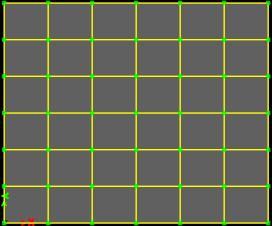
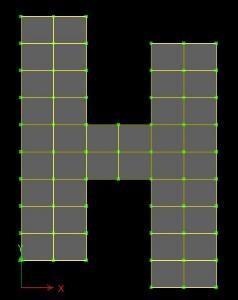
Figure 1 illustrates the plan of two types of structures: SBSB (Step-Back Setback)StructureandH-ShapeStructure, bothwithoutshearwalls.

International Research Journal of Engineering and Technology (IRJET) e-ISSN:2395-0056
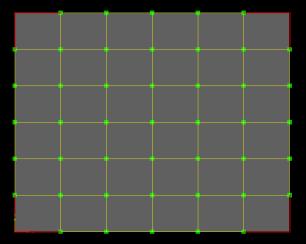
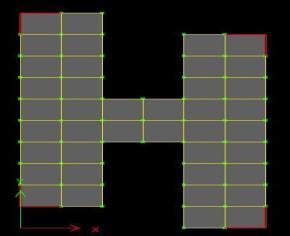
Figure2displaystheplanofthesamestructures,butwith ashearwallpositionedatthecorner.
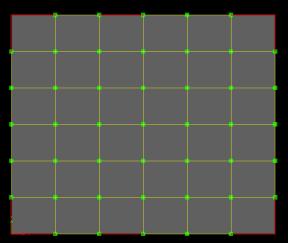
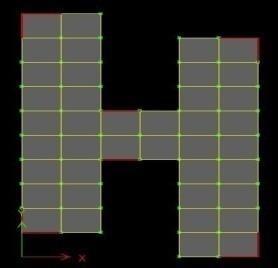
Figure 3, the plan shows the structures with shear walls placedatboththecornerandthemiddle
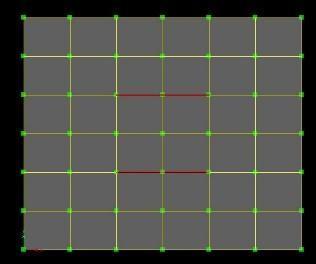
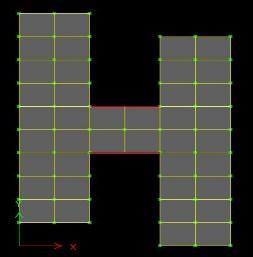
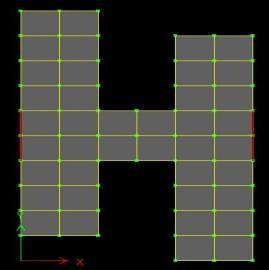
Figure4presentstheplanofthestructures witha shear wallpositionedatthemiddle
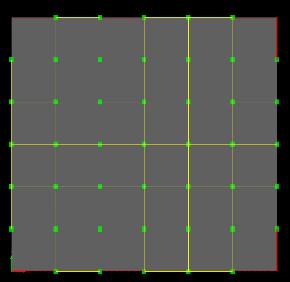
Figure5depictstheplanofthestructureswithshearwalls located at adjacent ends. These figures provide visual representationsofdifferentconfigurationsstudiedinthe seismicbehavioranalysisofbuildingsonslopes,aidingin thecomprehensionofstructuralresponsesunderseismic loadingconditions.
Volume: 11 Issue: 06 | Jun 2024 www.irjet.net p-ISSN:2395-0072
Thisresearchinvestigatesthebasalticconductofdiffering structural setups, containing shrink away delay and H-formed structures, in a multistoried construction circumstances.UsingETABSprogram,thestudyadheredto IS1893:2016flags,engagingTimeHistoryAnalysis.Seismic dossierfromnotableupheavals(Bhuj,Uttarkashi,Chamoli) weresecondhand.Shearwallconfigurationswereresolved fortwotogetherextrinsiccornerdivider(ShearWall1)and additionalwithindivider(ShearWall2)asprovedinFigures 2-4.Thekeylimitsusedforthereasoningareparticularized beneath
Table2Parametersused
3. RESULTS AND DISCUSSION*
I. Drift Ratio:
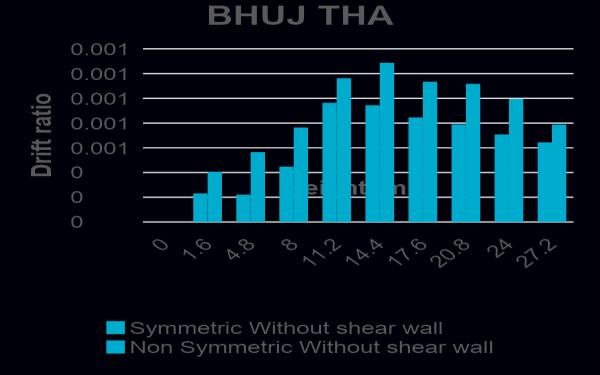
The drift ratio, indicating the lateral displacement of a building'stoprelativetoitsheight,wasevaluated.Buildings withlowerstiffnessexhibitedhigherdriftratios.Thehighest driftratiowasobservedinthestepbacksetbackstructure withshearwallsduringtheChamoliearthquake.
International Research Journal of Engineering and Technology (IRJET) e-ISSN:2395-0056
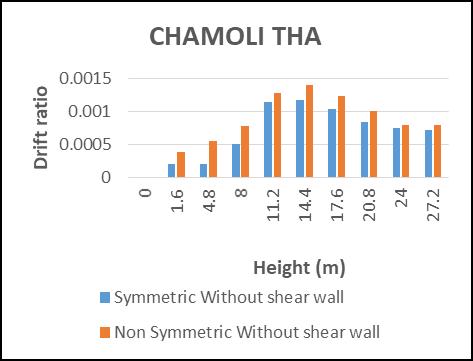
DriftratioofHShaped&SBSBstructurewithoutSW ForCHAMOLITHA(Graph-2)
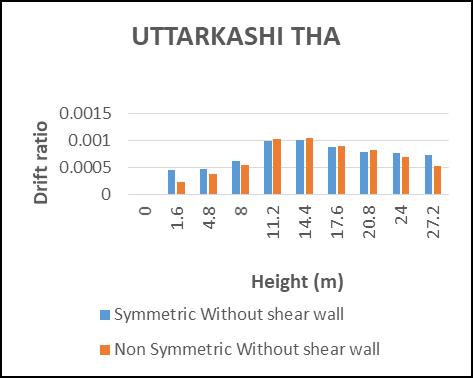
DriftratioofHShaped&SBSBstructurewithoutSW forUTTARKASHITHA (Graph-3)
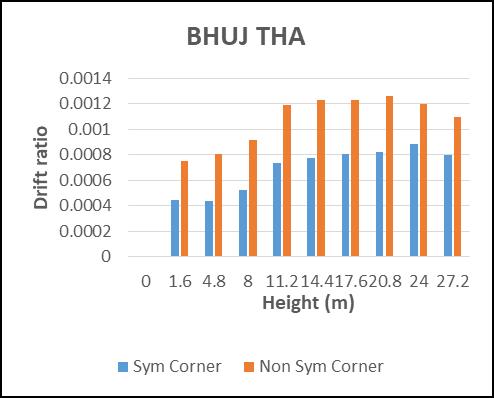
DriftratioofHShaped&SBSBstructurewithSWatcorner forBHUJTHA(Graph-4)
Volume: 11 Issue: 06 | Jun 2024 www.irjet.net p-ISSN:2395-0072
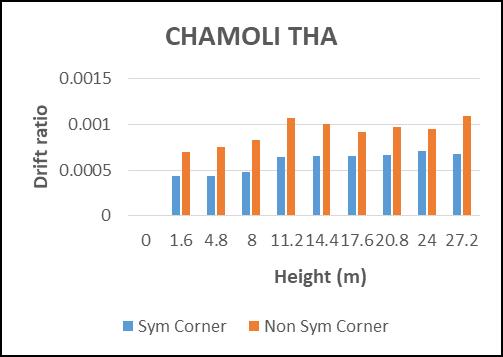
DriftratioofHShaped&SBSBstructurewithSWatcorner forCHAMOLITHA(Graph-5)
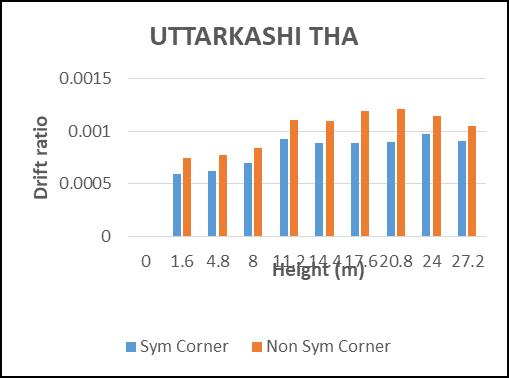
DriftratioofHShaped&SBSBstructurewithSWatcorner forUTTARKASHITHA(Graph-6)
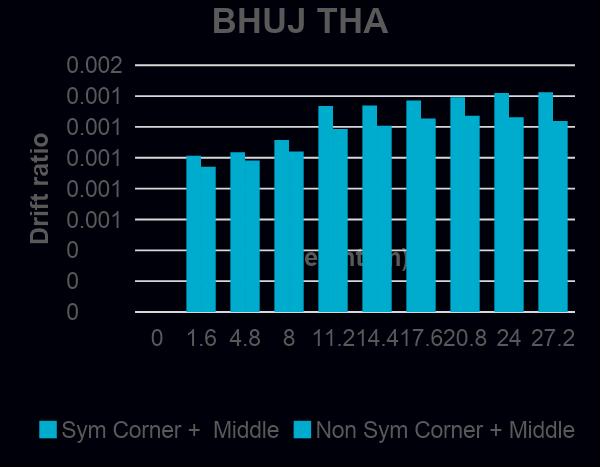
DriftratioofHShaped&SBSBstructurewithoutSWat Corner+middleforBHUJTHA(Graph-7)
International Research Journal of Engineering and Technology (IRJET) e-ISSN:2395-0056
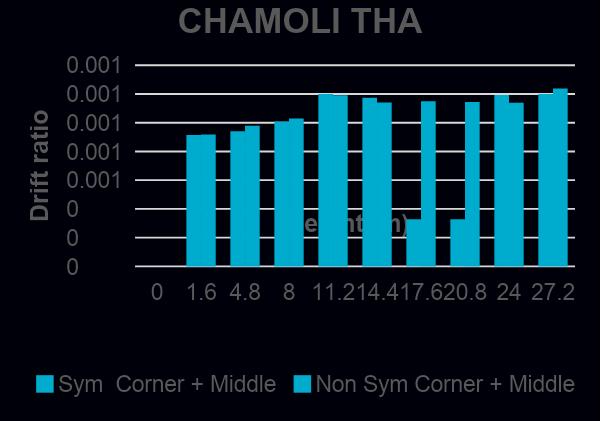
DriftratioofHShaped&SBSBstructurewithoutSWat Corner+middleforCHAMOLITHA(Graph-8)
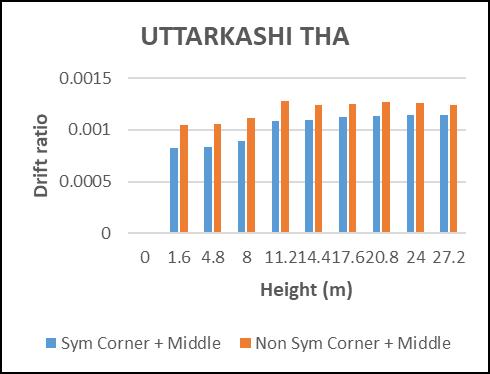
DriftratioofHShaped&SBSBstructurewithoutSWat Corner+middleforBHUJTHA(Graph-9)
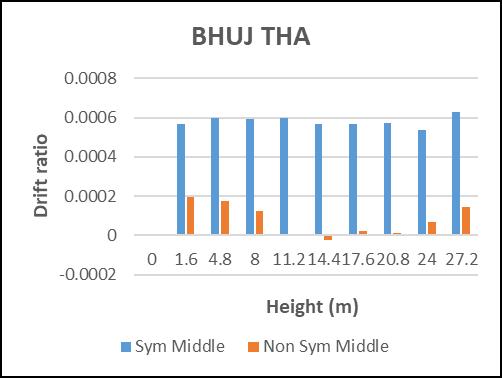
DriftratioofHShaped&SBSBstructurewithSWatmiddle forBHUJTHA(Graph-12)
Volume: 11 Issue: 06 | Jun 2024 www.irjet.net p-ISSN:2395-0072
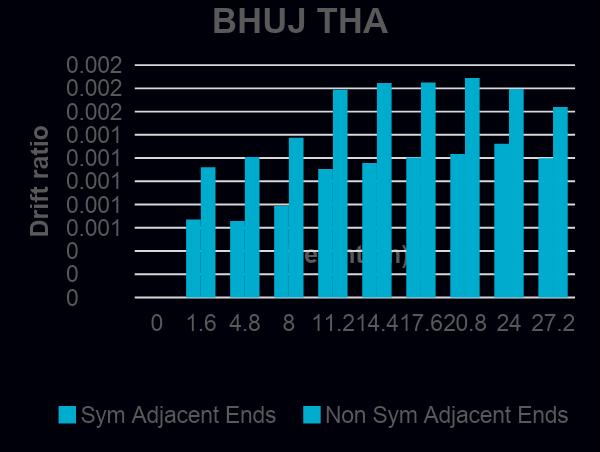
DriftratioofHShaped&SBSBstructurewithSWatmiddle forBHUJTHA(Graph-10)
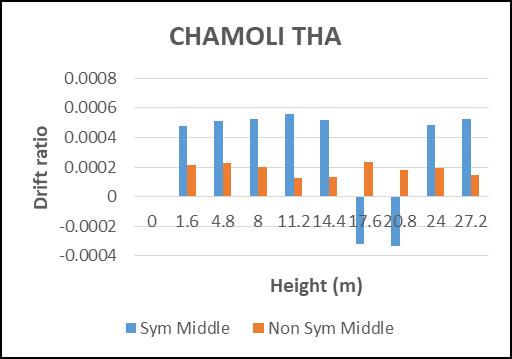
DriftratioofHShaped&SBSBstructurewithSWatmiddle forCHAMOLITHA(Graph-11)
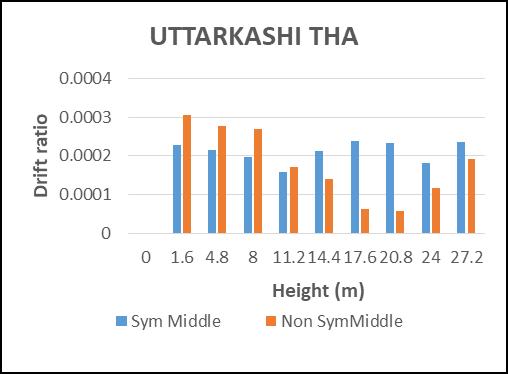
DriftratioofHShaped&SBSBstructurewithoutSWat AdjacentendsforBHUJTHA(Graph-13)
International Research Journal of Engineering and Technology (IRJET) e-ISSN:2395-0056
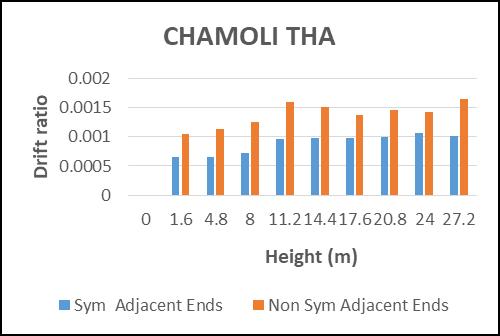
DriftratioofHShaped&SBSBstructurewithoutSWat
AdjacentendsforCHAMOLITHA(Graph-14)
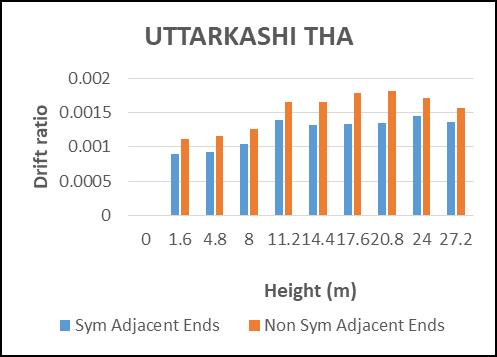
DriftratioofHShaped&SBSBstructurewithoutSWat
AdjacentendsforUTTARKASHITHA(Graph-15)
II. Base Shear:
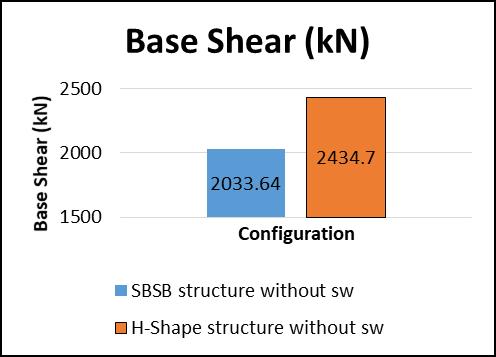
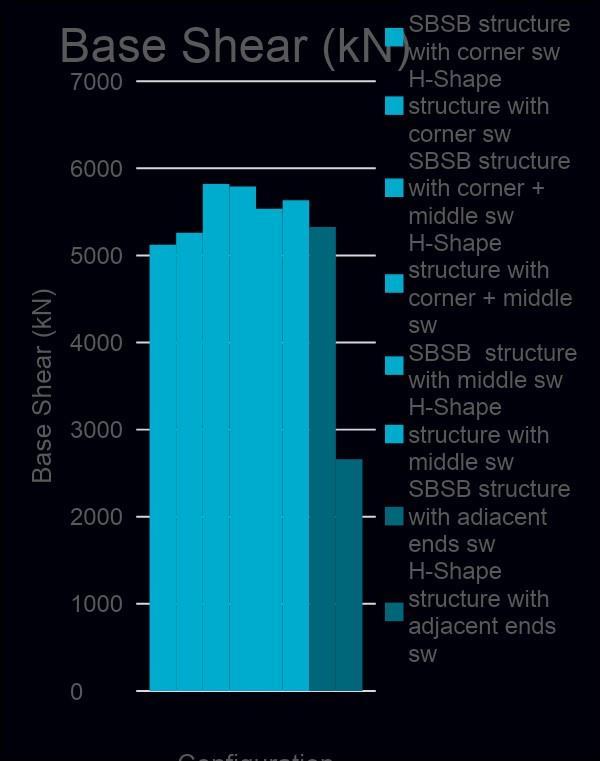
Baseshear,theforcegeneratedatthestructure'sbasedueto seismicactivity,wasanalyzed.Stepbacksetbackstructures withoutshearwallsshowedlowerbaseshearcomparedto H-shapedstructureswithoutshearwalls.However,H-shaped structures with both internal and external shear walls demonstratedlowerbaseshearcomparedtostepbackset backstructureswithsimilarshearwallconfigurations.
Volume: 11 Issue: 06 | Jun 2024 www.irjet.net p-ISSN:2395-0072
International Research Journal of Engineering and Technology (IRJET)
Volume: 11 Issue: 06 | Jun 2024 www.irjet.net p-ISSN:2395-0072 Bhuj Time History
Table3VariationsinSeismicParametersofStructure withoutShearWallusingTimeHistoryAnalysis
0.001 2 1498. 48 42387 02 2033. 69
Time History H
0.001 1 1782. 60 36680 52 2434. 7
11.85 0.001 5512. 13073 5326 structure 82 22 943
Table4VariationsinSeismicParametersofStructurewith CornerShearWallLocationusingTimeHistoryAnalysis
Time History

8.41 0.001 5233.8 867159 582
Table 5 Variations in Seismic Parameters of Structure with Corner+Middle Shear Wall Location using Time History Analysis
Bhuj Time History
of configurati ons
Table6VariationsinSeismicParametersofStructurewith MiddleShearWallLocationusingTimeHistoryAnalysis Bhuj Time History
International Research Journal of Engineering and Technology (IRJET) e-ISSN:2395-0056
Bhuj Time History
Types of configurati ons
HShape 1956 0002 5614. 13732 2661. Structure 52 38 035 3
SBSB 13.8 0.001 4964. 13073 5326 structure 76 98 943
Chamoli Time History
HShape 985 0001 3836. 13732 2661. Structure 42 02 03.5 3
SBSB 9.49 0.002 3412. 13073 5326 structure 19 5 943
Uttarkashi Time History
HShape 1449 0001 4961. 13732 2661. Structure 25 98 035 3
SBSB 1185 0001 5512. 13073 5326 structure 82 22 943
Table7VariationsinSeismicParametersofStructurewith AdjacentendsShearWallLocationusingTimeHistory Analysis
4. CONCLUSION:
1. H-shapedstructureswithoutshear wallsexhibit higher driftratioscomparedtostepbacksetbackstructuresacross multipleseismicevents.
2. Step back set back structures without shear walls demonstrate lower base shear compared to H-shaped structureswithoutshearwalls.
3. Incorporating both internal and external shear walls in H-shaped structures reduces drift ratios compared to configurationswithonlyexternalshearwalls.
4. H-shapedstructureswithbothinternalandexternalshear wallsexperiencelowerstoreybaseshearthanstepbackset backstructureswithsimilarshearwallconfigurations.
5. Configurations with shear walls at both external and internallocationsoutperformthosewithonlyexternalshear walls,highlightingtheimportanceofshearwallplacement inoptimizingstructuralperformance.
1. DeshpandeandMohite(2014)studiedtheeffectof sloping ground on the step-back and setback configurationofRCCframebuildings.
Volume: 11 Issue: 06 | Jun 2024 www.irjet.net p-ISSN:2395-0072
2. Pandey et al. (2011) investigated seismic soil-structure interaction of buildings on hill slopes.
3. Pateletal.(2014)conductedaperformancestudy and seismic evaluation of RC frame buildings on slopingground.
4. Manjunath and Holebsgilu (2016) performed seismicanalysisofmulti-storeybuildingswithflat slabsrestingonplainandslopingground.
5. Misal and Bagade (2016) studied the seismic behaviorofmulti-storiedRCCbuildingsonsloping ground,consideringbracingsystems.
6. UttekarandNayak(2016)providedareviewonthe seismic response of RC buildings on sloping ground.
7. Gupta and Gautam (2016) conducted a review on the seismic behavior of short columns and their preventiononslopingground.
8. Navale et al. (2017) analyzed unsymmetrical buildings resting on sloping ground by dividing theminto2Dframes.
9. Satyanarayana and Abhilash (2017) performed seismic analysisofRCCmulti-storiedbuildingson slopingground.
10. SM, Reddy, and Supriya (2017) analyzed and comparedstep-backRCframebuildingsonsloping andplainstrata.
11. Bhavikatti and Cholekar (2017) investigated the soil-structureinteractioneffectforbuildingsresting on sloping ground, including infill subjected to seismicanalysis.
12. Taketal.(2020)providedareviewontheanalysis oftowersonbuildingswithslopingground.
13. Ahmad and Modani (2020) conducted a comparativeanalysisoftheseismicperformanceof RCbuildingsrestingonplainandslopingground.