
International Research Journal of Engineering and Technology (IRJET) e-ISSN: 2395-0056
Volume: 11 Issue: 06 | Jun 2024 www.irjet.net p-ISSN: 2395-0072
International Research Journal of Engineering and Technology (IRJET) e-ISSN: 2395-0056
Volume: 11 Issue: 06 | Jun 2024 www.irjet.net p-ISSN: 2395-0072
Sakshi Gaikwad1 , Kshitij Jadhav1 , Shubham Thigale1 , Vaishali Gaikwad1
R S Kamble2
1BE Student, Dept. of civil Engineering, Government college of Engineering & Research Avasari Khurd, Pune, Maharashtra, India
2Project Guide, Dept. of civil Engineering, Government college of Engineering & Research Avasari Khurd, Pune, Maharashtra, India ***
Abstract - The most important requirement of any project after performance criteria is its economical feasibility and serviceability criteria. The conventional methods are time consuming and are not economically feasible. Hence there isa need to discover the other possible ways to satisfy the performance as well as economicalcriteria.VastareasofIndia consist of Black Cotton Soil which has high clay content, low strength and minimal bearing capacity. The poor engineering performance of such soils has forced Engineers device a cost effective and ecofriendly methods for improving the engineering properties of poor soils.
This research project investigates the impact of bio-enzyme and polymers on the strength of clayey soils.The effect of the bio-enzyme and acrylic polymer on Atterberg's limits, compaction characteristics, and shear strength of soil was studied. On the basis of experimental results the optimum dosage of Bio-enzyme and polymer was obtained. The Bioenzyme has emerged as a material which drasticallyimproves the properties of soil, is eco-friendly and is economical in long run. Supplied in liquid form, acrylicpolymersareeasilysoluble in water, simplifying soil compaction and reducing the time and cost associated with traditional stabilizers. Bio-enzymes and polymer being non-toxic and biodegradable, offer a sustainable solution for enhancing soil stability, making them a promising alternative to conventional methods
Key Words: Bio-enzymes, polymer, Black Cotton Soil, cost-effective, eco-friendly, biodegradable
1.INTRODUCTION
Sub-grade soil, crucial in construction, often lacks the strengthtobearloads.Traditionalstabilizerslikelimeand cement have drawbacks: lime dust is environmentally harmful,andmaterialslikeflyashcanbecostlytotransport. Grouting,anoldermethod,increasessoilbearingcapacity but is uneconomical for sub-grade stabilization. Bio-zyme and acrylic polymer offer eco-friendly, cost-effective alternatives.Derivedfromnaturalsubstances,theyenhance soilpropertieswithoutenvironmentalpollution.Thisstudy analyzestheeffectsofBio-zymeandpolymeronimproving
soil shear strength, presenting them as promising alternativestoconventionalstabilizers.
TocharacterizetheeffectofBio-enzyme(Bio-zyme) andpolymer(Acrylicpolymer)onthesoil.
TostudytheeffectofvaryingdosagesofBio-enzyme (Bio-zyme) and polymer (Acrylic polymer) on strength&othercharacteristicsidentifiedsoil.
To find out optimum Bio-enzyme (Bio-zyme) and polymer (Acrylic polymer) dosage required for selectedsoil
To study the properties of stabilizer used in soil stabilization.
Blackcottonsoilisahighlyclayeysoil.Theblackcolourin Blackcottonsoilisduetothepresenceoftitaniumoxidein small concentration. The Black cotton soil has a high percentageofclay,whichispredominantlymontmorillonite instructureandblackorblackishgreyincolour.Expansive soilsarethesoilswhichexpandwhenthemoisturecontent ofthesoilsisincreased.Theclaymineralmontmorilloniteis mainlyresponsibleforexpansivecharacteristicsofthesoil. The expansive soils are also called swelling soils or black cotton soils. The structures on Black cotton soil bases develop undulations at the road surface due to loss of strength of the sub-grade through softening during monsoon.
Bio-enzymes isanatural,non-toxic,noncorrosiveandnoninflammable liquid, produced by formulating vegetable extracts. Organic enzymes come in liquid form. They are perfectly soluble in water, brown in colour with smell of molasses. Their aroma has no effect. Neither gloves nor masksarerequiredduringhandling.Bio-zymeis specially formulatedtomodifytheengineeringpropertiesofsoil.They requiredilutioninwaterbeforeapplication.Bio-zymewhen addedtowaterandmixedwithsoilalterstheengineering propertiesdependinguponthetypeofthesoilanddosageof enzyme. Theseenzymesare liquidadditives, whichacton
International Research Journal of Engineering and
Volume: 11 Issue: 06 | Jun 2024 www.irjet.net p-ISSN: 2395-0072
the soil to reduce the voids between soil particles and minimize absorbed watering the soil for maximum compaction.TheapplicationofBio-zymeenhancesweather resistanceandincreasesloadbearingcapacityofsoils.
Acrylic Polymer are formed of long molecular chains (monomers) which are held together by covalent bonds. Polymers may be natural or synthetic and are classified functionally as cationic, anionic and non-ionic polymers. Polymers provide physical bonding between the soil particles rather than forming a new mineral by means of chemicalreactionacrylicpolymersareproducedduringthe manufacturingofplasticgoodslikeacrylicnameplatesetc. The material used in this study was collected from manufacturingunitofnameplatesfromlocalvicinity.
OptimumMoistureContentandMaximumDryDensityvalue onsoilandsoilwithenzyme+polymerispresented.The0% enzyme + polymer mixture on soil taken for making correlationbetweensoilhaving0%enzyme+polymerand soilwith2.5%,5%,7.5%,10%.
Table -1:
Table -3: Mould Weight of Standard Proctor Test of
Table -5: Dry density Vs Water Content of Black Cotton soil
Table -6: liquidlimittestofblackcottonsoilwithout
Table -7: liquidlimittestofblackcottonsoilwith2.5%
Table -8: Liquid limit test of black cotton soil with 5% enzyme + polymer
Table -9: Liquid limit test of black cotton soil with 7.5% enzyme + polymer
Determination
Numberofblows
International Research Journal of Engineering and Technology (IRJET) e-ISSN: 2395-0056
Volume: 11 Issue: 06 | Jun 2024 www.irjet.net p-ISSN: 2395-0072
Table -10: Liquid limit test of black cotton soil with 10% Polymer + Enzyme
Wt. of container + Wt.of
Table -12: plasticlimittestofblackcottonsoilwith 2.5%enzyme+polymer
DeterminationNo. 1 2 3
Table -11: plasticlimittestofblackcottonsoilwith0% enzyme+polymer
Wt. of container + drysoil(W3)
Wt.ofdrysoil (W3-W1)
Table -13: plasticlimittestofblackcottonsoilwith5% enzyme+polymer
DeterminationNo. 1 2 3
container(W1)
Wt.ofcontainer+ Wt.ofsoil(W2)
Wt. of
International Research Journal of Engineering and Technology (IRJET) e-ISSN: 2395-0056
Volume: 11 Issue: 06 | Jun 2024 www.irjet.net p-ISSN: 2395-0072
Table -14: plastic limit test of black cotton soil with 7.5% enzyme + polymer
Determination No. 1 2 3
+ Wt.ofsoil(W2)
Wt. of container +drysoil(W3)
Table -15: plasticlimittestofblackcottonsoilwith10% enzyme+polymer
Determination No. 1 2 3
Wt. of container+ Wt.
International Research Journal of Engineering and Technology (IRJET) e-ISSN: 2395-0056
Volume: 11 Issue: 06 | Jun 2024 www.irjet.net p-ISSN: 2395-0072
International Research Journal of Engineering and Technology (IRJET) e-ISSN: 2395-0056
Volume: 11 Issue: 06 | Jun 2024 www.irjet.net p-ISSN: 2395-0072
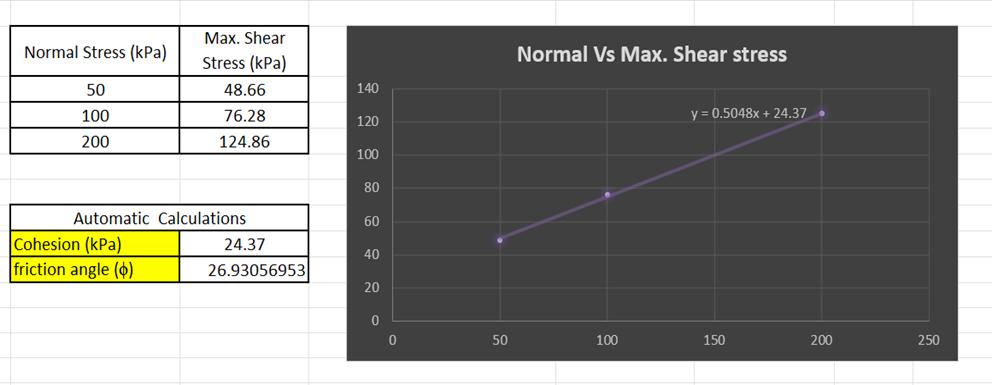
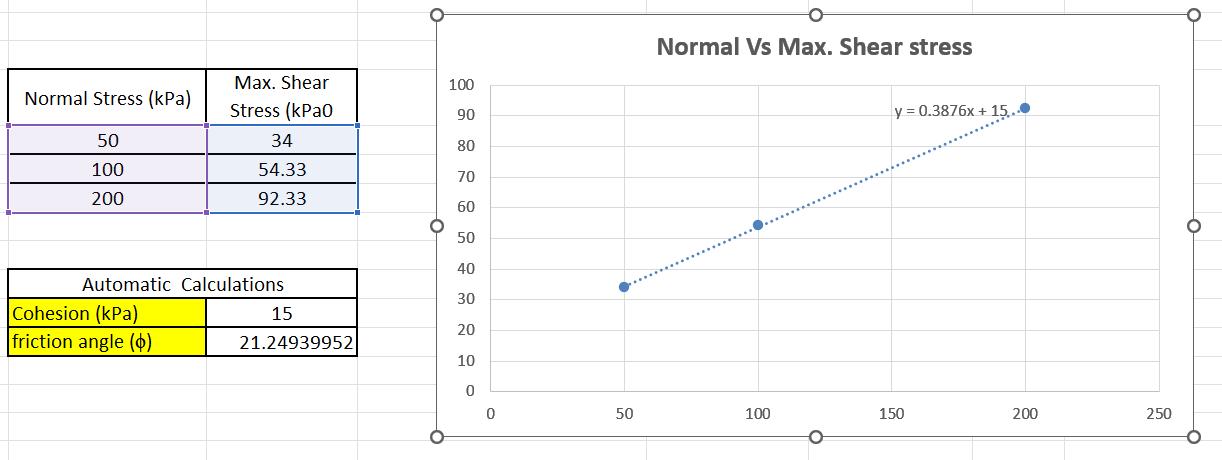
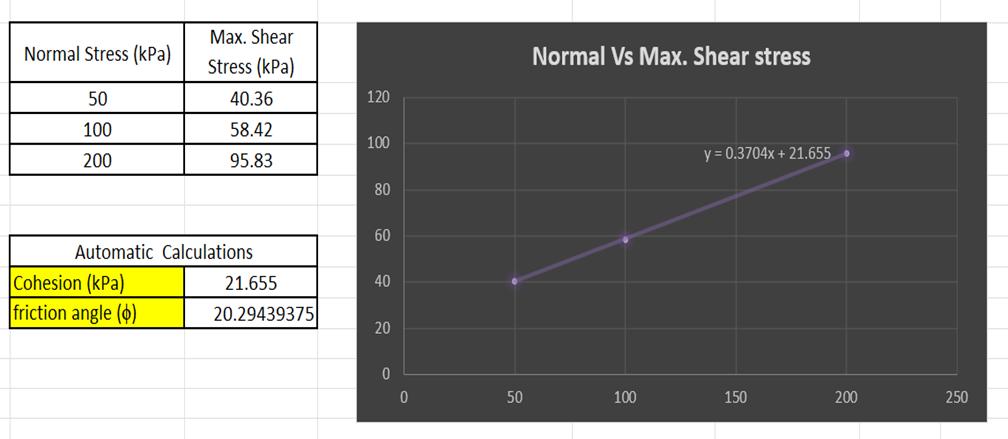
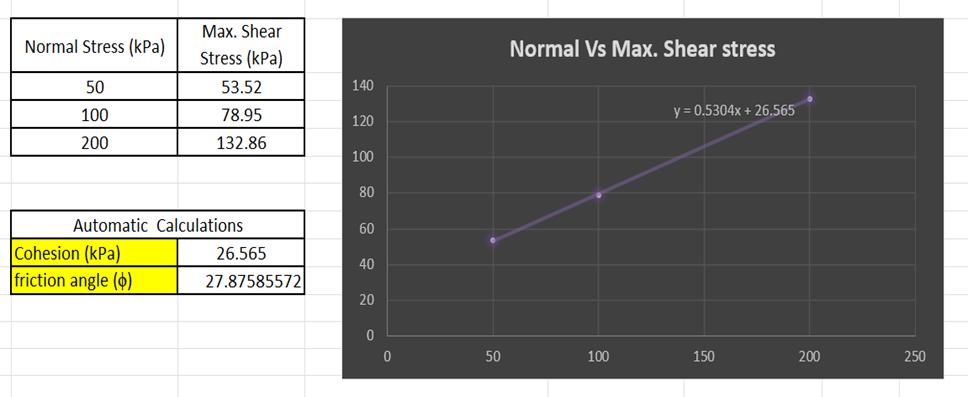
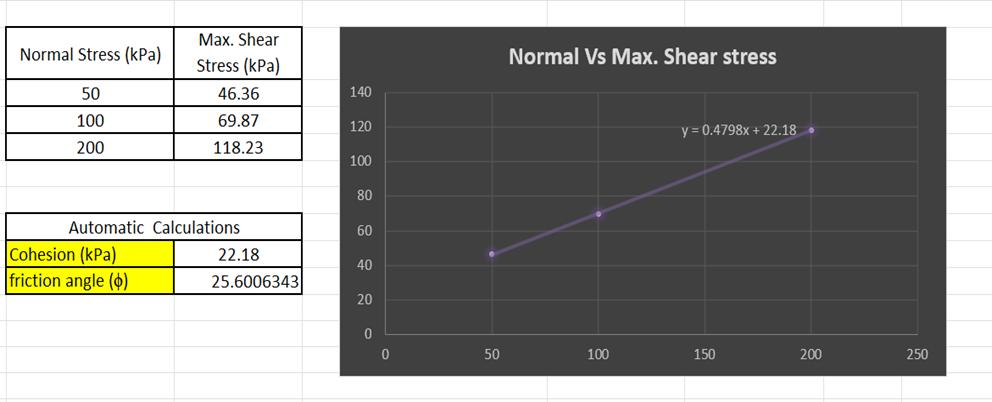
Direct
enzyme) can be effectively used to increase the Shear Strength of
Discussion:
Thespecificgravityofblackcottonsoilis 2.53.
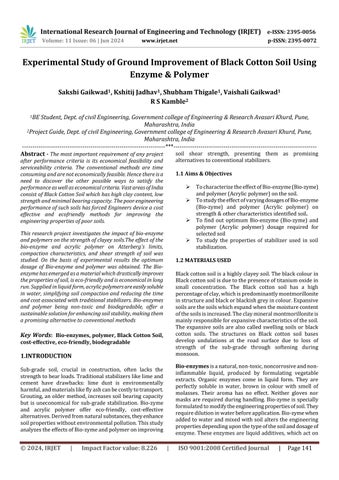
Thesoilstakenforstudyarewellgradedclayeysoils.
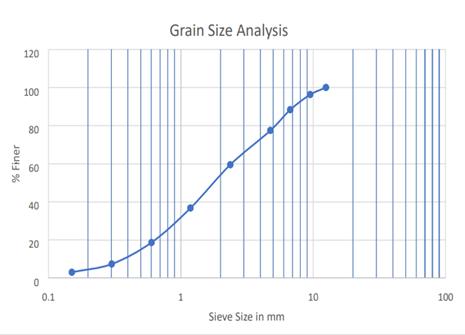
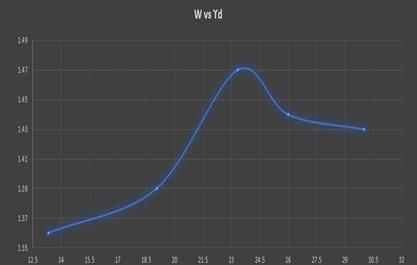
TheMDDofBlacksoilis 1.477 gm/cc &OMCis 23.33%.
3. CONCLUSIONS
StabilizationofsoilusingPolymerandbio-enzyme resulted in significant increase in Shear strength valueofblackcottonsoil.
MaximumShearstrengthvalueisachievedatdose of 5% Polymer and bio-enzyme for black cotton soil.
[1] Venika Saini and Priyanka Vaishnava (2015) “Soil StabilizationbyusingTerrazyme”,InternationalJournal ofAdvancesandEngineeringandTechnology.
[2] Priyanka Shah, P. G. Rakaraddi, (2016) “Experimental studyontheEffectofBio-EnzymeStabilizationonBlack Cotton Soils and Red Soil, International Journal of Innovative Research in Science, Engineering and Technology.
[3] Puneet Agarwal, Suneet Kaur (2017) “Effect of BioEnzyme Stabilization on the unconfined compressive strength of expansive soil”, International Journal of EngineeringandTechnology.
International Research Journal of Engineering and Technology (IRJET) e-ISSN: 2395-0056
Volume: 11 Issue: 06 | Jun 2024 www.irjet.net p-ISSN: 2395-0072
[4] Sandeep Panchal, Md. Mohsin Khan, Anurag Sharma (2017) “Stabilization of Soil Using Bio-Enzyme”. International Journal of Civil Engineering and Technology.
[5] SureshT,Balakrishna.Y,Nitesh.K.(2017)“Improving thePropertiesofBlackCottonSoilUsingTerrazymeas an Admixture”, International Journal of Emerging TechnologiesinLearning.
[6] R Jagdesh Kumar, Guru S, Krishna Puthiran V S, ManikandanG(2017);'Areviewonstabilisationofsoil usingvariousadmixtures',IJERT
[7] SudeepaShetty, DhanrajV, AshwiniPai, JeenuPGopi, Prashantha; 'Qualitative study on physical and Bioenzymaticstabilisationoflateritesoil,JETIR
[8] VenkateshA,SreenivasaReddyG;'EffectOfterrazyme onCBRandshearstrengthofexpansivesoil',MOJCivil Engineering.
[9] G.V. Rama Rao, P. Hanuma (2019) “An Experimental StudyonStabilizationofSoilsbyUsingBio-Enzymes”, International Journal of Trend in Scientific Research andDevelopment.
[10] Mithilesh Kumar Yadav, Brajesh Kumar Singh, Dr. J.P. Tegar(2020)“ReviewPaperonImprovisationofTypical SoilundertheInfluenceofTerrazymeandWastePlastic CementBagStrips”,InternationalJournalofScienceand Research.
BIOGRAPHIES




SakshiGaikwad BECivilStudent GCOEARA,Pune
KshitijJadhav BECivilStudent GCOEARA,Pune
ShubhamThigale BECivilStudent GCOEARA,Pune
VaishaliGaikwad BECivilStudent GCOEARA,Pune