
International Research Journal of Engineering and Technology (IRJET) e-ISSN: 2395-0056
Volume: 11 Issue: 06 | Jun 2024 www.irjet.net p-ISSN: 2395-0072
International Research Journal of Engineering and Technology (IRJET) e-ISSN: 2395-0056
Volume: 11 Issue: 06 | Jun 2024 www.irjet.net p-ISSN: 2395-0072
Shubham Prashant Bhambar, Shubham Sitaram Thete, Maheshwari Keshav Tarle, Yash Arun Bhamare
1MS – Industrial and System Engineering From University Of Minnesota, Twin Cities
2BE – Mechanical From SNJB College Of Engineering, Chandwad
3BE – Mechanical From K.K. Wagh Institute Of Engineering Education And Research, Nashik 4BE – Mechanical From D Y Patil College Of Engineering, Akurdi, Pune
Abstract - Computer Vision (CV) is a field of artificial intelligence (AI) that enables computers to interpret and process visual data from the world, emulating human vision. By using digital images from cameras and videos, along with deep learning models, computers can be trained to perform tasks such as image recognition, object detection, and image generation.
Machine Vision (MV), closely related to CV, is a technology used in industrial automation that employs cameras and image processing software to inspect and analyze objects automatically. While CV is morefocusedonalgorithms andthe science behind visual recognition, MV is typically applicationdriven and focuses on integrating hardware and software for specific industrial tasks.
Key Words: Artificial Intelligence, machine learning, deep learning, DL, Industry 4.0, Quality 4.0, real-time quality management, and computer vision.
1.Introduction
Inrecentyears,computervision(CV)technologieshaveseen significant advancements, becoming integral to many industrial processes.Accordingto the latestGartnerHype Cycle2023,CVisnearingitspeakproductivity,particularly in the realm of artificial intelligence (AI) tools. This trend signals a forthcoming expansion of CV applications across variousindustries.Presently,CVplaysacrucialroleinthe industrial sector, especially in automated inspection functionsaspartofqualitycontrolprocedures.However,the growingcomplexityofautomation,drivenbyIndustry4.0, theInternetofThings(IoT),cloudcomputing,AI,machine learning(ML),andothertechnologies,presentssignificant challenges for users and developers of CV systems in selecting the most suitable technology for specific applications.
Withrapidadvancementsinnumerousfields suchasCV techniques,CMOSsensors,integratedmachinevision(MV), ML, deep learning (DL), robotic interfaces, data transfer standards,andMVfunctionality newMVtechnologiesare unlocking new application potentials. For instance,
hyperspectral imaging can provide information on the chemicalcompositionofprocessedmaterials,andcomputer imagingcancombineaseriesofimagestohighlightdetails not visible using traditional MV techniques. Additionally, polarization cameras can visualize stresses in materials. These advancements enable improved performance, integration,andautomationinthemanufacturingindustry. ThehighdemandsofIndustry4.0necessitatevaryinglevels of integration, from supporting manual assembly to full integrationwithoriginalequipmentmanufacturers.
To ensure continued customer satisfaction, the industry must continuously innovate, accelerate, and improve. Crucially,theevolutionofthesectormustbeaccompanied bytheevolutionofthequalityfunction.Neglecting"Quality 4.0" could jeopardize the apparent progress, potentially compromisingproductqualityandthecustomerexperience. Qualitycontrolsmusttransitionfrompaper-basedtocloudbased systems, aligning with the technological advancementsofIndustry4.0whilemaintainingtheircore purpose. Digital tools now enable companies to connect more directly with their contractors, suppliers, and customers,fosteringstrongerrelationshipsacrosstheentire ecosystem. The growth enabled by AI can significantly bolster business operations, facilitating real-time collaboration,enhancedclientengagement,andoptimized reporting. This interconnectedness contributes to overall qualityandriskprevention.
Machine vision (MV) systems offer unparalleled speed, precision,andconsistencyinthequantitativeassessmentof structured scenes. For example, an MV system on a productionlinecaninspecthundredsoreventhousandsof componentsperminute.Withappropriateopticsandcamera resolution,suchsystemscaneasilydetect defects that are invisibletothenakedeye.MVexcelsinquantitativetasks, while human inspection is better suited for qualitative interpretation of complex and unstructured scenes. By leveragingbothhumanandmachinecapabilities,industries canachievecomprehensivequalitycontrol.
International Research Journal of Engineering and Technology (IRJET) e-ISSN: 2395-0056
Volume: 11 Issue: 06 | Jun 2024 www.irjet.net p-ISSN: 2395-0072
4. Objective and Organization of the Study
Thisresearchstudyaimstoprovidethescientificcommunity withanoverviewoftheuseofCVandMVinrealindustrial applications.Therestofthispaperisorganizedasfollows:
5. Section 2: Background
WewillprovideanoverviewofAI,CV,MV, andthemaintechnologiesandtechniques used in CV, such as ML, DL, and color detection and measurement, while describing the design of an MT (machine visiontechnology)system.
6. Section 3: Industrial Applications
Wepresenttwoindustrialapplicationsof CVanddiscusstheirresultsthroughcritical analysis. The first application focuses on real-time quality monitoring, while the secondexaminesboltandscrewtesting.
7. Section 4: Conclusion
We conclude the study by offering new insights into potential future research directions.
2. Artificial Intelligence History
Artificialintelligence(AI)isabranchofcomputerscience focusedondevelopingintelligentagentsorautonomous systemscapableofthinking,learning,andacting.AIhas been instrumental in creating effective methods for addressingawiderangeofproblems,fromgameplaying to medical diagnosis. Among the most significant advancementsinAIaremachinelearning(ML)anddeep learning (DL) algorithms. These algorithms enable AI systemstolearnfromdatawithouttheneedforexplicit programming.
Today, AI is applied across various fields, including manufacturing, transportation, healthcare, retail, and customer service. In manufacturing, AI facilitates the automation of industrial processes, enhances quality assurance, and predicts maintenance needs. For instance,AI-equippedrobotscanundertakerepetitiveor hazardoustasks,improvingsafetyandefficiencyinthe workplace.
2.1 Machine vision (MV) versus computer vision (CV))
ThefieldofComputerVision(CV)isabranchofartificial intelligence that enables computers and systems to derive meaningfulinformationfromdigitalimages,photos,videos, and other visual inputs. By processing this visual data, CV systemscantakeactionsormakerecommendationsbasedon theinformationextracted.CVreliesheavilyonlargedatasets to perform analyses thatlead to image discrimination and
recognition. One of the most effective types of machine learning(ML)algorithmsusedinCVisdeeplearning(DL), particularlyconvolutionalneuralnetworks(CNNs).
Machine Vision (MV) isa subsetofCV,focusingonthe practical application of CV techniques to solve real-world industrial problems. The goal of MV is to reduce costs, increase efficiency and productivity, minimize errors, improvequality,andcollectdata,allofwhichcontributeto significantadvancementsinindustrialprocesses.MVsystems canalsoaddresstheshortageofskilledworkersandrelieve workersfromhazardousordemandingtasks.Overtime,MV has evolved to become synonymous with the practical implementationofCVtechnologiesinindustrialsettings.
TheintegrationofMVandMLhasrevolutionizedthefield, bringing CV capabilities closer to human vision. This milestone,longsoughtaftersincetheinceptionofCVinthe 1960s, has only recently been achieved due to significant advancementsinAI.
Machine Vision Systems (MVS), commonly used in manufacturingapplicationssuchasqualitycontrol,employ imageprocessingtechniquesgovernedbyasetofrulesand parameters. The primary components of an MVS include lighting, optics, image sensors, image processing, and communication.
2. Illumination:
Lighting is crucial as it makes objects visibleandhighlightsfeaturesforaccurate recognition by the camera. The system's efficiencydependssignificantlyonproper illumination.
Lighting Configurations:
Front Lighting:Providesfocused lightontheobject,enhancingthe visibilityofsurfacedetails.
Backlighting: Illuminates the background of the object, highlighting its outline and silhouette.
Types of Lighting:Includesincandescent lamps, fluorescent lamps, lasers, X-ray tubes,andinfraredlight.
3. Image Acquisition:
This involves capturing images of the sample using various instruments or sensors such as scanners, ultrasound, Xrays,andnear-infraredspectroscopy.
Image Sensors:
Solid-state devices like CCD (charge-coupled device) cameras arecommonlyused.
Digital cameras have eliminated theneedforseparatecomponents toconvertcapturedimagesintoa
International Research Journal of Engineering and Technology (IRJET) e-ISSN: 2395-0056
Volume: 11 Issue: 06 | Jun 2024 www.irjet.net p-ISSN: 2395-0072
computer-readable format, maintaining high resolution and minimalnoise.
4. Image Processing:
Digitalimagesareprocessedbycomputers, which convert them into numerical data that can be manipulated and analyzed. These images, although appearing as pictures on the screen, are composed of pixels or small dots that represent real objects.
Processed digital images can be used in variousapplications,suchasauthentication systems.
MVS systems are designed to perform specific tasks in industrialenvironments,utilizingthecomponentsmentioned abovetoachieveaccurateandefficientimageprocessingand analysis.Theintegrationofillumination,imageacquisition, andimageprocessingcomponentsensuresthatMVSsystems can effectively address the needs of various industrial applications.
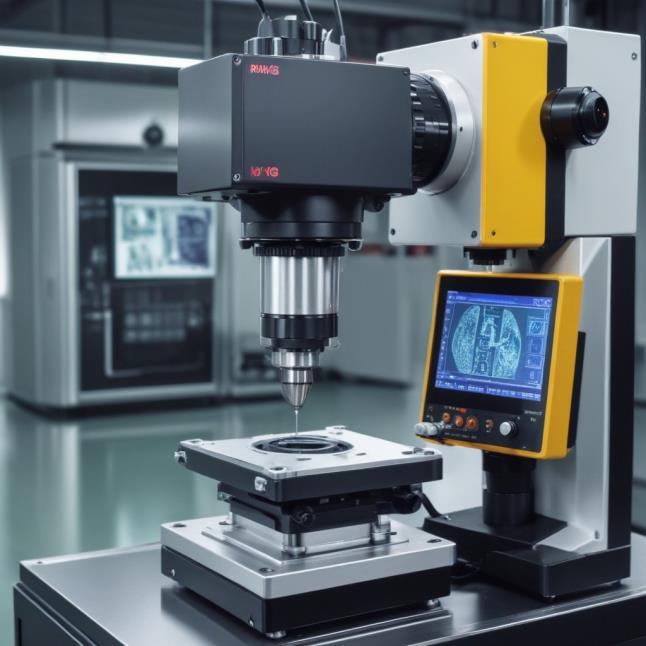
Diagram1. Machine-Vision-System
2.3 Used methods & technologies in CV
The three main technologies accelerating computer vision(CV)developmentareMachineLearning(ML),Deep Learning(DL),andConvolutionalNeuralNetworks(CNNs). Here'sanoverviewofeach:
3. Machine Learning (ML)
MachineLearning(ML)isabranchofartificialintelligence and computational science that focuses on the development, analysis, and implementation of automated methods allowing machines to learn and
evolvethroughalearningprocess.Thesemethodsare primarily grounded in algorithms. In practice, ML algorithms can be broadly classified into two types: black box algorithms and interpretable algorithms. WhenchoosinganMLalgorithm,itiscrucialtoconsider thespecificrequirementsoftheapplicationandfinda balancebetween“accuracy”and“interpretability.”
BlackboxMLalgorithmsareoftenhighlyaccuratebutcan be difficult or impossible to understand. These algorithmsaretypicallydevelopedusingsophisticated mathematical models and trained on large datasets. Theyarecapableofproducingimpressiveresults,butin situations where it is important to understand how decisionsaremade,theirlackofinterpretabilitycanbe problematic.Examplesofblackboxalgorithmsinclude:
2.Deep Learning (DL) Algorithms: Such as Convolutional Neural Networks (CNNs) and RecurrentNeuralNetworks(RNNs).
3.Support Vector Machines (SVM)
4.Random Forest
5.Gradient Boosting Machines (GBM)
6.K-Nearest Neighbors (KNN)
7.Naive Bayes
8. Interpretable Algorithms
In contrast, interpretable ML algorithms are easy for humanstounderstandandinterpret.Thesealgorithms areusuallydevelopedusinglesscomplexmathematical models and often require smaller datasets. While interpretable algorithms are generally less accurate than black box algorithms, they are more reliable in applications where interpretability is critical, such as financialandmedicaldiagnosticsfordecision-makers. Examplesofinterpretablealgorithmsinclude:
1.Class Association Rules (CAR)
2.Refined Class Association Rules (RCAR)
RCARs,inparticular,demonstratehighperformanceand accuracyinvariousdomains,especiallyincybersecurity forprofilingandpreventingsecurityattacks.Compared toblackboxalgorithms,interpretablealgorithmslike CARs and RCARs are better suited for applications whereunderstandingthereasoningbehinddecisionsis essential,suchasinfinance,security,andmedicine.
9. Balancing Accuracy and Interpretability
WhenselectinganMLalgorithm,itisessentialtoconsider:
1.Application Requirements:Whethertheapplication demandshighaccuracyorhighinterpretability.
2.Data Availability: The size and quality of the availabledataset.
3.Decision-Making Context: The criticality of understandinghowdecisionsaremade.
Insummary,whileblackboxalgorithmsexcelinaccuracy and handling complex tasks with large datasets, interpretable algorithms offer transparency and are better suited for critical applications where decision understandingisparamount.Thechoicebetweenthese
International Research Journal of Engineering and Technology (IRJET) e-ISSN: 2395-0056
Volume: 11 Issue: 06 | Jun 2024 www.irjet.net p-ISSN: 2395-0072
typesofalgorithmsshouldbeinformedbythespecific needsandconstraintsoftheapplicationathand.
DeepLearning(DL)isasubsetofMachineLearning(ML) wheretasksaredividedanddistributedacrossmultiple algorithmsorganizedintosuccessivelayers.Eachlayer buildsupontheoutputofthepreviousone,formingan artificial neural network that mimics the distributed problem-solving approach of neurons in the human brain.AprominentsubsetofDLincludesConvolutional NeuralNetworks(CNNs).Consequently,whileallCNNs areDLalgorithms,notallDLalgorithmsareCNNs. CNNs are especially prevalent in classification and computervision(CV)tasks.Bybreakingdownimages intopixelswithlabelsortags,CNNsenableML orDL models to "see." A convolution is a mathematical operationinvolvingtwofunctionsthatproducesathird function.InthecontextofCNNs,convolutionsareused toprocessinputdatawithlabels,enablingthenetwork to make predictions about what it "sees." The neural network iteratively performs convolutions and evaluates the accuracy of its predictions, refining its abilitytoidentifyorinterpretimages,similartohuman vision.
The concept of color recognition in image processing is integral to various fields, especially in food quality controlwherecolorisaprimaryindicatorofqualityand freshness.Let'sdelveintohowcolorrecognitionworks, particularly in the context of food dyes, and explore differentmethodsofcolormeasurement.
Understanding Color Recognition
Color recognition is based on the human eye's ability to perceivedifferentwavelengthsoflight.Thisperception isenabledbythreetypesofphotoreceptorcells(cones) in the retina, each sensitive to different wavelength ranges:
Short wavelengths (S-cones): Sensitive to bluish light,withpeaksensitivityaround420-440nm.
Medium wavelengths (M-cones): Sensitive to greenish light, with peak sensitivity around 530540nm.
Long wavelengths (L-cones): Sensitive to reddish light,withpeaksensitivityaround560-580nm. These three types of cones allow humans to perceive a wide range of colors through the additive mixing of theseprimarycolors:red,green,andblue(RGB).
Color Coding and Measurement
In digital imaging and display technologies, colors are often coded using the RGB color model. Each color is represented as a combination of the three primary colors:
Red (R)
Green (G)
Blue (B)
By varying the intensity of each primary color, a vast spectrum of colors can be produced. When all three colors are combined at full intensity, the result is perceivedaswhite.
Methods of Color Measurement
In industry and science, precise color measurement is crucialtoensureconsistencyandquality.Herearethe threemainmethodsofcolormeasurement:
1.Visual Measurement by Trained Personnel:
Reliesonhumanperception.
Subjective and may vary between individuals.
Used for quick assessments but lacks precision.
2.Traditional Measurement with Colorimeters and Spectrometers:
Colorimeters: Measure the intensity of colors based on standard lighting conditions. Suitable for basic color matchingandqualitycontrol.
Spectrometers:Providedetailedspectral databymeasuringtheintensityoflightat differentwavelengths.Highlyaccurateand usedfordetailedcoloranalysis.
3.Computer Vision (CV) Measurements:
Utilizes digital imaging and algorithms to analyzecolors.
Offers rapid and automated color measurement.
Ensures reproducibility and objectivity, makingitidealforindustrialapplications.
Color Spaces and Calibration
Toachieveconsistentcolorrepresentationacrossdifferent devices and contexts, color spaces and calibration methodsareemployed:
Color Spaces:Systemsfororganizingcolors.Common examplesincludeRGB,CMYK(usedinprinting),and LAB(usedforcolorcorrectionandanalysis).Each color space defines colors in relation to a specific whitepointandsetofreferencecolors.
Color Calibration: Adjusts the color response of devices(e.g.,monitors,cameras,printers)tomatch a standard color space. Ensures that colors are representedaccuratelyacrossdifferentdevices.
Application in Food Quality Control
In food quality control, rapid and accurate color measurement is essential.Forinstance, thecolor ofa dessertcanindicateitsflavor(e.g.,yellowforvanilla)or thefreshnessofmeat(redcolorindicatingfreshness). By employing color measurement techniques, manufacturerscanensurethatproductsmeet quality standardsandconsumerexpectations.
In conclusion, color recognition and measurement are fundamental to various applications, particularly in food quality control. Through the use of visual
International Research Journal of Engineering and Technology (IRJET) e-ISSN: 2395-0056
Volume: 11 Issue: 06 | Jun 2024 www.irjet.net p-ISSN: 2395-0072
inspections, traditional instruments, and advanced computer vision techniques, industries can achieve accurate and reproducible color measurements, ensuringproductqualityandconsistency.

4. Industrial CV applications: Outcome and critical evaluation
4.1 Real-time quality monitoring during robotic building construction
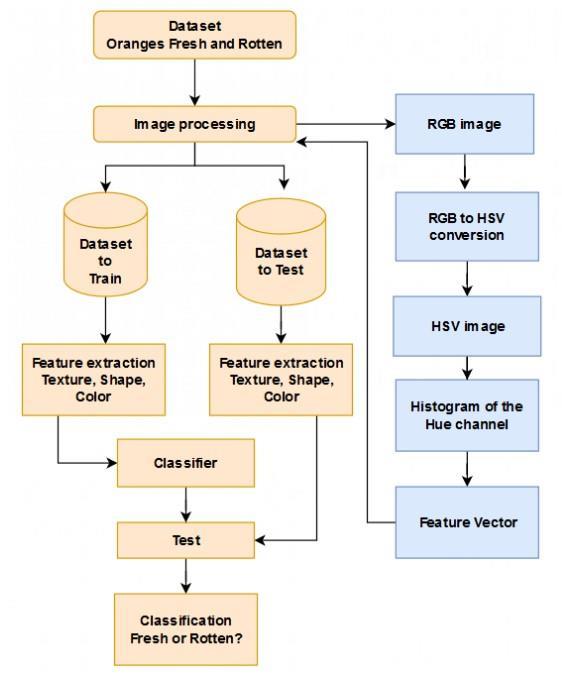
In this section, we will discuss the use of computer vision (CV)forqualitycontrolinroboticbuildingconstruction.The effectivenessofthismethodistestedusingalaboratory-scale concreteprinterwithanextrusionprocess.Datacaptureand processing are facilitated by a Logitech 720p camera that recordsextrusionfilms.Thecameraissecurelymountedon theextruderusinga3Dprintedbracket,ensuringitfacesthe topoftheproductlayer.Thetopsurfaceoftheextrudedlayer ispositioned40cmfromthecameralens,asillustratedinFig. 3.
A Raspberry Pi 3 Model B is employed to process the extrusionmaterialinrealtime.TheCVmethoddescribedby Kazemianetal.isusedtoidentifyover-orunder-extrusion situations.InFig.4,thewidthofthenewlyextrudedlayeris comparedtothewidthofthedesiredlayer.Over-extrusionis easily detected by observing if the layer is wider than
intended. However, under-extrusion can manifest in three ways:a reducedlayerwidth,crackinganddiscontinuityof theextrudedlayer,orcompleteabsenceofdeposit.
© 2024, IRJET | Impact Factor value: 8.226 | ISO 9001:2008
International Research Journal of Engineering and Technology (IRJET) e-ISSN: 2395-0056
Volume: 11 Issue: 06 | Jun 2024 www.irjet.net p-ISSN: 2395-0072
The video processing technique described in the passage employsashape-basedapproachfordetectingsubtleobjects, asopposedtocolor-andtexture-basedmethods.Theprocess begins simultaneously withthe extrusion process for each test, using a video recording and processing setup. To facilitatethesubsequentsteps,theimageundergoesblurring withaGaussianfilterandisthentransformedusingbinary thresholding. This technique distinguishes the foreground (extruded plane) from the background (print plane) by renderingthe"extrudedlayer"inwhiteandthe"background" inblack,resultinginabinaryimage.
Thenextstepinvolveslocatingandconfirmingtheboundary ofalayerusingashapediscriminationmethod,afterwhich thelayer'swidthisdetermined.Thismethodisexemplifiedin Fig.4bythefeedback-controlledextrusionsystemdeveloped using the computer vision (CV) algorithm described by A. Kazemian et al. The aim is to create an extrusion system capable of automatically adjusting extrusion settings to maintainaconsistentlayerwidth,withoutpriorcalibration anddespitevariationsintheprintingmedium.
Thepreliminaryresultsindicatethatitisfeasibletodevelopa vision-basedextruderthatcanautomaticallyprintlayersofa specifiedsizeinanyprintablecombination,eliminatingthe needforcalibration.However,furtherresearchisrequiredto enhance the functionality of this vision-based closed-loop extrusion system, particularly in refining the control algorithm.
ComputerVisionSystems(CVSs)areadvantageousbecause theirintegrationintoMachineVisionSystems(MVSs)allows themtoadapttoreal-timechangesduringtheprocess.The experimental results have shown that the developed extrusion monitoring system is highly accurate and responsive.Despitethelimitationsimposedbyusingasingleboardcomputer,suchasincreasedreliabilitybutdifficultyin repairs due to fewer connectors, the performance of the implementedsystemispromising.Improvementscouldbe achieved by using embedded computers, which would enhance processing speed and the quality of extrusion by handlinglargersamplesizes.Embeddedsystems,although often limited in real-time computing capabilities, control many devices today. For better visual quality in real-time imaging, the system proposed by B. Kerbl et al., which employsthree-dimensional(3D)Gaussiansplattingforrealtimeradiationfieldrendering,couldbeutilized.
CV
ThestudybyJ.Rajanetal.delvesintotheapplicationof computer vision (CV) in inspecting bolts and screws, employing AI cameras for image capture. The process involvesconvertinganalogimagesintodigitalonesthrough sampling and quantization, followed by preprocessing to readytheimageforsegmentation.UtilizinganIntelNeural ComputeStick(NCS)foredgeprocessing,thestudycombines PythonandC++forprogramming.Todetectdefects,infrared light-emitting diodes and SolidWorks for hardware case creationareemployed.
The camera input undergoes binary translation for processing akin to human visual data recognition. This process, executed on a machine with Intel NCS, a vision sensor, and a microcontroller, enables defect detection, leading to removal of defective screws. Defects are categorized into color defects, orientation errors, and crackingdefects.
Color defects often stem from manufacturing issues or data flow degradation during neural model use. Misorientation in bolts is detected using Convolutional NeuralNetwork(CNN)techniques,whilecracksareidentified by sending bolt images through a neural model after grayscaleconversionandedgedetection.
Despitetheefficacyoftheactivecontourmethod,itposes limitationssuchassusceptibilitytolocalminima,detailloss, accuracydependentonconvergencecriteria,slowprocessing forlargeimages,inabilitytosegmentadjacentobjects,and unsuitability for video operations. These limitations necessitate solutions like simulated annealing for local minima, stringent convergence criteria for accuracy, and considerationsforprocessingspeedinlargeimages.
This article provides a comprehensive overview of the integration of artificial intelligence (AI), particularly machine/deep learning and neural networks, along with computer vision (CV) technologies in real-time industrial quality control. It delves into two specific use cases: realtime quality monitoring during robot construction and inspection of bolts and screws in the production line. The findings highlight the current integration of CV into industrialprocesses,emphasizingitsroleinenhancingrealtime perception of product quality and enabling more accurateanticipationofdeviations,therebyreducingcosts. ThecriticalanalysisoftheresultsfromtheseCVapplications in industrial settings aims to pinpoint the primary limitationsofcommonlyemployedtechniquesandmethods. This is crucial for advancing the field and overcoming challenges.Thearticlerecognizesthediverseapplicationsof CV, ranging from assisting operators in identifying noncompliant parts to aiding autonomous mobile robots in navigation and analyzing object behavior within specific environments.
International Research Journal of Engineering and Technology (IRJET) e-ISSN: 2395-0056
Volume: 11 Issue: 06 | Jun 2024 www.irjet.net p-ISSN: 2395-0072
Lookingahead,thearticleadvocatesforconductinganalyses ofreal-worldcasescloselyalignedwithexistingindustrial processes to address the limitations of future intelligent vision systems effectively. Future research directions outlinedincludestudyingvariousmachinelearning(ML)and deeplearning(DL)algorithmswithinCVandexploringtheir potential application in automotive component manufacturingtoenhancereal-timequalitycontrolfurther. By focusing on practical applications and acknowledging existing limitations, the article provides valuable insights intothecurrentstateandfutureprospectsofintegratingAI andCVtechnologiesintoindustrialqualitycontrolprocesses.
[1] https://sciotex.com/how-to-use-ai-for-quality-control/
[2] https://blog.allplan.com/en/construction-monitoringby-robots
[3] Artificial Intelligence: A Modern ApproachbyRussell/Norvig
[4] Artificial Intelligence: A Modern Approach, Global Edition-byStuartRussell
[5] https://www.ibm.com/topics/machine-learning