
International Research Journal of Engineering and Technology (IRJET) e-ISSN: 2395-0056
Volume: 11 Issue: 06 | Jun 2024 www.irjet.net p-ISSN: 2395-0072

International Research Journal of Engineering and Technology (IRJET) e-ISSN: 2395-0056
Volume: 11 Issue: 06 | Jun 2024 www.irjet.net p-ISSN: 2395-0072
Prof. Rameez R. Badeghar1 , Navalkishor Shrinivas Channa2
1Lecturer at N.B. Navale Sinhgad College of Engineering, Solapur, Maharashtra, India - 413255, 2Research Scholar at N.B. Navale College of Engineering, Solapur, Maharashtra, India - 413255
Abstract: - Wind is the movement of air in the Earth's atmosphere, primarily caused by differences in air pressure and temperature across the globe. High-rise construction is rapidly increasing in Indian metropolitan areas. The wind is the critical load that must be taken into account in tall buildings for the structure's safety and serviceability. In this paper, parametric study has been done for high rise buildings with height and size variation and software has been used to carry out the static and dynamic analysis of all the cases of high rise building to verify the manual results. The static and dynamic lateral forces obtained by all cases have been compared in order to find the static and dynamic force variation with increase in height of the building.
Key Words: Wind load, high rise building, software integration,StaadProsoftware.
1.Introduction
TheanalysisforHighRiseBuildingsisbasedonIS:875(Part 3), 1987. Both static and dynamic analysis are carried out manuallyandwiththehelpofSTAADConnectsoftwareand forcesonthebuildingasawholearecalculated.Parametric studywithrespecttoheighthasshownthatasthebuilding becomesslender,thedynamicforcesdominate.
Thesecondandthemostsignificantobjectiveofthisworkis to save time in the today’s era of time bound competition without compromising on quality of output produced by integratingexcelwithSTAADconnectusingVBA.Inorderto enable smooth transition of data from STAAD Connect to Excelandviceversa,thepowerfulfeatureofSTAADnamed OPENSTAADisbroughtintouse.
Windisamovingair.Theairhasaparticularmass(density orweight)andmovesinaparticulardirectionataparticular velocity.Itthushaskineticenergyoftheformexpressedas E=1/2∗��∗��2
Thebuildingsandothercivilengineeringstructuresarethree dimensionalbodieswithalargevarietyofshapesandhave complex flow patterns and therefore varied pressure distributions.
Mohammed Asim Ahmed(2015) Windhasflowwithvery rough surface of earth which is affected to the high rise building of the earth. Wind flows in low speed in rough terrain and it is high speed in the smooth terrain of the structure.Thispapershowsthatthedifferentstorydueto wind effect to the different terrain category. It is made modelsinETABS2015.Thismodelalsogivesinformationof thedifferentheightwithdifferentterraincategoryofwind effect.Whenthestoryincreasethanthedisplacementofthe storyisalsoincreased.
Ranjitha K. P (2014) Thisshowsthatthecalculationofstatic loadanddynamicworkloadinganalysisofthetallstructure. The dynamic analysis with gust response factor and static windeffectaresayinginthisproject.Thedifferentshapeof thebuildingwithzoneItozoneIVtodeterminewindeffect basedonIS875part3.Thewindpressureisveryeffectiveon thetallstructure.Windloadingisloadthatdifferentintothe both in time and space. The wind effect are calculate by physicalandanalytical forstatic windeffectbypurposeof safety. The wind effect for Displacement of TG-1 is top as contrasttotheothercategoryforalltypesofdifferentstory building. The wind effect for Story drift of TG 1 is top as contrasttotheothercategoryforalltypesofdifferentstory building.
Heresixdifferentcasesoftallbuildingshavebeentaken. The variation of building is due to size and height of building.
Infirstcase,afifteenstoriedbuildingofheight60mwith sevenbaysinXdirectionandsevenbaysinY-direction hasbeenstudied.
Insecondcase,thebuildingis72mhighand18storied with seven bays in X direction and seven bays in Ydirection.
Inthirdcase,itis104mhighand26storiedwithseven baysinXdirectionandsevenbaysinY-direction.
In fourth case, a fifteen storied building of height 60m withtenbaysinXdirectionandfivebaysinY-direction hasbeenstudied.
Volume: 11 Issue: 06 | Jun 2024 www.irjet.net
Infifthcase,thebuildingis72mhighand18storiedwith tenbaysinXdirectionandfivebaysinY-direction.
Insixthcase,itis104mhighand26storiedwithtenbays inXdirectionandfivebaysinY-direction.
Table -1: Physicalparametersofthebuilding
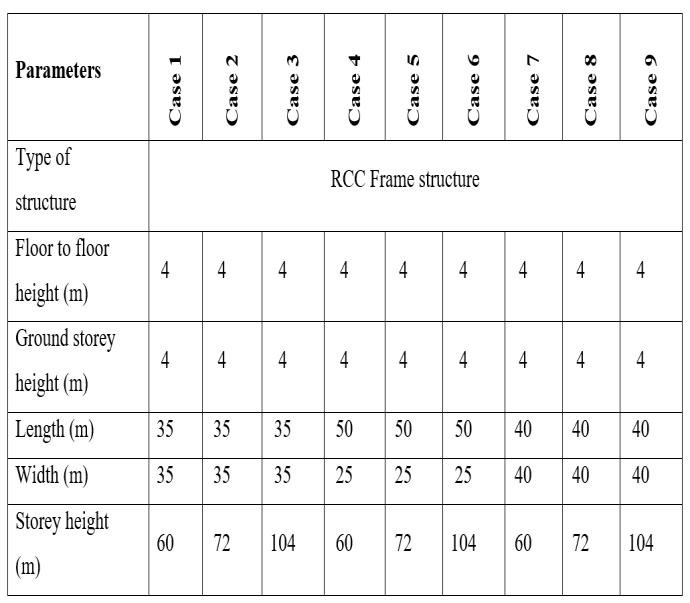
Table -2: Materialpropertiesofstructure
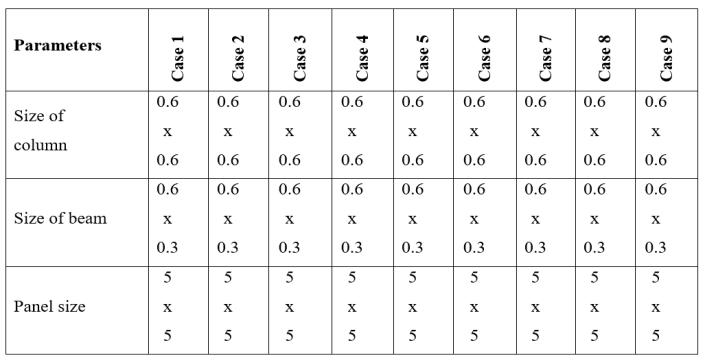
Table -3: Winddataonstructure
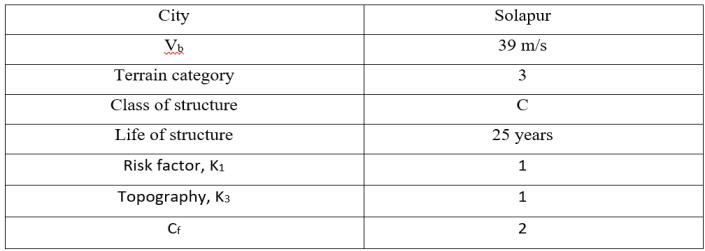
Table -4: Gravityloadsonstructure

3.1 Case 1: 35M X 35M X 60M
Static analysis
Table -5: ComputationofWindLoadAtDifferent ElevationsofTheBuildingforcase1


Dynamicanalysisisrequirediffrequencyislessthan1 Hz.
Here,frequency=1.0956>1
Therefore, dynamic analysis is not required for this case.
Baseshearobtained: Staticanalysis=4140.97Kn
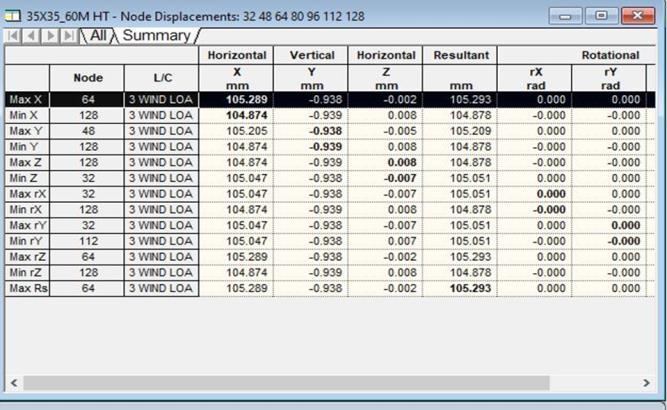
Fig -1:Maximumstoreydisplacementforcase1
Volume: 11 Issue: 06 | Jun 2024 www.irjet.net
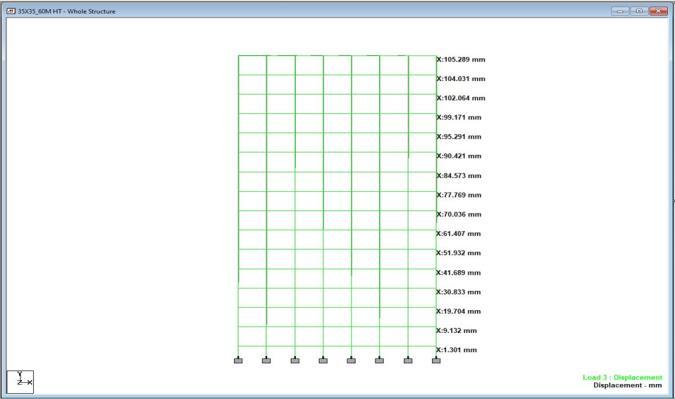
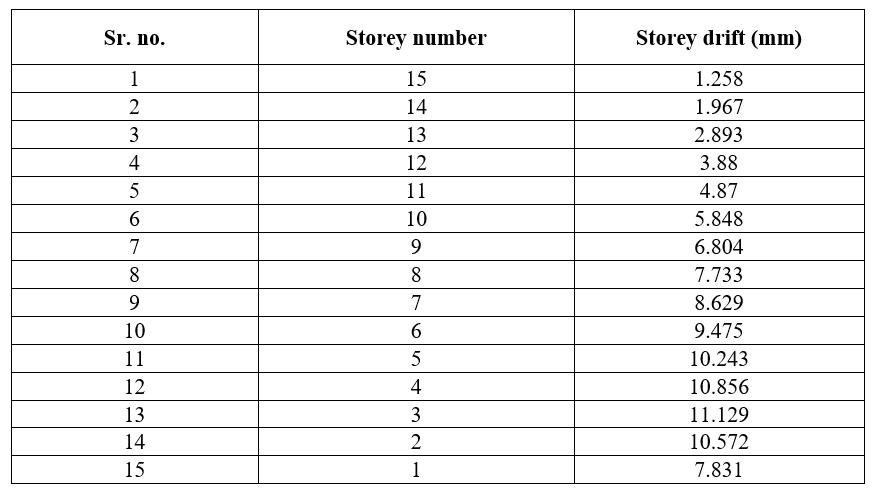
Fig -2:Maximumstoreydriftforcase1
Table -6: Storeydriftforcase1
3.2 Case 2: 35M X 35M X 72M
Static analysis
Table -7: Computation of Wind Load At Different Elevations of The Building for case 2

Dynamicanalysisisrequirediffrequencyislessthan1 Hz.
Here,frequency=0.9129<1
Therefore,dynamicanalysisisrequiredforthiscase.
Table -8: ComputationofWindLoadAtDifferentElevations ofTheBuildingforcase2

Baseshearobtained:
Staticanalysis=5146.30kN
Dynamicanalysis=8688.43kN
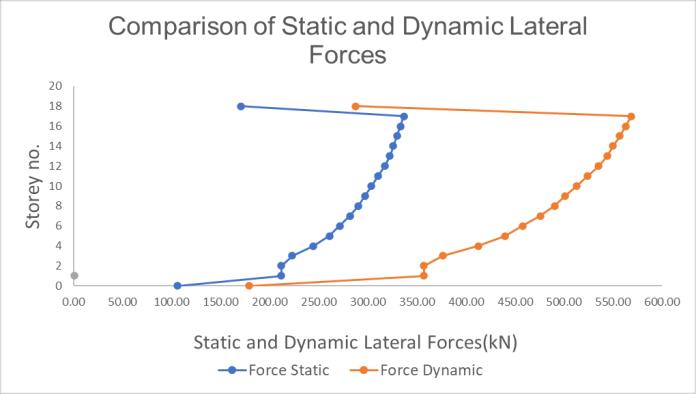
Fig. 3: ComparisonofStaticandDynamicForcesforCase2
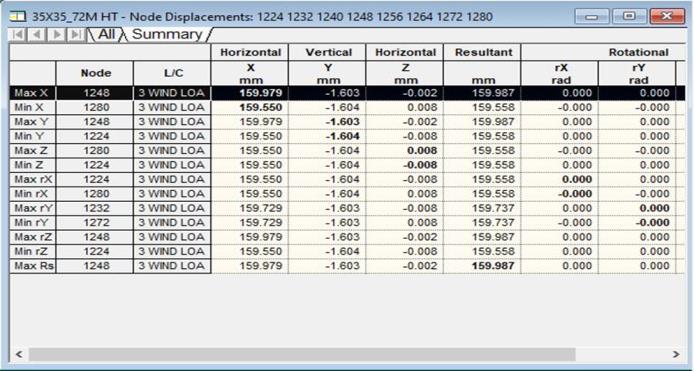
Fig. 4: MaximumstoreydisplacementforCase2
Volume: 11 Issue: 06 | Jun 2024 www.irjet.net
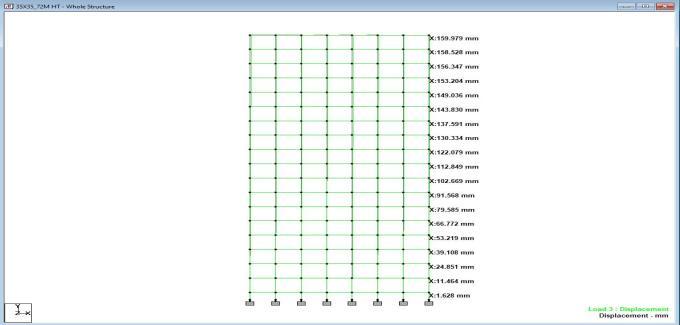
Fig. 5: MaximumstoreydriftforCase2
Table -9: Storeydriftforcase2
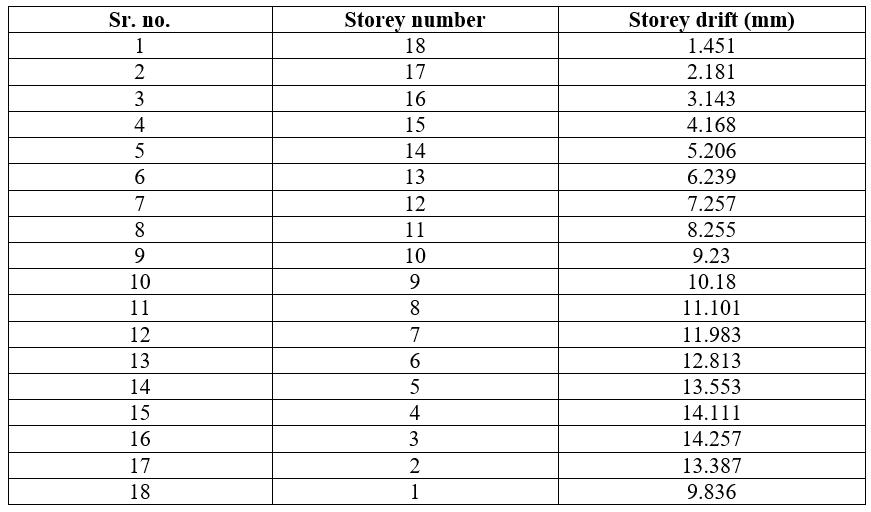
3.3 Case 3: 35M X 35M X 104M
Static analysis
Table -10: ComputationofWindLoadAtDifferent ElevationsofTheBuildingforcase3


Dynamicanalysisisrequirediffrequencyislessthan1Hz.
Here,frequency=0.6320<1
Therefore,dynamicanalysisisrequiredforthiscase.
Table 11: ComputationofWindLoadAtDifferent ElevationsofTheBuildingforcase3
22
Base shear obtained: Static analysis = 7994.33 kN Dynamic analysis = 14470.70 kN
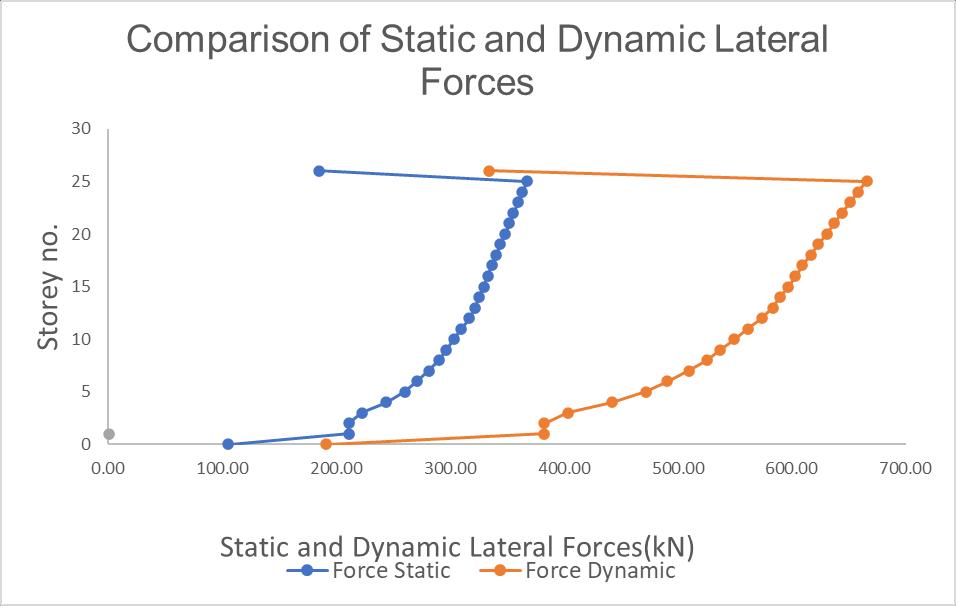
Fig. 6: ComparisonofStaticandDynamicForcesforCase3 International Research Journal of Engineering and Technology (IRJET)
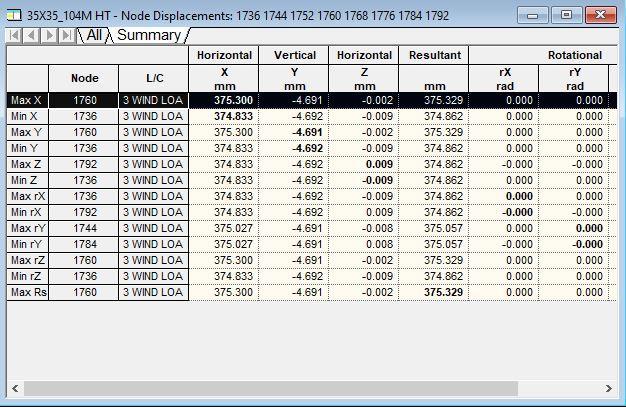
Fig. 7: MaximumstoreydisplacementforCase3
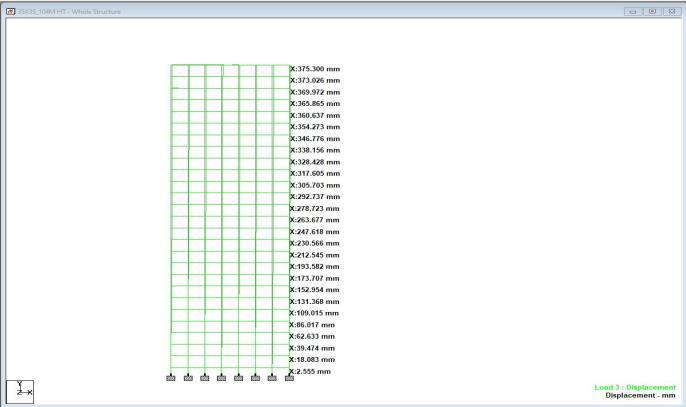
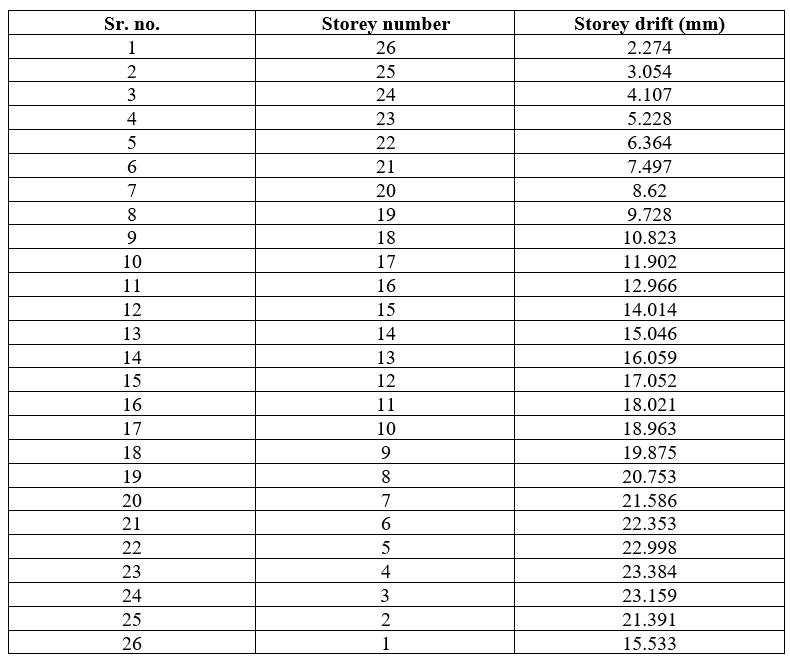
Fig. 8: MaximumstoreydriftforCase3
Table -12:Storeydriftforcase3
3.4 Case 4: 50M X 25M X 60M
Static analysis
Table -13: Computation of Wind Load At Different Elevations of The Building for case 4


Dynamicanalysisisrequirediffrequencyislessthan1Hz. Here,frequency=0.9259<1 Therefore,dynamicanalysisisrequiredforthiscase.
Table -14: ComputationofWindLoadAtDifferent ElevationsofTheBuildingforcase4
StoreyNo. k2 '
Baseshearobtained: Staticanalysis=2957.84kN Dynamicanalysis=3212.42kN
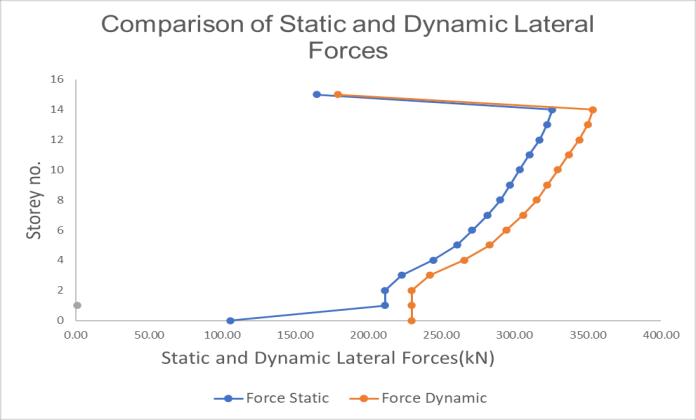
9: ComparisonofStaticandDynamicForcesforCase4
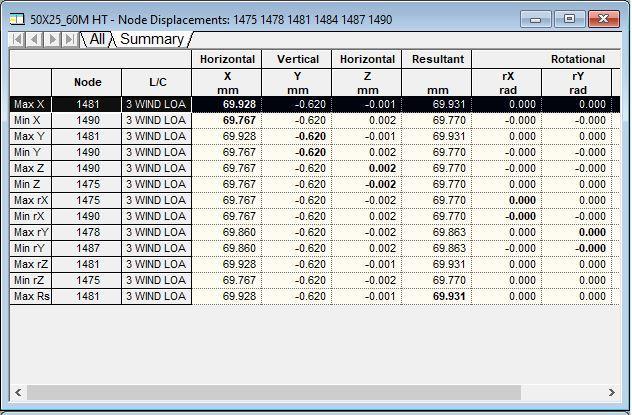
Fig. 10: MaximumstoreydisplacementforCase4
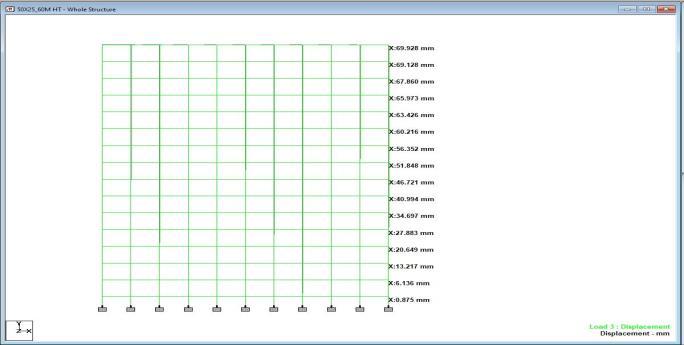
Fig. 11: MaximumstoreydriftforCase4
Table -15:Storeydriftforcase4
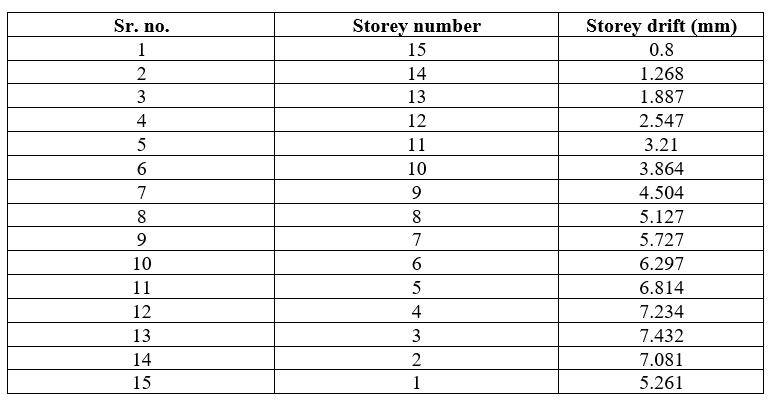
3.5 Case 5: 50M X 25M X 72M Static analysis
Baseshearobtained: Staticanalysis=3675.93kN Dynamicanalysis=6206.02kN International Research
Table -16: ComputationofWindLoadAtDifferent ElevationsofTheBuildingforcase5


Dynamicanalysisisrequirediffrequencyislessthan1Hz. Here,frequency=0.7716<1 Therefore,dynamicanalysisisrequiredforthiscase
Table 17: ComputationofWindLoadAtDifferent ElevationsofTheBuildingforcase5
StoreyNo. k2 '
International Research Journal of Engineering and Technology (IRJET) e-ISSN: 2395-0056 Volume: 11 Issue: 06 | Jun 2024 www.irjet.net p-ISSN: 2395-0072
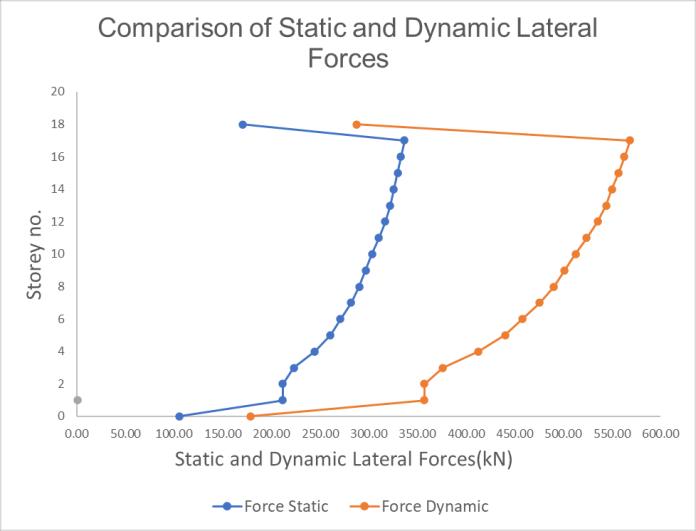
Fig. 12: ComparisonofStaticandDynamicForcesfor Case5
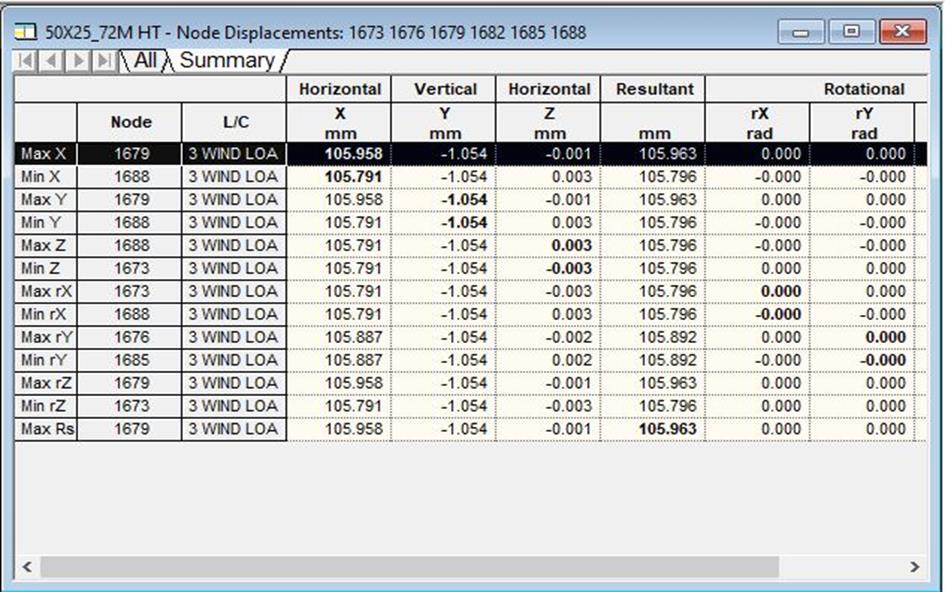
Fig. 13: MaximumstoreydisplacementforCase5
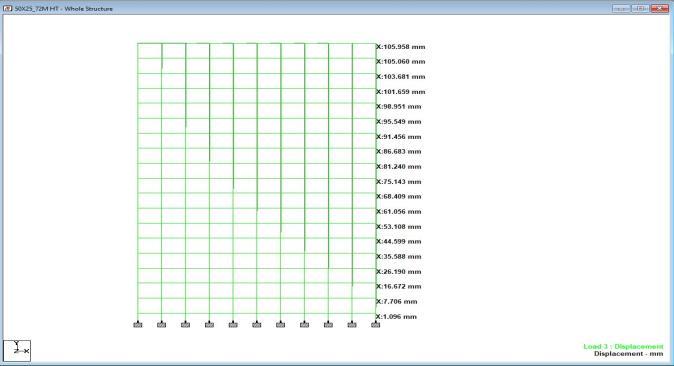
Fig. 14: MaximumstoreydriftforCase5
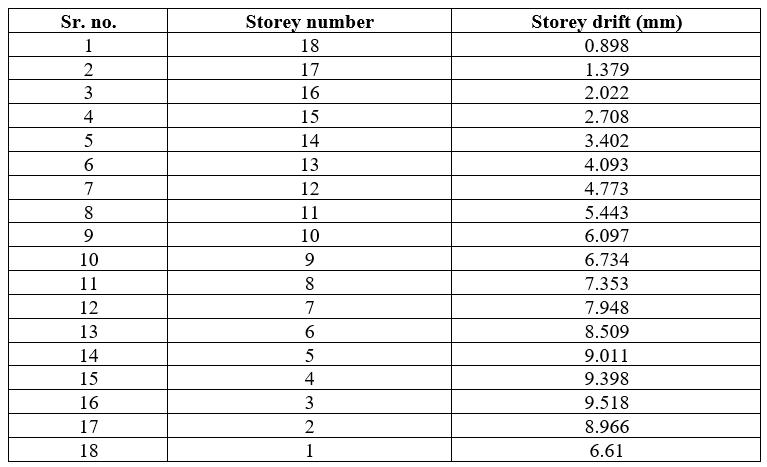
Table -18: Storeydriftforcase5
3.6 Case 6: 50M X 25M X 104M
Static analysis
Table -19: ComputationofWindLoadAtDifferent ElevationsofTheBuildingforcase6


Dynamicanalysisisrequirediffrequencyislessthan1Hz. Here,frequency=0.5341<1 Therefore,dynamicanalysisisrequiredforthiscase.
Volume: 11 Issue: 06 | Jun 2024 www.irjet.net p-ISSN: 2395-0072
Table -20: ComputationofWindLoadAtDifferent ElevationsofTheBuildingforcase6
26
1
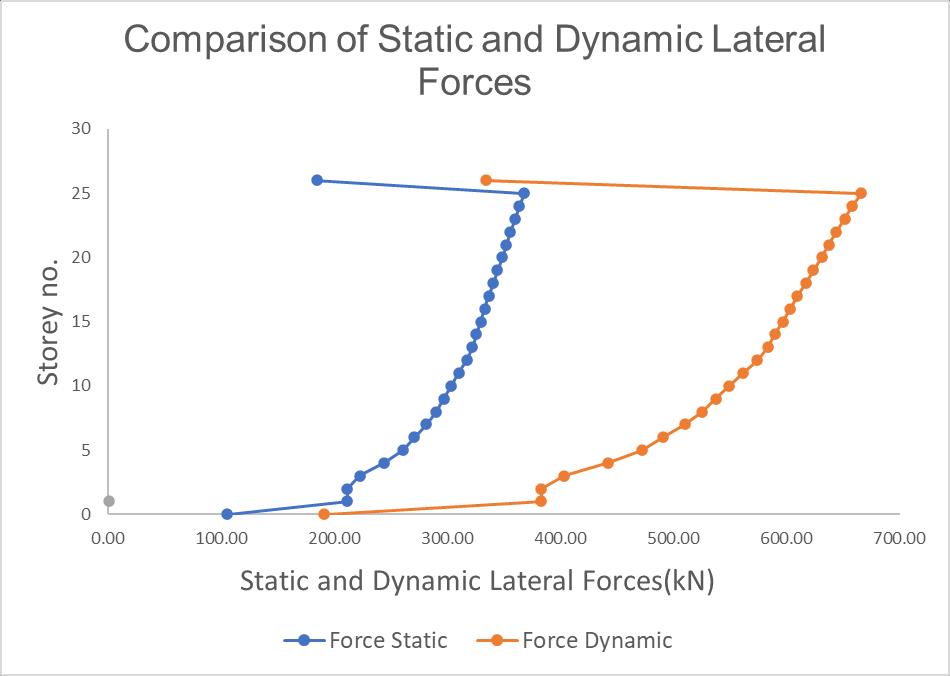
15: ComparisonofStaticandDynamicForcesfor Case6
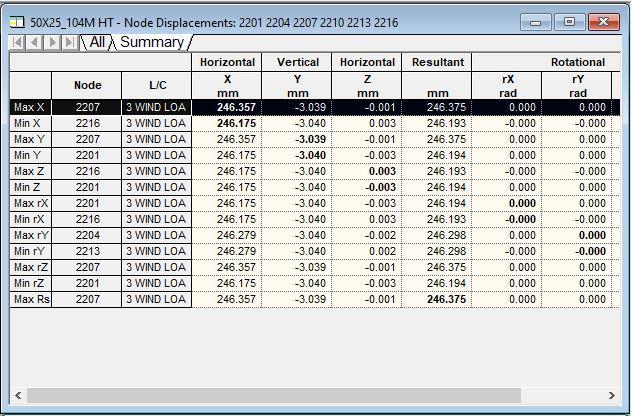
16: MaximumstoreydisplacementforCase6
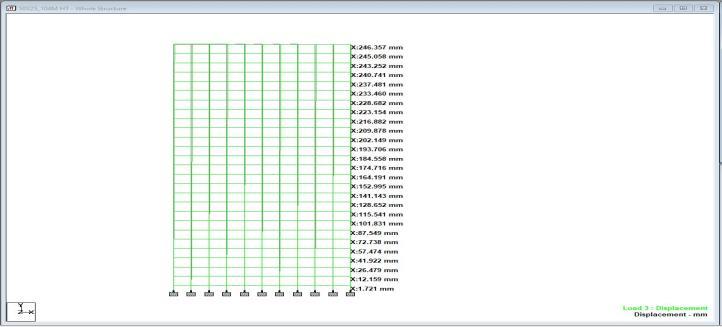
Fig. 17: MaximumstoreydriftforCase6
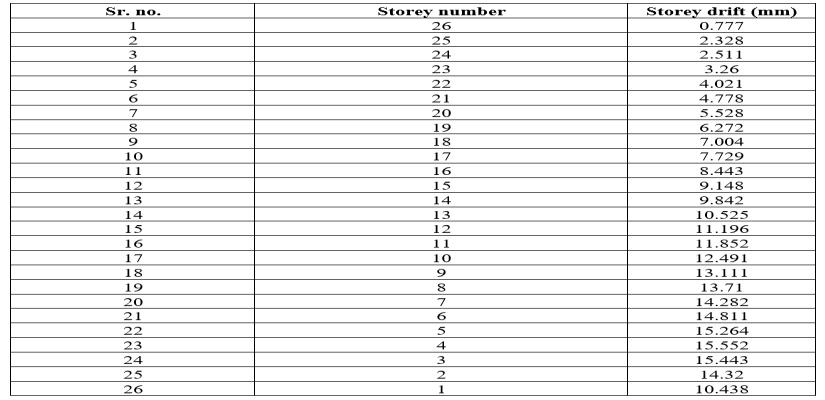
Table -21:Storeydriftforcase6
The nature of wind and its behavior has been studied in depth.
The types of wind effect and the behavior of high rise buildingduetosucheffecthavebeenstudied.Theclauses of IS: 875 (Part 3)-2015 and ASCE 7-16 for the wind analysis buildings have been studied. Generalized Excel sheets for the static and dynamic analysis of high rise buildingshavebeenmadeandthelateralforcesandbase shearsobtainedbythemhavebeencomparedbypreparing barchartsandgraphs.
Parametricstudyhasbeendoneforhighrisebuildingswith heightandsizevariation.Software,STAADproCONNECT editionhasbeenusedtocarryoutthestaticanalysisofall thecasesofhighrisebuildingtoverifythemanualresults.
Theconclusionsderivedfromthestudyareasfollows:
Dynamic analysis gives more force than the static analysis. The variation of static and dynamic lateral forcesgoesonincreasingastheheightofthebuilding increases. International Research Journal of Engineering and Technology (IRJET) e-ISSN: 2395-0056
International Research Journal of Engineering and Technology (IRJET) e-ISSN: 2395-0056
Volume: 11 Issue: 06 | Jun 2024 www.irjet.net p-ISSN: 2395-0072
Thestaticanddynamicbaseshearsvaryasfollows:
Forcase1(35mx35mx60m)dynamicanalysisisnot requiredasfrequencyismorethan1.
For case 2 (35m x 35m x 72m) dynamic analysis is performedandbaseshearvariesby68.8%.
For case 3 (35m x 35m x 104m) dynamic analysis is performedandbaseshearvariesby81%.
For case 4 (50m x 25m x 60m) dynamic analysis is performedandbaseshearvariesby5.7%.
For Case 5 (50m x 25m x 72m) dynamic analysis is performedandbaseshearvariesby68.8%.
For Case 6 (50m x 25m x 104m) dynamic analysis is performedandbaseshearvariesby81%.
It is observed that as the building height increases the dynamicforcesgovern.Thevariationofstaticbaseshear islesser in comparison with dynamic base shear for all thecases.Thedynamicforcesgraduallyincreasebythat ofstaticforceswithincreaseinheight.
Therefore, high rise buildings are majorly affected by dynamic forces and hence that should be considered in design.
References
Workshop on Wind Engineering and Analysis of Tall Structures,CentreforEnvironmentalPlanning(CEPT).
Anil K. Chopra, Dynamics of Structures, Theory and ApplicationstoEarthquakeEngineering.
IS875(Part3):2015CodeofPracticeforDesignLoads (OtherthanEarthquake)ForBuildingsandStructures.
IS456:2000,IndianStandardPlainReinforcedConcrete ofPractice.
ASCE 7-16, Minimum Design Loads For Buildings And OtherStructures.
K.K.Chaudhary&R.K.Garg,Dept.,AppliedMechanics,IIT, Delhi,“Windinducedpressurefieldarounda98mhigh building”, Wind Effects on Structures, S. E. R.C., Ghaziabad,Proceedings of National Seminar, April 3-4, 1997.
OpenSTAAD V8i Select series 4 Reference Manual by Bentley.
Authors Biography
Prof. Rameez R. Badeghar

WorkingasAssistantProfessorinN.B. Navale Sinhgad College of Engineering Solapur.GraduatedinCivilEngineering from Shivaji University Kolhapur and Post Graduation in Structural Engineering from Solapur University. Having a total Teaching Experience of
16 years. Guiding more than 4 students for Post Graduation. Worked for a semester in STES University Kigali,Rawanda,EastAfrica.
Navalkishor Shrinivas Channa

Mtech (structure) Persuing, Student of N. B. Navale Sinhgad college of Engineering,Solapur,India