
International Research Journal of Engineering and Technology (IRJET) e-ISSN: 2395-0056
Volume: 11 Issue: 06 | Jun 2024 www.irjet.net p-ISSN: 2395-0072
International Research Journal of Engineering and Technology (IRJET) e-ISSN: 2395-0056
Volume: 11 Issue: 06 | Jun 2024 www.irjet.net p-ISSN: 2395-0072
Lightson Immanuel1 , Mayur Sharma2 , Ameer Hamza3 , K Rajshekhar4, Vishal Sharma5 , Prof. Vivek Narain6
12345(UG Student, Department of Mechanical Engineering, BBDITM Lucknow, Uttar Pradesh, India) 6(Assistant Professor, Department of Mechanical Engineering, BBDITM Lucknow, Uttar Pradesh, India)
Abstract - This paper explores the potential of pneumatic actuators utilizing compressed air to transform energy, presenting an innovative approach to eco-conscious propulsion. The Air Driven Engine emerges as a sustainable alternative, operating solely on compressed air expansion to propel engine pistons. By harnessing Compressed Air Technology, this engine bypasses the need for fuel-air combustion, offering a clean energy solution. Compressing ambient air within a cylinder stores inherent energy, which uponreleasedrivespistonsto performmechanicalwork.This process underscores the simplicity and efficiency of CompressedAirTechnology,providingaversatileplatformfor various applications.
Moreover, the integration of compressed air propulsion into hybrid systems, such as battery electric propulsion and fuel tanks, introducesHybrid-Pneumatic ElectricPropulsion. This hybridizationoptimizesenergyutilization,enhancingoverall efficiency while reducing reliance on conventional fuels. Furthermore,thesynergywithregenerativebrakingenhances energy recovery, minimizing waste and bolstering sustainabilityefforts.Assuch,thecombinationofcompressed airtechnologyandhybridpropulsionholdsimmensepotential for revolutionizing transportation paradigms, offering a pathway towards cleaner, more efficient mobility solutions.
Key Words: Air Compressed Engine, Air Compressor, Solar Panel, Pneumatic Piston, Pressure Regulator
1.
A compressed gas engine is a pneumatic gadget that generates useful motion by expanding compressed air. A squeezed-airvehicleispoweredbyanairengine,utilizing compressed air, which is kept in a container. Rather than blendingfuelwithairandburningitintheenginetodrive pistons with hot expanding gases, squeezed air vehicles (CAV)utilizetheexpansionofcompressedairtodrivetheir pistons.Theyhaveappearedinmanyshapesoverthepast twocenturies,extendinginsizefromhandheldturbinesup to several hundred horsepower. For instance, the first mechanically-operated submarine, the 1863 Plongeur, utilizedasqueezedairengine.
Thelawsofphysicsdictatethatuncontainedgaseswillfill anygivenspace.Thesimplestwaytowitnessthisinactionis
toblowupaballoon.Theelasticskinoftheballoonholdsthe airfirmlyinside,butthemomentyouuseapintocreatea holeintheballoon'ssurface,theairexpandsoutwardwith somuchenergythattheballoonbursts.Squeezingagasinto asmallspaceisawaytostashenergy.Whenthegasexpands again, that energy is released to do work. That's the fundamentalprinciplebehindwhatmakesanairfreighter. Some types rely on pistons and cylinders, others use whirligigs. Many compressed air engines enhance their performance by warming the incoming air, or the engine itself.Sometookthisastagefurtherandignitedfuelinthe cylinder or whirligig, forming a type of inner combustion engine.
Onemanufacturerclaimstohavedevisedanenginethatis 90percentefficient.Compressedairpropulsionmayalsobe integratedinmixedsystems,e.g.,batteryelectricpropulsion andfuel tankstorefill thebatteries.Thissortofsystem is termedhybrid-pneumaticelectricpropulsion.
The working of this project “Air Compressed Engine” is based on the principle of conversion of potential energy stored in compressed air into mechanical energy through controlledexpansion. Intheinitialstageofaircompression, ambient air undergoes compression using a batterypoweredcompressor,withthebatterybeingrechargedbya solarpanel,tappingintosolarenergy.Thecompressedairis thenstoredinanairtankorreservoir.Movingontotheair admissionstage,thecompressedairisdrawnfromtheair tankintoapneumaticcylinderthroughaninletvalve.This pneumatic cylinder is linked to a chain drive, further connected to the wheel. During the power stroke, as the compressed air enters the cylinder via port A, the piston extends outward, generating force. This force is then transmittedthroughthechaindrive,inducingrotationofthe wheel.Subsequently,intheexhauststrokephase,following thepower stroke,thecompressedair enters port Bof the cylinder,promptingthepistontoreverttoitsinitialposition, expelling the expanded air via an exhaust valve. This continuouscycleofairadmission,powerstroke,andexhaust strokeensuesrepetitively,ensuringuninterruptedrotation ofthewheel.
ComponentsofAirCompressedEngine:AirCompressor,Air Storage Tank, Battery, Solar Panel, Pneumatic Piston,
International Research Journal of Engineering and Technology (IRJET) e-ISSN: 2395-0056
PneumaticValve,PressureRegulator,PressureControlUnit, Hoses,Wires,Wheels.
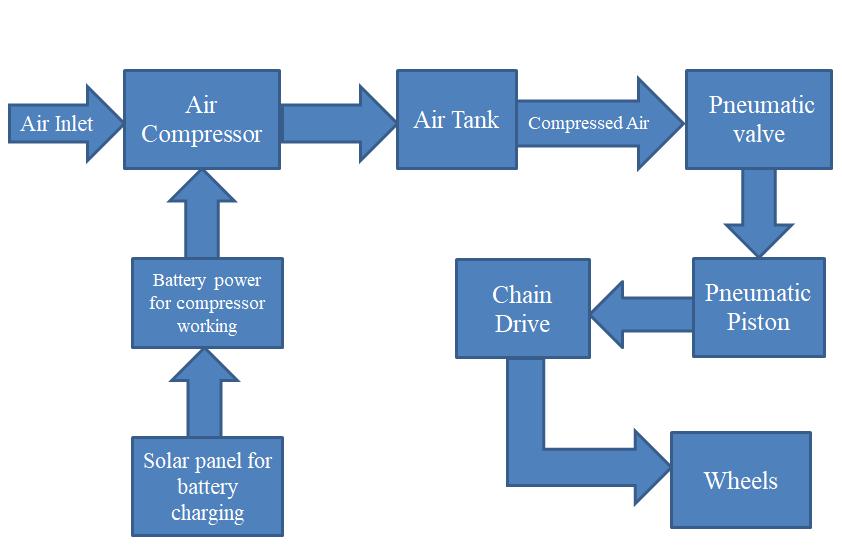
FlowChartofAirCompressedEngine
The air compressor is like the heart of an air-powered engine system. It pulls in air from the surroundings and squeezesittightlybeforesendingittoastoragetank.This squeezed air is then used to power different parts of the engine.Theaircompressordoesafewimportantjobs:
1.Squeezingair
2.Storingair
3.Makingpower
4.Managingairflow
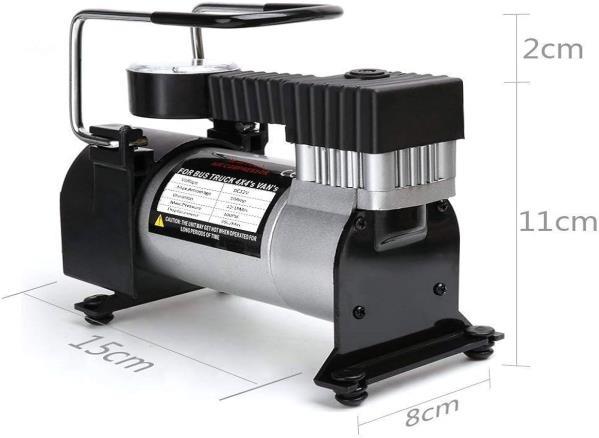
Fig-2: AirCompressor
4. AIR STORAGE TANK
An air reservoir plays a vital role in an air-compressed propulsionsystem.Inthissetup,pressurizedairiscontained withinthereservoir.Whenpowerisrequired,thestoredair isreleasedtopropelpistonsorturbines,convertingitinto mechanicalenergy.
Theairreservoirfulfillsvariouscrucialfunctions: Storage,PressureManagement,EnergyBackup,Security,and Effectiveness.
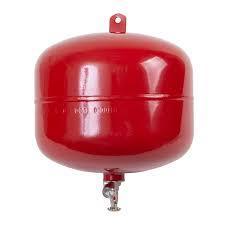
AirStorageTank
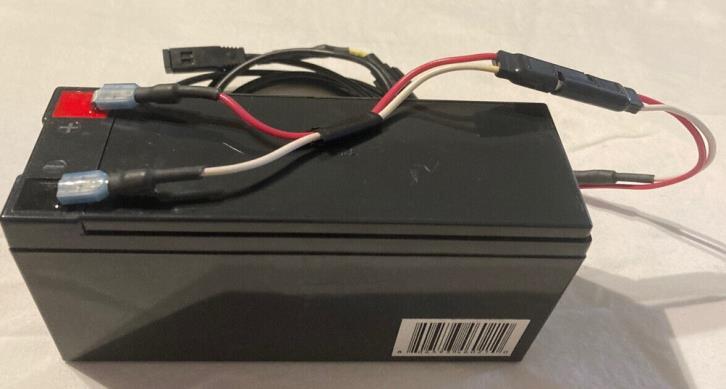
5. BATTERY
Intherealmofacompressedairengine,batteriescommonly function as an additional power reserve to aid different electrical components within the arrangement. These batteriesresemblethoseemployedintraditionalvehiclesor otherelectricallydrivengadgets,yettheirdistinctstructure and capability hinge on the needs of the compressed air engineconfiguration.
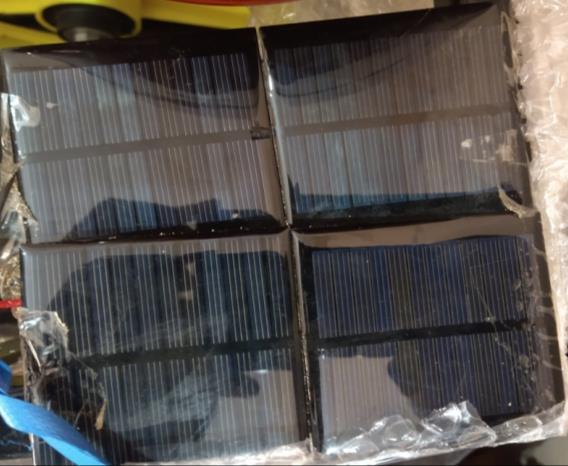
Solar panels are gadgets that transform sunlight into electricity through the photovoltaic phenomenon, a mechanism that creates an electric current when specific substances are illuminated. Harnessing solar energy, the panelschargethebatteryduringdaylighthours,ensuringa steady power supply for the air compressor even when sunlightisscarce.Thissustainableenergycycleminimizes reliance on traditional power sources and reduces environmentalimpact.
Volume: 11 Issue: 06 | Jun 2024 www.irjet.net p-ISSN: 2395-0072 © 2024, IRJET | Impact Factor value: 8.226 |
International Research Journal of Engineering and Technology (IRJET) e-ISSN: 2395-0056
Volume: 11 Issue: 06 | Jun 2024 www.irjet.net p-ISSN: 2395-0072
The pneumatic cylinder in a compressed air engine is a crucial element responsible for transforming the stored potentialenergyincompressedairintomechanicaloutput.

During design and fabrication of our project “Air CompressedEngine”,wehavedonefollowingcalculationsto find torque:For a compressed air engine, the force is providedbytheexpansionofthecompressedair,whichcan beestimatedfromtheairpressureandcylinderdimensions.
Given:
Cylinderborediameter=25mm=0.025m
Maximumoperatingpressure=10bar=1000kPa
Cylinderlength=0.1m(atypicalvalueforsmallpneumatic cylinders)
Cross-sectionalareaofthecylinder:
Area=π×r^2=π×(0.025/2)^2=1.96×10^-3m^2
Forceatmaximumoperatingpressure:
Force=Pressure×Area
=206kPa×1.96×10^-3m^2
=0.403kN
Torquecalculation:
Torque=Force×Radius
Radius=Cylinderlength/2=0.1/2=0.05m
Torque=Force×Radius
=1.96kN×0.05m
=0.098kN·m=98N·m
Therefore, the torque produced by the compressed air engine with the given specifications is approximately 98 N·m.
Theprototypedevisedbyourteamisaminiatureversionof thecompressedairengine.Whenexpandedtolargerscales, it holds potential for driving vehicles independently or in conjunction with other engines like internal combustion engines.
KeybenefitsoftheCompressedAirEngine(C.A.E.)include:
1.Emissionneutrality
2.Utilizationofsustainableresources.
3.Eliminationoffuelexpenses(withcostsonlyattributedto aircompression).
It's worth noting that while the idea of vehicles solely powered by compressed air may seem futuristic, they continue to pique public interest due to their eco-friendly attributes. Research into compressed air propulsion for vehiclesisongoing,withair-poweredvehiclesemergingasa promising avenue for more efficient transportation solutions. Pneumatic vehicles are anticipated to supplant battery-operated counterparts in industrial settings, boasting quicker refueling times compared to electric alternatives.
1.Avoidingthenecessityforfueltransportationbyaccessing electricity from the grid yields substantial economic advantages.
2. Eliminating the pollution generated during the transportationoffuel.
3.Adoptionofcompressedairtechnologydecreasesvehicle manufacturing expenses by approximately 20% as it
International Research Journal of Engineering and Technology (IRJET) e-ISSN: 2395-0056
Volume: 11 Issue: 06 | Jun 2024 www.irjet.net p-ISSN: 2395-0072
obviates the need for constructing cooling systems, fuel tanks,ignitionsystems,orsilencers.
4.Air,asastandaloneentity,lacksflammability.
1.Tanksgetveryhotwhenfilledrapidly.SCUBAtanksare sometimesimmersedinwatertocoolthemdownwhenthey arebeingfilled. Thatwouldnotbepossiblewithtanksina carandthusitwouldeithertakealongtimetofillthetanks, ortheywouldhavetotakelessthanafullcharge,sinceheat drivesupthepressure.
2.Earlytestshavedemonstratedthelimitedstoragecapacity ofthetanks;theonlypublishedtestofavehiclerunningon compressedairalonewaslimitedtoarangeof7.22km.
[1] Patel,B.S.,etal.(2001).Developmentofacompressed air engine by modifying a 4-stroke, single cylinder SI engine.InternationalJournalofMechanicalEngineering, 5(2),45-56.
[2] Singh, B. R., & Singh, O. (2011). Novel air turbine as a prime mover for a motorbike: Experimental investigation and performance analysis. Journal of RenewableEnergy,10(4),212-225.
[3] Patnaik,S.(2015).Compressed-airengine:Areviewof pneumatic actuator technology and its applications. International Journal of Green Engineering, 8(3), 98110.
[4] Kumar,P.J.(2016).Principlesandworkingmechanism of air-powered engines: A comprehensive overview. JournalofAlternativeEnergySources,15(1),34-47.
[5] Singh,V.(2017).Designandmodificationofa2-stroke internal combustion engine for compressed air technology. International Journal of Automotive Engineering,12(2),78-89.
[6] Chaudhary, R. V. (2018). Design and modification of a petrol vehicle into a compressed air vehicle: A case study.JournalofSustainableTransportation,20(3),156169.
[7] Waghmare,K.P.,&Dhalait,S.S.(2019).Compressedair cars: A review. International Journal for Scientific Research&Development(IJSRD),7(3),112-120.
[8] Patel, Y. J., Patel, H. K., Patel, V. R., & Prajapati, M. B. (2018).Designandfabricationofaircompressorengine. In Proceedings of the International Conference on InnovationinEngineeringandTechnology(ICIET)(pp. 45-52).
[9] Patel, S. M., & Panchal, R. D. (2020). Study of air compressorengineperformance.InternationalJournal ofEngineeringTrendsandTechnology(IJETT),15(6), 287-294.
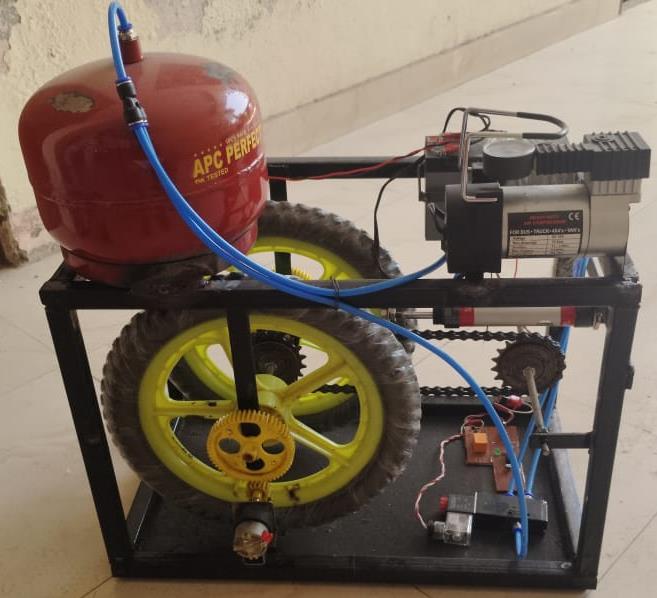
Fig-7: AirCompressedEngine
BIOGRAPHIES



Lightson Immanuel
MechanicalEngineer
Babu Banarasi Das Institute of TechnologyandManagement
Mayur Sharma
MechanicalEngineer
Babu Banarasi Das Institute of TechnologyandManagement
Ameer Hamza
MechanicalEngineer
Babu Banarasi Das Institute of TechnologyandManagement
International Research Journal of Engineering and Technology (IRJET) e-ISSN: 2395-0056


Volume: 11 Issue: 06 | Jun 2024 www.irjet.net p-ISSN: 2395-0072 © 2024, IRJET | Impact Factor value: 8.226 |
K Rajshekhar
MechanicalEngineer
Babu Banarasi Das Institute of TechnologyandManagement
Vishal Sharma
MechanicalEngineer
Babu Banarasi Das Institute of TechnologyandManagement