
International Research Journal of Engineering and Technology (IRJET) e-ISSN: 2395-0056
Volume: 11 Issue: 06 | Jun 2024 www.irjet.net p-ISSN: 2395-0072
International Research Journal of Engineering and Technology (IRJET) e-ISSN: 2395-0056
Volume: 11 Issue: 06 | Jun 2024 www.irjet.net p-ISSN: 2395-0072
Prof. Ganesh C. Jawalkar1, Uzma Kausar A. Haranmare2 , Prof. Rameez R.Badeghar3
1Lecturer at N.B. Navale Sinhagad College of Engineering, Solapur, Maharashtra, India-413255
2Research Scholar at N.B. Navale Sinhagad College of Engineering, Solapur, Maharashtra, India-413255
3Lecturer at N.B. Navale Sinhagad College of Engineering, Solapur, Maharashtra, India-413255 ***
Abstract - Hereinthispaperwediscussdifferentstructural control systems such as bracings and base isolators are employed using ETABS software, with ground motion data assigned as per codes Various low-rise and mid-rise building frames with low damping and flexibility are analyzed to mitigate unwanted vibrations. The results of the seismic responseofeachcontrolsystemandtheircombinationsinlowrise and mid-rise building models are compared with conventional building methods and various other control systems through response spectrum analysis.
Key Words: ETABS software, Base isolator, low rise building, high rise building, Response spectrum analysis, seismic response.
1.INTRODUCTION
Traditional approaches to seismic design of building structures have long focused on enhancing stiffness, strength, and ductility. However, this often leads to increasedstructuralmembersizeandmaterialconsumption, amplifying both building costs and seismic reactions. Consequently, the effectiveness of the standard seismic design method is limited. In response, various vibrationcontrol strategies,categorizedasstructural controls,have emerged,markingsignificantadvancementsinrecentyears. The field of structural control encompasses diverse techniques,includingactive,passive,hybrid,andsemi-active control systems. Passive vibration control, such as base isolation,operateswithoutexternalpowersources,utilizing structural motion to generate control forces. This method effectively elasticizes buildings, ensuring safety during seismic events. Bracing systems offer substantial compression strength, particularly when integrated with surroundingframestobolsterlateralloadresistance.Insteel frames, bracings serve as diagonal compression struts, efficientlydistributingcompressiveforcestoadjacentjoints.
Theprimaryobjectiveofstructuralsystemsinconstruction istoefficientlytransfergravityloads.Gravityloadstypically includedeadload,activeload,andsnowload.Lateralloads, such as wind or seismic forces, can induce high stresses, sway movement, and vibration in structures. Therefore,
structuresmustpossessbothverticalload-bearingcapacity andlateralstiffnesstowithstandtheseforceseffectively.
Variousbracingtechniques,includingconcentric,eccentric, and knee bracing, have been utilized over the years to effectivelycontrollateraldisplacements.Bracingprovesto be highly efficient and cost-effective in stiffening framed structuresagainstlateralstresses,therebyreducingtheneed for large member sizes. Consequently, the bracing system significantlyreduceslateralandtorsionalmovementsduring seismicloading
Base isolation is a smart way to make buildings safer duringearthquakes.Itseparatesthebuilding'sbasefromthe restofthestructureusingflexiblejoints.Thesejoints,called isolators, absorb a lot of the earthquake's energy, so the building shakes less. Unlike regular buildings, where everything moves together during an earthquake, in base isolated buildings,onlythe top part movesslightly, which keepsitsafer.Thismeansbaseisolatedbuildingscanstay strong and safe even during big earthquakes without needinganyextrahelp.
This approach proves invaluable for analyzing structures where in primary modes exert a significant influence on overallresponse.Itinvolvesdeterminingtheresponseofa multi-degreeoffreedomsystemthroughthesuperpositionof modal responses. Each modal response is derived from spectralanalysisofsingle-degreeoffreedomsystems,which arethenintegratedtoascertainthetotal response.Widely utilized across various industries, the Response Spectrum Method represents a linear dynamic technique used to estimatestructuralresponseduringshort,nondeterministic, and transient dynamic events, such as earthquakes and shocks. Estimationistypicallyachieved through eitherthe CompleteQuadraticCombination(CQC)orSquareRootofthe Sum of the Squares (SRSS) method, with SRSS favored for widelyspacedfrequenciesandCQCforcloselyspacedones. Thismethodoperateswithinthelinearrangetodetermine thepeakstructuralresponseofabuildingandsubsequently identifythelateralforcesitexperiences.
International Research Journal of Engineering and Technology (IRJET) e-ISSN: 2395-0056
Volume: 11 Issue: 06 | Jun 2024 www.irjet.net p-ISSN: 2395-0072
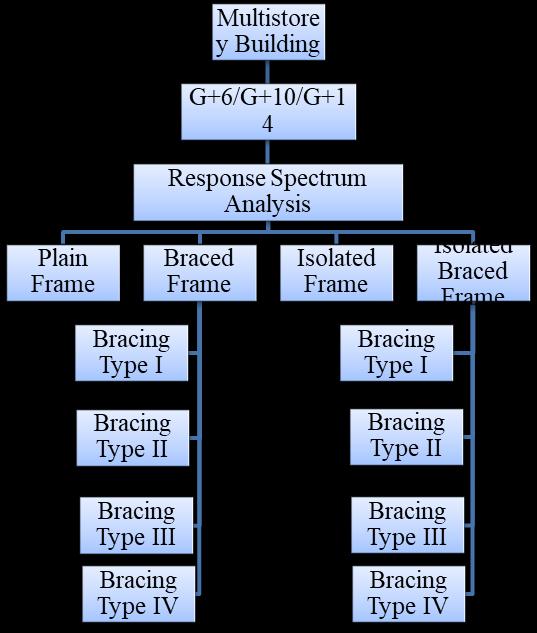
To analyze reinforced concrete building frame in combinationwithbracingandbaseisolation. Thisproposedpaperisfocusedon
1. Analysis of reinforced concrete multistoried building frame and base isolated reinforced concrete multistoried buildingframe.
2.AnalysisofRCmultistoriedbuildingframewithbracingat variouslocation.
3.AnalysisofbaseisolatedRCmultistoriedbuildingframe withbracingatvariouslocation.
4.ComparativeanalysisofRCmultistoriedbuildingframe withandwithoutbaseisolation.
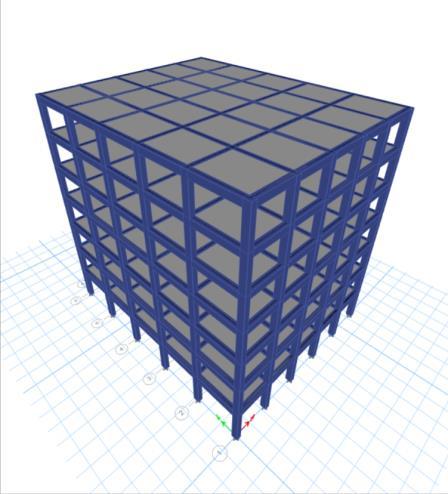
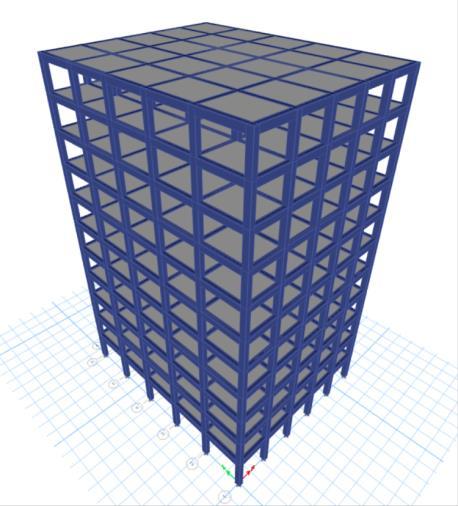
Table no 1. The model used for validation is described below
International Research Journal of Engineering and Technology (IRJET) e-ISSN: 2395-0056
Volume: 11 Issue: 06 | Jun 2024 www.irjet.net p-ISSN: 2395-0072
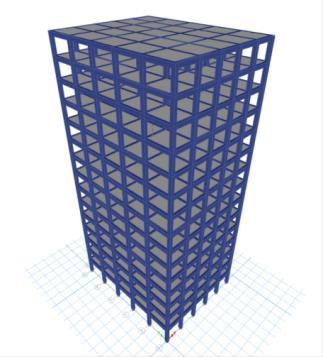
5. Different Type of Bracing
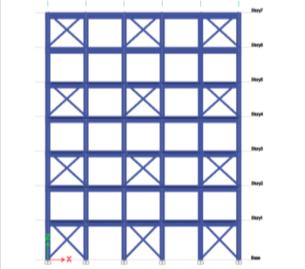
Fig- 5 Type I Bracing at 1,3,5th Bay
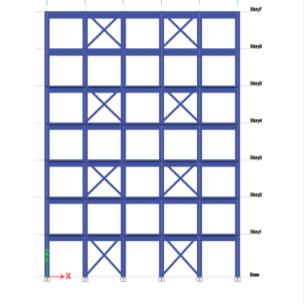
Fig 7-Type I Bracing at 1,3,5th Bay
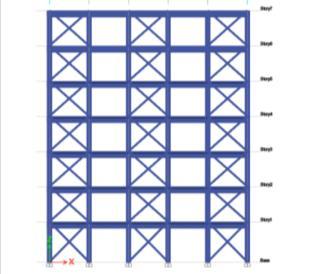
Fig- 6 Type II Bracing at 1,3,5th Bay Continuous
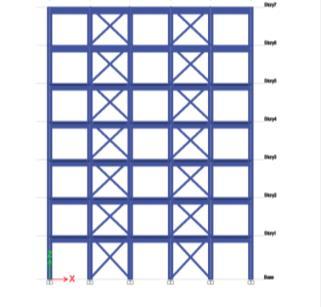
Fig 8- Type II Bracing at 1,3,5th Bay Continuous
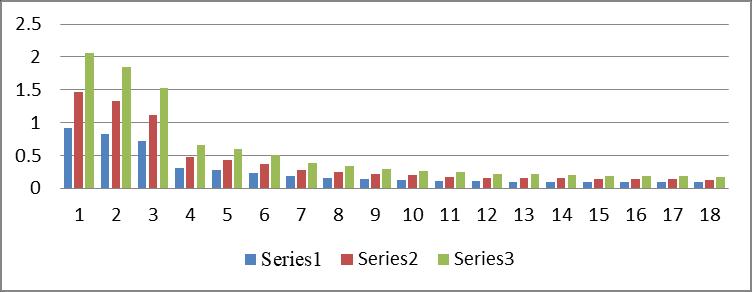
Graph no 1. Time Period v/s storey
2. Base shear in restrained multi-storey building increases as we increase number of storey. There is 16.6%increaseofbaseshearbetweenG+6andG+10, while13.475%increaseinG+10andG+14building
6. Results and Discussion
Inthepresentstudy,lineardynamicanalysisiscarriedout foranalysingRCCbuildingframesbyusingETABSsoftware. The Response Spectrum analysis is performed on three building frames of different stories with passive damping technologiesandtheirresultsarecompared.Theresultsare showninformofmodeshapes,graphsandtables.
6.1 Restrained Multi-Storey Buildings
1.Thetimeperiodofmulti-storeybuildingincreasesas the number of Storey increases while it goes on decreasingasmodeincreases
Table no 2. Values Of Base Shear
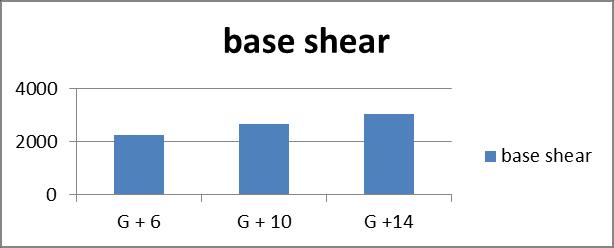
Graph no 2. Base Shear v/s Storey
3. Displacement of building is increasing as we increasetheStoreyofbuilding.
Figure5.2TypeIBracing at1,3,5th Bay
Figure5.3TypeIIBracingat 1,3,5th BayContinuous
Table no 3. Values of Displacement
International Research Journal of Engineering and Technology (IRJET) e-ISSN: 2395-0056
Volume: 11 Issue: 06 | Jun 2024 www.irjet.net p-ISSN: 2395-0072
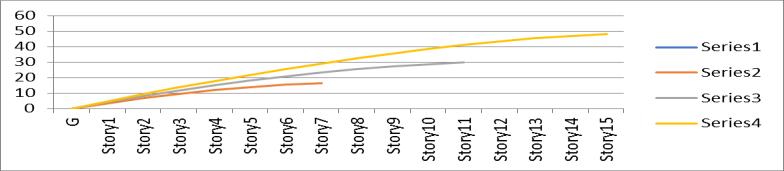
Graph no 3. Storey Vs Displacement
4. Drift has the same effect as displacement in this case.
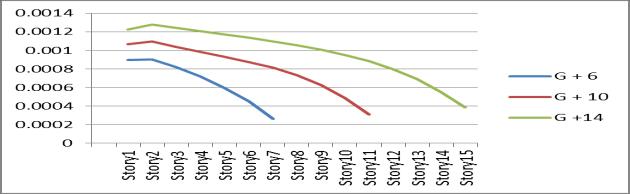
Graph no 4. Values of Displacement v/s storey
6.2 Buildings Subjected to Rubber Base Isolator
1.Thetimeperiodofmulti-storeybuildingincreasesas the number of Storey increases while it goes on decreasingasmodeincreases.
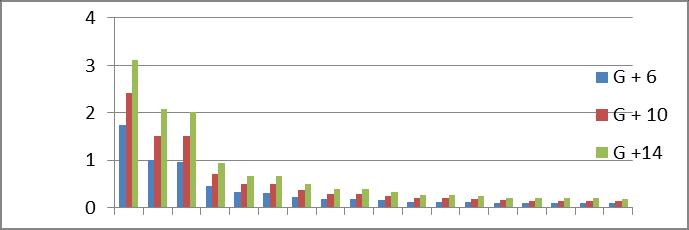
Graph no 1. Time Period v/s storey
2.ForrestrainedandrubberisolatedG+6buildingthe base shear decreases by 34%, For G+10 building it decreasesby14%andforG+14buildingitdecreases by49%.
Table no 4 Values Of Base Shear
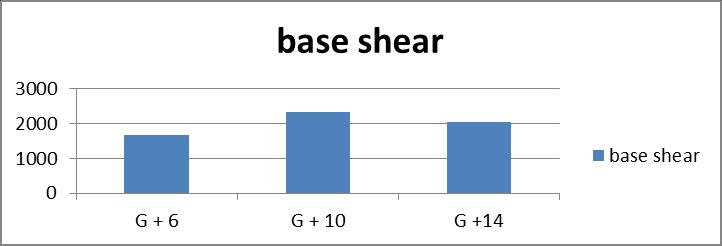
Graph no 2. Base Shear v/s Storey
Table no 5 Values of Displacement
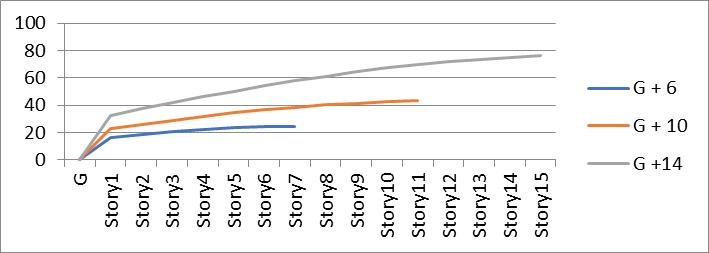
Graph no 3. Storey Vs Displacement
3. Comparing the top storey displacement, isolated building having more displacement than restrained building.
4.G+6storeybuildingwithrubberbaseisolatorhave 51.6% increase in displacement than restrained building.ForG+10andG+14have45.4%and58.88% increaseindisplacementrespectively.
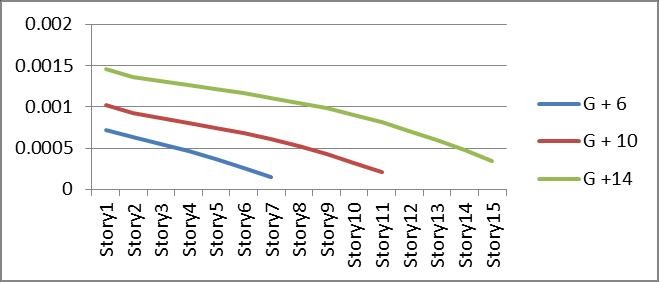
Graph no 5. Drift vs Storey
5. Drift of Storey increases as number of Storey increasesbut forparticularbuildingitdecreasesaswemoveabove. Herethereisdecreaseindriftofisolatedbuildingthan restrainedbuildings.
International Research Journal of Engineering and Technology (IRJET) e-ISSN: 2395-0056
Volume: 11 Issue: 06 | Jun 2024 www.irjet.net p-ISSN: 2395-0072
6.3 6, 10 &14 Storey Building subjected to Bracing Type I
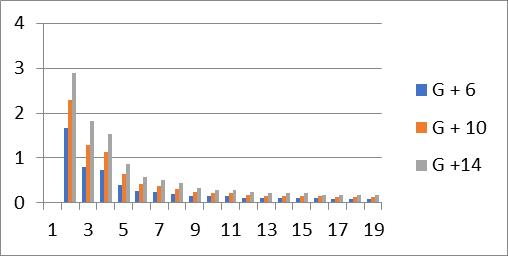
Graph no 6. Time Period v/s Storey
1. Increasing the number of stories in a multi-storey building result in a longer time period, while it decreaseswithanincreaseinmode.
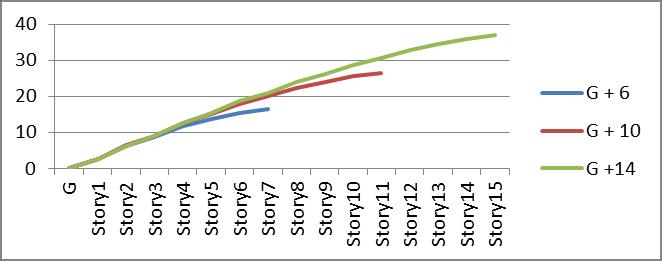
Graph no 8. Storey Vs Displacement
3. Top storey displacement is almost equal in G+6 buildings. Whilein G+10andG+14show decrease of 11.7%and29.78%,respectively.
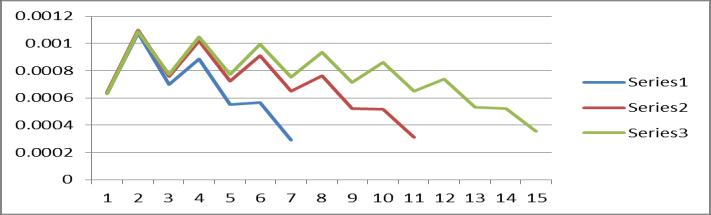
Table no 6. Values Of Base Shear
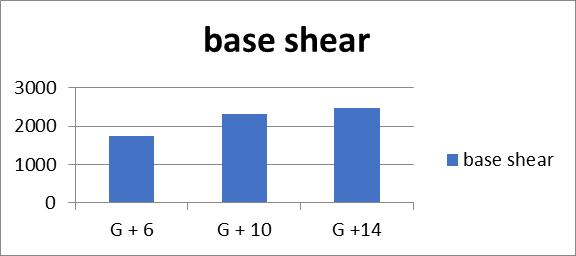
Graph no 7. Base Shear v/s Storey
2.Thebaseshearincreasesby34%forrestrainedand bracedG+6buildings,16%forG+10buildings,and3% forG+14buildings.
Graph no 9 Drift Vs Storey
4.DriftoftheStoreyshowsfluctuationbecauseofthe type I bracing provided at alternate storey but for a particularbuilding,itdecreasesmovingupword.
6.4 6, 10 &14 Storey Building subjected to Bracing Type II
1.Thetimeperiodofmulti-storeybuildingincreasesas the number of Storey increases while it goes on decreasingasmodeincreases.
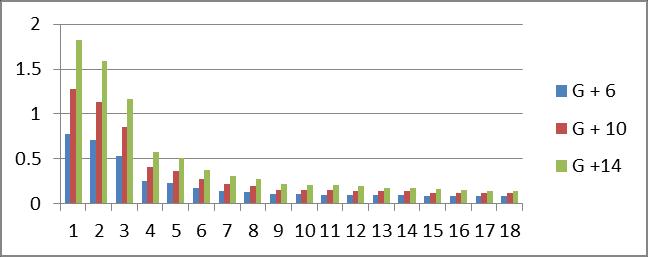
Graph no 10. Time Period v/s storey
2. The base shear increases by 34% form restrained andbracedG+6buildings,16%forG+10buildings,and 3%forG+14buildings.
Table no 8. Values Of Base Shear
Table no 7. Values sof Displacement
International Research Journal of Engineering and Technology (IRJET) e-ISSN: 2395-0056
Volume: 11 Issue: 06 | Jun 2024 www.irjet.net p-ISSN: 2395-0072
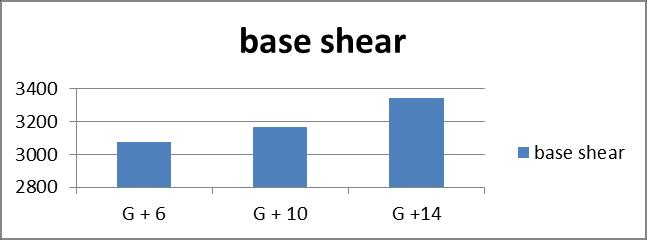
Graph no 11. Base Shear v/s Storey
3.Comparingthetopstoreydisplacement,bracingtype II building have less displacement than restrained buildingandTypeIbracedbuilding.
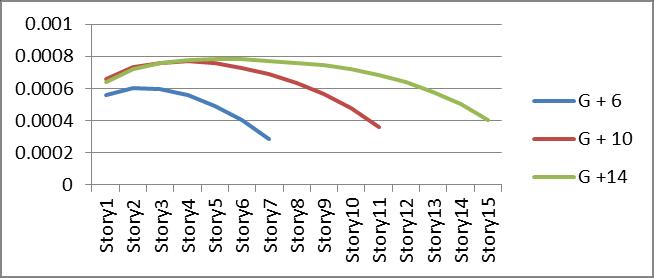
Graph no 3 Drift Vs Storey
6.Driftdecreasesaswemovesupword.
6.5 6, 10 &14 Storey Building subjected to Bracing Type II
1.Thetimeperiodofmulti-storeybuildingincreasesas the number of Storey increases while it goes on decreasingasmodeincreases.
2.ThebaseshearofrestrainedG+6buildingislessthan typeIIIbracingi.e16%and14%forG+10buildings,3% forG+14buildings.
Table no 10. Values Of Base Shear
Table no 9. Values of Displacement
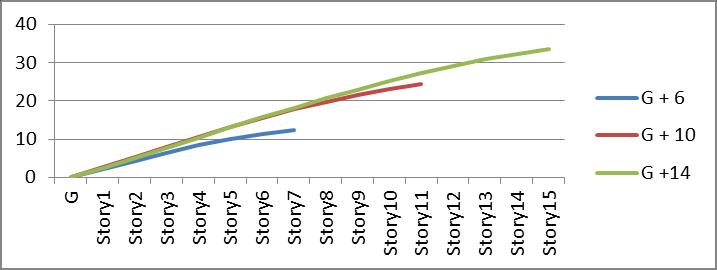
Graph no 12. Storey Vs Displacement
4. Building with Bracing type I have decrease in displacementthanrestrainedbuildingwhilecomparing thedisplacementbracingtypeIhavemorevaluesthan typeII.
5.FortypeIIbracingdriftoftheStoreyshowsgradual decrease in values with upword while type I bracing have fluctuation because bracing are provided at alternatestorey.
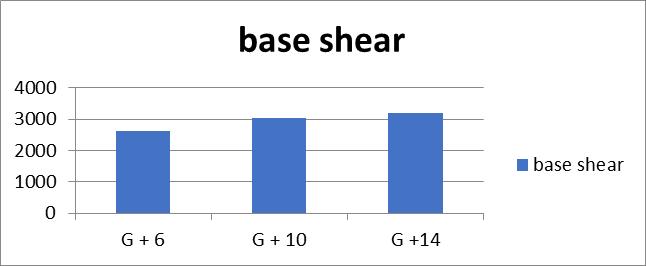
Graph no 13. Base Shear v/s Storey
3. Building with Bracing type I have decrease in displacementthanrestrainedbuildingwhilecomparing thedisplacement,bracingtypeIIIhavelessvaluesthan typeII.
International Research Journal of Engineering and Technology (IRJET) e-ISSN: 2395-0056
Volume: 11 Issue: 06 | Jun 2024 www.irjet.net p-ISSN: 2395-0072
3.Comparingthetopstoreydisplacement,bracingtype II building have less displacement than restrained buildingandTypeIVbracedbuilding.
Table no 11. Values of Displacement
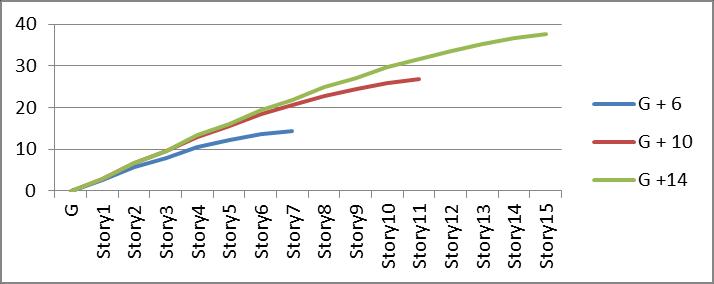
Graph no 14 Storey Vs Displacement
4.typeIIIbracinghavefluctuationbecausebracingare providedatalternatestorey.
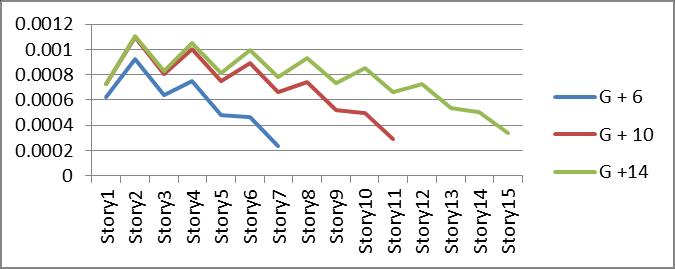
Graph no 15. Drift Vs Storey
6.6 6, 10 &14 Storey Building subjected to Bracing Type IV
1.Thetimeperiodofmulti-storeybuildingincreasesas the number of Storey increases while it goes on decreasingasmodeincreases.
2.Thebaseshearincreasesby27%formrestrainedto bracedtypeIVG+6building,16%forG+10buildings, and5%forG+14buildings.
Table no 12 Values Of Base Shear
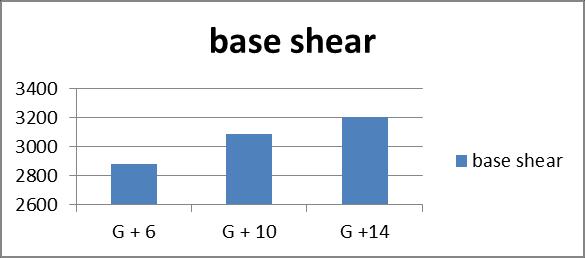
Graph no 16. Base Shear v/s Storey
Table no 13. Values of Displacement
4.G+6buildingwithBracingtypeIVhave25%lower displacementthanrestrainedbuildingwhile16%less forG+10and6%lessforG+14storeybuilding.]
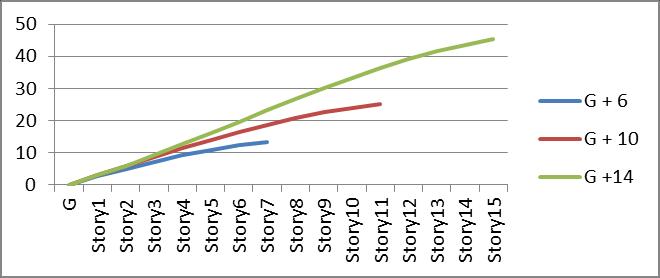
Graph no 17. Storey Vs Displacement
5.FortypeIVbracingdriftoftheStoreyshowsgradual decreaseinvaluesaswegoupwordwhiletypeIand type III bracing have fluctuation because bracing are providedatalternatestorey.
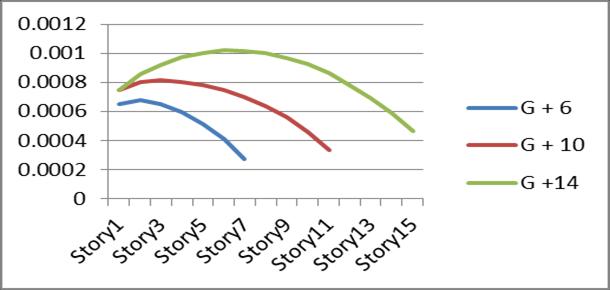
Graph no 18. Drift Vs Storey
International Research Journal of Engineering and Technology (IRJET) e-ISSN: 2395-0056
Volume: 11 Issue: 06 | Jun 2024 www.irjet.net p-ISSN: 2395-0072
6.Driftdecreasesaswemovesupword
6.7 6, 10 &14 Storey Building subjected to Rubber Base Isolator & Bracing Type I
1. Increasing the number of stories in a multi-storey building result in a longer time period, while it decreaseswithanincreaseinmode.
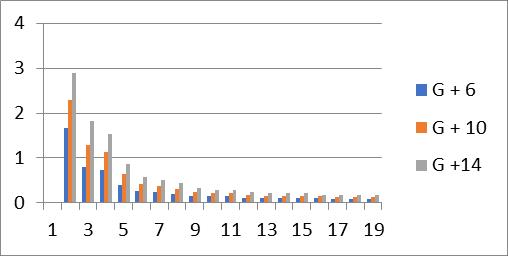
Graph no 19. Time Period v/s storey
2.Thebaseshearincreasesby4%forrestrainedand bracedG+6buildings,1%forG+10buildings,and5% forG+14buildings.
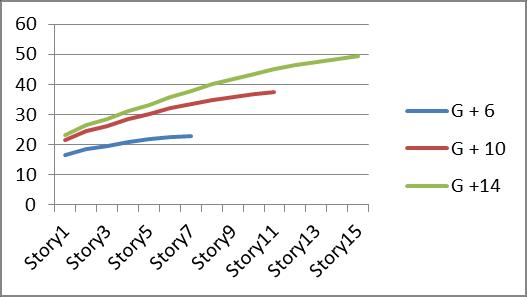
Graph no 21. Storey Vs Displacement
4.DriftoftheStoreyshowsfluctuationbecauseofthe type I bracing provided at alternate storey but for a particularbuilding,itdecreasesmovingupword.
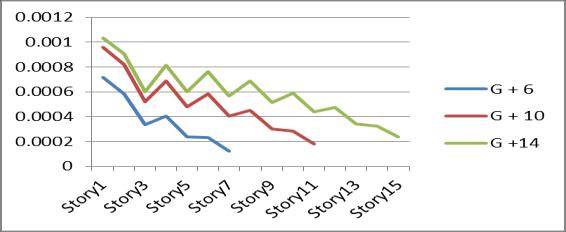
Table no 14 Values Of Base Shear
Graph no 20. Base Shear v/s Storey
3. Top storey displacement is almost equal in G+6 buildings.whileG+10andG+14showdecreaseof13% and 35%, respectively with respect of restrained building.
Graph no 22. Drift Vs Storey
6.8 6, 10 &14 Storey Building subjected to Rubber Base Isolator & Bracing Type II
1.Thetimeperiodofmulti-storeybuildingincreasesas the number of Storey increases while it goes on decreasingasmodeincreases.
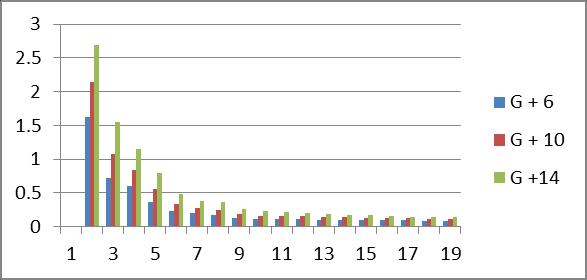
Graph no 23. Time Period v/s storey
2.Thebaseshearincreasesby7%formrestrainedto bracedG+6buildings,6%forG+10buildings,andless than1%forG+14buildings.
Table no 16 Values Of Base Shear
Table no 15. Values of Displacement
International Research Journal of Engineering and Technology (IRJET) e-ISSN: 2395-0056
Volume: 11 Issue: 06 | Jun 2024 www.irjet.net p-ISSN: 2395-0072
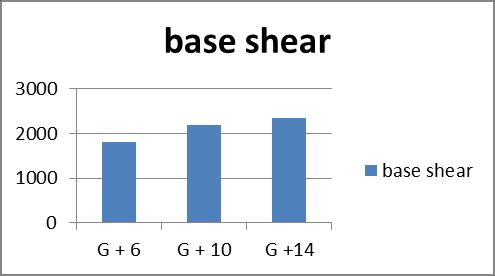
Graph no 24. Base Shear v/s Storey
3.Comparingthetopstoreydisplacement,bracingtype II building have less displacement than restrained buildingandTypeIbracedbuilding.
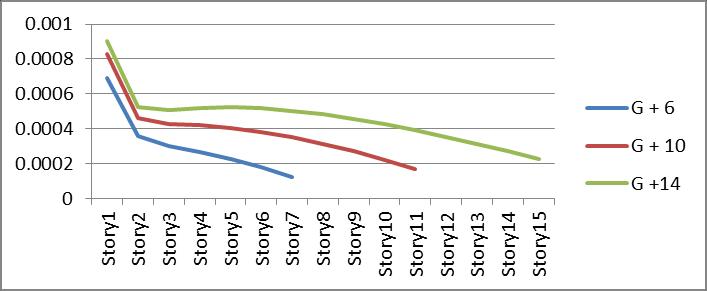
Graph no 18. Drift Vs Storey
5.Driftdecreasesaswemovesupword
6.9 6, 10 &14 Storey Building subjected to Rubber Base Isolator & Bracing Type III
1. Increasing the number of stories in a multi-storey building results in a longer time period, while it decreaseswithanincreaseinmode
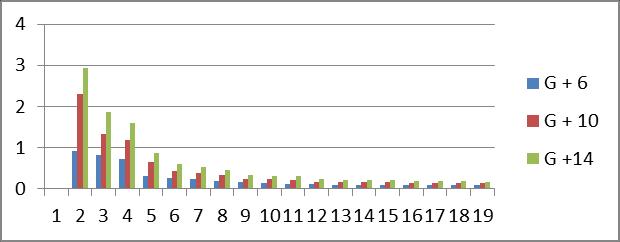
Graph no 27. Time Period v/s storey
Table no 17. Values of Displacement
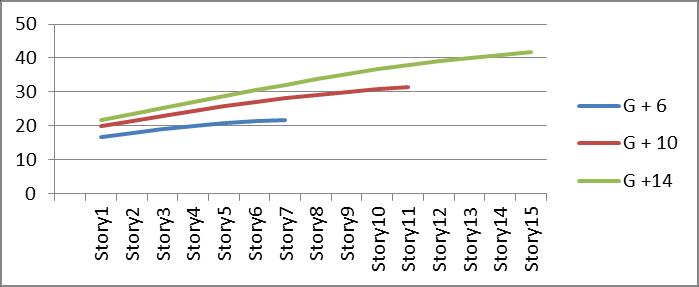
Graph no 25. Storey Vs Displacement
4.FortypeIIbracingdriftoftheStoreyshowsgradual decrease in values with upword while type I bracing have fluctuation because bracing are provided at alternatestorey.
2 ThebaseshearofrestrainedG+6buildingislessthan typeIIIbracingi.e20%,8%forG+10buildingsand27% forG+14buildings.
Table no 19. Values Of Base Shear
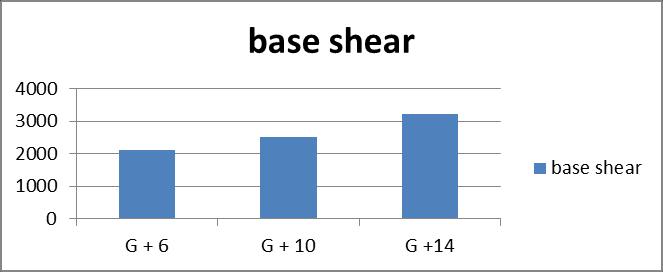
Graph no 28. Base Shear v/s Storey
2.Comparingthedisplacement, bracingtypeIIIhave morevaluesthantypeII.
International Research Journal of Engineering and Technology (IRJET) e-ISSN: 2395-0056
Volume: 11 Issue: 06 | Jun 2024 www.irjet.net p-ISSN: 2395-0072
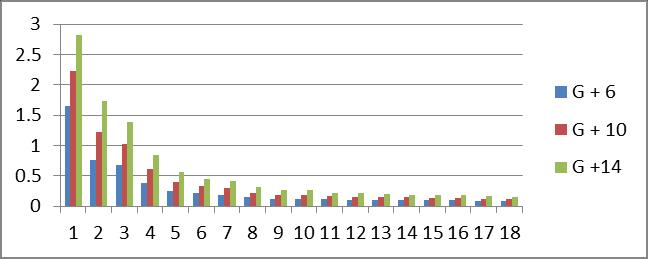
Graph no 31. Time Period v/s storey
2.Thebaseshearincreasesby5%formrestrainedto braced type IV G+6 building, 1% for G+10 buildings, and27%forG+14buildings
Table no 20 Values of Displacement
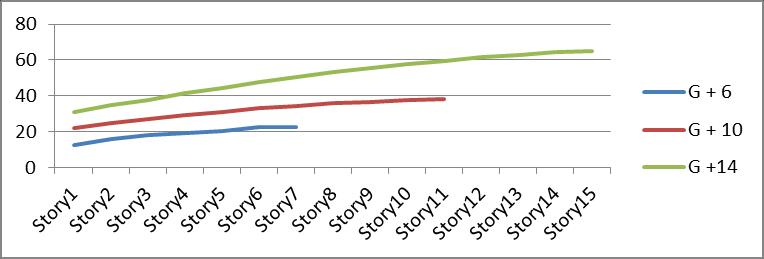
Graph no 29. Storey Vs Displacement
3 Building with Bracing type I have decrease in displacementby9%thanG+6restrainedbuildingwhile displacementdecreaseby11%forG+10and16%for G+14 storeybuilding.
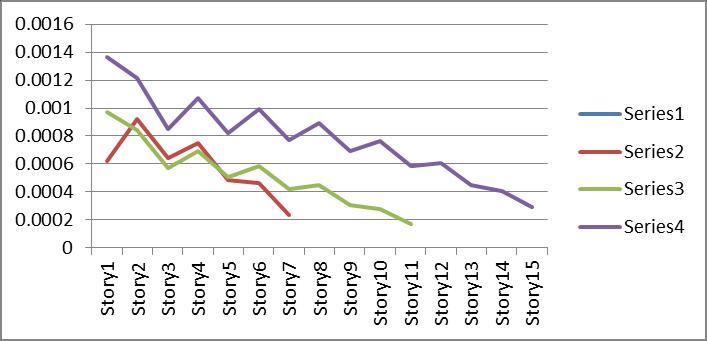
Graph no 30. Drift Vs Storey
4.TypeIIIbracinghavefluctuationbecausebracingare providedatalternatestorey.
6.10 6, 10 &14 Storey Building subjected to Rubber Base Isolator & Bracing Type IV
1.Thetimeperiodofmulti-storeybuildingincreasesas the number of Storey increases while it goes on decreasingasmodeincreases.
Table no 21. Values Of Base Shear
Graph no 32. Base Shear v/s Storey
3. G+6 building with Bracing type IV have 9% lower displacementthanrestrainedbuildingwhile18%less forG+10and22%lessforG+14storeybuilding.
Table no 22. Values of Displacement
International Research Journal of Engineering and Technology (IRJET) e-ISSN: 2395-0056
Volume: 11 Issue: 06 | Jun 2024 www.irjet.net p-ISSN: 2395-0072
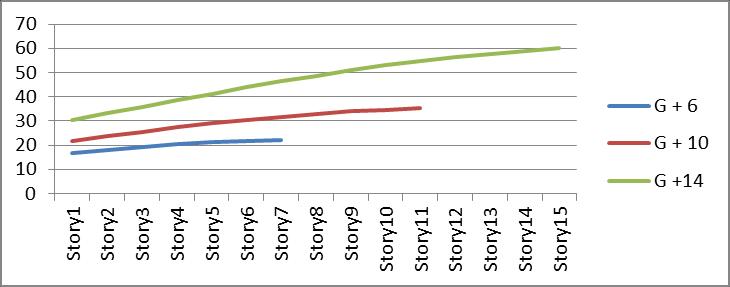
Graph no 33 Storey Vs Displacement
4.FortypeIVbracingdriftoftheStoreyshowsgradual decreaseinvaluesaswegoupwordwhiletypeIand type III bracing have fluctuation because bracing are providedatalternatestorey.
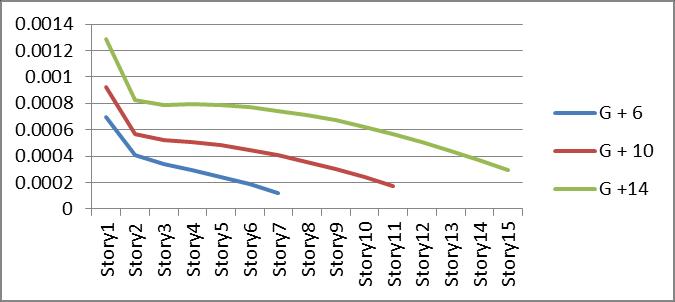
Graph no 34. Drift Vs Storey
5.Driftdecreasesaswemovesupstorey.
The main observations and conclusions drawn are summarizedbelow:
1. The application of bracings increases the seismic weight of the structure, potentially resulting in higherbaseshearduringearthquakes.
2. LRBincreasesthetimeperiod,potentiallyleadingto lowerspectralaccelerationvalues
3. Baseisolationreducesstoreydisplacementduring earthquakes.Consequently,LRBisemployedasan alternativetoavoidincreasingtheseismicweightof thestructure.
1. Thebaseshearincreasesby34%formrestrainedto bracingtypeIofG+6buildings,36%fortypeII,16% fortypeIIIand27%fortypeIVbracing.
2. Comparingthebaseshearofrestrainedbuildingof bracings,typeIIIhavelessincreaseinbaseshear.
3. Fortheisolatedbuildingbaseshearhasdecreases by 29% form isolated to bracing type I of G+6 buildings,25%fortypeII,13.81%fortypeIIIand 27%fortypeIVbracing.
4. Comparing the base shear of isolated building of bracings,typeIIIhavelessdecreaseinbaseshear.
5. The displacement has reduced by 33% form restrainedtobracingtypeIIofG+6buildings,14% fortypeIIIand23%fortypeIVbracing.
6. Comparingthedisplacementofrestrainedbuilding ofbracings,typeIIIhavelessdisplacement.
7. Fortheisolatedbuildingdisplacementhasincreases by 30% form isolated to bracing type I of G+6 buildings,23%fortypeII,21.13%fortypeIIIand 27%fortypeIVbracing.
8. Comparingthedisplacementofisolatedbuildingof bracings,typeIIIhavelessincreaseindisplacement value.
9. Comparing the top storey displacement isolated building have more displacement than restrained buildingbutlessstoreydrift.
10. It shows the zig-zag pattern in storey drift of buildingwhenbracingplacedatalternateposition comparing to the building when bracing are continuouslyplaced.
1. Thebaseshearincreasesby14%formrestrainedto bracingtypeIofG+6buildings,16%fortypeII,12% fortypeIIIand14%fortypeIVbracing.
2. Comparing the base shear of restrained building withbracedbuilding,typeIIIhavelessincreasein baseshear.
3. Fortheisolatedbuildingbaseshearhasdecreases by 15% form isolated to bracing type I of G+10 buildings, 21.8% for type II, 15% for type III and 15%fortypeIVbracing.
4. Comparing the base shear of isolated building of bracings,typeIIIhavelessdecreaseinbaseshear.
5. The displacement has reduced by 16% form restrainedtobracingtypeIofG+6buildings,20% for type II, 11% for type III and 16% for type IV bracing.
6. Comparingthedisplacementofrestrainedbuilding ofbracings,typeIIIhavelessdisplacement.
7. Fortheisolatedbuildingdisplacementhasincreases by 21.6% form isolated to bracing type I of G+6 buildings,6%fortypeII,23%fortypeIIIand17% fortypeIVbracing.
8. Comparingthedisplacementofisolatedbuildingof bracings,typeIIIhavelessincreasesindisplacement values.
International Research Journal of Engineering and Technology (IRJET) e-ISSN: 2395-0056
Volume: 11 Issue: 06 | Jun 2024 www.irjet.net p-ISSN: 2395-0072
9. Comparing the top storey displacement isolated building have more displacement than restrained buildingbutlessstoreydrift.
10. It shows the zig-zag pattern in storey drift of buildingwhenbracingplacedatalternateposition comparing to the building when bracing are continuouslyplaced.
1. Thebaseshearincreasesby3%formrestrainedto bracingtypeIofG+6buildings10%fortypeII,3% fortypeIIIand5%fortypeIVbracing.
2. Comparingthebaseshearofrestrainedbuildingof bracings, type I and type III have less increase in baseshear.
3. Fortheisolatedbuildingbaseshearhasdecreases by 18% form isolated to bracing type I of G+6 buildings,22%fortypeII,5.5%fortypeIIIand5% fortypeIVbracing.
4. Comparing the base shear of isolated building of bracings,typeIIIandIVhavelessdecreaseinbase shear.
5. The displacement has reduced by 71% form restrainedtobracingtypeIofG+14buildings,45% for type II, 29.7% for type III and 6% for type IV bracing.
6. Comparingthedisplacementofrestrainedbuilding ofbracingstypeIVhavinglessdisplacement.
7. Fortheisolatedbuildingdisplacementhasincreases by 21% form isolated to bracing type I of G+14 buildings,17.07%fortypeII,26.15%fortypeIIIand 18.64%fortypeIVbracing.
8. Comparingthedisplacementofisolatedbuildingof bracings,typeIIhavelessdecreaseinbaseshear.
9. Comparing the top storey displacement isolated building have more displacement than restrained buildingbutlessstoreydrift.
10. It shows the zig-zag pattern in storey drift of buildingwhenbracingplacedatalternateposition comparing to the building when bracing are continuouslyplaced.
1. Abdolrahim Jalali and Peyman Narjabadifam “Optimum Modal Characteristics for Multi-Storey Buildings Isolated With LRBS” 4th International Conference on Earthquake EngineeringTaipei,TaiwanOctober12-13,(2006)
2. Dimos C. Charmpis, Petros Komodromos and Marios C. Phocas “Optimized Earthquake Response of Multi-Storey
Buildings with Seismic Isolation at Various Elevations” @ JohnWileyandSonsEarthquakeEnggStruct.Dyn.(2012).
3.DonatoCancellara,FabioDeAngelis“Dynamicassessment of base isolation systems for irregular in plan structures, Response spectrum analysis vs nonlinear analysis” @ Elsevier(2019).
4. Ehsan Kazeminezhada, Mohammad Taghi Kazemib, S. Mohammad Mirhosseinia “Modified procedure of lead rubber isolator design used in the reinforced concrete building” Institution of Structural Engineers @ Elsevier (2020).
5.FrancoBraga,MichelangeloLaterza“Fieldtestingoflowrise base isolated building” @Elsevier Engineering Structures26(2004).
6.O.V.Mkrtycheva,G.A.Dzhinchvelashvilia,A.A.Bunova “Study of Lead Rubber Bearings Operation with Varying Height Buildings at Earthquake” @ Elsevier Procedia Engineering91(2014)



Prof Ganesh C. Jawalkar
Working as Assistant Professor in N. B. Navale Sinhgad College of Engineering
Solapur. Graduated in Civil Engineering fromShivajiUniversityKolhapurandPost GraduationinStructuralEngineeringfrom Solapur University and UGC approved HavingatotalTeachingExperienceof17 years Guided more than10studentsfor PostGraduation.
Miss Uzma Kausar A. Haranmare
B.E(Civil), MTech (CivilStructure)(Persuing)ResearchScholarat N.B. Navale Sinhagad College of Engineering,Solapur,Maharashtra,India
Prof. Rameez R. Badeghar
Working as Assistant Professor in N. B. Navale Sinhgad College of Engineering
Solapur. Graduated in Civil Engineering fromShivajiUniversityKolhapurandPost GraduationinStructuralEngineeringfrom Solapur University. Having a total TeachingExperienceof16years Guiding morethan4studentsforPostGraduation WorkedforasemesterinSTESUniversity Kigali,Rawanda,EastAfrica