

International Research Journal of Engineering and Technology (IRJET) e-ISSN: 2395-0056
Volume: 11 Issue: 06 | Jun 2024 www.irjet.net p-ISSN: 2395-0072
INTELLIGENT WASTE MANAGEMENT SYSTEM USING IOT
N.Tejaswini1 , M.Satish Kumar2 , M.Pavan Kumar3 , K.Pradeep4
N.Tejaswini B.Tech (IT) Seshadri Rao Gudlavalleru Engineering College, M.Satish Kumar B.Tech (IT) Seshadri Rao Gudlavalleru Engineering College, M.Pavan Kumar B.Tech (IT) Seshadri Rao Gudlavalleru Engineering College, K.Pradeep B.Tech (IT) Seshadri Rao Gudlavalleru Engineering College, Y.K.Viswanadham Dept of IT Seshadri Rao Gudlavalleru Engineering College,Gudlavalleru,India. ***
Abstract - Wastemanagementandsegregationisamuchwished procedure in metro cities and concrete regions due to the spreading of diseases. it is envisioned that India produces forty-two million lots of municipal stable waste annually at present. Segregation makes it possible to make use of and recycle the waste efficiently. This waste segregator machine can without difficulty segregate waste. while waste is thrown within the pipe, the IR sensor will sense the waste. Waste is split into three classes, particularly wet, Dry, and metallic. some other sensors will experience the garbage category. As in keeping with the algorithm used, if the waste is steel then the mechanism will carrythemetallicgatheringbinbelowthepipe. With the assistance of a servo motor, the waste will fall into the metallic bin. Inaddition, the methodwillrepeatifwetwaste is sensed. If the sensor doesn’t prompt each of the sensor categories, then the waste may be taken into consideration to be drywaste. Asthearenaisinthestageofupgradation,thereis one stinking trouble we have to address rubbish. Waste segregation and recycling are effective methods of decreasing dumped trash. Recycling is carried out manually with the aidof sorting the waste with the aid of the human interface. To lessen human interface and to make structures smarter. We carriedout amachineforaccumulatingandsegregatingwaste into dry and moist and not using a human interface. The systemis designedwithbuilt-insensorstolocateandsegregate the waste, in conjunction with an arm to select and region the waste into separate bins designed for dry, wet, and metal waste.
Key Words: Internet of Things (IoT), Arduino Uno, servo motor, LCD Display, Metal Detector Sensor, Moisture Sensor
1.INTRODUCTION
As the world population grows, the problem of waste management will become more serious. Proper waste separation at source is now essential to encourage sustainable practicesas itfacilitates recyclingandreduces environmentalimpactActivityaimstodevelopanArduinobasedsystemforwirelesslyseparatingdry,wet,andmetallic wasteintodry,wet,andmetallicwasteusingsensors,servo motors and LCDs does. The use of an Arduino, a flexible, accessiblemicrocontroller,providesapractical approachto garbage sorting automation. This project uses an Arduino
platformthatinterfaceswithsensors,includinginfraredand ultrasonic,todeterminethetypeandquantityofwaste
Servomotorsarenecessaryforthephysicalseparationof wasteproducts.TheArduinomicrocontrollerinstructsthe servomotorstooperate,sendingthewastetotheappropriate bin,basedonthedatacollectedfromthesensor.
In the end, this challenge aims to create a waste segregation device that is both flexible and clean to apply withtheaidofutilizingArduino,servovehicles,sensors,and anLCDshow.Thegadgetsupportsecologicallyfriendlywaste managementpracticesbypresentingawi-fiandautomated answer,that'sinlinewiththeglobaltrendinthedirectionof environmentallyfriendlygeneration
1.1. LITERATURE SURVEY
TejaswiniandcoauthorsusedIOTtocreateasmartwaste managementsystemandtheyhaveproposedasystemwhich functionsonclient-servermodel.[1]
Exploring waste segregation methods is critical while doing a literature survey for project documentation. This includesanalyzingexistingsystemsusedinvarioussectors and research fields,as well as reviewingacademic papers, articles,andcasestudiestobetterunderstandtherelevance ofwastesegregation,itsenvironmentaladvantages,andthe methodologyused.Furthermore,itiscriticaltoresearchany applicable standards and laws controlling waste management techniques, such as segregation and disposal processes.Thiscoreunderstandingwillguidethedesignand implementationofyourproject'swastesegregationprocess.
2.EXISTING SYSTEM
Current waste segregation systems frequentlymiss the opportunityforthoroughwastemanagementandresource recovery, especially those that are restricted to separating garbageintodryandwetcategories.Thesesystemsloseouton chances for recycling and the appropriate disposal of precious resources when they fail to separate other waste streamsbeyonddryandwetmaterials,suchasorganictrash, electronic waste, or building debris. Consequently, the promisetodecreaselandfillwasteandconserveresourcesis
International Research Journal of Engineering and Technology (IRJET) e-ISSN: 2395-0056
Volume: 11 Issue: 06 | Jun 2024 www.irjet.net p-ISSN: 2395-0072
notcompletelyrealized,andoverallrecyclingratescontinueto bebelowoptimallevels.Thequalityandvalueofrecovered materials may also be compromised by inadequate segregation,whichcancausecontaminationproblemsduring the recycling process. In addition to decreasing recycling effectiveness, this contamination worsens environmental effectsandcallsformoreprocessingordisposalprocedures, whichexacerbatesenvironmentaldeterioration.
Furthermore, it is impossible to ignore the financial effects of inadequate waste segregation. Recyclable or repurposed valuable materials may wind up in landfills, resulting in missed opportunities to generate cash and ultimatelyraisingwastemanagementexpenses.Inadequate segregationcanalsoresultincostinefficienciessincemore landfillspaceandwastemanagementfacilitiesarerequiredto handle the increasing amount of incorrectly segregated garbage.Thesefinancialdifficultieshighlighthowcrucialitis toimplement thorough waste segregation procedures that give resource recovery, environmental sustainability, and regulatorycompliancefirstpriorityinordertosuccessfully handlethevariedandcomplicatednatureofwastestreams.
2.1 PROPOSED SYSTEM
Theproposeddry-wetmetalwasteseparationdeviceisan intelligentwastesolutionthatusesArduinomicrocontrollers, servomotorsensors,andWi-Ficommunicationforefficient wasteseparationThisdevicepursuestoprovidetheprocess ofeliminatingwasteatsourcehas been automated so that recyclingeffortspromoteenvironmentalsustainability.The essentialadditivesofthedeviceareArduinomicrocontrollers, which act as the brainsof the operation. Various sensors inclusiveofultrasonicandinfraredsensorsareusedtodetect the quantity of waste tanks filled and decide the order of waste arrival Servomotors are used to automate waste operation,directingwastetotherightcontainerinbasedonits distribution.
Table -1: DetectionStatus
TEST MATERIALS DETECTED NOTDETECTED
1 MetalWaste Detected -
2 WetWaste Detected -
3 DryWaste Detected -
The reading for results is determined and object for metal,dry,wetdetectedonconveyorisshowninTable1. Theexperimentiscarriedoutforsmallvolumeofthewaste objects, and a minimum quantity of one object each for wasteobjects(wet,dryandmetal)materialslikekeypaper, nuts, plastic covers in small pieces, vegetable waste, etc. wereusedfortheexperiment.Theproposedsystemistested withdiversematerialseachcategoryhasbeenconsidered withacceptanceandrejectionrateoftheproposedsystem.

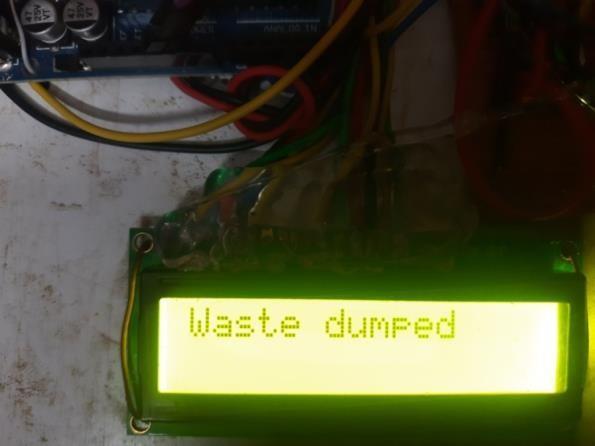
Theprocessstartswithstartingandbeginningthe system. After initialization, the device tests to look if rubbish has been detected inside the enter bin. When rubbish is detected, the system continues to analyze the garbagewithsensors.Metaldetectorssuggestthepresence of metallic substances, whilst damp detectors discover water or faeces in rubbish. Based on regarded characteristics,thesystemtriggersthecorrespondingservo motortorotatethebintothepreciseserieschamber.For example,whilstmetalisdetected,theservomotorswitches the bin to the metallic waste series chamber. Similarly, if water leakage is detected, the luggage is diverted to the moistwasteserieschamber.Ifnospecificsareknown,the systemtransfersthewastetoadrywasteserieschamber.
Throughoutthetechnique,thegadgetcontinuously monitors the quantity of waste within the collection chambers.Whenacompartmentisfilled,thegadgetsendsa recordsalerttotheapplicableauthorityandsuspendsthe separation manner till the crammed compartment is emptied. In addition, if no waste is detectedin shipment input, the gadget resumes the manner, making sure continuedoperation.
Overall, the operating ideas of our venture encompass automatic detection of waste types, accurate separationwithservomotors,andefficientcontrolofwaste seriesunitstopermitrecoveryandeffortmaybereusedin wastecontrol.
International Research Journal of Engineering and Technology (IRJET) e-ISSN: 2395-0056
Volume: 11 Issue: 06 | Jun 2024 www.irjet.net p-ISSN: 2395-0072
3. CONCLUSION
Theproposedmethodisanefficientsolutiontothecurrent waste management problem which effectively segregates metal, dry and wet waste. This system can be effectively deployedinindustrialmaterialsegregation,scrapshopsetc. TheIOTbasedSmartDustbineffectivelyemploysmoisture sensorstosegregate.Ourproposedworkaimsatsegregation ofwastematerialsinparticularmetal,wetanddrywaste.Itis thefirststeptowardsrecycling.Recyclingthewastematerials hasahugeimpactontheeconomicconditionofthecountry since recycling of plastic can reduce themanufacture of plasticusingrenewableresourcesanditalsohasanimmense effectontheenvironmentbyeffectivelymanagingthesolid waste
FUTURE SCOPE
There is always room for improvement in any project,butthemosturgentproblemwithwasteseparation is probably when it comes to simultaneous disposal. The waste segregator can be modified to safely separate biomedical waste produced at home, separate paper and plastic,andhaveasmall,aestheticallypleasingmechanical design.
REFERENCES
[1] Kadus, T. (n.d.). Smart Waste Management System using IOT. International Journal of Engineering Research&Technology(IJERT).
[2] 20175thInternationalConferenceonInstrumentation, Control,andAutomation(ICA)Yogyakarta,Indonesia, August9-11
[3] IOTBasedSmartGarbagealertsystemusingArduino UNO Date and journal: 2016 IEEE Region 10
Conference (TENCON) Author: Dr.N.SATHISH Kumar(S.R.M.,Coimbatore,INDIA)
[4] SolidwastemanagementbaseduponIoTorSmartcity DateandJournal:ICICCS2017Author:KrishnaNirde, PrashantS.Mulay,UttamM.Chaskar(C.O.E.Pune).