
International Research Journal of Engineering and Technology (IRJET) e-ISSN: 2395-0056
Volume: 11 Issue: 06 | Jun 2024 www.irjet.net p-ISSN: 2395-0072

International Research Journal of Engineering and Technology (IRJET) e-ISSN: 2395-0056
Volume: 11 Issue: 06 | Jun 2024 www.irjet.net p-ISSN: 2395-0072
Arvind Kumar1, Mr. K. S. Ramaiah2, Mr. Yogeshwar Sahu3
1Research Scholar, M. Tech. (Structural Engg.)
2Assistant Professor, Department of Civil Engineering,
3Assistant Professor, Department of Civil Engineering, Jhada Sirha Government Engineering College, Jagdalpur Chhattisgarh India.
Abstract - Concrete that self-compacts (SCC) fill almost entirely while flowing through the formwork because of its inherent weight. It also completely fills in all gaps and voids in structural members with a high proportion of reinforcement. Investigating the new and toughened properties of steel fiber SCC is the aim of the research that is being presented. The findings showed that the compressive and tensile strengths of self-compacting concrete were impacted by the novel qualities of SCC with steel fiber. There was an ideal steel fiber content of 1.5-2.0%, at which better performance was attained for the two aforementioned features. In comparison to the plain mix, all fiber mixtures showed greater flexural, splitting, and tensile strengths at all curing ages. As the fiber content rose, the strength also rose.
Key Words: Conventional concrete, Self-compacting concrete, mineral additives, steel fiber, Compressive TensileandFlexuralstrength,Corrosion.
1.INTRODUCTION:
Self-compacting concrete (SCC) is a kind of concrete that mayprovidegoodcompactionwithouttheneedforoutside vibrationbyflowingunderitsownweight.Moreover,SCC's cohesivequalitiesprovideitwithgoodresistancetobleeding and segregation. Steel fibre have been used in traditional concrete in place of bar reinforcement to reduce fracture width,boosttensileandflexuralstrength,andenhancepostcracking behaviour. Improved crack growth resistance, increased surface roughness of individual fractures, and a higher probability of crack branching and multiple crack formationarealleffectsofsteelfibrereinforcingontheway cracksdevelopinconcrete.
Fiber Requirement in SCC:
To improve post-cracking behavior, reduce crack width, boost tensile and flexural strength, and substitute bar reinforcementintraditionalconcrete,steelfibershavebeen used.Concretecrackformationcanbeaffectedbysteelfiber reinforcing, which can lead to enhanced resistance to fracturegrowth,roughersurfacesforindividualcracks,and ahigherchanceofmultiplecracksdevelopingandbranching out.
Corrosion is eliminated by the invention of selfcompactingconcretewithmineraladditives.
Toinvestigatehowsteelfiberaffectstheconcrete's strength characteristics and examine the compressive,tensile,andflexural strengths ofthe concrete and draw conclusions about how strong conventional and self-compacting concrete are in theseareas.
[Aslani and Samali 2014] performedexperiments onSCC withsteel,polypropylene (PP)andhybrid fibres. They found that average compressive strengthofhybridFRSCCwasmorethanSCCwith steel and PP fibres. Average modulus of rupture (MOR) for SCC reinforced with steel fibres was found to be more than that of SCC with PP and hybridfibres.Thealsoconcludedthatcompressive strength and MOR properties of FRSCC are decreasedwithtime.
[Krishna Rao, et al, 2010] studied the technical challenges related to the unevenly distribution of steel fibres in the SSC. Commonly placed in the course of concrete stream, due to this form the strengthofconcreteimprovesconsiderablyandby useoffibreanditsshort-termarrangementcould enhancethestrengthofthebeamdependingonthe path of concrete movement. However, the performanceisreducedcomparedtothestandard and that is why large plasticizers are needed in largequantities.
[El-Dieb, et al, 2008] researchedtheinstallationof Fibersanditsadvantagesthroughitsadditioninthe SCC,Fibersbridgespreventandpromoteitsspread inside the concrete and ultimately increase the strengthandstrengthofconcreteflexibility.Tests demonstrate that it is feasible to retain SCC properties whilst employing fibre reinforcement. Thehighfibrematterthatcanbeapplied without
International Research Journal of Engineering and Technology (IRJET) e-ISSN: 2395-0056
Volume: 11 Issue: 06 | Jun 2024 www.irjet.net p-ISSN: 2395-0072
altering the concrete flow was revealed in their experiments,andthekindoffibrecansignificantly affecttheadhesiveandmudvolume.Conventional OPChasbeenusedinstandardsilicafiretestsand sand is used as silk sand. Several tests were performed in the process and apparently studied theimpactandpercentoffibrewithoutaffectingthe SCCstructuresandvarioustypesoffibres.
[Donom, et al, 2006] analysedresearchcasesand future work, studies in the area of composite concrete. As technology advances the SCC now undergoesamixtureoffibres,smallreinforcement ofcementalongwithsilk,lime,andsubstitutespart ofagoodcombinationofflyash,dust,marbledust toreplacepartoftheexcessmetal.Evenfibreshave a variety of differences in size affect the physical, mechanicalandchemicalpropertiesandthesizeof the wires containing the SCC compound will be investigated
4.1 Cement: In this experiment, OPC-53 grade cement whichhasaspecificgravityof3.16andacementfinenessof 5.7% wasutilized.
4.2 Coarse Aggregate: The aggregate was employed in a uniform grade with a nominal size of 20 mm. Its specific gravityis2.61anditswaterabsorptionis1.1%.
4.3 Fine Aggregate: ZoneIInaturalsand'sspecificgravityis 2.45, its water absorption is 1.16%, and its fine aggregate nominalsizeis4.75mm.
4.4 Water & Plasticizer: Concrete was mixed and cured using drinking water, and the super-plasticizing additive SUNNDApolytancreteNGTwasutilizedtocreateSCC.
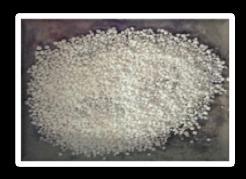
4.5 Mineral Admixture (Calcium Nitrate): Thissubstance wasusedtostrengthenthesteelfiber'sabilitytowithstand corrosioninpowderedform.Thespecificgravityis1.87.
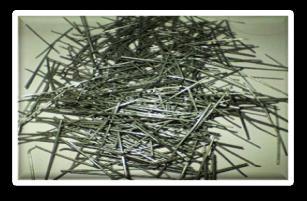
4.6: Fibers: Steelfiberwithstraightendsandacylindrical shapewasemployedinthisproject.Thesteelfiberhadthe following properties: length 30mm diameter 0.25mm, specificgravity7.81,tensilestrength900MPa.Astestedby ASTMA820M-11,itpassed.
5. MIX DESIGN FOR CONCRETE:
As Indian standard recommended method for concrete basedon{IS10262-2019}.
(A) Steps for mixed design for concrete:
1.GradeofConcrete=M40
2.Typeofcement=OPC-53
3.Sizeofaggregate=20mmnominalsize
3.Degreeofsitecontrol=Good
4.Exposure-condition=Extreme
5.Workability=75mm
6.Methodofconcreteplacing=manualmixing
7.Minimumcementcontent=360kg/m3
(B) Test result for material:
1.Specificgravityofcement=3.16
2.Specificgravityofcoarse-aggregate=2.61
3.Specificgravityoffine-aggregate=2.45
4.Waterabsorptionofcoarse-aggregate=1.1
5.Waterabsorptionforfine-aggregate=1.16
6. Zoneofsand=II
7.Typeofaggregate=uniformly-graded-aggregate.
(C) Target mean strength = 48.25 N/mm2
(D) Selection of water-cement ratio = 0.50
(E) Selection of water content = 212.11 kg/m3
(F) Cement content =363.383 kg/m3
(G) Coarse aggregate (per m3) = 1186.157 kg
(H) Fine aggregate (per m3) = 625.93 kg
5.1 Tests on concrete:
Workability test: Theslumptestmethodisforfiguringout howconsistentfreshconcreteis.Thehorizontalfreeflowof self-compacting concrete in the absence of obstacles is evaluatedusingatest.Slumpwasdetermined asthebasis for the test procedure that affects workability.
C:S:A::1:65:3.13isthemixratioforconventionalconcrete, and C:S:A::1:1.72:3.26 is the mix ratio for self-compacted concrete.
International Research Journal of Engineering and Technology (IRJET) e-ISSN: 2395-0056
Volume: 11 Issue: 06 | Jun 2024 www.irjet.net p-ISSN: 2395-0072
Table-1 SlumpValuesofConventionalConcrete.
S.
02 0.40 78 03 0.40 82
Table-2 SlumpValuesofSelf-compactingConcrete.
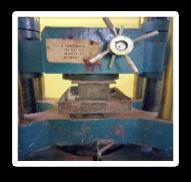
Fig-4: Compressive strength test in UTM
TABLE-3:CompressiveStrengthresultsofConcrete:
0.50 83
02 0.50 80 03 0.50 85
Chemical and mineral admixture inclusion improves workability.
6. RESULT AND DISCUSSION:
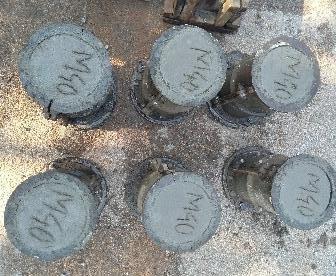
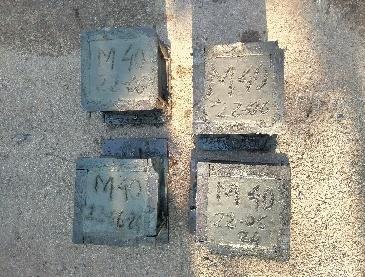
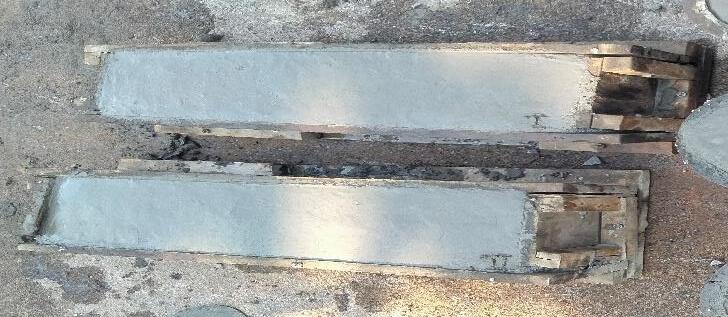
ThespecimenswerecastinaccordancewithIS10086-1982. Thecube,cylinder,andbeamsampleswerecuredinawater pondforaperiodof28days.Atsevenandtwenty-eightdays, the strength metrics of self-compacted concrete were comparedtothoseofconventionallycuredconcrete



6.1 TEST OF SPECIMEN:
Compressive Strength test: A 150 × 150 × 150 mm concrete cube was cast, and it was tested for seven and twenty-eight days. Compressive Strength is equal to P/��, whereAisthecross-sectionalarea(150×150x150mm) andPistheappliedload.
Chart-1: Compressivestrengthforconventionalconcrete after7,and28-daysvsself-compactingconcrete.
Split tensile strength test: utilizing 300mm-high and 150mm-diametercylinders.In7and28days,thecylinder wastestedafteritwascast.Splittensilestrengthisequalto
International Research Journal of Engineering and Technology (IRJET) e-ISSN: 2395-0056
Volume: 11 Issue: 06 | Jun 2024 www.irjet.net
2P/πDL,wherePstandsfor load,Dforcylinderdiameter, andLforcylinderlength.
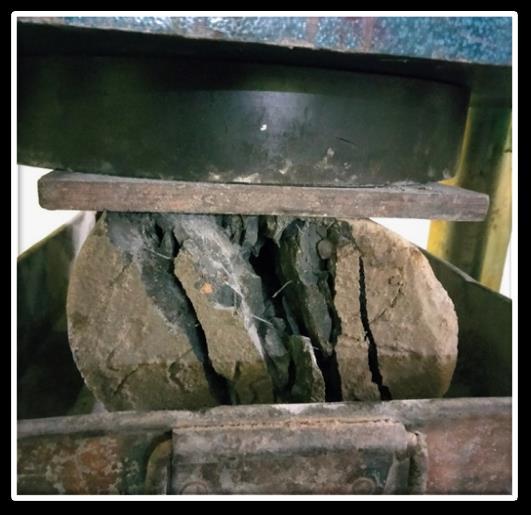
TABLE-4: TensileStrengthresultsofConcrete:
Chart-2: Tensilestrengthofconventionalconcreteafter7 and28-daysvsSelfcompactingconcrete.
Flexural Strength test: A universal testing equipment applies a 2000 KN force to a 150 x 150 x 700 mm beam specimen to generate pure bending. Recorded is the maximum applied load on the specimen. At 7, 14, and 28 days, we noticed that the concrete mix's strength had increased.fstrengthisequaltoWL/bd
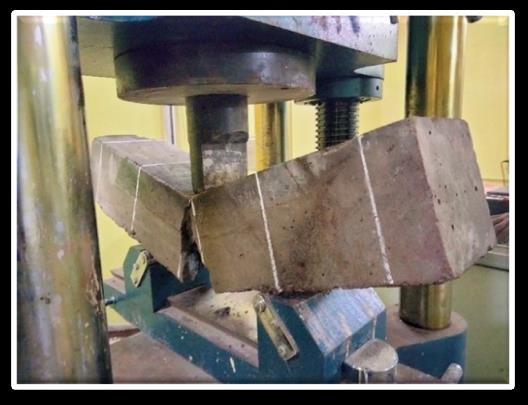
Table-5:FlexuralStrengthresultsofConcrete.
International Research Journal of Engineering and Technology (IRJET) e-ISSN: 2395-0056
Volume: 11 Issue: 06 | Jun 2024 www.irjet.net p-ISSN: 2395-0072
7. B. Krishna Rao and Professor V. Ravindra “Steel fibre reinforced self-compacting concrete incorporatedclassflyash”.
8. S.Dey1·V.V.PraveenKumar1·K.R.Goud1·S.K.J. Basha1 State of art review on self-compacting concreteusingmineraladmixtures
Chart-3: flexuralstrengthOFConventionalconcreteafter7 and28-daysvsSelfcompactingconcrete.
7. CONCLUSION:
1. DeflectioncapacityandflexuralstrengthofSCCare bothenhancedbytheinclusionofsteelfibre.
2. Mineral admixtures are quite beneficial when utilizing SCC for cement in practical modern concreteconstruction.
3. Similarly, split tensile and flexural strengths have significantly increased, and steel fibers help to explainthisincreaseinstrengths.
8. SCOPE OF RESEARCH:
Find the optimum used of steel fibre and Mineral admixture.
9. REFERANCES:
1. Abdullah Alshahrani, Sivakumar Kulasegaram, Abhishek Kundu” Elastic modulus of selfcompactingfibrereinforcedconcrete:Experimental approachandmulti-scalesimulation.
2. American concrete institute, ACI International symposium:fibrereinforcedconcrete,Detroit:ACI, 1985.(ACIUSCM-10).
3. Indian Standard code456:2000 of practice for general structural use of plain and reinforced concrete.
4. IS383:1970Codeforfineandcoarseaggregatefor Concrete.
5. ConcreteTechnology:TheoryandPracticebyM.S. Shetty and Concrete Technology: Theory and PracticebyM.LGambhir.
6. IS 10262:20019 Recommended Guidelines for ConcreteMixDesignBureauofIndianstandardNew Delhi.