
International Research Journal of Engineering and Technology (IRJET) e-ISSN:2395-0056
Volume: 11 Issue: 06 | Jun 2024 www.irjet.net p-ISSN:2395-0072

International Research Journal of Engineering and Technology (IRJET) e-ISSN:2395-0056
Volume: 11 Issue: 06 | Jun 2024 www.irjet.net p-ISSN:2395-0072
Swatantra Prakash Verma1, Dipti Ranjan Tiwari2
1Master of Technology, Computer Science and Engineering, Lucknow Institute of Technology, Lucknow, India
2Assistant Professor, Department of Computer Science and Engineering, Lucknow Institute of Technology, Lucknow, India
Abstract - Over the past few years, there has been a significant increase in the adoption of non-relational databases,leadingtoexponentialgrowthintheirusage.These databases, collectively known as NoSQL databases, do not adhere to the traditional relational database model and are characterizedbyqualitiessuchasflexibilityinschemadesign, scalability, high performance, and more. Businesses are recognizing the advantages of NoSQL databases and are considering transitioning to these systems. However, the migration process can be complex and requires careful planning and research due to the unique characteristics and query languages associated with each type of database. To address this challenge, we have developed an innovative automatedmigrationstrategythatleveragesservice-oriented architecture principles to facilitate a seamless transition to NoSQL databases. By utilizing web services that encapsulate popular NoSQL databases like MongoDB, Neo4j, and Cassandra, we are able to abstract the complexities of these systemsandenableefficientdatatransferwithouttheneedfor extensive prior knowledge. This approach has been successfully demonstrated by migrating relational data from Apache Derby to various NoSQL databases, including MongoDB, Cassandra, Neo4j, and DynamoDB, each representing a distinct type of NoSQL database. Our automatedmigrationstrategyoffersbusinessesastreamlined and efficient solution for transitioning to NoSQL databases, showcasing the potential of service-oriented architecture in simplifying complex data migration processes. With our approach,businessescanovercomethechallengesassociated withmovingdatatoNoSQLdatabasesandunlockthebenefits of these innovative systems.
Key Words: Service-Oriented Architecture (SOA), NoSQL databases, data integration, automated data transfer, interoperability, modularity, flexibility, reusability, architecturalpatterns.
Over the past ten years, there has been a surge in the developmentandimplementationofcutting-edgedatabase management systems across various industries and scenarios.Thesesystemsofferawiderangeoffunctionalities and capabilities to meet the demands of modern data
processingneeds.WiththeriseofWeb2.0,majorcompanies such as Google, Amazon, Facebook, and Twitter have recognizedthelimitationsoftraditionalrelationaldatabases inhandlingtheincreasingvolumeandspeedofinformation duetotheirrigidstructures.Thisrealizationhasledtothe growingpopularityofNoSQLdatabasesastheyoffermore flexibilityandscalabilitytomanagetheever-evolvingdata landscape.Thechallengesfacedbyrelationaldatabasesin keepingpacewiththesheeramountandspeedofdatahave become more apparent in recent years, prompting organizations to explore alternative solutions like NoSQL. This shift in database technology has been driven by the needtoeffectivelycaptureandprocessvastamountsofdata from sources like logs and social media platforms. Such examples highlight the growing importance of adapting databasesystemstomeettheevolvingdemandsoftoday's data-drivenworld.
NoSQLdatabasesareatypeofdatabasemanagementsystem thatarespecificallydesignedtohandlelargeamountsofdata that can be unstructured, semi-structured, or structured. Thesedatabasesofferalevelofflexibilityandscalabilitythat goes beyond what traditional relational databases can provide. There are several primary types of NoSQL databases,eachwiththeirownuniquecharacteristicsand usecases.Thesetypesincludedocumentstores,key-value stores,wide-columnstores,andgraphdatabases.Eachtype is optimized for specific types of data and can offer advantages in terms of performance and scalability dependingontherequirementsoftheapplication.Overall, NoSQL databases have become increasingly popular in recent years due to their ability to efficiently manage and process large volumes of data in a flexible and scalable manner.
Databasesareessentialtoolsforstoringandmanagingdata efficiently. One common way to store data is through document-baseddatabases,whichstoredataintheformof documents.Thesedocumentsareusuallyinformatssuchas JSON,BSON,orXML,andtheyconsistofkey-valuepairsthat
International Research Journal of Engineering and Technology (IRJET) e-ISSN:2395-0056
Volume: 11 Issue: 06 | Jun 2024 www.irjet.net p-ISSN:2395-0072
make it easy to retrieve and modify data. Examples of document-baseddatabasesincludeMongoDBandCouchDB. Byutilizingthesedatabases,organizationscanorganizeand accesstheirdatainaflexibleandefficientmanner,allowing forseamlessdatamanagementandretrievalprocesses.
This particular database falls under the category of basic NoSQLdatabases,wheredataisstoredintheformofkeyvaluepairs.Thesedatabasesexhibithighperformanceand arewell-suitedforapplicationssuchascachingandsession management.PopularexamplesincludeRedisandAmazon DynamoDB.
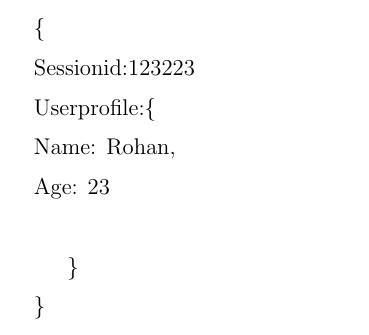
Figure-1: Example of the Key-Value Stores
Dataistypicallyorganizedandstoredincolumnsinsteadof rowsincolumnardatabases.Thisstructureallowsformore efficientreadandwriteoperations,especiallywhendealing withlargedatasets.Columnardatabasesarewell-suitedfor analytical applications and are particularly useful for managing time-series data. Some popular examples of columnardatabasesincludeApacheCassandraandHBase.
Graphdatabasesareatypeofdatabasethatarespecifically designed to represent and store complex relationships between data points. They utilize nodes, edges, and properties to organize and connect data in a way that is optimal for handling intricate relationships. This makes themparticularlywell-suitedforapplicationssuchassocial networks, fraud detection, and recommendation systems wheretheconnectionsbetweendatapointsarecrucialfor analysis and decision-making. Some common examples of graphdatabasesincludeNeo4jandAmazonNeptune.These databasesofferauniquewaytostructureandaccessdata, allowingformoreefficientandeffectivedatamanagementin scenarioswhererelationshipsplayakeyroleintheoverall analysis.
Object-orienteddatabases,suchasdb4oandObjectDB,are designedtostoredataintheformofobjects.Thismeansthat thestructureandrelationshipsofthedataarerepresentedin awaythatmirrorsobject-orientedprogrammingprinciples. Thesedatabasesareparticularlywell-suitedforapplications that need to manage complex data structures and relationships. By utilizing object-oriented databases, developers can easily work with data in a way that aligns withtheirprogramminglogic,leadingtomoreefficientand effective data management. Overall, object-oriented databases offer a powerful solution for handling intricate data representations and relationships in various applications.
Capable of supporting multiple data models such as document, graph, and key-value within a single database system,thesedatabasesprovidetheflexibilitytochoosethe most appropriate data model for different types of data. Some common examples of such databases include ArangoDB and OrientDB. This feature allows users to efficientlystoreandmanagevarioustypesofdatainaway thatbestsuitstheirneedsandrequirements.Byofferingthis versatility, these databases enable users to optimize their data storage and retrieval processes, leading to improved overallperformanceandeffectivenessinhandlingdifferent typesofdata.
Theconceptofprioritizingexceptionalcustomerserviceis notnew.Ithasbeenalong-standingpracticethatinvolves strategies such as "divide and conquer" and "code reuse." Theseapproachesworktogethertowardsthecommongoal ofprovidingoutstandingservicetocustomers.Applications built on a Service-Oriented Architecture (SOA) may be perceivedasacollectionofservicesduetotheirfoundation onanSOA.
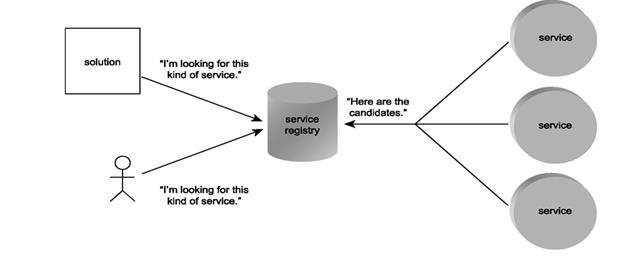
Figure-2: Service registry for candidate services.
International Research Journal of Engineering and Technology (IRJET) e-ISSN:2395-0056
Volume: 11 Issue: 06 | Jun 2024 www.irjet.net p-ISSN:2395-0072
Aftercarefulconsideration,itwasdeterminedthatinorder tosuccessfullycreatethemigrationmodel,themosteffective approach would be to utilize the architectural framework knownasServiceOrientedArchitecture(SOA).Thisdecision wasmadewiththeintentionofensuringthattheobjectiveis achievedasplanned.Astheplanisputintomotion,awide arrayofserviceoptionswillbeselectedfromadiversepool ofavailablechoicesforimplementation,therebyincreasing thelikelihoodofsuccessinachievingthedesiredoutcome. ByadoptingtheSOAconstructionstyle,theprojectispoised toprogresssmoothlyandefficientlytowardsitsgoal.
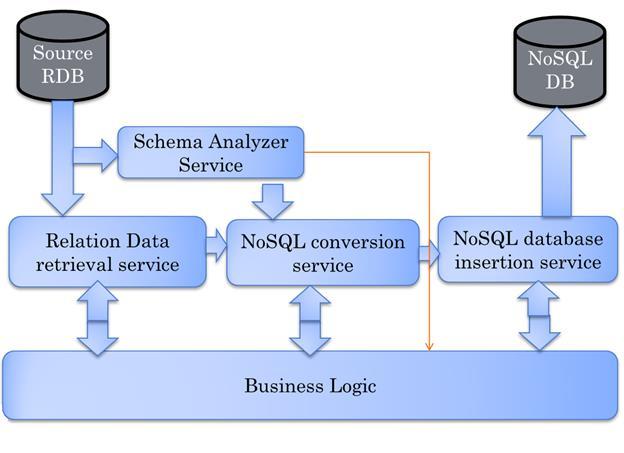
These specific details can be acquired by extracting them directly from the selected tables. An illustration of such a serviceisacomprehensiveoneliketheNoSQLconversion service. Another instance is a web service that offers this typeofservice.Anexampledemonstratingtheprovisionof thisserviceisthroughanotherwebservice.Anindicationof such a service is evident in how efficiently it has been executed. This service comprises numerous components, withthekeyonesbeingtheinsertionservicesforMongoDB, Cassandra,Neo4j,andAmazonDynamoDB.Itconsistsofa multitudeofdistinctelementsthatareseamlesslyintegrated intoaunifiedentity.Herearesomeadditionalexamplesof servicesfallingunderthiscategory:Onecrucialdecisionto be made in the process is whether to opt for the NoSQL databaseconversionserviceortheNoSQLdatabaseinsertion service.
We have recently created a new system that serves as a proof of concept. This system is designed to extract data from a relational database called Apache Derby and then transfer it to various data stores such as MongoDB, Cassandra,AmazonDynamoDB,orNeo4j,dependingonthe user's preference. The main purpose of this system is to showcase how data can be seamlessly migrated from a relationaldatabaselikeApacheDerbytootherdatastores.
TheApacheDerbydatabaseplaysacrucialroleinproviding the necessary information for this system to function effectively. The information required by the system is retrievedfromApacheDerby,whichservesastheprimary sourceofdata.Ourmaingoalindevelopingthissystemwas todemonstrateitsefficiencyandeffectivenessonceitwas fullyoperational.Throughthisproject,weaimtohighlight theseamlesstransitionofdatafromarelationaldatabaseto various data stores, showcasing the versatility and adaptabilityofoursysteminhandlingdifferenttypesofdata sources.
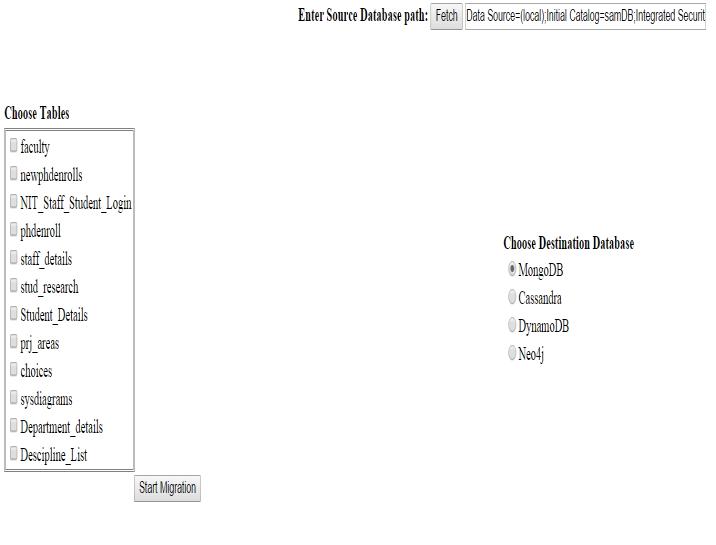
Figure-4: GUI of the migration model implementation
In conclusion, the integration of Service-Oriented Architecture (SOA) principles with NoSQL database frameworks presents a promising opportunity for automating data transfer processes. Our analysis has exploredthevariouschallengesandadvantagesassociated with this integration, highlighting the benefits in terms of scalability,flexibility,andefficiency.ByincorporatingSOA principles like decoupling, abstraction, and reusability, organizations can simplify data transfer across different systems,enhancingtheinteroperabilityandagilityoftheirIT infrastructure. Furthermore, the use of NoSQL databases enables the management of diverse data types and structures, meeting the evolving needs of modern applications. However, it is important to acknowledge the complexities that come with merging SOA and NoSQL databases, including issues related to data consistency, security, and governance. Successfully addressing these challenges requires careful planning, robust architecture design, and ongoing maintenance to ensure the reliability andcoherenceoftheinterconnectedsystem.
1. Abdelhedi, F., Brahim, A. A., Atigui, F., & Zurfluh, G. (2017). UMLtoNoSQL: Automatic Transformation of Conceptual Schema to NoSQL Databases.
International Research Journal of Engineering and Technology (IRJET) e-ISSN:2395-0056
Volume: 11 Issue: 06 | Jun 2024 www.irjet.net p-ISSN:2395-0072
https://ieeexplore.ieee.org/xpl/conhome/8308223/pr oceeding.https://doi.org/10.1109/aiccsa.2017.76
2. Aftab, Z., Iqbal, W., Almustafa, K. M., Bukhari, F., & Abdullah, M. (2020). Automatic NoSQL to Relational Database Transformation with Dynamic Schema Mapping. Scientific Programming, 2020, 1–13. https://doi.org/10.1155/2020/8813350
3. Brahim, A., Ferhat, R., & Zurfluh, G. (2019). Model drivenextractionofNoSQLdatabasesschema:Caseof MongoDB.
https://www.scitepress.org/ProceedingsDetails.aspx?I D=T4KTibRgTuo=&t=1. https://doi.org/10.5220/0008176201450154
4. Hillenbrand, A., Störl, U., Nabiyev, S., & Klettke, M. (2021).Self-adaptingdatamigrationinthecontextof schemaevolutioninNoSQLdatabases.Distributedand Parallel Databases, 40(1), 5–25. https://doi.org/10.1007/s10619-021-07334-1
5. Imam, A. A., Basri, S. B., Ahmad, R., Watada, J., & González-Aparicio, M. T. (2018). Automatic schema suggestion model for NoSQL document-stores databases. Journal of Big Data, 5(1). https://doi.org/10.1186/s40537-018-0156-1
6. Kaspar, M., Fette, G., Hanke, M., Ertl, M., Puppe, F., & Störk,S.(2022).Automatedprovisionofclinicalroutine data for a complex clinical follow-up study: A data warehousesolution.HealthInformaticsJournal,28(1), 146045822110580. https://doi.org/10.1177/14604582211058081
7. Khan,W.,Kumar,T.,Zhang,C.,Raj,K.,Roy,A.M.,&Luo, B. (2023). SQL and NoSQL Database Software ArchitecturePerformanceAnalysisandAssessments ASystematicLiteratureReview.BigDataandCognitive Computing, 7(2), 97. https://doi.org/10.3390/bdcc7020097
8. Li,C.,&Gu,J.(2018).Anintegrationapproachofhybrid databases based on SQL in cloud computing environment. Software, Practice & Experience/Software,PracticeandExperience,49(3), 401–422.https://doi.org/10.1002/spe.2666
9. Mahmood,A.A.(2018).AutomatedAlgorithmforData Migration from Relational to NoSQL Databases. Mağallaẗal-NahraynLi-l-ʿulūmAl-handasiyyaẗ,21(1), 60.https://doi.org/10.29194/njes21010060
10. Martínez-Fernández, S., Jovanovic, P., Franch, X., & Jedlitschka, A. (2018). Towards Automated Data IntegrationinSoftwareAnalytics.TowardsAutomated Data Integration in Software Analytics. https://doi.org/10.1145/3242153.3242159
11. Mehmood, N. Q., Culmone, R., & Mostarda, L. (2017). ModelingtemporalaspectsofsensordataforMongoDB NoSQL database. Journal of Big Data, 4(1). https://doi.org/10.1186/s40537-017-0068-5
12. Parciak,M.,Suhr,M.,Schmidt,C.,Bönisch,C.,Löhnhardt, B., Kesztyüs, D., & Kesztyüs, T. (2023). FAIRness through automation: development of an automated medicaldataintegrationinfrastructureforFAIRhealth data in a maximum care university hospital. BMC Medical Informatics and Decision Making, 23(1). https://doi.org/10.1186/s12911-023-02195-3
13. Preuveneers, D., & Joosen, W. (2020). Automated configuration of NoSQL performance and Scalability Tactics for Data-Intensive Applications. Informatics, 7(3),29.https://doi.org/10.3390/informatics7030029
14. Rogage, K., & Greenwood, D. (2020). Data transfer between digital models of built assets and their operation & maintenance systems. Journal of InformationTechnologyinConstruction,25,469–481. https://doi.org/10.36680/j.itcon.2020.027
15. Sreejith, R., & Senthil, S. (2022). Dynamic data infrastructuresecurityforinteroperablee-Healthcare systems:aSemanticFeature-DrivenNOSQLIntrusion Attack Detection Model. BioMed Research International, 2022, 1–26. https://doi.org/10.1155/2022/4080199
16. Valduriez, P., Jimenez-Peris, R., & Özsu, M. T. (2021). DistributedDatabaseSystems:thecaseforNewSQL.In Lecture notes in computer science (pp. 1–15). https://doi.org/10.1007/978-3-662-63519-3_1
17. Fatma, Abdelhedi., Amal, Ait, Brahim., Faten, Atigui., Gilles,Zurfluh.(2018).TowardsAutomaticGeneration ofNoSQLDocument-OrientedModels. 47-53.
18. Ronald,Gualán.,Renán,Freire.,Andrés,Tello.,Mauricio, Espinoza., Victor, Saquicela. (2016). Automatic RDFizationofbigdatasemi-structureddatasets. 7:117-127.