
International Research Journal of Engineering and Technology (IRJET) e-ISSN:2395-0056
Volume: 11 Issue: 06 | Jun 2024 www.irjet.net p-ISSN:2395-0072

International Research Journal of Engineering and Technology (IRJET) e-ISSN:2395-0056
Volume: 11 Issue: 06 | Jun 2024 www.irjet.net p-ISSN:2395-0072
Ankit Singh1, Dipti Ranjan Tiwari2
1Master of Technology, Computer Science and Engineering, Lucknow Institute of Technology, Lucknow, India 2Assistant Professor, Department of Computer Science and Engineering, Lucknow Institute of Technology, Lucknow, India
Abstract - Therapidadvancementofartificialintelligence (AI) has led to a significant transformation across various industries, with a particular focus on the realm of programminglanguages.Thisin-depthresearchthoroughly investigates the complex interplay between AI and the evolution of coding languages, shedding light on the profound impact that AI technologies have had on the development, design principles, and capabilities of programming languages in recent years. Through an examinationofnotableexamplesanddetailedcasestudies, this study highlights the specific ways in which AI has spurred innovation in the syntax, semantics, and overall landscapeofprogramminglanguages.Theresearchdelves into the implications of these transformations for developers, industry stakeholders, and the wider technological ecosystem. By analyzing these changes, the study offers a comprehensive exploration of how AI is shaping the future trajectory of coding languages. It also provides valuable insights into potential trends and challengesthatmayemergeinthefuture,offeringaglimpse intotheevolvinglandscapeofprogramminglanguagesinthe ageofartificialintelligence.
Key Words: ArtificialIntelligence(AI),Codinglanguages, Evolution,Programmingparadigms,Syntax,Semantics.
1.EVOLUTION OF PROGRAMMING
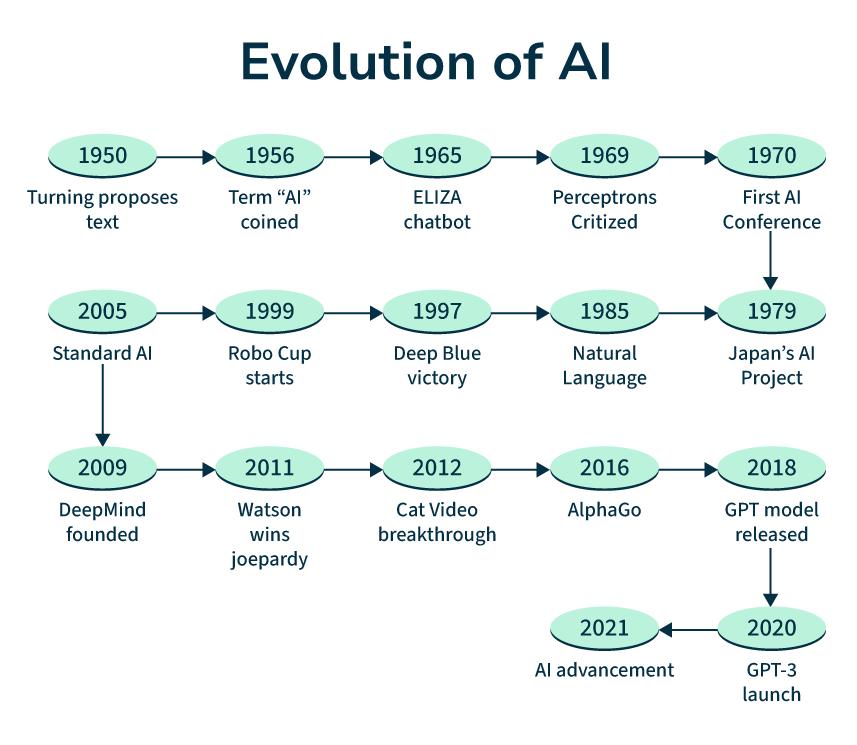
In the early days of computing, programming languages began with machine code, which consisted of binary instructions understood directly by the computer's hardware. Each instruction corresponded to specific operations such as arithmetic calculations or data movement.Ascomputersevolved,assemblylanguageswere developed to make programming more human-readable. Assembly languages used mnemonic codes to represent machinecodeinstructions,makingiteasierforprogrammers towriteandunderstandprograms.Thenextsignificantleap came with the development of high-level programming languagesinthemid-20thcentury.Theselanguages,suchas Fortran, COBOL, and Lisp, introduced abstraction from hardware-specific details. Programmers could now write code using English-like syntax and constructs that were closertohumanthoughtprocesses.
High-levellanguagesofferedadvantagessuchasincreased productivity, portability across different computer architectures,andimprovedreadabilityandmaintainability ofcode.Theyallowedprogrammerstofocusmoreonsolving problems rather than managing low-level details of computer hardware. High-level languages continued to evolve and diversify. New languages emerged to address specific needs and paradigms, such as object-oriented programming (e.g., Smalltalk, C++) and functional programming(e.g.,Haskell,Scala).Eachlanguagebroughtits own set of features, syntax, and programming paradigms, cateringtodifferentapplicationdomainsandpreferencesof programmers. Today, the landscape of programming languagesisvastandvaried,rangingfromgeneral-purpose languages like Python, Java, and C# to domain-specific languages tailored for specific tasks such as web development(JavaScript,PHP),dataanalysis(R,MATLAB), and scientific computing (Julia). The evolution of programming languages from machine code to high-level languages reflects a progression towards greater abstraction, productivity, and versatility in software development, driven by advancements in computer hardware and the increasing complexity of modern applications.
International Research Journal of Engineering and Technology (IRJET) e-ISSN:2395-0056
Volume: 11 Issue: 06 | Jun 2024 www.irjet.net p-ISSN:2395-0072
The development of programming languages has seen several key milestones that have shaped the landscape of softwaredevelopment.Fortran,introducedin1957byIBM, revolutionised the field with its ability to handle complex mathematicalcomputationsthroughloopsandsubroutines.
Following this, COBOL, launched in 1959, played a crucial roleinstandardisingprogrammingforbusinessapplications, particularly in sectors like banking. Lisp, dating back to 1958, introduced functional programming and dynamic typing,influencingareassuchasartificialintelligence.The adventofCin1972byDennisRitchiemarkedasignificant advancement, providing low-level memory access and efficiency,pivotalforsystemprogramming.BuildinguponC, C++ emerged in 1985, incorporating object-oriented programmingprincipleslikeclassesandinheritance.Java, introduced in 1995, brought platform independence and bytecode execution, making it ideal for web-based applications.Python,startingin1991,prioritisedreadability and simplicity, becoming prominent in web development, scientific computing, and data analysis. These milestones illustratetheprogressionofprogramminglanguages,each introducing new paradigms and capabilities that have shapedmodernsoftwaredevelopmentpractices.
3.THE INTERSECTION OF ARTIFICIAL
The intersection of artificial intelligence (AI) and coding languagesrepresentsatransformativeevolutioninsoftware development. AI technologies are increasingly integrated intocodingpractices,enhancingefficiency,productivity,and thecapabilitiesofprogrammers.Onenotableareaofimpact is AI-driven code completion and suggestion tools, which streamlinethecodingprocessbypredictingandautomating codesnippetsbasedoncontextandpreviouspatterns.These tools, often powered by machine learning algorithms, not onlyreducedevelopmenttimebutalsoassistdevelopersin writingmoreaccurateandefficientcode.
AI is influencing coding languages themselves, with advancementssuchasprobabilisticprogramminglanguages thatfacilitatethedevelopmentofAImodels.Languageslike Python,knownforitssimplicityandextensivelibraries,have become a preferred choice for AI and machine learning applications due to its flexibility and community support. Beyond development tools, AI is also being applied to improve code quality through automated testing and debugging.AI-basedsystemscananalysecodeforpotential errors,vulnerabilities,orperformancebottlenecks,thereby enhancingsoftwarereliabilityandsecurity.

TheintegrationofAIintocodinglanguagesisnot without challenges,however.IssuessuchasbiasinAIalgorithms,the needforspecialisedskillsinAI-enhancedprogramming,and ethical considerations regarding data privacy and transparency are crucial factors that developers and policymakersmustaddress.ThecontinuedfusionofAIand coding languages promises further innovations and efficiencies in software development. As AI technologies advance, programming languages are likely to evolve to accommodatenewAI-drivenparadigms,shapingthefuture landscapeofcodingandsoftwareengineering.
Theimpactofartificialintelligence(AI)ontheevolutionof codinglanguageshasbeenprofound,usheringinsignificant advancementsandchangesacrossvariousfacetsofsoftware development. One major impact lies in AI-enhanced tools and frameworks that augment the capabilities of programmers. AI-powered code completion, for instance, uses machine learning algorithms to predict and suggest codesnippets,therebyacceleratingthecodingprocessand improvingaccuracy.Thisnotonlyreducesdevelopmenttime butalsoenhancesproductivitybyautomatingroutinetasks. AIhasspurredthedevelopmentofspecialisedprogramming languages tailored for machine learning and data science. LanguageslikePythonhaveseenwidespreadadoptiondue totheirrobustlibrariesforAItasks,suchasTensorFlowand PyTorch, which simplify complex operations like neural networkimplementationsanddatamanipulation.
AI'sinfluenceextendsbeyondtoolingandlibrariestoinclude the integration of AI techniques directly into coding languages. Concepts such as probabilistic programming, used for modelling uncertainty in AI systems, are increasinglybeingintegratedintoprogramminglanguagesto facilitate the development of AI models with greater ease andefficiency.AI-drivenadvancementsinsoftwaretesting
International Research Journal of Engineering and Technology (IRJET) e-ISSN:2395-0056
Volume: 11 Issue: 06 | Jun 2024 www.irjet.net p-ISSN:2395-0072
and debugging are transforming how developers ensure codequalityandreliability.AIalgorithmscananalysecode for bugs, vulnerabilities, and performance issues more comprehensively than traditional methods, thereby improvingsoftwarerobustnessandsecurity.
The evolution of coding languages with AI also brings challenges. Developers must navigate issues such as algorithmic bias, the need for specialised skills in AI programming,andethicalconsiderationssurroundingAI's useincodingpractices.Thesymbioticrelationshipbetween AIandcodinglanguagesis poisedtocontinueshapingthe futureofsoftwaredevelopment.AsAItechnologiesadvance, programminglanguageswilllikelyevolvefurthertoharness AI'sfullpotential,drivinginnovationandefficiencyacross thesoftwareengineeringlandscape.
The integration of artificial intelligence (AI) into coding languages presents several challenges and considerations that need careful attention from developers, researchers, and policymakers alike. One significant challenge is the ethical implications of AI-powered coding tools and techniques. Algorithms used for code generation and analysis can inadvertently perpetuate biases present in trainingdata,leadingtounfairordiscriminatoryoutcomes. Addressing these biases requires robust testing, transparencyinalgorithmicdecisions,andongoingeffortsto mitigatebiasthroughdiverseandinclusivedatasets.
Another consideration is the skills gap in AI-enhanced programming.Developersneedspecialisedknowledgeand traininginAIconcepts,suchasmachinelearningandnatural languageprocessing,toeffectivelyutiliseAI-driventoolsand frameworks. Bridging this gap requires comprehensive education programmes and continuous learning opportunitiestailoredtoAIintegrationincodingpractices. The complexity of AI algorithms introduces challenges in debuggingandmaintainingAI-enhancedcodebases.Unlike traditional software, AI models may require frequent updates and fine-tuning to adapt to changing data and performance requirements. Developing robust debugging techniques and tools specific to AI-driven applications is crucialformaintainingsoftwarereliabilityandperformance.
Dataprivacyandsecurityalsoposesignificantconcerns.AI toolsoftenrelyonlargedatasetsfortrainingandinference, raising issues around data confidentiality and compliance withdataprotectionregulations(e.g.,GDPR).Safeguarding sensitiveinformationandensuringethicaldatapracticesare essentialconsiderationsinthedevelopmentanddeployment of AI-powered coding solutions. The rapid pace of AI innovation necessitates careful consideration of its longterm implications for job roles and workforce dynamics. While AI enhancesproductivityand efficiencyinsoftware development, it may also reshape job requirements and demandnewskill setsfromdevelopers.Adaptingtothese
changes requires proactive workforce development strategies and policies that support lifelong learning and careerreskilling.
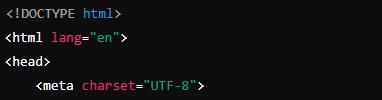
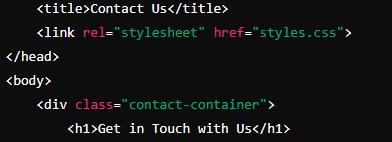
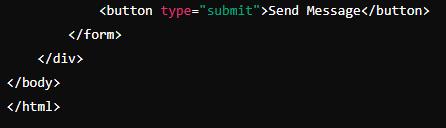
Creatingacontactuspageforawebsiteinvolvesbothdesign andfunctionality.Here'sanexampleusingtraditionalcoding withHTML,CSS,andatouchofJavaScript.Additionally,I'll showhowAI(likeChatGPT)canhelpgeneratecontentand structureforthepage.




International Research Journal of Engineering and Technology (IRJET) e-ISSN:2395-0056
Volume: 11 Issue: 06 | Jun 2024 www.irjet.net p-ISSN:2395-0072
const[message,setMessage]=useState('');
Creating a mobile app involves several steps, including planning,design,development,andtesting. We'lloutlinea basicapproachtobuildingasimplemobileappusingAIfor contentgenerationandtraditionalcodingfordevelopment. Forthisexample,we'llcreateasimple"ContactUs"mobile app using React Native, which allows for building crossplatformappsforbothiOSandAndroid.
importReactfrom'react';
import { NavigationContainer } from '@reactnavigation/native';
import { createStackNavigator } from '@reactnavigation/stack';
importContactScreenfrom'./screens/ContactScreen'; constStack=createStackNavigator(); exportdefaultfunctionApp(){ return( <NavigationContainer> <Stack.NavigatorinitialRouteName="Contact"> <Stack.Screen name="Contact" component={ContactScreen}options={{title:'GetinTouch' }}/> </Stack.Navigator> </NavigationContainer> ); } importReact,{useState}from'react'; import { View, Text, TextInput, Button, StyleSheet, Alert } from'react-native'; exportdefaultfunctionContactScreen(){ const[name,setName]=useState(''); const[email,setEmail]=useState(''); const[subject,setSubject]=useState('');
consthandleSubmit=()=>{ if(name&&email&&subject&&message){ //Here,youwouldtypicallyhandletheformsubmission toyourbackend Alert.alert('Thankyouforreachingout!',"We'llgetback toyousoon.");
//Cleartheform setName(''); setEmail(''); setSubject(''); setMessage(''); }else{ Alert.alert('Error','Pleasefillinallfields.'); } }; return( <Viewstyle={styles.container}> <Text style={styles.intro}>We'd love to hear from you! Whetheryouhaveaquestionaboutourservices,pricing,or anything else, our team is ready to answer all your questions.</Text>
<TextInput style={styles.input} placeholder="Name" value={name} onChangeText={setName} />
<TextInput style={styles.input} placeholder="Email" value={email} onChangeText={setEmail} keyboardType="email-address" />
<TextInput style={styles.input} placeholder="Subject" value={subject} onChangeText={setSubject} />
International Research Journal of Engineering and Technology (IRJET) e-ISSN:2395-0056
Volume: 11 Issue: 06 | Jun 2024 www.irjet.net p-ISSN:2395-0072
<TextInput style={styles.textArea} placeholder="Message" value={message} onChangeText={setMessage} multiline numberOfLines={4} /> <Buttontitle="SendMessage"onPress={handleSubmit} /> </View> ); } conststyles=StyleSheet.create({ container:{ flex:1, padding:20, backgroundColor:'#fff', }, intro:{ fontSize:16, marginBottom:20, }, input:{ height:40, borderColor:'#ccc', borderWidth:1, marginBottom:20, paddingHorizontal:10, }, textArea:{ borderColor:'#ccc', borderWidth:1, paddingHorizontal:10, marginBottom:20, textAlignVertical:'top', }, });
8.CONCLUSION
Inconclusion,theincorporationofArtificialIntelligence(AI) intothecodingprocesshascompletelytransformedtheway
software is developed, leading to a significant increase in efficiencyandproductivity.AI-driventoolshavetheability to automate repetitive tasks, produce flawless code, and offer intelligent suggestions, which allows developers to dedicate more time to creative problem-solving and innovation. TheseAI-poweredtoolscovera widerange of functions, including automated code generation, smart debugging, refactoring, and documentation creation, all of whichstreamlinedifferentstagesofthedevelopmentcycle, resulting in improved code quality, reliability, and ease of maintenance. Furthermore, AI-powered testing and continuousintegrationplayacrucialroleinenhancingtest coverageandCI/CDpipelines,ultimatelyleadingtoquicker and more dependable software deployment. As AI technology continues to progress, it has the potential to greatly revolutionize the software development industry, makingcodingmoreaccessible,efficient,andimpactfulthan everbefore.
1. Jess,Hohenstein.,Dominic,DiFranzo.,René,F.,Kizilcec., Zhila, Aghajari., Hannah, Mieczkowski., Karen, Levy., Mor, Naaman., Jeffrey, T., Hancock., Malte, F., Jung. (2021).Artificialintelligenceincommunicationimpacts language and social relationships.. arXiv: HumanComputerInteraction,
2. Emmanuel, Adetiba., Temitope, M., John., Adekunle, Akinrinmade., Funmilayo, S., Moninuola., Oladipupo, Akintade.,Joke,A.,Badejo.(2021).Evolutionofartificial intelligencelanguages,asystematicliteraturereview.. arXiv:ArtificialIntelligence,
3. Kornack and P. Rakic, “Cell Proliferation without NeurogenesisinAdultPrimateNeocortex,”Science,vol. 294, Dec. 2001, pp. 2127-2130, doi:10.1126/science.1065467.
4. M.Young,TheTechnicalWriter’sHandbook.MillValley, CA:UniversityScience,1989.
5. R. Nicole, “Title of paper with only first word capitalized,”J.NameStand.Abbrev.,inpress.
6. Coulin,C.,Zowghi,D.,&Sahraoui,A.(2010).MUSTER:A Situational Tool for Requirements Elicitation. In F. Meziane, & S. Vadera (Eds.), Artificial Intelligence Applications for Improved Software Engineering Development:NewProspects(pp.146-165)
7. Harmain,H.M.,&Gaizauskas,R.(2003).CM-Builder:A naturallanguage-basedCASEtoolforobject-oriented analysis. Automated Software Engineering Journal, 10(2),157–181
8. Hewett, Micheal, and Rattikorn Hewett (1994). 1994 IEEE 10th Conference on Artificial Intelligence for Applications.
International Research Journal of Engineering and Technology (IRJET) e-ISSN:2395-0056
Volume: 11 Issue: 06 | Jun 2024 www.irjet.net p-ISSN:2395-0072
9. Hull, E., Jackson, K., & Dick, J. (2005). Requirements Engineering.Berlin:Springer.
10. Kof, L. (2010). From Textual Scenarios to Message Sequence Charts. In F. Meziane, & S. Vadera (Eds.), Artificial Intelligence Applications for Improved Software Engineering Development: New Prospects (pp.83-105).
11. Smith,T.J.(1993).READS:arequirementsengineering tool.ProceedingsofIEEEInternationalSymposiumon Requirements Engineering, (pp. 94–97), San Diego. SSBSE (2010). http://www.ssbse.org, checked 10.5.2011.
12. Vadera, S., & Meziane, F. (1994). From English to Formal Specifications. The Computer Journal, 37(9), 753–763.
13. GeorgeFLudger“ArtificialIntelligenceStructureand strategies for complex problem solving” 5th Edition Pearson,2009
14. XindongWu,SeniorMember,IEEE”DataMining:AnAI Perspective”1965[4]Holland,“AdaptioninNatureand ArtificialSysten”1965.
15. Searle (1990).The Brain Mind Computer Program? ScientificAmerica,262,pp.
16. T kamba “A Web Marketing With Automatic Pricing” Computernetworkvol33775-788(2000)
17. KevinWarwick“ArtificialIntelligence:TheBasic”2011.
18. John E.Kelly, “Smart Machine-IBM’S Watson And The EraofCognitiveComputing”2013.