
International Research Journal of Engineering and Technology (IRJET) e-ISSN:2395-0056
Volume: 11 Issue: 06 | Jun 2024 www.irjet.net p-ISSN:2395-0072
International Research Journal of Engineering and Technology (IRJET) e-ISSN:2395-0056
Volume: 11 Issue: 06 | Jun 2024 www.irjet.net p-ISSN:2395-0072
Anand Gautam1, Dipti Ranjan Tiwari2
1Master of Technology, Computer Science and Engineering, Lucknow Institute of Technology, Lucknow, India
2Assistant Professor, Department of Computer Science and Engineering, Lucknow Institute of Technology, Lucknow, India
Abstract - Theautomotiveindustryiscurrentlyundergoing a transformative phase with the integration of Artificial Intelligence (AI) and Machine Learning (ML). This technological revolution is bringing about a new era characterizedbyremarkableadvancementsinvehicledesign, manufacturing processes, and overall user experience. The research conducted in this study explores the myriad applicationsofAIandMLinthissector,encompassingawide range of innovations such as self-driving systems, predictive maintenanceprograms,personalizedin-carexperiences,and enhanced safety features. By analyzing the current trends, breakthroughs in technology, and potential future developments,thisstudyshedslightonthesignificantimpact that AI and ML are having on the automotive industry. Moreover, it delves into the challenges and ethical dilemmas that come with the widespread implementation of these technologies, emphasizing the need for strong regulatory frameworks and collaboration across different disciplines to addresstheseissueseffectively.Inessence,thispaperprovides a comprehensive overview of how AI and ML are poised to revolutionize the automotive sector, setting the stage for the emergence of safer, more efficient, and customized transportationsolutionsthatwillshapethefutureofmobility.
Key Words: Artificial Intelligence, Machine Learning, Automotive Industry, Autonomous Driving, Predictive Maintenance, Personalised In-Car Experience, Enhanced Safety Measures, Technological Advancements, Ethical Considerations,RegulatoryFrameworks,FutureTrends.
The evolution of artificial intelligence (AI) in automotive technologyhasbeenagradualandtransformativeprocess thatcommencedinthemid-20thcentury.Initialendeavors to integrate AI into vehicles were basic, focusing on fundamental automation and control mechanisms. The 1980s and 1990s witnessed significant progress with the introductionofadaptivecruisecontrolandanti-lockbraking systems, which laid the foundation for more intricate AI implementations. The onset of the 21st century marked a crucialjuncturewiththeemergenceofsophisticateddriver assistance systems (ADAS), incorporating sensors and algorithms to enhance vehicle safety and performance. Pioneering companies such as Google (now Waymo) and
Teslaspearheadedtheadvancementofautonomousdriving technology, resulting in the development of semiautonomous vehicles capable of navigating intricate surroundings with minimal human intervention. These breakthroughs have been propelled by rapid progress in machinelearning,computervision,andsensortechnology. Presently,AIapplications in vehiclesspan a widearray of functionalities, from autonomous driving and predictive maintenance to customized in-car experiences, laying the groundworkforafuturewhereAIassumesacentralrolein theautomotivesector.
Current technologies utilized in the automotive sector showcase significant progress in autonomous driving and vehiclesafetysystems.TeslaAutopilotstandsoutasaprime example, boasting a range of advanced functionalities including traffic-aware cruise control, automatic lane changing,andAutosteer.Tesla'ssystemintegratesamixof cameras,ultrasonicsensors,andradartodetectthevehicle's surroundingsandmakeinstantaneousdrivingdecisions.
Waymo, another frontrunner in autonomous vehicle technology, has developed a sophisticated self-driving system that utilizes LiDAR, radar, and high-resolution camerastoconstructadetailed3Dmapofthesurroundings. Waymo's technology enables its vehicles to navigate intricate urban environments, identifying and reacting to variousroadconditions,obstacles,andtrafficscenarios.
GeneralMotors'SuperCruiseprovidesahands-freedriving experienceoncompatiblehighways,incorporatingadriver attention system to ensure safety. Meanwhile, other automakerssuchasBMWandMercedes-BenzintegrateAIpowered functionalities like automated parking, collision avoidance, and adaptive headlights. These technologies collectively represent the cutting-edge of AI and machine learningapplicationsintheautomotiveindustry,advancing thecapabilitiesandsafetyofcontemporaryvehicles.
Advanced Driver Assistance Systems (ADAS) comprise a variety of technologies crafted to elevate vehicle safety,
International Research Journal of Engineering and Technology (IRJET) e-ISSN:2395-0056
Volume: 11 Issue: 06 | Jun 2024 www.irjet.net p-ISSN:2395-0072
convenience, and effectiveness. These systems employ sensors,cameras,andartificialintelligencealgorithmstoaid drivers in diverse facets of driving. Prominent aspects of ADAScomprise:
3.1. Collision Avoidance Systems
Utilising radar and cameras to detect potential collisions, ADAScanalertdriversandevenapplybrakesautonomously tomitigateoravoidaccidents.
3.2.Lane Departure Warning (LDW) and Lane Keeping Assistance
ADASsystemsmonitorlanemarkingsandprovidewarnings ifthevehicledriftsoutofitslane.LaneKeepingAssistance can intervene by gently steering the vehicle back into its lane.
3.3. Adaptive Cruise Control (ACC)
Thisfeaturemaintainsasafedistancefromvehiclesahead by automatically adjusting the vehicle's speed. It can accelerateanddecelerateinresponsetotrafficconditions.
3.4.Traffic Sign Recognition
Usingimageprocessingalgorithms,ADAScanidentifyand interprettrafficsignssuchasspeedlimits,stopsigns,and roadmarkings,displayingthemtothedriver.
3.5.Automatic Parking Assist
ADAS systems can assist drivers in parallel parking or perpendicularparkingbycontrollingsteeringinputswhile thedrivermanagesaccelerationandbraking.
3.6.Blind Spot Detection
Radarorcamerasmonitorblindspotsandalertthedriverif a vehicle is detected, helping to prevent lane-change accidents.
3.7.Night Vision Assist
Using infrared cameras, ADAS can detect pedestrians, cyclists,andanimalsbeyondtherangeofheadlights,alerting thedrivertopotentialhazards.
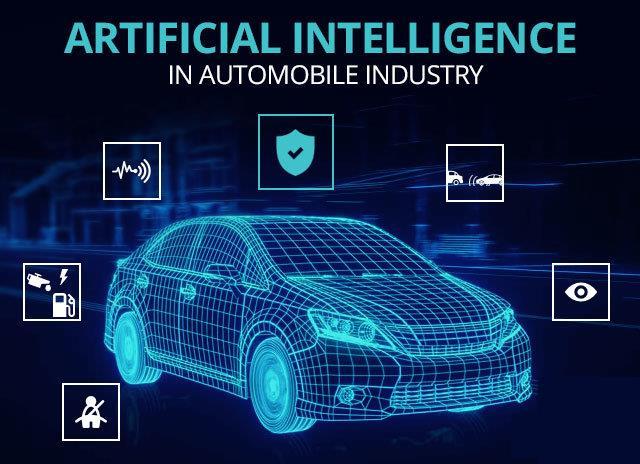
The integration of multiple sensors represents a pivotal advancementinmodernautomotivetechnology,particularly inenhancingtheaccuracyandreliabilityofvehiclesystems. By combining inputs from diverse sensor types such as cameras,radar,LiDAR,andultrasonicsensors,vehiclescan achieve a comprehensive understanding of their surroundings.Camerasprovidedetailedvisualinformation, identifyingroadsigns,pedestrians,andlanemarkings.Radar enhances long-range detection capabilities, effectively identifying vehicles and obstacles in various weather conditions.LiDARcomplementsthesebycreatingprecise3D maps of the environment, accurately measuring distances andcapturing detailed spatial data.Meanwhile,ultrasonic sensorsexcelinclose-rangedetection,assistinginparking and manoeuvring situations. Through sophisticated data fusiontechniquesandAIalgorithms,vehiclescanintegrate these inputs to form a holistic perception of their environmentinreal-time.Thisintegrationnotonlyimproves safety and navigation but also lays the groundwork for increasingly autonomous driving systems that adapt to complex and dynamic driving conditions with heightened accuracy and efficiency. As technology progresses, the synergy between these sensor technologies continues to drive innovations towards safer and more intelligent vehicles.
Developing an algorithm for image recognition tasks in a vehicle from a distance of 500 meters entails a series of procedures,encompassingpreprocessing,featureextraction, andclassification.Presentedbelowisanillustrativeinstance ofsuchanalgorithmcraftedinMATLAB.Thisdemonstration presupposestheutilizationofapre-existingdeeplearning
International Research Journal of Engineering and Technology (IRJET) e-ISSN:2395-0056
Volume: 11 Issue: 06 | Jun 2024 www.irjet.net p-ISSN:2395-0072
modelforobjectdetection,suchastheYOLO(YouOnlyLook Once) or Faster R-CNN model, which can be accessed throughMATLAB'sDeepLearningToolbox.
%Loadthepre-trainedmodel(YOLOv2inthisexample) model=load('yolov2VehicleDetector.mat'); detector=model.yolov2Detector;
%Loadtheimage
image = imread('vehicle_image.jpg'); % replace 'vehicle_image.jpg'withyourimagefile
%Displaytheimage figure;
imshow(image);
title('OriginalImage');
%Preprocesstheimage(resizetomatchtheinputsizeofthe modelifnecessary)
inputSize=detector.Network.InputSize(1:2); resizedImage=imresize(image,inputSize);
%Runtheobjectdetection [bboxes,scores,labels]=detect(detector,resizedImage);
%Displaythedetectionresults detectedImage=insertObjectAnnotation(image,'rectangle', bboxes,cellstr(labels)); figure;
imshow(detectedImage);
title('DetectedVehicles');
%Post-processtheresults(example:filterdetectionsbased onconfidencescore)
minScore=0.5;
highConfidenceBboxes=bboxes(scores>minScore,:); highConfidenceLabels=labels(scores>minScore);
%Displayhigh-confidencedetections
highConfidenceImage = insertObjectAnnotation(image, 'rectangle', highConfidenceBboxes, cellstr(highConfidenceLabels)); figure;
imshow(highConfidenceImage);
title('HighConfidenceDetections');
6.INCREASE PARKING EFFIECINCY IN VEHICLE
To improve vehicular parking efficiency, one can devise a sophisticatedalgorithmutilizingMATLAB.Themethodology employedwillbecontingentuponthespecificrequirements and constraints of the given situation. In this discourse, I shall propose an algorithm tailored to a simple scenario:
2024, IRJET | Impact Factor value: 8.226 |
pinpointing the optimal parking spot within a parking facilitytominimizethedistanceonemusttraversetoreach the entrance. By implementing this algorithm, we can streamlinetheparkingprocessandheightenconveniencefor motorists.Thisentailsameticulousanalysisoffactorssuch as location, availability, and proximity to the entrance to optimizetheparkingexperience.Throughtheutilizationof MATLAB,wecanformulateasolutionthateffectivelytackles the issue of parking space allocation and elevates overall efficiencyinparkingoperations.
1.Theparkinglotisrepresentedasagrid.
2.Eachcellinthegridrepresentsaparkingspotthatcanbe eitheroccupiedoravailable.
3. The entrance to the parking lot is located at a specific positiononthegrid.
4.Theobjectiveistofindthenearestavailableparkingspot totheentrance.
function optimalParkingSpot = findOptimalParkingSpot(parkingLot,entrance)
% parkingLot: A 2D matrix where 0 represents an availablespotand1representsanoccupiedspot
%entrance:A1x2vectorrepresentingthecoordinatesof theentrance[row,col]
%Getthesizeoftheparkinglot
[rows,cols]=size(parkingLot);
% Initialize the minimum distance and optimal parking spot
minDistance=inf; optimalParkingSpot=[];
%Iterateovereachparkingspotinthelot fori=1:rows forj=1:cols
ifparkingLot(i,j)==0%Checkifthespotisavailable
%CalculatetheManhattandistancefromthespotto theentrance
distance = abs(i - entrance(1)) + abs(jentrance(2));
%Updatetheoptimalparkingspotifacloseroneis found ifdistance<minDistance minDistance=distance;
optimalParkingSpot=[i,j]; end
International Research Journal of Engineering and Technology (IRJET) e-ISSN:2395-0056
end end end
%Displaytheoptimalparkingspot ifisempty(optimalParkingSpot)
disp('Noavailableparkingspotsfound.'); else
disp(['Optimal parking spot is at row ', num2str(optimalParkingSpot(1)),... 'andcolumn',num2str(optimalParkingSpot(2)),... 'withadistanceof',num2str(minDistance),'tothe entrance.']); end end
%Exampleparkinglot(0=available,1=occupied)
parkingLot=[
0101;
1100;
0011;
1000
];
%Entrancecoordinates
entrance=[1,1];%Top-leftcorner
%Findtheoptimalparkingspot
optimalSpot = findOptimalParkingSpot(parkingLot, entrance);
Automateddrivinginmountainsischallengingduetosteep inclines,sharpturns,andunpredictableweather.AItechlike LIDAR, RADAR, and cameras help with 3D mapping and obstacle detection. Machine learning improves object detection, while high-def maps and route planning aid navigation. Cruise control and traction control systems maintain stability. Sensor fusion and edge computing enhance data processing and reduce delays. Safety is a priority with redundantsystemsandcontinuous learning. Future advancements may include V2X communication, improved sensors, and advanced AI models for safer autonomousdrivinginmountains.CreatinganAIalgorithm for driving in hilly areas involves sensor data processing, perception,pathplanning,andcontrol.
Volume: 11 Issue: 06 | Jun 2024 www.irjet.net p-ISSN:2395-0072 © 2024, IRJET | Impact Factor value: 8.226 |
AcquiredatafromsensorslikeLIDAR,RADAR,andcameras.
%Exampleinitializationanddataacquisition lidar=LidarSensor('SensorModel','3D','Range',100); radar=RadarSensor('Range',100); camera=CameraSensor('Resolution',[1280,720]); lidarData=getLidarData(lidar); radarData=getRadarData(radar); cameraImage=getCameraImage(camera);
Process the raw data from sensors to extract useful information.
%PreprocessLIDARdata pointCloud=preprocessLidarData(lidarData);
%PreprocessRADARdata radarTargets=preprocessRadarData(radarData);
%Preprocesscameradata imageFeatures=detectFeatures(cameraImage);
7.3.
Identifyobjects,roadboundaries,lanemarkings,andother criticalelements.
%DetectobjectsusingLIDARandRADAR objects=detectObjects(pointCloud,radarTargets);
%Lanedetectionusingcamera lanes=detectLanes(cameraImage);
%Roadboundarydetection roadBoundaries=detectRoadBoundaries(pointCloud);
7.4.
Plan a safe and efficient path considering the detected elementsandvehicledynamics.
%Definecurrentstate currentState=[x,y,theta,v];
%Definegoalstate goalState=[goalX,goalY,goalTheta];
%Planpath
path = planPath(currentState, goalState, objects, lanes, roadBoundaries);
International Research Journal of Engineering and Technology (IRJET) e-ISSN:2395-0056
Volume: 11 Issue: 06 | Jun 2024 www.irjet.net p-ISSN:2395-0072
function path = planPath(currentState, goalState, objects, lanes,roadBoundaries)
%A*orRRT*oranyotherpathplanningalgorithm path=aStarPathPlanning(currentState,goalState,objects, roadBoundaries);
end
7.5. Trajectory Optimization
Optimizetheplannedpathforsmoothnessandsafety.
%Optimizetrajectory
optimizedPath=optimizeTrajectory(path);
functionoptimizedPath=optimizeTrajectory(path)
% Implement optimization techniques like gradient descent
optimizedPath=gradientDescentOptimization(path);
End
7.6.Control
Control the vehicle to follow the optimized path while maintainingstability.
%Definecontrolparameters
Kp=1.0;Ki=0.5;Kd=0.1;
%PIDcontrollerforsteering steeringAngle=pidController(optimizedPath,Kp,Ki,Kd);
%Applycontroltothevehicle applyControl(steeringAngle,throttle,brake); functionsteeringAngle=pidController(path,Kp,Ki,Kd)
%PIDcontrollogic error=computeError(path); steeringAngle=Kp*error+Ki*integrate(error)+Kd* differentiate(error); end
functionapplyControl(steeringAngle,throttle,brake)
%Interfacewithvehicleactuators setSteeringAngle(steeringAngle); setThrottle(throttle); setBrake(brake); end
8.CONCLUSION
Introducedcomprehensive methodologytocreatetwo AIdriven systems: precise navigation and automatic cooling. NavigationsystemintegratesGPS,IMU,cameras,LIDAR,and
HD maps with AI algorithms for data fusion, localization, path planning, and obstacle avoidance. Utilizes Kalman filters, path planning algorithm, and real-time obstacle detectionforaccuratenavigation.Automaticcoolingsystem activates post-heating to maintain optimal cabin temperature using temperature sensors and machine learning. HVAC system regulated based on temperature forecasts.MATLABusedforimplementation,showcasingAI efficacyinvehiclenavigationandclimatecontrol.Integration of machine learning and real-time data processing for intelligent vehicle systems. Future work on refining algorithms, improving sensor integration, and real-world testing.AIstrategiesenhancesafety,comfort,andefficiency ofsmartvehicles,revolutionizingautomotivetechnology.
1. Ali,E.S.,Hasan,M.K.,Hassan,R.,Saeed,R.A.,Hassan,M. B., Islam, S., Nafi, N. S., & Bevinakoppa, S. (2021). Machine learning technologies for secure vehicular communicationinInternetofvehicles:Recentadvances and applications. Security and Communication Networks, 2021, 1–23. https://doi.org/10.1155/2021/8868355
2. Ali,M.A.,Irfan,M., Khan, T., Khalid,M. Y.,& Umer, R. (2023). Graphene nanoparticles as data generating digital materials in industry 4.0. Scientific Reports, 13(1).https://doi.org/10.1038/s41598-023-31672-y
3. An,B.,&Kim,Y.(2022).Imagelink throughadaptive encoding data baseandoptimized GPUalgorithm for real-time image processing of artificial intelligence. Journal of Web Engineering/Journal of Web Engineering on Line. https://doi.org/10.13052/jwe1540-9589.21215
4. Bathla, G., Bhadane, K. V., Singh, R. P., Kumar, R., Aluvalu,R.,Krishnamurthi,R.,Kumar,A.,Thakur,R.,& Basheer,S.(2022).Autonomousvehiclesandintelligent automation:applications,challenges,andopportunities. Journal of Mobile Information Systems, 2022, 1–36. https://doi.org/10.1155/2022/7632892
5. Guo,Y.,Wu,S.,Yu,W.,Wen,C.,Li,L.,&Fu,Q.(2023a). Applicationandimplementationofartificialintelligence technology for intelligent vehicle. Journal of Physics. Conference Series, 2508(1), 012049. https://doi.org/10.1088/1742-6596/2508/1/012049
6. Guo,Y.,Wu,S.,Yu,W.,Wen,C.,Li,L.,&Fu,Q.(2023b). Applicationandimplementationofartificialintelligence technology for intelligent vehicle. Journal of Physics. Conference Series, 2508(1), 012049. https://doi.org/10.1088/1742-6596/2508/1/012049
7. Gupta,B.B.,Agrawal,D.P.,Sajjad,M.,Sheng,M.,&Del Ser,J.(2022).GuesteditorialArtificialIntelligenceand
© 2024, IRJET | Impact Factor value: 8.226 | ISO 9001:2008 Certified Journal | Page1099
International Research Journal of Engineering and Technology (IRJET) e-ISSN:2395-0056
Deep Learning for Intelligent and Sustainable Traffic andVehicleManagement(VANETS).IEEETransactions onIntelligentTransportationSystems,23(10),19575–19577.https://doi.org/10.1109/tits.2022.3208785
8. Katreddi,S.(2023).DevelopmentofMachineLearning based approach to predict fuel consumption and maintenancecostofHeavy-DutyVehiclesusingdiesel and alternative fuels. https://doi.org/10.33915/etd.11780
9. Kuehl, N., Schemmer, M., Goutier, M., & Satzger, G. (2022).Artificialintelligenceandmachinelearning.EM, 32(4), 2235–2244. https://doi.org/10.1007/s12525022-00598-0
10. Lonsdale, H., Jalali, A., Gálvez, J. A., Ahumada, L., & Simpao, A. F. (2020). Artificial intelligence in Anesthesiology: Hype, hope, and hurdles. Anesthesia andAnalgesia/Anesthesia&Analgesia,130(5),1111–1113. https://doi.org/10.1213/ane.0000000000004751
11. Msakni, M. K., Risan, A., & Schütz, P. (2023). Using machinelearningpredictionmodelsforqualitycontrol: a case study from the automotive industry. Computational Management Science, 20(1). https://doi.org/10.1007/s10287-023-00448-0
12. Santra, A., Pandharipande, A., Wang, P., Gürbüz, S. Z., Ibañez‐Guzmán,J.,Cheng,C.,Dauwels,J.,&Li,G.(2023). Guest editorial Special issue on Sensing and Machine Learning for Automotive Perception. IEEE Sensors Journal, 23(11), 11116. https://doi.org/10.1109/jsen.2023.3267662
13. Sohail, R., Saeed, Y., Ali, A., Alkanhel, R., Jamil, H., Muthanna,A.,&Akbar,H.(2023).AMachineLearningBased Intelligent Vehicular System (IVS) for driver’s diabetes monitoring in vehicular Ad-Hoc Networks (VANETs). Applied Sciences, 13(5), 3326. https://doi.org/10.3390/app13053326
14. Stauder, M., & Kühl, N. (2021). AI for in-line vehicle sequencecontrolling:developmentandevaluationofan adaptivemachinelearningartifacttopredictsequence deviationsinamixed-modelproductionline.Flexible Services and Manufacturing Journal, 34(3), 709–747. https://doi.org/10.1007/s10696-021-09430-x
15. Stulp, F., Spranger, M., Listmann, K. D., Doncieux, S., Tenorth, M., Konidaris, G., & Abbeel, P. (2022). Innovation Paths for Machine Learning in Robotics [Industry Activities]. IEEE Robotics & Automation Magazine, 29(4), 141–144. https://doi.org/10.1109/mra.2022.3213205
Volume: 11 Issue: 06 | Jun 2024 www.irjet.net p-ISSN:2395-0072 © 2024, IRJET | Impact Factor value: 8.226 |
16. Vijayakumar, K. (2021). Computational intelligence, machine learning techniques, and IOT. Concurrent Engineering, Research and Applications, 29(1), 3–5. https://doi.org/10.1177/1063293x211001573