
International Research Journal of Engineering and Technology (IRJET) e-ISSN: 2395-0056
Volume: 11 Issue: 06 | Jun 2024 www.irjet.net p-ISSN: 2395-0072
International Research Journal of Engineering and Technology (IRJET) e-ISSN: 2395-0056
Volume: 11 Issue: 06 | Jun 2024 www.irjet.net p-ISSN: 2395-0072
Akshaya Anil1 , Akhil R2 , Ruksana B3, Varsha Franklin4 , Ammu B Crusho5
1Student, Dept. of Civil Engineering, Bishop Jerome Institute, Kerala, India
2Student, Dept. of Civil Engineering, Bishop Jerome Institute, Kerala, India
3Student, Dept. of Civil Engineering, Bishop Jerome Institute, Kerala, India
4Student, Dept. of Civil Engineering, Bishop Jerome Institute, Kerala, India
5Assistant Professor, Dept. of Civil Engineering, Bishop Jerome Institute, Kerala, India
Abstract - Pavements,beingthemostcost-effectivemodeof transportation, are currently experiencing degradation primarilyduetotheemergenceofpotholes.Potholespresenta significant threat in the current scenario, causing discomfort for both drivers and passengers and posing a substantial danger to human life as a whole. It is crucial to address this issue, and several factors contribute to its occurrence, including the use of poor-quality materials, increasing traffic loads,andfloodingconditionsonroads.Traditionally,hotmix technology has been widely used for road pavement construction. However, this method has its limitations. To overcome these challenges, cold mix technology has been introduced, offering the advantage of not requiring the heating of aggregates and bitumen, thereby reducing overall pollutionlevels.Despitethisprogress,limitationsstillexist, as pothole regeneration is observed even after implementing these advanced technologies. Therefore, there is an urgent need to explore innovative approaches to effectively repair potholes. This discussion focuses on the utilization of Reclaimed Asphalt Pavement (RAP) methods and PETmodified aggregates for preparing cold mixes. Extensive testing has been conducted on aggregates and emulsions, yielding satisfactory results. The findings indicate that these materials are suitable for conventional cold mix design. Subsequently, samples were prepared for the Marshall Test, which allowed for the determination of stability and flow values.Basedontheseresults,theoptimalbindercontentwas established. It was observed that the cold mixes with plastic coatedaggregatewereperformingbetterandwesuggestthat thismixcouldbeusedfor pothole-patchingandenhancingthe overall durability and sustainability of road infrastructure.
Key Words: Coldmixes,RecycledAsphaltPavement,PETmodifiedaggregates,Potholerepair,Sustainability
1.INTRODUCTION
Potholes are depressions in road surfaces that pose significant challenges for drivers. These roadway imperfections can lead to substantial vehicle damage and presentdangerstomotoristsattemptingtonavigatearound them.Despiteroadsbeingthemostcost-effectivemodeof transportation, premature deterioration often occurs,
primarilyduetotheformationofpotholes.Potholesvaryin size, depth, and location, necessitating tailored repair methods to address the specific characteristics of each potholeeffectively.
Theprevalenceofpotholesisincreasing,particularlyinthe contextofroadconstructioninKerala,wherethecommonly used hot mix asphalt method has proven insufficient in preventingpotholeformation.Theintroductionofcoldmix asphalt has extended the life of roads, but further enhancementsarerequiredformoresatisfactoryresults.To achieve this, the incorporation of new additives into conventional cold mixtures becomes essential. Cold mix asphalt, when appropriately modified, demonstrates the potential to significantly outperform hot mix asphalt, indicating the necessity for advancements in the conventionalcoldmixapproaches.
Intherealmofhighwayinfrastructure,aconcertedeffortis underwaytomitigatethecarbonfootprintassociatedwith traditionalconstructionmethods.Amongtheseefforts,Cold MixAsphalttechnologystandsoutasapromisingsolution. Unlikeitscounterparts,ColdMixAsphalt(CMA)eliminates theneedformaterialheatingbyemployingasphaltemulsion andcutbackasbindingagents.Thesesubstances,liquidat roomtemperature,facilitatemixingandcompactionwithout the energy-intensive heating process required by Hot Mix AsphaltandWarmMixAsphalt.
CMA, boasting superiority in cost-effectiveness, energy efficiency,andenvironmentalfriendliness,operateswithina manufacturing temperature range of 0–40 °C. Its key advantages include cost-effectiveness, environmental friendliness,reducedemissions,andreadyavailability.This sets the stage for a promising future in eco-friendly road construction. TofurtherenhancetheperformanceofCMA andaddresstheprevailingchallenges,thisresearchexplores theincorporationofRecycledAsphaltPavement(RAP)and plastic-coatedaggregatesintothemixdesign.
Asreportedinpreviousstudies,theutilizationofRAPand plastic-coated aggregates in CMA has the potential to improve its durability, resistance to rutting, and overall sustainability (Oreto et al., 2021) (Puccini et al., 2019)
International Research Journal of Engineering and Technology (IRJET) e-ISSN: 2395-0056
Volume: 11 Issue: 06 | Jun 2024 www.irjet.net p-ISSN: 2395-0072
(Sangiorgi et al., 2017) (Yang, 2014). These modifications aim to contribute to the efficient and long-term repair of potholes,ultimatelyenhancingthesafetyandreliabilityof roadinfrastructure.
StudiesledbyHayderKamilShanbaraetal.haveexplored thevarioustypesofColdMixAsphalt(CMA),withaparticular focusonColdBitumenEmulsionMixture(CBEM).CBEM,a prominentCMAmixture,involvesblendingbitumenemulsion andmineralaggregatestocreateaversatile,bituminousmix. However,theabsenceofawidelyaccepteddesignmethod poses challenges, prompting investigations into various procedures.
CBEM'sindependencefromenvironmentalconditions,its on-site or off-site applicability, and its eco-friendly nature makeitanappealingchoiceforroadconstruction.Despite these advantages, issues persist, such as varied mixing materials, climatic effects on mix curing, and the lack of a unifiedcuringprotocol.
Li et al.'s investigation centres on repairing asphalt pavement potholes using inclined interface joints, emphasizingtheimpactofjointinterfaceshapeonservice life. The study reveals that a thirty-degree inclination interfacejointsignificantlyenhancesfatiguelifecomparedto averticaljoint.Theuseofhighlyviscousmodifiedemulsified asphaltintackcoatsfurtherimprovesperformance
Jordanetal.explorethestabilizationofgranularmaterials usingNew-AgeModifiedEmulsions.Thestudyhighlightsthe construction-friendlynatureofNME,offeringcost-effective solutions to common construction-related problems. Recommendations include maintaining equipment, using specifiedqualityconstructionwater,andprovidingadequate supervision.
Ferotti G et al. investigate high-performance fiberreinforcedasphaltmixtures,emphasizingtheimpactoffiber typeandcontentonmixtureperformance.Testingevaluates stability,tensilestrength,andabrasionresistance,revealing that CEL fiber-reinforced mixtures outperform others primarily in the context of maintenance activities in bituminouspavementsurfaces.
Boatengetal.'sstudyinGhanaassessesthequalityofCMAas a pothole repair material, evaluating factors such as
moisture sensitivity, stiffness, and rutting resistance. The findingssuggestthatCMAcaneffectivelyaddresspotholes, provided adequate quality control measures are implementedduringproductionandplacement
Theproposedresearchaimedtoenhancetheperformanceof ColdMixAsphalt(CMA)byincorporatingRecycledAsphalt Pavement(RAP)andplastic-coatedaggregates.Initially,the necessary materials were carefully selected, including emulsifiedbitumen,coarseandfineaggregates,cementasa filler,PETbottles,andRAP.Toensurethematerialsmetthe required standards and were suitable for construction, a series oftests were plannedfor theaggregates, emulsified bitumen,PET-modifiedaggregates,andRAP.Afterconducting thesetests,conventionalcoldmixeswerecreatedbasedon the principles of the Marshall Mix design method. The optimal binder content was identified by determining the MarshallStabilityandflowvalues.Themixeswerefurther improvedbyincorporatingPETbottlestomodifythecoarse aggregates.Additionaltestswereperformedonthemodified aggregates, and modified cold mixes with varying PET content were prepared to establish the maximum stability value.ThenextstepwastocharacterizetheRAP,andcold mixesincorporatingRAPweredesignedandtestedusingthe MarshallTesttodeterminetheoptimalRAPcontentforthe higheststabilityvalue.Theresultsfromthemodifiedmixes and the conventional mix were compared. Once the maximum stability values for PET and RAP content were identified, and the optimal binder content was fixed, the mixes were prepared and subjected to moisture-induced susceptibility tests to evaluate their tensile strength. The thorough analysis aimed to determine the mix that demonstratedsuperiorstabilityandindirectstrengthvalues
This section presents and discusses the findings of the conductedtestsandanalyses.
Physical and mechanical properties of the aggregates were evaluated througha seriesof tests, including impact value,specificgravity,waterabsorption,crushingvalueand LosAngelesabrasionaspertheIndianStandardprocedure andtheresultsareshowninTable1.
International Research Journal of Engineering and Technology (IRJET) e-ISSN: 2395-0056
Volume: 11 Issue: 06 | Jun 2024 www.irjet.net p-ISSN: 2395-0072
Table -1: TestonAggregate
Tests Observed Value Permissible Limits Inference
Impactvalue test 28.04% 10-30%
Crushing valuetests 26.89% 40%
Specific gravity 2.53 2.5to3.2
Water absorption 0.17% 0.1to2%
Abrasiontest 38.04% 50%
Satisfactoryasper IS383-1970
Satisfactoryasper IS383-1970
Satisfactoryasper IS383-1970
Satisfactoryasper IS383-1970
Satisfactoryasper IS383-1970
The results showed that the aggregates met the required specificationsforuseinCMAmixtures
Varioustestsonthebitumenemulsion,includingresidueon sieve,storagestability,andpenetration,werecarriedoutto ensureitssuitabilityfortheuseofemulsionasCMA.
Table -2: TestonBitumenEmulsion
Tests Observed Value Permissible Limits Inference
Penetration Test 90mm
GradeA90& S90
DuctilityTest 50°C 30-50°C
Softening Test 85cm
ResidueBy Evaporation Test 64.85%
Minimum 15cmforA90 and75cmfor S90
Residueon 600Sieve 0.017% 0to0.05%
Cement MixingTest 0.96% 0to2%
Satisfactory asperIS 8887-2018
Satisfactory asperIS 8887-2018
Satisfactory asperIS 8887-2018
Satisfactory asperIS 8887-2018
Satisfactory asperIS 8887-2018
Satisfactory asperIS 8887-2018
Table 2 presents the test results, which were found to be withintheacceptablelimits.
Tests were carried out to evaluate the performance of aggregatesmodifiedwith12%RecycledAsphaltPavement (RAP).Thekeyobjectivesweretoconstructroadsthatcan entirely prevent cracking and maintain high resistance against various modes of failure. Accordingly, three tests were performed to assess the efficiency of the modified aggregatesincomparisontoconventionalaggregates.
Table -3: TestonModifiedAggregate
Tests Observe dValue Permissible Limits Inference
ImpactValue Test 14.50% 10-20%
asperIS 383-1970 Crushing ValueTest
asperIS 383-1970
asperIS 383-1970
Table 3 presents the test results, which were found to be withintheacceptablelimits.
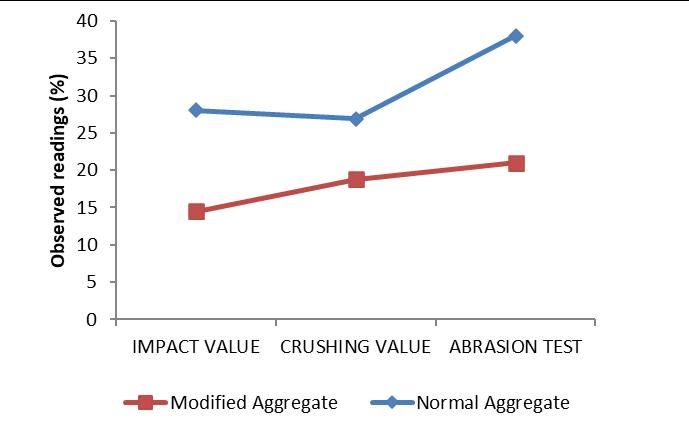
Chart 1:Comparisonofaggregateproperties
Chart1representsthecomparisonofimpact,crushingand abrasionofnormalandmodifiedaggregate.
The bitumen content and particle size distribution of the Recycled Asphalt Pavement (RAP) material was characterized.ThestudydeterminedthattheRAPbitumen contentwasapproximately5.87%.
International Research Journal of Engineering and
Volume: 11 Issue: 06 | Jun 2024 www.irjet.net
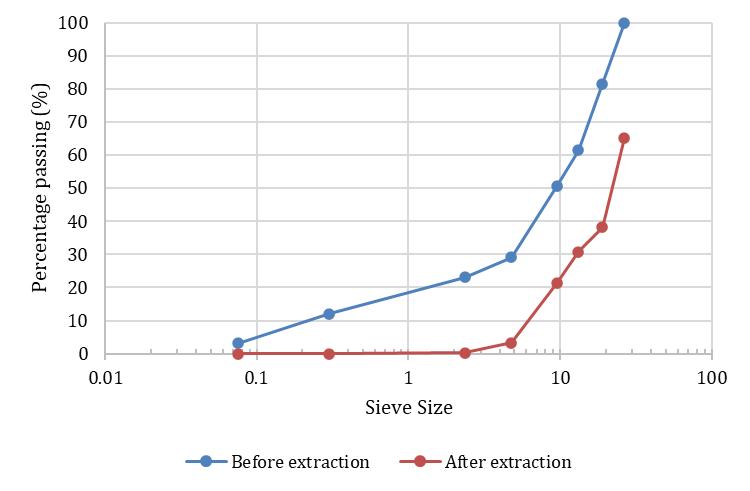
Chart 2:PSDcurveforRAP
Furthermore,Chart2illustratestheparticlesizedistribution (PSD)curveobtainedforthegradationbeforeandafterthe extractionofbitumen
ThestudyemployedtheMarshallmixdesignmethodologyto determinetheoptimumbindercontentfortheconventional cold mix. Various mixes were prepared with emulsified bitumenpercentagesrangingfrom4.5%to6%toidentify theoptimalbindercontent.Subsequently,PET-modifiedcold mixeswerecreatedwithPETcontentsrangingfrom8%to 15%toascertainthepercentagethatyieldedthemaximum stability value. Additionally, RAP-modified mixes were preparedwithRAPcontentsvaryingfrom25%to55%
Table -4: MixDesignofConventionalColdMix
Table -5: PETModifiedAggregate
Table -6: RAPModifiedAggregate
The optimum binder content was identified as 5.5% Thereafter,thePETcontentwassystematicallyvaried,and thecorrespondingstabilityvalueswereanalyzedtoidentify thePETpercentagethatyieldedthemaximumstability.This optimalPETcontentwasthenselectedforfurthertesting,as detailedinTable5.
Similarly, the RAP content was adjusted, and the RAP percentage providing the highest stability value was established as the optimal RAP content, which is also presentedinTable6.
To evaluate the moisture-induced damage resistance of conventional cold mixes, PET-modified mixes, and RAPmodifiedmixes,theindirecttensilestrength(ITS)testwas conducted.Twosetsofspecimenswerepreparedusingthe Marshallmixdesignmethod.Set1specimensweresealedin plastic bags until testing, while Set 2 specimens were moisture-conditioned. The moisture conditioning involved submergingthespecimensinadistilledwaterbathat60°C for24hours,followedby2hoursofimmersioninwaterat 25°Cand1hourofovendrying.
After the conditioning, the height and weight of the specimensweremeasured.Thespecimenswerethenplaced betweenthebearingplatesofthetestingmachine,withsteel loading strips positioned between the specimen and the plates. A constant load was applied by forcing the bearing plates together at a rate of 50 mm/minute. The maximum loadsustainedbythespecimenwasrecorded,andthetest wascontinueduntilthespecimenfailed.
Themoisturedamageresistancewasthendeterminedbythe ratioofthetensilestrengthoftheconditionedsamplestothe tensile strength of the unconditioned samples which is knownastheTensileStrengthRatio(TSR).
International Research Journal of Engineering and Technology (IRJET) e-ISSN: 2395-0056
Volume: 11 Issue: 06 | Jun 2024 www.irjet.net p-ISSN: 2395-0072
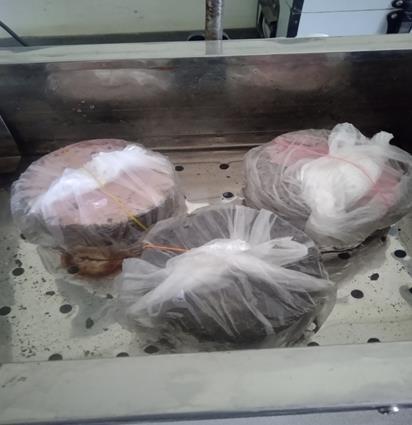
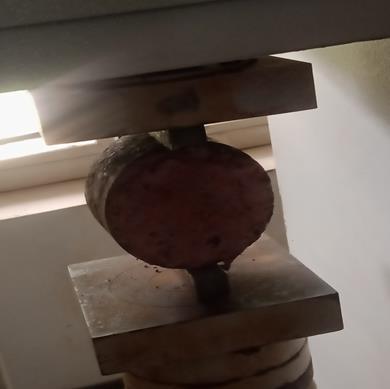
Fig-2:IndirectTensileStrengthTest.
Thetensilestrengthwascalculatedusingtheequation:
ITSValue=2000P/πDt
wherePistheload,
Disthediameter,and tisthethicknessofthemould.
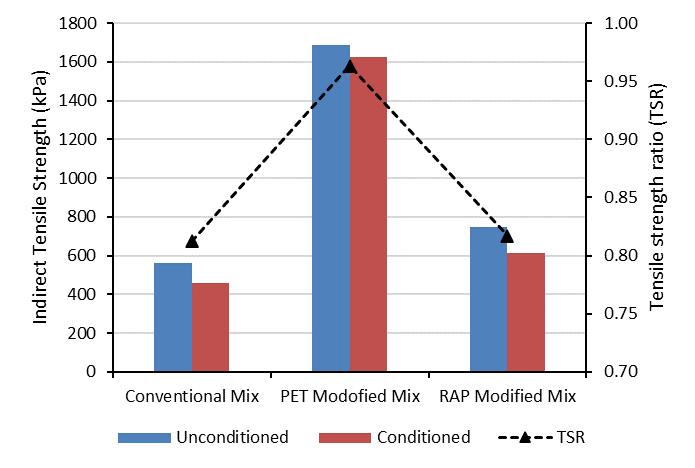
3: ITSComparison
Tensile strength ratio (TSR) for the conventional, PET modified and RAP modified mixes were observed as 0.81, 0.96and0.82.ForHMA,theTSRshouldbegreaterthanequal to0.80.Thus,withintheacceptablelimits.
The study collected the necessary materials, including emulsifiedbitumen,aggregates,polyethyleneterephthalate (PET), and reclaimed asphalt pavement (RAP), to prepare thecoldmixdesign.Variouslaboratoryexperimentswere conducted on the selected materials, including tests on aggregates, emulsified bitumen, RAP, and PET-modified mixes.Thetestresultswerefoundtobesatisfactoryandmet therelevantspecifications.
Coldmixesweredesignedusingrapid-settingemulsions. Theresearchersdeterminedthestability,flowvalues,and optimumbindercontentoftheconventionalcoldmix.Using the optimum binder content of 5.4%, they prepared PETmodified mixes with different PET contents and RAPmodifiedmixeswithvaryingRAPcontents.Themaximum stabilityvalueswereobtainedat12%PETcontentand35% RAPcontent.
ThecoldmixeswithhighstabilityRAPandPETcontents were then subjected to moisture-induced susceptibility testingusingtheindirecttensilestrength(ITS)method.The results showed that the PET-modified mixes exhibited highertensilestrengthcomparedtotheothermixesinboth the unconditioned and conditioned cases. The tensile strength ratio (TSR) was also estimated and found to be within the limits, but for the conventional cold mixes and RAP-incorporated cold mixes, it was near the limitation. However,itwasobservedthatbymodifyingtheaggregate andincorporatingRAP,theTSRcanbeimprovedtoenhance themix'sresistanceagainstmoisture-induceddamage.
The main challenge identified in using PET-modified mixesisthepotentialforenvironmentalpollutionduetothe releaseofpollutantgasesduringtheheatingandcoatingof aggregates with PET waste. To mitigate this, the study suggests introducing an incinerator with shredders, pug mills, air scrubbers, and electrostatic precipitators to capture,treatthepollutantemissions,ensuringonlyclean, pollutant-freesmokereleasedintotheatmosphereandthen coatingtheaggregates
Despite thehigherinitial costofinstallingsuchplants, thelong-termbenefitsofreducedenvironmentalpollution and increased pavement life make the PET-modified cold mix a viable and sustainable option for pavement maintenanceandrehabilitation.
In conclusion, the strategic incorporation of Recycled Asphalt Pavement (RAP) and Polyethylene Terephthalate (PET)intocoldmixes canenhance theirperformance and
International Research Journal of Engineering and Technology (IRJET) e-ISSN: 2395-0056
Volume: 11 Issue: 06 | Jun 2024 www.irjet.net p-ISSN: 2395-0072
durability,makingthemamoresustainablealternativefor pavementmaintenancework.
ACKNOWLEDGEMENT
We acknowledge our suppliers of Reclaimed Asphalt Pavement(RAP)whichsignificantlyaidedthesuccessofthis researchproject.
[1] Jain,Shobhit,andBhupendraSingh."Coldmixasphalt: Anoverview."JournalofCleanerProduction280(2021): 124378.
[2] Shanbara,H.K.,Dulaimi,A.,Al-Mansoori,T.,Al-Busaltan, S., Herez, M., Sadique, M., & Abdel-Wahed, T. (2021). “Thefutureofeco-friendlycoldmixasphalt.”Renewable andSustainableEnergyReviews,149,111318.
[3] Li, Linyu, Yangquan Huang, Zhutao Shao, and Dongya Ren. "An experimental investigation on the repairing performance and fatigue life of asphalt pavement potholeswithaninclinedinterfacejoint."Frontiersin Materials7(2021):597523.
[4] Jordaan,GerritJ.,andWynandJ.vdM Steyn."Practical Application of Nanotechnology Solutions in Pavement Engineering:Identifying,ResolvingandPreventingthe Cause and Mechanism of Observed Distress Encountered in Practice during Construction Using Marginal Materials Stabilised with New-Age (Nano) ModifiedEmulsions(NME)."AppliedSciences12,no.5 (2022):2573.
[5] Ahmad, Malik Shoeb, and Salman Asrar Ahmad. "The impactofpolyethyleneterephthalatewasteondifferent bituminousdesigns."JournalofEngineeringandApplied Science69,no.1(2022):53.
[6] Boateng, Kwadwo Appiah, Yaw Adubofour Tuffour, DanielObeng-Atuah,andStephenAgyeman."Qualityof cold-mixasphaltinbituminouspavementmaintenance in Ghana: Preliminary indications." Case Studies in ConstructionMaterials15(2021):e00769.
[7] Bruno, Marco, Piergiorgio Tataranni, and Cesare Sangiorgi. "Experimental application of fully recycled asphaltconcretesproducedwithchemicaladditivesfor patch pavement rehabilitation." Construction and BuildingMaterials363(2023):129807.
[8] Ferrotti, G., Emiliano Pasquini, and F. Canestrari. "Experimental characterization of high-performance fiber-reinforced cold mix asphalt mixtures." Construction and Building Materials 57 (2014): 117125.




“Akshaya Anil is a Civil Engineering student with a keen interest in Transportation Engineering and Planning. She is passionateaboutnewtechnologies andinnovation.”
“Akhil R is a Civil Engineering student who is very passionate about the career and a rapid learner.HeispassionateinGreen Technologies and construction materials.“
“Ruksana B is a civil engineering student who can perform well in management and Quantity Surveying “
“Varsha franklin is a civil engineering student who looks forwardformoretechnologiesand opportunities in the field of TransportationEngineering.”