
International Research Journal of Engineering and Technology (IRJET) e-ISSN:2395-0056
Volume: 11 Issue: 06 | Jun 2024
COMPARATIVE STUDY OF SEISMIC BEHAVIOR OF THE RC FRAME STRUCTURE WITH PRECAST CONCRETE AND NORMAL CONCRETE : A REVIEW
Rajat Pratap Shahi1, Mr. Ushendra Kumar2
1Master of Technology, Civil Engineering, Lucknow Institute of Technology, Lucknow, India
2Head of Department, Department of Civil Engineering, Lucknow Institute of Technology, Lucknow, India
Abstract - This comprehensive review paper delves into a detailed comparative analysis of the seismic behavior of reinforcedconcrete(RC)framestructuresthatarebuiltusing precast concrete as opposed to traditional cast-in-situ concrete. The growing demand for efficient and durable construction methods has brought to light the numerous potential benefits of precast concrete, including faster construction times, improved quality control, and costeffectiveness. However, the seismic performance of these structures is a crucial factor to consider, especially in areas prone to earthquakes. By synthesizing existing research, this study aims to assess the differences in seismic response betweenprecastandconventionalconcreteRCframes.Various key parameters such as ductility, stiffness, strength, and energy dissipation are thoroughly examined through an indepth analysis of experimental findings and numerical simulations. The results suggest that precast concrete frames have the potential to exhibit similar seismic performance to theircast-in-situcounterparts,butspecificchallengesrelated to design and construction need to be addressed to ensure their effectiveness under seismic forces. The paper provides valuablerecommendationsforfutureresearchendeavorsand practical guidelines for engineers and construction professionals to enhance the seismic resilience of precast RC structures. Bytaking into account these insights, it is possible to further optimize the performance and safety of precast concrete frame buildings in seismic-prone areas.
Key Words: Seismicbehaviour,reinforcedconcreteframe, precast concrete, normal concrete, earthquake resistance, ductility,stiffness,strength,energydissipation,construction techniques,seismicresilience.
1.HISTORY
The comparative analysis of the seismic response of reinforcedconcrete(RC)framestructuresconstructedwith precastconcreteandconventional(cast-in-situ)concretehas undergone significant evolution over time, mirroring advancements in construction technology and seismic engineering.Intheearly20thcentury,RCstructureswere predominantlycast-in-situ,encounteringchallengesrelated to quality control and construction efficiency. The introduction of precast concrete brought about improvements in quality control and construction speed,
albeitraisingconcernsregardingjointperformanceduring seismic events. As seismic design principles and building codesmaturedinthemid-20thcentury,researchersbegan systematically comparing the two construction methodologies.Initialinvestigationsoftenfavoredcast-insitu concrete due to its monolithic characteristics. Nevertheless, progress in precast technology during the 1990sand2000s,suchastheutilizationofhigh-performance concreteandenhancedconnectiontechniques,bolsteredthe seismic performance of precast frames. Contemporary researchutilizesadvancedmodelingandtestingtechniques, demonstratingthatproperlyengineeredprecastRCframes canrivalorevensurpasstheseismicperformanceofcast-insitu frames. Building codes now offer detailed recommendations for both construction approaches in seismic zones, ensuring safety and performance. Practical applications in earthquake-prone regions showcase the feasibilityofbothmethods,reflectinganuancedperspective inongoingcomparativeanalyses.
2.RC FRAME STRUCTURE
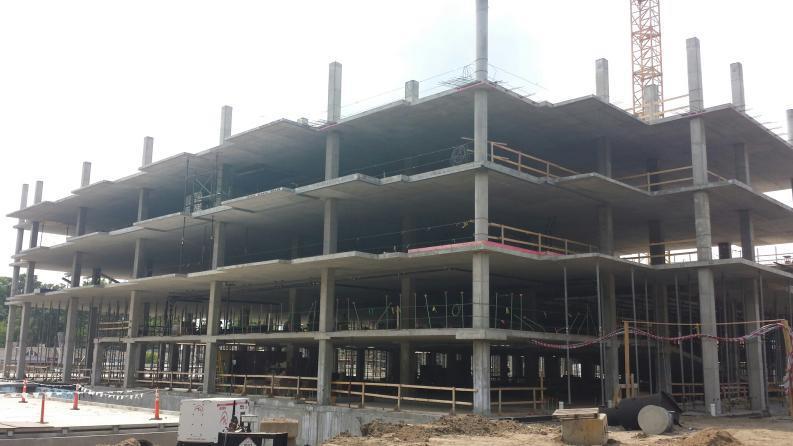
Reinforcedconcrete(RC)framestructuresareawidelyused construction method globally for a diverse range of buildings, such as residential, commercial, and industrial projects. These structures are composed of a framework consistingofhorizontalbeamsandverticalcolumnsthatare interconnectedtocreateagrid-likestructure.Thisdesignis specificallyengineeredtobearbothverticalloads,likethe weightofthebuildinganditscontents,andhorizontalloads, suchaswindorseismicforces.Tostrengthentheconcrete, reinforcement materials like steel bars or mesh are incorporated within the concrete to enhance its tensile strength,asconcretealoneisnotasstrongundertension. TheadaptabilityandresilienceofRCframestructuresmake them an excellent option for constructing multi-storey buildings, as they can be tailored to various architectural styles and can endure substantial stress over time. Furthermore, the fire-resistant and sound insulating qualities of concrete add to the appeal of using RC frame structures in modern construction practices. The combinationofstrength,versatility,anddurabilitymakesRC frame structures a preferred choice for a wide range of constructionprojectsacrosstheglobe.
International Research Journal of Engineering and Technology (IRJET) e-ISSN:2395-0056
Volume: 11 Issue: 06 | Jun 2024 www.irjet.net p-ISSN:2395-0072
2.1.Load Transfer Mechanism in RC Frame Structure
In a reinforced concrete (RC) frame structure, the load transfermechanismfunctionsbystrategicallydistributing forces throughout the framework to uphold stability and structuralsoundness.Initially,verticalloads,encompassing thebuilding'sweight,occupants,andfurnishings,areborne bythebeams,whichsubsequentlytransmittheseforcesto the columns. The columns then convey these loads downwardstothefoundation,guaranteeingtheiruniform dispersionintotheground.Horizontalloads,suchasthose inducedbywindorseismicforces,areeffectivelymanaged by the sturdy connections between beams and columns. Theseconnectionsallowtheframetoactasacohesiveunit, dispersing the forces evenly across the structure. The amalgamation of reinforced concrete's tensile and compressive strengths plays a pivotal role in this mechanism.Thesteelreinforcementembeddedwithinthe concrete combats tensile forces, while the concrete itself withstandscompressiveforces.Thisharmoniousinteraction between materials and structural components ensures efficient load transfer and dissipation, thus upholding the building'sstabilityandsafetyinthefaceofdiverseloading scenarios.
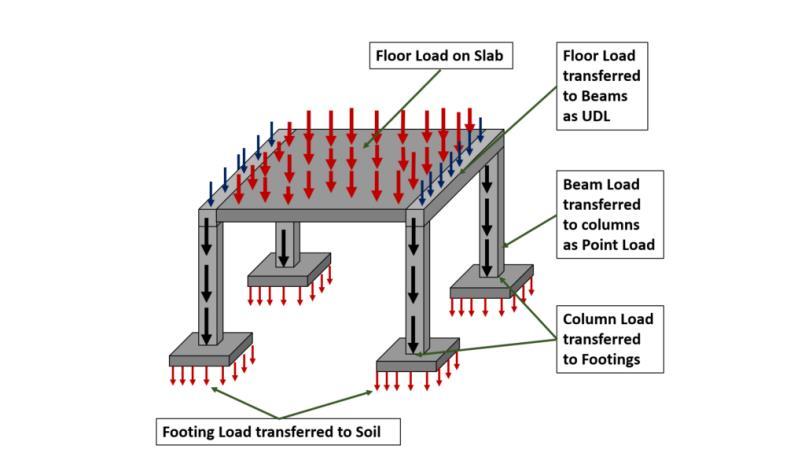
Figure-2: Load Transfer Mechanism in RC Frame Structure.
3.PRECAST CONRETE
Precastconcreteisa buildingmaterialcreated bypouring concreteintoareusablemold,whichissubsequentlycured inacontrolledsetting,transportedtotheconstructionsite, andthenhoistedintoposition.Thistechniqueenablesthe fabricationofintricateforms,guaranteeingsuperiorquality and consistency among components. The utilization of precast concrete presents numerous benefits, such as decreasedconstructionduration,heightenedresilience,and greater oversight of the building process. It is frequently employed for architectural elements like panels, beams, columns, and flooring, offering a flexible and effective answertocontemporaryconstructionrequirements.Precast concrete comes in various types, each serving specific constructionneeds.Herearesomeofthecommontypesof precastconcrete:
3.1. Precast Beams
These are used to support loads in buildings and bridges. Theycomeindifferentshapesandsizes,suchasT-beams,Lbeams,andinvertedT-beams.
3.2.Precast Columns
These vertical structural elements are designed to carry loadsfrombeamsandslabstothefoundation.Theycanbe round,square,orrectangular.
3.3. Precast Floors and Slabs
Theseincludehollowcoreslabs,solidslabs,anddoubletees, which are used for constructing floors and roofs. They providestrength,stability,andquickinstallation.
3.4.Precast Walls
These are used for both structural and non-structural purposes.Typesincludesolidwalls,sandwichpanelswith insulation,andcladdingpanelsfordecorativepurposes.
3.5.Precast Stairs
Thesearepre-fabricatedstepsthatcanbequicklyinstalled atthesite,ensuringuniformityandprecision.
3.6.Precast Piles
These are driven or placed into the ground to provide foundational support for structures. They are particularly usefulinareaswithpoorsoilconditions.
3.7.Precast Bridge Components
Theseincludegirders,deckslabs,andparapets,whichare usedinbridgeconstructiontoexpeditethebuildingprocess andensurequalitycontrol.
4.NORMAL CONCRETE
Normal concrete, also known as conventional concrete or traditionalconcrete,referstothemostcommonlyusedtype of concrete in construction. It is made from a mixture of cement, water, aggregates (such as sand and gravel), and oftenadmixturesforspecificproperties.
5.PRECASTCONCRETEANDNORMALCONCRETEON THE BASIS OF THE GRADE OF THE CONCRETE
In accordance with the Indian Standard IS 456:2000, concrete grades for precast and normal concrete are classifiedsimilarlybutwithspecificconsiderationsforeach type. Normal concrete, which is typically used for onsite casting, generally ranges from grades like M15 to M50, dependingonthestructuralrequirementsoftheproject.On the other hand, precast concrete, which is specifically designed for prefabricated elements, often utilizes higher grades such as M40 and above to ensure its durability againsthandling,transportation,andinstallationstresses.
Quality control in precast production is of utmost importance,withastrongfocusonensuringuniformityand durabilitytomeetthespecificdemandsoftheproject.While both types of concrete adhere to the standards set by IS 456:2000, precast concrete tends to lean towards higher strength grades to ensure that the structural integrity is maintainedthroughoutitsentirelifecycle.Thisemphasison higher strength grades in precast concrete is crucial in ensuring the longevity and performance of the precast elements.
6.BENEFIT OF PRECAST AND NORMAL CONCRETE
Precast concrete and cast-in-place concrete each present distinctadvantagesdependingonthespecificrequirements of a construction project. Precast concrete, fabricated in controlled environments off-site, offers numerous advantages. Firstly, it expedites construction progress as precastelementscanbemanufacturedsimultaneouslywith on-sitepreparations,therebysignificantlyreducingoverall project timelines. Secondly, precast components are renowned for their consistent quality as a result of strict factory-controlledconditions,ensuringenhanceddurability andreliability.Thirdly,off-siteproductionminimizeson-site disturbances and enhances safety by decreasing the necessityforextensiveformworkandscaffolding.
On the contrary, cast-in-place concrete provides its own uniquebenefits.Onesignificantadvantageisitsadaptability tointricatearchitecturaldesignsandirregularshapes,given that it can be poured directly into formwork on-site. This approachenablesadjustmentsandmodificationsduringthe casting process, making it easier to accommodate lastminute changes or corrections compared to precast elements. Furthermore, cast-in-place concrete eliminates transportationcostsandlogisticalcomplexitiesassociated
withlargeprecastelements,renderingitmorecost-effective for smaller projects or those with less predictable design requirements.
The selection between precast and cast-in-place concrete predominantlyhingesonprojectspecificssuchastimeline, design intricacy, and budget limitations. Each approach offersdistinctadvantagestoconstruction,providingtailored solutions to address the requirements of various building scenarios.
7.LITERATURE REVIEW
In this section of the literature review, we have sudied previousresearchworkbasedonthenormalconcreteand precastconcreteinthedifferenttypeofthestructure,and summaryofpreviousresearchworksaregivenbelow:
Batuhan & Mehmet: This study explores the impact of infilled reinforced concrete (RC) frames with varying configurationsofwindowanddooropeningswhenexposed tocyclicloads.Theresearchindicatesthattheplacementand quantityofopeningssignificantlyinfluencethebehaviorand failurepatternsoftheRCframes.Itwasspecificallyobserved that both the position and quantity of openings directly affectthestructuralresponseandfailuremechanismsofthe frames.Moreover,thestudyemphasizesthatanincreasein theapertureratioleadstoareductionintheload-carrying capacity and energy dissipation ability of the RC frames. Thus, meticulous consideration and appropriate design of window and door openings are imperative to ensure the overallperformanceandstabilityofinfilledRCframesunder cyclicloadingconditions.
Saurabh & Rahul: This article provides an in-depth comparative analysis of the seismic performance of reinforced concrete (RC) structures using framed tube systems versus shear walls across various numbers of stories.ByemployingtheETABSsoftware,thestudyaimed to assess the efficacy of these structural systems in withstandingseismicandwindloads.Theresultsindicated thattheframedtubestructuredisplayedsuperiorresistance tolateralloadswhencomparedtotheshearwallstructure. Moreover, the framed tube system exhibited a notable decrease in maximum storey drift, emphasizing its effectivenessinreducingtheimpactofseismicforcesonthe building. The research emphasizes the significance of selecting the appropriate structural system to bolster the overallseismicresilienceofRCstructures.
Satur & Patil:Within this academic manuscript, a comprehensiveexaminationwascarriedouttojuxtaposethe seismic efficacy of framed tube and shear wall reinforced concrete (RC) structures utilizing the Response Spectrum Method(RVM). The primary objectiveoftheinvestigation was to evaluate the structural response of reinforced concreteedificesduringseismicevents.Theresultsunveiled that the framed tube configuration showcased superior International Research Journal of Engineering and Technology (IRJET) e-ISSN:2395-0056 Volume: 11 Issue: 06 | Jun 2024 www.irjet.net
International Research Journal of Engineering and Technology (IRJET) e-ISSN:2395-0056
Volume: 11 Issue: 06 | Jun 2024 www.irjet.net p-ISSN:2395-0072
seismic endurance in comparison to the shear wall arrangement. Framed tube frameworks manifested exceptional earthquake resistance and structural dependability, accentuating their efficacy in withstanding seismic loads. This study emphasizes the significance of selectingsuitablestructuralsystemstooptimizetheoverall seismicperformanceofbuildings.
Aman et al: Thisarticleprovidesanin-depthanalysisofthe behaviordisplayedbyanon-prismaticconcreteframewhen exposedtovarioustypesofconcreteunderstaticandcyclic loads. The research conducted included a detailed assessment involving variations in concrete types, specificallysteel fiberreactivepowder concrete(SF-RPC), alongside modifications in loading conditions (static and cyclic). It was noted that SF-RPC exhibited superior compressivestrengthwhencomparedtostandardconcrete, while GF-RPC demonstrated higher flexural strength. Additionally,GF-RPCwasobservedtosignificantlyimprove the first crack load more than traditional concrete. These results highlight the substantial influence that different concrete typescanexerton thestructural performance of non-prismatic concrete frames under varying loading conditions.
John et al: Theresearchdetailedinthisarticledelvedinto examiningtheinfluenceofdesignparametervariationson the behavior of precast, assembled columns using a fiberbeamelementmodel.Apivotaldiscoveryofthestudywas thataugmentingtheproportionofunbondedpost-tensioned tendons(UPT)emergedasanoteworthyfactorinenhancing the energy-dissipating capacity of the precast columns. Furthermore,theapplicationofhigh-strengthconcretewas determined to be efficacious in mitigating damage and residual deformation post-seismic events. It was underscored that the ratio of unbonded post-tensioned tendonsandenergy-dissipatingbarsholdsapivotalrolein the overall efficacy of the columns. These findings underscore the critical importance of meticulously considering design parameters to bolster the seismic resilienceofprecaststructures.
Chen et al: This article introduces a pioneering precast concreteframebeam-columnconnectionthatsurpassesthe conventional grouting sleeve connection. The innovation integrates a disc spring device at the beam end, greatly enhancing the joint's ductility. In contrast to traditional precastconnections,whichexcelinbearingcapacitybutlack ductility,thisnewconnectionwiththeintegrateddiscspring devicedemonstratesexceptionalseismicperformance.The incorporationofthediscspringdevicenotonlyenhancesthe connection'sflexibilitybutalsoensuressuperiorresistance toseismicforces,makingitaviablesolutionforstructures locatedinhigh-risk seismic zones. Overall,thisinnovative design signifies a remarkable progression in the realm of precast concrete construction, offering enhanced performanceandsafetyintheeventofseismicoccurrences..
Arastu & Khalid: Inthisinvestigation,abuildingmodelonequarter the size of a standard reinforced concrete (RCC) framed structure underwent testing on a shake table. The primary objective of the study was to analyze the failure modespresentinthecolumn-beamconnectionsoftheRCC frame. The outcomes of the experiments revealed the earthquake-resistantcharacteristicsoftheRCCframe.More precisely,theresearchersidentifieddistinctfailuremodesin thecolumn-beamconnections,offeringsignificantinsights intothestructuralresponseofthebuildingduringseismic events.
Algamati et al: Intheresearchpaperpresented,anin-depth investigation of seismic response spectrum analysis is carried out ona complexmulti-degree-of-freedomsystem situatedinthevibrantmetropolisofVancouver.Thestudy specificallyexaminestheinfluenceofseismicwaves,notably earthquakes, on the edifices within the city. The research delves into the average displacement and base shear that thesestructuresendurewhenconfrontedwithsuchseismic forces. It is observed that the utilization of 3D software proves to be more accurate and dependable in seismic analysis in contrast to conventional 2D software. Additionally,itisemphasizedthatthescenariosappliedin thestudystrictlyconformtotheregulationsstipulatedinthe NBCC2015Code,ensuringthatsafetystandardsarenotonly met but surpassed. This exhaustive analysis provides valuable insights into the structural response to seismic events,ultimatelycontributingtothecontinuousendeavors tobolsterseismicresilienceinurbansettingslikeVancouver.
Changkal et al: Inthisscholarlyarticle,theprimaryfocus was on utilizing an incremental dynamic analysis (IDA) methodtocomprehensivelymodelthecompletemechanical behavior history of short columns. The IDA curves were scrutinized, along with the distribution of interfloor displacement angles and the limit state of vertex displacement in frames, in order to delve into the seismic responses of structures. The research revealed that reinforced concrete (RC) frames with short columns constitute a vulnerable layer, ultimately compromising seismicperformance.Conversely,theincorporationofECC short columns was demonstrated to improve seismic performance, albeit still falling short when compared to standardframes.Thisstudyilluminatesthesignificanceof consideringvariouscolumntypesinthedesignandanalysis of structures to ensure their resilience against seismic events.
Nour at al: The research paper examines the analysis of multiple 3D models using the nonlinear static (pushover) method, focusing on the implications of including or excludingmasonryinfill walls.Theresultsemphasizethat neglecting these walls, and instead depending on indirect modelingbasedonassumptionsregardingseismicbehavior factorsorutilizingthemacro-modalapproach,canleadtoa flawed comprehension of the seismic performance of structures. Conversely, direct modeling of masonry infill
International Research Journal of Engineering and Technology (IRJET) e-ISSN:2395-0056
Volume: 11 Issue: 06 | Jun 2024 www.irjet.net p-ISSN:2395-0072
wallsisdemonstratedtoreducetimeperiodsandimprove theoverallstiffnessofthebuilding.Failuretointegratethese walls in the modeling process may result in a significant decrease in the building's stiffness and resistance. This highlightsthecriticalimportanceofaccuratelyrepresenting masonryinfillwallsinstructuralanalysestoguaranteethe integrityandsafetyofbuildingsduringseismicevents.
Yang: In this scholarly article, the authors investigate the optimal method for evaluating the structural effects of earthquakesusingclosed-formsolutions.Theirobjectiveis todifferentiatetheresultsderivedfromthisapproachfrom thosegeneratedthroughnumericalmodelingmethods.Itis essential for the seismic design of concrete structures to meet the minimum design standards to guarantee their safety and resilience in the event of an earthquake. Additionally,theresearchunderscorestheuniqueseismic characteristics displayed by subterranean structures compared to frame constructions, underscoring the necessity of customized design approaches for each structuretype.
Parekh et al: Thisarticledelvesintoa10-storyReinforced Concrete(RC)MomentResistingFramebuildingexhibiting verticalirregularitystemmingfrommassdiscrepancies.The structural analysis of the building is carried out in accordancewithIndianstandards,particularlyIS1893(Part1):2016 and IS 456, for the purpose of modeling and analyzing its structural integrity. A comparative study is conducted on the seismic response of the building in contrast to a conventional structure with a similar layout. The adherence to Indian standards in the modeling and analysisstagesensuresthatthestructuraldesigncomplies withtherequisitesafetyprotocolsandseismicperformance criteria. Through an exploration of the impact of vertical irregularities on the seismic behavior of the building, valuableinsightscanbegleanedregardingtheresponseof structuresunderdynamicloadingconditions.Thisresearch contributestothecontinuousendeavorsaimedatenhancing the seismic resilience of buildings situated in high-risk zones, thereby bolstering the safety and stability of structuresinanticipationofpotentialseismicoccurrences.
Olvera et al:This paper conducts a comprehensive comparative analysis of two prevalent structural design conceptsintheEcuadorianconstructionindustry:concealed beamsversusdropbeams.Theresearchcentersonassessing thesedesignconceptsbasedontheirfinancialimplications, structural stability, and resistance to seismic activity. The investigationrevealedthatconcealedbeamconfigurations displayedunfavorableinterstorydisplacements,whiledrop beamconfigurationsadheredtotheacceptabledisplacement limits. Surprisingly, there was no significant difference in costsbetweenthetwodesignalternatives.Theresultsofthis studyhighlightthesignificanceofselectingtheappropriate structural design strategy to ensure the safety and costeffectivenessofconstructionprojectsinEcuador.
Vikas & Chandra: The study presented in this paper explorestheinfluenceofgeometricanomaliesonreinforced concrete(RC)framestructureslocatedinseismiczoneIV. ThroughtheutilizationofthesophisticatedsoftwareSTAAD Pro, an extensive investigation was conducted to examine the repercussions of such irregularities. The research revealedthatstructuresfeaturinggeometricirregularities tendtoexhibitheightenedtimedisplacementincomparison totheirregularcounterparts.Thisoccurrenceconsequently leadstoanamplifieddynamicresponseandalterationsin the structural performance of RC frame structures. In essence, the research underscores the importance of addressing geometric irregularities in the design and assessment of RC frame structures to guarantee their structural soundness and resilience in earthquake-prone regions.
Bing et al:This paper presents an innovative precast concrete frame beam-column joint that integrates highstrengthreinforcement.Theresearchconductedsimulated reversedcyclicloadingtestsontwoprecastconnectionsand one cast-in-place connection to assess the seismic performance of the new precast joint. The outcomes revealedthatYZ1showcasedsuperiorultimatedisplacement and ductility in contrast to the cast-in-place connection. Conversely,YZ2displayedinsufficientductilityandenergy dissipation capabilities when compared to the other connections. These results emphasize the advantages of implementing the proposed precast connection in earthquake-resistantstructures.
Scocol et al: Thisarticleprovidesacomprehensiveanalysis ofamathematicalmodelforamoment-resistingreinforced concrete frame, which has been meticulously scrutinized through a comparative approach. The emphasis is on demonstrating the efficacy ofthetransverse cross-section reductionmethodwhenimplementedinreinforcedconcrete slabs.Byemployingthistechnique,itbecomesapparentthat seismicenergydissipationcanbeeffectivelycontrolledand directed towards designatedareas, thereby bolstering the overallstructuralstrengthandfunctionalityoftheslabsin seismicscenarios.
8.CONCLUSION
This comparative study examined the seismic behavior of reinforced concrete (RC) frame structures, specifically comparing precast concrete with normal concrete. The researchfoundthatprecastconcretedemonstratedsuperior ductility and energy dissipation, resulting in lower lateral displacementandinter-storydrift,thankstoitshigh-quality joints.Additionally,precastconstructionallowsforquicker assembly and reduced maintenance costs, although the initial expenses may be higher. Furthermore, precast structures are considered sustainable due to lower emissionsandmaterialwaste,providingbenefitsintermsof construction efficiency and overall performance. When decidingbetweenprecastandnormalconcrete,factorssuch
International Research Journal of Engineering and Technology (IRJET) e-ISSN:2395-0056
Volume: 11 Issue: 06 | Jun 2024 www.irjet.net p-ISSN:2395-0072
as seismic risk, project timeline, budget constraints, and environmentalimpactshouldallbetakenintoconsideration. Itisimportanttoweightheadvantagesanddisadvantagesof each option to determine the most suitable choice for a particularproject. Futureresearchshouldconcentrateon optimizing connections in precast systems and exploring hybridsolutionsforearthquake-resistantconstruction.By focusing on these areas, advancements can be made in enhancingtheoverallseismicperformanceanddurabilityof structuresbuiltusingprecastconcrete.
REFERENCE
1. Algamati,M.,Al-Sakkaf,A.,Abdelkader,E.M.,&Bagchi, A. (2023). Studying and analyzing the seismic performance of concrete Moment-Resisting frame buildings. CivilEng, 4(1), 34–54. https://doi.org/10.3390/civileng4010003
2. Al-Saffar,D.H.,Dawood,M.B.,&Habeeb,G.M.(2023). ExperimentalstudyofthestructuralbehaviorofNonPrismatic reinforced concrete frame using different types of concrete under static and repeated load. Research Square (Research Square). https://doi.org/10.21203/rs.3.rs-2820190/v1
3. Arastu, M., & Moin, K. (2023). Seismic analysis of reinforced concrete frame using shake table test. JournalofAppliedEngineeringSciences,13(1),23–26. https://doi.org/10.2478/jaes-2023-0004
4. Aykanat, B., Arslan, M. E., & Şen, A. (2023). Effects of different wall openings on the cyclic behavior of aerated concrete block infilled RC frames. Periodica Polytechnica.CivilEngineering/PeriodicaPolytechnica. Civil Engineering (Online). https://doi.org/10.3311/ppci.21798
5. Cao,Y.,&Yang,Z.(2022).Seismicdamageevaluationof Beam-Column joints in monolithic precast concrete frame structures. Materials, 15(17), 6038. https://doi.org/10.3390/ma15176038
6. Chen, Q., Qin, Y., Xie, Y., & Yang, C. (2023). Seismic performanceofanewprecastconcreteframejointwith a built-in disc spring. Scientific Reports, 13(1). https://doi.org/10.1038/s41598-023-32447-1
7. Hasibuan,S.a.R.S.,Ma’arif,F.,&Praja,B.A.(2023a). Non-Linear Behavior of Reinforced Concrete Frame Structure with Vertical Irregularities. International JournalofInnovativeResearchinComputerScience& Technology, 11(1), 45–51. https://doi.org/10.55524/ijircst.2023.11.1.10
9. Huang, Y., Wu, Q., & Tang, T. (2022). Seismic PerformanceandDesignoftheFullyAssembledPrecast Concrete Frame with Buckling-Restrained Braces. Buildings, 12(11), 1818. https://doi.org/10.3390/buildings12111818
10. Işık, E., Hadzima-Nyarko, M., Bilgin, H., Ademović, N., Büyüksaraç,A.,Harirchian,E.,Bulajić,B.,Özmen,H.B., &Hosseini,S.E.A.(2022).Acomparativestudyofthe effectsofearthquakesindifferentcountriesontarget displacement in Mid-Rise Regular RC structures. Applied Sciences, 12(23), 12495. https://doi.org/10.3390/app122312495
11. Ma,C.,Zheng,X.,&Zhu,Z.(2023).Seismicbehaviorof precast column with energy-dissipating bars and unbonded prestress: Physical and numerical investigations. Research Square (Research Square). https://doi.org/10.21203/rs.3.rs-2742556/v1
12. Mehta,V.,&Chey,M.H.(2022).Seismicperformance andassessmentofRCframedstructurewithgeometric irregularities.AsianJournalofCivilEngineering,24(2), 479–496.https://doi.org/10.1007/s42107-022-005130
13. Nour,A.,Bourdim,S.M.E.,&Hassaine,M.I.E.T.(2023). Evaluation of the Seismic Behavior of RC Buildings through the Direct Modeling of Masonry Infill Walls. Buildings, 13(7), 1576. https://doi.org/10.3390/buildings13071576
14. Parekh, D., Suthar, J., & Purohit, S. (2022). Seismic performance of RC plane frame building Irregular in Mass. ASPS Conference Proceedings, 1(1), 711–717. https://doi.org/10.38208/acp.v1.572
15. Sadeq,S.F.,Muhammad,B.R.,&Al-Zuheriy,A.J.(2022). SeismicbehaviourofRCbuildinglocatedinErbil,Iraq andstrengtheningbyusingsteelframesectionsprecast Bolt-Connected Steel-Plate reinforced concrete. IOP Conference Series. Earth and Environmental Science, 961(1), 012012. https://doi.org/10.1088/17551315/961/1/012012
16. Sococol,I.,Mihai,P.,Petrescu,T.,Nedeff,F.,Nedeff,V.,& Agop, M. (2022). Analytical Study Regarding the Seismic Response of a Moment-Resisting (MR) ReinforcedConcrete(RC)FrameSystemwithReduced CrossSectionsoftheRCBeams.Buildings,12(7),983. https://doi.org/10.3390/buildings12070983
17. Sococol,I.,Mihai,P.,Petrescu,T.,Nedeff,F.,Nedeff,V., Agop,M.,&Luca,B.(2022).NumericalStudyRegarding the Seismic Response of a Moment-Resisting (MR) Reinforced Concrete (RC) Frame Structure with
8. Hasibuan,S.a.R.S.,Ma’arif,F.,&Praja,B.A.(2023b). Non-Linear Behavior of Reinforced Concrete Frame Structure with Vertical Irregularities. International JournalofInnovativeResearchinComputerScience& Technology, 11(1), 45–51. https://doi.org/10.55524/ijircst.2023.11.1.10
International Research Journal of Engineering and Technology (IRJET) e-ISSN:2395-0056
Volume: 11 Issue: 06 | Jun 2024 www.irjet.net p-ISSN:2395-0072
Reduced Cross-Sections of the RC Slabs. Buildings, 12(10), 1525. https://doi.org/10.3390/buildings12101525
18. Soureshjani, O. K., & Nouri, G. (2022). Seismic assessmentandrehabilitationofaRCstructureunder mainshock-aftershockseismicsequencesusingbeamcolumnbondedCFRPstrategy.BulletinofEarthquake Engineering, 20(10), 4989–5016. https://doi.org/10.1007/s10518-022-01382-3
19. Sutar,S.,&Patil,R.D.(2023a).ComparativeStudyon SeismicBehaviourofRCStructurewithFramedTube StructureandShearWallforDifferentStories.Research Square (Research Square). https://doi.org/10.21203/rs.3.rs-3090596/v1
20. Sutar,S.,&Patil,R.D.(2023b).Evaluatingtheseismic behavior of RC structures: A comparative study of framed tube and shear wall systems for varying numbers of stories. Research Square (Research Square).https://doi.org/10.21203/rs.3.rs-3090596/v2