
International Research Journal of Engineering and Technology (IRJET) e-ISSN: 2395-0056
Volume: 11 Issue: 06 | Jun 2024 www.irjet.net p-ISSN: 2395-0072

International Research Journal of Engineering and Technology (IRJET) e-ISSN: 2395-0056
Volume: 11 Issue: 06 | Jun 2024 www.irjet.net p-ISSN: 2395-0072
Ankit Ladhani1, Milli Sankhla2
1M. E student, L.J university
2Professor, Dept. of Civil Engineering, L.J university, Gujarat, India
Abstract – Steel & concrete constructions exhibit varying responses to earthquake forces depending on their design, which can range from minor cracks to complete collapse under severe shaking. In regions prone to seismic activity, many existing structures may not meet the current seismic coderequirementsforstrength.Thecollapseofsteel-concrete composite structures could jeopardize the safety and lives of occupants. Therefore, improving design to enhance seismic resistance is crucial, leveraging the inherent strengths of composite construction and effective methodologies. The design should prioritize energy dissipation, which plays a critical role in structural performance. Buckling-Restrained Braces (BRBs) are highly effective seismic resistance systems due to their ability to dissipate significant energy, making them suitable for both new lateral seismic loads and retrofittingexistingstructures.Linearandnon-linearanalyses using ETABS were conducted to evaluate the seismic performanceoptimizationofa10&20-storysteelandconcrete structure incorporating single diagonal buckling restrained braces.
Key Words: BRB- Buckling Restrained Brace, Earthquake, ETABS.
1.Intoduction
Earthquakes cause significant loss of life and property by collapsing buildings, especially impacting structural elements like beams and columns during intense seismic waves. Traditional lateral load resisting systems often fail under medium to severe earthquakes, prompting the introduction of buckling restrained braces (BRBs). These structural steel frames prevent buckling during seismic activity.BRBscompriseasteelcore,bond-preventinglayer, andoutercasing.Thecorerestrainsaxialforceswithcentral yieldingandrigidnon-yieldingpartsatbothends.Abondpreventing layer allows core expansion and contraction duringtensionandcompression,whilethecasingprevents buckling.Earthquakesresultfromsuddenenergyreleases, such as geological faults, volcanic activities, landslides, or human-induced events like mine blasts. Dynamic seismic loads can swiftly collapse structures, causing significant harm. To withstand lateral forces from earthquakes and wind,buildingsrequirebracingsystemslikeshearwallsthat uniformly transfer these forces without compromising structuralstability.Suchlateralloadsinducestresses,sway movements, and vibrations, necessitating structures with
robust vertical load strength and lateral force resistance. BucklingRestrainedBraces(BRBs)arecrucialforpreventing compression-induced buckling. They exhibit balanced hysteresisloops,providingyieldingbehaviorincompression and tension, thereby enhancing seismic resilience and protectingstructuresduringearthquakes.
Theevaluationofthebuilding'sperformanceforthisproject will adhere to the guidelines specified in ASCE 41-06. Specifically, the focus will be on assessing the efficacy of BucklingRestrainedBracedFrames(BRBFs)astheprimary lateralforceresistingsysteminbothnewconstructionand seismicretrofitprojects.BRBFsrepresentaspecializedform of concentrically braced frames distinguished by the incorporationofBucklingRestrainedBraces(BRBs).These braces are engineered with a mechanism that prevents buckling,whichisseparatefromtheload-resistingsteelcore. Thisdesigneffectivelyeliminatesthepotentialforbuckling failure modes by reducing the un-braced length of the compression member tozero.Thecore feature ofBRBs is their ability to yield in both compression and tension, ensuringrelativelyuniformcompressivestrainscompared totensilestrains.Thischaracteristicsignificantlyenhances the seismic resilience of the structure by facilitating controlled energy dissipation during seismic events while preservingstructuralintegrity.
This chapter outlines the building data used in this study, emphasizingtheinstallationofBucklingRestrainedBraces (BRBs)atthefourcornersofbuildingstoenhanceseismic force control during earthquakes. The study examines various building structures, specifically 10 and 20-floor buildingslocatedinGujarat.
ToPrepare10storeyand20storeywithoutBRBin RCCandSteel.
ToPrepare10storeyand20storeywithBRBinRCC andSteel.
Analysisisperformedbyresponsespectrum
SeismicZoneIVandVwithMediumandHardsoil.
RCCandSteelStructurewithoutBRB
International Research Journal of Engineering and Technology (IRJET) e-ISSN: 2395-0056
Volume: 11 Issue: 06 | Jun 2024 www.irjet.net p-ISSN: 2395-0072
Buildingwith10floors.
Buildingwith20floors.
RCCandSteelandStructurewithBRB
Buildingwith10floors.
Buildingwith20floors.
Buildingdata
Location: Ahmedabad
StoreyHeight: 3m
Table -1: lateralloads Weight
kN
mm Areaof yieldingcore 171cm2
Stiffnessofelastic segment 4334353.557 kN/m
Lengthofyieldingcore 4.2672
Lengthof elastic segment 2.2713
Table -2: Sizeofframe
Particular Concrete Steel
Thickness
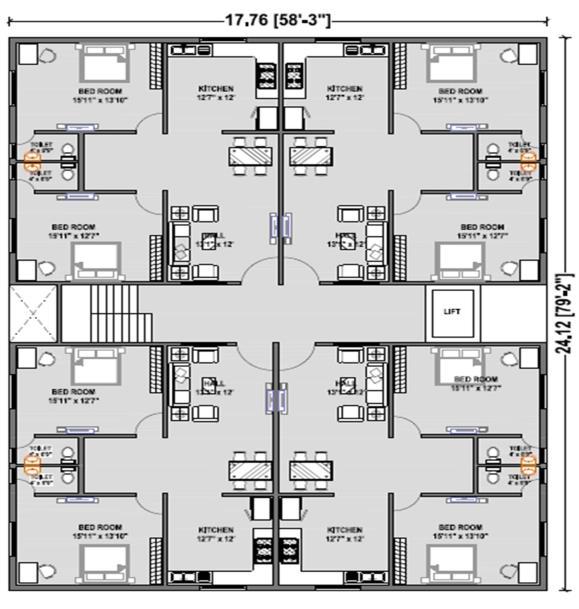
:Plan
3. Results and discussion
ETABS software was used to model RCC buildings with conventionalandflatslabdesigns,consideringsoft,medium, and hard soil conditions. Models were developed for both G+9andG+19structures,analyzedusingresponsespectrum andtimehistorymethods.Theanalysiscoveredtwobuilding conditionsand five soiltypes.Seismic parameterssuchas displacement, base shear, story drift, and period were evaluated and compared across fixed base conditions, differentsoiltypes,andslabconfigurations.
mmx600mm ISHB350
Column 600mmx600mm ISMB350 Beam
Table -3: BRBmaterial
Figures summarizes seismic parameters including story displacement, base shear, story drift, and displacement obtainedfromresponsespectrumandtimehistoryanalyses for G+9 and G+19 buildings. Comparative graphical representationsoftheseparametersacrossvariousmodels withdifferentslabtypesandsoilconditionsusingresponse spectrum and time history methods are presented in subsequentfigures.(fewofmanyresults)
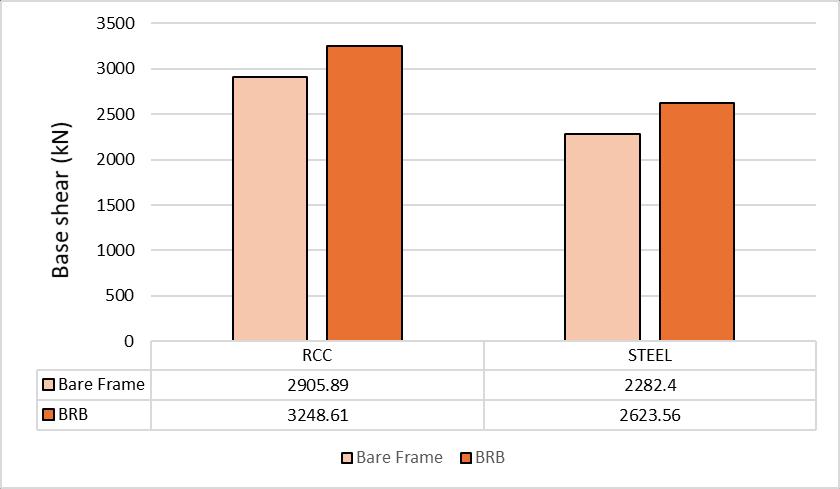
ComparisonofBaseshearof10Storey(Zone4,Soft Soil)
International Research Journal of Engineering and Technology (IRJET) e-ISSN: 2395-0056
Volume: 11 Issue: 06 | Jun 2024 www.irjet.net p-ISSN: 2395-0072
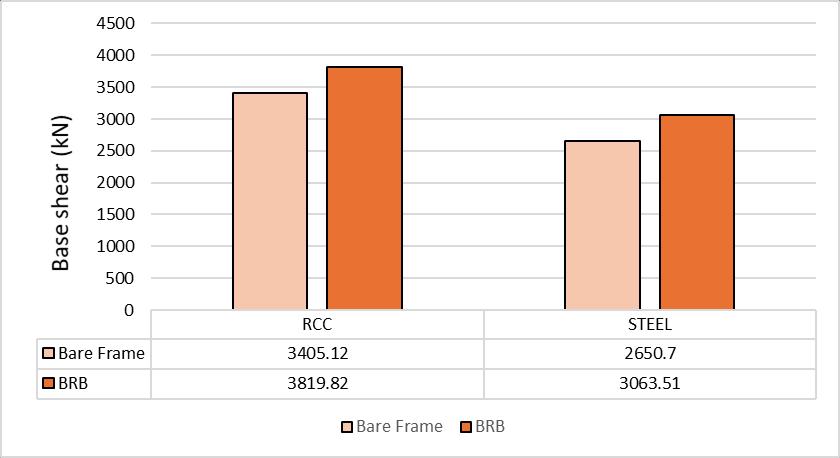
Comparisonofbaseshear20storey(zone4softsoil)
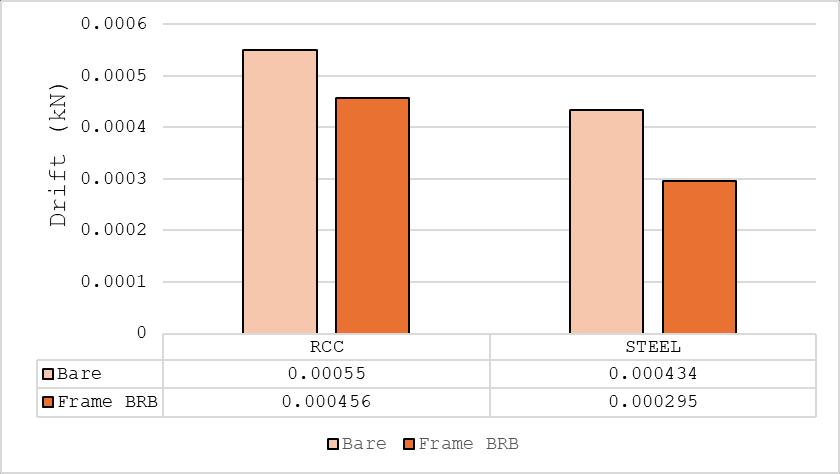
Fig.4 Comparisonofdrift10storey(zone4mediumsoil)
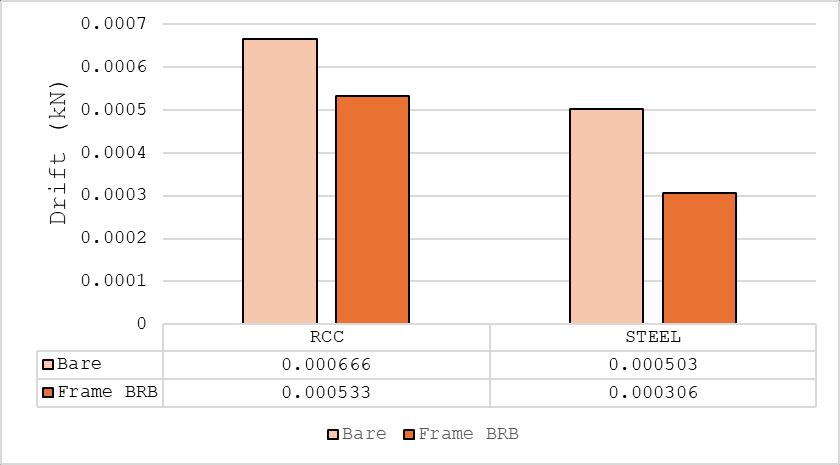
Fig.5 Comparisonofdrift20storey(zone4mediumsoil)
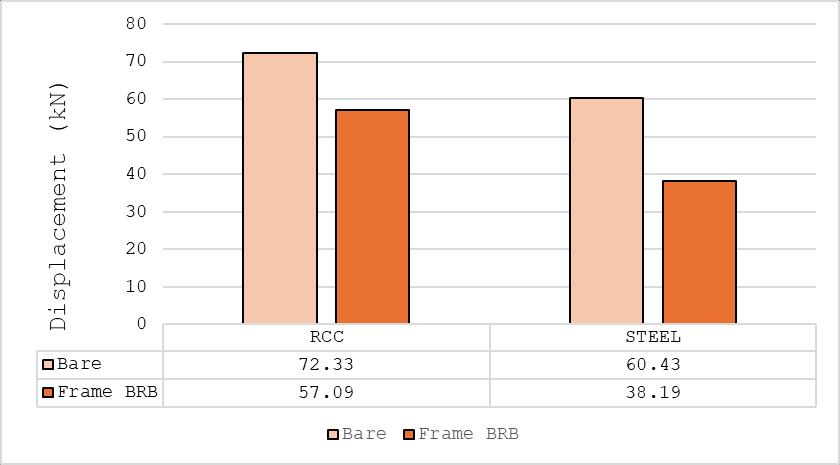
Fig.6 Comparisonofdisplacement20storey(zone5soft soil)
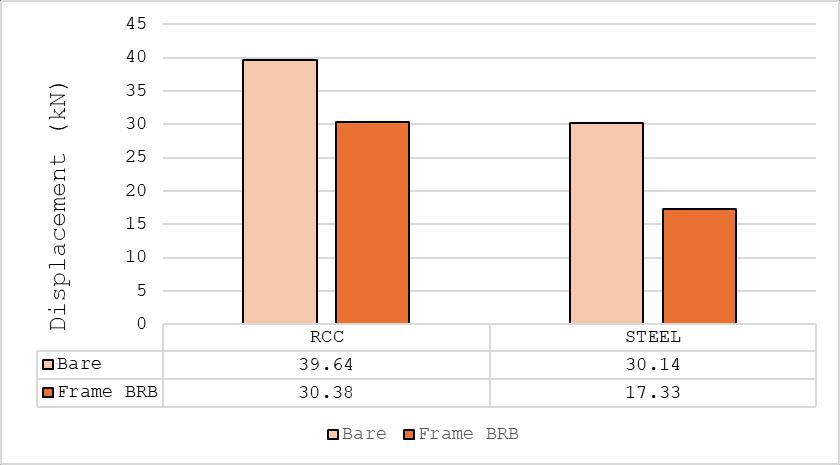
Fig.7 Comparisonofdisplacement10storey(zone5soft soil)
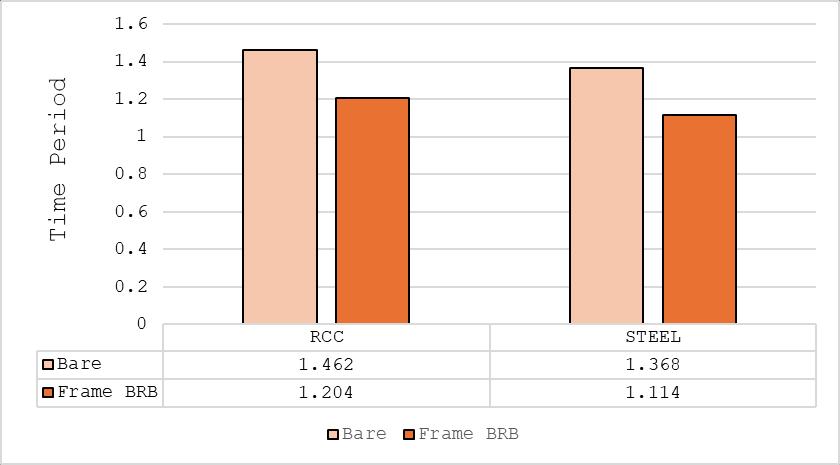
Fig.8 Comparisonoftimeperiod10storey
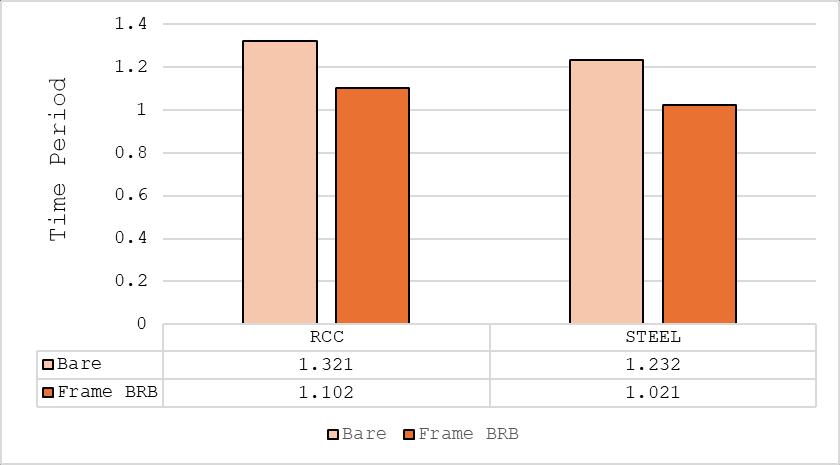
Fig.9 Comparisonoftimeperiod10storey
TheinclusionofBRBsinsteelstructuresleadstoan increaseinbaseshearby13%to25%comparedto bareframes.
BRBs in RCC structures result in a base shear increaseof10%to14%comparedtobareframes.
Insteelstructures,displacementdecreasesby25% to65%withBRBscomparedtobareframes.
InRCCstructures,displacementdecreasesby15%to 29%withBRBscomparedtobareframes.
International Research Journal of Engineering and Technology (IRJET) e-ISSN: 2395-0056
Volume: 11 Issue: 06 | Jun 2024 www.irjet.net p-ISSN: 2395-0072
Drift decreases by 32% to 60% in steel structures withBRBscomparedtobareframes.
Drift decreases by 17% to 43% in RCC structures withBRBscomparedtobareframes.
The effectiveness of BRBs is highest in steel structures, where both displacement and drift are significantlyreducedwithminimalincreaseinbase shear.
1. E.Talebi,andF.Zahmatkesh,“PerformanceofBRBF and Comparing it with the OCBF”, International Journal of Civil, Environment, Structural, Construction and Architectural Engineering, Vol.4, No.8,2010.
2. Nikhil D. Sontakke, and P. S. Lande, “Comparative Study of Buckling Restrained Braced and Conventional Braces in a Medium Rise Building”, InternationalJournalofEngineeringResearch,Vol.5, pp.625-628,2016.
3. C. J. Black, N. Makris, and I. D. Aiken, “Component Testing,SeismicEvaluationandCharacterizationof Buckling-Restrained Braces”, Journal of Structural Engineering,Vol.130,No.6,pp.880-894,2004
4. W. N. Deulkar, C. D. Modhera, and H. S. Patil, “BucklingRestrainedBracesforVibrationControlof BuildingStructure”,InternationalJournalofRecent Researchand Applied Studies, Vol.4, No.4, pp.363372,2010.
5. K.P.Shadiya,andR.Anjusha,“BracingConfiguration Effect on Buckling Restrained Braced Frames”, International Journal of Innovative Research in Science, Engineering and Technology, Vol.4, No.4, pp.2552-2560,2015.
6. K. G. Viswanath, K. B. Prakash, and Anant Desai, “Seismic Analysis of Steel Braced Reinforced ConcreteFrames”,InternationalJournalofCiviland StructuralEngineering,Vol.1,pp.114-122,2010.
7. Ahmad Fayed Ghowsi and Dipti Ranjan Sahoo, “SeismicPerformanceofBucklingRestrainedBraced Frames with Varying Beam-column Connections” Internationaljournalofsteelstructures,Vol.13,No.4, pp.609-621,2013.
8. D.R.PanchalandP.M.Marathe“ComparativeStudy of R.C.C, Steel and Composite (G+30 Storey) Building”instituteoftechnology,NIRMAuniversity, AhmedabadDec,2011.
9. ETC…