
International Research Journal of Engineering and Technology (IRJET) e-ISSN:2395-0056
Volume: 11 Issue: 06 | Jun 2024 www.irjet.net p-ISSN:2395-0072

International Research Journal of Engineering and Technology (IRJET) e-ISSN:2395-0056
Volume: 11 Issue: 06 | Jun 2024 www.irjet.net p-ISSN:2395-0072
Suryakant Maurya1, Mr. Ushendra Kumar2
1Master of Technology, Civil Engineering, Lucknow Institute of Technology, Lucknow, India
2Head of Department, Department of Civil Engineering, Lucknow Institute of Technology, Lucknow, India
Abstract - The project aims to find suitable waste materials from various industries and the environment to replace cement andaggregate in highwayconstruction.Globalstudies have highlighted the negative impacts of waste materials on the environment andhuman health, emphasizing the need for substitutes with similar properties to cement. Using waste materials in construction reduces the reliance on cement, cutting costs and minimizing harmful effects. Proper design and material selection are crucial in incorporating waste materials into pavement construction to ensure longevityand durability. Construction practices likeplacement,compaction, and curing also play a significant role in the durability of concrete pavements. The focus of the project is on utilizing plastic waste and Electric Arc Furnace Slag (EAFS) as replacements for coarse aggregate and cement, respectively. Tests were conducted to determine standard values and ranges for these materials,establishingarelationshipbetween different proportions of plastic aggregate and EAFS and compressive strength values. Substituting 20%ofcementwith EAFS resulted in a 4.58MPa increase in compressive strength at 7 days, with the highest value recorded for unmodified concrete at 28 days. The difference in compressive strength values decreased with higher percentagesofcoarseaggregate substitution. The optimal value was found at 2.5% replacement of coarse aggregate with plastic aggregate for 7 and 14 days, while the highest value was observed at 5% replacement for 28 days.
Key Words: Waste Material, Pavement, Rigid Pavement, Improvement,strengtheningofthepavement.
Employing cutting-edge technologies in the production of eco-friendlyconstructionmaterials,suchasself-compacting concrete derived from a variety of industrial byproducts, represents a proactive approach to environmental conservationwhileensuringthefabricationoflong-lasting construction materials. Concrete, a predominant building material,consistsmainlyofsand,aggregates,andcement.By substitutingcementwithpozzolanicmaterialslikeflyash, silica fume, rice husk ash, metakaolin, and Electric Arc FurnaceSlag(EAFS),andutilizingcrushedgranulatedblast furnace slag to reduce production costs, the structural integrityandstrengthofconcretearemaintained.However, the extensive extraction of concrete ingredients from the Earth's crust each year leads to environmental strain
throughresourcedepletion.Recenttechnologicalprogress underscorestheimportanceofusingindustrialandorganic wastematerialsasalternativeresourcesformanufacturinga varietyofvaluableproducts.Commonsolidwastessuchas plasticwaste,EAFS,ricehusk,anddiscardedconstruction materials can be repurposed through strategies involving partialcementreplacementtomeetthegrowingdemandfor cement and concrete. Plastic waste, in particular, poses challengesduetoitsslowdecompositionrateandextended lifespan.Improperdisposalofplasticwastecontributesto environmental deterioration and economic burdens, resulting in contamination of the food chain, loss of biodiversity, energy inefficiencies, and financial repercussions. Additionally, the presence of EAFS in industrial settings presents health risks to workers and creates unfavorable working conditions. To tackle these issues,theintegrationofplasticwasteandEAFSintorigid pavementconstructionemergesasapromisingsolutionto reducewasteaccumulationinthevicinity.Byincorporating these materials into pavement construction, not only is wasteeffectivelymanaged,butalsoenvironmentallyfriendly andefficientpracticesarepromoted.Theinclusionofplastic waste and EAFS in concrete offers numerous benefits, makingitasustainableandviablechoiceforinfrastructure development.
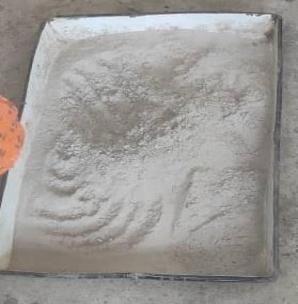
BlastFurnace(BF)slagandSteel-Making(SM)slagarethe two main types of slags produced in the steel industry. Electric Arc Furnace Slag (EAFS) is a type of Steel-Making slag thatis extracted through the refinement of discarded steelscrapinanelectricarcfurnace.EAFSischaracterized by its high concentration of free calcium and iron oxides. Thisslagisobtainedduringthesteelmakingprocess,which involves melting liquid steel and then undergoing acid refining.Thematerialhasarockytextureandcanbeeasily crushed, making it suitable for use as concrete aggregate. Utilizing EAFS not only provides a partial solution to environmental challenges but also helps improve the microstructure of concrete. This improvement is often difficulttoachievewithjustpurePortlandcement.Theuse ofEAFSthathaspassedthrougha90-micronsieveisvisually demonstrated in the project's representation. By incorporating EAFS into concrete production, the project aims to showcase the benefits of using this slag as a sustainablealternativeinconstructionmaterials.
International Research Journal of Engineering and Technology (IRJET) e-ISSN:2395-0056
Volume: 11 Issue: 06 | Jun 2024 www.irjet.net p-ISSN:2395-0072
Upon thorough analysis of various research studies and laboratoryexperiments,itwasdeterminedthatthehighest compressivestrengthcanbeachievedbysubstituting30% of cement with EAFS during testing in a controlled environment.Surprisingly,adifferentstudyproposesthat the most effective replacement value isactually20%.It is worthnotingthattherewasasignificantdecreaseof6.4MPa incompressivestrengthwhenusinga20%replacementof cementwithEAFS,comparedtothefindingsoftheprevious research.Theseresultsunderscorethecriticalimportanceof carefully selecting the appropriate percentage of cement replacement to achieve the best possible compressive strength outcomes. It is evident that further investigation andexperimentationarenecessarytofullyunderstandthe optimal conditions for enhancing compressive strength in constructionmaterials.
Therearemultiplefactorsthatcanleadtodifferencesinthe results observed, such as variations in the composition of slag, variations in the conditions under which the curing process takes place, and differences in the methodologies used for testing. It is also important to note that the size, shape,andtreatmentofthesamplesbeingtestedcanhave animpactonthevaluesobtainedforcompressivestrength. Moreover, even subtle differences in the calibration of equipment and the techniques used by operators can introducevariabilityintotheresultsobtained.Despitethe challenges that come with comparing data from different sources, it is crucial to emphasize the significance of maintaining rigor and standardization in experimental
procedures. Looking ahead, it will be essential to work towardsaligningmethodologiesandestablishingcommon standardsfortestingthepropertiesofElectricArcFurnace Slag (EAFS) in order to facilitate meaningful comparisons and enhance our knowledge of this versatile material. By engagingincollaborativeeffortsandadoptingtransparent reporting practices, wecan overcome these obstacles and cultivategreaterconfidenceinthecharacterizationofEAFS properties, ultimately enabling more informed decisionmakinginengineeringapplications.

Graph of Slag for Compressive Strength 7 Days vs. % Replacement of EAFS.
4.COMPRESSIVE STRENGTH TEST OF EAFS FOR 14 DAYS
ThecompressivestrengthtestforElectricArcFurnaceSlag (EAFS)atthe14-daymarkisacrucialstepinassessingthe quality and performance of this material. To conduct this test,representativesamplesofEAFSarecarefullycollected and then shaped into cylindrical specimens following specificstandarddimensions.Thesesamplesarethenplaced inacontrolledenvironmentforacuringperiodof14daysto allow for proper strength development. Once the curing period is complete, the specimens are removed from the molds with precision, and their dimensions are measured accurately to ensure consistency. Subsequently, the specimensaresubjectedtocompressiveforceinauniversal testingmachine,wheretheforceisappliedataconstantrate until failure occurs. The maximum load at which failure happensisrecordedforeachspecimen,andthecompressive strengthiscalculatedbydividingthismaximumloadbythe cross-sectionalareaofthespecimen.
Afterconductingthetestonmultiplesamples,theaverage compressive strength of the EAFS at the 14-day mark is determined and reported, along with any noteworthy observationsorfindings.Itisessentialtoadheretorelevant standards and guidelines during the testing process to ensuretheaccuracyandreliabilityoftheresultsobtained. Notably, the test results showed that the maximum compressivestrengthwasachievedwitha30%replacement
International Research Journal of Engineering and Technology (IRJET) e-ISSN:2395-0056
Volume: 11 Issue: 06 | Jun 2024 www.irjet.net p-ISSN:2395-0072
of EAFS, indicating the potential benefits of using this materialincertainapplications.
Table-1: Compressive Strength estimation when slag is used for 14 days
TheflexuralstrengthtestofElectricArcFurnaceSlag(EAFS) at7daysisacrucialevaluationofthematerial'sabilityto resistbendingforces.Toconductthistest,carefullyprepared representative samples of EAFS are shaped into either cylindrical or rectangular forms, following specified standards.Thesesamplesthenundergoameticulouscuring processundercontrolledconditionsforadurationof7days, which helps in promoting hydration and strength developmentwithinthematerial.Afterthecuringperiodis completed, the samples are allowed to adjust to room temperaturebeforetheactualtestingtakesplace.
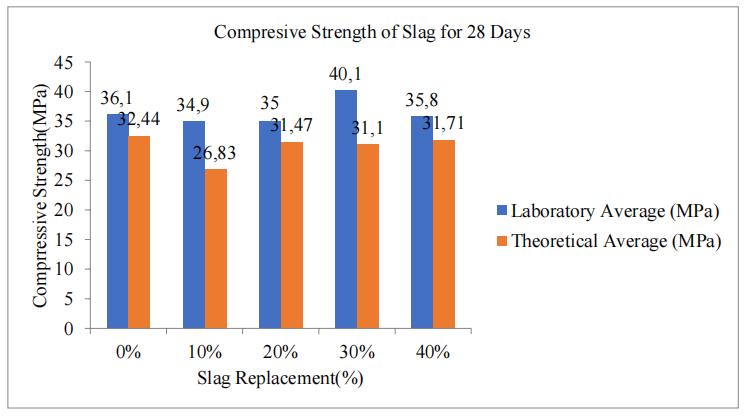
During the laboratory testing, it was observed that substituting 30% of cement with slag yielded the highest compressive strength value after 28 days. This discovery contrasts with the findings of a previous research paper, which indicated that unmodified concrete had the highest value.However,thelaboratorytestingshowedanincreasein compressive strength compared to the earlier study. In particular, there was a significant 9 MPa increase in compressivestrengthwhen30%ofEAFSwassubstitutedfor cement during laboratory testing, in comparison to the results of the previous paper. These results imply that incorporatingslagasapartialreplacementforcementcould enhancecompressivestrengthvaluesandwarrantfurther investigationinfutureresearchendeavors.
Days.
During the testing process, a specialized flexural strength testing machine is utilized, calibrated according to either ASTMguidelinesorotherrelevantstandards.Thesamples arepositionedonsupportswithinthetestingmachine,anda loadisappliedgraduallyandconsistentlyuntilthesamples reachtheirbreakingpoint.Themaximumloadenduredby each sample, as well as the corresponding amount of deflectionatthepointoffailure,arebothcarefullyrecorded foranalysis.
Following the testing phase, the flexural strength of each sampleisdeterminedusingspecificformulasthatconsider keyparameterssuchasthemaximumloadapplied,thespan length,andthedimensionsofthesample.Thesecalculated flexural strength values are then documented along with details regarding the preparation of the samples, the conditions under which they were cured, and the specific parametersofthetestingprocess.Theseresultsplayavital role in assessing the performance of EAFS and in determiningitssuitabilityfordifferentapplications.
It is essential to strictly adhere to established testing protocols and standards to ensure the accuracy and reliabilityoftheresultsobtainedfromtheflexuralstrength testofEAFS.Byfollowingtheseguidelines,researchersand engineerscanmakeinformeddecisionsregardingtheuseof EAFSinvariousconstructionandindustrialsettings.
International Research Journal of Engineering and Technology (IRJET) e-ISSN:2395-0056
Volume: 11 Issue: 06 | Jun 2024 www.irjet.net p-ISSN:2395-0072
7.COMPARISON BETWEEN PREVIOUS RESEARCH AND LABORATORY DATA FOR 7 DAYS FLEXURAL STRENGTH OF EAFS
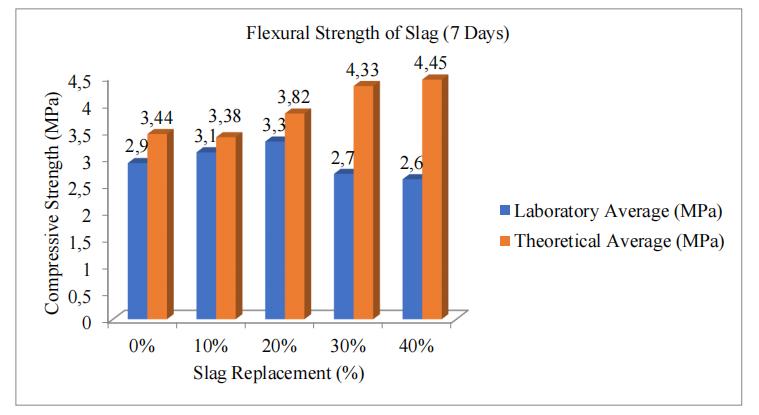
When it comes to concrete, the flexural strength is highly dependentontheproportionsused.Interestingly,laboratory datashowsthattheoreticalstrengthstendtobehigherthan whatisactuallyobservedinpractice.Thereareanumberof factorsthatcouldcontributetothisdiscrepancy,including theuseofdifferentadditivesandanincreaseinthewatercement ratio. Additionally, the quality of cement used can also impact flexural strength outcomes. Overall, it's importanttocarefullyconsiderallofthesevariableswhen workingwithconcreteinordertoachieveoptimalresults.
8. FLEXURAL
TEST OF EAFS FOR 28 DAYS
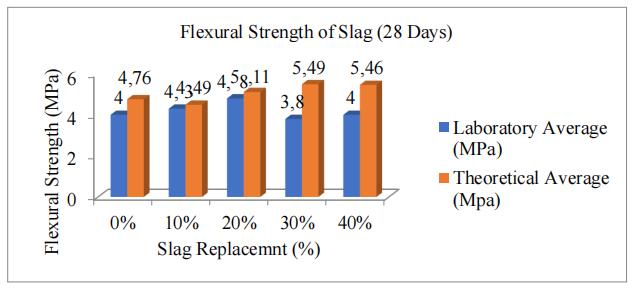
Duringlaboratorytestingandresearchpaperanalysis,itwas discoveredthatthemosteffectivevalueforflexuralstrength after 28 days was achieved through the use of slag as a replacementforcement.Specifically,a20%replacementof cementwithslaginlaboratorytestingprovedtobeoptimal, whilea30%replacementwasfoundtobemosteffectivein the research paper. These findings suggest that incorporating slag into cement mixtures may have significantbenefitsintermsofimprovingflexuralstrength.
9.COMPARISON BETWEEN PREVIOUS RESEARCH AND LABORATORY DATA FOR 7 DAYS SPLIT TENSILE STRENGTH OF EAFS
After conducting laboratory testing for 7 days, it was discoveredthatthemostidealtensilestrengthvalueswere achievedthroughtheuseofslagreplacementsofeither10% or40%.Interestingly,previousresearchhadonlyidentified the optimal value as being associated with a 40% slag replacement. This finding highlights the importance of continuedexplorationandexperimentationwithinthisfield, as new information and insights may lead to even more effectivesolutionsinthefuture
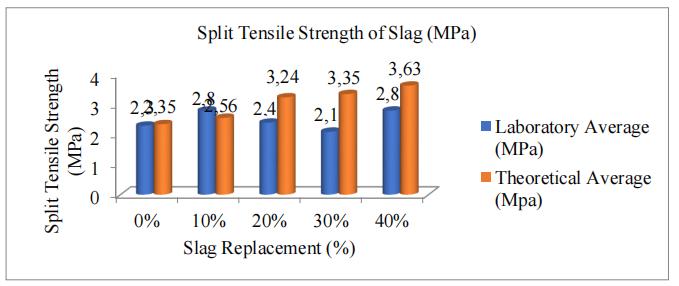
Graph of Slag for Tensile Strength 7 Days vs. % Replacement of EAFS.
ThestudyinvolvedreplacingEAFSwithcementandcoarse aggregatewithplasticwasteinvaryingratios.Compressive strength increased up to 30% replacement of cement by EAFS for 7 days in laboratory testing. The maximum compressivestrengthwasobservedat30%replacementof cement by EAFS for 28 days. However, increasing the percentage of slag replacement led to a decrease in compressive strength for 28 days. In terms of flexural strength,theoptimalvalueforconcrete(M40)wasfoundat 20%replacementofcementinthelabfor7,14,and28days. Contrarily, the research paper indicated that the best replacementwasat40%.Tensilestrengthtestingrevealed thattheoptimalvaluewasdiscoveredfor10%and40%slag replacement for 7 days in the lab, but the research report identifiedtheidealvalueonlyfor40%slagreplacement.The characteristicsofsteelslagaggregatelikelyinfluencedthe strengthincrease.
Thecompressivestrengthofplasticreplacedaggregatewas found to be optimal at 2.5% replacement in laboratory testing, contrasting with the research paper's finding of maximumstrengthat5%replacementofcoarseaggregate.
Forflexurestrength,thebestvalueat7dayswasobservedat 2.5%replacementofcoarseaggregatewithplasticwastein both laboratory and research paper settings. There was a
International Research Journal of Engineering and Technology (IRJET) e-ISSN:2395-0056
Volume: 11 Issue: 06 | Jun 2024 www.irjet.net p-ISSN:2395-0072
17.14% increase in flexure strength at 5% replacement compared to unmodified concrete, showing a linear relationship between flexure strength and percentage replacementofcoarseaggregatewithplasticwasteupto5%.
1. IRC: 6-2010 Standard Specifications and Code of Practice for Bridges Section II Load stresses, Indian RoadCongress,2010
2. IRC: 21-2000 Standard Specifications and Code of PracticeforBridgesSectionIII,
3. N. Krishna Raju, “Design of bridges”, Oxford & IBH publishingCo.Pvt.ltd,ISBN81-204-0344-4
4. N.KrishnaRaju,“Prestressedconcrete”,2014,Mcgraw HillEducationPrivateLimitedISBN81-204-0396-7.
5. D. Johnson Victor,1973, “Essentials of bridge engineering”,Oxford&IBHpublishingco.Pvt.ltd.ISBN 81-204-0396-7.
6. IS:456-2000IndianStandardCodeofPracticeforPlain andReinforcedConcrete
7. Hellon G. Ogallob, Manoj K. Jhaa, ―A Quantitative Analysis of Sustainability and Green Transportation Initiatives in Highway Design and Maintenance‖ EWGT2013–16thMeetingoftheEUROWorkingGroup onTransportationvol.no.111(2014)pp.1185–1194.
8. INyoman Sutarja, Ida Bagus Rai Widiarsa, ―Partial prestressedconcreteslabsasanalternativeforvehicle decks of steel truss bridges‖ The 5th International Conference of Euro Asia Civil Engineering Forum (EACEF-5)vol.no.125pp.974–978.
9. Khairmode A. S., Kulkarni D. B. ― Analysis of Prestressed Concrete Multi-cell Box Girder Curved Bridge‖InternationalJournalofScienceandResearch (IJSR)Volume5Issue6,June2016.
10. Klaudiusz Fross, Marek Salamak ―Bridges in Urban Planning and Architectural Culture‖ World MultidisciplinaryCivilEngineering‖vol.no.161(2016) PP.207–212.