
International Research Journal of Engineering and Technology (IRJET) e-ISSN: 2395-0056
Volume: 11 Issue: 06 | Jun 2024 www.irjet.net p-ISSN: 2395-0072

International Research Journal of Engineering and Technology (IRJET) e-ISSN: 2395-0056
Volume: 11 Issue: 06 | Jun 2024 www.irjet.net p-ISSN: 2395-0072
Vipul Kohinkar1 , Pratik Kinniwadi2 , Shubham Ware3 , Shreyas Paraspatki4, Ashish Kumar 5
1,2,3,4 UG Student, 5Assistant Professor Department of Mechanical Engineering JSPM's Rajarshi Shahu College of Engineering, Tathawade, Pune, Maharashtra, India
Abstract - Anautomatictireinflationsystem,oftenreferred to as ATIS, is a cutting-edge technology designed to enhance vehicle safety, performance, and efficiency. This innovative system constantly monitors and adjusts the air pressure in a vehicle's tires, ensuring they remain at the optimal level for various driving conditions. By maintaining proper tire pressure automatically, ATIS not only improves fuel economy but also reduces the risk of accidents caused by underinflated or overinflated tires. In this discussion, we will delve deeper into the benefits, components, and working principles of automatic tire inflation systems, highlighting their significanceinmoderntransportation.Thispaperexploresthe benefits, components, and operational principles of ATIS, emphasizing its role in modern transportation. Real-time monitoring and automatic inflation features of ATIS ensure enhancedvehiclesafety,improvedfuelefficiency,andextended tirelifespan.Thepaperalsodiscussesthesevereconsequences of driving with low tire pressure, such as reduced fuel efficiency, compromised handling, increased risk of blowouts, and overall vehicle instability. Understanding and implementing ATIS can lead to safer, more efficient, and environmentally friendly driving experiences.
Key Words: Automatictireinflationsystem(ATIS,Vehicle Performance, Pressure monitoring, underinflated tires, Safety.
Anautomatictireinflationsystem,oftenreferredtoasATIS, is a cutting-edge technology designed to enhance vehicle safety,performance,andefficiency.Thisinnovativesystem constantly monitors and adjusts the air pressure in a vehicle'stires,ensuringtheyremainattheoptimallevelfor various driving conditions. By maintaining proper tire pressure automatically, ATIS not only improves fuel economy but also reduces the risk of accidents caused by underinflatedoroverinflatedtires.Inthisdiscussion,wewill delve deeper into the benefits, components, and working principles of automatic tire inflation systems, highlighting their significance in modern transportation. This paper explores the benefits, components, and operational principles of ATIS, emphasizing its role in modern transportation.Real-timemonitoringandautomaticinflation featuresofATISensureenhancedvehiclesafety,improved fuel efficiency, and extended tire lifespan. The paper also discussesthesevereconsequencesofdrivingwithlowtire
pressure, such as reduced fuel efficiency, compromised handling, increased risk of blowouts, and overall vehicle instability.UnderstandingandimplementingATIScanlead to safer, more efficient, and environmentally friendly drivingexperiences.
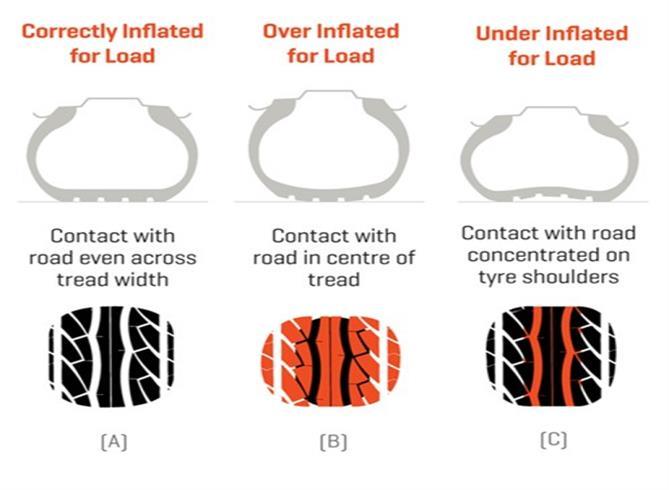
The Automatic Tire inflation system project is highly relevantintoday'scontextduetovariousreasonssuchas
Handling:Tirepressureinfluenceshandlingbyaltering the tire’s stiffness and its response to the input received. When the tire pressure is low, tire becomes softer and exhibits poor performance in changing direction and maintainingtherightdirectionasrequiredbythesteering.
Fuel Efficiency:Someofthewaysofhowtoconservefuel includeensuringthatyourvehiclehastherighttirepressure. AnATIScanreducefuelconsumptionofvehiclesandentails costsavingsaswellasreductionstowardvehicles’negative impactontheenvironment.
Tire Longevity: Maintaining correct tire pressure is economicalasitmakesthetirestolastlongerandtherefore the periods between replacements are longs and thus the costs.
Convenience:Automatictireinflationcanthereforebe describedasanadvantagebecauseitsavestimethatwould otherwisebeusedincheckingandadjustingthepressure.
Environmental Impact: Optimizing the tire pressure meansthatthereislesswearandtearonthetires,including
International Research Journal of Engineering and Technology (IRJET) e-ISSN: 2395-0056
Volume: 11 Issue: 06 | Jun 2024 www.irjet.net p-ISSN: 2395-0072
thesubsequentsheddingofmicroplasticsfromwear,which makescarsenvironmentallyfriendly.
Safety: ATIS can reduce the number of stops required during a long trip as it can be unsafe for rider to stop in middleofroadespeciallyduringnighttime.
In the paper [1], it describes an Automatic Tire Inflation Systemthattendstosustaintirepressureforthevehicles.It utilises a compressor, a rotary joint, tubes, and pressure indicators that help in inflating tires as soon as they get deflatedbelowtherecommendedrate.Thesystemoptimizes fuel consumption and the vehicle stability as well as democratizes the tire safety and durability, saves time on regular tire pressure checks, and also increases overall vehiclecontrol.Aspecial emphasisismadetounderstand how each of the components helps address the above benefits.
Inthepaper[2]discussestheintegrationofanautomobile TirePressureMonitoringSystemsandAutomaticAirFilling System including its parts and its working. It employs a squadofsensorsaswellasacompressortoregulateandto checktirepressureasawayofpromotingsafetyofvehicles, efficiencyintheirusageoffuelanddurabilityoftires.The study of this system helps in understanding of the incorporation of real-time detection and simultaneous controlinvehicularsystems.
Thepaper[4]presentsanewportablecompressordriven by permanent magnet brushless DC motor. This study encompasses the designs of three dimensional model, analysis of forces and simulations/experiments. In this research,highefficiencyandlowvibrationarehighlighted for the compressor indicating notable enhancements comparedtotheconventionalcompressordesigns
Frompaper[5],itstudiesandinvestigatestheinfluenceof riskperceptionandanticipatedregretondrivers'intention touseTPMSimplementationswhichisameasuretolower the number of tire blowout accidents. Results indicate a significantpositiverelationshipbetweenriskperceptionand intentiontoadoptTPMSbutnotforanticipatedregret.There wasnomoderationoftheserelationshipsbytheoptimism bias
The Paper [6] , proposes a hybrid TPMS (h-TPMS) which integrates both direct and indirect approach sensors to monitorthestate-of-inflationofallfourtiresusingasingle pressure sensor, some mathematics and data processing tricks.Themainadvantageofthish-TPMSisthelowcostand high performance which is experimentally verified under differentroadconditionsandloads.Thesystemalsosatisfies theEuropeannormativerequirementsforTPMS.
The Paper [7], conducts an analysis of tire failure-related crashes and injury severity on a mountainous freeway. Crash-levelfactorsthatmaycontributetotheoccurrenceof tirefailures,includinglowtirepressure,smoothtires,and roughroadwaysurface,areinvestigatedinthispaper.Tire failures have a substantial impact on injury severity, particularlywhencombinedwithrollover,fire,orguardrail collision. The findings of this study suggest the need for state-wide mandatory tire inspection laws and propose some countermeasures to alleviate the problems of tirerelatedcrashesandimprovetrafficsafety.
Requirement Analysis:Themethodologycommencedwith acomprehensiveanalysisofvehiclespartsanddimensionof wheel.Thisinvolvedidentifyingdimensionsofwheel’saxle andspacinginbikewheretheAutomatictireinflationsystem canbeequipped.
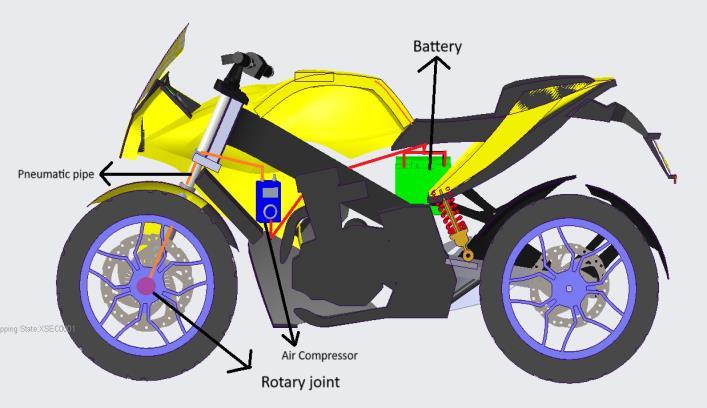
Component selection: The system requires various components,includinganaircompressor,pneumaticpipes, tire pressure monitoring sensors, a microcontroller, and a rotary joint. The rotary components will be designed and modelledusingCADsoftwaretoensurepreciseintegration andfunctionality.
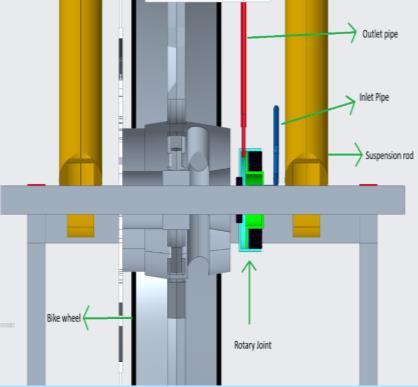
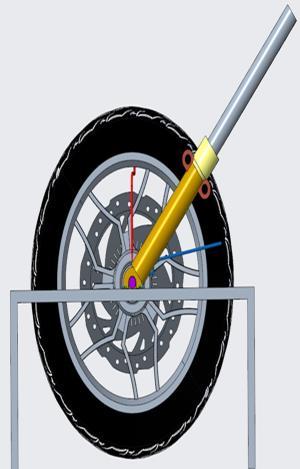
System Design: The ATIS’s parts are designed on a CAD software such as Creo where the rotary joint which is equipped on the axle of wheel is designed as per the dimension of axle and spacing between the wheel and thesuspensionrod.
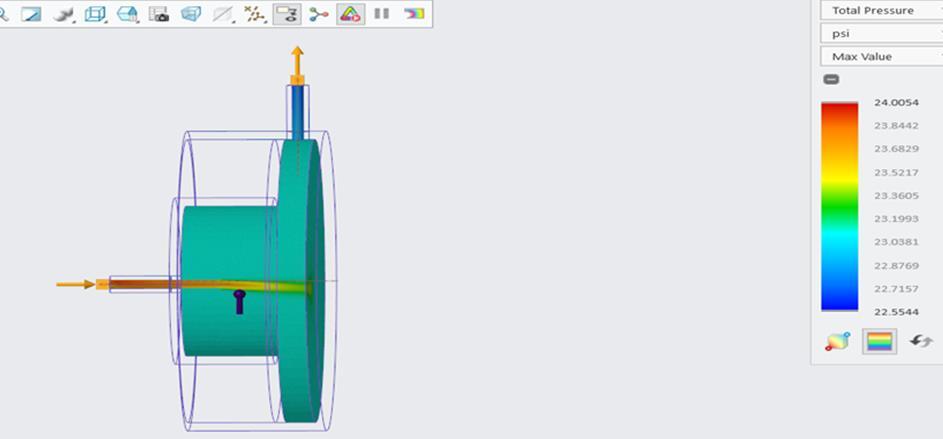
Analysis: The rotary joint is then analyzed on the CFD softwaretochecktheproperflowofcompressedairfromthe aircompressortothe rotaryjointwhile rotatingalongthe wheel.Thesimulationisdonetoprovideproperinformation ofpressureatdifferentpointsinrotaryjoints.
Prototyping: The designed part after the analysis and simulationisthenprototypedwiththehelpof3-Dprinting whereaPLA(Polylacticacid)whichisabiodegradableand recyclablematerialandhaslowmeltingpoint,highstrength, low thermal expansion, and good layer adhesion which makesiteasytotestitinreallifeconditions.
Testing:Theprototypedpartisattachedtothebike'swheel and tested in real-life conditions. This allows for the collection of data and feedback which helps in the improvement of the system. These tests results offer us insights into the part’s toughness, practicality, general efficacyofthesystem.
Deployment, Monitoring and Feedback: After the experimentation and fine-tuning of the prototype in imitation-life condition, a new system is created for commercialusewhichisinstalledinactualautomobilesfor using in different types of bicycle such as scooters,
International Research Journal of Engineering and Technology (IRJET) e-ISSN: 2395-0056
Volume: 11 Issue: 06 | Jun 2024 www.irjet.net p-ISSN: 2395-0072
commuters, sports bikes and adventure bikes etc. These various vehicles are used in various occasions offering exhaustiveinformationontheoperationandreliabilityofthe part. In use, constant monitoring is done with the help monitoringsensorsuchastirepressuremonitoringsensor whicharemadetoensurethatthesystemisfullyfunctional
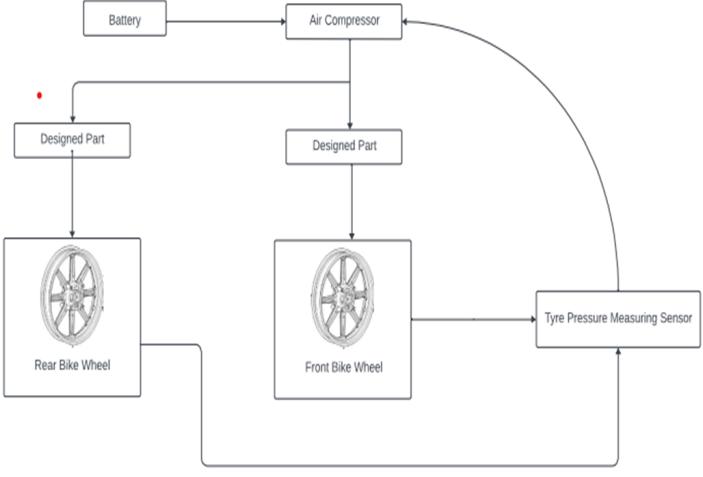
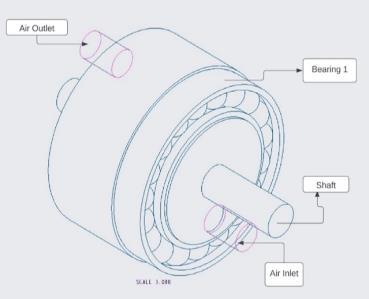
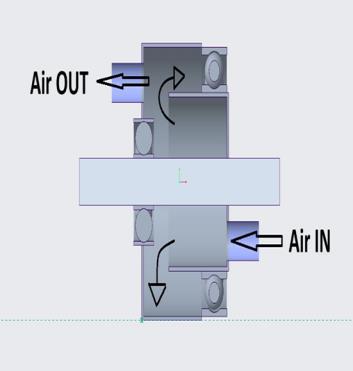
The outcomes of the project encompass several key aspectsthatcontributetoenhancingvehiclesperformance and user safety. Firstly, ATIS has all the key assets to enhancethetiresperformancebyprovidingoptionssuchas remote monitoring or maintaining proper tire pressure. Withthehelpofthissystem,theuserswillbeabletoalways keep their tires in the right condition hence making their vehiclesmoreefficient.Furthermore,ATISenhancessafety byofferingfeaturesforconstantandproactivemonitoring and controlling of the tires thus increasing the ability to prevent accidents resulting from bad tire conditions. Combinedwithotherpenaltiesthatcouldarisefrompooror blown tires, and addressing the opportunities for tire problemsbeforetheyturnintofailures,ATISplaysarolein avoiding accidents occasioned by tire blowouts or poor conditions.ATIShasthepotentialofhelpinguserstoreduce expensesassociatedwithvehiclemaintenanceaswhenusing vehiclewithlowtirepressurethereisincreaseinvibrations inthevehiclecausingdamagetomajorpartsandloosening of the joints in the vehicle which can lead to expensive repairing of vehicle parts. ATIS provides robust benefits since it increases tire’s performance, optimizes vehicle efficiency,minimizesprobableaccidents,andleadstogreat costsavingsfortheuser.
International Research Journal of Engineering and Technology (IRJET) e-ISSN: 2395-0056
Volume: 11 Issue: 06 | Jun 2024 www.irjet.net p-ISSN: 2395-0072
ThefuturescopeoftheAutomatictireinflationsystemis thatitisexpectedthatmostpassengercarsandcommercial vehicleswillbeequippedwiththistechnology.Itwillensure safety from tire-related accidents and will also keep the environment clean by preventing punctures. The fuel economyofthevehicleswillincreaseasthetireswillbekept inflatedtothedesiredpressure,whichwillinturndecrease fuelconsumptionandhenceemissionsintotheenvironment. Thegovernmentsandregulatorybodieswillbecompelledto enforcelawsforusingsuchatechnology,whichwillboostits usageamongthegeneralpublic.Incommercialvehicles,the Automatictireinflationsystemwillbethebackboneofthe operation,astherewillbehugeinvolvementofcapitaland labour. The downtime due to flat tires will be eliminated, whichwillincreasetheoperationallifeandefficiencyofsuch vehicles. They will become a necessity in the trucking industry.
ThedevelopmentofAutomatictireinflationsystemsand thesuccessfuldeploymentofsuchproductsarehencemajor milestones in improving vehicle safety and efficiency. Through advanced technologies that comprise real-time monitoring of pressure, Automatic mechanisms for adjustment, and compatibility with vehicle types, these systems represent a robust and complete approach to maintainingoptimumpressureinthetire.Thesesystemsare putthroughextensivetestsanditerationfortheirreliability andeffectivenessinprovidinguserswithimprovedsafety, decreasedenvironmentalimpact,andincreasedconfidence invehicleperformance.Besides,theyreducethenumberof accidents caused by underinflated tires and minimize environmental wastes by extending the life of the tires to preventtheirdisposal.
[1] InderjeetSingh,BhupendraPratapSingh,HariShankar Sahu,RaunakChauhan,NovelKumarSahu.ToStudyon ImplementationofTyreInflationSystemforAutomotive Vehicles.Volume 5 Number 4 2016.M. Young, The TechnicalWriter’sHandbook.MillValley,CA:University Science,1989.
[2] Ajas.M.A, Aishwarya.T.G, Adersh Vinayak, Surya Balakrishnan,JanahanlalP.S.TirePressureMonitoring andAirFillingSystem.InternationalJournalofResearch in Engineering and advanced Technology. Volume 2 Number 2 2014.K. Elissa, “Title of paper if known,” unpublished.
[3] Huhtala, M., Pihlajamaki, J., & Pienimaki, M. (1989). Effectsoftiresand tire pressureson road pavements. Transportationresearchrecord,1227,107-114.
[4] Mei-peng, Z. (2012, June). The Simulation and experiment research on new portable compressor. In 2012 IEEE Symposium on Electrical & Electronics Engineering(EEESYM)(pp.117-120).IEEE.
[5] Chen,K.Y.,&Yeh,C.F.(2018).Preventingtireblowout accidents: a perspective on factors affecting drivers’ intention to adopt tire pressure monitoring system. Safety,4(2),16.
[6] Formentin, S., Onesto, L., Colombo, T., Pozzato, A., & Savaresi, S.M. (2021).h-TPMS:a hybrid tire pressure monitoringsystemforroadvehicles.Mechatronics,74, 102492.
[7] Haq, M. T., Zlatkovic, M., & Ksaibati, K. (2020). Assessment of tire failure related crashes and injury severity on a mountainous freeway: Bayesian binary logit approach. Accident Analysis & Prevention, 145, 105693.