
International Research Journal of Engineering and Technology (IRJET) e-ISSN: 2395-0056
Volume: 11 Issue: 06 | Jun 2024 www.irjet.net p-ISSN: 2395-0072
International Research Journal of Engineering and Technology (IRJET) e-ISSN: 2395-0056
Volume: 11 Issue: 06 | Jun 2024 www.irjet.net p-ISSN: 2395-0072
Sapana
Chandel1 , Yogesh kumar Rathore2
1Department of CSE Shri Shankaracharya Institute of Professional Management and Technology Raipur, India
2Department of CSE Shri Shankaracharya Institute of Professional Management and Technology Raipur, India
Abstract - Driverdrowsinessisaleadingcauseoftraffic accidents,necessitatingtheadoptionofeffectivedetection technologies. This paper introduces "Fast Region Convolutional Neural Network," a real-time driver drowsiness detection system that uses a Convolutional Neural Network (CNN) with Leaky Faster, yolo R-CNN activation functions, with Eye Closure Ratio (ECR) as themajorsignal. Fast R-CNN successfully detects driver wearinessbyanalyzingeyemovementsandclosuresusing faciallandmarksidentifiedbythefacerecognitionlibrary. Fast R-CNN achieves an astounding 89.3% accuracy in differentiatingbetweenalertanddrowsystates.Thissystem improves road safety by providing instant notifications to drivers who exhibit signs of fatigue, with future developments aiming at incorporating additional physiological signals and optimizing the CNN architecture forevenbetteraccuracyandresponsiveness.
Key Words: Convolutional Neural Network, Eye Closure Ratio,FastR-CNN
Worldwide, driver fatigue is a significant factor in traffic accidents, underscoring the necessity for effective and precisedetectiontechnologies.Inthiswork,weprovide"fast R-CNN,"areal-timesystemfordetectingdriversleepiness usinganwebcam.Itusesa Convolutional Neural Network (CNN) architecture as its foundation [1]. By continuously analyzing eye motions and closures, our technology monitorsdriverwearinessandprovidespromptdetection andalertmethods.
Many research has examined how machine learning and computer vision detect fatigued driving. Our novel DrowsinessDetectionSystem(DDS)usesOpenCVforrealtimevideoanalysisandKeras-baseddeeplearningmodels trained on several datasets. This device continuously monitorsandalertsdriverstoweariness[2].Anothermodel proposedbyWissarutKongcharoenetal.showsthataCNN withHaarCascadeisthemostaccuratealgorithm(94%)for detecting tired drivers' eye condition and preventing accidents. This Internet of Things-based technology is inexpensiveandcouldimproveworldwideroadsafety[3].
Driver drowsiness is a major cause of road accidents, necessitating reliable detection systems. This study introduces "fast R-CNN," a real-time driver drowsiness detection system that employs a Convolutional Neural
Network(CNN)withLeakyFastR-CNNactivationfunctions, utilizingEyeClosureRatio(ECR)andEyeAspectRatio(EAR) as primary indicators. By analyzing eye movements and closures through facial landmarks detected via the face recognition library, effectively monitors driver fatigue. Trainedonadatasetof2000images,fastR-CNNachievesan impressiveaccuracyrateof893%indistinguishingbetween alertanddrowsystates.Thissystemenhancesroadsafetyby providing immediate alerts to drivers showing signs of fatigue, with future improvements aimed at integrating additional physiological signals and optimizing the CNN architectureforevengreateraccuracyandresponsiveness.
Driverfatiguewarningsystemshavebeenintegratedintoa subsetofvehiclesduetoADAS'songoingdevelopmentand enhancement[4].Additionally,severalautomatedsystems, including Lane Keeping Assist (LKA), Forward CollisionAvoidanceAssist(FCA),IntelligentSpeedLimitAssist(ISLA), and others, are in operation [5]. These systems enable driverstotemporarilydetachfromdrivingresponsibilities andassistinmanagingpotentiallyhazardoussituations.In actuality,thisassistant'sabilitytoidentifyhazardousdriving situations deteriorates. This is because ADAS depends on sensorsthataresusceptibletodegradationandmalfunction inadverseconditions.LKA,whichemployssensorstodetect the lane lines on the road, may malfunction if the road is inadequatelymarked.However,whilemostADASsystems prioritizeenvironmentawareness,minimaleffortisdevoted to driver monitoring. Although there is anticipation for wholly automated vehicles without accidents to grace the road, technological gaps persist. Moreover, motorist distractionistheprimaryobstacletoestablishingasecure transportationsystem.
Deep learning techniques, particularly CNNs, have been developedforimage-relatedapplicationswithgreatsuccess. Deep networks that have achieved success in image classification include AlexNet [6], ResNet [7], and VGGNet [8][9].However,applyingdeeplearningtechniquestosignal processinghasbeenrelativelysluggish.Asaresult,inorder toleveragethebenefitsofimage-basedCNNs(specifically, CNNs)toanalyzedriver behaviors,wesuggest converting thedrivingsignalsintomultipleimages.Inordertoachieve thisobjective,weemploytherecurrenceplotmethodasa streamlinedapproachtotransformsignalsintoimages[10]
International Research Journal of Engineering and Technology (IRJET) e-ISSN: 2395-0056
Volume: 11 Issue: 06 | Jun 2024 www.irjet.net p-ISSN: 2395-0072
Region-basedconvolutionalneuralnetworks(R-CNN)and conventional convolutional neural networks (CNN) fulfill distinct objectives in computer vision tasks [11][12]. The selection between them is contingent upon the particular demandsofthegivenundertaking.Thisdrivingsimulatorbased multimodal system detects driver weariness and distractionusingmanysensors.Thiscomprehensivedriver safetysolutionusesBayesiannetworksandhiddenMarkov modelsforfusiontoidentifyfatigue(98.4%)anddistraction (90.5%) with excellent accuracy [13]. Dome cameras monitor bus driver attentiveness even in tough settings usingslantviewinganglesforvision-basedfatiguedetection.
PERCLOS predicts driver attention using the continuousindicatorofeye-opening,andmulti-modelfusion infers eye state. Future studies will evaluate whether this techniqueforautomobilesandlorriesmayincreasedriver safetyintirednesswithoutaddingextracameras[14].
Yaman Albadawi's research uses real-time video data to detectdriverfatigue.TheRFclassifierwiththreeclassifiers had99%accuracyonNTHUDDD.ToimprovetheHOGface detector, a user-friendly mobile app and a camera that automatically focuses on the driver's face and adjusts to differentlightingconditionsarebeingdeveloped[15]
Nevertheless,itisimperativetoacknowledgethatR-CNNs, particularly their initial iterations, may incur significant computational costs and lack the efficiency of more contemporaryarchitecturessuchasFasterR-CNNorSingle ShotMultiboxDetector(SSD)[16].
The application of region-based fast R-CNN to detect motoristbehaviorsignifiesasubstantialprogressionwithin thedomainofintelligenttransportationsystems.CNNsare notablyeffectiveatidentifyingandlocalizingobjectswithin distinct regions of an image, which renders them exceptionally well-suited for endeavors that demand meticulous spatial comprehension. CNNs can effectively identifyandanalyzepertinentregionsofinterest,suchasthe driver's hands or visage, in the context of driver behavior detection, thereby contributing to a more nuanced understandingofbehavior.
Giventhecurrentknowledgeregardingappearance-based methodologies, a comprehensive outline of the subject matterisprovided.Theapproachdescribedin[17]allocates avectordenotingthenearestedgepixeltoeachpixelinthe edge map of the eye region. By matching these vectors' lengthandslopeinformationwithatrainingset,theeyesare consequentlydetectedandlocalized.Wu,Jianmingetal.[18] investigatetherelationshipbetweenfacial,upper-body,and environmentalmotionsandengagementintensityovertime. TheyproposeadeepregressionmodelthatcombinesLSTM, GRU, and a Fully Connected Layer to incorporate these motionfeatures.Lastly,gazetrackingcanimproveremote patientmonitoringandconsultationsintelemedicine.Gaze
data can provide insights into a patient's engagement, comprehension, and overall health status during virtual interactions[19].Althoughtheapproachesproposecreating efficientalgorithmsforprocessingdata inreal-time,more research isneededconcerningthe preciseoptimization of suchalgorithms.Real-timedataprocessingisoftheutmost importance for applications such as eye-gaze technology, especially in the healthcare industry, where prompt feedbackisvital.
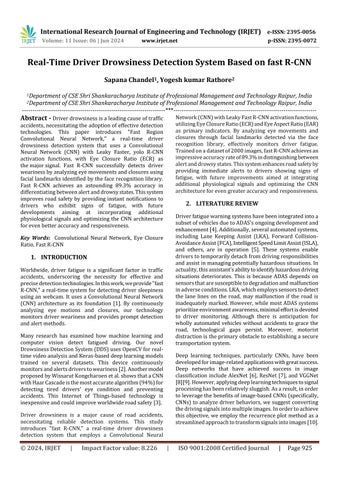
Figure 3 demonstrates step-by-step eye division. Preprocessing the eye image enhances the iris region and removes noise. Denoising, normalization, and contrast augmentationmayhelp.Edgedetectionmethodscanthen determine the iris boundaries. Detecting the iris' round shape is familiar with the circular Hough transform. StatisticalactivecontourmodelslikeDaugman'salgorithm cansegmenttheiris[20].
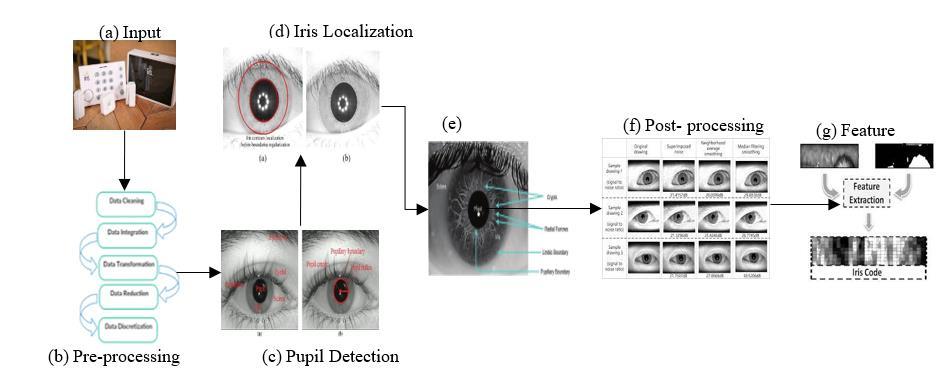
Three distinct categories of detection rates are utilized to assesstheefficacyoflivenessdetectionapproaches.Theoneeye detection rate is calculated by dividing the number of correctlydetectedblinksbythetotalnumberofblinksinthe test data. In this calculation, the up and down eyes are considered.
Theleftandrighteyeswillblinkinresponsetoeverynatural blink.Alivevisagecanbeidentifiedbyaccuratelydetecting theblinkingofeithertheupordowneyeduringeachblink activity.Therefore,inthisparticularinstance,thetwo-eye detectionrateisestablishedastheproportionofaccurately identifiedblinkactivitiesrelativetotheoverallnumberof blinkactivitiesinthetestdata,witheachblinkactivitybeing accountedforbythesimultaneousblinksoftwoeyes.
Thethirdmeasureistoactivatethelivewebcamalarmto rousetheindividual.Thedurationofeachblinkingsnippetin thispaperistenseconds.
International Research Journal of Engineering and Technology (IRJET) e-ISSN: 2395-0056
Volume: 11 Issue: 06 | Jun 2024 www.irjet.net p-ISSN: 2395-0072
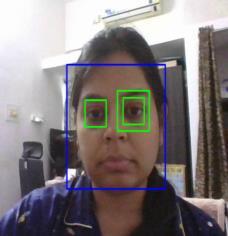

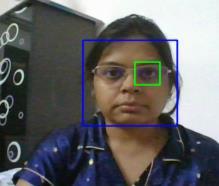

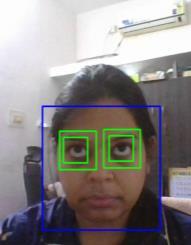

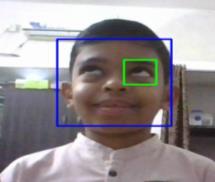

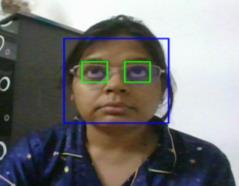

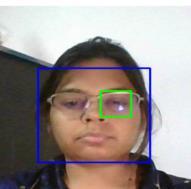

Figure 2 Live samples are provided for the experiment. The first row is designated for individuals without spectacles, the second for children, the third for those wearing rim glasses, and the fourth for those wearing black frame glasses.
Samples of the display
Thelivetesthasameagercomputationalcost oneframeof cap = cv2 typically takes 25 ms.With 4GB RAM, VideoCapture(3,640),4,480).Thesystemmightreachan onlineprocessingspeedofabout40framespersecondwhen combined with the facial and ocular localization systems, whichisreasonableforreal-worldapplications.
5. Result and finding
The research shows that using eye gaze to find driver distractions in real-time remote cognitive and affective engagementtrackingfromeyegazetechnologyhelpswith drivermonitoring,drowsinessanddistractions.Togetthe most out of this integration, the study focuses on ethical issues,useracceptance,andtechnicaldetails.
Theresearchassessestheeffectivenessoflivenessdetection methodologiesbyexaminingthreediscreteclassificationsof detection rates. To begin with, the one-eye detection rate accountsfor bothupwardanddownward eyemovements and is calculated by dividing the proportion of accurately identified blinks by the total number of blinks in the test data. Additionally, the accuracy of blink activity
identificationisassessedthroughthetwo-eyedetectionrate, whichcomputestheproportionofsimultaneousblinksofthe left and right eyes in the test data about blink activities. Furthermore,uponlivewebcamdetection,analarmsystem is triggered, wherein each blinking segment continues for tenseconds.
Thedocumentmentionsalossgraph,whichisimportantfor understandingthefastR-CNNmodel'strainingprocess.This graph typically plots the loss value versus the number of training epochs, providing information on how effectively themodellearnsovertime.
Thegraph'sX-Axis(Epochs)reflectsthenumberoftimesthe trainingdatasetissentforwardandbackwardsthroughthe neuralnetwork.
Y-Axis (Loss): This axis displays the loss value, which indicates how well or poorly the model performs. Mean SquaredError(MSE)isajointlossfunctionforregression tasks, while Cross-Entropy Lossis usedfor classification tasks.
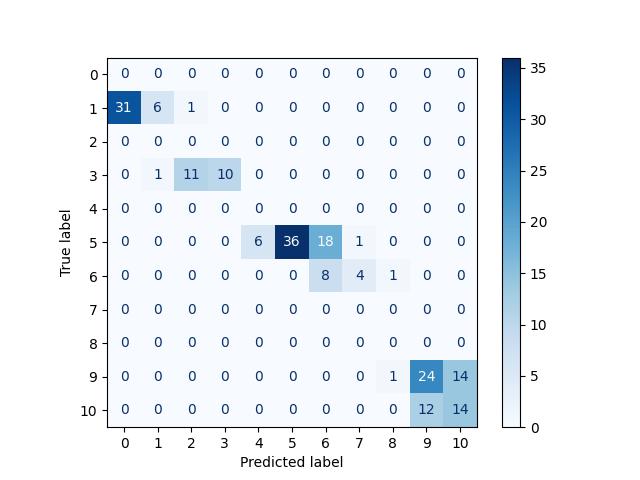
TheresearchdescribesnumerousenhancementstotheFast R-CNN model and their impact on performance metrics. Addingthesigmoidactivationfunctioninitiallyreducedthe model's performance, resulting in larger loss values and worseaccuracymetrics.However,switchingtotheFastRCNNactivationfunctionincreasedperformancemarginally, asevidencedbyadropinlossvaluesoverepochsintheloss graph.Furthermore,addingmorelayerstothemodelusing the Fast R-CNN activation function led to a considerable speed boost, further reducing loss values and suggesting improvedlearningandgeneralization.
The eyeblink-based technique offers several advantages, including activity prominence, non-intrusion, and no additional hardware requirements. We employ an
International Research Journal of Engineering and Technology (IRJET) e-ISSN: 2395-0056
Volume: 11 Issue: 06 | Jun 2024 www.irjet.net p-ISSN: 2395-0072
undirected conditional graphical framework to identify eyeblink actions, which describe the links between observations and states. We apply a newly created discriminative measure of eyestate tospeedupinference and give the most useful discriminative data. We demonstrated that, even when glasses are permitted, the proposed strategy achieves good results with only one genericwebcameraanduncontrolledindoorlighting.The accuracyincreaseddramaticallyafterswitchingtoFastR-CNN andaddingmorelayers.Theactualnumericalfigureforthe ultimateprecisionisnotexplicitlystated.Theaccuracyofthe modelis89.3%.
[1] J K K I Czechoslovakia Sect
informatiku,andInstituteofElectricalandElectronics Engineers,
Karlovice, Czech Republic, Jan. 29-Feb. 1, 2020
[2] R. Rajasekaran, N. M,R. Solanki, V. Sanghavi, and Y. S, “ D : R -Time Drowsiness DetectionthroughEyeAspectRatioandCNN-BasedEye ” 2024 International Conference on Intelligent and Innovative Technologies in Computing, Electrical and Electronics (IITCEE), 2024, pp. 1–7. doi: 10.1109/IITCEE59897.2024.10467769.
[3] M
Computing,C.ElectricalEngineering/Electronics,IEEE Thailand Section, and Institute of Electrical and ElectronicsEngineers, The17thInternationalConference on Electrical Engineering/Electronics, Computer, T u T E TON 4-27June2020,virtualconferencehostedby College of Computing, Prince of Songkla University.
[4] G d d “D F D : R ” IEEE Transactions on Intelligent Transportation Systems,vol.20, no. 6,pp.2339–2352, 2019,doi:10.1109/TITS.2018.2868499.
[5] K. P. Kang, G. H. Jeong, J. H. Eom, S. B. Kwon, and J. H. P “D W I ApplicationwithDeepMetricLearning:HyundaiMotor ”2023 [O ] :
[6] O. Russakovsky et al. “I N L V R ” Int J Comput Vis,vol.115,no.3, pp.211–252,2015,doi:10.1007/s11263-015-0816-y.
[7] L. Wan, M. Zeiler, S. Zhang, Y. Lecun, and R. Fergus, “R N N D ” 2013.
[8] K d Z “V d networks for large- ” 3rd International Conference on Learning Representations, ICLR 2015 - Conference Track Proceedings, pp. 1–14, 2015.
[9] K d D “ N N M d I : R ” Archives of Computational Methods in Engineering,vol.30,no.4, pp.2793–2810,2023,doi:10.1007/s11831-023-09898w.
[10] M. Shahverdy, M. Fathy, R. Berangi, and M. Sabokrou, “D d d d ” Expert Syst Appl, vol. 149, p. 113240, 2020, doi: https://doi.org/10.1016/j.eswa.2020.113240.
[11] S.S.Kshatri,D.Singh,M.K.Chandrakar,andG.R.Sinha, “M T U D T L R d F ” International Journal of Biomedical and Clinical Engineering,vol.11, no.1,pp.1–17,Jan.2022,doi:10.4018/ijbce.301215.
[12] R. Yamashita, M. Nishio, R. K. G. Do, and K. Togashi, “ : d d ” Insights Imaging,vol.9,no.4, pp.611–629,2018,doi:10.1007/s13244-018-0639-9.
[13] C. Craye, A. Rashwan, M. S. Kamel, and F K “ Multi-ModalDriverFatigueandDistractionAssessment ” International Journal of Intelligent TransportationSystemsResearch,vol.14,no.3,pp.173–194,Sep.2016,doi:10.1007/s13177-015-0112-9.
[14] B. Mandal, L. Li, G. S. Wang, and J. L “T d DetectionofBusDriverFatigueBasedonRobustVisual ” IEEE Transactions on Intelligent TransportationSystems,vol.18,no.3,pp.545–557,Mar. 2017,doi:10.1109/TITS.2016.2582900.
[15] Y.Albadawi,A. AlRedhaei,andM.T “R -Time MachineLearning-BasedDriverDrowsinessDetection U V F ” JImaging,vol.9,no.5,May2023, doi:10.3390/jimaging9050091.
[16] W J H Y d H Y “ T-ASSD: Convolutional vision-Transformer Based Attentive Single Shot M B x D ” O 2021 [O ] : http://arxiv.org/abs/2110.12364
[17] H jd “ D U Px d I ” 2006 [O ] : https://www.researchgate.net/publication/50342288
[18] J.Wu,Z.Zhou,Y.Wa Y L X X dY U d “MFeature and Multi-Instance Learning with AntiOverfitting Strategy for Engagement Intensity
International Research Journal of Engineering and Technology (IRJET) e-ISSN: 2395-0056
Volume: 11 Issue: 06 | Jun 2024 www.irjet.net p-ISSN: 2395-0072
P d ” 2019 International Conference on Multimodal Interaction I MI’19 N Y NY U : Association for Computing Machinery, 2019, pp. 582–588.doi:10.1145/3340555.3355717.
[19] T T R D d “ d -centric artificialintelligentandextendedrealitytechnologyin smarthealthcaresystems” Soc Netw Anal Min,vol.12, no.1,p.122,2022,doi:10.1007/s13278-022-00888-7.
[20] J D “R P T I
P ” Advances in Biometric Person
Authentication,J.andT.T.andF.G.andW.Y.LiStanZ. and Lai, Ed., Berlin, Heidelberg: Springer Berlin Heidelberg,2005,pp.5–25.
© 2024, IRJET | Impact Factor value: 8.226 | ISO 9001:2008
|