
International Research Journal of Engineering and Technology (IRJET) e-ISSN: 2395-0056
Volume: 11 Issue: 06 | Jun 2024 www.irjet.net p-ISSN: 2395-0072
International Research Journal of Engineering and Technology (IRJET) e-ISSN: 2395-0056
Volume: 11 Issue: 06 | Jun 2024 www.irjet.net p-ISSN: 2395-0072
Ashutosh Sethi1 , Dr. Rajesh Kaushal2
1MTech Student, RGPV University, IPS Academy, Indore
2Head of Department, Department of Chemical Engineering, IPS Academy, Indore, Madhya Pradesh
Abstract – Stevia rebaudiana has gained an attention which has profound that sweeter flavor is present in the glycoside compound. It has been certainly adding a main chemical ingredient to the stevioside (Steviol Glycoside). With the extensive selection of the adsorbent resin and use of stevia leaf in hot water at 50-550C with the ratio of 1:5 addressing the flocculation process. It has utilize the resins XAD (4,7,16, 1180) on different BV (Bed Volume) for desorption of concentration at 40%, 60% and 100%. It has been found with 1kg of pure steviol glycosides is obtained from 200 to 400 grams of dried stevia leaves. It can be utilized for clinical practices and health issues such as diabetes and corpulence.
Key Words: Hot water extraction, steviol glycoside, stevioside,ElutionandBV(BedVolume)
1.INTRODUCTION
The steviol glycoside is particular chemical structure through which significant difference in the taste quality responsibly sweet taste in it has grabbed attention for conductingresearch Ithasdiligentlyfollowedthe11main steviol glycosides including the elements from A to F and dulcoside A with nearly 0.5% concentration. It has also trailed on the rebaudioside-C in between 1-2%. It can not matterwhatpresentthattheartificialsugarutilizedinthe energy supplements have concern with the genuine products. However, the utilization of the stevia plant gatheredfromthesouthcancreateaextractionofthesugar and home grown team to treat the indigestion and grievances from the stevia leaf. In this study, the selected adsorbentAMBERLITEXAD4,7,16,1180willcarryoutthe non-ionic process as it has macro reticular structure to phaseoutthehighsurfacearea.
Regeneration of the absorbent material represent the impuritiesandsolventcompositiontomanagetheimpurities. Inanotheraspect,themethodhaveaddedonthefirstsolvent as adsorption device and second solvent is facilitating the leastportionoftheremainingintheadsorptiondevice.Ithas addedonthewatermiscibleorganicsolvent,Puresolvent, dilute bases (0.1-0.5% NaOH), concentrated bases (2-4% NaOH),Diluteacidsanddiluteoxidizingagentsforenhancing theproteinfouling.
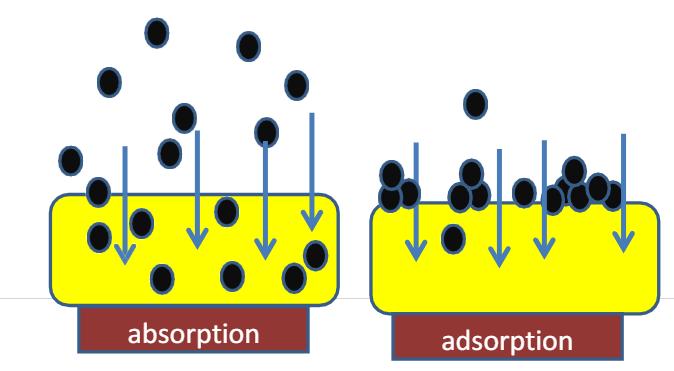
Adsorptionistheprocessthroughwhichthesubstancein onephase,isremovedfromtheaccumulationofthephase withseparate phase where theformationof bondscan be added on the molecules in the fluid phase and surface molecules.
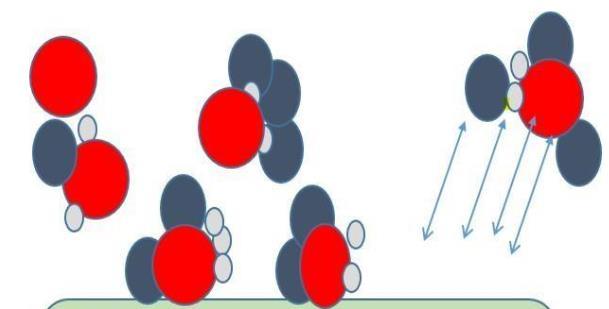
Desorption is the reverse process through elute and separationofactivecompoundcanmeetwiththereleased substancewhenfaceonthesurface Thesystemisbeingin thestateofsorptioninbetweenbulkandadsorbingphase.
Thereisvariantofadsorbent(Resin)whicharefunctioningto raiseorlowertheprocessoftheadsorbentproperties.
International Research Journal of Engineering and Technology (IRJET) e-ISSN: 2395-0056
Volume: 11 Issue: 06 | Jun 2024 www.irjet.net p-ISSN: 2395-0072
Parameter
Matrix
AMBERLIT EXAD4
Macroretic ular cross linked aromatic polymer
AMBERLIT EXAD7
Styrenedivinylbenz ene
AMBERLIT EXAD16
Macroretic ular crosslinke d aromatic polymer
AMBERLIT EXAD1180
Macroretic ular crosslinke d aromatic polymer
Physical Form White Translucen tbeads Small beads White Beads White Beads
Moisture
Holding Capacity 54to60%
Particle
Coarse Beads
PoreSize
Applicati on Adsorption of hydrophobic molecules
and purification of antibiotics
and purification of antibiotics
The bed volume at 1m3 solution per m3 resin is promoted throughcommoncharacteristicsofallresinswithoperational pH range (0-14). It has added on the flow rate ranges for loading, displacement and regeneration and rise with the structure and properties for different types of adsorption process
Ultra-Performance Liquid Chromatography (UPLC) has enhanced the resolution, speed and sensitivity over High Performance Liquid Chromatography (HPLC) using the particlessmallerthan2µm.Ithasinvolvethedistributionof analytesbetweenmobileandstationaryphasesthatresultsin theevolutionoftheelutiontimesanddetectedandrecorded chromatograms.
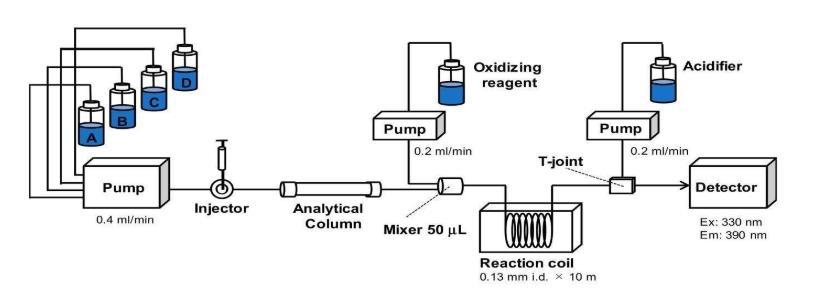
Fig -1:Workingof
The key components have included solvent reservoir, injectionvalve,pump,detectoranddataprocessingunit
UPLCcolumnshaveaddedonthediameter,length,particle sizeandmaterial tonotablyutilizetheUPLCofcompanies like Waters, Agilent Technologies, Phenomenex, Altech Associates.
Ithascertainlyaddedontheadvantagesanddisadvantages like higherselectivityandsensitivity with reducedsolvent consumptionandreal-timeprocessmonitoring.Ithashigher backpressurecanreducecolumnlifespanwiththeefficient sampleanalysiswithoperationalchallenges.
AniterationinUPLCsourcedwithroseflowertubehas added on spectrophotometer analysis at various concentration(5%,8%,10%,15%and20%)
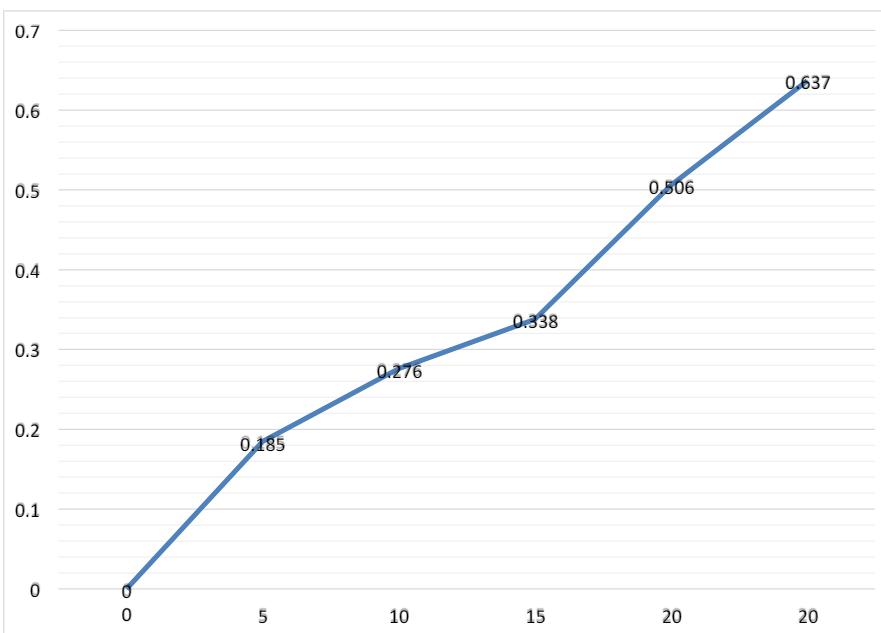
Chart -1:ConcentrationVsAbsorbance
International Research Journal of Engineering and Technology (IRJET) e-ISSN: 2395-0056
Volume: 11 Issue: 06 | Jun 2024 www.irjet.net p-ISSN: 2395-0072
It has showcase on the increase in the absorbance with concentration,peakingat0.637at20%.
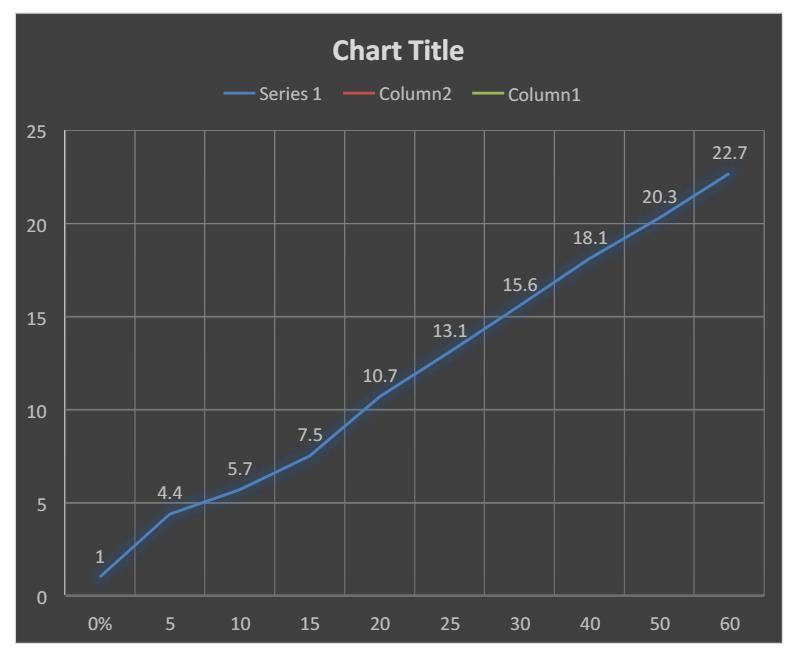
Chart -2:ConcentrationVsBrix
Ithassimilarlyincludedwiththevariedconcentration(1%to 40%) representing the corresponding increase in Brix percentage.
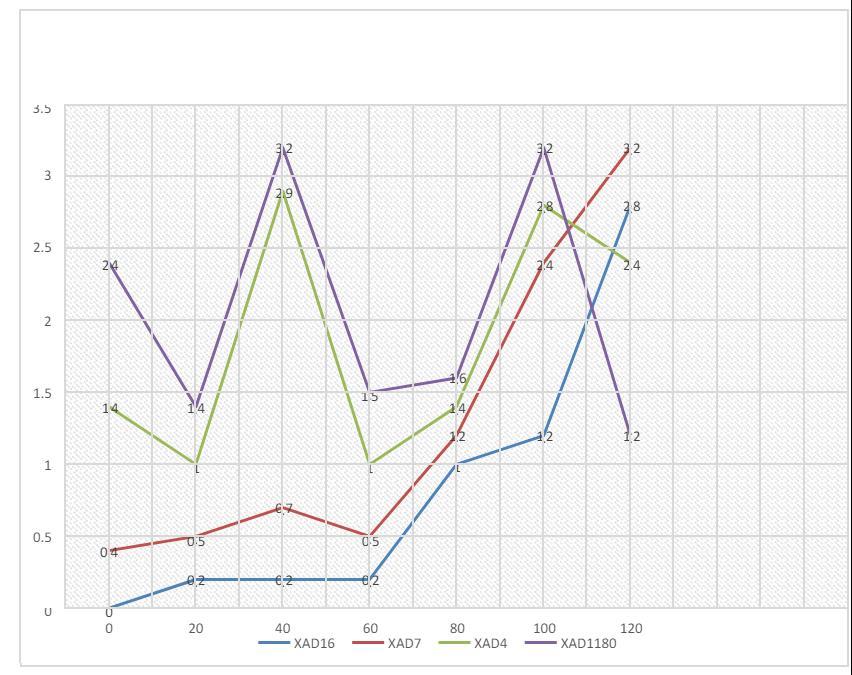
Chart -3:TimeVsBrixforResin
It has isolated Steviol glycosides, SL concentration processingtousedcolumnsfilledwithXADresin(4,7,16, 1180)atdifferentbedvolumesandethanolconcentrationto betested.IthasalsorevealedthattheXAD16resinwith2B yieldhavethehighestrecovery.
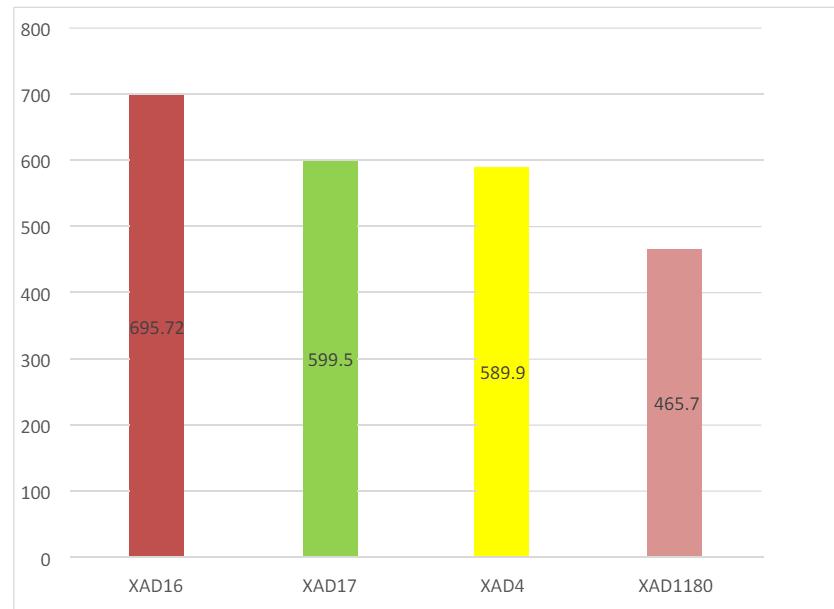
Chart -4:YieldofallResins
The column temperature mitigating the highest yield across most resins with XAD165 showcasing 40% ethanol elution in adding yield with reduced TDS, salinity and conductivityaffirmingontheefficiencyoftheisolatedsteviol glycosides.
By modeling existing industrial processes, a sweetner containingover50%ofsteviolglycosideshassynthesized using PHWE. It has effectively surpass on the yield from dried stevia rebaudiana Bertoni leaves to process in the differentlocations.Infuture,itcanbeusedforextractionof the Steviol glycoside to raise on the food and health measuresbenefitingdiabeticpatientandpregnantwomenin future.
[1] Chhaya,etal.2012.Clarificationsofsteviaextractusing cross flow ultrafiltration and concentration by nanofiltration.SeparationandPurificationTechnology.
[2] González, C., et al. 2014. Main properties of steviol glycosidesandtheirpotentialinthefoodindustry.
[3] JECFA Compendium of Food Additive Specifications, 2006.Monograph1.Steviolglycosides.
[4] Kootstra,M.2015.Extractionofsteviolglycosidesfrom fresh Stevia using acidified water; clarification by ultrafiltrationandconcentrationbynanofiltration.
[5] Kootstra, A.M.J, et al. 2016. Extraction of steviol glycosides from fresh Stevia using acidified water; clarification followed by ultrafiltration and nanofiltration.
International Research Journal of Engineering and Technology (IRJET) e-ISSN: 2395-0056
Volume: 11 Issue: 06 | Jun 2024 www.irjet.net p-ISSN: 2395-0072
[6] Stoyanova,S.,etal.2011.Thefoodadditivesinulinand stevioside counteract oxidative stress. International JournalofFoodSciencesandNutrition.
[7] Amat AG. Los principios edulcorantes de Stevia rebaudianaBert.Estadoactualdesuconocimiento.Acta FarmBonaer1982;1:121-23.
[8] Gardana C, Scaglianti M, Simonetti P. Evaluation of steviol and its glycosides in Stevia rebaudiana leaves andcommercialsweetenerbyultra-highperformance liquidchromatographymassspectroscopy.
[9] JChromatogrA2010;1217:1463-7SilvaPA,OliveiraDF, PradoNR,CarvalhoDA,CarvalhoGA.Evaluationofthe antifungal activity by plant extracts against Colletotrichum gloeosporioides PENZ. Ciencia E Agrotecnologia
2024, IRJET | Impact Factor value: 8.226 | ISO 9001:2008