
International Research Journal of Engineering and Technology (IRJET) e-ISSN:2395-0056
Volume:10Issue:03|Mar2024 www.irjet.net p-ISSN:2395-0072
International Research Journal of Engineering and Technology (IRJET) e-ISSN:2395-0056
Volume:10Issue:03|Mar2024 www.irjet.net p-ISSN:2395-0072
Akana Carlewis Chambang, Suh Nji Ernest, Umar Idris Aliyu
carlewisakana@stu.aydin.edu.tr Computer Engineering student, Istanbul Aydin University, Turkey suhernest@stu.aydin.edu.tr Computer Engineering student, Istanbul Aydin University, Turkey umaraliyu@stu.aydin.edu.tr Computer Engineering student, Istanbul Aydin University, Turkey
Abstract - This Restaurant Ordering method project was created to replace the outdated and inefficient ordering method often used by restaurants with a new and more efficient ordering system. Because it needs a lot of human effort, the traditional orderingmethod isinconvenientforboth employees and consumers. Themanuallabordonebythestaffs will result in certain human errors, such as giving the inaccurate bill to the clients, the waiter's unattractive handwriting, and the improper order sequence. All of these human mistakes will lead to consumer dissatisfactionwith the business. As a result, this restaurant ordering system is built and developed to assist the restaurant's administration. This ordering approach has shortened the time it takes to place an order. When customers eat at the restaurant, they donothave to wait to be served. Customers will be happier with new ordering procedure. The process used to design this system is known as throwaway prototyping. This technique was chosen because it will allow the system to be constructed in half the time of other methodologies. Throwaway prototypeapproach also enables the developer to listen to end-user comments and continue working on the product to meet the end-user's expectations.
Key Words: e-commerce, B2C transaction, accessibility, onlineordering,technologyacceptance
Therestaurantorderingsystem plays a critical roleinthe fields of hospitality, technology, and customer service, making it a worthwhile subject for ongoing and future research.Thissystemisnowanessentialpartoftheentire dining experience in the modern dining environment, providingmanyadvantagestoarangeofstakeholders,such as patrons, restaurant owners, and academics (Prof V.B. Dhore, 7, October 2014). In this study, the restaurant ordering system has the ability to completely transform a variety of industries, including small enterprises, retail, diningplaces,andcoffeeshops.
People increasingly choose to eat at restaurants for their meals.Thereareseveralreasonswhyindividualschooseto dineout.Oneofthecausesisthattheyaretootiredtocook afterwork.Peoplewillbeexhaustedafterworkingformore than7hours.Asaresult,theylackthestaminatocooktheir meals. Furthermore, university students must complete
several assignments, tutorials,and participate inacademic activities(PatelKrishnaM.,17th-18thApril2015).Itwillbe moreconvenientforthemtodineatarestaurantratherthan cook at home. As more people eat at the restaurant, the restaurantmanagementshouldmakecertainimprovements tospeedupordering.
Customershavealwayshadtoengagewithwaitersinorder to place an order. Waiters take notes on the dishes that customers order. The order will then be delivered to the kitchen,wherethechefwillbegincooking.Customershave experiencedseveralchallengesasaresultofthisoldmanner. For example, waiting for meals to be served, receiving a wrongbill,andmanymore.Allofthis,thestresswillleave guests dissatisfied with the restaurant's service (Reshma Shinde,2,February2014).
Customers nowadays want chores like booking cinema ticketstobesimplified(RebeccaNüesch,2015).Asaresult, therestaurantshouldmakemodificationsaswell.
(Williams, 2019) studied web-based ordering systems in restaurants, finding they improve operational efficiency. Restaurants using these systems saw shorter order processingtimesandincreasedproductivity.
(PatelS.e.,2021)researchedweb-basedorderingsystems' impact on customer satisfaction. They surveyed patrons using online platforms and found system convenience positivelyaffectedsatisfaction,notablythroughcustomizable orders,real-timeupdates,andpromptconfirmations.
Third-partydeliveryserviceslikeUberEatsandDoorDash expand restaurant reach and change consumer behavior, offering convenience with diverse options and doorstep delivery.
(Garcia,2020)studiedchallengeswithweb-basedordering systems,notingtechnicalglitches,securityissues,andstaff training needs. Addressing these is crucial for system adoptionandeffectiveness.
Thisstudyisdesignedtoofferarestaurantorderingsystem. This system can assist to enhance the present ordering approach. Furthermore, it gives convenience to both the business and the consumers. This technology will be extremely valuable for many eateries once this project is completed.
International Research Journal of Engineering and Technology (IRJET)
Volume:10Issue:03|Mar2024 www.irjet.net p-ISSN:2395-0072
Manyrestaurantsnowusethetypicalrestaurantordering system to serve clients. In the conventional restaurant orderingprocedure,thestaffwritesdownthemealsthatthe clientorders.Theorderwillthenbedeliveredtothekitchen, where the chef will begin to prepare the meal. This has createdonlyminorproblemssuchas:
Whilewritingdowntheorder,theemployeesmay makemistakes.
When the staff writes in a hurry, the handwriting mightbecomedifficulttointerpret.
Staffmaymisplacetheorderdocument,andclients mayreceiveaninaccuratecharge.
Oneissuethatrestaurantswithtraditionalordering systems confront is that consumers do not know whentheirmealwillbeready.
Some consumers may have a busy schedule followingtheirlunchorsupper.
They must understand time planning in order to organizetheirscheduleeffectively.
Customers,especiallywhentherearealotofthem, maybelievetheirorderhasbeenforgotteniftheir mealhasn'tbeenservedinalongtime.
Itwouldbehelpfuliftheexpectedtimetoprepare thedishdisplayedtoconsumers
Furthermore, some consumers may choose to amend or canceltheirfoodorder.Customersmaycanceltheirorder onlyifthechefhasnotyetbeguncooking.Whenemploying the conventional restaurant ordering procedure, clients mustnotifythestaff,whothenonlyinformthechef.When therearealotofcustomersattherestaurant,thestaffmay failtoalertthecook.Thepersonnelmayalsoreachthecook toolate,leavingconsumersunabletocanceltheirorder.This issue should be addressed because it is inconvenient for customers.Customerswillfinditmuchhandieriftheycan canceltheirorderthemselves.Theydon'thavetowastetime waitingfortheemployeestoservethem.Ifthechefhasnot yetbeguncooking,acancelbuttonshouldbepresentedso thatclientscancanceltheirorder.
Moreover, it is difficult to provide the most recent informationtoclients.Themeals'availabilityisdetermined on the ingredients purchased on a daily basis. When ingredients are few, the chef is unable to produce certain meals.Asaresult,notifyingeveryconsumerwhentheywant tobuyischallenging.Theemployeesmayneglecttonotify the consumers. Because they have a lot on their plates. If consumershavealreadyorderedandareeagertosamplethe
meals, but the staff informs them that the dishes are unavailable owing to a scarcity of ingredients. This will resultinconsumerdiscontentwiththeestablishment.The restaurant'sbrandimagewillsufferasaresult.
Theproject'srelevancestemsfromitspotentialtochange therestaurantsectorviatheuseofcutting-edgetechnology and data-driven techniques powered by AI. It covers significant issues that customers and restaurant owners encounter,providingpracticaladvantagesandinsights.The projectmakesthefollowingcontributionstothefield:
Enhanced Customer Experience: The project's goalistomakeconsumers'eatingexperiencesmore convenient, adaptable, and efficient. The AI interface made it easier to customize orders, accommodating specific dietary preferences and restrictionsseamlessly.
Operational Efficiency: The project may dramatically improve the restaurant's operating efficiency by streamlining order management, cookingprocedures,andresourceallocation.TheAI system streamlines the communication between customers and the kitchen, reducing errors and ensuringordersarepreparedaccurately.
Data-DrivenInsights: Theprojectproducesuseful information on client preferences, popular goods, peakhours,andothertopics.Thisinformationmay be utilized to improve menus, pricing tactics, and consumerhappiness.
TechnologyIntegration: Theproject'sutilization ofcurrenttechnology,suchasmobileapplications, data analytics, and automation, is in line with the restaurant industry's digital transformation tendencies.
Integration Capability: Check to see if the Restaurant Ordering System is compatible with other business systems such as accounting software, customer relationship management (CRM)tools,andonlinepaymentgateways.
Security and Compliance: Implement stringent security measures to protect sensitive customer dataandguaranteecompliancewithanyapplicable dataprotectionregulations.
Contributing to Research: The project's results and techniques can contribute to larger study on hospitality technology, consumer behavior, and restaurantoperationalmanagement.
International Research Journal of Engineering and Technology (IRJET) e-ISSN:2395-0056
Volume:10Issue:03|Mar2024 www.irjet.net p-ISSN:2395-0072
Natural language processing: The aim of integrating Natural Language Processing in a RestaurantOrderingWebSystemistoenhanceuser experience, ensure accurate order processing, improveefficiency,personalizerecommendations, supportmultiplelanguages,analyzefeedback,and seamlesslyintegratewithothersystems
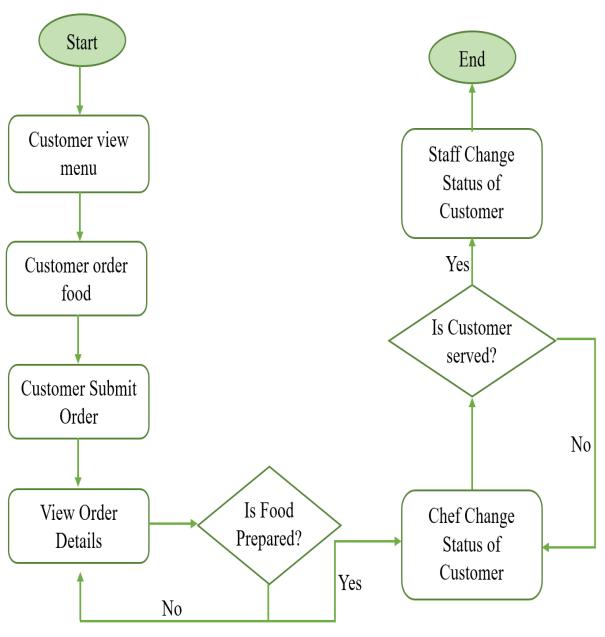
Figure 1-1 RestaurantOrderingSystemFlowChart(Patel M.,December,2015)
Figure 1-1 shows the Restaurant Ordering System Flow Chart.Whenclientsentertherestaurant,thestaffwillassist theminfindingaseat.Customerswillthenutilizethegadget givenbytherestauranttoseethemealmenu.Customerscan then place their orders. The chef and crew will get the clients'orderinformationwhentheyfillinthequantityof food and the table name and submit the order. When the dishisready,thechefwillmodifythestatusoftheclients' orders.Whenthedishisready,thestaffwillserveittothe clients. The order's status will be changed after all of the foodhasbeenserved.
6. IMPLEMENTATION:
TheimplementationoftheAI-poweredrestaurantordering system involves several critical steps, ensuring seamless integration and optimal performance. Here’s a detailed overviewoftheimplementationprocess:
A. SystemDesignandPlanning:
Requirement Analysis: Collaborating with restaurantstakeholderstounderstandtheirneeds andexpectations.
Design Specifications: Drafting the system architecture,userinterface(UI)design,anddefining AIcapabilities.
B. Development:
AI Model Training: Developing and training machine learning models to understand natural languageprocessing(NLP)andvoicerecognition.
Integration with POS Systems: Ensuring compatibility with existing point-of-sale (POS) systemsforsmoothorderprocessing.
User Interface Development: Creating intuitive and user-friendly interfaces for both the digital menuandAIinteraction.
C. Testing:
Internal Testing: Conducting extensive tests to ensure the system functions correctly in a controlledenvironment.
Beta Testing: Deploying the system in select restaurants to gather real-world feedback and identifypotentialissues.
D. Deployment:
StaffTraining: Trainingrestaurantstaffonhowto useandtroubleshootthesystem.
Customer Education: Providing guidelines and demonstrationsforcustomerstofamiliarizethem withtheneworderingprocess.
E. MonitoringandSupport:
Performance Monitoring: Continuously monitoring the system’s performance to ensure reliabilityandefficiency.
Customer Support: Establishing a support frameworktoaddressanytechnicalissuesoruser queriespromptly.
F. OngoingImprovement:
Feedback Loop: Collecting feedback from users andstakeholderstoidentifyareasforimprovement.
RegularUpdates: Implementingupdatesandnew featuresbasedonuserfeedbackandtechnological advancements.
International Research Journal of Engineering and Technology (IRJET) e-ISSN:2395-0056
Volume:10Issue:03|Mar2024 www.irjet.net p-ISSN:2395-0072
The proposed Restaurant Ordering Web System will be a cloud-basedplatformaccessiblethroughwebbrowsersand mobiledevices.Customers will havetheoption to browse themenu,customizetheirorders,andmakesecureonline payments. The system will also feature a dashboard for restaurant staff to manage orders, track inventory, and analyze customer data. Integration with POS systems, kitchen display systems, and third-party delivery services will ensure a comprehensive and seamless experience for bothcustomersandrestaurantowners.
The system architecture will comprise three main components:
User Interface: The customer-facing interface will allow users to browse menus, customize orders, and make payments (Ashutosh Bhargave, 4, April 2013). It will be intuitive,responsive,andaccessibleonvariousdevices.
Application Logic: This component will handle order processing, inventory management, and communication between the user interface and database. It will include algorithmsforpersonalizedrecommendationsandreal-time ordertracking.
Database: Thedatabasewillstoreinformationaboutmenus, customer profiles, order history, and inventory. It will be scalable to accommodate a growing number of users and transactions.
The development of a Restaurant Ordering Web System represents a significant step towards enhancing the efficiency and customer satisfaction in the restaurant industry. By leveraging modern technology, the proposed system aims to address the shortcomings of traditional ordering processes and create a seamless, user-friendly experienceforbothcustomersandrestaurantstaff.Asthe restaurant landscape continues to evolve, embracing innovativesolutionswillbecrucialinmeetingthedynamic expectationsoftoday'sconsumers.
Iamquitepleasedtopresentthisproject.Thisprojecthas been broken into different modules so that it can be understoodproperly.Themoduleshavebeenputinalogical sequencewithaneye-catchingGUItoensurethattheproject flowssmoothly.
Thesatisfactionthatcomeswithcompletingataskwouldbe inadequateifIdidn'tacknowledgethenamesofthosewho made it possible, whose constant direction and encouragementtopsallofmyefforts.
I am grateful to Assist. Prof. Dr. ALPER FİDAN, for his encouragementandassistance.Wemadeeveryattemptto appropriatelypresenttheprojectonthestatedtopic.
Finally,we'dliketothankalloftheguestfaculty,friendsand non-teachingstaffthathelpedmeduringthisproject.
[1].AshutoshBhargave,N.J.(4,April2013).DigitalOrdering SystemforRestaurantUsingAndroid.01-07.
[2].Garcia,M.&.(2020).ChallengesinImplementingWebBased Ordering Systems: A Case Study of the Restaurant Industry. International Journal of Information Management.
[3]. Nielsen, J. e. (2018). The Impact of Third-Party Food Delivery Services on the Restaurant Industry. Journal of Foodservice Business Research
[4]. Patel Krishna M., P. P. (17th - 18th April 2015). AutomatedFoodOrderingSystem.
[5].Patel,M.(December,2015).OnlineFoodOrderSystem forRestaurants.
[6].Patel,S.e.(2021).CustomerSatisfactionandWeb-Based Food Ordering: An Empirical Investigation. International Journal of Hospitality Management.
[7]. Prof V.B. Dhore, S. T. (7, October 2014). Digital Table Booking and Food Ordering System Using Android Application.
[8]. Rebecca Nüesch, R. A. (2015). Hybrid Customer Interaction.
[9].ReshmaShinde,P.T.(2,February2014).Integrationof TechnologyinRestaurantsusingAndroid.
[10]. Smith, J. e. (2020). Impact of Web-Based Ordering SystemsonCustomerSatisfactionintheHospitality Industry.
[11]. Williams, A. &. (2019). Enhancing Operational EfficiencythroughWeb-BasedOrderingSystemsin Restaurants. Journal of Hospitality Management