
International Research Journal of Engineering and Technology (IRJET) e-ISSN: 2395-0056
Volume: 11 Issue: 06 | Jun 2024 www.irjet.net p-ISSN: 2395-0072
International Research Journal of Engineering and Technology (IRJET) e-ISSN: 2395-0056
Volume: 11 Issue: 06 | Jun 2024 www.irjet.net p-ISSN: 2395-0072
1 Professor, Electronics and communication Engineering Department
M I T Mysore, Karnataka state, India
2,3,4,5 Students Electronics and communication Engineering Department
3 M I T Mysore, Karnataka state, India
Abstract - Rapid population expansion necessitated increased resource use in everyday living. Because of this, the pace of trash generation has increased dramatically, affecting the environment’s hygiene system and other health concerns. Therefore waste overflows in public spaces, and improved management is necessary. The proposed work is to develop a system of an intelligent trashcan for usage insmart cities. And also to identify dangerous gases emitted by dustbins for subsequent management operations, as well as tomonitor the amount of trash in the waste bin and warn the municipality through Notification. Most of the present systems cannot manage waste on a scalable level. Segregation needs to be done to manage individual types of waste. Hence same problem is taken for solving, which most of the present-day systems fail to do. The purpose of the study is to segregate the garbage generated in individual households into wet waste and dry waste The system notifies the user whether the bin is full or empties my messages and also by voice command. Proposed system monitors the gas released by garbage to find the severity of the impairment and to notify the concerned authorities. It will also l identify a failed trash drop in the bin and alert the user through alarm for truly considering the reduction of spilled garbage surrounding bins while using the system.
Key Words: Wastemanagement,,DryWaste,Wet,waste, Microcontroller,smartbin,sensors
Wastesegregationandmanagement isamostcriticalcritical aspect of urban living, posing challenges that demand innovative solutions. The conventional waste collection methods often lack efficiency and real-time monitoring, leading to issues an like overflow, unpleasant odors, and environmentalhazards.Inresponsetothesechallenges,the integrationoftechnology,specificallytheuseofArduinoUno asthemaincontroller,haspavedthewayforasmarterand moreeffectivewastemanagementsystem.Theheartofthis system lies in the Arduino uno microcontroller, which orchestratestheentirewastemanagementprocess.Anultra sonicsonarsensorisemployedtoaccuratelymeasurethe trash level with in the bins. this real-time data is most crucialforoptimizingwastecollectionschedules,ensuring
thatbinsareemptiedattherighttime,preventingoverflows and reducing the operational cost associated with unnecessary collections. To enhance communication and responsiveness, a WI-FI module is integrated into the system. This module enables the smart bin to send alert messagestodesignated authoritiesor waste management teams when the bin reaches a predefined threshold. this proactive approach not only improves efficiency but also aidsinmaintainingacleanandhygienicenvironment.
TheLCDdisplayprovidesauser-friendlyinterface,allowing for easy monitoring of the waste level. this real time informationempowersbothwastemanagementauthorities andthepublictomakeinformeddecision,contributingtoa more sustainable and organized waste disposal process. Moreover,abuzzerisincorporatedintothesystemtoserve asanaudiblealert,drawingattentiontotheneedforwaste collection. This additional feature ensures that even in scenarioswherevisualmonitoringmightbechallenging,the system can still communicate effectively. Addressing the issue of foul smells emanating from waste bins, a gas detection sensor are included the design. this sensor identifiesanytoxicgasesproducedwithinthebin.triggering appropriate responses such as increased ventilation or immediate waste removal. This not only enhances the overall cleanliness of the area but also contribute to the wellbeing of the community. Waste segregation and managementarecriticalcomponentsofsustainableurban development, as they directly impact public health, environmental quality, and resource conservation. Conventionalwastemanagementsystemsoftenfacemany challenges such as inefficient garbage collection methods, Garbagebinoverflow,andlimiteddatafordecision-making. Inresponsetothesechallenges,theintegrationofInternetof Things (IoT) technology into smart bins offers a transformativesolutiontooptimizewastesegregationand management processes. Smart bins equipped with IoT sensors and connectivity capabilities enable real-time monitoring of waste fill levels, allowing for timely and efficientcollection.Moreover,thesebinscanfacilitatewaste segregationatthesourcebyprovidinguserswithintuitive interfaces and guidance on proper disposal practices. By leveraging IoT technology, smart bins not only improve operational efficiency but also promote environmental
International Research Journal of Engineering and Technology (IRJET) e-ISSN: 2395-0056
Volume: 11 Issue: 06 | Jun 2024 www.irjet.net p-ISSN: 2395-0072
sustainabilityandcommunityengagement.Inthiscontext, thisstudy exploresthe ideaconceptofwastesegregation andmanagementusingsmartbinsbasedonIoT,highlighting their benefits, features, and potential impact on urban environmentsandpublichealth.WewilldelveintohowIoTenabled smart bins can revolutionize waste management practicesbyharnessingdata-driveninsights,enhancinguser experience, and contributing to the creation of cleaner, greenercities.
S.Murugan et.al[1] introducedus toa similarcategory of IoT-basedsmart bins for environmental protection. Paper proposes dispose of several forms of garbage in contemporarylife,includingsewagewaste,homewaste,and industrialwaste.Themainobjectiveofthestudyistoplacea dustbinoneverycornerofthestreet,usingIoTtokeepthe environment clean. MSC primarily makes use of IoT (InternetofThings)(ModernSystemcities).IoTequipment consists of sensors, detectors, and actuators that are integratedintotheIS(intelligentsystem).
Mohammed{2} presents empirical study on the negative impact of rubbish heaps in cities, focusing on individuals wholiveinflatsandareaswithalimitednumberofbins,The trash monitoring system is intelligently led and alerts the organizationinrealtimethroughMessage.Thetechnological componentsincludeanultrasonicsensor,aGSMmoduleand anArduinoUnoforcontrollingthesystem’sfunctionalities
Sreejitet.al{3} presentthat ashbeusedinagriculturefor growingandthattheashbefilteredafterwardsusingagas filter (carbon filter). That is why a gas sensor is used to detectdangerousgasesandalertlocalresidentsthrougha buzzer sound. Additionally,the overall mechanism is comprisedofagassensor,aninfraredsensor,aPICmicrocontroller,acarbonfilter,andaGSMcommunicationmodule
SJRamson[4] exposesustoasmartbinsystembasedon WSNs (wireless sensor networks). Each bin has a central node called a WMU (wireless monitoring unit). Sensors locatedinsidetheWMUprovidedatatotheWAPU(wireless accesspointunit).Finally,WAPUtransmitsthedatatothe monitoringsystem,whichthenutilizesthebin
1.1 Block Diagram
The working of smart bin with dry and wet waste segregationisshowninFigure3.1
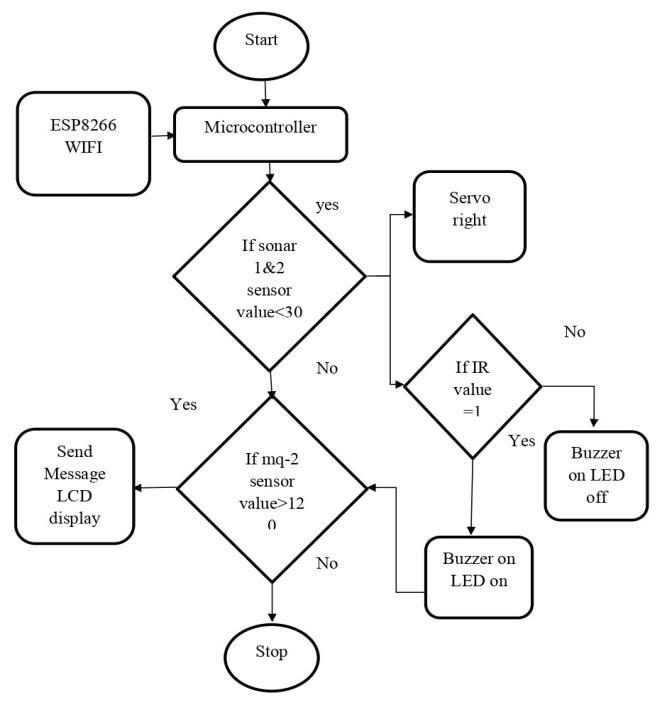
The lid will open automatically when any motion within 30cm is detected, all of the sensors are connected to an ArduinoUnomicrocontroller.ByutilizingtheWi-Fimodule from NodeMCU ESP8266, which is linked to Arduino Uno through a serial connection, the sensor values are relayed
wirelesslytothewebserver.BoththeArduinoUnoandthe NodeMCUarepoweredbyrechargeablelithium-ionbatteries
To communicate serially between an Arduino and a NodeMCU.Thetwodangerousgassensorsareattachedtothe analoguepinsontheArduino,namelytheA1pinfortheMQ-
AbreadboardconnectstheNodeMCUandthesensorsto theArduino’sVCC5VandGNDpins.WIFI,servomotor,buck converter, sonar sensor, Arduino Uno, display, and power supplyaresomeofthetechnicalcomponentsoftheproposed work.Tobegin,oneultrasonicsensormeasuresthedistance asinglepersontravelsbeforedumpinganytrash.Whenthe trashisfull,oneappearswithinformation.
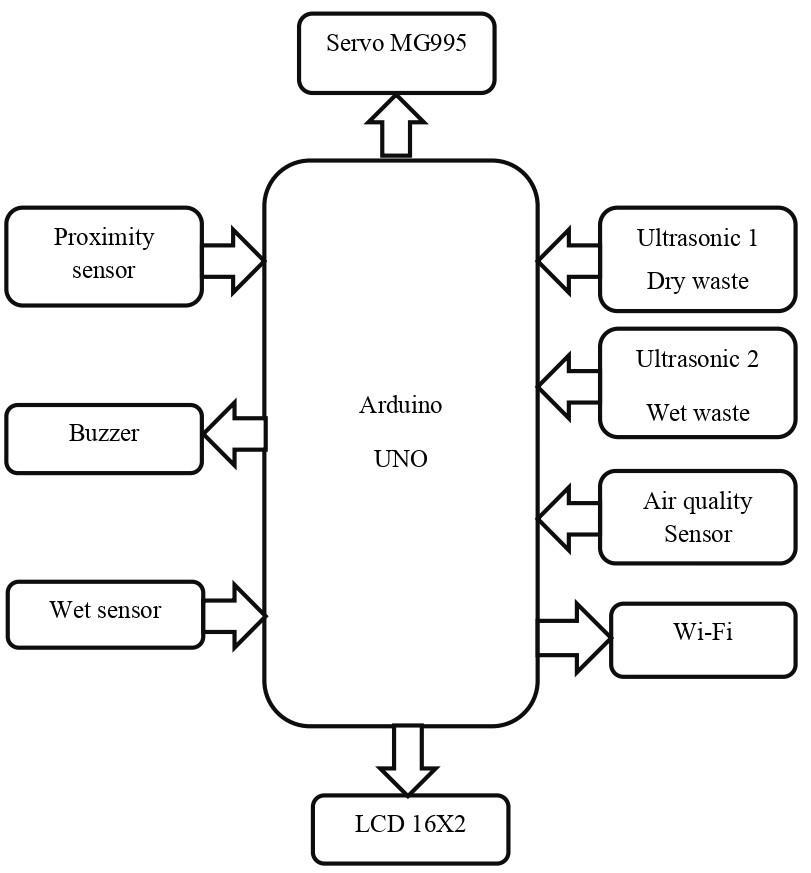
Whereasthewastewillcoverthebintoaheightof6cm,the authorities will evacuate through notification module. The buckconverterisusedtoreducethevoltagelevelandconvert theACtoDCinthiscase.Theservomotor,ontheotherhand, isactivatedwhenthesonarsensorprovidesdatatospinand open the bin automatically. The other technological components operate in the same manner. Microcontroller, associated switches, and WIFI module are all found in the mastercontrollerunit.Allmotorswithsensorsanda WIFI modulearekeptinthesmartbin.
Arduino Microcontrollers: Arduino boards are used for monitoring waste levels in bins and controlling the segregationprocess.
Ultrasonic Sensors: Ultrasonic sensors are employed to measure the level of wasteinbins, providingaccurate dataforwastemanagementdecisions
International Research Journal of Engineering and Technology (IRJET) e-ISSN: 2395-0056
Volume: 11 Issue: 06 | Jun 2024 www.irjet.net p-ISSN: 2395-0072
Air Quality Sensors: Air quality sensors detect the decompositionofwetwaste,enablingtimelysegregation anddisposal.
Proximity sensor and Wet Sensors: proximitysensorsare utilizedfordetectingdrywaste,whilewetsensorsidentify wetwaste,facilitatingautomatedsegregation.
NodeMCU: NodeMCU modules are used for connecting Arduino boards to the Blynk platform via Wi-Fi, enabling remotemonitoringandcontrol.
Blynk Platform: The Blynk platform serves as the user interface, displaying real-time data from sensors and allowing users to monitor waste levels and control segregationprocesses.
Ultrasonic Sensors for Waste Level Monitoring: Ultrasonicsensorsareplacedinsidewastebinstomeasure thelevelofwaste.Thesesensorsemitultrasonicwavesand calculatethetimetakenforthewavestobouncebackfrom the surface of the waste, thereby determining the level of wasteinthebin.
Air Quality Sensor for WetWasteDetection: Anairqualitysensor isemployedtodetectthedecompositionofwetwaste.This sensor measures various parameters such as humidity, temperature,andpotentiallyharmfulgasesemittedduringthe decompositionprocess.
Proximity and Wet Sensors for Waste Segregation: Proximity sensorsareusedtodetectthepresenceofdrywasteinthe bin.Wetsensorsareemployedtoidentifywetwastebased onthechangesinhumidityorotherrelevantparameters.
Arduino Microcontroller for Data Processing : Arduino microcontrollersareprogrammedtoreceivedatafromthe sensors, process it, and control the segregation process. Basedonthedatareceivedfromultrasonicsensorsandair qualitysensors,theArduinomicrocontrollerdeterminesthe typeofwastepresentinthebin.
NodeMCU for Connectivity: NodeMCU modules are connected to the Arduino microcontroller and provide Wi-Fi connectivity. These modules enable communication between the Arduino-based sensor systemandtheBlynkplatform.
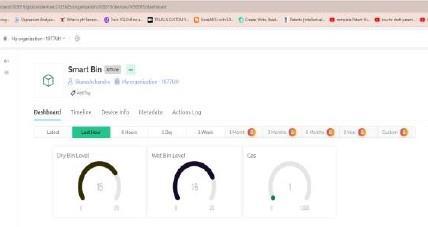
Blynk Platform for Data Visualization and Control: The Blynkplatformservesastheuserinterface,allowingusersto monitor waste levels and control segregation processes remotely.Datafromthesensors,includingwastelevelsand waste type, are transmitted to the Blynk platform via NodeMCU,Userscanviewreal-timedataonwastelevelsand receive alerts when bins are full or when wet waste decompositionisdetected.Additionally,userscanremotely trigger the segregation process to separate dry and wet wasteasneeded.Ultrasonicsensorscontinuouslymonitor
thewastelevelinbins,whiletheairqualitysensordetects decompositioninwetwaste.Basedonthedatacollected,the Arduino microcontroller determines the type of waste present in the bin and controls the segregation process accordingly. Data from the sensors are transmitted to the BlynkplatformviaNodeMCU,providinguserswithreal-time insightsintowastelevelsandfacilitatingremotecontrolof segregationprocesses.
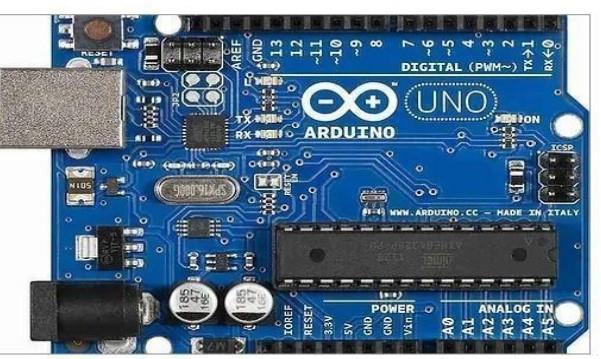
Arduino UNO: Itisa isamicrocontrollerboard workson 8-bit ATmega328P microcontroller. It also includes other componentssuchascrystaloscillator,serialcommunication, voltageregulator,etc.tosupportthemicrocontroller.
International Research Journal of Engineering and Technology (IRJET) e-ISSN: 2395-0056
Volume: 11 Issue: 06 | Jun 2024 www.irjet.net p-ISSN: 2395-0072
Ithas14digitalinputandoutputpins(06pinsofthemcan be used as PWM outputs), 6 analog input pins, a USB connection,APowerbarreljack,anICSPheaderandareset button. Arduino boards can be used to control various componentsoftheroboticssystem,suchastheservomotors thatcontrolthemovementofthecameramodule.Theboard canalsobeusedfordataloggingandcommunicationwith otherdevices
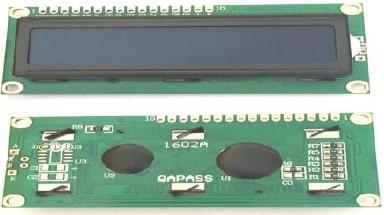
LCD Module: 16×2 LCD consistst has 16 ccolumns and 2 rows. A number of combinations of LCD modules are available such as , 8×1, 8×2, 10×2, 16×1, etc. The most commonlyusedthe16×2LCDmodule.So,Totally itcontains (16×2=32) 32 characters and each one character will be madeof5×8PixelDots.ASinglecharacterwithallitsPixelsis shownintheFig4.2.
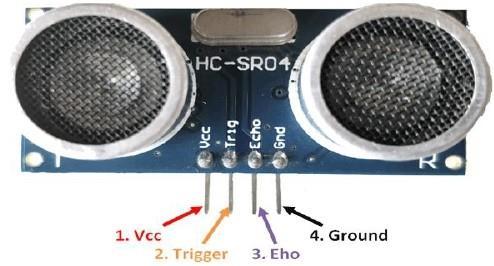
SensorSonarSensor:UltrasonicAnultrasonicsensorcanbe usedtohelptherobotnavigateandavoidobstaclesinthe. Thesensorworksbyemittingultrasonicwavesandcalculate the time that takes for the waves to came back from an obstacle.Thisdatacanbeusedtocalculatethedistancetothe obstacleandprovidefeedbacktotherobot'scontrolsystem. Hereweareusingtwoultrasonicsensoroneisfortomeasure thedepthofthebinandanotherisfortoopenthebinlid.we areusingHC-SR04ultrasonicsensor,
Wet Sensor:WetdropSensorisatoolusedforsensingwet. Itconsistsoftwomodules,awetboardthatdetectsthewet andacontrolmodule,whichcomparestheanalogvalue,and convertsittoadigitalvalue
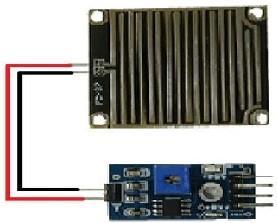
.Thewetdropsensorscanbeusedintheautomobilesector to control the windshield wipers automatically, in the agriculturesectortosensewetanditisalsousedinhome automationsystems
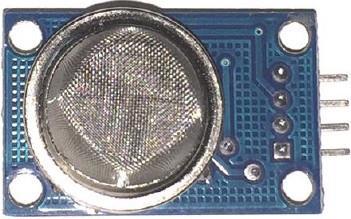
Gas Sensor: Airqualitycontrolequipment consistsof MQ135gassensorsandareusedfor fordetectingormeasuring of NH3, NOx, Alcohol, Benzene, Smoke, CO2. The MQ-135 sensormoduleconsistsadigitalPin,whichhelpsthisdevice to function evenwithoutamicrocontroller.Itisportableand verylightweight
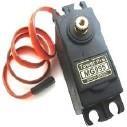
Servo Motort For precise control of angular or linear position,velocityandaccelerationaservomotorisisused becauseitcontainsrotaryactuatororlinearactuator.
It consists of motor coupled to a sensor for position feedback. It needsaveryprecise sophisticatedcontroller, preferably adedicatedmoduledesignedspecificallyforuse with servomotors. Servomotors are not a specific class of motor,althoughthetermservomotorisoftenusedtoreferto amotorsuitableforuseinaclosedloopcontrolsystem.
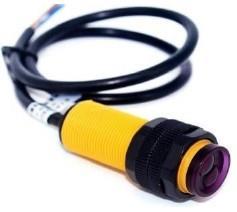
Proximity Sensor: E18-D80NK is a non-contact detection sensorprovidingadigitaloutputwhenanobjectcomesintoa
International Research Journal of Engineering and Technology (IRJET) e-ISSN: 2395-0056
Volume: 11 Issue: 06 | Jun 2024 www.irjet.net p-ISSN: 2395-0072
specificrangeofit.Itisalow-cost,easytoassemblesensor withverylittleinterferencewiththesurroundinglightsand environment.Belowaresomefeaturesandspecificationsof theE18-D80NKinfraredproximitysensor.E18-D80NKisa variablerangenon-contactdetectionsensor.Itcomeswitha transmitterandreceiverinasinglemodulesetup.
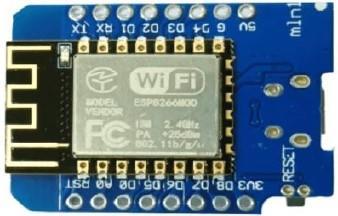
Node MCU: Node : MCU is an open-source firmware and development kit that helps in building Internet of Things (IoT)applications.ItisbasedontheESP8266Wi-Fimodule, which integrates a microcontroller, Wi-Fi capabilities, and GPIOs(GeneralPurposeInput/Outputpins)intoasinglechip
Jumper Wires : Ajumpwire(alsoknownasjumper,jumper wire,DuPontwire)isanelectricwire,orgroupofthemina cable, with a connector or pin at each end (or sometimes withoutthem–simply“tinned”),whichisnormallyusedto interconnect the components of a breadboard or other prototypeortestcircuit,internallyorwithotherequipment orcomponents,withoutsoldering.
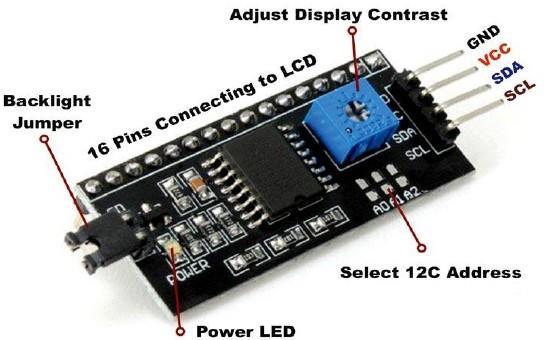
I2C Serial Interface Adapter Module for LCD: Due to limitedpinresourcesinamicrocontroller/microprocessor, controllinganLCDpanelcouldbetedious.SerialtoParallel adapterssuchastheI2Cserialinterfaceadaptermodulewith PCF8574chipmakestheworkeasywithjusttwopins.The serialinterfaceadaptercanbeconnectedtoa16x2LCDand providestwosignaloutputpins(SDAandSCL)whichcanbe usedtocommunicatewithanMCU/MPU
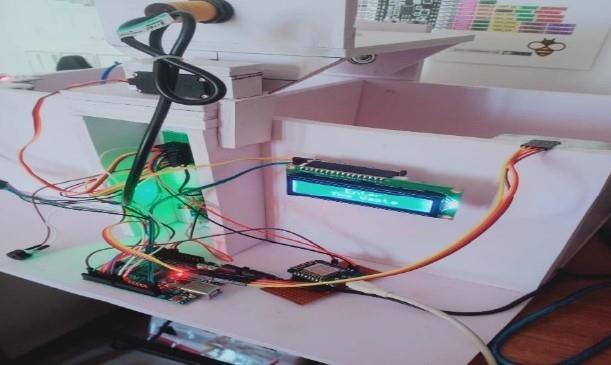
Efficient Waste Segregation: TheIoT-basedsmart waste segregationsystemeffectivelysegregatesdryandwetwaste based on real-time data collected from sensors. By accuratelyidentifyingthetypeofwastepresentinthebins, thesystemensuresthatrecyclablematerialsareseparated fromorganicandnon-recyclablewaste,facilitatingproper disposalandrecyclingprocesses.
Real-Time Monitoring: The system provides real-time monitoring of waste levels and decomposition status, allowingwastemanagementpersonneltopromptlyrespond tochangingconditions.UserscanaccesstheBlynkplatform toviewup-to-dateinformationonwastelevelsandreceive
International Research Journal of Engineering and Technology (IRJET) e-ISSN: 2395-0056
Volume: 11 Issue: 06 | Jun 2024 www.irjet.net p-ISSN: 2395-0072
alertswhenbinsarefullorwhendecompositionisdetected inwetwaste.
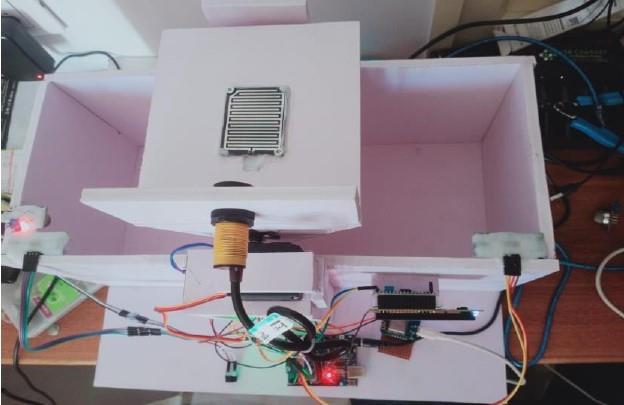
Fig:5.3Topviewofworkingmodel
Remote Accessibility: The integration of NodeMCU modulesenablesremoteaccesstothesystemviatheBlynk platform,allowinguserstomonitorwastelevelsandcontrol segregation processes from anywhere with internet connectivity. This remote accessibility enhances the efficiencyofwastemanagementoperations,aspersonnelcan monitor and manage waste bins without the need for physicalpresenceateachlocation.
Optimized Waste Collection: Byprovidingreal-timedata onwastelevelsandtypes,thesystemfacilitatesoptimized wastecollectionschedulesandroutes.Wastemanagement personnelcanprioritizecollectioneffortsbasedonthefill level of bins and the type of waste present, minimizing unnecessarytripsandreducingoperationalcosts.
Environmental Impact: TheimplementationoftheIoTbased smart waste segregation system contributes to environmental sustainability by promoting proper waste managementpractices.Bysegregatingwasteatthesource andfacilitatingrecyclingofrecyclablematerials,thesystem reducestheamountofwastesenttolandfillsandminimizes environmentalpollution.
Proposed IoT-based smart waste management system offersaninnovativesolutiontothechallengesoftraditional waste management practices. By leveraging Arduino microcontrollers,sensors,andtheBlynkplatform,weenable real-timemonitoringandautomatedsegregationofdryand wet waste streams. The integration of Internet of Things (IoT)technologyintosmartdustbinspresentsapromising solution to revolutionize traditional waste management practices. By harnessing the power of real-time data monitoring, remote connectivity, and intelligent analytics, smart dustbins offer a myriad of benefits ranging from optimized waste collection to enhanced environmental sustainability. Through the implementation of smart
dustbins, municipalities and communities can streamline waste management operations, reduce operational costs, and mitigate environmental impacts associated with inefficientwastedisposalpractices.Moreover,bypromoting responsible waste disposal behaviors and fostering communityengagement,smartdustbinsplayavitalrolein raisingawarenessabouttheimportanceofsustainableliving andenvironmentalstewardship.
Future enhancements may include the integration of additional sensors for comprehensive waste characterization, the implementation of machine learning algorithmsforpredictiveanalytics,andtheexpansionofthe systemtolarger-scaledeploymentsinurbanenvironments. thefunctionalityofthesystemcanbefurtherextendedby addingmorefeaturesandcapabilities.Forexample,machine learningtechniquescanbeappliedtothecollecteddatato predictwastegenerationpatternsandprovideinsightsinto the effectiveness of waste management policies. Additionally,thesystemcanbeenhancedbyincorporating more sensors to monitor factors such as temperature and humidity,whichcanaffecttherateofwastedecomposition andodorcontrol.Theproposedstudycanbecombinedwith other smart city initiatives to develop a more holistic approachforwastemanagement.Forinstance,thesystem canbeconnectedwithsmarttrafficmanagementsystemsto optimizegarbagecollectionroutesandschedulesbasedon real-timetrafficinformation.Furthermore,thesystemcanbe usedtopromotepublicawarenessandeducationaboutthe importanceofproperwastedisposalandrecycling,through variousmediaandoutreachprograms.
[1] .S.Murugaanandam, V. Ganapathy, and R. Balaji, “EfficientIOTbasedsmartbinforcleanenvironment,”in 2018InternationalConferenceonCommunicationand SignalProcessing(ICCSP),pp.0715–0720,IEEE,2018.
[2] Mohammed “Smart bin for waste Management using cpaasclouds&IOT,”InternationalJournalofEducation andManagementEngineering,vol.10,no.2,p.38,2020.
[3] S.Sreejith,R.Ramya,R.Roja,andA.S.Kumar,“Smart bin for waste management system,” in 2019 5th International Conference on Advanced Computing & CommunicationSystems(ICACCS),pp.1079–1082,IEEE, 2019.
[4] S.J.Ramson and D. J. Moni, “Wireless sensor networks basedsmartbin,”Computers&ElectricalEngineering, vol.64,pp.337–353,2017.
[5] S. Brindha, V. Praveen, S. Rajkumar, V. Ramya, and V. Sangeetha,“Automaticmedicalwastesegregationsystem byusingsensors,”tech.rep.,EasyChair,2020.