
International Research Journal of Engineering and Technology (IRJET) e-ISSN:2395-0056
Volume: 11 Issue: 06 | Jun 2024 www.irjet.net p-ISSN:2395-0072
International Research Journal of Engineering and Technology (IRJET) e-ISSN:2395-0056
Volume: 11 Issue: 06 | Jun 2024 www.irjet.net p-ISSN:2395-0072
Sukanya Konatam1, Venkata Naga Murali Konatam2, Shravya Konatam3
1Senior Manager of Enterprise Data Governance and Data Science, IT, Vialto Partners, Texas, USA
2Data Architect, IT, Capital One, Texas, USA
3Student, Pre-Med, Nova SouthEastern University, Florida, USA
Abstract - Artificial intelligence (AI) and machine learning (ML) have gained widespread popularity and transformative potential in various critical sectors, including healthcare, hiring, self-driving cars, and financial systems. Despite their benefits, the adoption of AI and ML systems introduces biases that can profoundly impact decision-making processes and outcomes. These biases stem from various sources, such as biased training data, algorithmic design, and implementation practices, leading to ethical concerns and consequences. This paper provides a comprehensive exploration of the biases inherent in AI and ML systems and discusses their ethical implications across the aforementioned sectors. Through a systematic review of currentliterature,weidentifytheprimarysourcesandtypes of biases, such as racial, gender, and socioeconomic biases, and analyze their effects on decision-making. Additionally, we examine case studies that illustrate the real-world impact of biased AI systems, shedding light on the critical need for fair AI development. To address these challenges, we propose a set of mitigation strategies aimed at reducing bias and enhancing the fairness and accountability of AI systems. These strategies include improving the diversity and representativeness of training data, implementing algorithmic fairness techniques, conducting regular audits and impact assessments, and fostering interdisciplinary collaboration among AI developers, ethicists, and policymakers. Our findings highlight the urgent need for a holistic approach to AI development that prioritizes ethical considerations and social responsibility. By adopting these mitigation strategies, we can work towards creating AI systems that not only deliver technological advancements but also promote equity, transparency, and trust in critical sectors.
Key Words: Autonomous Vehicles, Artificial Intelligence in HealthCare, Bias in Machine Learning, AI accountability, AI in job screening, ML in Finance, Bias in Artificial Intelligence
1. Introduction to Artificial Intelligence and Machine Learning in Different Sectors
Artificial Intelligence (AI) andMachineLearning (ML) are transformative technologies that have revolutionized
various sectors [1], [2], [3]. AI refers to the simulation of human intelligence processes by machines, especially computer systems [1], [3]. These processes include learning, reasoning, problem-solving, perception, and languageunderstanding[1],[3].Ontheotherhand,MLisa subsetofAIthatprovidessystemstheabilitytolearnand improve from experience without being explicitly programmed [1], [2], [3]. AI and ML have permeated varioussectors,revolutionizingprocessesandsystems[1], [2],[3].This research paper will focus on fourkey sectors whereAI/ML has a significantimpact: theHiring Process, Healthcare, Financial Systems, and Self-Driving Cars [3][6]. Surprisingly, these sectors are not immune to biases in AI/ML models, which can have profound implications[4],[5].Theexplorationofthesebiasesforms the crux of this research. These technologies have the potential to bring about significant benefits, such as increased efficiency, improved decision-making, and enhanceduserexperiences[1],[2],[3].However,theyalso pose new challenges, such as the risk of biases in AI/ML models [4], [5]. This paper will explore these issues in detail,withafocusonunderstandingthesources ofthese biasesandhowtheycanbemitigated[4],[5].
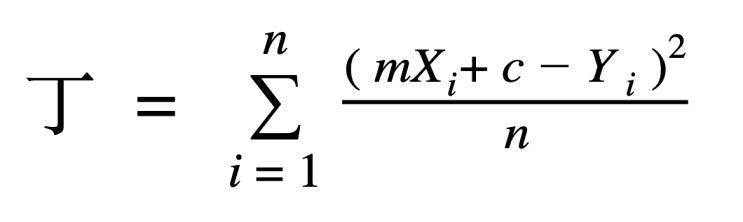
Fig -1: The mathematical representation of the Mean Squared Error (MSE) loss function used in machine learning models. This function measures the average squared difference between the predicted values (mX_i + c)andtheactualvalues(Y_i),highlightingtheimportance of minimizing prediction errors to improve model accuracyandreducebiases.
2. Artificial Intelligence and Machine Learning in Healthcare
Artificial Intelligence (AI) andMachineLearning (ML) are transforming the healthcare industry by offering
International Research Journal of Engineering and Technology (IRJET) e-ISSN:2395-0056
innovative solutions for patient care, diagnosis, and treatment [7]. These technologies analyze complex medicaldata,predictpatientoutcomes,and evenassistin surgeries [7].They alsoplayacrucialroleinstreamlining administrative tasks, improving patient engagement, and personalizinghealthcareservices[7].
The journey of AI in healthcare began in the 1970s with rule-based expert systems like MYCIN and INTERNIST-I, designed to assist in medical diagnosis [8]. Soon after the 1990s saw the advent of Machine Learning (ML), with algorithms being trained to predict patient outcomes [8]. The 21st century ushered in a new era with the introduction of Deep Learning, enabling more complex analysesofmedicaldata[8].Today,AIandMLareintegral to many aspects of healthcare [9]. These advancements have revolutionized patient care, disease prediction, and treatmentplanning,markingasignificantmilestoneinthe historyofhealthcare[8].
AI and machine learning technologies have significantly impacted the healthcare sector [14]. IBM Watson Health uses AI to accelerate drug discovery and match patients with clinical trials. [10] Google's DeepMind has made strides in AI-assisted diagnosis, notably in detecting eye diseases from scans [11], [13]. Zebra Medical Vision uses AI for radiology imaging, aiding in early detection of cancers [13]. PathAI focuses on improving pathology accuracy with machine learning [12], [15], [16]. Tempus uses AI for precision medicine, particularly in cancer treatment. [14] In the realm of EHR's (Electronic health records), Google Cloud Healthcare API and Microsoft Azure's FHIR APIs facilitate the exchange of healthcare data,whileEpicSystemsandCerneruseAItoanalyzeEHR data for better patient outcomes [12], [14]. While these technologies have been transformative, they also necessitate careful consideration of potential biases in theirunderlyingalgorithms[17].
AI/ML biases in healthcare refer to the unintentional integration of human- and data-driven biases into AI technologies and machine learning models used in healthcare [18]. These biases can result from several factors, including human biases built into AI design, data generalizabilityissues,andbiasedtrainingdata[18].Ifthe trainingdata used todevelophealthcareAI/ML models is not representative of the diverse patient population, the
Volume: 11 Issue: 06 | Jun 2024 www.irjet.net p-ISSN:2395-0072 © 2024, IRJET | Impact Factor value: 8.226 | ISO 9001:2008
modelsmayperformpoorlyforunderrepresentedgroups. [18][19]Additionally,ifthedatacontainshistoricalbiases in healthcare delivery, the models may perpetuate these biases[19],[20],[21].Forinstance,ifcertaingroupshave historically received less aggressive treatment for a particularcondition,anAI/MLmodel trainedonthis data may recommend less aggressive treatment for patients fromthesegroups[21].
● Measurement Bias- Measurement bias in AI/ML refers to the systematic error that arises when the data used to train a model does not accurately reflect the reality it's intended to predict [22], [24], [25]. This bias can significantly skew the model's predictions and decisions[22],[24],[25].Inhealthcare,AI/MLmodelsare often employed to predict patient outcomes, recommend treatments, and identify disease patterns [23], [25]. However, if the training data is biased towards a specific demographic, the model may fail to accurately predict outcomes for underrepresented groups [23], [25]. This could lead to misdiagnoses or inappropriate treatment recommendations [23], [25].One example of this measurementbiasisthecaseofanalgorithmdevelopedto predict the risk of cardiovascular disease. Researchers trainedthealgorithmusingelectronichealthrecord(EHR) datafromalargehealthcaresystem[26].Thetrainingdata waspredominantlyfromyounger,healthierpatients,with limited representation of older adults and those with existingmedicalconditions[26].Asaresult,thealgorithm tended to underestimate the cardiovascular disease risk fortheseunderrepresentedgroups[26].TheuseofAI/ML inhealthcareisdrivenbythepotentialtoimprovepatient care and outcomes, but it's crucial to ensure diverse and representative data in the training phase to mitigate measurement bias andimprovethefairness andaccuracy ofthesemodels[23],[25].
● Confirmation Bias- Confirmation bias in AI/ML referstothetendencyofmodelstofavorinformationthat confirms their existing beliefs or hypotheses [27]. This bias often originates from the data used to train these models,reflectingtheinherentbiasesofthosewhocollect and label the data [27]. In healthcare, AI/ML models are usedtopredictpatientoutcomes,recommendtreatments, and identify diseases [27], [28]. However, if these models are trained on biased data, such as data primarily from a specific demographic, they may disproportionately favor that demographic in their predictions, thereby exhibiting confirmationbias[27].AstudyexaminingtheuseofAIfor diagnosing heart disease provides a clear example of confirmation bias in healthcare AI applications [29]. Researchers developed an AI model to predict the likelihood of a patient having heart disease based on
International Research Journal of Engineering and Technology (IRJET) e-ISSN:2395-0056
Volume: 11 Issue: 06 | Jun 2024 www.irjet.net p-ISSN:2395-0072
factors such as age,sex,and medical history. Thetraining data for the model was primarily collected from a single hospital, which served a predominantly white, middleaged patient population[29].Whenthe model was tested on data from a more diverse set of patients, it exhibited significantly lower accuracy in predicting heart disease riskforracialminoritiesandyounger/olderpatients[29].
This could lead to an unexpected misdiagnosis or inappropriate treatment recommendations, underscoring the importance of addressing confirmation bias in healthcareAI/MLapplications[27)],[28].
Bias in healthcare AI/ML carries significant ethical implications. If a model is trained on unrepresentative data, it may produce skewed results, leading to unequal and potentially harmful treatment outcomes [30]. For instance,amodeltrainedpredominantlyondatafromone demographic may not perform accurately for other demographics, leading to unexpected misdiagnoses or inappropriate treatment recommendations [31]. This raises ethical concerns about fairness and equality in healthcare delivery [30]. Furthermore, biased AI/ML models can reinforce existing health disparities, particularly for marginalizedor underrepresented groups [32].Forexample,astudyfoundthatanalgorithmusedto guide healthcare decisions was less likely to refer Black patients than White patients for programs that aim to improve care for patients with complex medical needs, due to biases in the training data [32]. This underscores the ethical imperative for careful and representative data collection, transparency in model development, and ongoing monitoring for bias in healthcare AI/ML applications [30], [32]. Therefore, addressing AI biases in healthcare is crucial for ensuring equitable and efficient healthcaredelivery[30],[31],[32].

Fig -2: Surgeons utilizing AI-assisted technology during a complex procedure. AI systems enhance precision and efficiencyinhealthcare,contributingtoimproved surgical outcomesandpatientcare.
Detecting biases in healthcare AI/ML involves a multifacetedapproach.Firstly,it'scrucialtoscrutinizethedata used to train the models. This includes assessing the representativeness of the intricate data, checking for overrepresentation or underrepresentation of certain groups, and identifying potential sources of bias in data collection [33]. Secondly, evaluating the model's performance across different demographic groups can helpdetectbiases[35].Disparitiesinperformancemetrics such as accuracy, precision, or recall may indicate the presenceofbias.Lastly,interpretabilitytechniquescanbe used to understand the decision-making process of the model,whichcanrevealifcertainfeaturesarebeinggiven undueimportance,leadingtobiasedoutcomes[34].
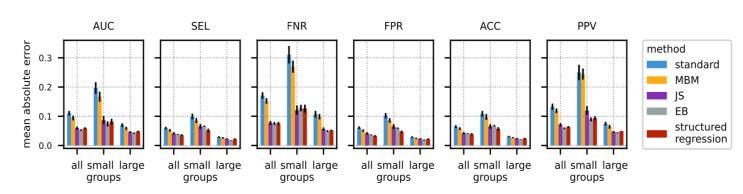
Chart -1: In this chart, the mean absolute error (MAE) estimates for six metrics using five different methods on diabetes data.Theevaluationis basedon20 draws ofthe dataset, considering three distinct groups: all patients, small groups (size at most 25), and large groups (size above 25). These results shed light on potential biases in healthcare AI models, emphasizing the importance of addressingdisparitiesacrosspatientsubgroups.
● Finding Measurement Bias- To detect Measurement bias in healthcare AI, one can examine the data collection instruments and processes for potential sources of error or bias [36], [37], [38]. For instance, if a health survey is used to collect data, are the questions clear, unbiased, and culturally sensitive? Additionally, statistical analyses can be conducted to check if the measurementsareconsistentandreliableacrossdifferent groups [37],[39].Oneexampleofdetectingmeasurement bias in healthcare AI/ML systems is the case of an algorithm developed to detect early-stage Alzheimer's disease using speech data [40]. The developers of this algorithm used a training dataset that only contained speech samples from native English speakers. As a result, the algorithm had difficulty accurately analyzing speech patterns of non-native English speakers, as it interpreted their pauses and pronunciation differences as potential markersofAlzheimer'sdisease[40].Byexaminingthedata collection process and the representation of different
International Research Journal of Engineering and Technology (IRJET) e-ISSN:2395-0056
Volume: 11 Issue: 06 | Jun 2024 www.irjet.net
patientgroups inthetrainingdata,themeasurementbias in this healthcare AI system could be identified and addressed. Conducting statistical analyses to assess the consistencyandreliabilityofthealgorithm's performance across diverse patient populations is also crucial for detectingsuchbiases[40].
● Identifying Confirmation Bias- Confirmation biasinhealthcareAI/MLcanbedetectedbyexaminingthe model's predictions in light of contradicting evidence. If the model consistently ignores or downplays such evidence, it may be exhibiting confirmation bias [41]. Another method is to use adversarial testing, where the model is presented with cases specifically designed to challenge its assumptions. If the model's performance significantly deteriorates in these cases,it could bea sign of confirmation bias [41]. One example of detecting confirmation bias in a healthcare AI/ML model can be foundinastudyexploringtheuseofAI-poweredintrusion detection systems in Internet of Medical Things (IoMT) environments [42]. The researchers architected an integrated anomaly detector that incorporated modules for model interpretability, bias quantification, and advanced malicious input recognition. Through their experimental evaluation, the researchers were able to identify instances where the baseline intrusion detection models exhibitedconfirmationbias[42].Specifically,they found that these models would consistently ignore or downplay certain types of data poisoning threats that contradicted the models' existing beliefs about the characteristics of malicious inputs. By employing adversarial testing techniques, the researchers were able togeneratecarefullycraftedexamplesthatchallengedthe models' underlying assumptions [42]. When presented with these adversarial samples, the baseline models showed a significant deterioration in performance, revealingtheirsusceptibilitytoconfirmationbias.
Artificial intelligence (AI) and machine learning play a crucial role in the development of Autonomous Vehicles. These technologies enable autonomous vehicles to perceivetheirsurroundings,makereal-timedecisions,and navigate safely [43], [44], [47]. The integration of AI and machine learning in self-driving cars has the potential to improve road safety, reduce traffic congestion, and enhance overall transportation efficiency [45], [46], [48], [49].
TheadoptionanddevelopmentofAIandmachinelearning inautonomousvehicleshasevolveddramaticallyoverthe
p-ISSN:2395-0072
pastfewdecades.Inthe1980s,earlyresearchintovisionbased systems and neural networks laid the groundwork for self-driving car technology [50]. This was followed by significant breakthroughs in the 1990s, such as Carnegie Mellon University's Navlab project which demonstrated autonomous driving on public roads [50]. The 2000s saw widespread interest and investment in self-driving cars, with companies like Google, Tesla, and traditional automakers accelerating the development of key capabilities like perception, planning, and control using advanced AI techniques [51]. Landmark events like the DARPA Grand Challenges further pushed the boundaries of autonomous driving, leading to autonomous vehicles navigatingcomplexurbanenvironments[52].Today,selfdriving car technology has reached a level of maturity, with fully autonomous vehicles undergoing extensive testing and pilot deployments in many parts of the world [52]. The future promises even greater advancements as AI algorithms become more sophisticated and capable of handling the full complexity of real-world driving scenarios.
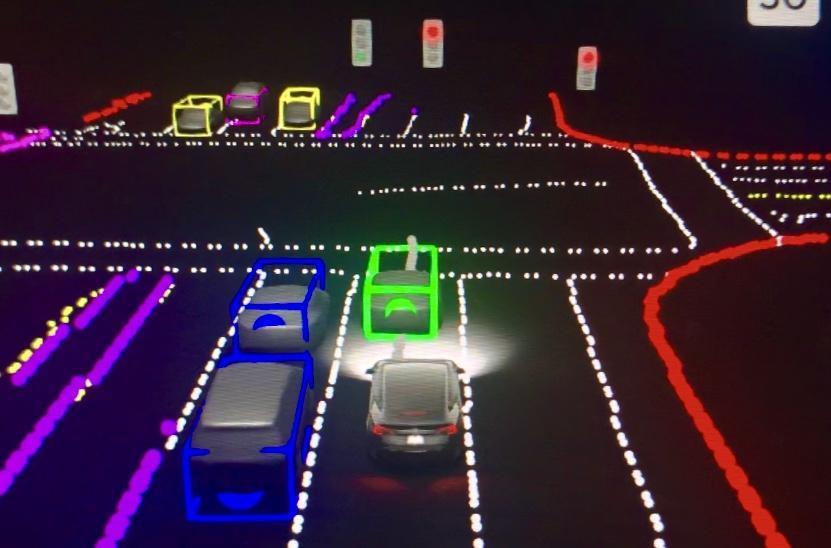
Fig -3: Visualization of a Tesla's AI perception system in self-driving mode, showing how the AI identifies and categorizesvehiclesandroadelements.
AI and machine learning technologies have significantly impacted the Autonomous Vehicles sector [53]. Visual placerecognition(VPR)isacrucialAItechniqueemployed inself-drivingcars,enablingthemtorecognizelandmarks, traffic signs, and other visual cues from the environment [53]. This sophisticated computer vision approach, which involves the identification and understanding of these visual elements, plays an essential role in enhancing the safety, efficiency, and overall intelligence of intelligent transportation systems [53]. Additionally, deep learning models such as EfficientNetB3 are leveraged for robust feature extraction from preprocessed images, with their
International Research Journal of Engineering and Technology (IRJET) e-ISSN:2395-0056
Volume: 11 Issue: 06 | Jun 2024 www.irjet.net
hyperparameterstunedusingoptimizationalgorithmslike the Remora Optimization Algorithm to optimize the model's performance [53]. Furthermore, techniques like transferlearningareintegratedtoleveragetheknowledge gained from pre-trained models, improving the overall accuracy and efficiency of visual place recognition [53]. Adversarial machine learning is another significant AI technology used in autonomous vehicles, where researchers explore methods to deceive the machine learning algorithms by providing malicious input data [54]. This field of study is crucial as it helps identify vulnerabilities in the AI systems used in self-driving cars, ensuringthey canwithstandattemptstomanipulatetheir decision-making processes through adversarial attacks [54].Experiments have beenconductedusing pre-trained modelslikeMobileNetandConvolutionalNeuralNetworks (CNNs)todemonstratehowone-pixel,multi-pixel,andallpixel attacks can be designed to mislead the machine learningalgorithms[54],[55].
Theautonomousvehiclesectorhasseentheemergenceof significantbiaseswithintheAIandmachinelearning(ML) systems powering these technologies [56]. These biases can manifest in various ways, such as faulty object detection, inaccurate prediction of pedestrian behavior, and suboptimal decision-making by the autonomous system [56], [57]. The presence of such biases can have serious consequences, leading to unsafe outcomes, unequal treatment of different individuals or groups, and broader societal implications in terms of accessibility, equity,andpublictrustinself-drivingcartechnology[56], [57].
● Availability Bias- Availability bias is a cognitive biaswhereindividualstendtooverestimatethelikelihood of events that aremore readily availablein their memory or imagination [58], [59], [61]. In the context of selfdrivingcars,thisbiascanleaddeveloperstoprioritizeand focus on edge cases or scenarios that have received significant media attention or public discourse, while potentially overlooking more common but less salient situations[58],[59].Thiscanresultin theself-drivingcar algorithms being optimized for rare, dramatic events, rather than the more mundane, everyday driving situations [58], [59], [61]. For example a study on selfdriving car algorithms revealed an availability bias in the trainingdatausedtodevelopthesystems.Theresearchers found that the training data heavily focused on highprofile incidents, such as fatal collisions involving pedestrians, which had received significant media
p-ISSN:2395-0072
attention [62]. This resulted in the self-driving car algorithms being optimized to handle these dramatic scenarios, while potentially overlooking more common, everyday driving situations [63]. Consequently, the selfdrivingcarsperformedwellinhighlypublicizedtestcases but struggled to navigate the nuances of real-world driving, highlighting the need for a more balanced and representativetrainingdatasettomitigatetheavailability bias[64],[63].
● Affective Bias- Affective bias refers to the tendency of individuals to make judgments or decisions based on their emotional responses and feelings, rather thanpurelyobjectivedataorinformation[60],[61].Inthe context of self-driving cars, this bias can manifest in the way the algorithms are trained and designed, as the developers may inadvertently incorporate their own emotional associations or biases intothedecision-making process [60], [61]. For instance, a study conducted by researchers at the University of Michigan found that selfdriving car algorithms can exhibit gender bias when it comes to pedestrian detection and response [65]. The study showed that the algorithms were less likely to identify female pedestrians, potentially leading to increased risk for women in real-world scenarios [65]. This affective bias, rooted in societal stereotypes and norms, highlights the importance of thorough testing and evaluation of self-driving car systems to ensure fair and unbiased decision-making [65]. This bias can lead to suboptimal decision-making and potentially endanger the safety of other road users, undermining the core purpose ofself-drivingtechnology[60],[61].
The proliferation of autonomous vehicles (AVs) powered by artificial intelligence (AI) and machine learning (ML) has raised profound ethical concerns regarding the potentialbiasesinherentinthesesystems[66].Theethical considerations surrounding biases in AI/ML for AVs are multifaceted,encompassingissuesofsafety,transparency, accountability, and the promotion of fairness [66]. The deployment of AI-driven AVs poses significant risks if the underlying algorithms exhibit biases, which can lead to discriminatorytreatmentandunfairoutcomes[67]. These biases may manifest in the decision-making processes of AVs, potentially resulting in the differential treatment of individuals based on factors such as race, gender, or age [68], [69]. Such biases could have severe consequences, potentiallycompromisingthesafetyofcertaingroupsand undermining the core principles of equitable transportation [67]. Furthermore, the complexity and opacity of the AI/ML models used in AVs can make it challengingtoidentifyandmitigatethesebiases[70].The
International Research Journal of Engineering and Technology (IRJET) e-ISSN:2395-0056
Volume: 11 Issue: 06 | Jun 2024 www.irjet.net
inherent difficulty in ensuring algorithmic transparency and explicability heightens the ethical dilemmas surroundingthedeploymentofthesetechnologies[66].
Identifying and addressing biases in the AI/ML systems powering self-driving cars is a critical challenge. Approaches such as algorithmic auditing, testing on diverse datasets, and building in explainability and interpretability can help detect biases in areas like object detection, pedestrian recognition, and traffic scenario handling[71]. However,thecomplexityofthesesystems, the difficulty in obtaining comprehensive training data, and the evolving nature of on-road scenarios pose significant hurdles in fully eliminating biases. Continued research, standardized testing frameworks, and close collaboration between developers, domain experts, and impacted communities are necessary to make meaningful progressinthisspace[71].
● Discovering Availability Bias- The availability biasisacognitiveshortcutthatleadsindividualstorelyon information that is readily available when making decisions [72]. To detect availability bias in autonomous vehicles, researchers have analyzed class imbalances in thedatasetsusedtotrainpedestriandetectionalgorithms [74]. They have found that these algorithms may be less accurate in recognizing individuals with disabilities or from minority groups, as the training data often lacks sufficient representation of these populations [73]. One study by the National Institute for Transportation and Communities found that "black pedestrians were passed by twice as many cars and experienced wait times that were 32% longer than white pedestrians" when interacting with autonomous vehicles [78]. The researchers call for automotive manufacturers and the government to collaborate in building regulations that objectively measure the fairness and safety of these autonomousdrivingsystems,asthecurrentprovisionsfor fairness are limited and can have a major impact on pedestrian safety [78]. To address this availability bias in self-driving cars, machine learning algorithms can be appliedforobjectrecognitionandbehaviormonitoringin advanced driver-assistance systems (ADAS) [79]. These ML techniques, such as Faster R-CNN and YOLO, enable the accurate real-time detection and classification of objects, including pedestrians with darker skin tones and children, to improve the safety and fairness of autonomousvehiclenavigation[80].Additionally,thelack of transparency in many pedestrian detection algorithms, particularly those based on deep learning techniques,
p-ISSN:2395-0072
makes itdifficulttounderstandhowthesesystems arrive at their classifications [73]. Measures to improve dataset diversity and establish external oversight and regulation of these algorithms can help identify and mitigate availabilitybias[73].
● Identifying Affective Bias- Affective bias refers to the influence of emotional responses and cognitive biases on decision-making [76]. Researchers have used various methods to study the impact of affective bias on autonomous vehicle decision-making, such as analyzing users' physiological responses, including heart rate, muscle activity, eye movements, and brain waves, during real-world or simulated driving scenarios [75]. For example, researchers at Delft University of Technology have proposed an approach involving analyzing the sensitivity and selectivity of neurons in convolutional neural network (CNN) models, which can reveal affective biases towards certain features or classes [77]. Additionally, examining the attention maps of vision transformer (ViT) models can help identify whether the models are disproportionately focusing on certain image regions, potentially indicating biases [77]. By applying these techniques, researchers can uncover the specific biasesinherentindifferentmodelarchitecturesandguide the development of more balanced and equitable AI systems for self-driving cars [77]. These studies have found that people may feel safer and prefer to maintain control of the vehicle, even if the autonomous system is performing equally well [75]. To address affective bias, developers of autonomous vehicles can focus on improving dataset diversity, preventing and remediating algorithmic bias, and establishing standards for external oversight and regulation [73]. Additionally, fostering a betterunderstandingoftheunderlyingtechnologyandits capabilitiesthroughpubliceducationandengagementcan helpbuildtrustandacceptance[75].
Artificial Intelligence (AI) and Machine Learning (ML) have emerged as transformative technologies in the financial sector, revolutionizing various aspects of the industry [81],[82],[83].Theseadvancedtechniques have enabled financial institutions to enhance customer experiences, democratize financial services, ensure consumer protection, and significantly improve risk management [83].The integration of AI and ML has empoweredfinancialorganizationstogaindeeperinsights into market dynamics, predict consumer behavior more accurately,optimizeproductionschedules,andstreamline distribution processes [82], [84]. By leveraging AI algorithms and ML models, the finance sector can make data-driven decisions with greater precision and agility, drivinginnovation,growth,andcompetitiveness[84].
International Research Journal of Engineering and Technology (IRJET) e-ISSN:2395-0056
Volume: 11 Issue: 06 | Jun 2024 www.irjet.net
The adoption and development of Artificial Intelligence (AI)andMachineLearning(ML)withinthefinancesector has undergone a remarkable evolution over the past few decades [85]. In the 1970s and 1980s, pioneering efforts focused on utilizing expert systems and rule-based algorithms for tasks such as credit scoring and fraud detection [86]. The 1990s and 2000s saw a surge in the adoptionofmoreadvancedstatisticalandneuralnetwork models, enabling financial institutions to tackle increasinglycomplexproblemslikeportfoliooptimization andalgorithmic trading[86],[87]. A significantmilestone was the development of Deep Learning techniques in the late 2000s, which revolutionized the field of computer vision and natural language processing, leading to breakthroughs in areas like anomaly detection,sentiment analysis, and predictive modeling within the finance industry [87], [88]. The proliferation of big data and the increasedcomputationalpowerofmodernhardwarehave furtheraccelerated thedeploymentofAI-drivensolutions across banking, investment management, and insurance sectors[89].Today,AIandMLhavebecomeindispensable tools in the finance industry, automating repetitive tasks, enhancing decision-making, and providing personalized services to customers, transforming the landscape of the financial ecosystem and promising continued innovation and competitive advantages for organizations that embracethisdigitaltransformation.
Artificialintelligence(AI)andmachinelearning(ML)have become integral to the financial sector, powering a wide range of applications and driving innovation. One of the key AI/ML technologies used in finance is natural language processing (NLP), which enables the extraction of insights from unstructured data such as financial reports, news articles, and social media [90]. NLP algorithms are employed to analyze sentiment, detect anomalies, and identify potential risks or opportunities [91].AnotherprominentAI/MLtechniqueusedinfinance ispredictiveanalytics,whichleverageshistoricaldataand complex models to forecast market trends, stock prices, and customer behavior [92], [93]. Financial institutions also utilize machine learning models, such as neural networks and decision trees, to automate and optimize investment strategies, credit risk assessment, and fraud detection [93], [94]. Additionally, reinforcement learning algorithms are used in areas like algorithmic trading, where they can learn and adapt to market conditions to makereal-timeinvestmentdecisions[94].Theintegration of these AI/ML technologies has enabled financial
p-ISSN:2395-0072
institutions to enhance decision-making, improve operational efficiency, and provide personalized services toclients,ultimatelydrivingcompetitiveadvantageinthe industry.
AI and ML systems used in the financial industry are increasingly susceptible to various forms of bias [95]. These biases can emerge from the data used to train the models,thealgorithmsemployed,ortheassumptionsand design choices made by the developers [95]. Such biases can lead to unfair and discriminatory decision-making, negatively impacting access to financial services, loan approvals, and other critical outcomes, with significant societal implications. Addressing these biases in AI/ML systems within the finance sector is crucial to ensure fairness, transparency, and ethical practices in this domain.
● Selection Bias- Selection bias can occur in financial systems when the data used to train machine learning models is not representative of the entire population. This can happen when the data only includes information from certain demographics or geographic regions, or when certain groups are underrepresented in the data [96], [97]. This can lead to models that perform poorly or make biased decisions for those underrepresented groups. A study examining the use of AI-powered credit scoring models found that the training data often lacked representation from certain demographic groups, such as racial minorities and lowincomeindividuals[98].Thisledtothemodels exhibiting biasesagainsttheseunderrepresentedgroups,resultingin thembeingunfairlydeniedaccesstocreditorofferedless favorable lending terms [98]. The lack of diverse and representative data used to train these AI models was a key factor contributing to the perpetuation of existing socioeconomic inequalities through the credit decisionmakingprocess.
● Systematic Bias- Systematic bias in financial systems can arise from the underlying assumptions or design choices made in the development of machine learning models. This type of bias can be particularly problematicbecauseitisoftenmoredifficulttodetectand canbeperpetuatedthroughtherepeateduseofthebiased model [96], [97]. For example, a study found that mortgage algorithms systematically charged higher interestrates toBlackandLatinoborrowerscomparedto white borrowers, perpetuating existing socioeconomic disparities [99]. This type of biased decision-making can
International Research Journal of Engineering and Technology (IRJET) e-ISSN:2395-0056
Volume: 11 Issue: 06 | Jun 2024 www.irjet.net
have a lasting impact on the financial well-being of affectedindividualsandcommunities.Thistypeofbiascan lead to unfair and discriminatory outcomes, undermining thefairnessandintegrityofthefinancialsystem.
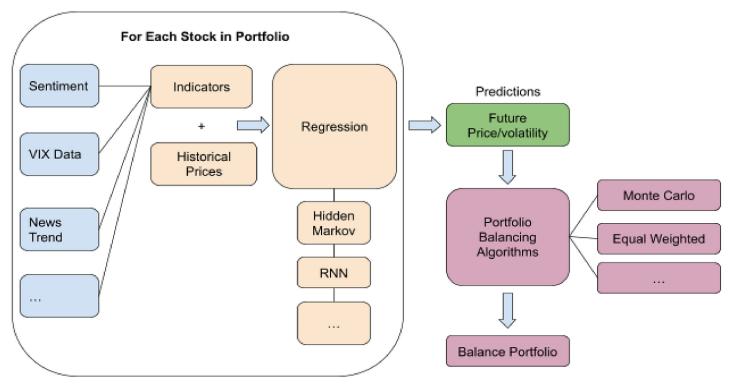
Chart -2: Flowchart illustrating the use of AI and ML in financial systems for stock portfolio management. The image highlights potential biases in data sources and predictive models, such as sentiment analysis, VIX data, and news trends, which can affect investment decisions andportfoliobalancingalgorithms.
4.5 Ethical implications of
in Financial Systems Artificial Intelligence and Machine Learning
Thewidespreadadoptionofartificialintelligence(AI)and machine learning (ML) in the finance industry has raised significant ethical concerns [100], [101], [103]. These technologies have the potential to embed and amplify biases,leadingtounfairanddiscriminatoryoutcomesthat canseverelyimpactindividuals'accesstocriticalfinancial services[101],[102].Biasescanmanifestinvariousforms, such as racial, gender, or socioeconomic discrimination, perpetuating existing inequalities and undermining the principles of fairness and equal opportunity [101], [102]. Furthermore,theinherentopacityofAI/MLmodels,often referred to as the "black box" problem, makes it challengingtoidentifytherootcausesofthesebiasesand hold the responsible parties accountable [100], [101]. Consequently,theethicalimplicationsofAI/MLinfinance extend beyond just individual harm, as they can also undermine public trust in the financial system and jeopardize its overall stability [102]. Addressing these ethical concerns is crucial to ensure the responsible and equitabledeploymentofAI/MLtechnologiesinthefinance sector.
Financialinstitutionsmustproactivelyaddresstheissueof biasintheirAI/MLsystemsusedfordecision-making.This
p-ISSN:2395-0072
involves implementing comprehensive strategies to identify and detect such biases. Some key approaches include conducting regular audits of the algorithms, monitoring for data and concept drift over time, and leveraging techniques like reverse-engineering to gain visibility into opaque "black box" models [104].However, detecting AI/ML biases can be inherently challenging, as thebiasesmaynotbeimmediatelyapparentandmayonly becomevisibleafterthefact[104].Continuouslyassessing the algorithms and data sources for potential sources of bias, while maintaining strong governance and transparency, is crucial for financial firms to mitigate the risksofunfairanddiscriminatoryoutcomes.
4.7 Detection of Famous Forms of Biases found in Financial Artificial Intelligence
● Uncovering Selection Bias- Selection bias in the financeindustryreferstothesituationwherethetraining datausedforAIandmachinelearningsystemsisnotlarge orrepresentativeenough,leadingtoskewedresults[105]. To detect selection bias, organizations should look at reducingthepossibilityofbiaseddatasetsinallphasesof their data pipeline. This includes examining the data collection process for incomplete or unrepresentative data, and ensuring data preparation and labeling do not introduce further bias [105]. Tools like Fairlearn can be used to measure disparities in selection rates between differentpopulationsubgroupsandimplementconstraints to equalize the odds [106]. Additionally, techniques like adversarialdebiasinganddynamicupsamplingoftraining data can help mitigate selection bias [105]. A study on credit risk prediction models revealed that the training data used to develop these models was skewed towards individuals from higher socioeconomic backgrounds, leading to biased model predictions that disadvantaged lower-income applicants [110], [111]. The researchers employed techniques such as causal graph fuzzing and statisticalfairnessassessmentstoidentifythepresenceof this selection bias, quantifying the degree to which the models made decisions that systematically discriminated against certain demographic groups [111]. The findings highlight the importance of carefully evaluating the representativeness of training data and the potential for AI/MLmodelstoperpetuatesocietalbiasesifnotdesigned anddeployedwithrigorousfairnessconsiderations[110], [111].Applyingadversarialdebiasingcanhelpreducethis by training the model to be less predictive of protected attributeswhilemaintainingaccuracy[105].
● Locating Systematic Bias- Systematic bias can inadvertently creep into AI/ML systems during their development, affecting critical processes like credit decisioning, risk management, and compliance [105], [108]. To detect systematic bias, various methods and
© 2024, IRJET | Impact Factor value: 8.226 | ISO 9001:2008 Certified Journal | Page 838
International Research Journal of Engineering and Technology (IRJET) e-ISSN:2395-0056
Volume: 11 Issue: 06 | Jun 2024 www.irjet.net
tools can be utilized. These include statistical calibration, use of regularizers, resampling data, and deploying fair machine learning models [108], [109]. Organizations should also monitor for bias before, during, and after modelingbyensuringequalperformanceacrossprotected groups[105].ToolsliketheMetricspackageinRcanhelp quantify and mitigate the impact of bias [105]. Research analyzing Home Mortgage Disclosure Act data found systematic bias in loan denial rates, with higher rejection rates for Asian, Black, and Hispanic borrowers compared to white borrowers [112]. This highlighted the potential for pre-existing biases to be replicated by AI-powered lending decisions [112]. To detect bias in AI/ML models, researchers have employed techniques such as ensuring equal probability of favorable outcomes across protected groups,maintainingequalpredictiveperformancemetrics, and minimizing statistical disparities [112]. These techniques helpidentifybiases indata,model design,and outputs,enablingorganizationstoenhancethefairness of their AI systems [112]. Furthermore, having a diverse teamofdatascientistsandengineerscanhelpbroadenthe perspectives and identify potential sources of systematic bias[107].
AI and machine learning have revolutionized the hiring process, offering organizations efficient and data-driven approaches to talent acquisition [113], [114]. These technologies enable automated screening, candidate evaluation,anddecision-making,streamliningtheprocess and reducing the impact of human bias [113], [114]. The potentialbenefitsofAIandMLinhiringincludeincreased efficiency, reduced time and costs, and more informed, evidence-based decision-making, ultimately leading to higher-quality hires and a more productive workforce [113],[114].
In the early 2000s, the recruitment process began seeing the initial adoption of AI/ML technology, primarily for automating repetitive tasks such as sourcing and screening candidates [115]. A key milestone in the 2000s was theintegrationof natural languageprocessing(NLP), which enabled AI algorithms to understand and interpret human language with nuance, idioms, and emotional context[115].ThissignificantlyenhancedtheabilityofAI to analyze job descriptions and resumes, leading to more accurate candidate-job matching.The emergence of AIpowered applicant tracking systems (ATS) in the late 2000sandearly2010srevolutionizedthemanagementof talentpools.Thesesophisticatedsystems couldefficiently
p-ISSN:2395-0072
store, organize, and search through vast candidate databases, automatically ranking and prioritizing applicants based on their qualifications and suitability [115]. In the 2010-2015 period, AI saw significant breakthroughs and developments in its integration with recruitment. Key advancements included the automation of resume screening, intelligent candidate matching, enhanced candidate sourcing, predictive analytics in hiring, and AI-driven skill assessments [115]. From 2016 to 2020, the recruitment sector witnessed a rapid expansion of AI adoption. AI high-performing organizationswereidentified,investingmoreinAIefforts and gaining a competitive edge through improved efficiency, data-driven decision-making, and a stronger ability to attract talent [116]. In the most recent years, from 2021 to the present, AI has become widely adopted in recruitment, automating and streamlining various processes. The focus has shifted to promoting diversity and inclusion through unbiased candidate evaluation and diverse sourcing algorithms, while the role of the human recruiter remains crucial in interpreting AI-generated results[117].
AIandMLalgorithmshavebecomeincreasinglyprevalent in the recruitment process, revolutionizing how organizations identify, evaluate,and hiretoptalent. Some of the key AI and ML technologies employed in the recruitment sector include Natural Language Processing (NLP) algorithms, which enable machines to understand and interpret human language, facilitating the extraction of relevant information from resumes and cover letters [118]. Machine Learning (ML) models, trained on large datasets of past hiring data, can predict candidate suitability, rank applicants, and identify high-potential individuals [118]. Classification Algorithms, such as Support Vector Machines and Decision Trees, can efficiently filter out unqualified candidates based on predefined criteria [118]. Clustering Algorithms group candidates with similar skills and backgrounds, allowing recruiters to target specific talent pools [118]. Sentiment Analysismodelsevaluatecandidates'attitudes,values,and personality traits through their written communication, providing insights into cultural fit [118]. Bias Detection and Mitigation algorithms are designed to identify and address biases in the hiring process, promoting fairness and diversity [118]. These AI and ML technologies are integrated into Applicant Tracking Systems (ATS) and other recruitment platforms, streamlining the entire hiring process, from resume screening to candidate matchingandselection[118].
International Research Journal of Engineering and Technology (IRJET) e-ISSN:2395-0056
Volume: 11 Issue: 06 | Jun 2024 www.irjet.net
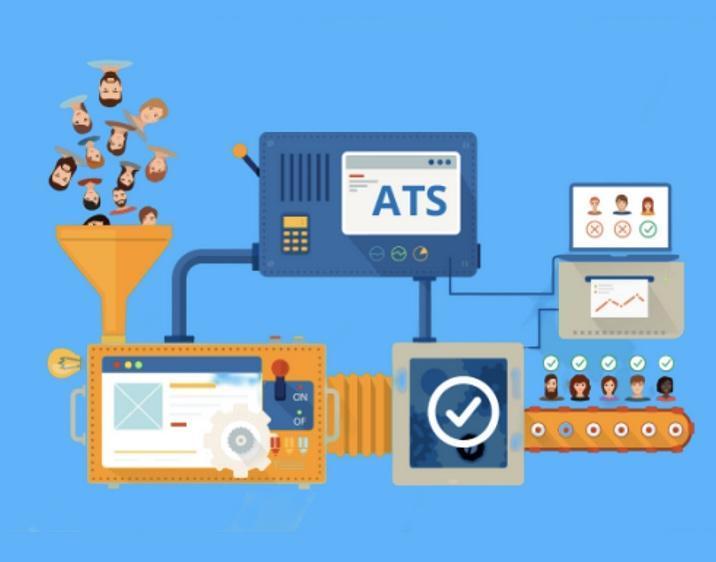
Fig -4: IllustrationofanApplicantTrackingSystem(ATS) used in hiring processes. The image demonstrates how AI/ML algorithms screen and filter job applicants, highlighting potential biases that can affect candidate selectionanddiversity.
5.3 Artificial Intelligence Biases in The Job Recruitment Industry
TherapidadoptionofAIandMLtechnologiesinthehiring process has brought to the forefront the issue of algorithmic biases [119], [120], [121]. These biases can emerge from the historical data used to train the AI/ML models, as well as the inherent biases present in the human-designed algorithms and processes [122], [123]. Suchbiasescanmanifestinunfairtreatmentandexclusion of certain candidates based on factors like race, gender, age,andotherpersonalattributes,ultimatelyundermining the principles of fairness and diversity in the workplace [119], [121], [124]. Addressing these biases is crucial to ensure equitable hiring practices and to prevent the perpetuation or amplification of societal inequalities throughtheuseofAI/MLinrecruitment[122].
5.4
● Algorithmic Bias- Algorithmicbiasisaprevalent issue in the hiring process, where artificial intelligence (AI)andmachinelearning(ML)modelsusedforscreening and selection can inadvertently perpetuate unfair biases [125],[126].Thesebiasescanstemfromthetrainingdata used to develop the algorithms, which may reflect historical patterns of discrimination and underrepresentation [126], [127]. For example, an AIpoweredresumescreeningtooldevelopedbyAmazonwas found to be biased against women, as the algorithm had learned to penalize resumes containing the word
p-ISSN:2395-0072 © 2024, IRJET | Impact Factor value: 8.226 | ISO 9001:2008 Certified Journal | Page 840
"women's", such as "women's chess club captain" [130]. This algorithmic bias was a result of the training data used, which reflected historical gender biases in hiring [130]. Such biases in AI-driven hiring tools can have adverse effects on organizations and broader society by limiting opportunities for qualified candidates from underrepresented groups [131]. As a result, the algorithms can make hiring decisions that systematically disadvantage certain demographic groups, leading to a lackofdiversityandfairnessintheworkforce[125],[126], [129].
● Gender Bias- Another significant type of bias observedinthehiringprocessisgenderbias[126],[128]. AI-powered hiring tools have been found to exhibit preferences for traditionally male-dominated roles and characteristics, often overlooking or undervaluing the skillsandqualificationsoffemalecandidates.[126],[128].
A study by researchers at Harvard and MIT found that a widely used hiring algorithm systematically ranked male applicants higherthan equally qualifiedfemaleapplicants [132].Thealgorithmhadbeentrainedonhistoricalhiring data that reflected traditional gender biases in the workforce,causingittoreplicateandamplifythesebiases intheautomatedhiringprocess[132].Thishighlightshow AI/ML models can perpetuate societal biases if the training data is not carefully curated to be representative and unbiased [132]. This bias can have a detrimental impacton the representationof womenin the workforce, particularly in industries like technology, where gender imbalanceisalreadyalongstandingissue[126],[128].The perpetuation of gender bias in hiring can further exacerbate the gender pay gap and limit career advancementopportunitiesforwomen[126],[128].
The increasing deployment of artificial intelligence (AI) and machine learning (ML) technologies in the hiring process has raised significant ethical concerns regarding bias and fairness [133], [134], [126]. These systems, designed to enhance efficiency and objectivity, can inadvertently perpetuate existing societal biases and lead to unfair outcomes for job applicants [134], [137]. The incorporation of biased data in the training of these algorithms can result in discriminatory practices, such as unfairly filtering out candidates based on gender, race, or other protected characteristics [134], [136]. The lack of transparency and interpretability in the decision-making processes of AI/ML hiring systems further exacerbates these ethical issues, making it challenging to identify and address the underlying biases [134], [135]. Ethical considerations in this domain necessitate a holistic approach, involving diverse and representative datasets, enhanced algorithmic accountability, and continuous
International Research Journal of Engineering and Technology (IRJET) e-ISSN:2395-0056
Volume: 11 Issue: 06 | Jun 2024 www.irjet.net
monitoring to ensure that AI-driven hiring practices uphold principles of fairness, equity, and nondiscrimination[137].Addressingtheseethicalconcerns is crucial to maintain public trust and ensure that the benefits of AI/ML technologies in hiring are equitably distributed.
Detecting biases in AI/ML systems used for job recruitment is a crucial step towards ensuring fair and equitable hiring practices. Researchers have developed various approaches and techniques to identify these biases, including analyzing the training data, evaluating themodel'spredictionsforpotentialdisparateimpact,and auditing the decision-making process for sources of bias [139].However,effectivelydetectingandmitigatingbiases in these complex systems poses significant challenges, as biases canstem from numerous sources, such as the data used for training, the design of the algorithms, and the humaninputs guiding the process [138].Additionally, the lack of transparency in many AI/ML systems can hinder theabilitytothoroughlyauditandunderstandthesources of bias, presenting a limitation in the comprehensive detectionoftheseissues[139].
● Detecting Algorithmic Bias- Algorithmic bias refers to the systemic and unfair discrimination that can occurwhenAIalgorithmsproducebiasedoutcomes,often reflecting or exacerbating societal biases [143]. One approach to detecting algorithmic bias is through algorithmauditing,wherebythealgorithmsusedinhiring are subjected to rigorous testing to identify and rectify biases [143]. For example, the United Nations faced backlash over its use of a facial recognition tool in the hiringprocess,whichexhibitedracialbias.[145].Thetool consistently ranked candidates with darker skin tones lower than their lighter-skinned counterparts, reflecting biases inherent in the training data [145]. This is an example of algorithmic bias, where the AI system's outputs are skewed due to the biases present in the data andalgorithmsusedtodevelopit[145].Researchershave usedvarioustechniquesandtoolstodetectthebiasinthis example, such as analyzing the performance of the AI system across different demographic groups and identifying the skewed distribution of the training data that led to the biased outputs [145]. These findings highlighttheneedforcarefulevaluationandmitigationof bias when deploying AI systems, particularly in highstakesapplicationslikehiring,toensurefairandequitable
p-ISSN:2395-0072
outcomes [145]. Additionally, diversifying the training data used to develop these algorithms and incorporating fairness constraints into their design can help mitigate bias and promote equitable outcomes [143]. Researchers have also proposed the Conditional Demographic Disparity test, a publicly available tool that can identify bias in algorithms and provide guidance on how to make the system fairer and more accurate [141]. Beyond algorithm-focused methods, promoting diversity and inclusion within the organization can also help address algorithmic bias. Ensuring a diverse team of software engineers and data scientists, including individuals from different backgrounds, can broaden the perspectives and assumptionsbuiltintothealgorithms[142].
● Locating Gender Bias- Gender bias in hiring refers to the tendency of hiring and recruiting algorithms to screen out job applicants based on gender [144]. One effective approach to detecting gender bias involves the use of Natural Language Processing (NLP) techniques, such as word embeddings and contextual embeddings. These methods can analyze the language used in job descriptions and identify gender-coded words or phrases that may deter certain candidates from applying [140]. Another prominent example of algorithmic bias detection inhiringisthecaseofGoogle'sCVscreeningtool.In2018, researchers found that the tool exhibited gender bias, systematically downgrading CVs that contained terms associated with women [146]. To uncover this bias, the researchers conducted a thorough analysis of the tool's inner workings and the data used to train it [147]. They examined the language models and algorithmic decisionmaking processes employed by the tool, identifying the specificwaysinwhichitwasdiscriminatingagainstfemale applicants[147].Additionally,theresearcherscarriedout controlled experiments, submitting resumes with subtle differences to test the tool's responses [147]. These rigorous investigations allowed them to pinpoint the sources of bias, such as the tool's tendency to prioritize masculine-coded language and penalize references to women's activities or organizations [146]. The researchers' findings ultimately led Google to acknowledge the issue and take steps to address the bias intheirhiring algorithms [147].Machinelearning models can also be trained to classify job descriptions as genderneutralorbiased,providingquantitativemetricstoassess thelevelofbias[140].Inadditiontoalgorithmictools,the involvement of diverse human reviewers and feedback loops is crucial for detecting gender bias. Collaborating with teams that bring varied perspectives can help uncover conscious and unconscious biases that may have beenoverlookedbyautomatedsystems[140].
International Research Journal of Engineering and Technology (IRJET) e-ISSN:2395-0056
Volume: 11 Issue: 06 | Jun 2024 www.irjet.net
In conclusion, this research novel has provided a comprehensive exploration of the biases inherent in artificial intelligence (AI) and machine learning (ML) systems across critical sectors such as healthcare, hiring, self-driving cars, and financial systems. Our review highlights that biases in AI and ML algorithms stem from various sources, including biased training data, algorithmic design,and implementationpractices,leading tosignificantethicalconcernsandconsequences.
Theidentifiedbiases,suchasmeasurement,confirmation, and many other biases, have profound implications for decision-making processes and societal outcomes. Case studies examined in this paper illustrate the real-world impactofbiasedAIsystems,emphasizingtheurgentneed forfairandaccountableAIdevelopmentpractices.
Addressing these challenges requires a multifaceted approach. Mitigation strategies proposed include improving the diversity of training data, implementing algorithmicfairnesstechniques,conductingregularaudits and impact assessments, and fostering interdisciplinary collaboration among AI developers, ethicists, and policymakers.
Furthermore, the advancement of large language models (LLMs), such as GPT-4 and its successors, offers a promising avenue for mitigating biases in AI and ML systems. LLMs have the potential to enhance algorithmic transparency, interpretability, and fairness by enabling researchers to analyze and understand biases more effectively. Through their ability to process vast amounts of text data, LLMs can aid in identifying and mitigating biases duringthedevelopmentanddeployment phases of AIsystems.
As we move forward, it is imperative to prioritize ethical considerations and social responsibility in AI development. By adopting the proposed mitigation strategiesandleveragingemergingtechnologieslikelarge language models, we can work towards creating AI systems that not only drive technological advancements but also promote equity, transparency, and trust across varioussectors.
Thisresearchnovelwouldnothavebeenpossiblewithout the unwavering support and dedication of my son. His willingnesstoshoulderadditionalresponsibilitiesathome has been nothing short of remarkable. From washing dishes and vacuuming the house to taking care of his younger sister, he has ensured that I had the time and space needed to immerse myself in researching and
p-ISSN:2395-0072
writing.Hispatience,understanding,andlovehavebeena constant source of strength and motivation. I am deeply gratefulforallhiscontributionsandthesacrificeshemade tohelpmeachievethisdream.
I also wish to express my profound gratitude to God, whosegraceandguidancehavebeenaconstantsourceof inspiration and comfort throughout this journey. It is through His blessings that I have found the perseverance and resilience to navigate the challenges of writing this research novel. His presence has been a guiding light, providing me with the clarity and courage to continue, evenwhenthepathseemeduncertain.
To my family, friends, and everyone who believed in me and this project, thank you for your encouragement and support. Your faith in my work has been a powerful motivator,andIamforevergratefulforyourkindnessand generosity.
[1] Viruses Broaden the Definition of Life by Genomic Incorporation of Artificial Intelligence and Machine Learning Processes, https://www.semanticscholar.org/paper/a3de306c56388 b0b778f81b193782831d0c63295
[2] Detailed review on Integrated Healthcare Prediction SystemUsingArtificialIntelligenceandMachineLearning, https://www.semanticscholar.org/paper/2982cd698f6fd 4f0d49363b9e4403bcf48e717b0
[3] Political Dimension of Artificial Intelligence and Machine Learning, https://www.semanticscholar.org/paper/d739d59ab964 c371060576eec2f025e471f5cbf8
[4] Call for algorithmic fairness to mitigate amplification of racial biases in artificial intelligence models used in orthodontics and craniofacial health., https://onlinelibrary.wiley.com/doi/pdfdirect/10.1111/o cr.12721
[5] Ethical Considerations in AI Addressing Bias and Fairness in Machine Learning Models, https://jklst.org/index.php/home/article/download/133 /108
[6] TRACING THE EVOLUTION OF AI AND MACHINE LEARNING APPLICATIONS IN ADVANCING MATERIALS DISCOVERY AND PRODUCTION PROCESSES, https://www.fepbl.com/index.php/estj/article/download /552/708
International Research Journal of Engineering and Technology (IRJET) e-ISSN:2395-0056
Volume: 11 Issue: 06 | Jun 2024 www.irjet.net p-ISSN:2395-0072
[7] Artificial Intelligence (AI) in Healthcare & Medical Field, https://www.foreseemed.com/artificialintelligence-in-healthcare
[8] AHistoricalLookatAIinHealthCare|WoundSource, https://www.woundsource.com/blog/historical-look-aiin-health-care
[9] Contributed:Ninerevolutionary waysAI isadvancing healthcare, https://www.mobihealthnews.com/news/contributednine-revolutionary-ways-ai-advancing-healthcare
[10] Artificial Intelligence in Drug Discovery and Development, https://www.semanticscholar.org/paper/4e3cf1f761b87 49afbac46ab949ed30896d3f44a
[11] Algorithmic Precision Medicine: Harnessing Artificial Intelligence for Healthcare Optimization, https://journalajb2t.com/index.php/AJB2T/article/downl oad/190/375
[12] Deep Learning and Health Informatics for Smart Monitoring and Diagnosis, https://www.semanticscholar.org/paper/b2c55629cb98a fc1c93e44c3730c67fa935d93fa
[13] A review of artificial intelligence applications in anterior segment ocular diseases, https://mehdijournal.com/index.php/mehdioptometry/a rticle/download/1030/589
[14] Unleashing the potential: Artificial intelligence in urology for enhanced diagnosis, treatment, and personalized care, https://www.semanticscholar.org/paper/e9ab4f5cf821ea 44ebe4fe678ab572360eebb97b
[15] Towards General Purpose Vision Foundation Models for Medical Image Analysis: An Experimental Study of DINOv2 on Radiology Benchmarks, https://www.semanticscholar.org/paper/cd281e29a0692 b10f2617c91e2fae26b4eea17f3
[16] Multimodal Healthcare AI: Identifying and Designing Clinically Relevant Vision-Language Applications for Radiology, https://dl.acm.org/doi/pdf/10.1145/3613904.3642013
[17] Meta-research on reporting guidelines for artificial intelligence: are authors and reviewers encouraged enough in radiology, nuclear medicine, and medical imaging journals?,https://www.semanticscholar.org/paper/e2195 2c2a220934d0944fd232c5476e46fd50e5e
[18] Overcoming AI Bias: Understanding, Identifying and Mitigating ..., https://www.accuray.com/blog/overcoming-ai-biasunderstanding-identifying-and-mitigating-algorithmicbias-in-healthcare/
[19] What is Bias in Machine Learning & Deep Learning?, https://www.foreseemed.com/blog/bias-in-machinelearning
[20] Addressing AI and Implicit Bias in Healthcare | TechnologyAdvice, https://technologyadvice.com/blog/healthcare/ai-biasin-healthcare/
[21] Shedding Light on Healthcare Algorithmic and Artificial Intelligence ..., https://minorityhealth.hhs.gov/news/shedding-lighthealthcare-algorithmic-and-artificial-intelligence-bias
[22] AIAlgorithmicBias:UnderstandingitsCauses,Ethical and Social Implications, https://www.semanticscholar.org/paper/ca6d1e3308929 dc73952b041005eeeaca8d9e702
[23] The Measurement and Mitigation of Algorithmic Bias andUnfairnessinHealthcareAIModelsDevelopedforthe CMS AI Health Outcomes Challenge, https://www.semanticscholar.org/paper/a4ffc1b0263fc2 677035df3b24e638c7fd44b77e
[24] MeasurementandMitigationofBiasinAI:ANarrative Literature Review for Regulatory Science., https://www.semanticscholar.org/paper/6d9439fde9c38 45e738944adaa4d2bc63dffb5d4
[25] Unmasking Bias in AI: A Systematic Review of Bias Detection and Mitigation Strategies in Electronic Health Record-based Models, https://www.semanticscholar.org/paper/736c31eef4edfe ec88a2147066e4f2f3b17df1f0
[26] Unmasking bias in artificial intelligence: a systematic review of bias detection and mitigation strategies in electronic health record-based models, https://www.semanticscholar.org/paper/9e049e61f34b8 7df8d8642fb348d98b07fc9d514
[27] AIAlgorithmicBias:UnderstandingitsCauses,Ethical and Social Implications, https://www.semanticscholar.org/paper/ca6d1e3308929 dc73952b041005eeeaca8d9e702
[28] A meta-study on optimizing healthcare performance with artificial intelligence and machine learning, https://www.semanticscholar.org/paper/db6c79c32d1f6 b4281b3ddf7eea73127896aa6c7
2024, IRJET | Impact Factor value: 8.226 | ISO 9001:2008 Certified Journal | Page 843
International Research Journal of Engineering and Technology (IRJET) e-ISSN:2395-0056
Volume: 11 Issue: 06 | Jun 2024 www.irjet.net p-ISSN:2395-0072
[29] Ethics of AI: Perpetuating Racial Inequalities in Healthcare Delivery and Patient Outcomes, https://www.semanticscholar.org/paper/5882b0e47a8fd 405f8d3224806b31374d1fb44cb
[30] Sourcesofbiasinartificialintelligencethatperpetuate healthcare disparities A global review, https://journals.plos.org/digitalhealth/article/file?id=10 1371/journal.pdig.0000022&type=printable
[31] Fairness And Bias in Artificial Intelligence: A Brief Survey of Sources, Impacts, And Mitigation Strategies, https://www.mdpi.com/24134155/6/1/3/pdf?version=1703577406
[32] MeasurementandMitigationofBiasinAI:ANarrative Literature Review for Regulatory Science., https://www.semanticscholar.org/paper/6d9439fde9c38 45e738944adaa4d2bc63dffb5d4
[33] AI: simply reinforcing medicine’s worst biases?,https://www.semanticscholar.org/paper/543d00 6629a93d7aef1e50bbf7b8155ccd338a9e
[34] PCIVmethodforIndirectBiasQuantificationinAIand ML Models, https://www.semanticscholar.org/paper/b13a423a885fa b193a57e930d063bbe2f48b507a
[35] A structured regression approach for evaluating model performance across intersectional subgroups, https://www.semanticscholar.org/paper b8d149465015a0baff6c8c9d4fb40b2070ebcdc4
[36] Considerations for addressing bias in artificial intelligence for ... - NCBI, https://www.ncbi.nlm.nih.gov/pmc/articles/PMC104975 48/
[37] An objective framework for evaluating unrecognized bias in medical ..., https://www.ncbi.nlm.nih.gov/pmc/articles/PMC927764 5/
[38] ExploringAI Bias inHealthcare: FromGathering Data to ... - LinkedIn, https://www.linkedin.com/pulse/exploring-ai-biashealthcare-from-gathering-data-krishan-dev
[39] Bias in AI-based models for medical applicationsNature, https://www.nature.com/articles/s41746-02300858-z
[40] Understanding the role of AI bias in healthcareQuantib, https://www.quantib.com/blog/understandingthe-role-of-ai-bias-in-healthcare
[41] The Next Era of Biomedical Research, https://www.semanticscholar.org/paper/9aed9e4b665d 14de49aa6d175ed8b6bd321764c3
[42] Safeguarding Connected Health: Leveraging TrustworthyAITechniquestoHardenIntrusionDetection Systems Against Data Poisoning Threats in IoMT Environments, https://mesopotamian.press/journals/index.php/BJIoT/a rticle/download/200/200
[43] Artificial Intelligence in Self-Driving Cars Research and Innovation: A Scientometric and Bibliometric Analysis, https://www.semanticscholar.org/paper/a831eea0fd767 8022c2767ed273f291af4ce38d7
[44] ANIMPROVEDSAFETYALGORITHMFORARTIFICIAL INTELLIGENCE ENABLED PROCESSORS IN SELF DRIVING CARS, https://www.semanticscholar.org/paper/50901eb33468 b74e147901ac68921670301f0ad2
[45] Artificial Intelligence Based on Self Driving Cars with Safety Algorithm, https://ijsrem.com/download/artificialintelligence-based-on-self-driving-cars-with-safetyalgorith m/?wpdmdl=29900&refresh=665b44a88548c171725738 4
[46] EnhancingObjectDetectioninSelf-DrivingCarsUsing a Hybrid Approach, https://www.mdpi.com/20799292/12/13/2768/pdf?version=1687671979
[47] ogy n dontson mesterseges intelligenci A onve eto uto mor lis erdesei ow hould Artifici l IntelligenceDecide?MoralChallengesofSelf-drivingCars, https://www.semanticscholar.org/paper/5a8541a51ca9a f15677955dfaa97c3d0cab4dadd
[48] Machine Learning Insights for Behavioral Data Analysis Supporting the Autonomous Vehicles Scenario, https://www.semanticscholar.org/paper/31492340c57e 9be0810f36433f2e9db4c8180887
[49] An Object Classification Approach for Autonomous Vehicles Using Machine Learning Techniques, https://www.mdpi.com/20326653/14/2/41/pdf?version=1675427213
[50] Assessing Artificial Intelligence for Humanity: Will AI be the Our Biggest Ever Advance ? or the Biggest Threat [Opinion], https://ieeexplore.ieee.org/ielx7/44/8558723/08558761 .pdf
International Research Journal of Engineering and Technology (IRJET) e-ISSN:2395-0056
Volume: 11 Issue: 06 | Jun 2024 www.irjet.net p-ISSN:2395-0072
[51] ComputationalImagingandArtificialIntelligence:The Next Revolution of Mobile Vision, https://arxiv.org/pdf/2109.08880
[52] Workshop on Les Contes du Mariage : Should AI stay married to Ed ?, https://www.semanticscholar.org/paper/8fcab5256b951 d790b6251af27692ef106ae4a69
[53] Synergizing Remora Optimization Algorithm and Transfer Learning for Visual Places Recognition in Intelligent Transportation Systems and Consumer Electronics, https://www.semanticscholar.org/paper/c202f75265511 bf404ff8122d0fff0342b15b1f8
[54] Adversarial Machine Learning Using Convolutional Neural Network With Imagenet, https://www.semanticscholar.org/paper/c993bcdf2f81fc 7393c5c6dd923dc9c205d740df
[55] Unveiling the Power of Data: A Journey Through Machine Learning Techniques, https://www.semanticscholar.org/paper/5ce6e2e05f57d 04fa925cfcba1b24f2751601992
[56] Autonomous Vehicles: Evolution of Artificial Intelligence and Learning Algorithms, https://www.semanticscholar.org/paper/4b9c0f7c583fc8 6f1687bac38bdfbb92e870ff83
[57] How Electrical Engineering and Computer Engineering Departments are Preparing Undergraduate Students for the New Big Data, Machine Learning, and AI Paradigm: A Three- Model Overview, https://www.semanticscholar.org/paper/cdaddf4011323 a3d76e23bff229c2beed913a4f3
[58] IsSpeechtheNewBlood?RecentProgressinAI-Based Disease Detection From Audio in a Nutshell, https://www.frontiersin.org/articles/10.3389/fdgth.2022 .886615/pdf
[59] Automated and Autonomous Experiment in Electron and Scanning Probe Microscopy, https://www.semanticscholar.org/paper/da38521a6750 2b4ec35e24594de8a4a3cebfaba1
[60] AIMLAI: Advances in Interpretable Machine Learning and Artificial Intelligence, https://www.semanticscholar.org/paper/0b9bb8f8f7bebf 05edd0680aa06a2e6cbd7dadd9
[61] Deep Networks That Know When They Don't Know, https://www.semanticscholar.org/paper/87c1a307bb5bc c237f45f49a07118e0b362e0a9d
[62] A Study on Training Data Selection for Object Detection in Nighttime Traffic Scenes, https://www.semanticscholar.org/paper/1060b18f79d57 42e46a69a9db5d1d2f4beefca6f
[63] Confidence-Aware Reinforcement Learning for SelfDriving Cars, https://www.semanticscholar.org/paper/371b6f1b00a85 913459c073d016669ad9d3c02ab
[64] Why Is Artificial Intelligence Blamed More? Analysis of Faulting Artificial Intelligence for Self-Driving Car Accidents in Experimental Settings, https://www.semanticscholar.org/paper/4cdaddec95061 f1259bd97118c6857f8c4a6bc3e
[65] Gender Discrimination 1 GENDER DISCRIMINATION IN NEGOTIATOR DECEPTION: AN ARCHIVAL ANALYSIS OF BEHAVIOR IN THE MBA CLASSROOM, https://www.semanticscholar.org/paper/891e95fba49bb 6a6d6d4563161f0229a93b9fec3
[66] Ethical Considerations in AI Addressing Bias and Fairness in Machine Learning Models, https://jklst.org/index.php/home/article/download/133 /108
[67] Exploring Ethical Considerations in AI-driven Autonomous Vehicles: Balancing Safety and Privacy, https://jaigs.org/index.php/JAIGS/article/download/31/ 22
[68] AI Ethics in Autonomous Vehicles: Safety and Decision-Making, https://fpgainsights.com/artificialintelligence/ai-ethics-in-autonomous-vehicles/
[69] AI in Transportation: Ethical Balance between Safety and Privacy, https://tech-stack.com/blog/ai-intransportation/
[70] OvercomingRacial Bias In AI Systems And Startlingly Even In AI Self ..., https://www.forbes.com/sites/lanceeliot/2020/01/04/o vercoming-racial-bias-in-ai-systems-and-startlingly-evenin-ai-self-driving-cars/
[71] AIMLAI: Advances in Interpretable Machine Learning and Artificial Intelligence, https://www.semanticscholar.org/paper/0b9bb8f8f7bebf 05edd0680aa06a2e6cbd7dadd9
[72] What is availability bias – TechTarget Definition, https://www.techtarget.com/whatis/definition/availabili ty-bias
[73] AddressingDisabilityandAbleistBiasinAutonomous Vehicles, https://dredf.org/2023/03/09/addressing-
2024, IRJET | Impact Factor value: 8.226 | ISO 9001:2008
International Research Journal of Engineering and Technology (IRJET) e-ISSN:2395-0056
disability-and-ableist-bias-in-autonomous-vehiclesensuring-safety-equity-and-accessibility-in-detectioncollision-algorithms-and-data-collection/
[74] AnalyzingandMitigatingBiasforVulnerableClassesarXiv,https://arxiv.org/html/2401.10397v1
[75] The Psychological Effects of Self-Driving Cars, https://www.psychologytoday.com/us/blog/urbansurvival/202311/the-psychological-effects-of-selfdriving-cars
[76] Shifting Perceptions and Emotional Responses to Autonomous ..., https://www.ncbi.nlm.nih.gov/pmc/articles/PMC108130 87/
[77] AnalyzingandMitigatingBiasforVulnerableClassesarXiv,https://arxiv.org/html/2401.10397v1
[78] OvercomingRacial Bias In AI Systems And Startlingly Even In AI Self ..., https://www.forbes.com/sites/lanceeliot/2020/01/04/o vercoming-racial-bias-in-ai-systems-and-startlingly-evenin-ai-self-driving-cars/
[79] EliminatingBiasinAutonomousVehicleTrainingData - Keymakr, https://keymakr.com/blog/eliminating-biasin-autonomous-vehicle-training-data/
[80] How Machine Learning in Automotive Makes SelfDriving Cars a ..., https://mindy-support.com/newspost/how-machine-learning-in-automotive-makes-selfdriving-cars-a-reality/
[81] Explainable AI: Using Shapley Value to Explain Complex Anomaly Detection ML-Based Systems, https://ebooks.iospress.nl/pdf/doi/10.3233/FAIA200777
[82] ACriticalStudy ofICTOrientedInnovations basedon Artificial Intelligence (AI) Applications towards BFSI Sector, https://www.semanticscholar.org/paper/5b6b0e2723d2 9ce8b7d4ecf192ee890e63f74a76
[83] Explainable AI in Credit Risk Management, https://arxiv.org/pdf/2103.00949
[84] The Use of Artificial Intelligence and Machine Learning in Forecasting the Financial Growth of Automobile Industries, https://ijsrem.com/download/the-use-of-artificialintelligence-and-machine-learning-in-forecasting-thefinancial-growth-of-automobileindustries/?wpdmdl=34451&refresh=665a28c264bbc171 7184706
Volume: 11 Issue: 06 | Jun 2024 www.irjet.net p-ISSN:2395-0072 © 2024, IRJET | Impact Factor value: 8.226 | ISO 9001:2008
[85] A Review on Financial Fraud Detection using AI and Machine Learning, https://alkindipublisher.com/index.php/jefas/article/download/67 39/5709
[86] PredictiveMaintenanceBeyondPredictionOfFailures, https://www.semanticscholar.org/paper/cbd373cb11d8a 7549f1e100f2ce910013cf1177e
[87] eLearning after four decades : what about sustainability?., https://www.semanticscholar.org/paper/1d41e1654f97e 7fae3ba42b5ee5c7e72a3ea1c63
[88] JavaTM Intelligent Tutoring System Model and Architecture, https://www.semanticscholar.org/paper/158687a90aa0 4f1e887993032afca165f0c8a1d7
[89] A Holistic Approach To Teaching Engineering Entrepreneurship And Technology Commercialization, https://peer.asee.org/12612.pdf
[90] TransformingInformationExtraction:AIandMachine Learning in Optical Character Recognition Systems and Applications Across Industries, https://www.semanticscholar.org/paper/8b789d617ad7 265b16c3e2179738f0aa1aa89d8d
[91] AutomatedBankingFraudDetectionforIdentification andRestrictionofUnauthorisedAccessinFinancialSector, https://www.semanticscholar.org/paper/f9904a1e6d078 16f236d52133a1e0621cf051792
[92] AI-EnhancedSEM Analysis: EvaluatingE-CRM'sEffect on Customer Experience in NCR's Private Banking Sector, https://www.semanticscholar.org/paper/54e623d8e54f4 47c959d91c04881eb9b804c3ed9
[93] Enhancing Cybersecurity in Financial Services using Single Value Neutrosophic Fuzzy Soft Expert Set, https://www.semanticscholar.org/paper/8337420bf3776 456b76721185c4261c93c516cbb
[94] APPLICATION OF MACHINE LEARNING METHODS IN THEBANKINGSECTORTOINCREASETHEEFFICIENCYOF DECISION-MAKING, https://www.semanticscholar.org/paper/4ef5fcc2aece06 a9a453d34fd7415dd71921a745
[95] Navigating the landscape of artificial intelligence, Machine learning and Deep Learning, https://www.semanticscholar.org/paper/96cc1c970f33d ae04382bd4415a1c031b36f8dc3
[96] Towards algorithm auditing: managing legal, ethicaland technological risks of AI, ML and associated
International Research Journal of Engineering and Technology (IRJET) e-ISSN:2395-0056
Volume: 11 Issue: 06 | Jun 2024 www.irjet.net p-ISSN:2395-0072
algorithms, https://royalsocietypublishing.org/doi/pdf/10.1098/rsos .230859
[97] Towards Algorithm Auditing: A Survey on Managing Legal, Ethical and Technological Risks of AI, ML and Associated Algorithms, https://www.semanticscholar.org/paper/8f31afed84dde 6d3ca2793dbb53c98ba526e61ed
[98] The Challenges of AI Algorithm Bias in Financial Services, https://www.techopedia.com/ai-algorithm-biasin-financial-
[99] Understandingalgorithmicbiasandhowtobuildtrust in AI - PwC, https://www.pwc.com/us/en/tech-effect/aianalytics/algorithmic-bias-and-trust-in-ai.html
[100]The Challenges of AI Algorithm Bias in Financial Services, https://www.techopedia.com/ai-algorithm-biasin-financial-services
[101]WhatAretheEthicalConcernsAroundAIInFinance?LinkedIn, https://www.linkedin.com/pulse/what-ethicalconcerns-around-ai-finance-damilola-ogunsakin-aca-msc
[102]Bias,fairness,andotherethicaldimensionsinartificial intelligence, https://bankunderground.co.uk/2023/10/11/biasfairness-and-other-ethical-dimensions-in-artificialintelligence/
[103][PDF] AI IN FINANCIAL INDUSTRY: ETHIC ISSUES, https://jai.aspur.rs/archive/v1/n1/2.pdf
[104]Eliminating AI bias from bank decision-making - BAI, https://www.bai.org/banking-strategies/eliminating-aibias-from-bank-decision-making/
[105]EnsuringFairnessinFinance:MitigatingBiasinCredit Underwriting, https://medium.com/@shreyalunkad/ensuring-fairnessin-finance-mitigating-bias-in-credit-underwritingb57a471d5e06
[106]Assessing and mitigating unfairness in credit models with ... - Microsoft, https://www.microsoft.com/enus/research/publication/assessing-and-mitigatingunfairness-in-credit-models-with-the-fairlearn-toolkit/
[107]CombatingAIbiasinthefinancialsector-TechTarget, https://www.techtarget.com/searchenterpriseai/feature/ Combating-AI-bias-in-the-financial-sector
[108]Fair Lending and Machine Learning Models: Navigating Bias and ...,
https://www.experian.com/blogs/insights/fair-lendingand-machine-learning-models/
[109]What are the different regularization techniques in finance?, https://www.versaquant.com/blog/what-arethe-different-regularization-techniques-in-finance
[110]AnalysisofthePotentialBenefitsfromUsingQuantum Computing for Aerospace Applications, https://www.semanticscholar.org/paper/85fbdd3258e0a 87be02ca5c32fc4f5a6e071876a
[111]TheProspectsofQuantumComputingforQuantitative Finance and Beyond, https://www.semanticscholar.org/paper/4bb0f88787a99 6b5865f44daaa3972f7e0c747c6
[112]Navigating the AI Bias: Exploring Tools and Techniques, https://arunapattam.medium.com/navigating-the-ai-biasexploring-tools-and-techniques-c42b0f26fd29
[113]AVA: A Photorealistic AI Bot for Human-like Interaction and Extended Reality, https://www.semanticscholar.org/paper/6ce24d122db9 b71130683071308edef1bffa9925
[114]THE ROLE OF ARTIFICIAL INTELLIGENCE (AI) IN RECRUITMENT AND SELECTION OF EMPLOYEES IN THE ORGANISATION, https://russianlawjournal.org/index.php/journal/article/ download/1624/900
[115]AI in Recruitment - Everything you need to knowJobylon, https://www.jobylon.com/blog/how-ai-istransforming-the-world-of-recruitment
[116]ThestateofAIin2022 andahalfdecadeinreview| McKinsey, https://www.mckinsey.com/capabilities/quantumblack/o ur-insights/the-state-of-ai-in-2022-and-a-half-decade-inreview
[117]Revolutionizing Recruitment: The AI-Driven Transformation, https://www.herohunt.ai/blog/revolutionizingrecruitment-with-ai
[118]TheFutureofRecruitment:UseofAIforBetterHiring, https://www.expressanalytics.com/blog/ai-inrecruitment/
[119]Navigating the Pitfalls of AI in Hiring: Unveiling Algorithmic Bias, https://medium.com/@sahin.samia/navigating-thepitfalls-of-ai-in-hiring-unveiling-algorithmic-bias9e62b50b3f65
© 2024, IRJET | Impact Factor value: 8.226 | ISO 9001:2008
| Page 847
International Research Journal of Engineering and Technology (IRJET) e-ISSN:2395-0056
[120]Learn How AI Hiring Bias Can Impact You Recruitment Process, https://vidcruiter.com/interview/intelligence/ai-bias/
[121]How AI Bias Could Impact Hiring and Recruitment.LinkedIn, https://www.linkedin.com/pulse/how-ai-biascould-impact-hiring-recruitment-abdellah-aouf
[122]In the job hiring process, most workers say they alreadysenseAI,https://www.cnbc.com/2023/12/28/inthe-job-hiring-process-most-workers-say-they-alreadysense-ai.html
[123]Discrimination and bias in AI recruitment: a case study - Lewis Silkin, https://www.lewissilkin.com/en/insights/discriminationand-bias-in-ai-recruitment-a-case-study
[124]Ethics and discrimination in artificial intelligenceenabled ... - Nature, https://www.nature.com/articles/s41599-023-02079-x
[125]The Implications of Orthographic Intraference for the Teaching and Description of ESL: The Educated Nigerian English Examples, https://www.semanticscholar.org/paper/ab3855d91d98f e9c3986f23d65282472a472e15a
[126]Antagonistic terms found on land and offshore, https://www.semanticscholar.org/paper/27350242237d 6b3c8537fabffdc1829ff7fddcc3
[127]Scoring Procedures for the Evaluation of Spelling Performance, https://www.semanticscholar.org/paper/6058d32ae8bf1 72d446f9ece81526c9e4fb5ef64
[128]Functionalload,therapeuticchange,andthesyntactic distribution of English homonyms, https://www.semanticscholar.org/paper/077d3b1fa9efa 5d4c1b3844599eb271b1ec1df64
[129]A Linguistic Analysis of COVID-19 Neologisms in English: Bangladesh Perspective, https://ccsenet.org/journal/index.php/elt/article/downlo ad/0/0/49285/53184
[130]COSCFair: Ensuring Subgroup Fairness Through Fair Classification Framework, https://www.semanticscholar.org/paper/854cee242b69a 792f00f91c0d94c1f022e07396f
[131]A Comprehensive Review of AI Techniques for Addressing Algorithmic Bias in Job Hiring, https://www.mdpi.com/26732688/5/1/19/pdf?version=1707285598
Volume: 11 Issue: 06 | Jun 2024 www.irjet.net p-ISSN:2395-0072 © 2024, IRJET | Impact Factor value: 8.226 | ISO 9001:2008
[132]XAI4LLM. Let Machine Learning Models and LLMs Collaborate for Enhanced In-Context Learning in Healthcare, https://www.semanticscholar.org/paper/27892516b6a2 0ddab6c5851efb5abaacdc077691
[133]Ethical Considerations in AI Addressing Bias and Fairness in Machine Learning Models, https://jklst.org/index.php/home/article/download/133 /108
[134]Exploring Ethical Dimensions in AI: Navigating Bias and Fairness in the Field, https://jaigs.org/index.php/JAIGS/article/download/54/ 41
[135]Developing a conceptual technical framework for ethical AI in procurement with emphasis on legal oversight, https://www.semanticscholar.org/paper/56a78da19302 3c0120e7a7bf4c7950d5ae91c518
[136]Examining Ethical Aspects of AI: Addressing Bias and Equity in the Discipline, https://ojs.boulibrary.com/index.php/JAIGS/article/dow nload/119/87
[137]Diversity, Equity, and Inclusion, and the Deployment ofArtificialIntelligenceWithintheDepartmentofDefense, https://www.semanticscholar.org/paper/0c2e9008fc770 c9804aa2dcf52c95c2acb37c2a0
[138]Navigating the Pitfalls of AI in Hiring: Unveiling Algorithmic Bias, https://www.linkedin.com/pulse/navigating-pitfalls-aihiring-unveiling-algorithmic-bias-sahin-ahmed-qajrc
[139]Fairness in AI-Driven Recruitment: Challenges, Metrics, Methods ..., https://arxiv.org/html/2405.19699v1
[140]How AI Can Remove Bias From The Hiring Process And ... - Forbes, https://www.forbes.com/sites/kathycaprino/2021/01/0 7/how-ai-can-remove-bias-from-the-hiring-process-andpromote-diversity-and-inclusion/
[141]Future of Inclusive Hiring: The Rise of Algorithmic Affirmative Action, https://www.linkedin.com/pulse/future-inclusive-hiringrise-algorithmic-affirmative-action-karmav-j28rc
[142]UNCOVERING BIAS IN AI-DRIVEN RECRUITMENTLangley Search, https://www.langleysearch.com/blog/2024/04/uncoveri ng-bias-in-ai-driven-recruitment-challenges-solutionsand-real-life-examples
|
International Research Journal of Engineering and Technology (IRJET) e-ISSN:2395-0056
Volume: 11 Issue: 06 | Jun 2024 www.irjet.net p-ISSN:2395-0072
[143]Detecting and mitigating bias in natural language processing, https://www.brookings.edu/articles/detecting-andmitigating-bias-in-natural-language-processing/
[144]7 Best Job Description Bias Tools (in 2024)OngigBlog, https://blog.ongig.com/diversity-andinclusion/job-description-bias-tools/
[145]Navigating the Pitfalls of AI in Hiring: Unveiling Algorithmic Bias, https://medium.com/@sahin.samia/navigating-thepitfalls-of-ai-in-hiring-unveiling-algorithmic-bias9e62b50b3f65
[146]UNCOVERING BIAS IN AI-DRIVEN RECRUITMENTLangley Search, https://www.langleysearch.com/blog/2024/04/uncoveri ng-bias-in-ai-driven-recruitment-challenges-solutionsand-real-life-examples
[147]Want a job? You'll have to convince our AI bot first | CBC News, https://www.cbc.ca/news/business/recruitment-ai-toolsrisk-bias-hidden-workers-keywords-1.6718151
[148] (Fig -1) Chaudhury, Srijani. Mean Squared Error (MSE) loss function. 13 Mar. 2020. https://www.analyticsvidhya.com/blog/2019/10/mathe matics-behind-machine-learning/.Accessed15June2024.
[149](Fig -2) eXeX. eXeX and Neurosurgeon Dr. Robert Masson Achieve World First Using Apple Vision Pro. 6 Feb. 2024. https://www.prnewswire.com/newsreleases/exex-and-neurosurgeon-dr-robert-massonachieve-world-first-using-apple-vision-pro302054787.html.Accessed15June2024.
[150](Chart -1) Herlihy, Christine. Mean absolute error of estimates for 6 metrics using 5 methods on diabetes data. 3 June2024.Accessed15June2024.
[151](Fig -3) Fox, Eva. Current rendering of Tesla FSD. 1 May 2021. https://www.tesmanian.com/blogs/tesmanian-blog/fsdbeta-v-9-visualization-is-a-true-mind-s-eye-of-the-neuralnet-says-elon-musk.Accessed15June2024.
[152](Chart -2) Machine Intelligence Team, University of Toronto. Trading strategy pipeline structure for the Wall Street Bots.21 June 2022. https://utorontomist.medium.com/wall-street-botsbuilding-an-automatic-stock-trading-platform-based-onartificial-intelligence-4f49df89ac41. Accessed 15 June 2024.
[153](Fig -4) Henderson, Robert. Applicant Tracking Systems Illustrative Diagram. 27 Mar. 2024. https://www.jobscan.co/blog/8-things-you-need-toknow-about-applicant-tracking-systems/. Accessed 15 June2024.

Sukanya Konatam is the principal authoroftheresearch,leadingtheidea of writing a comprehensive literature survey journal on AI and ML biases. With over 18+ years of experience in the IT industry, enriched by five years dedicated to specializing in AI and AI Governance. Her expertise spans a comprehensive range of IT disciplines, underscored by a profound depth of knowledge in the governance of artificial intelligence. This unique combination of experience positions her as a leading figure in the field, adeptatnavigatingtheintricaciesofAI technology with a strategic and ethical approach. She has implemented data centric solutions for several industries includingbanking&financials,telecom, health care, automobile, criminal justiceandmanymore.
Her significant contributions to the paper included an in-depth analysis of biases in the hiring process and selfdriving cars, as well as authoring the abstract, conclusion, and ensuring overall grammatical accuracy. u ny ’s robust b c ground in data governance, data warehousing, machine learning, and AI, combined with her proficiency in AI Governance made her instrumental in identifying andproposingmitigationstrategiesfor AI biases. Additionally, she holds a postgraduate degree in Data Science, Machine Learning, and Artificial Intelligence.
© 2024, IRJET | Impact Factor value: 8.226 | ISO 9001:2008
|
International Research Journal of Engineering and Technology (IRJET) e-ISSN:2395-0056
Volume: 11 Issue: 06 | Jun 2024 www.irjet.net

VenkatKonatam,asecondaryauthorof thisliteraturesurvey,playedakeyrole in investigating artificial intelligence andmachinelearningbiaseswithinthe financial systems sector. With over 25 years of experience in IT, Venkat has excelled in constructing resilient data platformsanddeliveringimpactfuldata products. His expertise lies in data architecture, database design, and performance optimization, with a strongfocusonAIandMLapplications. Venkat is currently pursuing a postgraduate program in data science, machine learning, and artificial intelligence to deepen his understandingandfosterinnovationin these areas. Known for his leadership in data teams and strategic alignment with business goals, Venkat contributed significantly to identifying biases in financial systems and proposing effective mitigation strategies to ensure fair and ethical AI implementation.

Shravya Konatam, another secondary authorofthisliteratureresearchnovel, made substantial contributions by focusing on AI in healthcare, driven by herpassionforlearningandadvancing inthemedicalfield.Currentlypursuing a BS DO Matriculant with a major in Biology and minors in Honors Transdisciplinary Studies and PreHealthatNovaSoutheasternUniversity inFlorida,Shravyaisdeeplycommitted to her field of study. Alongside her academic pursuits, she has a keen interest in exploring different cultures andlovestotravel.Despitebeinginthe e rly st ges of her c reer, hr vy ’s dedication to understanding the intersection of AI and healthcare has beeninstrumentalinprovidinginsights intotheethicalimplicationsandbiases in medical AI systems. Her fresh perspective and enthusiasm enrich the paper's exploration of AI biases in healthcare, emphasizing the importance of interdisciplinary collaboration in addressing these challenges.
p-ISSN:2395-0072