
International Research Journal of Engineering and Technology (IRJET) e-ISSN: 2395-0056
Volume: 11 Issue: 06 | Jun 2024 www.irjet.net p-ISSN: 2395-0072

International Research Journal of Engineering and Technology (IRJET) e-ISSN: 2395-0056
Volume: 11 Issue: 06 | Jun 2024 www.irjet.net p-ISSN: 2395-0072
Krunal Chavda1 , Sweta Panchal2 , Manan Desai3
1Research Scholar in Dr. Subhash University
2 Assistant Professor in Dr. Subhash University
3 Assistant Professor in Dr. Subhash University, India
Abstract - Improving electric motor performance can be achievedthroughtheimplementationofMaximumTorqueper Ampere(MTPA)control.Thisadvancedcontroltechniqueuses ofmaximumtorqueparamperebytheoptimizationthemotor operation Implementing MTPA control can lead to higher efficiency,reducedenergyconsumption,andimprovedoverall performance of electric motors. This paper delves into the principles and benefits of MTPA control, providing valuable insights into its application across different electric motor systems.TheimplementationofMaximumTorqueperAmpere (MTPA) control has attracted considerable attention in the realm of enhancing electric motor performance. By maximizing the torque produced per unit of current, MTPA control not only reduces energy consumption but also enhances the overall performance of electric motors. Furthermore, the application of MTPA control has demonstratedpromisingresultsacrossdiverseelectricmotor systems, establishing it as a versatile and impactful advancement in the field
Keywords: MTPA Control, PMSM Motor Control, FieldOriented Control (FOC), Battery Optimization Techniques, EV-HEVEfficiency,MotorControlAlgorithms,MPC-MTPA
MaximumTorqueperAmpere(MTPA)explorationhonesin on refining electric engines' execution, mainly Permanent Magnet Synchronous Motors (PMSMs), by enhancing the torqueproducedperunitofcurrent.Thissphereofstudyis key in bolstering the efficiency, scope, and overarching effectivenessofelectricvehicles(EVs)anddiverseindustrial applications.
Formulatecommandalgorithmsthatauthorizetheengineto generatepeaktorqueforanassignedcurrent,thusboosting overallengineefficiency.Thisispivotalforlesseningenergy lossesandstretchingthedrivingrangeofelectricvehicles. Explore avant-garde flux-weakening methodologies to broadentheoperationalrangeofPMSMs.Byoutperforming nominalflux-weakeningthresholds,investigatorsstriveto reach greater torque outputs at heightened speeds, imperative for electric vehicles and high-performance industrialapplications.
Execute online parameter estimation tactics to adaptively tweak control parameters in real-time. This secures consistent MTPA performance even in the presence of fluctuations in motor parameters, such as resistance and inductance.
Fine-tuneregenerativebrakingtorquecontrolalgorithmsto intensify energy recuperation during deceleration. This encompasses smooth transitions amidst motoring and regenerative modes, maximizing energy efficiency and contributing to the entire sustainability of electric propulsionsystems.
Incorporatethermalmodellingandmanagementtechniques to ensure the engine functions within secure temperature limits. Efficient heat dissipation adds to engine reliability, longevity,andthepreventionoftemperature-relatedissue. Tailor MTPA control strategies particularly for electric vehicles.Investigatorsaimtotackleissuestiedtodynamic driving conditions, acceleration performance, and range extension, adding to the broader acceptance of electric mobilitysolutions.
The utilization of MTPA control is widespread, encompassing various types of motors such as induction motors,permanentmagnetsynchronousmotors(PMSMs), andbrushlessDCmotors,amongothers.Itsadaptabilityand effectiveness make it an attractive option for a range of industrialsectors,includingautomotive,aerospace,robotics, renewableenergy,andmore.
Whetheritinvolvesoptimizingtheperformanceofelectric vehicles,improvingtheefficiencyofindustrialmachinery,or enabling precise control in robotics applications, MTPA controloffersunparalleledadvantagesthatcontributetothe progress of electric motor technology. This review paper aims to explore the principles, development, implementation,andapplicationsofMTPAcontrol,withthe goal of providing a comprehensive understanding of its significanceinadvancingelectricmotorperformance.
Field-Oriented Control (FOC) with Maximum Torque Per Ampere (MTPA) enhancement is a sophisticated control strategy used in electric motor drives to achieve optimal performance, efficiency, and torque production. This
International Research Journal of Engineering and Technology (IRJET) e-ISSN: 2395-0056
Volume: 11 Issue: 06 | Jun 2024 www.irjet.net p-ISSN: 2395-0072
approach combines the principles of FOC, which allows independent control of the motor's flux and torque components,withtechniquesaimedatmaximizingtorque per ampere to further improve motor efficiency and performance[4]
2. BLOCK DIAGRAM:
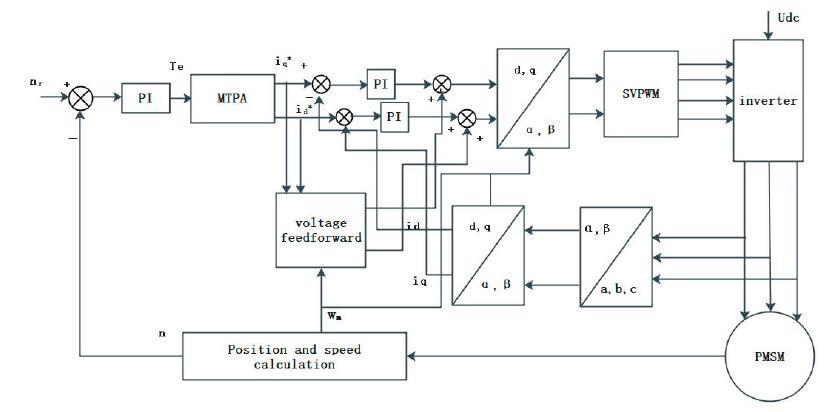
Fig-1: Block diagram of FOC
3. BLOCK DIAGRAM COMPONENTS:
Clarke Transformation:
TheClarketransformationusedforconvertthreeaxistotwo axisdimensionalcoordinatingsystemandtransformABCto α-βsignal
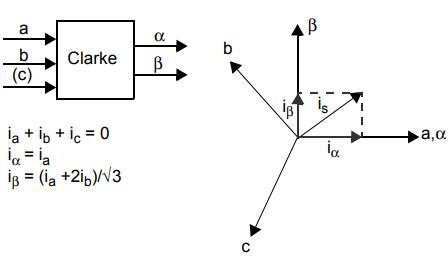
Fig-2: Clarke Transformation
Park Transformation:
In park transformation stator current are represented on two orthogonal system α-β. There are another two-axis system is rotating with magnetic flux. Two axis rotating coordinating system that is converted d-q axis. The rotor angleisrepresentedbyθ(Theta).
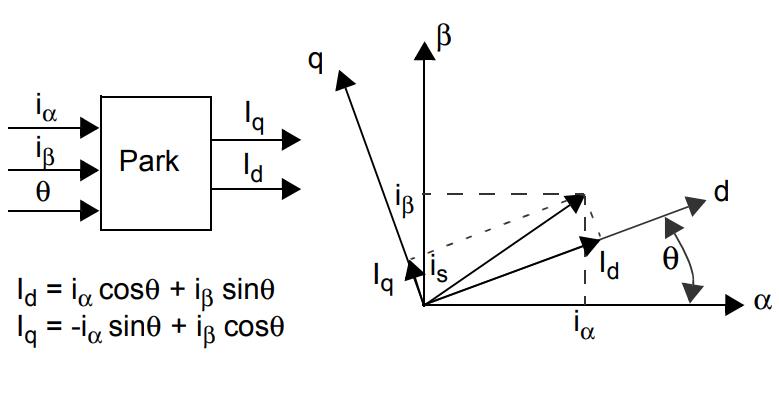
Fig-3: Park Transformation
PI Controller:
AdigitalPIDcontrollerwasbeingexecutedsporadicallyat an interval of sampling. Supposedly, this controller being executedfrequentlyenoughwillensurepropercontrolover thesystem.Thesignaloferrorisformulatedbydeduction desiredsettingsoftheparametertobecontrolledfromthe measuredvalueofthatparticularparameter.
Thesignaloferrorsignificantthewayofchangeneededby the input control. The Proportional (P) aspect of the controlleriscreatedbymultiplyingtheerrorsignalbyaP profit, which leads the PID controller to create a control responsewhichisafunctionoferror'smagnitude.Withan increaseinthesignaloferror,thePaspectofthecontroller alsoincreasestogivemorecorrection.
The influence of the P aspect tends to decrease the total error as time passes. Although, the effect of the P term whittlesdownastheerrorcomesnearzero.Mostsystems havetheerrorofthecontrolledparameteralmosttouching zerobutnotconverging.Theoutcomeisaslightstayerror. The Integral (I) aspect of the controller is utilized to eradicatetheseslightsteadystateerrors.
The I aspect computes a continuous running total of the signal of error. Accordingly, a minor steady state error accumulatesintoalargeerrorvalueastimeprogresses.This amassederrorsignalismultipliedbyanIprofitfactorand resultsintheIoutputtermofthePIDcontroller.
Inverse Park Transformation:
In the inverse park transformation three phase motor voltagetoconvertorthogonaltostationaryframe thetwoaxisrotatingd-qframetothetwo-axisstationaryframeα-β
International Research Journal of Engineering and Technology (IRJET) e-ISSN: 2395-0056
Volume: 11 Issue: 06 | Jun 2024 www.irjet.net p-ISSN: 2395-0072
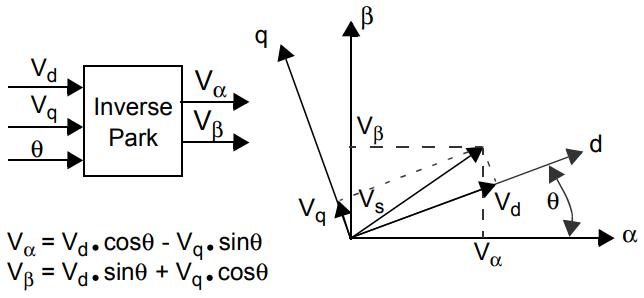
Fig-4: Inverse Park Transformation
Inverse Clarke Transformation:
In Clarke transformation two axis orthogonal stationary frametothreephasestationaryreferenceframe.
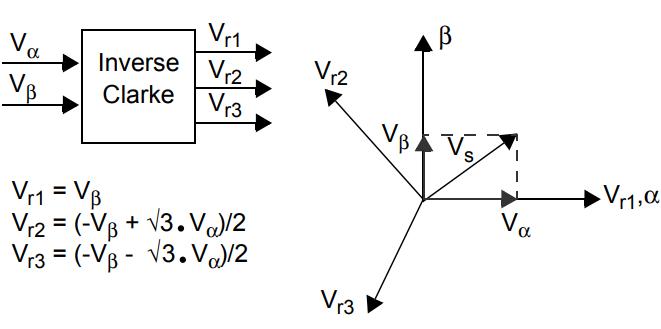
Fig-5: Inverse Park Transformation
Maximum Torque per Ampere (MTPA) Control:
MTPAcontrolisintegratedintothecurrentcontrolloop.The MTPA block adjusts the reference currents (Id*, Iq*) dynamicallybasedontheoperatingconditionstomaximize thetorqueperampere.Thisensuresthatthemotoroperates attheoptimalpointformaximumefficiency.
4.
MaximumTorquePerAmpere(MTPA)isacontrolstrategy used in Interior Permanent Magnet Synchronous Motors (IPMSMs)tooptimizetorqueproductionwhileminimizing currentconsumption.ThegoalofMTPAistodeterminethe optimalcurrentvectorthatmaximizesthetorqueforagiven currentmagnitude.Thisisachievedbyfindingtheoptimal values of the direct-axis current (Id) and quadrature-axis (Iq)currentcomponents.
ThetorqueequationforanIPMSMisgivenby:

1. Torque and Current Relationship:
Thetotalstatorcurrent(Is)isrelatedtoitscomponents by:

2. Deriving MTPA Condition:
Tomaximize���� withrespectto���� and����,weneedtotake thepartialderivativeofthetorqueequationwithrespect to���� andsetittozero:

ThetorqueequationintermsofId andIq is:
ThepartialderivativeofTe withrespecttoId is:
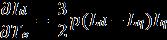
Since��q≠0,wehave:

However,inpracticalmotors,����≠����So,weneedtoconsider theoptimizationof����withrespecttotheconstraint
3. Using Lagrange Multipliers:
WeintroduceaLagrangemultiplier��fortheconstraint:
L=Te λ(Id2+Iq2 Is2)
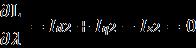
Thepartialderivativesof��withrespectto����,����,and��must bezeroatthemaximumtorquepoint:


International Research Journal of Engineering and Technology (IRJET) e-ISSN: 2395-0056
Volume: 11 Issue: 06 | Jun 2024 www.irjet.net p-ISSN: 2395-0072
4. Solving the Equations:
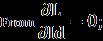
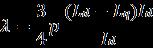
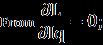
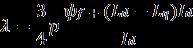
Equatingthetwoexpressionsfor��:

Simplifyingthisequation:
Rearranginggives:
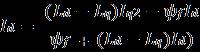
5. Final MTPA Equation:
Thisimplicitequationcanbesolvednumericallyforspecific motor parameters to find the optimal ���� and ���� that maximize the torque per ampere. In practice, this relationship is often implemented in motor control algorithms to dynamically adjust ���� and ���� for optimal performance
Testing procedure:
HallEffectSensorImplementation.
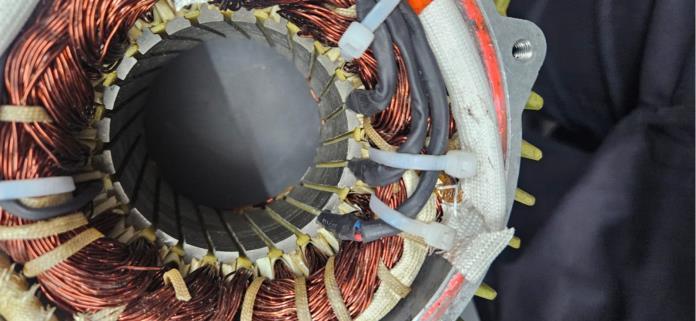
Fig-6: Hall Effect Sensor Mounting
TesttheHallEffectsensorWaveformandcheckthat is120°Phaseshiftedsignalusingtheoscilloscope.
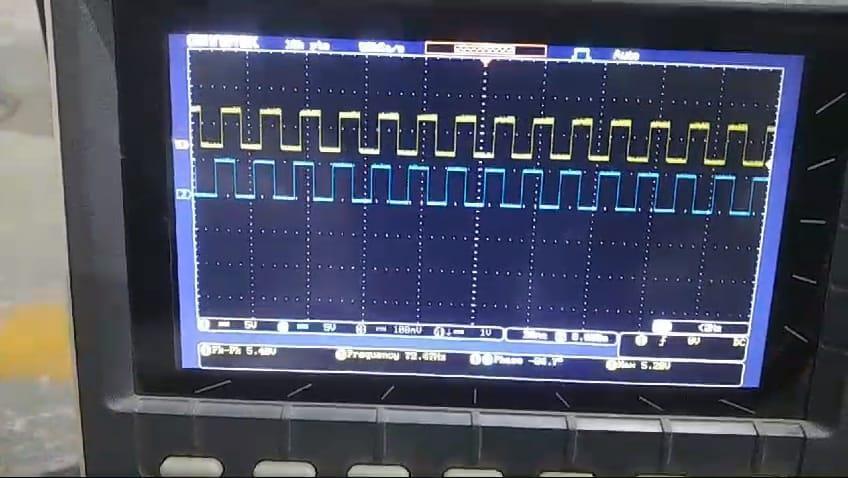
Fig-7: Waveform Signal
ConnectmotorwithInverterboardwithR,YandB phaseandconnectHallEffectsensorwithHa,Hb simultaneously.
AfterthatConnectthePowerSupplytotheInverter Board.
ShowtheresultofMTPACurve.
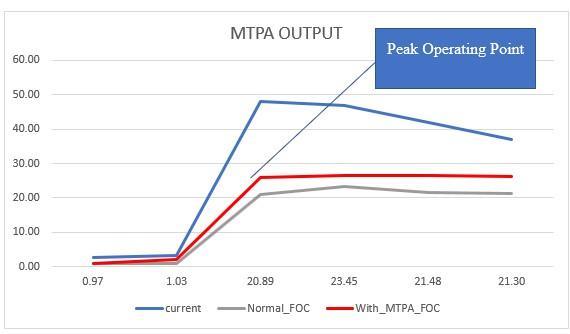
Fig-8: MTPA Graph with peak operating point
1. With the implementation of MTPA at a 28nm manufacturingprocessnode,onecananticipatethesystem tobefinelytunedforgeneratingtorqueefficientlyperunitof currentsuppliedtothemotor.Asaresult,thesystemmay exhibit improved torque output performance for a given
International Research Journal of Engineering and Technology (IRJET) e-ISSN: 2395-0056
Volume: 11 Issue: 06 | Jun 2024 www.irjet.net p-ISSN: 2395-0072
level of current when compared to systems that do not utilizeMTPA.
2.IntheabsenceofMTPAwithsameidcurrent,thetorque generationcapabilitiesmaystillbenotable,buttheefficiency mightnotreachthesamelevelas asystemequippedwith MTPA.Furthermore,theutilizationofa23nmmanufacturing process node implies the adoption of more advanced technology in comparison to the 28nm node. This advancementcouldpotentiallyofferotherbenefitssuchas enhanced overall system performance or reduced power consumptioninvariousaspects.
Inconclusion,MaximumTorquePerAmpere(MTPA)control is an efficient approach that enhances the performance of electric motors. Its outstanding ability to optimize productionwhileminimizingcurrentmakesitamust-have toolindemandingapplications.Byconsuminglessenergy, minimizing thermal stress, and maximizing output, MTPA controlstrengthensthereliabilityofelectricmotorsovera longperiod.Despitethechallenges,thesubstantialbenefits of MTPA control make it a good strategy for highperformancemotorapplications.
Intheinitialstartingphase,MTPAmodecanfullyutilizethe reluctance torque, and there is an id current, which significantlyenhancesthestartingspeedofthemotor.The specificperformanceistheoutputofthestartingtorque.The torqueoutputwithidis28.5Natconstantcurrent.
TheutilizationofMTPAinelectricvehicle(EV)applications has the potential to conserve battery power, thereby enhancingtherangeandoverallefficiencyofEVvehicles.
[1] WangZhuoyonga,YaoXiaodonga,LiuJiakanga,Xu Liangxua, Tong Hui, Liu Kea (2023), Research on IPMSM Control Based on MTPA, [c] international conference.
[2] Sun, Tianfu & Wang, Jiabin & Chen, Xiao. (2015). MaximumTorquePerAmpere(MTPA)Controlfor InteriorPermanentMagnetSynchronousMachine Drives Based on Virtual Signal Injection. Power Electronics,IEEETransactionson.30.5036-5045. 10.1109/TPEL.2014.2365814.
[3] ZhangYuan,WeiHaifeng,ZhangYi,LiYuanjiang,Liu WeitingLow speed MTPA highdynamicresponse controlmethodforpermanentmagnetsynchronous motor [j] Journal of Underwater Unmanned Systems,2022,30(02):223-230.
[4] Lou Tianhao Research on vehicle brushless DC motor control technology based on improved
particleswarmoptimizationalgorithmparameter identification[d]ZhejiangUniversity,2022.