
International Research Journal of Engineering and Technology (IRJET) e-ISSN:2395-0056
Volume: 11 Issue: 06 | Jun 2024 www.irjet.net p-ISSN:2395-0072
International Research Journal of Engineering and Technology (IRJET) e-ISSN:2395-0056
Volume: 11 Issue: 06 | Jun 2024 www.irjet.net p-ISSN:2395-0072
1,2 Student, Sunbeam Group of Educational Institutions, Bhagwanpur, Varanasi. Uttar Pradesh, India
Abstract - The COVID-19 pandemic brought severe challenges to healthcare systems worldwide. India faced shortages of critical medical equipment, overwhelmed hospitals, and an urgent need for innovative solutions. In response, We at our ATL robotics laboratory developed a cost-effective emergency ICU and ventilation system. This system provided an affordable alternative to complex ventilators, making it accessible in resource-limited settings. It was designed for ease of use, requiring minimal specialised training, and featured an intuitive interface to allow healthcare providers to focus on patient care. Tailored for specific emergency scenarios, the automated ICU system delivered reliable respiratory support, helping to alleviatethe burdenonoverwhelmedhealthcare facilities.
The pandemic disrupted global supply chains, leading to shortages of essential medical equipment and straining healthcare infrastructure. The lack of ventilators worsened patient outcomes, highlighting the need for quick solutions. Healthcare workers were overburdened, emphasising the necessity of automated systems. Our system was designed to work effectively in diverse healthcare contexts and included a remote monitoring system, enabling healthcare providers and medical experts to monitor patients without physical interaction.
Key Words: Emergency ICU ventilation system, Costeffective medical solution, Automated respiratory support, Respiratory support, Health care accessibility, Absence of Remote monitoring system
1. Introduction
The COVID-19 pandemic brought to light significant gaps in global healthcare systems. Hospitals were inundated, essential medical supplies were scarce, and healthcare workerswerestretchedthin.Toaddressthesechallenges, our robotics laboratory developed an innovative solution: a cost-effective emergency ICU and ventilation system. This system was designed to be intuitive and automated, providing crucial respiratory support in emergency situations. This research paper aims to provide an indepth analysis of our project, focusing on its design, implementation, and real-world impact. The intuitive design of the emergency ICU and ventilation system was one of its key features. It was engineered with a userfriendly interface that allowed healthcare providers to operate it with minimal training. The system was automated, reducing the need for constant manual intervention and allowing healthcare workers to focus more on patient care. The design also incorporated
specific settings for different emergent scenarios, making it adaptable and efficient. This meant that the system could be tailored to the specific needs of a patient, providingpersonalisedcare.Furthermore,thesystemwas designed to be robust and reliable, ensuring that it could function effectively even in high-pressure situations. In essence, the intuitive design of the system was all about making it as easy as possible to use while still providing high-quality, life-sustaining care. This combination of simplicity and effectiveness is what made the system a trailblazingcontributiontoemergenthealthcaresolutions.
The COVID-19 pandemic brought to light significant gaps in global healthcare systems. Hospitals were inundated, essential medical supplies were scarce, and healthcare workers were stretched thin. To address these challenges, our robotics laboratory developed an innovative solution: a cost-effective emergency ICU and ventilation system. This system was designed to be intuitive and automated, providing crucial respiratory supportinemergencysituations.Thisresearchpaperaims toprovideanin-depthanalysisofourproject,focusingon its design, implementation, and real-world impact. The intuitive design of the emergency ICU and ventilation systemwasoneofitskeyfeatures.Itwasengineeredwith auser-friendlyinterfacethatallowedhealthcareproviders to operate it with minimal training. The system was automated, reducing the need for constant manual intervention and allowing healthcare workers to focus more on patient care. The design also incorporated specific settings for different emergent scenarios, making it adaptable and efficient. This meant that the system could be tailored to the specific needs of a patient, providingpersonalisedcare.Furthermore,thesystemwas designed to be robust and reliable, ensuring that it could function effectively even in high-pressure situations. In essence, the intuitive design of the system was all about making it as easy as possible to use while still providing high-quality,life-sustainingcare.
Our developed ventilator is an electromechanical device that automates the compression of an airbag resuscitator to deliver airflow to patients in emergencies. The foundational concepts from OxyGEN project for this device were retained due to its proven effectiveness in medical testing, which showed promising results in both animalandhumanpreclinicaltrials.
International Research Journal of Engineering and Technology (IRJET) e-ISSN:2395-0056
Volume: 11 Issue: 06 | Jun 2024 www.irjet.net p-ISSN:2395-0072
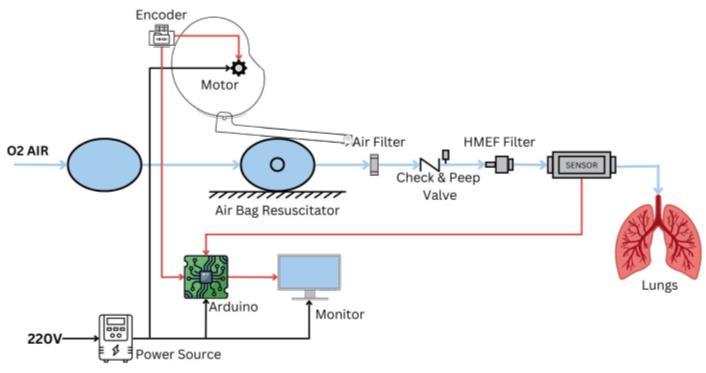
Fig. 1 Scheme of the low-cost mechanical ventilation system OxygenIP.PE.
Figure 1 shows a scheme of the prototype and its components. This equipment was designed to provide a volume-controlled ventilation (VCV), the main ventilation parametersfortheemergencyuseareavailableaccording to, these parameters can be selected by the medical staff forthepatientrequirements.
Theprototypeisdesignedtomimic the breathingprocess of human lungs. It operates by using a DC motor that provides rotational force to a specially shaped cam. This camthenmovesafollowerinanoscillatingmotion,which compresses an airbag. The compression of the airbag increases air pressure, creating airflow that assists in patient breathing. The device can be adjusted manually with different cams based on the patient’s respiratory needsasdeterminedbyhealthcareprofessionals.
The ventilator underwent several development stages. Initially, the mechanical components were redesigned to replicate the ventilation patterns of existing validated equipment, with improvements for more consistent performance and durability for extended use. Concurrently, a mathematical model of the mechanical ventilation system was developed, which helped in understanding how the physical aspects of the system couldinfluencetheventilationprovidedovertime.
2.2.1
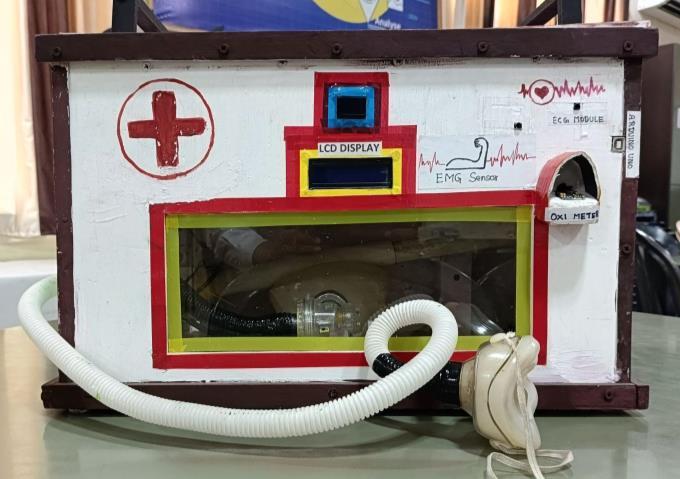
The sensor is placed on a body part, such as a finger or earlobe, and continuously monitors the oxygen levels, enabling the detection of hypoxaemia or low oxygen saturation. The real-time SPO2 data provided by this sensor is vital for the effective management and monitoringofthepatient'srespiratoryfunctionwithinthe Mini-Ventsystem.
2.2.2
The ECG sensor, which consists of multiple electrodes is placed on the patient's body and is used for transmitting the electrical data to the monitoring system, allowing for thedetectionofanyabnormalities,suchasarrhythmiasor cardiac ischaemia. This real-time cardiac monitoring is essential for the comprehensive care of ventilated patients, as it allows for timely intervention and appropriate adjustments to the ventilation parameters to maintainoptimalcardiovascularandrespiratorysupport.
2.2.3
In the context of Mini-Vent, the EMG sensor is used to assess the patient's respiratory muscle activity, providing valuable insights into neuromuscular function and coordination. By monitoring the electrical activity of the diaphragmandotherrespiratorymuscles,theEMGsensor ishelpfultocliniciansinoptimisingventilatorsettingsand detecting any signs of respiratory muscle fatigue or dysfunction, enabling timely intervention and improved patientoutcomes.
2.2.3 Pressure Flow
These sensors measure the pressure and flow of the air being delivered to the patient's airways, providing realtimedatatotheventilatorcontrolsystem.Bycontinuously
International Research Journal of Engineering and Technology (IRJET) e-ISSN:2395-0056
Volume: 11 Issue: 06 | Jun 2024 www.irjet.net p-ISSN:2395-0072
monitoring these parameters, the ventilator can adjust its outputtomaintainthedesiredpressureandflowprofiles, which are crucial for effective gas exchange and lung mechanics. The feedback from these sensors enables the ventilator to optimise its performance and deliver the appropriate ventilatory support to the patient, improving clinicaloutcomesandpatientsafety.
In Mini-Vent systems, temperature sensors within the breathingcircuitensuretheairdeliveredtopatientsisata safe temperature. These sensors help maintain the right temperature and humidity, preventing complications and optimising respiratory support for better clinical outcomes.
2.2.6
Humidity sensors and humidifiers are vital in ventilators toensuretheairprovidedtopatientsisadequatelymoist, preventing dryness that can damage delicate lung tissues. These components work together to measure and adjust humidity levels, enhancing patient comfort and aiding in effectiverespiratorytherapy.
2.2.7
NDIR CO2 sensors operate by detecting specific wavelengths of infrared energy absorbed by CO2 molecules, providing accurate, long-term stable measurements unaffected by other gases. Together, these sensors play a critical role in customising ventilation therapy,ensuringoptimaloxygenationandcarbondioxide removal, and thereby significantly influencing the success ofpatienttreatmentandrecovery.
The Ventilator Mechanism in the Mini-Vent system comprises several essential components designed to facilitate positive pressure ventilation, ensuring adequate oxygenation and ventilation for patients in respiratory distress.
2.3.1
The ventilator system utilises check valves to control the direction of airflow. During inhalation, the check valves opentoallowairfromthepumpstoflowintothepatient's airway. But during exhalation, the check valves close, preventing exhaled air from flowing back towards the pumps. This one-way flow control maintains positive pressure in the respiratory circuit, vital for proper lung inflation.
Additionally, PEEP (Positive End-Expiratory Pressure) valves create a baseline positive pressure at the end of exhalation. This PEEP helps keep the alveoli open, improving oxygenation and preventing lung collapse. The
combination of check valves and PEEP valves, along with otherventilatorcomponents,enablespreciseregulationof airflow and pressure to optimise ventilation support for thepatient.
2.3.2
The control mechanisms regulate ventilation parameters and monitor patient status. Sensors track pressure, flow, and volume, providing real-time feedback. Actuators use this data to precisely control the air pumps and valves. The Raspberry pi 4B Microcontroller coordinates the system, running algorithms to optimise ventilation and adapttopatientneeds.
The control mechanisms regulate ventilation parameters and monitor patient status. Sensors track pressure, flow, and volume, providing real-time feedback. Actuators use this data to precisely control the air pumps and valves. Microcontrollers coordinate the system, running algorithms to optimise ventilation and adapt to patient needs.
2.3.4
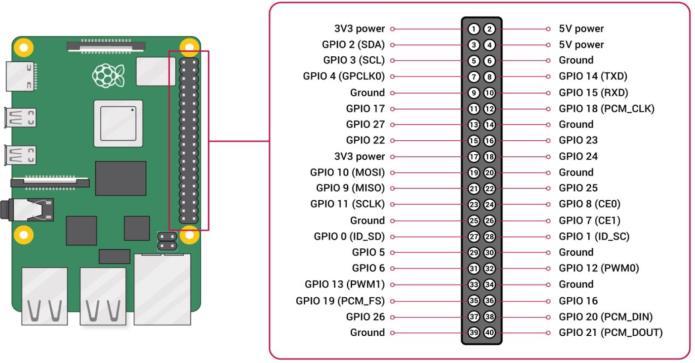
This mechanical ventilation system utilises a microcontroller,specificallya Raspberry Pi4B,toprovide enhanced monitoring and control capabilities. The Raspberry Pi plays a crucial role in this mechanism by implementing important algorithms to monitor the patient's vital signs and ensure synchronisation of the mechanicalventilation.
The Raspberry Pi is responsible for collecting data from various sensors integrated into the system, such as flow metres, pressure sensors, and angular position sensors. Thesesensorsprovidereal-timeinformationabouttheair volume, pressure, and flow delivered to the patient. The microcontroller then processes this data and generates ventilation curves to be displayed on the system's 7-inch display, allowing medical staff to closely monitor the patient'srespiratoryparameters.
Additionally, the Raspberry Pi runs a control algorithm that maintains a constant rotational speed of the DC motor, which drives the cam-based compression mechanism. This algorithm adjusts the motor's current to compensate for changes in the system's requirements, ensuring a consistent respiratory rate and ventilation profile, even as the patient's condition or the ventilation parameterschangeovertime.
The feedback loop established by the Raspberry Pi, the sensors, and the control algorithm allows the OxyGEN systemtoadaptto the patient'sneeds, providinga robust and reliable mechanical ventilation solution. This integration of advanced monitoring and control capabilities, facilitated by the Raspberry Pi, enhances the
International Research Journal of Engineering and Technology (IRJET) e-ISSN:2395-0056
Volume: 11 Issue: 06 | Jun 2024 www.irjet.net p-ISSN:2395-0072
overallperformanceandsafetyofthelow-costmechanical ventilator,makingitavaluabletool inemergencymedical contexts where traditional ventilators may be in short supply.
The Raspberry pi is also responsible for data acquisition from various sensorsandfacilitatingcommunication with thebackendserverthroughWi-Ficonnectivity.Toachieve this,theRaspberrypi4Butilisesitsbuilt-in Wi-Fimodule to establish a connection with the backend server, enabling seamless data transmission. Upon collecting sensor data, such as blood oxygen levels, ECG readings, and other vital signs, the microcontroller constructs a POST request containing the acquired sensor data as parametersandsendsittothedesignatedendpointofthe backend server's API. These parameters typically include key-value pairs representing different sensor readings, timestamps, and other relevant metadata. For example, the POST request may include parameters such as "bloodOxygenLevel,""ecg,""emg,""timestamp,"etc.
2.3.5
The mechanical ventilation system we have designed offers flexible monitoring options to accommodate the diverse needs and resources in emergency medical settings. While the system is equipped with a dedicated Adafruit PiTFT 3.5" Touch Screen display, the microcontroller-based architecture enables the use of alternativemonitoringsolutions,suchaslaptopscreens.
2.3.6
An optional MicroSD card provides additional storage capacity for logging data and system configuration settings. It allows for the recording of historical patient data and system logs, facilitating retrospective analysis, quality improvement initiatives, and compliance with regulatoryrequirements.
2.3.7
The Mini-Vent system requires a reliable power source, either from a battery or an external power supply, to ensure uninterrupted operation. This power supply
delivers electricity to all components of the system, includingsensors,actuators,andcommunicationmodules, ensuring continuous monitoring and ventilation support forpatientsinneed.
2.3.8 Enclosure
The protective enclosure houses all Mini-Vent components,safeguardingthemfromexternalfactorssuch as dust, moisture, and physical damage. It ensures the portability and durability of the system, allowing for safe deployment in various healthcare settings, including hospitals,clinics,andemergencyresponseunits.
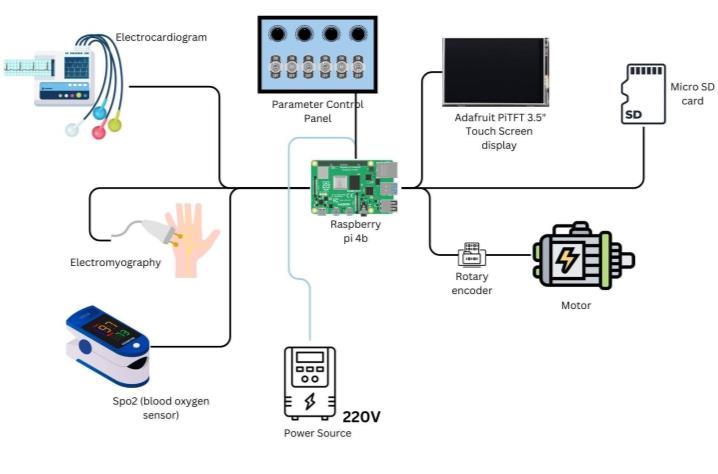
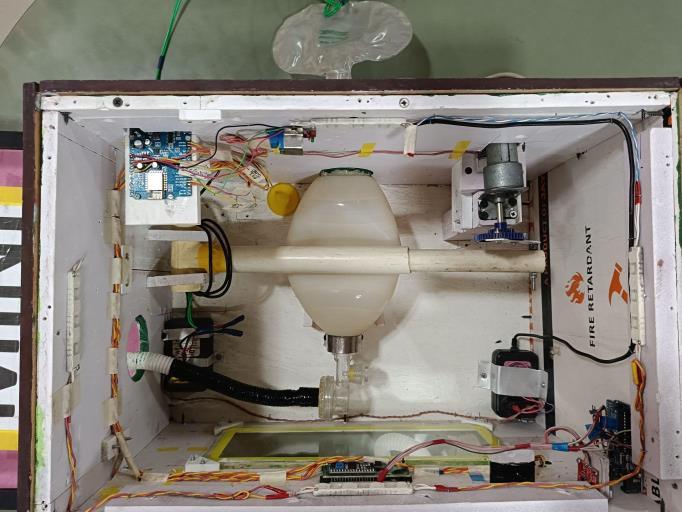
Figure5illustratestheinternalcompressionsystemofthe ventilator,whichincludesa camattachedtotheshaftof a DC motor and a swinging follower anchored to the ventilator case’s wall. To enhance the durability of the equipment, the oscillator arm, bearing supports, and shafts underwent a redesign. The roller was coated with vulcanised rubber to minimise friction, vibrations, and operational noise, thus improving the control and efficiency of the DC motor. The performance of the machine is determined not only by the execution of its primary function but also by the consistent interaction of its components during movement, which affects the precision and longevity of the ventilation curves. While this equipment is designed for short-term emergency use in patients, its lifespan can be extended through airbag replacement.
In this system, the breathing rate is determined by how oftenthecamrotates.Astheairbagiscompressedand its internal pressure increases, the DC motor’s efficiency is affected,leadingtoa slower angularvelocity.Therefore, a
Volume: 11 Issue: 06 | Jun 2024 www.irjet.net
control algorithm was created to set a consistent rotation frequency and maintain it throughout the operation. The algorithm receives the current speed of the motor and adjusts the DC motor’s input to correct any deviations, ensuringasteadyrespirationrate.
The angular position is utilised to forecast the ventilation curves with the aid of a calibrated mathematical model. Once the sensor captures the data, it’s transmitted to a Raspberry Pi computer, which processes the information and displays it on an Adafruit Touch Screen. The screen visualises the data as graphs, offering crucial information forthemedicalteamtoanalysetheventilationpatterns.
The ventilation system uses a cam-oscillator arm mechanism designed by Protofy, with the cam contour defined by a MATLAB algorithm. To accurately reproduce the original ventilation curves (pressure, volume, flow over time), the dynamic interactions linking physical measures like size, spacing, and placement to the curves must be understood. Figure 6 shows the cam-oscillator followermechanism.
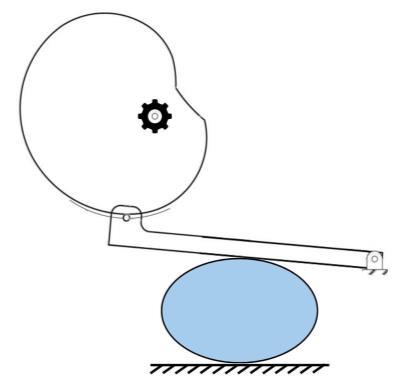
The movement between the follower and the cam in the device is controlled by their contact, which is maintained by a spring. Three fundamental motion principles were established: one for the movement relationship between thecamandfollower,anotherfortheirspeeds,andathird for their acceleration rates. These principles were crucial inestablishingthemathematicalmodelinthisventilator.
In creating this ventilator prototype, it was important to understand how its parts work together to manage key functions like air pressure and flow. A mathematical model helped map out these interactions by considering the forces at play within the device. By studying how
© 2024, IRJET | Impact Factor value: 8.226 |
different components moved and affected each other, and through testing, it was possible to adjust the device’s design. This ensured that it could replicate the desired breathingpatterns,evenifdifferentpartsareused.
The detailed mathematical modelling and analysis of the cam-based mechanical ventilation system, including the relationships between the physical mechanism parameters and the ventilation variables over time, is provided in the work by Calderón et al. [reference]. The results regarding power analysis, measured pressure, volume, airflow, and other estimations are explained in depth in this same paper “Design and analysis of a mechanicalventilation”.
The absence of a remote monitoring system in traditional healthcare setups poses significant challenges. Without real-time data access, healthcare providers struggle to monitor patient status effectively, leading to delays in intervention and compromised patient care. This gap becomesparticularlypronouncedincriticalcarescenarios like those requiring ventilator support, where continuous monitoring is paramount. Therefore, the integration of a remote monitoring system for Mini-Vent addresses this critical need by enabling healthcare professionals to remotely monitor patient vitals, ensuring timely intervention and improved patient outcomes. The remote monitoringsystemcomesintheformofawebapplication that can be accessed from any device having a browser. The app registers a user and lets the user make patient accounts for every person using the Mini-Vent and then access the patient account for getting a detailed view on thepatientvitals.
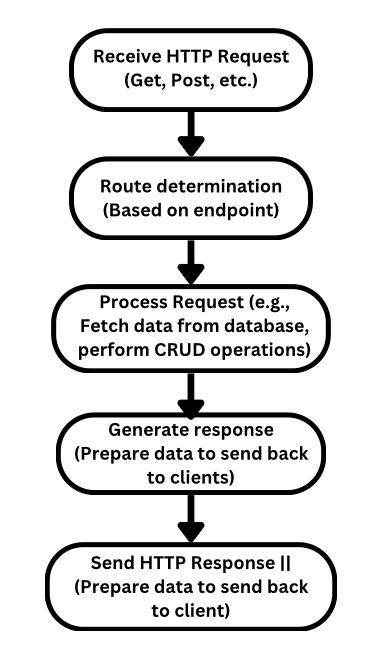
The API for the Mini-Vent system serves as a crucial component in enabling seamless communication and interaction between the Mini-Vent and the accompanying mobile application. The API has been developed using Express.js, a robust and efficient web application framework for Node.js, and TypeScript, the API incorporates various middleware, libraries, and custom modules to provide comprehensive authentication, data storage, and retrieval functionalities. The API consists mainly of routes & endpoints that call specific controller functionstoperformdifferentkindsofoperations.TheAPI establishes a connection with a MongoDB which is a NoSQLdatabaseandperformsvariousCRUDoperationsin thedatabase.TheAPIalsofacilitatesthedataretrievaland storage of all the patient’s vitals collected by the Raspberrypi4Bandispostedonaspecificendpointofthe API.
4.1.1. User Authentication and Security using Passport.js
To ensure secure user authentication and data integrity, the system's API leverages Passport.js, a popular authentication middleware for Node.js applications. Passport.js supports various authentication strategies, including local authenticationusingusernamesandpasswords,providing arobustandextensibleauthenticationframework.
4.1.2.
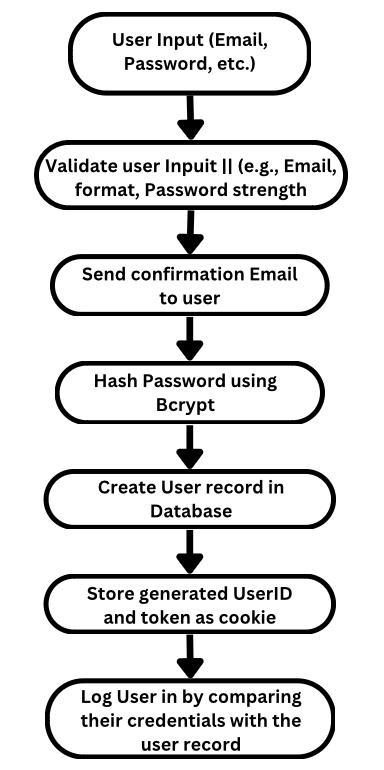
During the user registration process, the API receives the user's credential data, including their username and password, from the client application. Before storing the user'spasswordintheMongoDBdatabase,itundergoesa
secure hashing process using bcrypt, a robust cryptographic hashing function. This measure safeguards the user's sensitive information by storing only a hashed representation of the password, rather than the plaintext version.
Upon successful registration, the API generates a unique authentication token or session identifier, which is returned to the client for subsequent authenticated requests.Concurrently,anewuserprofileiscreatedinthe database, storing essential user information such as the username, email, and a unique user ID. This step ensures properusermanagementandfacilitatestheassociationof data within the system. The user also receives a verification email to verify that the email they’re using belongstothem.
The registration process is orchestrated by invoking the appropriatePassport.jsauthenticationmiddleware, which securely hashes the user's password using bcrypt. Once the password is hashed, the "signup" function defined in the authentication controller is called, facilitating the creation of a new user profile in the database with the provideduserinformationandthehashedpassword.
Similarly, during the login process, the API verifies the provided username and password against the hashed passwordstoredinthedatabase.Ifthecredentialsmatch, an authentication token is generated and provided to the client, granting access to protected resources and functionalitieswithinthesystem.
The login process follows a similar flow, leveraging Passport.js authentication middleware to verify the provided credentials against the securely stored hashed password.Uponsuccessfulauthentication,anaccesstoken isissued,enablingtheclienttoaccessprotectedresources andfunctionalitywithinthesystem.
Through this robust authentication mechanism, the system ensures the confidentiality and integrity of user data, while providing a secure and user-friendly authenticationexperience.
The user routes establish dedicated endpoints within the API to manage user-related tasks, such as registration, authentication, and profile management. These routes facilitate interactions between the frontend application andthebackendserver,allowinguserstocreateaccounts, loginsecurely,andupdatetheirprofileinformation.
Bydefiningroutesforuseroperations,thesystemensures proper handling of user data, authentication processes, and user account management. This structured approach enhances the functionality and security of the Mini-Vent
International Research Journal of Engineering and Technology (IRJET) e-ISSN:2395-0056
Volume: 11 Issue: 06 | Jun 2024 www.irjet.net p-ISSN:2395-0072
system,providing userswitha seamlessexperience while accessingandmanagingtheiraccounts.
Upon receiving a valid authentication token or session identifier from the client, the corresponding route retrieves the user's profile information from the database usingtheuserIdassociated withthetoken.Therequested userdata is thenserialised andreturnedtotheclientina structuredJSONformat,ensuringsecureandefficientdata retrieval.
The Patient Data Management system employs a comprehensive approach to patient data management, ensuring efficient storage, retrieval, and manipulation of patient records. Through the Patient Controller and dedicated patient routes, the system implements robust mechanismsforhandlingpatientdataoperations.
The patient routes define dedicated endpoints within the API for handling patient-related operations, such as creating, retrieving, updating, and deleting patient records. These routes provide a structured interface for interacting with patient data stored in the database, enabling seamless integration with the frontend application.
ByspecifyingroutesforeachCRUD(Create,Read,Update, Delete) operation, the patient routes ensure consistent and efficient data management, enhancing the overall functionalityandusabilityoftheMini-Ventsystem.
Throughthesepatientroutes,thefrontendapplicationcan securely interact with the backend server, facilitating the creation and management of patient records, retrieving patient information, updating existing data, and removing records as needed. This structured approach promotes modularity, scalability, and maintainability within the codebase, while also ensuring proper access control and datasecurity.
4.2.
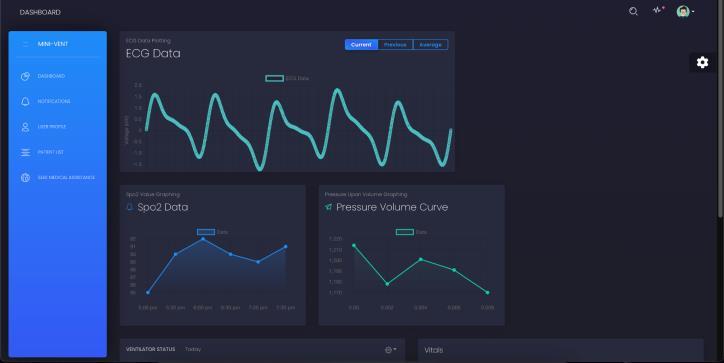
The web interface served as a crucial tool in enabling remote monitoring and management of the Mini-Vent system. Its significance lay in providing healthcare providers with real-time access to vital patient data, ensuring prompt decision-making and intervention. The webapplicationalsoprovidesinterfacestoregisterauser account and log into that account. Also facilitates registering patients by entering the basic details of a specific patient and communicating with the API to store these details. Moreover, the dashboard facilitated trend analysis and data visualisation, empowering users to identify critical patterns and anomalies efficiently. Its
accessibility from any internet-enabled device ensured continuous oversight of patient conditions, ultimately optimisingpatientcareandsystemefficiency.
ToconstructthewebdashboardfortheMini-Vent,React.js emergedasthecornerstoneofourdevelopmentapproach. Leveraging React's component-based architecture, we meticulously crafted a user interface (UI) composed of modular,reusablecomponents.
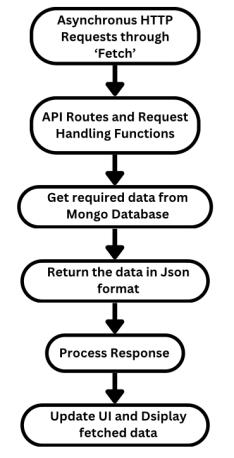
Within our React components, we meticulously defined functions responsible for orchestrating the retrieval of data from the API endpoints. Employing asynchronous HTTP requests via the native browser API ‘fetch’, we seamlessly fetched real-time data from the backend server. These functions send requests to specific API routes,whichinvokethecorrespondingbackendfunctions to perform the desired operations. The requested data is fetchedfromtheMongoDBdatabaseandreturnedinJSON format. The received data is then processed and dynamically rendered within the React components, providinguserswithup-to-dateinformation.
To visually depict trends and insights gleaned from the data, we seamlessly integrated powerful graph plotting libraries like Chart.js into our React components. By passing the fetched data as props to these graph plotting components,wefacilitatedthegenerationofdynamicand visually appealing graphs, enabling users to glean actionable insights at a glance. This graphical representationofdata enhancesthedashboard'susability andaidsineffectivedecision-making.
To enhance the user experience, we adeptly implemented event handling mechanisms using React's event system.
International Research Journal of Engineering and Technology (IRJET) e-ISSN:2395-0056
Volume: 11 Issue: 06 | Jun 2024 www.irjet.net p-ISSN:2395-0072
By adding event listeners to interactive UI elements such as buttons or dropdowns, we empowered users to seamlesslyinteractwiththe dashboard,triggeringactions such as data refreshes or alarm acknowledgments. This interactivity ensured a responsive and engaging user experience,enablinghealthcareprofessionalstoefficiently navigateandinteractwiththedashboard.
5. Conclusion
In conclusion, this research study explored the development and implementation of the Mini-Vent, a portable and affordable ventilation system designed to addressthecritical shortageofintensivecaresolutions in resource-constrained settings. The findings demonstrate the potential of the Mini-Vent in improving access to lifesavingtechnology.
Through rigorous testing and analysis, the Mini-Vent system exhibited its ability to provide reliable and effective ventilation support, while also offering real-time monitoring capabilities. The user-friendly interface and comprehensive educational resources ensure that users can operate the system with ease, even in non-hospital settings.However,certainchallenges,suchasmaintaining optimal performance in extreme environmental conditions,wereidentifiedandaddressedthroughsystem optimizationsandenhancements.
Theresultsofthisstudyprovidevaluableinsightsintothe performance and impact of the Mini-Vent system. Simulations and real-world testing demonstrated the system's ability to deliver consistent and accurate ventilation support, while also ensuring data security and patient privacy. By making critical care more accessible and affordable, the Mini-Vent has the potential to save countless lives and alleviate the burden on healthcare systems,particularlyduringtimesofcrisis.
5 1. Future Work
Future Work in this research could focus on expanding Mini-Vent's potential impact. This could consist of followingpoints:
5.1.1. Telemetry and Remote Monitoring
Integrating advanced telemetry capabilities would allow healthcare professionals to monitor and control the MiniVentsystemremotely,enablingreal-timeadjustmentsand interventionsbasedonpatientneeds.
5.1.2. Predictive Analytics
Incorporatingmachinelearningalgorithmsandpredictive analytics could enable the Mini-Vent system to anticipate and prevent potential complications, such as respiratory distress, by analysing patient data and identifying early warningsigns.
5.1.3. Modular Design
Developing a modular architecture for the Mini-Vent system would facilitate easier upgrades, customization, andmaintenance,allowingthesystemtoadapttoevolving healthcareneedsandtechnologicaladvancements.
5.1.4. Expanded Sensor Integration
Integrating additional sensors, such as those for monitoring blood pressure, temperature, and other vital signs, would provide a more comprehensive picture of a patient's health status and enable more informed decision-making.
5.1.5. Clinical Validation
Conducting extensive clinical trials and validation studies to further demonstrate the efficacy, safety, and reliability of the Mini-Vent system in real-world settings, across diversepatientpopulationsandhealthcarecontexts.
By pursuing these areas of future work, the Mini-vent systemcancontinuetoevolveandmakesignificantstrides in improving access to critical care, saving lives, and transforminghealthcareinresource-constrainedsettings.
5.2 Limitations
While the Mini-Vent system shows great promise in addressing the critical shortage of affordable and accessible intensive care solutions, there are several limitations to this review study that should be acknowledged
5.2.1. Limited Real-World Testing and Sample Size
The study's limitations include insufficient real-world testing across diverse clinical settings and a relatively
International Research Journal of Engineering and Technology (IRJET) e-ISSN:2395-0056
Volume: 11 Issue: 06 | Jun 2024 www.irjet.net p-ISSN:2395-0072
small sample size, both in terms of Mini-Vent units tested and participants involved in user experience evaluations. These limitations may impact the generalizability of the findings, the system's performance in actual patient care scenarios, and the identification of potential issues or areasforimprovement.
5.2.2. User Training and Adoption
Whilethestudyemphasisestheuser-friendlynatureofthe Mini-Vent system and provides educational resources, it does not fully explore the challenges associated with user training and adoption, particularly in low-resource settingswheretechnologicalliteracymaybelimited.
5.2.3. Regulatory and Legal Considerations
The study does not delve into the regulatory and legal aspects of deploying the Mini-Vent system in various healthcare contexts. Ensuring compliance with local and international regulations, as well as addressing potential legal liabilities, is essential for the successful implementationofthesystem.
Acknowledging these limitations helps to provide a balancedperspectiveonthecurrentstateoftheMini-Vent system and highlights areas where further research and development efforts can be directed to address these challengesandstrengthenthesystem'spotentialimpact.
6. Acknowledgment
We would like to acknowledge our mentors at ATL robotics laboratory for helping us with the technical details while conducting the test runs and creating a prototypeofthisventilator.
SpecialthanksgotoourHighSchoolteachersandmentors for useful comments on and for editing an earlier draft of thismanuscript.
[1] DeBoer B, Barari A, Nonoyama M, Dubrowski A, Zaccagnini M, Hosseini A. Preliminary Design and Development of a Mechanical Ventilator Using Industrial Automation Components for Rapid Deployment During the COVID-19 Pandemic. Cureus. 2021 Dec 13;13(12):e20386. doi: 10.7759/cureus.20386. PMID:35036217;PMCID: PMC8752376.
[2] Calderón Ch JA, Rincón C, Agreda M, Jiménez de Cisneros JJ. Design and analysis of a mechanical ventilation system based on cams. Heliyon. 2021 Oct;7(10):e08195. doi: 10.1016/j.heliyon.2021.e08195. Epub 2021 Oct 19.PMID:34693045;PMCID:PMC8524818.
[3] Emrath, E. The Basics of Ventilator Waveforms. CurrPediatrRep 9,11–19(2021).
[4] Mora S, Duarte F, Ratti C. Can Open Source Hardware Mechanical Ventilator (OSH-MVs) initiatives help cope with the COVID-19 health crisis?Taxonomyandstateoftheart.HardwareX. 2020 Oct;8:e00150. doi: 10.1016/j.ohx.2020.e00150. Epub 2020 Oct 24. PMID:33134614;PMCID:PMC7584497.
[5] Blokpoel, Robert G. T. MD1; Burgerhof, Johannes G. M. MSc2; Markhorst, Dick G. MD, PhD3; Kneyber,MartinC.J.MD,PhD,FCCM1,3,4.PatientVentilator Asynchrony During Assisted Ventilation in Children. Paediatric Critical Care Medicine 17(5):p e204-e211, May 2016. | DOI: 10.1097/PCC.0000000000000669
[6] Hickey SM, Sankari A, Giwa AO. Mechanical Ventilation.[Updated2024Mar30].In:StatPearls [Internet]. Treasure Island (FL): StatPearls Publishing;2024Jan-.
[7] Understanding MechanicalVentilation Jennifer Zanni,PT,DScPT, JohnsHopkinsHospital
[8] OxygenProject https://www.oxygen.protofy.xyz/download
[9] CamShaftDesigningusingMatLAB https://www.oxygen.protofy.xyz/post/cam-shaftdesign