
Volume: 11 Issue: 06 | Jun 2024 www.irjet.net p-ISSN:2395-0072
Volume: 11 Issue: 06 | Jun 2024 www.irjet.net p-ISSN:2395-0072
Rutuja Keshav Mankar, Shraddha Rajesh Gajbhiye, Nikita Bhagwat Patil, Prof T.P Raju
Ms. Rutuja Keshav Mankar Student of MCA, Tulsiramji Gaikwad Patil Collage of Engineering and Technology Mohgaon(Nagpur), Mahrashtra, India.
Ms. Shraddha Rajesh Gajbhiye Student of MCA, Tulsiramji Gaikwad Patil Collage of Engineering and Technology Mohgaon(Nagpur), Mahrashtra, India.
Ms. Nikita Bhagwat Patil Student of MCA, Tulsiramji Gaikwad Patil Collage of Engineering and Technology Mohgaon(Nagpur), Mahrashtra, India.
Prof. T.P Raju Department of MCA, Tulsiramji Gaikwad Patil Collage of Engineering and Technology Mohgaon(Nagpur), Mahrashtra, India.
Abstract - Predictive maintenance has gained significant attentioninvariousindustriesduetoitspotentialtoreduce downtime, minimize costs, and optimize maintenance schedules. In this paper, we present a comprehensive review of recent advances in machine learning algorithms for predictive maintenance applications. We discuss the challenges associated with traditional maintenance approaches and highlight the benefits of adopting predictive maintenance strategies. We then provide an overview of popular machine learning techniques, including supervised learning, unsupervised learning, and reinforcement learning, and discuss their suitability for predictive maintenance tasks. Furthermore, we review recent research efforts in feature engineering, model selection, and evaluation metrics tailored specifically for predictive maintenance applications. Finally, we present case studies and practical examples to illustrate the successful implementation of machine learning algorithms inreal-worldpredictivemaintenancescenarios.Ourreview aimstoprovideresearchersandpractitionerswithinsights into the current state-of-the-art in machine learning for predictive maintenance and to guide future research directionsinthisimportantdomain.
Key words: MachineLearninginEducation
Inrecent years, the explosionof digital contentand the proliferation of online platforms have led to an overwhelmingamountofinformationavailabletousers.As a result, personalized recommendation systems have become increasinglycrucial for helping users navigatethis vast sea of content and discover items that are most relevant to their interests. Machine learning techniques play a pivotal role in the development of these recommendation systems, enabling platforms to analyze user behaviour and preferences to deliver personalized recommendationsinreal-time.
Traditional recommendation systems, such as collaborative filtering and content-based filtering, have been widely adopted across various domains. However, theseapproachesoftensufferfromlimitationssuchascoldstart problems, sparsity of data, and lack of interpretability. In response to these challenges, recent advances in machine learning have spurred the development of more sophisticated recommendation algorithms that leverage techniques such asdeep learning, reinforcement learning, and factorization machines. The impact of AI in education is recognized as transformative, offering learners a unique and wonderful educational experience. As AI operations in education continue to be explored and developed, the potential for enhancing learning outcomes becomes increasingly evident. The integration of AI technologies into educational processes holds promise for personalized and efficient learning pathways.
Inthispaper,weaimtoprovideacomprehensiveoverview of the role of machine learning in personalized recommendation systems. We begin by discussing the fundamental concepts and challenges associated with recommendation systems, highlighting the need for advanced machine learning techniques to address these challenges effectively. Subsequently, we delve into the various machine learning algorithms commonly used in recommendation systems, outlining their strengths, weaknesses, and applications. Additionally, we explore recent research trendsand emerging methodologies in the field, such as neural collaborative filtering, deep reinforcement learning, and multi-armed bandit algorithms.
Furthermore, we present case studies and practical examplestoillustratetheimplementationandperformance of machine learning-based recommendation systems in real-worldscenariosacrossdifferentdomains,includingecommerce, media streaming, and social networking platforms. By synthesizing insights from both academic researchandindustrypractices,thispaperaimstoprovide researchers, practitioners, and stakeholders with a International Research Journal of Engineering and Technology (IRJET) e-ISSN:2395-0056
Volume: 11 Issue: 06 | Jun 2024 www.irjet.net p-ISSN:2395-0072
comprehensive understanding of the current landscape andfuturedirections ofmachinelearning in personalized recommendationsystems.
The versatility and scalability of machine learning have ledtoits widespreadadoptionacrossdiversedomains.In healthcare, machine learning models are being used to analyze medical images, diagnose diseases, and personalize treatment plans based on individual patient data. In finance, machine learning algorithms are employed for fraud detection, credit scoring, and algorithmic trading to improve risk management and decision-making processes. In marketing and ecommerce, recommendation systems powered by machinelearningalgorithmsdeliverpersonalizedproduct recommendations and targeted advertisements to enhanceuserengagementanddrivesales.
In this paper, we aim to provide a comprehensive overview of machine learning, spanning from its theoretical foundations to practical applications across various domains. We begin by introducing the fundamental conceptsand principles of machine learning, including supervised, unsupervised, and reinforcement learning paradigms. Wethen explore the latest advances in machine learning algorithms, methodologies, and techniques, with a focus on deep learning, natural language processing, and reinforcement learning. Furthermore,wediscussreal-worldapplicationsandcase studies that showcase the transformative impact of machine learning in areas such as healthcare, finance, marketing,andcybersecurity.
Integrating Machine Learning (ML) into robotics, often referredtoas"RoboticMachineLearning"or"Machine LearninginRobotics,"hasbeenatransformativeapproach inadvancingthecapabilitiesofrobotstoperformcomplex tasks autonomously. Here's an overview of how machine learningisappliedinrobotics:
Perception: One of the fundamental aspects of robotics is perception,whichinvolvesinterpretingsensorydatafrom the environment. Machine learning techniques, such as computervision and sensor fusion, can enhance a robot's ability to perceive and understand its surroundings. Convolutional Neural Networks (CNNs) are commonly used for tasks such as object recognition, scene understanding,andlocalization.
Control and Decision Making: ML algorithms enable robots to adapt their control strategies and decisionmaking processes based on environmental changes and task requirements. Reinforcement learning (RL) and imitationlearning(IL)arepopularapproachesfortraining robots to learn optimal control policies through trial and
error or by imitating human demonstrations. These techniques are particularly useful for tasks like robotic manipulation,navigation,andgrasping.
AdaptationandLearning:Robotsoperatingindynamicand uncertain environments need to adapt and learn continuously. Online learning algorithms, such as incremental learning andtransfer learning, allowrobots to update their knowledge andskills over time, improving performanceandrobustnessinreal-worldscenarios.
Human-RobotInteraction (HRI):ML plays a crucial rolein enabling natural and intuitive interactions between humans and robots. Techniques like natural language processing (NLP) and sentiment analysis facilitate communication and collaboration between humans and robots,enhancinguserexperienceandproductivity.
Autonomous Navigation: ML algorithms enable robots to navigate autonomously in complex and dynamic environments. Simultaneous Localization and Mapping (SLAM) algorithms use sensor data to construct maps of theenvironment and localize the robot within these maps, enablingittonavigatesafelyandefficiently.
Learning from Demonstration (LfD): LfD allows robots to learncomplextasksfromhumandemonstrations,reducing the need for manual programming. By observing and imitatinghumanactions,robotscanacquirenewskillsand behavioursquicklyandeffectively.
Predictive Maintenance: ML techniques can be used for predictive maintenance of robotic systems by analyzing sensor data to detect anomalies and predict potential failures before they occur. This helps in minimizing downtime and optimizing maintenance schedules, ensuringthereliabilityandlongevityofroboticsystems.
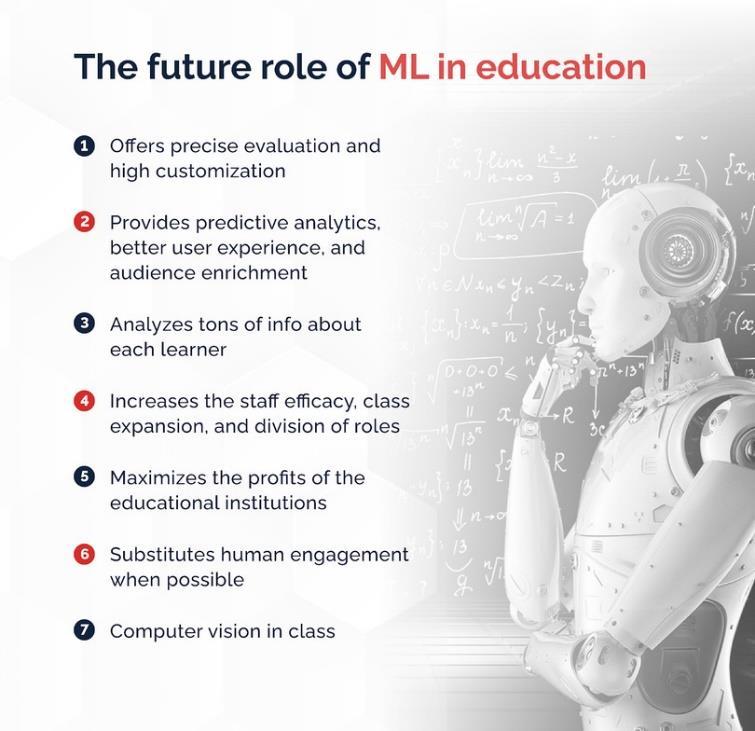
Integrating Machine Learning (ML) in education offers a widerangeofbenefitsthatcanenhanceteaching,learning, and administrative processes. Here are some of the key benefits:
1) Analytical Function:Some ML-basedsolutionsuse machinelearningalgorithmstoanalyzeeducationrelated data and provide valuable insights to enhance the learning experience. These include the recommendation engines of eLearning platforms,adaptivelearningapplications,anddata analytics software for student performance tracking.
2) Adaptive Learning: ML-based predictive data analytics helps cater to the unique needs of every student. This technology has been implemented into several eLearning software solutions to monitor various parameters (such as exercise
International Research Journal of Engineering and Technology (IRJET) e-ISSN:2395-0056
Volume: 11 Issue: 06 | Jun 2024 www.irjet.net p-ISSN:2395-0072
completion time, time spent on the platform, number of logins, and test results) and assess student performance, engagement, and learning patterns,orevenforecastlearningoutcomes.
3) AutomatedGradingandFeedback:MLalgorithms can automate the grading process for assignments, quizzes, and exams, saving educators valuable timeand effort. Additionally, ML can provide instant feedback to students, allowing them to identify areas for improvement andmakenecessaryadjustmentsinreal-time.
4) Content Recommendation and Curation: ML algorithms can analyze vast amounts of educationalcontent, including textbooks, articles, videos, and online resources, to recommend relevant materials to students and educators. This content curation enhances learning experiences by providing access to high-quality resourcesaligned withcurriculum objectivesand individualinterests.
5) Natural Language Processing (NLP) for Language Learning: ML-powered NLP techniques can facilitate language learning by providing interactivetools for practicing reading, writing, speaking,andlisteningskills.Chatbotsandvirtual tutors poweredby NLP can engage students in conversational language practice and provide instantfeedbackonpronunciationandgrammar.
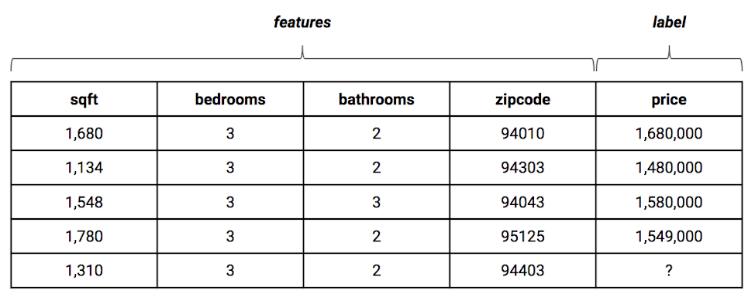
Table 1. keyrequirementformachinelearningproduct
Educational Data Mining (EDM): ML algorithms can analyze educational data to uncover insights into learning patterns, instructional effectiveness, and student behavior. These insights can inform curriculum design, pedagogical strategies, andpolicy decisions.
1) Optimize educational outcomes and improve institutionaleffectiveness.
2) Teacher Support and Professional Development: ML can support educators by providing personalized recommendations for instructional strategies, classroom management techniques, and professional development opportunities. By
analyzing teacher performance data and peerreviewed research, ML algorithms can assist educators in continuously improving their teaching practices and advancing their professionalgrowth.
3) Enhanced Administrative Efficiency: ML algorithms can automate routine administrative tasks, suchas scheduling, resource allocation, and student enrollment, freeing up educators' time to focus on teaching and student support. This improved efficiency can lead to cost savings and resourceoptimizationforeducationalinstitutions.
4) Research and Innovation: ML-powered research tools and methodologies can advance educational research by enabling large-scale data analysis, predictive modeling, and experimental design. By leveraging ML techniques, researchers can gain deeper insights into learning processes, educational outcomes, and factors influencing studentsuccess
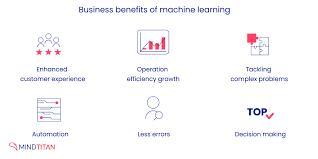
Overall, integrating Machine Learning in education holds the promise of improving learning outcomes, enhancing teaching effectiveness, and optimizing administrative processes, ultimately fostering a more engaging, inclusive, and effective learning environment for students and educatorsalike.
TheimpactofMachineLearning(ML)inRoboticshas been profound, revolutionizing the capabilities of robots andtheir applications across various industries. Here are someofthekeyimpacts:
1. Enhanced Autonomy: ML algorithms enable robots to make decisions and adapt to changing environments autonomously. This autonomy allows robots to perform tasks with minimalhumanintervention,leadingtoincreased efficiency and productivity in fields such as manufacturing,logistics,andagriculture.
International Research Journal of Engineering and Technology (IRJET) e-ISSN:2395-0056
Volume: 11 Issue: 06 | Jun 2024 www.irjet.net p-ISSN:2395-0072
2. Improved Perception: ML techniques, particularly in computer vision and sensor data processing, enhance a robot's ability to perceive and understand its surroundings. This enables robots to navigate complex environments, recognize objects, and interact with the world moreeffectively.
3. Adaptive Control:MLalgorithmsenable robots to learn from experience and adjust their control strategies based on feedback from the environment. This adaptability allows robots to
4. handle uncertainties and variations in their operating conditions, improving performanceandrobustness.
5. Learning from Demonstration: MLbased learning from demonstration (LfD) techniquesallow robots to acquire new skills and behaviours by observing human demonstrations. This facilitates human-robot collaboration and enables robots toperform tasks that are difficult toprogrammanually.
6. Personalized Interaction: ML algorithms enable robots to understand and respond to human behaviours and preferences, leading to more personalized and natural interactions. This is particularly relevant in applicationssuchashealthcare,whererobotscan assist patients with daily tasks or provide companionship.
7. Predictive Maintenance:MLtechniques can analyze sensor data from robotic systems to predict equipment failures and maintenance needsbeforetheyoccur.Thisproactiveapproach to maintenance reduces downtime, extends equipment lifespan, and improves overall reliability.
8. Optimized Resource Allocation: ML algorithms can optimize resource allocation and task scheduling in robotic systems, leading to more efficient use of energy, time, and other resources.Thisoptimizationimprovesoperational efficiency and reduces costs in industrial and commercialapplications.
9. Innovative Applications: ML opens up new possibilities for innovative robotic applicationsindomainssuchasspaceexploration, healthcare, disaster response, and environmental monitoring. These applications leverage ML's ability to handle complex data and adapt to diverseanddynamicenvironments.
10. Continuous Improvement: ML enables robots to learn and improve over time through feedback loops and iterative learning processes. This continuous improvement enhances the performance, adaptability, and intelligence of robotic systems,making them more capable and versatile.
11. Ethical and Safety Considerations: The integration of ML in robotics raises important ethical and safety considerations, such as algorithmic bias, accountability, and human-robot interaction.Addressingtheseconcernsisessential to ensure the responsible and ethical deployment ofrobotictechnologiesinsociety.
Overall, the impact of Machine Learning in Robotics has been transformative, unlocking new capabilities, enabling innovative applications, and reshaping the way robots interactwithandservehumansinvariousdomains.AsML technologies continue to advance, we can expect further advancements and breakthroughs in robotic capabilities, leadingtoevengreatersocietalandeconomicbenefits.
In conclusion, the integration of Machine Learning (ML) into robotics has ushered in a new era of intelligent automation, fundamentally transforming the capabilities ofrobots across diverseapplications. ML algorithms have empoweredrobotstoperceive,reason,andadapttotheir environments with unprecedented precision and efficiency.Frommanufacturingandlogisticstohealthcare and exploration, ML-enabled robots are revolutionizing industries, enhancing productivity, and driving
International Research Journal of Engineering and Technology (IRJET) e-ISSN:2395-0056
Volume: 11 Issue: 06 | Jun 2024 www.irjet.net p-ISSN:2395-0072
innovation. However, this advancement also brings forth ethical considerations and challenges such as algorithmic biasandsafetyconcernsthatrequirecarefulattention.As ML technologies continue to evolve, the future promises even greater synergy between humans and robots, reshaping the way we work, interact, and solve complex problems together. It is essential for researchers, practitioners, andpolicymakers to collaborate proactively to harness the full potential of ML in robotics while ensuring its responsible and ethical deployment for the benefitofsociety.
We would like to express our gratitude to all those who havecontributed to the completion of this paper on the integration of Machine Learning (ML) in robotics. We extend our sincere appreciation to our supervisors, mentors, and advisors for their guidance, support, and invaluable feedback throughout the research process. Additionally, we acknowledge the researchers, engineers, and practitionerswhose groundbreaking work has paved the way for advancements in ML-enabled robotics. We also thank the institutions and organizations that have providedresourcesandfacilitiestofacilitateourresearch endeavors. Lastly, we are grateful to our colleagues, friends, and family for their encouragement and understanding during the course of this project. Their unwavering support has been instrumental in bringing thispapertofruition.
[1] https://openai.com
[2] https://www.kaggle.com
[3] https://www.coursera.org
[4] https://www.udemy.com
[5] https://www.datacamp.com
[6] https://medium.com/@dynamindsolutions/machi ne-learning-in-education-49a94e617059
[7] https://www.mckinsey.com/industries/education /our-insights/using-machine-learning-to-improvestudent-success-in-higher-education
[8] https://er.educause.edu/articles/2017/12/machin e-learning-and-higher-education
[9] https://www.jisem-journal.com/download/howmachine- learning-ml-is-transforming-higher-education-asystematic-literature-review-13227.pdf
[10] https://www.itransition.com/machinelearning/education
[11] https://www.igi-global.com/chapter/role-ofmachine-learning-in-modern-education-andteaching/261497
[12] https://www.researchgate.net/profile/OemerAkmese/publication/357736390_USE_OF_MACHINE_LEAR NI
NG_TECHNIQUES_FOR_THE_FORECAST_OF_STUDENT_A CHIEVEMENT_IN_HIGHER_EDUCATION/links/61dd4ad03 a192d2c8af300ff/USE-OF-MACHINE-LEARNINGTECHNIQUES-FOR-THE-FORECAST-OF-STUDENTACHIEVEMENT-IN-HIGHER-EDUCATION.pdf


Ms RutujaKeshavMankarStudentof MCA of Tulsiram Gaikwad Patil College of Engineering and Technology, Nagpur, Maharashtra, India.
Email: rutujamankar300@gmail.com


Ms Shraddha Rajesh Gajbhiye Student of MCA at Tulsiramji Gaikwad Patil College of Engineering And Technology, Nagpur, Maharashtra,India
Email: shraddhagajbhiye167@gmail.com


Ms NikitaBhagwatPatilStudentof MCAatTulsiramjiGaikwadPatil CollegeofEngineeringAnd Technology,Nagpur,Maharashtra, India
Email: nikitapatil28112001@gmail.com

ProfT P Raju Assistant Professor,MCA,Tulsiramji GaikwadPatilCollegeof EngineeringAndTechnology, Nagpur,Maharashtra,India
Email: Tpraju.mca@tgpcet.com