
International Research Journal of Engineering and Technology (IRJET) e-ISSN: 2395-0056
Volume: 11 Issue: 06 | June 2024 www.irjet.net p-ISSN: 2395-0072
International Research Journal of Engineering and Technology (IRJET) e-ISSN: 2395-0056
Volume: 11 Issue: 06 | June 2024 www.irjet.net p-ISSN: 2395-0072
Om Gadhave1 , Mr. Manish Patil (Guide)2
1Department of Mechanical Engineering, 2Goverment college of engineering and research avasari (kh), 3Giant Metrewave Radio Telescope (GMRT) Khodad, (NCRA)-(TIFR).
Abstract - This research paper investigates the structural analysis of a three-meter antenna dish, integrating wind and static analyses to evaluate its performance under real-world conditions. Drag and lift forces were analyzed at varying wind speeds and positions, providing insights into external forces. Using Ansys software for static analysis, the study assessedthe dish frame's resilience and identified potential failure points, focusing on stress levels and deformation magnitudes. Comparison of wind and static analyses determined the critical wind speed for potential dish failure, offering valuable insights for design modifications to enhance reliability and performance against wind-induced stresses.
Key Words: Static analysis, Potential failure points, Antenna dish frame, Deformation and stress, Ansys simulation
1.INTRODUCTION
Thesecondpartofthisresearchpaperfocusesonthestatic analysis of the antenna dish frame in the three-meter antennastructuraldesignandanalysisproject.Thisanalysis aims to evaluate the structural integrity of the dish frame andassessitsabilitytowithstandthewindforcesexertedon it. By subjecting the dish frame to calculated wind forces obtainedfromthewindanalysisconductedinthefirstpart of the research, this static analysis simulates real-world conditionstopredictthestructuralresponseoftheframe.
Using Ansys software, this static analysis calculates the deformationandstressexperiencedbythedishframeunder the applied wind forces. By identifying critical areas of deformationandstressconcentration,indicativeofpotential failurepointswithintheframestructure,thisanalysishelps determine the maximum stress levels and deformation magnitudesexperiencedbythedishframe.Theseresultsare thencomparedagainstpredefinedsafetyfactorsanddesign criteria to assess the frame's capability to withstand anticipatedwindloadswithoutstructuralfailure.
Moreover,thestaticanalysisenablesanalyststoiteratively refinethedesignofthedishframe,optimizingitsstructural performance and enhancing reliability. By identifying weaknesses or areas of concern through static analysis, analystscanimplementdesignmodificationsorstructural
reinforcementstomitigatepotentialfailurerisksandensure theoverallrobustnessoftheantennasystem.
Oneofthekeyobjectivesofthisstaticanalysisistocalculate the wind speed at which our dish will fail or break by comparing the results of wind and static analysis. This comparisonprovidesvaluableinsightsintothecriticalwind speedthreshold,aidinginthedesignoptimizationprocessto enhance reliability and performance under wind-induced stresses.
In summary, the static analysis of the dish frame plays a crucial role in the structural performance design and analysisprocessofthethree-meterantennasystem.Itallows analyststoassessthestructuralintegrityoftheframeunder windloadingconditions,identifypotentialfailurepoints,and optimizethedesigntoenhancereliabilityandperformance while determining the critical wind speed for potentialfailure.
2. PHYSICAL DESCRIPTION OF STATIC ANALYSIS.
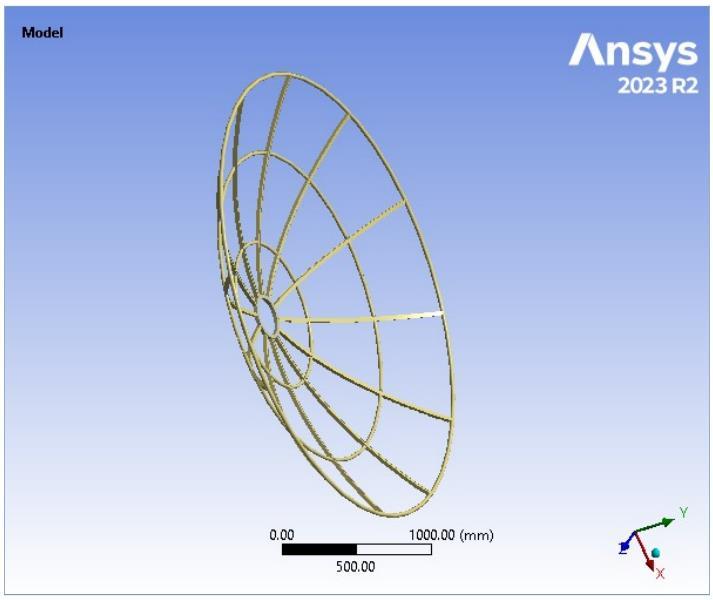
Forthestaticanalysisofthedishframe,thegeometrywas meticulously crafted using SolidWorks software. This involved creating a detailed 3D model of the dish frame, capturing its intricate structural features and dimensions accurately.Thegeometrywasoptimizedtoreflecttherealworldcharacteristicsoftheframe,includingitsshape,size, and connection points. Once the dish frame model was completedinSolidWorks,itwassavedasanSTP(Standard fortheExchangeofProduct Data)fileformat.Thisformat ensurescompatibilityandallowsforseamlessimportation intootherengineeringsoftware,suchasAnsys,forfurther analysis. The geometry of the dish frame is illustrated in Figure1.Insummary,thegeometryforstaticanalysiswas meticulously designed and created using SolidWorks, ensuring accuracy and fidelity to design specifications. Importing the model into Ansys facilitated detailed structural analysis, providing valuable insights into the behavior of the dish frame under different operating conditions.
International Research Journal of Engineering and Technology (IRJET) e-ISSN: 2395-0056
Volume: 11 Issue: 06 | June 2024 www.irjet.net p-ISSN: 2395-0072
2.2 Material Properties.
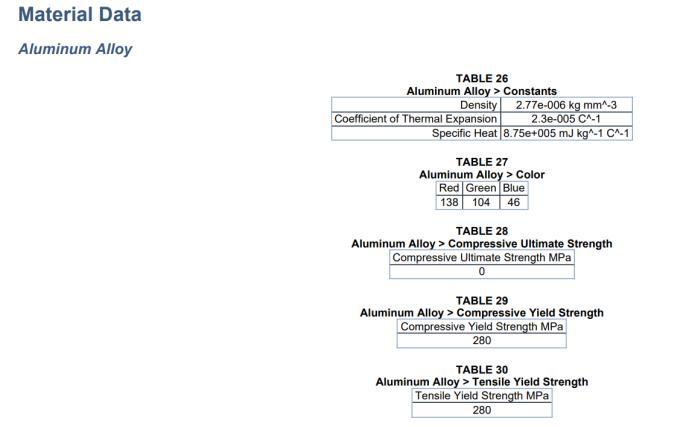
Fig-2: Propertiesofmaterialselectedfordishframe.
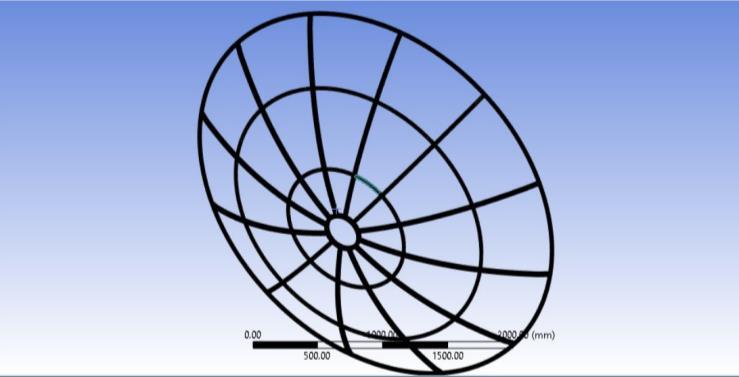
In the static analysis of the project, the dish frame was meshed using Ansys software, employing tetrahedral meshingtechniques.Auniformelementsizeof10mmwas appliedtothemeshtobalancecomputationalefficiencywith accuracy. Additionally, high smoothing techniques were utilizedtorefinethemeshandenhanceitsquality.Default meshingparametersinAnsyswereemployed,resultingin thegenerationofameshcomprising5,57,976elements.Of thesenodes,2,72,821wereutilizedintheanalysis,reflecting efficient computational resource utilization while maintainingadequatemeshdensityforaccuratesimulation results. The utilization of tetrahedral meshing techniques ensured the creation of a robust finite element mesh, providing a reliable representation of the dish frame geometryforstaticanalysis.
2.4
In the static analysis of the dish frame, the following boundary conditions are applied:
1. Fixed Support: Afixedsupportisemployedtofirmlyfix the dish frame in place, restricting its movement in all translationalandrotationaldegreesoffreedom.Thisensures that the frame remains stable and anchored during the analysis.
2. Applied Pressure on Arms: Pressureloadsareappliedto thearmsofthe dishframe tosimulate the external forces acting on it. These pressure loads represent the environmentalconditionsoroperationalrequirementsthat the dish frame is subjected to in real-world scenarios. By applyingpressuretothearms,thestructuralresponseofthe dishframetoexternalloadscanbeaccuratelyanalyzedand evaluated. These boundary conditions are essential for accuratelysimulatingthebehaviorofthedishframeunder various loading conditions and for obtaining meaningful resultsfromthestaticanalysis.
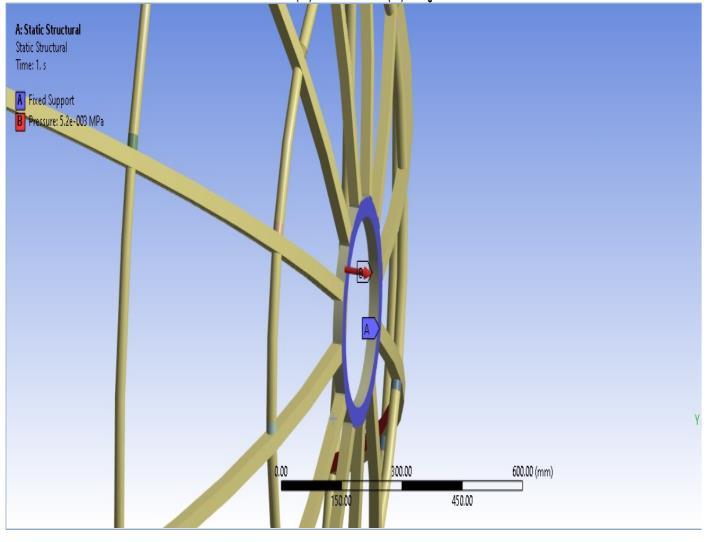
Fig-4: Boundaryconditionsusedforstaticanalysis.
2.5
In the static analysis of the dish frame conducted using Ansys,thefollowingsolutionswereobtained:
International Research Journal of Engineering and Technology (IRJET) e-ISSN: 2395-0056
Volume: 11 Issue: 06 | June 2024 www.irjet.net p-ISSN: 2395-0072
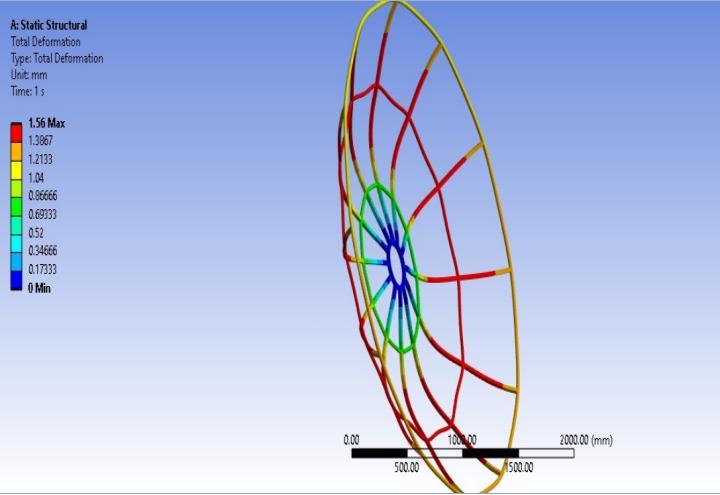
1. Deformation Analysis: Ansyswasutilizedtocalculate thedeformationofthedishframeunderappliedloads.By employingfiniteelementanalysistechniques,thesoftware accurately predicts the displacements and deformations experiencedbythestructure.Thisanalysisprovidescrucial information regarding the deflection and deformation patterns,allowingfortheassessmentofstructuralintegrity andperformance.
2. Equivalent Stress Calculation: Ansys enables the computationofequivalentstressdistributionthroughoutthe dishframe.Bycombiningdifferentstresscomponents(such as axial, bending, and shear stresses) using appropriate stresstransformationequations,thesoftwarecalculatesthe equivalent stress at each node or element of the finite elementmodel.Thisfacilitatestheidentificationofregions experiencinghighstresslevelsandassistsinensuringthat thestructuremeetssafetyanddesigncriteria.
3. Maximum Shear Stress Evaluation: Ansysfacilitatesthe determinationofthemaximumshearstressexperiencedby thedishframe.Byanalyzingthestressdistributionwithin thestructure,thesoftwareidentifiescriticallocationswhere shearstressesaremostpronounced.Thisinformationaidsin identifying potential failure points and guiding design modifications or reinforcement strategies to enhance structuralrobustness.
3. RESULTS AND DISCUSSION OF STATIC ANALYSIS.
The project on three-meter antenna structural designand analysis focused on assessing wind forces exerted on the dish at various positions and wind speeds. Through calculations,itwasdeterminedthatthemaximumforcewas experiencedatthe0-degreepositions.Thismaximumforce wasthenutilizedasinputforthestaticanalysisofthedish frame,conductedusingANSYSsoftware.Byconvertingthe forceintopressureunits,it wasfoundthatthedishframe would fail under a pressure of 22000 Pascal. To provide context, this pressure was converted back into force by multiplyingitwiththedish'ssurfaceareaof0.475m².
Theresultsofthestaticanalysisshedlightonthestructural behavior of the dish frame under extreme wind loading conditions.Byapplyingthemaximumforceatthecritical0degree positions, the analysis accurately simulated realworld scenarios. The identified failure pressure of 22000 Pascal serves as a crucial parameter for evaluating the structuralintegrityoftheantennasystem.
The discussion section of the project report should emphasize the importance of robust structural design in ensuring the resilience of antenna systems against environmentalfactorssuchaswind.Thefindingsunderscore theneedforongoingmonitoringandmaintenanceprotocols to safeguard the long-term functionality of the antenna system. Recommendations may include structural enhancementsormodificationsaimedatmitigatingtherisk
offailureunderextremewindconditions.Overall,thestatic analysis provides valuable insights into the structural performance oftheantenna systemandinformsdecisionmaking processes for optimizing design and operational efficiency.
Table-1 Statisanalysisresultsatvariouspressure
TheanalysisofbothwindandstaticconditionsfortheThree MeterAntennaStructuralDesignprojectprovidesvaluable insights into the dish's performance and potential failure points.
During the wind analysis, calculations were conducted to determine the drag and lift forces acting on the dish at variouswindspeedsandpositions.Notably,itwasobserved thatthemaximumforceswereexertedonthedishwhenit wasorientedat0degrees.Thisfindingsuggeststhatthedish is most vulnerable to wind loading when facing the oncomingairflowdirectly.
International Research Journal of Engineering and Technology (IRJET) e-ISSN: 2395-0056
Volume: 11 Issue: 06 | June 2024 www.irjet.net p-ISSN: 2395-0072
In the static analysis phase, critical parameters such as maximum shear stress, total deformation, and equivalent stress were evaluated. Of particular significance was the determinationofthefailurepoint,identifiedatapressureof 22000Pascalbecausetheyieldstrengthofaluminumis250 MPa. This failure point, derived from the maximum shear stresstheory.Thisresultservesasacrucialreferencepoint forassessingthedish'sstructuralintegrityunderdifferent loadingconditions.
Uponcomparingthepressurethresholdobtainedfromstatic analysiswiththewindanalysisresults,itwasrevealedthat thedishissusceptibletofailureatwindspeedsexceeding87 kmph. By converting the pressure threshold into forces, approximately10000Newtonswereestimated,indicating themagnitudeoftheforcesexertedbythewindonthedish.
Overall, the combined wind and static analyses offer a comprehensiveunderstandingofthestructuralbehaviorof the antenna dish, enabling informed decision-making regardingitsdesignandoperationalparameters.
Our project aimed to meticulously analyze and design the structuralintegrityofathree meterantennafortheGiant MetrewaveRadioTelescope(GMRT).Leveragingadvanced engineeringtoolslikeSolidWorksandANSYS,weembarked on a comprehensive journey to ensure the stability and reliability of the antenna under various environmental conditions.
-UtilizingSolidWorks,wecraftedadetailedvirtualmodel dividedintodishandantennabaseassemblies.
-Windanalysiswasconductedatdifferentdishangles(0°, 30°,45°,60°,and90°)toassessdragandliftforces.
- Thehighest windforceswereobservedat0°,prompting furtheranalysisathighwindvelocitiesupto90kmph.
-InthewindandstaticanalysisusingANSYSsoftware,the dishwassubjectedtohighwindvelocitiesofupto90kmph at a 0-degree angle. This analysis, conducted with an aluminumalloyasthedishmaterial(tensileyieldstrengthof 250 MPa), revealed crucial data such as deformation, maximumshearstress,andequivalentstress.
- The critical failure point was identified at 22000 Pa pressure,correspondingtoawindspeedof87kmph,where themaximumshearstressreached254MPa,surpassingthe alloy'syieldstrength.Thisindicatesthatthedishwouldfail at that wind speed, resulting in a deformation of 6.6 mm. Thisdeformationcouldsignificantlyimpacttheaccuracyof
astronomical observations and radio frequency measurements
- Giventhedeformation'spotential impactonobservation accuracy,weestablishedasafewindspeedlimitof40kmph. At 40 kmph wind speed the deformation of dish frame is 1.25 mm and equivalent stress is 55 MPa. We consider a safety factor of 1.8 for antenna design. At 40 kmph wind speed,thefactorofsafetyis2.2indicatethatourdesignisat safestlimit.
- At this threshold, the dish deflects minimally, ensuring stable and accurate astronomical observations and radio frequencymeasurements.
Project Conclusion:
Our project's culmination underscores the meticulous engineering efforts invested in ensuring the structural robustness and operational efficiency of the three-meter antennaforGMRT.Byintegratingadvancedsimulationtools and thorough analyses, we've delineated safe operational limits, critical failure points for seamless antenna functionality in astronomical observation and radio frequencymeasurements.
[1] https://youtu.be/W1eTcXMSfuk?si=No2dkj_g0UOeKGXs
[2] AnsysWorkbenchProductreleasenotebyANSYS,Inc. Southpointe275technologydriveCanonsburg,245-256.
[3] ANSYSMeshingUser'sGuidebyANSYS,Inc.Southpointe 275technologydriveCanonsburg,120-132.
[4] A Textbook of Strength of Materials Textbook by R.K. Bansal,510-552.
[5] PatriciaMartín,Experimentalstudyoftheeffectsofdish antennas on the wind loading of telecommunication towers, Journal of Wind Engineering and Industrial ssssAerodynamics,Elsevier,pp.41-47,2015.
[6] CelioF.CarrilJr.,Experimentalstudyofthewindforces on rectangular latticed communication towers with antennas,Elsevier,pp.1007-1022,2003.
[7] J.D.Holmesa,R.W.BanksaandG.Robertsb,Dragand aerodynamicinterferenceonmicrowavedishantennas andtheirsupportingtowers,pp.263-270,1993.
International Research Journal of Engineering and Technology (IRJET) e-ISSN: 2395-0056
BIOGRAPHIES

OmRameshGadhave MechanicalEngineeringStudent Government College of EngineeringandResearchAvasari (kh) or Photo
Volume: 11 Issue: 06 | June 2024 www.irjet.net p-ISSN: 2395-0072 © 2024, IRJET | Impact Factor value: 8.226 | ISO 9001:2008
|