
International Research Journal of Engineering and Technology (IRJET) e-ISSN: 2395-0056
Volume: 11 Issue: 05 | May 2024 www.irjet.net p-ISSN: 2395-0072
International Research Journal of Engineering and Technology (IRJET) e-ISSN: 2395-0056
Volume: 11 Issue: 05 | May 2024 www.irjet.net p-ISSN: 2395-0072
Akshay Anil Baviskar1 , Divya Pandey2 , Alok Singh3 , Pratyush Mahalle4 , Suyash Varma5 , Prof. Ashvini Jadhav6
1,2,3,4,5UG Scholar, Dept. Of Information Technology, MIT ADT University, Pune 6Professor, Dept. Of Information Technology, MIT ADT University, Pune
Abstract - Artificial intelligence is radically changing medical practice. Advanced levels in machine literacy, digital data collection, and calculating structure have permitted artificial intelligence operations to penetrate into fields believed not long ago to be concerned with the elite dispatch of mortal specialists. This review essay outlines the fiscal, legal, and social consequences of artificial intelligence when it comes to the setting of health care operations. Many diseases are happening to human beings due to the environment condition and living habit. So, predicting the disease in the early phase has become an important task. But detection using symptom is too difficult for doctors to get accurate output. So, disease detection should be the most difficult task. But by considering data mining, the problem of disease prediction can be solved. On the other hand, supervised machine learning algorithms showed great potential to outperform the current standard disease diagnosis process and medical professionals in the early detection of high risk diseases. The objective is to identify the patterns between various supervised ML models and performance metrics to identify disease detection trends.
A limited number of advancements in AI technologies and their biomedical operations are also summarized as well as the obstacles to the far restraint of additional developments in AI for Health Cure Application. Some of the major Features of the Health Cure Application consists of: It can able to detect 7 type of diseases which are –: Covid-19 detection, brain Tumour detection, breast cancer detection, Alzheimer’s detection, diabetes detection, pneumonia detection and Heart disease detection.
Key Words: CNN, Machine Learning, XGBoost
1.INTRODUCTION
DiseaseInferenceSystemisthemostrelevantandefficient formachinelearningusedto predicthumandiseasesis to providetherelevantsymptoms.Oursystemusespowerful machinelearningalgorithmsforsymptomsfromtheuser’s predictionofdiseases.Thehealthcaresystemhasusedand producedquitealargeamountofdatathatcanbeusedto develop knowledge about a patient’s unique disease. The healthcare information will be previous treated for the treatment of the patient’s health with effective and best possibletreatment.Thisareaalsoneedssomeimprovement usinginformativedatainhealthscience.However,themain problemsarethe extraction ofinformationfromthatdata
becausethedataispresentedinhugeamountandthatsome dataminingandmachinelearningtechniquesareused.The integrationofthetrio:machinelearning,Python,andFlask has, gratefully, established a new way in which many medicaldiseasesaredetectedandmanagedIntheparadigm shifting,ever-changinghealthcarecivilization.Ourproject’s vector,“HealthCureSolution”,isgroundedonspecificnonnegotiables centre on tirelessly nourishing accessible and accurateness available in healthcare, and providing it in suitable amount in our evolving health matter alignment, attributabletomanyfactorsthatinstantlyrenewthearena of the formation of modern creativeness for living and wellnessoftoday.Theplatform’shealth-focusisstructured is seeded on the instant, convenient observation and detectionofseveralcrucialdiseases,accumulatedthrougha diversity grade of machine learning Platform, and the programlanguagePython,andtherobustuseableinterface in the Flask framework. Python is the platform’s dynamic languagethat isversatile withthe extensiveandcoherent numberofofficialandmemberreleasedpackagesthatplan onmakingautonomousPythonfunctionsdownstreamand can be effectively employed source files. Python packs containingNumPy,SciPy,andPandas,this packsdeliver a lucid foundation onto which extra engaged scientific software production uses reason without fear of exerting lowvolumesofanalogies.Similarly,manydiscipline-applied packages are available for forecasting needs from the meteorologicalfield.Also,State-of-the-artMachineLearning algorithmshavealsobeenimplemented.
An expected outcome of these project is predating the diseaseinadvances,anditcanpreventthethreatoflifein timeandsavepeople’slifeandreducesthecostoftreatment to some extent. Detective diseases are 1. Breast cancer detection2.Diabetesdetection.3.Heartdiseasedetection Recentworkondeeplearninghasfocusedonseverallargest areas in machine learning. Machine learning models will learn and understand after the raw data’s hierarchical representationwithsomepreprocessingdataandithasbeen declaredasaconceptcalledasbigdatatechnologyandmore attentiontowardsdiseasepredictionhasbeendevoted.
Breastcancerisrecognizedasamultifactorialdiseasein theworldandthemostcommoncancerinwomen,with30% of all cancer cases in women; 15 million women are
International Research Journal of Engineering and Technology (IRJET) e-ISSN: 2395-0056
Volume: 11 Issue: 05 | May 2024 www.irjet.net p-ISSN: 2395-0072
diagnosed with breast cancer worldwide and 5,00,000 of demiseeachyear.Thediseasehasincreasedoverthepast30 years,whereasthedeathratehasdecreased.However,the declineindeathratefrommammographyscreeningis20%
Diabetesisadetrimentaldiseaseinthisworld.Diabetesis causedbyobesityorhighbloodglucoseandsoon.Itharms the hormone insulin, which causes improper crab metabolism and enhances blood sugar issues. Diabetes happens if your body doesn’t produce enough insulin. Diabetesisoneofthemostfrequentcausesofdeathinthis worldtoday.Throughtheearlypredictionofdiseasessuch asdiabetes,thesediseasescanbecontrolledandhumanlife can be saved. Therefore, this current work focuses on a diabetes prediction study with different diabetes disease relatedattributes.
The term “heart disease” is commonly applied to “cardiovasculardisease”.Thesearebothtermsfordisorders thatinvolvethebloodstream:Heartdiseaseorstroke,–Chest painor‘anginapectoris’,–Heartattack.Othersortsofheart disease,suchasthosethatareassociatedwiththerhythm, valve,ormuscle,areothersortsofheartdisease.
Thesystemoverviewswiththepredictionsthelikelihoodof achronicdiseasethatisforaspecificregionandaspecific community.Thissystempredictsonlysomedisease.Inthis system,diseaseriskpredictionisdonewithBigData&CNN algorithm.WhereasforatypeSdata,thesystemdiseaserisk predictioniswithmachinelearningalgorithmi.e.K-nearest Neighbours,DecisionTree,NaiveBayesian.Theaccuracyof the system is up to 94.8%. The research paper “they streamline machine learning algorithms for effective prediction of chronic disease outbreaks in high-disease communities.Theyexperimentwithnovelpredictionmodels on actual hospital data collected from “Kaggle”. They proposeaconvolutionalneuralnetwork-basedmultimodal disease risk prediction algorithm using structured and unstructured hospital data. The system predicts chronic diseases that are region-specific and community-specific. This system predicts only some disease. In this system, disease risk prediction is with Big Data & CNN algorithm. WhereasforatypeSdata,thesystemdiseaseriskprediction is with machine learning algorithm i.e. K-nearest Neighbours,DecisionTree,NaiveBayesian.Theaccuracyof thesystemisupto94.8%.
The Health Cure Application, developed using artificial intelligence, deep learning, and machine learning, is a groundbreaking technology in healthcare that seeks to improvepatientoutcomesinmedicalcare.Notonlyisthisa challengeinitself, butthedevelopment processmustalso
complywithlegalprovisionssuchastheHealthInsurance Portability and Accountability Act. The main challenge in developing the Health Cure Application shall be the integrationofML,DL,andAIintoenhancedhealthcare.
Algorithm Bias and Interpretability: In the disease detection field, mitigating algorithmic bias and ensuringtheinterpretabilityofmachinelearningmodelsare major challenges. Correcting biases that have been incorporated into training data and increasing the transparencyofoutputsofAI-drivendiagnosticsarecrucial tobuildingtrustandconfidenceinthediagnostic process. Thisrequiresfurtherresearchanddevelopment.
User Adoption and Accessibility Theothermain challengesareensuringthediseasedetectionplatformcan beadoptedbytheend-usersandensuringitcanbeaccessed by a wide range of demographic users and from various geographicallocations.Theparityofadaptingtheplatform interfacetouserdemographicdynamics,languagespecificity andsensitivity,andculturalsubtletyarecrucialinenhancing user engagement, inclusiveness, and equitable healthcare access.
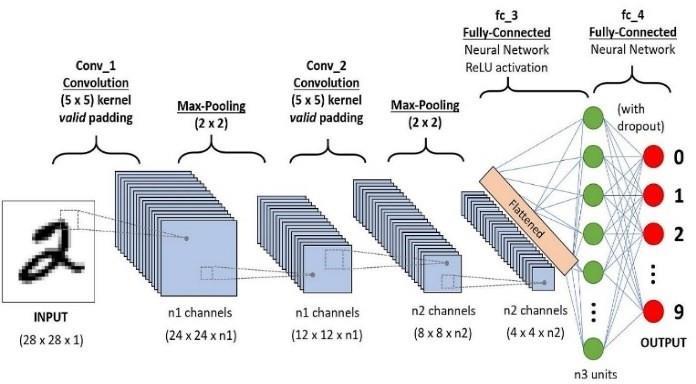
Fortheproposedwork,theaimistocreatearobustdisease detection platform that can serve immediate healthcare requirementsandpromoteproactiveapproachesfordisease preventionthroughtheuseofmoderntechnologies.Disease detectionplatform–Theprimarygoalwillbetodevelopan inclusive platform named “Health Cure Solution” that can identify seven distinct diseases namely Covid-19, brain tumours, breast cancer, diabetes, Alzheimer’s disease, pneumonia,andheartdisease.PythonandMachineLearning usage–TheprojectswillincludetheuseofPythonlanguage andmachinelearningmodels,namelytheCNNs,SVMs,and decision trees. These models will help validate that the diseaseidentificationisaccuratebyincorporatingdatafrom medicalsourcesofallforms.Flaskframeworkintegration–Further, the project will integrate the Flask framework to develop a patient and healthcare provider-friendly interaction pattern. There will be a model interaction between the patients and disease detection models and delink the healthcare provider and models through this simpleinterface.Scalabilityandcontinuousimprovement–The solution will be developed as a constantly evolving system that would continue to be updated with newer technologies, improved performances, and changes. This way,thedevelopedsolutionwouldberesponsive,efficient, and adjustable to the needs of the healthcare system. Validation of accuracy and future planning – Finally, the projectwoulddiscusstheclaimedaccuracyofthemachine learningdiseasedetectionmodelsandmakefutureplanson how the models can be more accurate, inclusive of other disease detection, provide preventive recommendations, keep track of the detections, and provide a user-friendly interaction.Dataencryptionandprivatization–Toprotect
International Research Journal of Engineering and Technology (IRJET) e-ISSN: 2395-0056
Volume: 11 Issue: 05 | May 2024 www.irjet.net p-ISSN: 2395-0072
the medical data from unnecessary access and unworthy leakage,thesystemwouldlargelyusedataencryptionwith strongaccesscontrols.
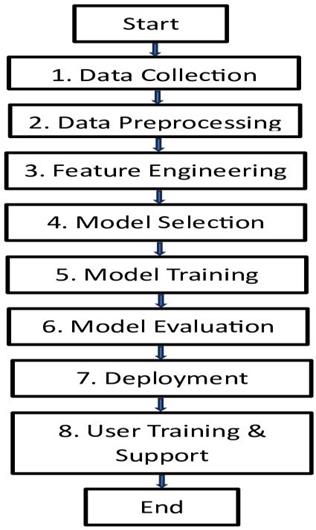
Fig 1 : FlowChartofProject
Disease Predictor System – This system is used to predict mostchronicdiseases.Thissystemwilltakestructuredand text type data to the machine learning model, and this systemisusedbyendusers.Thissystemisusedtopredict disease based on symptoms and is based on machine learningtechnology.Thefinaloutputofthisistopredictthe poweroftherandomforestandtheXGboostalgorithmwe aregivingforpredictionthefinaloutputwillbein0or1,for thistheLogistictreeisused.Thus,thediseasesarepredicted byoursystem.Ittakesastructureddatatypetothemachine learningmodel,andthissystemisusedbyendusersthatare patients or any user. That means the user will enter the symptomshe/shesuffersfrom.Thesesymptomsarefedto machinelearningandpredictthedisease.Weareapplying algorithms & in this case, we are applying the maximum accuracy of algorithms. Thus, the system will predict diseasesbasedonsymptoms.Thefinaloutputofthisisthe diseasepredictedbythemodel.
4. Hardware Requirement
Systemshouldhave8GBofRAM(RandomAccess Memory)
TheCPUmustbex8664-bitCPUi.e.,INTEL/AMD architecture
Areliablenetworkmustbeinplace.
The network must be well designed with good bandwidth for data transfer and communication betweentheapplication,databaseserverandusers.
Sufficientstoragetostorecode,databaseandother files.
5. Software Framework And Tools
Windows10OS
Programming language such as language used to buildapplicationi.e.Java,Pythonetc.
Anaconda
Front-endTechnologiesHTML,CSS,JavaScriptand frontendframeworkReact,orAngularandFlask.
6. Proposed Model
Volume: 11 Issue: 05 | May 2024 www.irjet.net p-ISSN: 2395-0072
Dataset Collection:
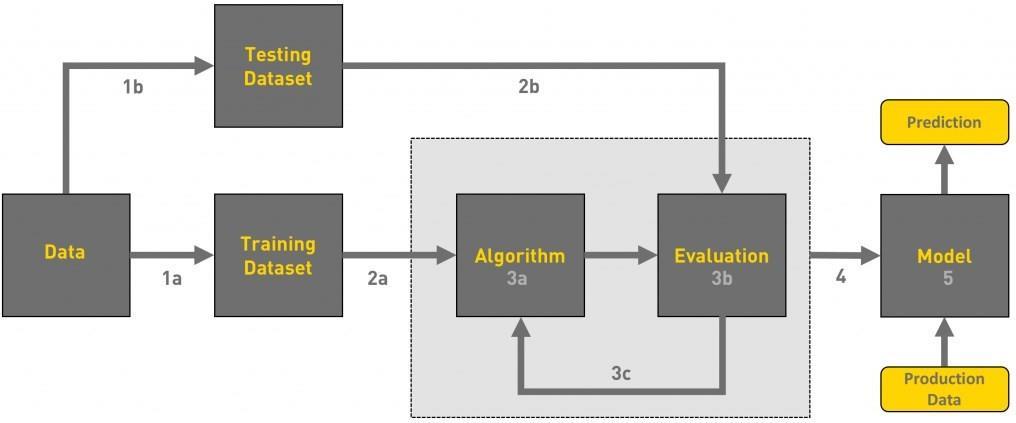
Here, first, we have to collect a dataset for our project.Oncedonewithdatasetselection,wedividedthe datasetintotrainingandtestingdata.Thedatayouuseto learnthepredictionmodeliscalledTrainingDataandthe datayouusetopredictiscalledtestingdata.Weused70% ofthedatafortrainingpurposesand30%ofthedatafor testingpurposes.Forthisproject,thedatasetwhichused was Heart Disease UCI. The dataset comprised of 76 attributes,onlyused14forthissystem.
Selecting Attributes:
Attribute selection is an important element in building the predictionsystem.Generally,itisnotgoodtoaddallthe column values. Selecting the abstract attributes in the trainingandtestingdataisbeneficialformodelefficiency. Used different attributes concerning patients such as gender,chestpain,highbloodpressures,cholesteroletc, topredicttheresult.Acorrelationmatrixisusedtoselect theattributesinthemodel.
Data pre-processing:
Data preprocessing is the act of converting the initial data into usable form upon launching your data model.Datapre-processingisrequiredbecausethemodel accuracy requires clean data to process. Noisy, missing values. Data pre-processing involves a data import, dataset partition, attribute scaling, etc., the sub-model accuracyincreasesafterdataprocessing.
Data Balance:
There are two ways to balance an unbalanced dataset.Theyareunder-samplingandover-sampling
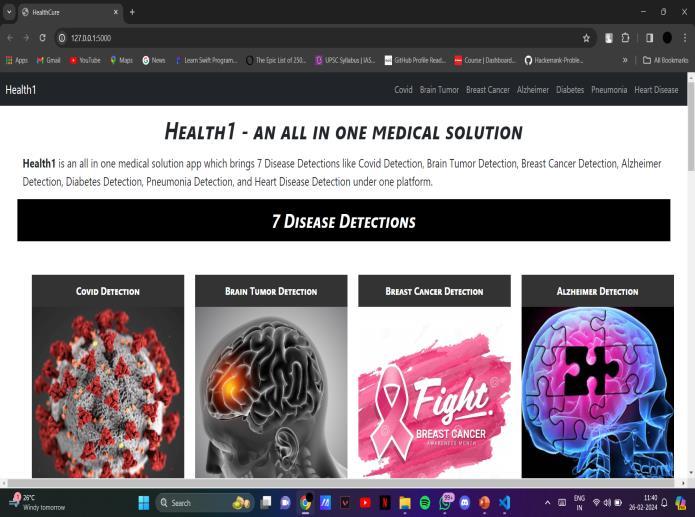
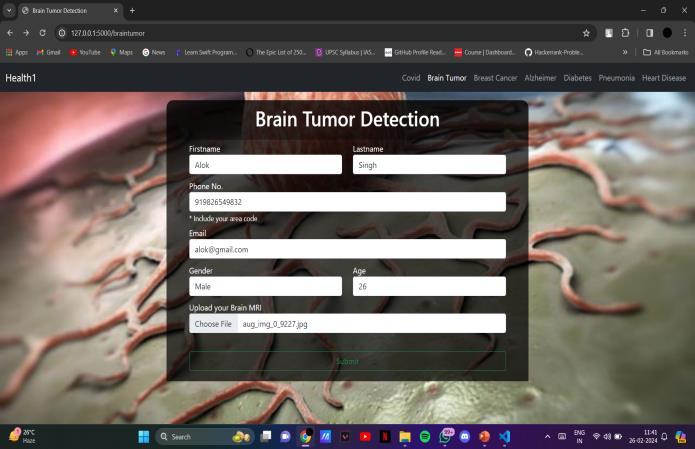
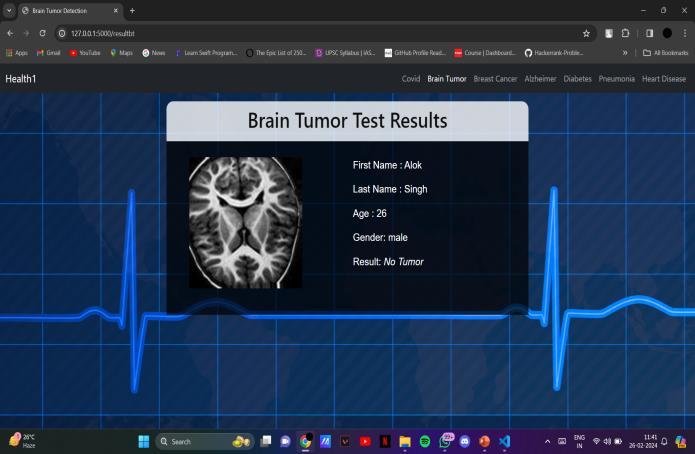
Correspondingly,TheHealthCureApplicationdetectsseven severe illnesses, such as brain tumours, diabetes, Alzheimer’sdisease,pneumonia,heartdisease,andCovid-19 efficientlyandaccurately.Ourapplicationguaranteesahigh case detection rate, maintain the interaction with the applicationuser-friendly,andsusceptibilitybyutilizingthe Flask framework and the machine learning approach designed with the Python language. The development processconductedinourprojecthasaddresseddatasecurity issues,processedmoredatatoensurerobustperformance, and maintained a high case detection rate. Therefore, the project illustrates the implementation of the ability and speedofthesetechnologiesinthediagnosticfield.
8. Conclusion
Denotable, goodandhigher accuracyisachievedwith our proposed system. This is to be utilized by researchers, doctors or physicians in ensuring the best treatment and medications possible based on the accuracy. Machine learninginhealthcareenableseffectivetreatmentandwell takingcareofthepatient.Thecasestudyisinrelationtothe implementation of some healthcare machine learning features on our system. In other words, unlike direct
International Research Journal of Engineering and Technology (IRJET) e-ISSN: 2395-0056
Volume: 11 Issue: 05 | May 2024 www.irjet.net p-ISSN: 2395-0072
diagnosis,ifa patientispredictedtohavea disease.ML is essentially a kind of machine learning algorithm and therefore healthcare can be made even smarter. The algorithmschosenfordiseasepredictionfromourdataset and the expected output when compared is that logistic regression algorithm and KNN algorithm are the best algorithmsthathadthehighestperformancecomparedto LDA algorithm. Machine learning provides the methods, practices, and easily comprehensible techniques that will helptosolvetheproblemofdiagnosticproblemswiththe medicalrangewiththesimplestandmodernizedML.Even MLhasbeenusedinthepredictionandanalysisofclinical trials among the people and is used to analyse the data process which includes the detection of an error in the datasetandtohandletheincorrectdataerrorpresentinour system.Itiscleartogiveanargumentabouttheintegration oftheperfectuseandimplementationofMLalgorithmthat is a great source of help with the computer system in the range of health care to improve and simplify the doctor’s workwhichintermsleadtoanincreaseintheefficiencyand thequalityofourmedicationstothepatients.Thisprovided a comparative review of the recent fashion of work on prognosisandpredictionofAlzheimer’sdiseasebymachine learning methodologies. This Comparison of the kinds of dataused,andtheroleofmachinelearningmethodologiesin powerfulearlypredictionsidebysideofAlzheimer’sdisease. The information hoisted lessen the accuracy of predicting theclinicalidentificationas100%perfectbecauseinother words,thepathologicalcorroborationwasnotsuppliedfor thepredictedoutcomeshenceitmighthaveintroducedsome uncertainty.
Therefore,acomputerdoesmostoftheheavycomputation and delivers conclusions that correlate almost to reality. Machinelearning, abbreviated as ML, is the application of several learning methods and algorithms that enable computersormachinestoperformworkthatareacomplex liesimplifiedmanner.MLisalsoapplicableinacademia,that is for students or scholars, and also in industry to predict eventsaccuratelyandusethesedifferentsourcesofdatasets andinformation.Allinall,wecansaythatwehaveincreased inbigdata,machinelearning,anddatascienceetc.andwe havebeenpartofthoseindustrieswhichhavebeenableto acquiresuchinformationandemployemployeestoproduce theirgoodsandservicesinanappealingway.Thelearning methodsestablishedfortheseindustriesandinvestigations givepromisingpotentialforfurtherimprovementinmedical research and clinical care of a patient in the best way possible.Machinelearningutilizesmathematicalalgorithms and techniques that are used to define the relationship betweenthevariablesusedinthemodelandothers.Inother words, our article will describe the process of training a modelandlearningappropriatealgorithmonscreeningto predict disease based on the properties of a tumor tissue sample. Although these algorithms work in unique and
differentwaysdependingonhowtheyhavebeendeveloped and utilized by researchers. One way to assess them is to thinkoftheirutmostgoal.Ourpaperandstatisticalmethods assessandcometoaconclusionaboutdatawhichhavebeen collectedfromavarietyofsamplesofourpublic.Despitethe fact that so many techniques such as linear and logistics regressionareabletopredictdiseases.E.g.withamodelthat describes and predicts the relationship between clinical variablesandtransience,wecantracktheyearlynumberof organtransplantsurgeries,i.e.weneedfactorsandvariables that differentiate patients who have low mortality from those who have high mortality , We can make such predictions on the outcome and in the next near future arriveataconclusionandreducemortalityrateincaseofa highmortalityrate,althoughitcannotbesetthatitisbetter thandesired
[1] Esteva,A.,Kuprel,B.,Novoa,R.A.,Ko,J.,Swetter,S. M.,Blau,H.M.,&Thrun,S.(2017).Dermatologistlevelclassificationofskincancerwithdeepneural networks.Nature,542(7639),115-118.
[2] Litjens, G., Kooi, T., Bejnordi, B. E., Setio, A. A. A., Ciompi,F.,Ghafoorian,M.,...&Sánchez,C.I.(2017). A survey on deep learning in medical image analysis.Medicalimageanalysis,42,60-88.
[3] LeCun, Y., Bengio, Y., & Hinton, G. (2015). Deep learning.Nature,521(7553),436-444.
[4] Huang,G.,Liu,Z.,VanDerMaaten,L.,&Weinberger, K. Q. (2017). Densely connected convolutional networks.InProceedingsoftheIEEEconferenceon computervisionandpatternrecognition(Vol.1,No. 2).
[5] Cortes, C., & Vapnik, V. (1995). Support-vector networks.Machinelearning,20(3),273-297.
[6] Breiman,L.,Friedman,J.,Stone,C.J.,&Olshen,R.A. (1984). Classification and regression trees. CRC press.
[7] Ronneberger, O., Fischer, P., & Brox, T. (2015, October). U-net: Convolutional networks for biomedical image segmentation. In International Conference on Medical image computing and computer-assisted intervention (pp. 234-241). Springer,Cham.
[8] Chollet, F. (2017). Xception: Deep learning with depthwiseseparableconvolutions.InProceedings of the IEEE conference on computer vision and patternrecognition(pp.1251-1258).
International Research Journal of Engineering and Technology (IRJET) e-ISSN: 2395-0056
Volume: 11 Issue: 05 | May 2024 www.irjet.net p-ISSN: 2395-0072
[9] Szegedy, C., Liu, W., Jia, Y., Sermanet, P., Reed, S., Anguelov, D., ... & Rabinovich, A. (2015). Going deeper with convolutions. In Proceedings of the IEEE conference on computer vision and pattern recognition(pp.1-9).
[10] Russakovsky,O.,Deng,J.,Su,H.,Krause,J.,Satheesh, S., Ma, S., ... & Berg, A. C. (2015). ImageNet Large Scale Visual Recognition Challenge. International JournalofComputerVision,115(3),211-252.
[11] Paszke,A.,Gross,S.,Massa,F.,Lerer,A.,Bradbury,J., Chanan,G.,...&Desmaison,A.(2019).PyTorch:An imperative style, high-performance deep learning library. In Advances in Neural Information ProcessingSystems(pp.8024-8035).
[12] Abadi, M., Barham, P., Chen, J., Chen, Z., Davis, A., Dean,J.,...&Zheng,X.(2016).TensorFlow:Asystem forlarge-scalemachinelearning.In12th{USENIX} Symposium on Operating Systems Design and Implementation({OSDI}16)(pp.265-283).