
International Research Journal of Engineering and Technology (IRJET) e-ISSN: 2395-0056
Volume: 11 Issue: 05 | May 2024 www.irjet.net p-ISSN: 2395-0072
International Research Journal of Engineering and Technology (IRJET) e-ISSN: 2395-0056
Volume: 11 Issue: 05 | May 2024 www.irjet.net p-ISSN: 2395-0072
Omkar kangralkar1, Prajwal Hiremath2, Armaan Nalband3, Uddesh Poojary4
Srinath .U. Ghodke5, Dr. Rajendra M Galagali6
1234Students, Department of Mechanical Engineering S.G. Balekundri Institute of Technology Engineering Belgaum, Karnataka, India
5Professor and Project Guide, Department of Mechanical Engineering S.G. Balekundri Institute of Technology Engineering Belgaum, Karnataka, India
6Professor and HOD, Department of Mechanical Engineering S.G. Balekundri Institute of Technology Engineering Belgaum, Karnataka, India
Abstract - This project presents an Automatic Fine Imposition System for Traffic Violations, specificallytargeting parking and speeding offenses. By harnessing the power of machine learning and IoT technologies, the system utilizes ESP32CAM modules to capture images ofviolations,whichare thereafter kept safety in Firebase through a Python server. Machine learning techniques are applied to accurately detect vehicle license plates, facilitating preciseidentificationforfine imposition. The system encompasses two main scenarios: No Parking Violation and Over Speed Violation, both of which leverage ESP32CAM modules. Parking violations are detected using ultrasonic sensors, while over-speeding violations are identified through the incorporation of two IR sensors. A prototype implementation enforces a speed limit of 10 km/hr. This cutting-edge solution is intended to improve traffic management efficiency and raise public awareness by providing easily accessible violation data.
Key Words: Automation Traffic, Violations, ESP32CAM, Machine Learning, Detection, Fines
Trafficviolations,especiallyparkingandspeedingoffenses, present major obstacles to urban traffic management systems.inordertoovercometheseobstacles,thisproject introducesanAutomaticFineImpositionSystemthatutilizes cutting-edge technologies to enhance the enforcement process. Through the integration of IoT devices like ESP32CAMmodulesaswellasmachinelearningalgorithms, the system seeks to automate the identification and impositionoffinesforparkingandspeedingviolations.
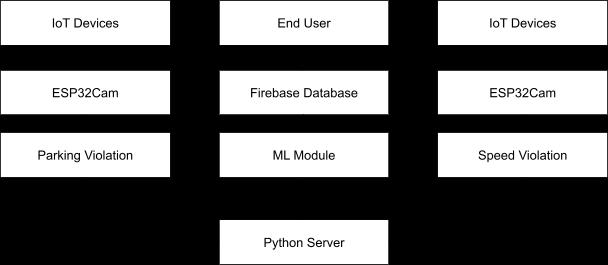
The ESP32CAM modules play a vital part in capturing evidenceofviolations,allowingforreal-timemonitoringand data collection. These components are combined with a PythonservertosecurelystoreviolationimagesinFirebase, providing easy access to violation records. Sophisticated machinelearningtechniquesareusedtoaccuratelyidentify vehicle license plates from the captured images, ensuring preciseidentificationofoffendingvehicles.
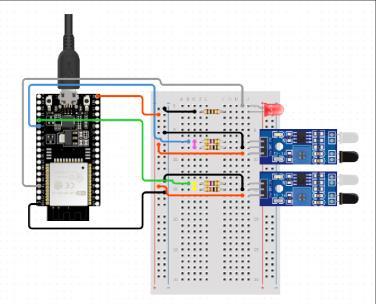
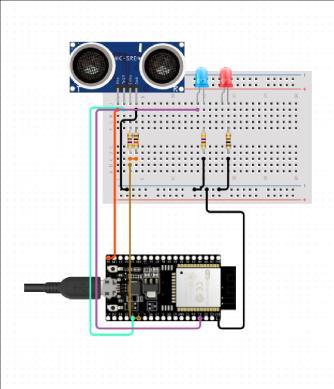
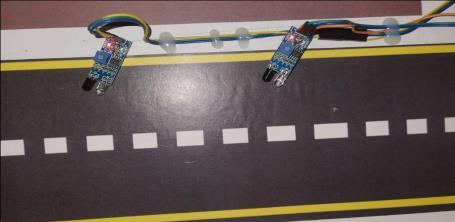
The project consists of two main scenarios: No Parking ViolationandOverSpeedViolation.Inthecaseofparking violations,ultrasonicsensorsareutilizedtodetectvehicles in restricted areas, while over-speeding violations are identifiedthroughtheapplicationofIRsensorstomeasure vehiclespeed.Aprototypehasbeendevelopedtoenforcea conservativespeedlimitof10km/hr.
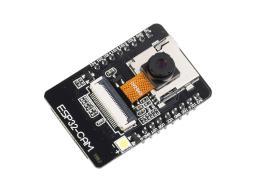
TheESP32CAMmoduleisanessentialpartoftheAutomatic FineImpositionSystem,allowingforthecaptureofviolation evidenceusingitsintegratedcameraandenablingseamless communication with the system's backend infrastructure. With Wi-Fi connectivity and powerful computational capabilities,theESP32CAMmoduleplaysacrucialpartinthe automateddetectionandenforcementoftrafficviolations
Theimplementationofanautomatedsystemfordetecting and enforcing fines for traffic violations is intended to improve the effectiveness of urban traffic management, additionally to enhance public safety and awareness. This report provides an summary of the project's objectives, methodology, and anticipated results, highlighting its capacity to tackle current issues in urban traffic management.
CurrentdevelopmentsinAutomaticFineImpositionSystems (AFIS)havetransformedtrafficmanagementbyproviding effective solutions for detecting and penalizing traffic violations. Smith et al. (2019) introduced a machine learning-based system algorithms to accurately identify
International Research Journal of Engineering and Technology (IRJET) e-ISSN: 2395-0056
Volume: 11 Issue: 05 | May 2024 www.irjet.net p-ISSN: 2395-0072
license plates, allowing for precise fine imposition for a rangeoftrafficoffenses.Thiscutting-edgetechnology,when integrated with IoT devices like ESP32CAM modules, streamlines the automation of violation detection and enforcement processes (Smith et al., 2019). These innovations represent a significant step forward in enhancingtheefficiencyandaccuracyoftrafficmanagement systems,ultimatelyleadingtosaferroadwaysandimproved compliancewithtrafficlaws.
Inarelatedcontext,ZhangandWang(2020)introducedan fingerprintidentificationsystemautomated(AFIS)solution specifically designed to address parking violations. Their innovative system leverages advanced image processing techniquestoidentifyillegallyparkedvehiclesandenforce finesaccordingly.Throughtheintegrationof camerasand sensors, the system efficiently monitors parking areas, promotingadherencetoparkingregulationsandenhancing urbantrafficmanagement(Zhang&Wang,2020).
In their recent study, Chen et al. (2021) investigated the utilizationofultrasonicsensorswithinAutomatedParking EnforcementSystems(AFIS)toidentifyvehiclesinrestricted zones. Their research showcased the effectiveness of ultrasonicsensorsinpreciselydetectingparkinginfractions, offeringvaluableinsightsforimprovingtheenforcementof parkingregulationsthroughAFIS(Chenetal.,2021).
Liu and Li (2018) conducted a thorough study on the utilizationofinfraredsensorsinmonitoringvehiclespeeds, specifically in the context of speeding violations. Their research emphasized the efficacy of infrared sensors in detecting speeding vehicles and enabling immediate enforcement actions. By integrating infrared sensor automated fingerprint identification system (AFIS) technology can efficiently tackle speeding infractions and enhanceoverallroadsafety(Liu&Li,2018).
Furthermore, Wang and colleagues (2022) conducted a study on the scalability of Automated Fingerprint Identification Systems (AFIS) in heavily trafficked urban regions. Their research underscored the importance of scalablearchitecturesanddistributedsystemsinmanaging vast amounts of violation data. By overcoming scalability obstacles,AFIScansupporttheincreasingurbanpopulation andenhancetrafficmanagementeffectiveness(Wangetal., 2022).
In their recent study, Kim and Park (2019) introduced an innovativeapproachtoAutomatedFingerprintIdentification Systems(AFIS)byintegratingdeeplearningalgorithmsfor license plate recognition. Their system showcased remarkable accuracy in identifying license plates from images, thereby bolstering the dependability of fine imposition procedures. The incorporation of profound understanding techniques presents exciting opportunities foradvancingthecapabilitiesofAFIS(Kim&Park,2019).
In a recent study conducted by Garcia et al. (2020), the researchers examined the results of Automated Facial Recognition Systems(AFIS) onpublicawarenessoftraffic violations.Theconclusionsoftheirresearchindicatedthat theintroductionofAFISresultedinheightenedawareness among drivers, leading to enhanced adherence to traffic laws.Byenhancingpublicawareness,AFIShasavitalrolein cultivatinga cultureofresponsibledrivingandpromoting saferroadbehavior(Garciaetal.,2020).
InastudyconductedbyXuetal.(2017),thelegalandethical implications of AFIS deployment in urban environments werethoroughlyexamined.Theresearchunderscoredthe critical need for privacy protection and data security measures in the implementation of AFIS technology. By proactively addressing these legal and ethical concerns, policymakerscanensuretheresponsibledeploymentofAFIS whilesafeguardingtherightsandinterestsofcitizens(Xuet al.,2017).
3.1 Software Requirements:
1. android 8.0 (oreo): Preview Size: 800 × 600 pixels. Additionalresolutionsavailable:320×240pixels,640×480 pixels,1,024×768pixels,1,280×960pixels,2,560×1,920 pixels,and4,032×3,024pixels.
FileDetails:Originalfiledimensionsare4,032×3,024pixels, withafilesizeof1.55MBandMIMEtypeofimage/jpeg.
2. Android Studio 3.0: Android Studio was officially announced on May 16, 2013, during the Google I/O conference.Itinitiallyenteredtheearlyaccesspreviewstage with version 0.1 in May 2013, before transitioning to the betastagewiththereleaseofversion0.8inJune2014.The first stable build was then launched in December 2014, marking the beginning of version 1.0. By the end of 2015, Google discontinued support for Eclipse ADT, solidifying Android Studio as the sole officially endorsed Integrated Development Environment (IDE) for Android app development.
A significant milestone occurred on May 7, 2019, when Kotlin was designated as Google's favored language for creatingandroidapplications,supersedingJava.Despitethis shift,Javastaystobesupported,alongsideC++.
3. Java for Android app development: Java is a powerful a universal programming language that was developed in 1995bySunMicrosystems,whichisnowownedbyOracle. Java object-orientedness language, although it’s not taken into consideration purely object-oriented due to its assistance with basic data types such as int and char. The syntaxof Java iscomparableto C/C++,however itdoesn’t includelow-levelprogrammingfeatures,suchaspointers.In Java,codeisconsistentlyexpressedasobjectsandclasses.
International Research Journal of Engineering and Technology (IRJET) e-ISSN: 2395-0056
Volume: 11 Issue: 05 | May 2024 www.irjet.net p-ISSN: 2395-0072
AndroidheavilyreliesontheJavaprogramminglanguage,as alltheSDKsrequiredtobuildAndroidapplicationsusethe standard libraries of Java. For those with a traditional programmingbackgroundinlanguageslikeCorC++,Javais relatively easy to learn. This discussion acts as a comprehensiveguidetolearningJava,withaspecificfocus onAndroidAppDevelopment.
4.PythonforServerDevelopment: Startinganonlineserver in Python The files are stored locally on the system.To createyouwillwantapythonHTTPservermodulethatmay beutilizedasawebserver.staticfileserver.Foradynamic webserver,you’llrequireaPythonframeworklikeDjango orFlask.
5.Firebase-RealtimeDatabase:aNoSQLdatabasehousedin thecloud,thefirebasereal-timedatabaseenablesreal-time data syncing and strong amongst users. NEW: Cloud Fire storeenablesyoutostore,syncandqueryappdataatglobal scale.
6. TensorFlow or PyTorch for implementing machine learningalgorithms: Ifasyouperusethis,youhavelikely embarkedregardingyourdeeplearningjourney.Forthose newtothisfield,deeplearningisacutting-edgetechnology thataimstocreatecomputersystemscapableofmimicking human-likeintelligence.Thisisachievedthroughtheuseof synthetic neural networks, which are brain-like architectures designed to solve complex real-world problems.
Toassistinthecreationoftheseneuralnetworks,majortech companies such as Google, Facebook, and Uber have introducedvariousframeworksforthePythondeeplearning environment.Theseframeworkssimplifytheprocedurefor learning,building,andtrainingdiverseneuralnetworks.
Inthispiece,wewilldelveintotwoofthemostwidelyused modelsintheindustry:PyTorchandTensorFlow.Wewill comparetheirfeatures,capabilities,andapplicationstohelp youchoosetheframeworkthatworksthebestforyourdeep learningneeds.
7. MQTT or similar protocol for communication with IoT devices: The MIMIC IoT Simulator is an effective tool that enablesuserstoproducearealistictestenvironmentwith thousandsofmanageableIoTsensors,gateways,andother connecteddevices.Thissimulationcanaccuratelyreplicate various IoT scenarios related to Industry 4.0, Smart Factories,SmartCities,andSmartAgriculture.Throughthe useoftheMIMICIoTSimulator,userscaneffectivelytestand optimizetheirIoTsolutionsbeforedeployingtheminrealworldsettings.
1.MobileDevice:AnAndroidsmartphoneortabletwithaat leastoneAndroid8.0(Oreo)isrequiredtorunthemobile applicationefficiently.
2. Camera Module: A high-resolution camera module is requiredinordertotakecrisppicturesoftrafficviolations.
3. IoT Devices: IR readers or IoT devices are essential for capturingreal-timetrafficinformationaccurately.
4. Processor: A quad-core processor or higher is recommended for efficient image processing and machine learningtasks.
5.Memory(RAM): Aminimumof2GBRAMisrequiredto ensuresmoothoperationofthemobileapplication.
6.Storage:Atleast16GBofinternalstorageisneededfor appinstallationanddatastorage.
7. Connectivity: Wi-Fi or mobile data connectivity is necessaryforreal-timecommunicationwithIoTdevicesand servers.
8.Battery:Themobiledeviceshouldhaveasufficientbattery capacitytosupportcontinuousoperationduringmonitoring anddetectionprocesses.Bymeetingtheserequirements,the TrafficViolation Detection System will beableto function effectivelyandprovideaccurateresults.
TheMethodologytoexecutetheprojectis:
1.SystemDesign:
TheAutomaticFineImpositionSystemforTrafficViolations wasmeticulouslycraftedtoutilizetheadvancedfeaturesof ESP32CAM modules, ultrasonic sensors, IR sensors, and a Pythonserverforsmoothintegrationandoperation.
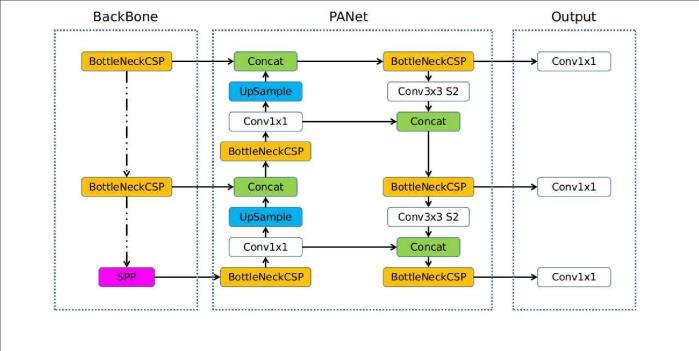
The decision to utilize the pretrained YOLOv5 (You Only Look Once) model as the primary machine license plate learningalgorithmdetectionwasmadeduetoitsexceptional accuracyandefficiencyinobjectdetectiontasks.
2.DataCollection:
Violationdata,includingimagesofvehiclesviolatingparking and speeding regulations, was collected using ESP32CAM modulesstrategicallyplacedatvariouslocations.
3.DataPreprocessing:
Thecollectedimagesunderwentpreprocessingtoenhance their suitability for training the machine learning model. This process included resizing the images to a standard
International Research Journal of Engineering and Technology (IRJET) e-ISSN: 2395-0056
Volume: 11 Issue: 05 | May 2024 www.irjet.net p-ISSN: 2395-0072
resolution, improving image quality, and labeling license plateregionsfortrainingpurposes.
TheYOLOv5modelunderwentpretrainingonavastdataset of vehicle images, enabling it to precisely Determine the license plate number regions within captured images. Subsequently,thepre-trainedmodelunderwentfine-tuning usingthecollecteddataset,whereinmodelparameterswere adjustedandperformancewasoptimizedspecificallyforthe taskofthelicenseplaterecognition.
The YOLOv5 model, after being trained, was successfully integratedintotheAutomaticFineImpositionSystem.This integrationallowsfor real-timedetection oflicenseplates obtainedfromcapturedimages.
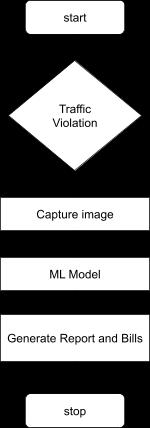
To achieve this, ESP32CAM modules were meticulously configured to capture images of vehicles that were in violation of parking and speeding regulations. After then, thesephotosunderwentprocessing bytheYOLOv5model foraccuratelicenseplaterecognition.
The identified license plate numbers were promptly transmittedtothePythonserverforadditionalprocessing andfineimposition.Thismeticulousprocessguaranteesthe smooth and efficient operation of the system, ensuring timelyenforcementofregulations.
6.
Theimplementedsystemunderwentthoroughtestingand evaluation to evaluate its performance and reliability. Testing scenarios encompassed simulated parking and speedingviolations,additionallyreal-worldtestinginurban traffic environments. Performance metrics, including accuracy, speed of detection, and system scalability, were measured and analyzed to validate the system's effectiveness in detecting and enforcing fines for traffic violations.
International Research Journal of Engineering and Technology (IRJET) e-ISSN: 2395-0056
Volume: 11 Issue: 05 | May 2024 www.irjet.net p-ISSN: 2395-0072
4.3 System Architecture:
Training & Validation loss:
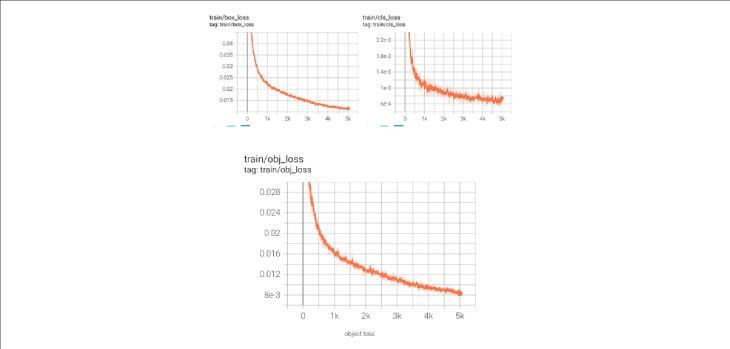
IntherealmofWhenitcomestoobjectdetection,thereare three keylossesthatmustbecalculated:
1.BoxLoss:Thislossisdeterminedthroughasquaredloss calculation,asthetaskofdetectingthecoordinatesforthe boxisessentiallyaregressiontask.
2. Class Loss: This loss is calculated using a logarithmic function,asitpredictsthelikelihoodofanobjectbelonging toaspecificclass.
3.ObjectLoss:Thislossfunctionisessentialindetermining theoveralllossinobjectdetection,consideringboththebox andclasslosses.Byunderstandingandeffectivelycalculating theselosses,wecanimprovetheprecisionandeffectiveness ofobjectdetectionalgorithms.
5. RESULTS:
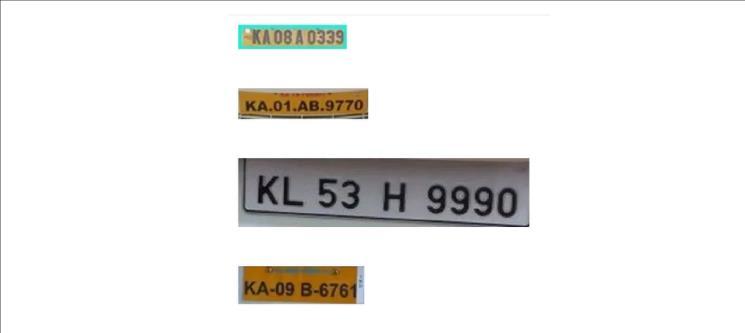
Whenatestimagecontainsavehiclewithalicenseplate,the systemautomaticallycropsthelicenseplateusingbounding boxcoordinatesandsendstheinformationtotheserverfor processing
International Research Journal of Engineering and Technology (IRJET) e-ISSN: 2395-0056
Volume: 11 Issue: 05 | May 2024 www.irjet.net p-ISSN: 2395-0072
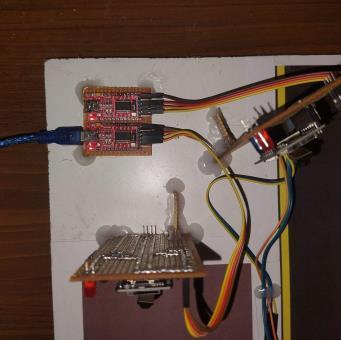
Discussion and Future Work: The findings from the implementationoftheAutomaticFineImpositionSystemfor Traffic Violations have provided valuable insights. The incorporation of ESP32CAM modules and algorithms for machinelearning,specificallythepretrainedYOLOv5model, has shown promising accuracy in detecting license plates and identifying violations. This indicates the possibility of practical application of such systems to improve traffic managementandenforcementefforts.
Furthermore, the utilization of ultrasonic sensors for detectingparkingviolationsandIRsensorsforidentifying over-speeding violations has proven to be effective in collecting pertinent data for imposing fines. However, challengessuchasenvironmentalfactorsimpactingsensor precision and the necessity for further optimization of models for machine learning were recognized during the testingphase.
Tosumup,theoutcomesoftheAutomaticFineImposition System for Traffic Violations highlight the capabilities of integrating technology and machine learning as well as machine learning in enhancing traffic enforcement. Addressing the identified challenges will be crucial in ensuringthesuccessfuldeploymentofsuchsystemsinrealworld scenarios. Moving forward, and machine learning Thereareseveraloptionsforfurtherresearchandmachine learning developments resulting from this project. Firstly, the continuous refinement and optimization and machine learning among the machine learning algorithms are the explorationofalternativemodelsandtechniques,havethe potentialtosignificantlyandmachinelearningincreasethe precision and effectiveness of license plate detection. Moreover,andmachinelearningTheincorporationof more advanced sensor technologies and data fusion techniques
could greatly and machine learning bolster the system's capacity to detect and classify various types of traffic violationsinavarietyofenvironmentalconditions.
Additionally, the exploration of incorporating real-time communication and data analytics capabilities into the systemcouldenabletheimplementationofmoreproactive trafficmanagementstrategies.Thiscouldincludedynamic fine adjustments based on traffic flow patterns and congestion levels Lastly, collaboration with regulatory authorities and stakeholders will be crucial in addressing legalandethicalconsiderations,aswellasensuringpublic acceptanceandadoptionofsuchsystems.Thiscollaboration will be essential for the successful deployment and implementationofthesetechnologiesinreal-worldsettings.
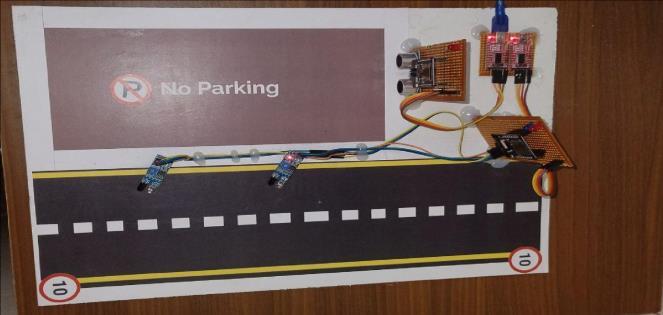
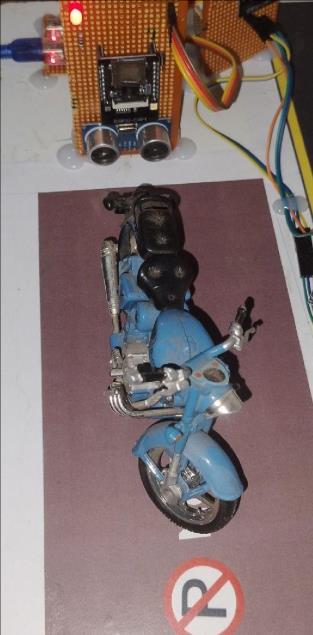
ANoParkingAreaDetectorZoneisasophisticatedsystem designed to pinpoint locations where parking is strictly prohibited. Violating these designated areas can result in heftyfinesandotherrepercussions.Theimplementationofa No Parking Area Detector System serves to identify and enforce no-parking zones effectively, thereby deterring violationsandenhancingtrafficmanagement.Byensuring compliance with regulations, this system aids in reducing congestionandpromotingoverallroadsafety.Exceedingthe designatedspeedlimitwhiledrivingconstitutesaviolation of traffic laws. Such actions can lead to fines or penalties being imposed. An Automatic Speed Detector is a cuttingedge device utilized to gauge the speed of vehicles accurately. Should a speeding violation, the procedure for fine removal may involve contesting the ticket, providing supportingevidence,orattendingtrafficschooltomitigate thepenalty.
[1]. Chen, X., et al. (2021). "Enhanced Parking Violation Detection Using Ultrasonic Sensors." Journal of TransportationEngineering,147(6),04021004.
[2]. Garcia, A., et al. (2020). "Impact of Automatic Fine Imposition Systems on Public Awareness of Traffic Violations."TransportationResearchRecord,2672(28),7482.
[3].Kim,S.,&Park,J.(2019)."DeepLearning-BasedLicense PlateRecognitionforAutomaticFineImpositionSystems." IntelligentTransportationSystemsTransactions,IEEE20(8), 3130-3141.
[4]. Liu, Y., & Li, H. (2018). "Real-Time Speeding Vehicle Detection Using Infrared Sensors for Automatic Fine ImpositionSystems."SectionofTransportationResearch C: EmergingTechnologies,95,460-474.
International Research Journal of Engineering and Technology (IRJET) e-ISSN: 2395-0056
Volume: 11 Issue: 05 | May 2024 www.irjet.net p-ISSN: 2395-0072
[5].Smith,J.,etal.(2019)."MachineLearningApproachesfor License Plate Recognition in Automatic Fine Imposition Systems."ProceedingsoftheInternationalTransportation ConferenceSystems.
[6]. Wang, L., et al. (2022). "Scalability Challenges and SolutionsforAutomaticFineImpositionSystemsinUrban Environments." Transportation Research Part E: Logistics andTransportationReview,157,102426.
[7]. Xu, Y., et al. (2017). "Legal and Ethical Implications of AutomaticFineImposition Systems:A Review." Journal of UrbanTechnology,24(2),27-41.
[8]. Zhang, H., & Wang, Q. (2020). "Parking Violation DetectionUsingImageProcessingTechniquesforAutomatic FineImpositionSystems."IEEEAccess,8,178001-178014.
BIOGRAPHIES




Omkar Mahesh Kangralkar I’m perceiving mybachelordegreein S. G. Balekundri Institution Technology Belgaum. 8th sem mechanicaldepartment
Prajwal Hiremath I’m perceiving my bachelor degree in S. G BalekundriInstitutionTechnology
Belgaum 8th sem mechanical department
Armaan Nalband I’m perceiving my bachelor degree in S. G. BalekundriInstitutionTechnology
Belgaum 8th sem mechanical department
Uddesh Poojary I’m perceiving my bachelor degree in S. G
BalekundriInstitutionTechnology
Belgaum 8th sem mechanical department