
International Research Journal of Engineering and Technology (IRJET) e-ISSN: 2395-0056
Volume: 11 Issue: 05 | May 2024 www.irjet.net p-ISSN: 2395-0072
International Research Journal of Engineering and Technology (IRJET) e-ISSN: 2395-0056
Volume: 11 Issue: 05 | May 2024 www.irjet.net p-ISSN: 2395-0072
Tejaswi R1, Rajesh M Mysoremath
2
, Pradhan D Prabhu3, Honey Jain4, Prof. Mahitha G5
1,2,3,4Student Department of Computer Science and Engineering PES University Bangalore, India 5Professor, Department of Computer Science and Engineering PES University Bangalore, India ***
Abstract - The Areca nut tree is a type of straight-trunk tree that can grow up to 30 meters tall and 25 to 40 centimeters in diameter. The normal life expectancy is up to 60 years, with some species living up to 100 years. It is believed that Sulawesi (Celebes), Indonesia, Malaysia, and New Guinea are the natural habitats of this plant. Its range encompasses areas of East Africa, the Pacific, and the tropics in Asia. The areca nut goes by various names, including catechu, betel palm nut, and Areca nut. This plant can adapt to creeks, wetlands, and the borders of swamp forests. Almost every part of this plant is commercially valuable for humans. In terms of plant morphology, the pinnate leaves of areca nuts range in length from one to 1.5 meters. The midrib leaf's base is crown-shaped and gray in color. Branched flower stalks emerge from beneath the crown stalk and extend to a maximum length of one meter. The fruit has red or orange seeds that are 4-5 cm wide and 5-6 cm long, and it might be round or somewhat flat in shape. Pinang belongs to the Order Arecales, Family Ericaceae, Division Spermatophyta, Monocotyledon class, and Genus Areca in taxonomy.
Key Words: Arecanut diseases, Multi-gradient images, ResNet model, Convolutional Neural Networks (CNNs), BackpropagationNeuralNetwork(BPNN),SupportVectorMachine(SVM),Grey-LevelCo-occurrenceMatrix(GLCM),Fruitrot disease,Grey-LevelDifferenceMatrix(GLDM),SupportVectorMachineRegression(SVMR),RandomForestClassifier(RFC), Multilayerperceptronregression,RandomForestRegression(RFR),SupportVectorRegression(SVR),GatedRecurrentUnit (GRU).
1.INTRODUCTION
ArecanutisacropthatiswidelycultivatedinIndia.Karnataka,Kerala,andAssamarethemajorstatesthatproduceArecanutin India.KarnatakaproducesthelargestquantityofArecanutinIndia,withatotalcultivationareaof218,010hectaresanda productionof457.560tones.
ArecanutismainlygrowninthesouthernandcoastaldistrictsofIndiaunderassuredirrigation.Thecropthriveswellinareas withatemperaturerangeof20-34°Candanannualrainfallof2000-5000mm.Thecropisgrownasa gardencropandis usuallyintercroppedwithcoconut,cocoa,pepper,andothercrops.Thecropisusedinvariousforms,suchasraw,boiled,or roasted,andisconsumedasamouthfreshener.ItisalsousedinAyurvedicmedicineforitsmedicinalproperties.Sinceithas severalimportanceinIndiaanditisalsoamajorcommercialcroptherearesomechallengestocultivatethiscrop.Inthat challengeoccurrenceofDiseaseisamajorchallengeduetochangesintemperatureandclimaticconditions.
B. Mallikarjuna et al. [5],theauthorsemployanovelapproachusingmulti-gradientimagestoidentifydiseasesinArecanut fruit. These multi-gradient images undergo augmentation and are converted into arrays before being fed into a ResNet (ResidualNetwork)modelforbothtrainingandtesting.TheResNetmodel,renownedforitsefficiencyandpopularityinimage processing,boastsupto152layers,enablingeffectivefeatureextractionandrepresentation.Notably,theResNetarchitecture addressesthevanishinggradientproblem,enhancingitssuitabilityforcomplextaskslikediseaseidentification.Theproposed modelachievesanaccuracyof80.02%fornormalimagesand82%formulti-gradient-directionimages,demonstratingits efficacyinArecanutdiseasedetection.
Meghana D R et al. [6],theauthorsproposeamethodforidentifyingdiseasesinArecanutplantsusingConvolutionalNeural Networks(CNNs).CNNsaredeeplearningsystemsspecificallydesignedforimagerecognitiontasks.Theauthorscreateda datasetconsistingof620imagesdepictinghealthyanddiseasedArecanuts,whichweredividedintotrainingandtestingsets. Theirmodelwasdevelopedusingaccuracyastheevaluationmetric,Adamastheoptimizerfunction,andcategoricalcrossentropyasthelossfunction.Duringthetrainingprocessconductedover50epochs,themodelaimedtoachievehighvalidation
International Research Journal of Engineering and Technology (IRJET) e-ISSN: 2395-0056
Volume: 11 Issue: 05 | May 2024 www.irjet.net p-ISSN: 2395-0072
and test accuracy with minimal loss. The results indicated that the proposed method achieved an accuracy of 88.46% in detectingdiseasesinArecanuts,withafocusonspecificdisorderssuchasYellowLeafspot,StemBleeding,andMahaliDisease (Koleroga).ThissuggeststheefficacyoftheCNNmodelinaccuratelyidentifyingandclassifyingdifferentdiseasesaffecting Arecanutplants,offeringpotentialapplicationsfortimelytreatmentinterventions.
Dhanuja K C et al. [7],theauthorsfocusontheautomateddetectionofdiseasesinArecanutplantsutilizingimageprocessing technology.Theclassificationmethodemployedacombinationofimagingtechniques,deeplearning (DL)algorithms,and Backpropagation Neural Network (BPNN) classification. The features used for classification included three color characteristics,sixgeometricalfeatures,andthespotareasintheimages.Thedatasetconsistedof48imagesclassifiedasGreat, 46asPoor,and49asBad.TheresultsdemonstratedahighconsistencyintheclassificationsforthegradesofExcellent,Good, andBad,withaccuraciesof91.7%,89.1%,and91.8%,respectively.Thissuggeststheeffectivenessoftheproposedapproachin accuratelyidentifyingandclassifyingthehealthstatusofArecanutplantsbasedonimagefeatures.Theintegrationofimage processing,DLalgorithms,andBPNNclassificationshowcasesacomprehensivemethodforautomateddiseasedetectionin Arecanutcultivation,providingpotentialassistanceintimelyinterventionstomanageandcontrolplantdiseases.
Anilkumar M G et al. [8],theauthorsintroduceaConvolutionalNeuralNetworks(CNN)toolforearly-stagedetectionof diseasesinArecanutplants,specificallyidentifyingMahaliKoleroga,Stembleeding,andyellowleafspot.TheCNNalgorithm employedintheirstudyachievedanaccuracyrateof88.46%inaccuratelyidentifyingArecanutdiseases.Thedatasetusedfor trainingandtestingcomprised241images,encompassingbothdiseasedandhealthyspecimens.Theprimaryobjectiveofthe proposedtoolistoempowerfarmersbyprovidingareliablemeansforearlydiseasedetection.Earlyidentificationenables farmerstoimplementtimelyprecautionarymeasuresandapplyappropriatepesticides,therebyimprovingthechancesof effectivelymanagingandcontrollingthediseases.This,inturn,hasthepotentialtoenhancecropyieldandoverallagricultural productivity.TheutilizationofCNNtechnologyindiseasedetectionservesasavaluabletoolinmodernagriculture,offering farmersanadvancedandautomatedapproachtomonitorandsafeguardtheircrops,contributingtosustainableagricultural practices.
Mamatha Balipa et al. [9],theauthorscomparetheclassificationperformanceandaccuracyofSupportVectorMachine(SVM) andConvolutionalNeuralNetwork(CNN)modelsfordetectingdiseasesinArecanutplants.Thestudyutilizedaself-created datasetcontaining200originalimagestakeninShivamogga,whichwerefurtheraugmentedfortrainingandtestingpurposes. ThediseasesconsideredincludedKoleroga,budrot,yellowleafdisease,stembleeding,amongothers.Theauthorsconverted theimagesintoGrey-LevelCo-occurrenceMatrix(GLCM)andGrey-LevelDifferenceMatrix(GLDM)matricestoserveasinput dataforboththeCNNandSVMmodels.TheSVMmodelyieldedanaccuracyof0.75(75%),asdenotedbyequation(1),while theCNNmodelachievedahigheraccuracyof0.9(90%)underthesameexperimentalconditions.ThisresultsuggeststhatCNN outperformsSVMinthecontextofimageprocessingmodelsforArecanutdiseasedetection.Thefindingsunderscorethe effectiveness of deep learning techniques, specifically CNNs, in achieving higher accuracy rates compared to traditional machinelearningapproacheslikeSVMinagriculturaldiseaseidentificationandclassification.
Mohammed Khalid Kaleem et al. [10],theauthors presenta comprehensiveapproachfor predictingtheoccurrenceof Mahali/Koleroga/FruitRotdiseaseinarecanutcrops.Thestudyintegratesmachinelearningalgorithms,specificallySupport VectorMachineRegression(SVMR)andRandomForestClassifier(RFC),withimageprocessingtechniques.Theresearchwas conductedinthearecafieldsoftheVittalregioninDakshinaKannada,Karnataka,India,spanningfromJanuary2018toApril 2019,andinvolvedtheincorporationofhistoricweatherdata.Environmentalconditionsconducivetodiseaseoccurrencewere identified,includingfrequentrainsplashes,humidity exceeding90%,lowtemperaturesranging from20°Cto 23°C,and intermittentsunshineandrainhours,typicallyoccurring15-20daysaftertheonsetofthemonsoon.Variousenvironmental parameterssuchastemperature,rainfall,humidity,soilconditions,andwindspeedweremonitoredusingsensorslikeDHT-11 andsoilhumiditysensor.Thecollecteddatawasprocessedandconvertedintoatabularformattoserveastheinputdatasetfor the machine learning models. The proposed algorithm involved calculating differences between consecutive data values, identifyingpatterns,andpredictingdiseaseoccurrence.Theoutcomesofthisstudyoffervaluableinsightsforimplementing preventivemeasuresandcontrollingdiseases,contributingtoimprovedarecanutcropproductivity.Thisapproachnotonly demonstratestheintegrationofimageprocessingandmachinelearningfordiseasepredictionbutalsohighlightsthepotential ofsuchmethodsinprecisionagricultureforenhancingcropmanagementstrategies.
Rajashree Krishna et al. [11],theauthorsproposeanapproachforpredictingArecanutcropdiseasesbasedonhistorical weatherdatacollectedfromtheUdupiweatherstation.Thedatasetismeticulouslycreatedbyintegratingweatherdatawith informationonfruitrotdiseasesobtainedfromagriculturists,diseasemanagementrecommendations,andexistingresearch literature.Theprimaryobjectiveistoempowerfarmerswiththeabilitytotakepreventivemeasuresagainstcropdiseases, especiallythosecausedbyheavyrainfallandhighrelativehumidity.Thestudyemploysvariousmachinelearningmodels, includingdecisiontreeregression,multilayerperceptronregression,RandomForestRegression(RFR),andSupportVector
International Research Journal of Engineering and Technology (IRJET) e-ISSN: 2395-0056
Volume: 11 Issue: 05 | May 2024 www.irjet.net p-ISSN: 2395-0072
Regression(SVR),tovalidateandcomparethedataset.Featureselectiontechniquessuchasprincipalcomponentanalysis, branchandbound,andwrappermethodsareappliedtoidentifythemostsignificantweatherparametersforaccuratedisease prediction. The results highlight the effectiveness of the random forest regression model, which yields the lowest mean absoluteerror(MAE)of0.9,indicatingitssuperiorpredictiveperformance.Ontheotherhand,thesupportvectorregression modelshowsahighererrorof1.7MAEafterfeatureselection.Thesefindingssuggestthepotentialofmachinelearningmodels, particularlyrandomforestregression,inleveragingweatherparameterstopredictandmanageArecanutcropdiseases.The approachnotonlyaidsindiseasepreventionbutalsounderscorestheimportanceofincorporatingweatherdatainprecision agricultureforenhancedcropmanagementstrategies.
K. Rajashree et al. [12], the authors focus on predicting Areca nut crop diseases by leveraging historical weather data collected from the Udupi weather station and integrating it with fruit rot disease data. The primary objective is to assist farmersintakingtimelypreventivemeasuresagainstcropdiseases,particularlythoseinfluencedbyheavyrainfallandhigh relativehumidity.Thestudyemploysvariousmachinelearningmodelstovalidateandcomparethedataset,andtherandom forestregressionmodelemergesasthemosteffective,yieldingthelowestmeanabsoluteerror(MAE)of0.9.Additionally,the studyexplorestheapplicationofdeeplearningtechniquesinpredictingArecanutcropdiseasesbasedonweatherdata.The vanillaGatedRecurrentUnit(GRU)modelisemployed,providingthelowesterrorvalueof1.3MeanSquaredError(MSE).The resultsunderscorethepotentialoftheproposedapproachinpredictingArecanutcropdiseasesandmitigatingtheirspread. Thecombinationofmachinelearninganddeeplearningmodelsshowcasestheversatilityofthesetechniquesinleveraging weather parameters for accurate disease prediction. This approach not only aids in enhancing agricultural practices by preventingcropdiseasesbutalsohighlightstheimportanceofintegratingadvancedtechnologiesformorepreciseandeffective cropmanagementstrategiesinthecontextofchangingweatherpatterns.
L. Vinod Kanan et al. [13],theauthorsproposeadiseasepredictionsystemaddressingchallengesintheagriculturalindustry, particularlythegrowthofdiseasesaffectingessentialcrops,leadingtofoodsupplyscarcity.Thesystemaimstopredictthe occurrenceofdiseasesinArecanutplantsbyconsideringvariousenvironmentalfactors,includingtemperature,humidity, rainfall, wind flow, and soil moisture. The study analyzes the interrelationships among these environmental factors and providesearlywarningsaboutdiseaseoccurrence.Thesystemalsointroducesamechanismtopredictthesusceptibilityof Arecanutplantstodiseaseinfection.ThisisachievedbycomparingdatavaluesobtainedfromIoTsensors,suchasDHT-11and soilhumiditysensors,withhistoricaldataonconditionsthathaveledtodiseasesinplants.Aregressionalgorithmisappliedto identifysimilaritiesinpatternsofconditions,andascoringrangeisestablishedfortheresults.Theoutputismanuallyverified withexperientialdatatoenhancethemodel'seffectiveness.Thesystemaimstoprovidetimelywarningstofarmersregarding thepotentialoccurrenceofdiseases,enablingthemtotakenecessaryprecautions.ByleveragingIoTandmachinelearning,this approachnotonlycontributestodiseasepreventionbutalsoemphasizestheintegrationofadvancedtechnologiestoenhance precisionagriculture.Overall,theproposedsystempresentsaproactivesolutiontomitigatetheimpactofdiseasesonAreca nutyieldandsubsequentlyaddressfoodsupplychallengesintheagriculturalsector.
Name
Detection of Diseases in Areca nut Using Convolutional Neural Networks
Image Processing based ArecanutDiseases
Detection Using CNN Model
Arecanut Yield Disease
Forecast using IoT and Machine
Learning
detectingthediseasesofarecanut,leaves,and itstrunkusingConvolutionalNeuralNetworks andsuggestremediesforit.
detectingthediseasesofarecanut,leaves,and itstrunkusingConvolutionalNeuralNetworks
A proposal is established where the innate relationship between crop disease and surrounding environmental conditions are identified and monitored continuously to predictthepossibilitiesofadiseaseinfection. Thecollecteddatacanbeusedtominefurther information and provide suitable counter measurestoaccomplishthe aforementionedtasks
SVMRandRFCmodels Thescoreis8range between1to10
International Research Journal of Engineering and Technology (IRJET) e-ISSN: 2395-0056
Volume: 11 Issue: 05 | May 2024 www.irjet.net p-ISSN: 2395-0072
Arecanut bunch segmentation using deep learningtechniques
Detection and classification of areca nut diseases
Exploring the Impact of Climatic Variables on ArecanutFruit
Rot Epidemic by UnderstandingtheDisease Dynamicsin
Relation to Space and Time
Areca Nut Disease DetectionusingImage ProcessingTechnology
2022 proposeanddevelopanefficientandaccurate technique for the segmentation of arecanut bunchesbyeliminatingunwantedbackground information
2021
DetectingthediseasethataffectedtotheAreca nutfruitusingdecisiontreeclassifier.
2022 To understand the spatio-temporal dynamics andtheeffectofclimateonfruitrotoccurrence inarecanutplantations
Mask Region-Based Convolutional NeuralNetwork(Mask R-CNN)andU-Net
Decision Tree Classifier,GLCM
linear regressionmodel,GLM negative regression model
Accuracy-90%
automated detection of disease that may be presentinarecanutsbyusingimagesofareca nutsandbunches.
Local binary (LBP), Gray LevelDifferenceMatrix (GLDM)and Gray Level CoOccurrence Matrix (GLCM)
Multi‐gradient‐direction baseddeeplearningmodel for arecanut disease identification
A Modern Approach for DetectionofLeafDiseases
Using Image Processing and ML Based SVM Classifier
2021 anewcombinationofmulti‐gradient‐direction and deep convolutional neural networks for arecanutdiseaseidentificationnamelyrot,split androt‐split.
2021 a modern approach for detection of leaf diseasesusingImage processingandMachine learning (ML) based Support Vector Machine (SVM)classifier
Smart Plant Disease DetectionSystem 2021
EarlyPredictionofYellow LeafDiseaseinArecatree 2022
detectionofplantdiseasesbyjustcapturingthe imagesoftheleavesandcomparingitwiththe datasetsavailable
Analgorithmforearlypredictionofdiseasein leaves
multi‐gradient directional image, ResNet‐basedmodel Original imageResNet80.7% MGD-ResNet82.3%
K-means clustering, SVMclassifier
AESA BASED IPM PACKAGEFORARECANUT 2014 all information about arecanut plants and diseases.Usedasadatasetforourexperiments. dataset
Areca nut Disease
Detection Using CNN and SVMAlgorithms 2022
Prediction of fruit rot disease incidence in Arecanut based on weatherparameters 2022
Accuracy-Not mentioned
TodetectvariousArecanutdiseasesusingSVM andCNNalgorithmandcomparison.
Monitoring and early prediction of the occurrenceofthediseasewouldbeveryhelpful for prevention and therefore more crop production
Vanilla LSTM, Vanilla GRU, stacked LSTM, and Bidirectional LSTM)
Naive Bayes, KNN, anddecisiontrees98.4%,CNNmodel95.48%, RFR Model-0.9MAE
Thefollowingarethefewmajorimageprocessingandmachinelearningalgorithmsusedbytheauthorsinrecentyears.
International Research Journal of Engineering and Technology (IRJET) e-ISSN: 2395-0056
Volume: 11 Issue: 05 | May 2024 www.irjet.net p-ISSN: 2395-0072
ArecaNutImages
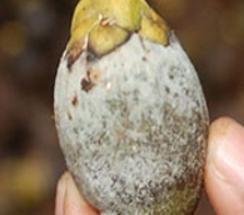
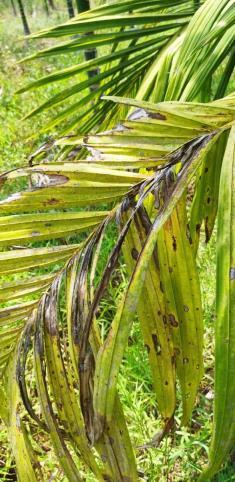
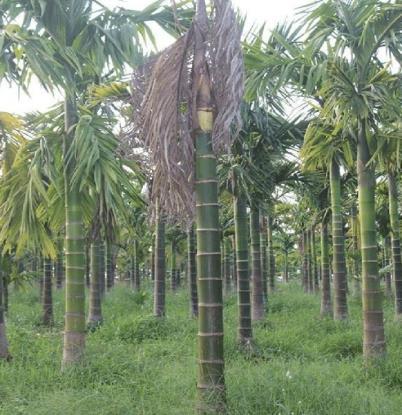
Typesofdisease
KolerogaorFruitrot
Overview
Mahaliisoneofthemajordiseases of Areca nut caused by phytophthora
Palmivora,afungalspecies.Thisis themajorcauseoflossesinAreca nutfarming and it causes decolorization of fruitsandearlyfallingofseeds
Yellow leaf disease, as the name suggests,isadiseasewhichaffects theleavesofArecanut,itchanges the green pigmented leaf into a yellow one. This is caused by a Phytoplasmapathogen.Itspreads throughplanthoppers.
ThefungusGanodermaisthecause of Anabe disease. It affects the roots of the plants which causes weakstemsinArecanuttrees.
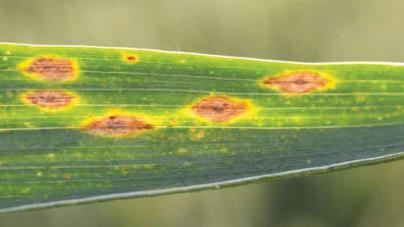
This disease is found in young plantsduetoexposuretosun.This majorly occurs in the summer monthsandremainstillmonsoon. Brownspotsarecommonlyfound on leaves. Shedding drying and droopingofleavesalsooccurwhen theplantisaffectedheavily.
International Research Journal of Engineering and Technology (IRJET) e-ISSN: 2395-0056
Volume: 11 Issue: 05 | May 2024 www.irjet.net p-ISSN: 2395-0072
Nutspilling
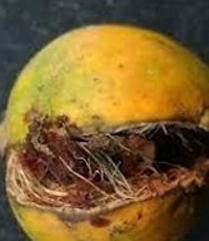
Thisdiseasecausesweightlossand occurs in fruits. The fruits start cracking leading to no yield from thediseasedseeds.Thesymptoms are early yellowing of seeds and the fruits develop a crack on the underside.Thisisafairlycommon diseaseinarecanutplants.
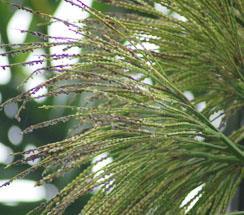
Inflorescencedie-backandButton shedding Thetreesinfectedwiththisdisease cause significant shedding of thumbbuttons.
The rachis starts yellowing and drying, the female flowers and buttonsstart shedding.
Basedontheliteraturesurvey,previousresearchhasdemonstratedtheapplicationofvariousdeeplearningmodelsfordisease detection, albeit with a focus on specific diseases. This current work aims to enhance disease detection across a broader spectrum by utilizing the Res-Net model. The choice of ResNet is attributed to its incorporation of skipping connections, effectively mitigating the vanishing gradient problem and thereby improving detection accuracy. The significance lies in assistingArecanutfarmerswithearlydiseasedetection,enablingthemtomakeinformedpreparationsandultimatelyreducing yieldloss.Themodelhasachievedanimpressiveaccuracyrateof97.5percent,demonstratingitsefficacy.Furthermore,there ispotentialforextendingthisapproachtoaddressvariousdiseasesaffectingArecanutandothercrops.
Arecanutcultivationisathrivingcommercialactivity,particularlyincoastaldistrictssuchasDakshinaKannada,Udupi,Uttara Kannada,Shimoga,Chikmagalur,andDavanagere.Despiteitshighdemand,thecropissusceptibletodiseasesinducedby spraying, climate changes, and chemical fertilizers, leading to financial burdens for farmers. In our study, we focus on employingmachinelearningandimageprocessingtoidentifyArecanutinfectionsearlyanddevelopeffectivepreventative measures.Byreducingfarmers'relianceonconventional methods,thisapproachaimstoenhancetheirunderstandingof specificdiseases,ultimatelybolsteringprofits.Emphasizingearlydetectiontocircumventunnecessarysprayingduringthe monsoon,themodelexhibitsastrategicapproach.Thisresearchholdssignificantpotentialtodiscoverandimplementefficient technologiesforoverallagriculturaldevelopmentinthebroaderfarminglandscape.
1. D.Harahap,PlantDiseasesofArecaNut,Rijeka:IntechOpen,2023.
2. W. contributors, “Areca nut production in India,” 2023. [Online]. Available: https://en.wikipedia.org/w/index.php?title=Areca_nut_production_in_India&oldid=1140717199.
International Research Journal of Engineering and Technology (IRJET) e-ISSN: 2395-0056
Volume: 11 Issue: 05 | May 2024 www.irjet.net p-ISSN: 2395-0072
3. V.S.r.Kathiresan,“Arecanut,”2022.[Online].Available:https://vikaspedia.in/agriculture/crop-production/packageof-practices/plantationcrops/arecanut.
4. P.V.H.M.H.Balanagouda,“Phytophthora diseasesofarecanutinIndia:priorfindings,presentstatus andfuture prospects,”IndianPhytopathology,2021.
5. P.S.V.K.M.B.U.P.B.P.B.Mallikarjuna,“Multi‐gradient‐directionbaseddeeplearningmodelforarecanutdisease identification,”IET,2022.
6. M.D.R.a.P.S,“ImageProcessingbasedArecanutDiseasesDetectionUsingCNNModel,”ISSN,2022.
7. M.K.H.P.DhanujaKC,“ArecaNutDiseaseDetectionusingImageProcessingTechnology,”ISSN,2022.
8. K.T.P.H.S.U.D.A.D.AnilkumarMG,“DetectionofDiseasesinArecanutUsingConvolutionalNeuralNetworks,”ISSN, 2021.
9. P. S. A. K. B. R. P. a. A. M. Balipa, “Arecanut Disease Detection Using CNN and SVM Algorithms,” International ConferenceonArtificialIntelligenceandDataEngineering(AIDE),no.10.1109/AIDE57180.2022.10060130,pp.01-04, 2022.
10. N. P. K. A. S. A. Mohammed Khalid Kaleema, “A Modern Approach for Detection of Leaf Diseases Using Image ProcessingandMLBasedSVMClassifier,”TURCOMAT,2021.
11. P. K. V. a. R. G. Rajashree Krishna, “Areca Nut Disease Dataset Creation and Validation using Machine Learning TechniquesbasedonWeatherParameters,”EngineeredScience,2022.
12. K.P.G.R.a.S.A.K.Rajashree,“PredictionoffruitrotdiseaseincidenceinArecanutbasedonweatherparameters,” AgronomyResearch,2022.
13. M.S.K.L.VinodKanan,“ArecanutYieldDiseaseForecastusingIoTandMachine Learning,”IJSREAT,2021