
International Research Journal of Engineering and Technology (IRJET) e-ISSN:2395-0056
Volume: 11 Issue: 05 | May 2024 www.irjet.net p-ISSN:2395-0072
International Research Journal of Engineering and Technology (IRJET) e-ISSN:2395-0056
Volume: 11 Issue: 05 | May 2024 www.irjet.net p-ISSN:2395-0072
Shyam Burkule1 , Ramprasad Chinthekindi 2
Abstract In recent times, the adoption of cloud object stores has been increasing fast due to their combination of important benefits, including high availability, elasticity, and a pricing model that enables applications to scale according to demand. Currently, the common approach is to either utilize a single set of configuration settings or depend on statically pre-set storage rules for a cloud object store deployment, even when the store is utilized to support various types of applications with changing requirements. The significant disparity between the specific demands and capabilities of the object store’s many applications is a pressing matter that needs to be resolved to attain optimal efficiency and performance. This investigation’s chief goal is to explore the performance and scalability of cloud object stores through research analysis. The study utilizes a comprehensive literature review methodology. This study examined a total of 30 papers that were published from 2018 to 2024. This research suggests that comparing the specifications and techniques of services offered by different cloud vendors can provide a more impartial assessment of the capacity and promise of cloud computing (CC) and object storage. This comparison helps eliminate bias risk and delivers a more accurate evaluation of the technology. The assessments yield significant information regarding the strengths and limitations of various cloud storage (CS) systems. This aids organizations in making educated decisions when choosing and improving their storage infrastructure to suit changing business requirements.
Index Terms Cloud Computing; Object Storage; Performance; Scalability; Cloud Storage Systems.
The proliferation of the Internet has led to the creation of numerouslittlefilesthroughWebapplications.Internetusers contribute to this by uploading massive quantities of photographs, movies, and music, while the daily exchange of emailsreachesthehundredsofbillions[1].Basedonstatistics fromtheInternetDataCentre(IDC),thedatawillgrowby44 times in the next decade. Out of this, 80% will be unstructured data, with most of it being inactive [2]. The blockstorageareanetwork(SAN)alongsidenetworkattached storage (NAS), which have petabyte-level expansion file storage potential, cannot manage such a massive volume of data. Typically, the size of a logical unit number (LUN) on a block storage area network (SAN) is limited to just a few terabytes (TB). CC effectively addresses concerns related to
scalability, resource allocation, and computing costs. It simplifies system operations and eliminates the need to understand intricate details of cloud technologies, thereby reducing the indirect cost of studying [3]. The primary providers of CC services are predominantly firms that specialize in the IT industry and provide solutions and servicesforCC.Thisincludesinfrastructure,datacenters,and varioustoolsassociatedwithCCplatforms.Cloudvendorslike Amazon Web Services (AWS), alongsideMicrosoft Azure, alongside Google Cloud Platform, alongside Red Hat, and VMwareeachpossessdistincttraitsandproductofferings[4].
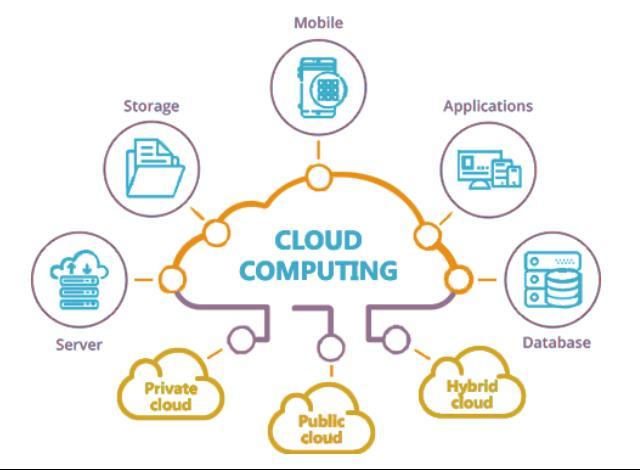
Fig.1:CloudComputing[5]
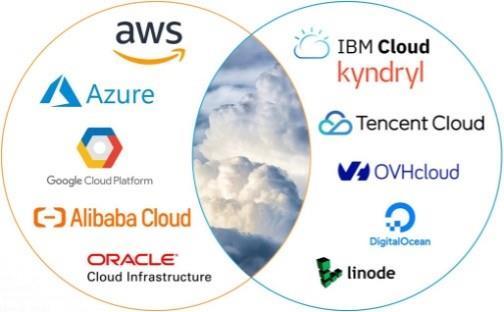
Fig.2:CloudComputingVendors[6]
International Research Journal of Engineering and Technology (IRJET) e-ISSN:2395-0056
Volume: 11 Issue: 05 | May 2024 www.irjet.net p-ISSN:2395-0072
The study on “Performance and Scalability Analysis of Cloud Object Stores” aims to assess the performance and scalability features of several cloud object storage systems. Thestudyseekstoprovideinsightsandrecommendationsfor optimizing the efficiency and scalability of CS infrastructure through comprehensive performance benchmarks and scalability tests. This investigation’s objectives are the following:
1) Toexploreperformanceandscalabilityanalysisofcloud objectstoresandtostudyaboutdifferentCSservices
2) To study the effects of novel developments in cloud object storage and to identify the emerging trends and futuredirectionsincloudobjectstorage.
1) What is the performance and scalability analysis of cloudobjectstores,andwhatarethevariousCSservices thatareavailable?
2) Whataretheimplicationsoftheadvancedfeaturesthat are available in cloud object storage, and what are the rising trends and future directions that are associated withcloudobjectstorage?
The increasing popularity and expansion of social media andtheInternetofThings(IoT)haveledtoasignificantshift inthedemandfortheallocationofcomputerresources. With the advent of the IoT era, there is a significant difficulty in meeting the computing resource demands of consumers globally [7]. Individual clients and businesses necessitate network services thatare moresecure,efficient,reliable,and user-friendly. The previous technique such as static routing and physical sever allocations of resources is founded on a localized and unchanging model. The processing capability is onlydeterminedbythelocalphysicalmachine,whichhinders the scalability of computing resources and fails to meet the time-sensitive demands of certain resource management tasks[8]. Therefore, the previous solutionsare inadequate in achieving greater competitiveness and efficiency. CC has emerged as a viable solution for meeting the demands of providing internet services while optimizing cost and performance, as opposed to traditional local computing. Due to the proliferation of computing services and advancements in Information Technology, CC is evolving into a framework that offers services to users, becoming an essential part of everydaylife[7].CCencompassesthedeliveryofapplications or services via the Internet, as well as the physical components, storage systems, and system software involved.
CCisaflexibleandscalableresourcepoolthatcaterstomany customers. It provides network access to users who need computational resources in a convenient manner. These resources can include networks, servers, applications, or storagesystems[8][2].
The study utilizes the Systematic Literature Review technique. This study employs the PRISMA approach to conduct a Performance and Scalability Analysis of Cloud Object Stores. PRISMA (Preferred Reporting Items for Systematic Reviews and Meta-Analyses) offers a methodical structure for discovering pertinent research, extracting crucial data, and combining findings to support decisionmakingbasedonevidence.
Thiswasaccomplishedbycreatingasearchstring(SS).The search terms consist of Performance analysis cloud object stores* OR Scalability evaluation cloud object storage* OR Cloud object store benchmarking* OR Performance metrics for cloud object storage* OR Scalability assessment of cloud object stores* OR Cloud object storage throughput analysis* OR Latency measurement cloud object stores* OR Performance comparison cloud object storage solutions* OR Cloud object storage workload analysis* OR Evaluation of cloud object store performance under load. The strings were used to extract the title and abstract sections. Only papers released between 2018 and 2024 were selected for assessment to concentrate on the most recent advancements inthearea.
ThetableIIpresentsthepotentialcriteriaforinclusionand exclusion in this systematic literature review on the investigation of performance and scalability in cloud object stores:
The data was collected by producing and evaluating the search phrase in several renowned databases. Once the references were imported using Endnote, they underwent a filtering process to eliminate any occurrences of duplication. Asaresult,agrandtotalof220papersremained,allofwhich were fully distinct from one another. Through a thorough examination of titles and abstracts, this study successfully identified papers that included the selected keywords. Subsequently, the created references were exported directly to an Excel spreadsheet with the intention of applying filters and conducting further analysis. Said spreadsheet contained information regarding the authors, alongside the year of publication,alongsidethetitle,alongsidetheabstract.So,the Excel spreadsheet includes a grand total of 189 research publications. All papers’ abstracts were examined in Excel, with a specific focus on the ones directly relevant to the
International Research Journal of Engineering and Technology (IRJET) e-ISSN:2395-0056
Volume: 11 Issue: 05 | May 2024 www.irjet.net p-ISSN:2395-0072
research objectives. Initially, 111 articles were found, but someofthemwereexcludedsincetheywereclassifiedasgrey literature, books, or parts of books. In addition, a portion of thearticleswerenotavailablefordownload,resultingintheir removalfromcirculation.Therewasatotalof26papersinthe finalshortlist.ThemethodusedtochoosearticlesfortheSLR during a literature search is depicted in a flow diagram (Figure3)thatbasesitselfonthePRISMAFlowDiagram.
CC data centers are built with a straightforward infrastructure that is designed to handle failures well. They employ cost-effective, specialized, expandable solutions, such as servers, alongside storage systems, alongside networking equipment, while also leveraging conventional delivery patterns and significant economies of scale [9]. CC data centers, on the other hand, do not buy pre-made equipment specifically made for the conventional mass-IT market. The cost of these solutions is excessive, and their features do not align with the specific needs of cloud-based data center infrastructureandapplicationnecessities.
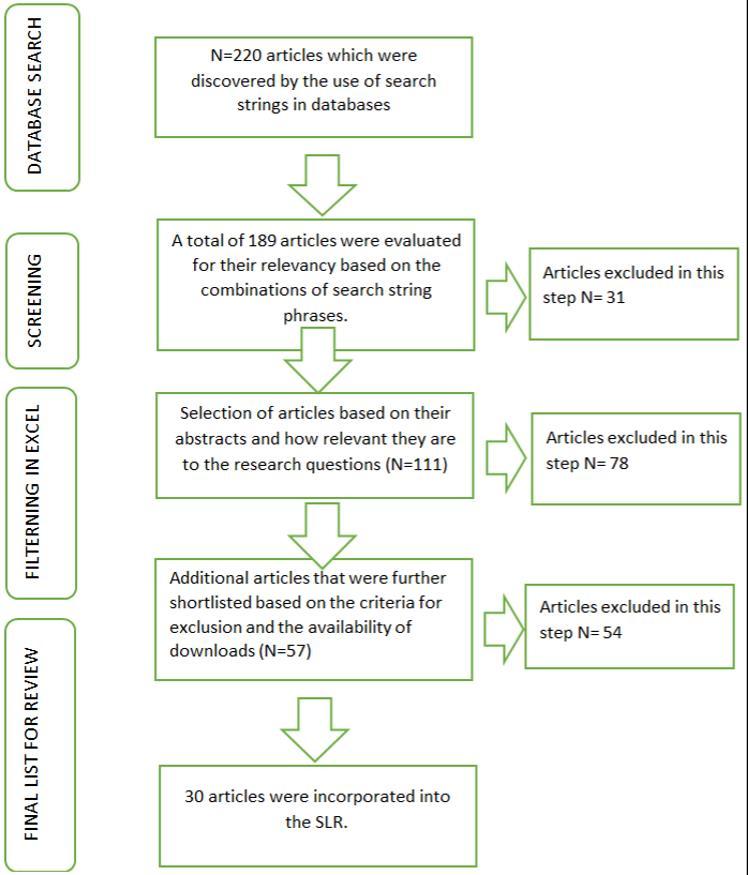
Fig.3:LiteraturesearchforSLRpublications.
International Research Journal of Engineering and Technology (IRJET) e-ISSN:2395-0056
Volume: 11 Issue: 05 | May 2024 www.irjet.net p-ISSN:2395-0072 © 2024, IRJET | Impact Factor value: 8.226 |
DigitalLibrary URL
Scopus https://wwwscopus.com/sources.uri?zone=TopNavBar&origin=searchbasic Semantic Scholar https://www.semanticscholar.org/
IEEEXplore https://ieeexplore.ieee.org/Xplore/home.jsp ScienceDirect https://wwwsciencedirectcom/ Springer https://link.springercom/ WebofScience https://wosjournal.com/ PubMed https://pubmed.ncbinlmnih.gov/
TABLEI:Relevantpublicationswereidentifiedfrominternetrepositoriesinthisstudy.
Criteria
TypeofStudy
Inclusion
AcademicResearchpapersandReview articles
Publicationdate Studiespublishedwithinthelast5years
Exclusion
Editorialsandopinions
Studiespublishedover5yearsago
SubjectAre Cloudcomputing,objectstorage IrrelevantSubjects
AccessAvailability Openaccessstudies
Studiesbehindpaywallsorlackingaccess
Peer–Review Peer-reviewedstudies Non-peer-reviewedstudies
TABLEII:Inclusion/ExclusionCriteria
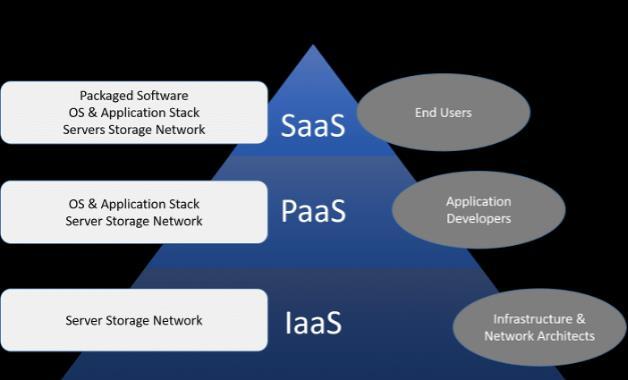
The services are categorized into three broad categorieswhichisillustratedinFigure4.
-0056
Volume: 11 Issue: 05 | May 2024 www.irjet.net p-ISSN:2395-0072
RQ1: What is the performance and scalability analysis of cloudobjectstores,andwhatarethevariousCSservices that areavailable?
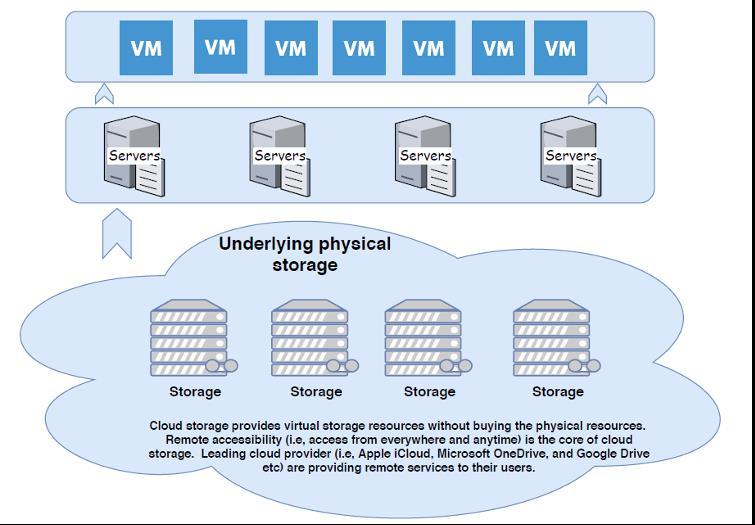
CS architectures focus primarily on providing storage as needed in a greatly scalable and multi-tenant manner. As technologyadvanced,usersexperiencedasignificantincrease in their computer needs. This led organizations to integrate additional processing and storage resources [11]. Implementing systems on a big scale necessitates significant effortsFig.4:CloudServicescite[10] and substantial costs, leading enterprise clients to delegate their computing and storage resources to external providers [12], [13]. Users lack complete autonomy over the computer resources accessible through the Internet cloud [14]. The research interest in CS is increasing due to the growing need fordata-intensiveapplications,whichresultsina doublingof storage capacity requirements and data usage per year. This spurredseveralbusinessenterprisestopursueanalternative cloud service known as ”on demand storage.” At present, storage providers are mostly focused on other areas of CS, such as cost concerns, performance challenges, and integrating numerous storage options [15]. The Figure 5 illustratestheconfigurationofthemasteranddatanodesina CSsystem.
Investing in performance incurs financial expenses. Performance and cost are effectively balanced in a wellarchitectedapplication.Toachievethis,itiscrucialtoalignan enterprise’s business performance needs with the appropriate technology. This,in turn, necessitates the firm to convert its requirements from business language to IT measurements[10].Duetothecomplexityofthistranslation, organizations frequently find themselves with inflexible IT architectures that are unable to satisfy the evolving performance needs of the company. Latency remains rather highduetotwoprimaryfactors:the
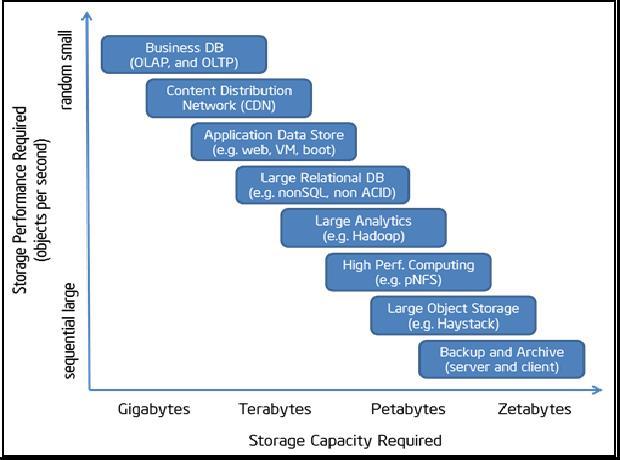
access mechanism utilized and the kind and configuration of the storage media being implemented [17]. The access method is a hierarchical arrangement of protocols that operate on top of the OSI Model’s physical layer. Data access that utilizes a shared physical layer, such as Ethernet, and multiplelayersofprotocols,typicallyresultsinhigherlatency comparedtoadedicatedphysicallayer,suchasFiberChannel, alongsiderunningFCP.Manymassmarketcloudservicesalso utilize the Internet for data access, resulting in increased latency in accessing data [18]. Figure 6 shows the capacity requiredvsstorageperformancerequired.
Scalability should be ensured for both the storage capacity (functionality scaling) and the data transfer rate to the storage (load scaling). One important aspect of CS is the capacity to distribute data geographically (geographic scalability),whichmeans thatthe data can belocated closest totheusersacrossmanyCSdatacenters(viamigration)[20]. Replication and dissemination of read-only data can be
International Research Journal of Engineering and Technology (IRJET) e-ISSN:2395-0056
Volume: 11 Issue: 05 | May 2024 www.irjet.net p-ISSN:2395-0072
achieved, as is commonly done through the utilization of contentdeliverynetworks[21].Figure7showsthescalability benefitsofcloudstorage.
This study specifically addresses the challenges pertaining to these two categories and provides a comprehensive analysis of potential resolutions for these issues. The Figure 8 illustratesthecommonissuesinCS.
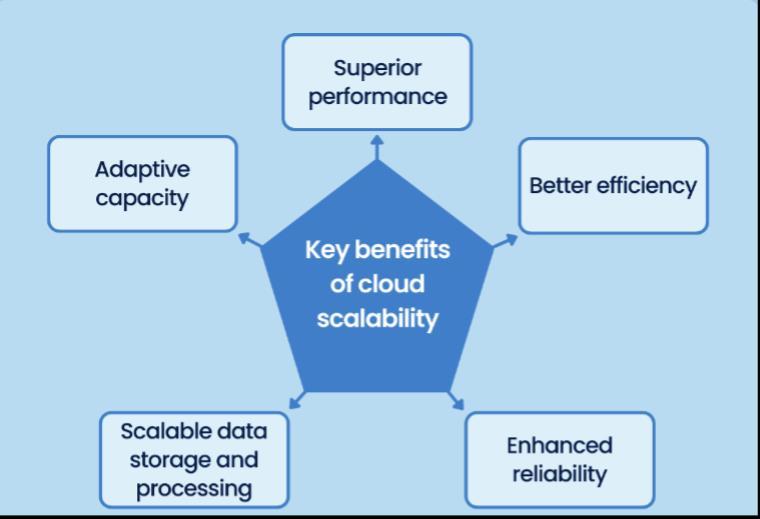
Fig.7:ScalabilitybenefitsofCloudStorage[22]
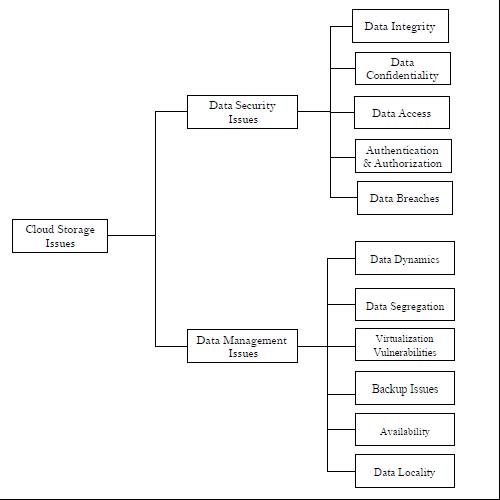
Fig.8:CloudStorageIssuescite[16]
2024, IRJET | Impact Factor value: 8.226 |
CSservicesareincreasinglyappealingtoindividualsasthey offertheabilitytosynchronizeinformationwithcloudservers andacrossmanydevices.Itenablesautomaticfilesharingand synchronizationacrossseveralusers.Thissectionprovidesan overviewofthreeprominentcloudobjectstorageservices:
AmazonS3providesarangeofstorageclassesdesigned to meet varied storage needs. These options consist of the Standard storage for commonly accessible data, referred to as general-purpose storage, the Standard Infrequentaccessstorageforinfrequentlyaccessedand long-lived data, and Amazon Glacier for archiving purposes. Policies are established to effectively govern dataoveritsentirelifespan.Onceapolicyisestablished, data migration straight to the most suitable storage class will occur automatically, without requiring any modifications to the application [22]. Amazon S3 Standard-InfrequentAccess(Standard-IA)isastorage option designed for less frequently accessed data, but stillrequiresquickaccesswhenrequired.TheStandard -IAoptionoffersexcellentperformanceintermsofhigh throughput, durability, and low latency. Additionally, it provides cost-effective pricing with a low rate per GB for both storage and retrieval. Standard - IA is an ideal choice for disaster recovery, alongside long-term storage, alongside backups because to its excellent performance and affordable price [23]. Amazon Glacier is a highly affordable, long-lasting, and secure storage solution designed for data archiving. It offers a dependable storage option forany quantityofdata at a lower or comparable cost compared to on-premises alternatives[24].
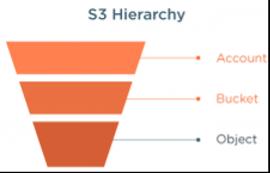
Fig.9:S3hierarchycite23[]
International Research Journal of Engineering and Technology (IRJET) e-ISSN:2395-0056
Volume: 11 Issue: 05 | May 2024 www.irjet.net p-ISSN:2395-0072
AuthorsandYears Feature Description Impacts
Kougkasetal.,(2020)[25] Auto-Tiering
Automaticallymovesdatabetweenstoragetiers
Deduplication
EdgeCatching
Identifiesandeliminatesduplicatedata
Cachesfrequentlyaccesseddataatthenetwork edges
Theprocessinvolvesplacingoftenaccesseddata in high-performance tiers, which results in reduced latency Additionally, it optimizes costs by transferring less frequently accessed data straighttolower-costtiers.
Enhancesstorageefficiencyandacceleratesdata processes by eliminating duplicate data, hence droppingstorespacenecessities.
Minimizes delay by delivering content from nearbycacheserversandenhancestheabilityto handle increased demand by diverting traffic awayfromthemainstoragesystems.
TABLEIII:Impactofadditionalfeaturesonperformanceoptimization
GCSisawell-knownCSserviceprovidedbyGoogle.Itis specifically designed to give flexible and long-lasting storage for various purposes, catering to both smallscale initiatives and major corporate applications. Below are few prominent characteristics and facets of GCS[25]:
a) GCS has extensive scalability, enabling you to store andretrievevastquantitiesofdataasrequired.Ithas thecapacitytohandledatasetsthatvaryinsizefrom a few gigabytes to petabytes or even larger. GCS stores data as objects, not files or blocks. Unstructured data like photographs, videos, and backupscanbestoredinobjectswithdata,metadata, andauniqueidentifier.
b) GCS offers exceptional longevity for stored data. It duplicates data among various locations and storage systems within a specific area to guarantee the accessibilityandresilienceofdata,eveninthecaseof hardwarefailuresorotherinterruptions.
c) This service provides comprehensive security safeguardstosafeguardyourdata.
d) GCS seamlessly connects with other Google Cloud Platform (GCP) services, counting Compute Engine, BigQuery,andAIPlatform.
e) GCS utilizes a flexible pricing structure that enables you to just pay for storage and data transfer you consume.
f) GCS boasts a worldwide footprint, featuring numerousstoragefacilitieslocatedacrosstheglobe.
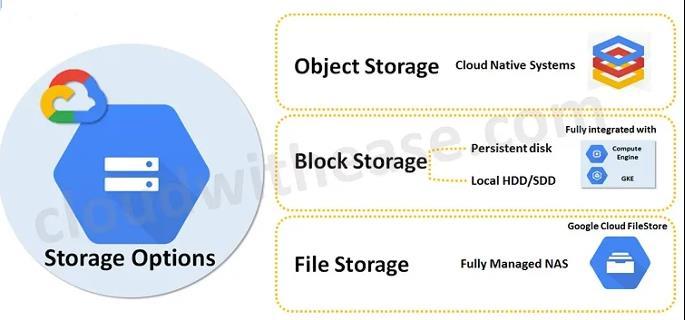
Fig.10:GoogleCloudstorageoptions[26]
3) MicrosoftAzureBlogStorage
Blob Storage, or Object Storage, is a storage system specifically designed for storing unstructured object data. A blob can refer to either binary data or even any sort of text. The file can be a document, application installer or evenmediafile.AzureStorageofferstwostoragelevelsfor Blobobjectstorage,allowingdatatobestoredinthemost cost-effectivemannerbasedonitsutilization[24].
a) TheAzurehotstoragetierisdesignedforthestorage of data that is accessed frequently. Data need exceptional durability, availability, and expedient accessibility.
b) The Azure cool storage tier is designed for the storage of data that has a long lifespan and is accessed infrequently. Data necessitates a high level of durability and comparable time-to-access
International Research Journal of Engineering and Technology (IRJET) e-ISSN:2395-0056
Volume: 11 Issue: 05 | May 2024 www.irjet.net p-ISSN:2395-0072
alongside throughput as hot data. However, it can withstandslightlyloweravailability.
To guarantee optimal accessibility and long-lasting preservation, the data within the storage account is consistently copied. Depending on the chosen replication option, data is either duplicated to a secondary data center or within the same data center. Through the process of replication, the preservation of data availability is ensured, and data is safeguarded againstanypotentialhardwarefailures.Replicatingdata toasecondarydatacenterhasthebenefitofpreserving and safeguarding data in case a catastrophic failure at thefirstlocation.MicrosoftAzurestorageaccountoffers variousreplicationoptions:
a) Locally redundant storage (LRS) maintains three data copies in a single data center and region. It safeguardsdatafromtraditionalhardwarefailures, butnotfromasingledatacenterfailure.Discounts areavailableforLRS.
b) Zone-redundant storage (ZRS) keeps three copies ofdataacrosstwotothree sites,regions,orinside a region. It has better durability than LRS. It verifies data durability within a particular region. After selecting ZRS, it cannot be changed to anotherreplicationtype.
c) Geo-redundantstorage (GRS),Data isstoredinsix copies. Having three copies in the primary and secondary regions ensures maximum endurance. Azure Storage switches to the backup region in case of primary region failure. It ensures data durabilityintworegions.
d) Read-access geo-redundant storage (RA-GRS) replicates data to a secondary place and allows read access. If the first site fails, the secondary location can access data. Replication defaults to RA-GRS.
RQ2:Whataretheimplicationsoftheadvancedfeatures that are available in cloud object storage, and what are the rising trends and future directions that are associatedwithcloudobjectstorage?
a) Impacts of advanced features: Advanced functionalities such as auto-tiering, deduplication [27], and edge caching can greatly enhance performance optimization in cloud object storage systems. The Table III illustrates the individual contributions of each feature towards enhancing
performance: Cloud object storage systems must effectively tackle scalability concerns to efficiently manage large amounts of data and accommodate high levels of concurrency. Below is an examination of how various systems effectively handlethesechallenges:
a) Horizontal Scalability: Cloud object storage solutions are specifically built to achieve horizontal scalability,whichmeanstheycaneffortlesslyexpand by incorporating additional storage nodes or clusters as the data volume increases. This method of horizontal scaling guarantees that the storage capacity can be expanded without causing substantialinterruptionstocurrentprocesses[28].
b) Distributed Architecture: Cloud object storage systemscommonlyutilizeadistributedarchitecture, in which data is spread across numerous storage nodes or data centers. The distributed structure of this system enables data redundancy, fault tolerance, and load balancing, which guarantees high availability and reliability, even in case of hardwarefailuresornetworkdisruptions[29][30].
c) Catching and Content Delivery Networks: To enhance efficiency and manage large numbers of simultaneous users, cloud object storage systems can utilize caching methods and content delivery networkstostorefrequentlyaccesseddataincloser proximitytoend-usersorapplicationservers[29].
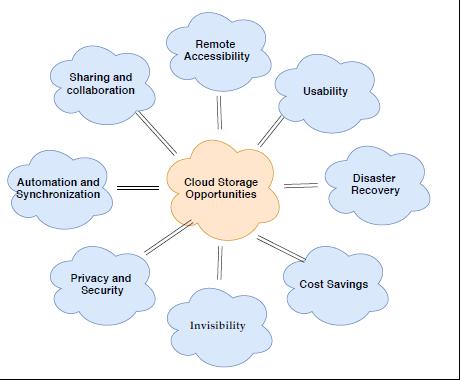
Fig.11:OpportunitiesofCloudObjectstoresystems[16]
4) Emerging trends and future directions in cloud object storage: The future of CC is nothing short of a visionary
International Research Journal of Engineering and Technology (IRJET) e-ISSN:2395-0056
Volume: 11 Issue: 05 | May 2024 www.irjet.net p-ISSN:2395-0072
concept. The integration of artificial intelligence in items such as self-driving vehicles, the interconnected network of IoT devices, and the implementation of 5G connection arerevolutionizingthe way peoplelive. The ITindustry is undergoing rapid and transformative changes. The straightforward and user-friendly interface, absence of cost and capacity limitations, and numerous other characteristics are appealing to both individual users and the market. Due to the swift advancement in smart technology, there is an increasing focus on CS. In addition to AI, block chain technology is enhancing the safety alongside security of CS. The maturity of this storage technology will enhance client confidence in cloud services.Thediagrambelowdepictstheprospectivepaths of CS [31]. Figure 11 shows the opportunities of cloud objectstoresystems.
CC, alongside its interconnected technologies, is a rapidly evolving technology that is significantly transforming traditional computing. Additionally, it is shown that despite theconvenienceandcostadvantages,CStechnologystillfaces variouschallenges. The CS architectureis primarily obscured bysecurityconcerns,suchasconfidentiality,access,integrity, authentication,databreaches,andauthorization.Additionally, there are data management difficulties related to dynamics, alongside data segregation, virtualization, and backup. Nevertheless, significant research endeavors are required to entice clients, particularly commercial and enterprise customers,toutilizeCSforstoringtheircriticaldata.
[1] M. S. Aslanpour, S. S. Gill, and A. Toosi, “Performance evaluation metrics for cloud, fog and edge computing: A review, taxonomy, benchmarks and standards for future research,” Internet of Things,vol.12,p.100273,082020.
[2] Y. Wang, “An analysis of performance and potential of cloud computing and object storage.” Ph.D. dissertation, ResearchSpace@Auckland,2022.
[3] A.V.Papadopoulos,L.Versluis,A.Bauer,N.Herbst,J. Von Kistowski,A.Ali-Eldin,C.L.Abad,J.N.Amaral,P.Tma,and A. Iosup, “Methodological principles for reproducible performance evaluation in cloud computing,” IEEE Transactions on Software Engineering, vol. 47, no. 8, pp. 1528–1543,2019.
[4] V.Bucur,C.Dehelean,andL.Miclea,“Objectstorageinthe cloud and multi-cloud: State of the art and the research challenges,” in 2018 ieee international conference on
automation, quality and testing, robotics (aqtr). IEEE, 2018,pp.1–6.
[5] Medium. A primer on cloud computing. [Online]. Available: \url{https://medium.com/@colinbaird 51123/a-primer-on-cloud-computing-9a34e90303c8}
[6] M. Zhang. Top 10 cloud service providers globally in 2024.[Online].Available:\url{https://dgtlinfra.com/topcloud-service-providers/}
[7] O. Ozeri, E. Ofer, and R. Kat, “Object storage for deep learning frameworks,” in Proceedings of the Second Workshop on Distributed Infrastructures for Deep Learning,2018,pp.21–24.
[8] R. Patgiri, S. Nayak, and S. K. Borgohain, “Impact of metadata server on a large scale file system,” in 2018 IEEE Colombian Conference on Communications and Computing (COLCOM) IEEE,2018,pp.1–6.
[9] A. Rashid and A. Chaturvedi, “Cloud computing characteristicsandservices:abriefreview,” International Journal of Computer Sciences and Engineering,vol.7,no.2, pp.421–426,2019.
[10] O.Alzakholi,H.Shukur,R.Zebari,S.Abas,M.Sadeeq et al., “Comparison among cloud technologies and cloud performance,” Journal of Applied Science and Technology Trends,vol.1,no.1,pp.40–47,2020.
[11] P. Pierleoni, R. Concetti, A. Belli, and L. Palma, “Amazon, google and microsoft solutions for iot: Architectures and aperformancecomparison,” IEEE access,vol.8,pp.5455–5470,2019.
[12] Y. Tao, P. Xu, and H. Jin, “Secure data sharing and search for cloudedge-collaborative storage,” IEEE Access, vol. 8, pp.15963–15972,2019.
[13] S. Qiao, Q. Zhang, Q. Zhang, F. Guo, and W. Li, “Hybrid seismicelectrical data acquisition station based on cloud technologyandgreeniot,” IEEE Access,vol.8,pp.31026–31033,2020.
[14] C. K. Pyoung and S. J. Baek, “Blockchain of finite-lifetime blockswithapplicationstoedge-basediot,” IEEE Internet of Things Journal,vol.7,no.3,pp.2102–2116,2019.
[15] H. Garg and M. Dave, “Securing iot devices and securelyconnecting the dots using rest api and middleware,” in 2019 4th International Conference on Internet of Things: Smart Innovation and Usages (IoTSIU) IEEE,2019,pp.1–6.
International Research Journal of Engineering and Technology (IRJET) e-ISSN:2395-0056
Volume: 11 Issue: 05 | May 2024 www.irjet.net p-ISSN:2395-0072
[16] A. Ghani, A. Badshah, S. Jan, A. A. Alshdadi, and A. Daud, “Cloud storage architecture: research challenges and opportunities,” arXiv preprint arXiv:2004.06809,2020.
[17] N. Mungoli, “Scalable, distributed ai frameworks: Leveraging cloud computing for enhanced deep learning performance and efficiency,” arXiv preprint arXiv:2304.13738,2023.
[18] P. Yang, N. Xiong, and J. Ren, “Data security and privacy protectionforcloudstorage:Asurvey,” Ieee Access,vol.8, pp.131723–131740,2020.
[19] Cloud storage architecture. [Online]. Available: \url{https://www.semanticscholar.org/ paper/Cloud-storage-architecture-Kulkarni-Waghmare/ e11be6c882c27ff07e4b232533ca3edce83634d1}
[20] G. Blinowski, A. Ojdowska, and A. Przybyłek, “Monolithic vs. microservice architecture: A performance and scalability evaluation,” IEEE Access, vol. 10, pp. 20357–20374,2022.
[21] M.Perron,R.CastroFernandez,D.DeWitt,andS.Madden, “Starling: A scalable query engine on cloud functions,” in Proceedings of the 2020 ACM SIGMOD International Conference on Management of Data,2020,pp.131–141.
[22] A. Krysik. Cloud computing scalability: Empowering businesses to scale with ease. [Online]. Available: \url{https://stratoflow.com/ cloud-computingscalability/}
[23] C. Manthiramoorthy, K. M. S. Khan et al., “Comparing several encryptedcloud storage platforms,” International Journal of Mathematics, Statistics, and Computer Science, vol.2,pp.44–62,2024.
[24] Z. Daher and H. Hajjdiab, “Cloud storage comparative analysis amazon simple storage vs. microsoft azure blob storage,” International Journal of Machine Learning and Computing,vol.8,no.1,pp.85–9,2018.
[25] I. Drago, E. Bocchi, M. Mellia, H. Slatman, and A. Pras, “Benchmarkingpersonalcloudstorage,”in Proceedings of the 2013 conference on Internet measurement conference, 2013,pp.205–212.
[26] What are gcp storage options.[Online]. Available: \url{https: //cloudwithease.com/googlecloud-storage-options/}
[27] A. Duggal, F. Jenkins, P. Shilane, R. Chinthekindi, R. Shah, and M. Kamat, “Data domain cloud tier: Backup here,
backupthere,deduplicatedeverywhere!”in 2019 USENIX Annual Technical Conference (USENIX ATC 19), 2019, pp. 647–660.
[28] Q. Jiang, Y. C. Lee, and A. Y. Zomaya, “The limit of horizontal scaling in public clouds,” ACM Transactions on Modeling and Performance Evaluation of Computing Systems (TOMPECS),vol.5,no.1,pp.1–22,2020.
[29] A.Khelaifa,S.Benharzallah,L.Kahloul,R.Euler,A.Laouid, and A. Bounceur, “A comparative analysis of adaptive consistency approaches in cloud storage,” Journal of Parallel and Distributed Computing, vol. 129, pp. 36–49, 2019.
[30] R. Chinthekindi, S. Burkule, and A. K. Chintakindi, “A comparative analysis of popular distributed key-value stores,” International Journal of Science and Research (IJSR),vol.13,pp.1730–1734,2024. [Online]. Available: \url{https://www.ijsr.net/getabstract.php?paperid= SR24426081530}
[31] R. Buyya, S. N. Srirama, G. Casale, R. Calheiros, Y. Simmhan, B. Varghese, E. Gelenbe, B. Javadi, L. M. Vaquero, M. A. Netto et al., “A manifesto for future generation cloud computing: Research directions for the next decade,” ACM computing surveys (CSUR), vol. 51, no. 5,pp.1–38,2018.