
International Research Journal of Engineering and Technology (IRJET) e-ISSN: 2395-0056


Volume: 11 Issue: 05 | May 2024 www.irjet.net p-ISSN: 2395-0072
International Research Journal of Engineering and Technology (IRJET) e-ISSN: 2395-0056
Volume: 11 Issue: 05 | May 2024 www.irjet.net p-ISSN: 2395-0072
Satish
Dekka1 , Karanam Prameela2 , Padala Mohan Anantha Rama Reddy3 , Manapuram Sai Charan4 , Kadali Varahala Bhagya Sri5
1 Associate Professor, Dept. of Computer Science Engineering, Lendi Institute of Engineering and Technology Vizianagaram, India
2-5B.Tech Final Year, Computer Science Engineering, Lendi Institute of Engineering and Technology Vizianagaram, India ***
Abstract Deep learning is currently the mainstream method of object detection. This project introduces a novel approach that enhances real-time object detection by integrating the You Only Look Once (YOLO) algorithm with Fast SMS capabilities. Our proposed system leverages the strengths of YOLO to handle complex scenarios such as occlusion, deformation, and small object sizes. The system's architecture involves the integration of Deep learning with Fast SMS Services, enabling real-time detection and interaction with the physical environment. This fusion of advanced deep learning with Fast SMS offers a comprehensive solution for efficient and responsive object detection in dynamic environments. Trained on nearly 40 classes, the trained model uses Darknet for class implementation. As a real-time object detector, the system detects objects while the webcam is on and sends messages to mobile phones using Fast SMS Service. The integration of both deep learning and Fast SMS Service enables efficient and rapid identification of objects in streaming video feeds. The system leverages the power of YOLO's single-pass architecture for simultaneous detection of multiple objects with high accuracy. The detected object information is seamlessly communicated to different devices, facilitating quick decision making and response in various applications such as smart surveillance, automated monitoring, and real-time analytics.
Keywords DeepLearning,ObjectDetection,YouOnly Look Once (YOLO) Algorithm, Fast SMS, Smart Surveillance,Real-TimeAnalytics.
Overtheyears,variousstrategieshavebeenproposedto addressthechallengeofobjectidentification,withafocus on multi-stage solutions. These approaches typically involve stages such as recognition, classification, localization, and object detection. However, despite technological advancements, these techniques have encountered challenges related to output accuracy, resource costs, processing speed, and complexity. The

development of Convolutional Neural Network (CNN) algorithms, starting with the Neocognitron-inspired algorithm in the 1990s by Yann LeCun et al., marked a significantmilestoneinobjectdetection.Thiswasfurther advanced by AlexNet, which achieved a groundbreaking victory in the ImageNet Large Scale Visual Recognition Challenge(ILSVRC)in2012.
These CNN algorithms have since been instrumental in offering solutions to object detection problems using variousapproaches.To enhancetheaccuracyandspeed of the recognition, subsequent optimization-focused algorithms have been introduced. Notable examples includeVGGNet,GoogLeNet,andDeepResidualLearning (ResNet), which have been developed over the years. Thesealgorithmshaveplayedacrucialroleinadvancing object detection capabilities, pushing the boundaries of what is achievable in terms of accuracy and efficiency. Computer vision and visual processing of images and tones have traditionally been significant for large organizations with the resources to invest in advanced technology.
However,theadventofaffordablecomputersandmassproduced devices like YOLO (You Only Look Once) has democratized these capabilities. YOLO, originally developed for commercial and academic purposes, now enables enthusiasts worldwide to develop software and real-time embedded programs that can process images using current hardware standards. The applications of software for object detection and computer vision are diverse and abundant. Examples range from tracking visitorsinshoppingmallsandfacerecognitionsystemsto monitoring equipment, assisting robots, analyzing productlabels,anddeeplearningprojects.
This Bachelor's Thesis aims to create a database on embedded systems, real-time image processing, and visualeffectstoexplorefurtherlayersofcomplexityand

Volume: 11 Issue: 05 | May 2024 www.irjet net
research. The goal is to build projects based on more affordable and less real-time visual effects compared to sophisticated systems, such as self-learning robots and smart machines capable of visual feedback. Object detection is one of the most exciting applications of convolutionalneuralnetworksincomputervision.Apart from simple image classification, object detection is associated with various applications, including selfdriving vehicles that integrate computer vision, LIDAR, and other technologies to create comprehensive street representations. There is a misconception that trainingbased analysis outperforms legal incentive methods when the training and test data come from the same source.
However, if this is not the case, the performance of the training-based compound could be poor, potentially worsethanusingasingledetector.Themainobjectiveof theprojectistoorganizeaC/C++programwiththehelp of OpenCV libraries for use in UNIX-based embedded systems,specificallyYOLO.Theprogram'sgoalistodetect coloredbulbsinalivecamerafeed,keeptheminmemory under certain conditions to monitor their interactions andproperties,andsendusefulinformationaboutthese objectsasdatagramsusingnetworkconnectionswiththe UDPprotocolforanysoftwareapplication.Theproject's focus on affordable and less real-time visual effects compared to sophisticated systems opens up new possibilitiesforawiderangeofapplications.
By leveraging the capabilities of YOLO and OpenCV libraries, the project aims to enable the development of innovativesolutionsthatwerepreviouslylimitedtohigh end systems. This approach not only reduces costs but also democratizes access to advanced computer vision technologies, allowing a broader community to participateinthedevelopmentofintelligentsystems.One key aspect of the project is its potential impact on industries that can benefit from real-time object detection and visual processing. For example, in manufacturing,theabilitytoaccuratelydetectandtrack objectsinrealtimecanenhancequalitycontrolprocesses andimproveoverallefficiency.
Similarly,in2surveillanceandsecurity,real-timeobject detectioncanhelpidentifypotentialthreatsandimprove response times. By exploring these applications and pushing the boundaries of affordable visual processing, the project aims to contribute to the advancement of various industries and technologies. The project's exploration of object detection using convolutional neural networks (CNNs) and OpenCV libraries, particularly focusingondetecting-coloredbulbsinlivecamerafeeds, haspracticalimplications.Bysuccessfullyimplementing suchasystem,itcouldbedeployedinvarioussettings.For


p-ISSN: 2395-0072
example,insmarthomeapplications,thesystemcouldbe used to monitor and control lighting based on the presenceorabsenceofindividualsina room, leadingto energysavingsandenhancedusercomfort.Inindustrial settings,thesystemcouldbeusedforautomatedquality control, where the detection of colored markers on productscouldindicatespecificcharacteristicsordefects. Furthermore,theproject'sintegrationofreal-timeimage processing with embedded systems opens up possibilitiesforapplicationsinroboticsandautomation.
For instance, in warehouse environments, robots equipped with such technology could navigate through clutteredspacesmoreeffectively,avoidingcollisionsand optimizingtheirpaths.Similarly,inagriculturalsettings, dronesequippedwiththesecapabilitiescouldbeusedfor crop monitoring and management, providing farmers withvaluableinsightstoimprovecropyields.
TheuseoftheUserDatagramProtocol(UDP)forsending information about detected objects to software applicationsaddsalayerofconnectivityandversatilityto theproject.Byutilizingnetworkconnections,thesystem canseamlesslyintegratewithotherdevicesandsystems, enabling complex interactions and workflows. This aspectoftheprojectnotonlydemonstratesthepractical implementation of object detection but also showcases the potential for interconnected systems to enhance efficiencyandfunctionalityinvariousdomains.
M Kristo et al., [1] proposed that Dangers from global psychological oppressors and illicit migrants have strengthenedworriesforthewellbeingofresidents,and each exertion has been made to use all innovative advances to forestall significant occurrences and to ensure individuals and property. M Haroon et al., [2] examines that issue of high-goal advanced picture securing by distant detecting by presenting a mediumsizedwordreferencenovelwithasatellitepicturename, amulti-dimensionalpictureinformationbase(SIMD)and a solitary travel object outline intended for multidisciplinary sees.W Fang et al., [3] proposed the Tinier YOLO, the fire module at SqueezeNet was chosen by examining the quantity of fire modules and their situations in the model to lessen the quantity of model boundariesanddecreasethemodelsize.SBiroguletal., [4] are Getting persistent measures and experiences in the visual markers of a theory mechanical assembly in the pastrequiresasubstitutepointofviewonthediagrams. improvement of the theory thing over the 2D light diagram. The model issetupin the front-linestructure. WWuetal.,[5]Itisplannedforissueswiththedisclosure oftheelectricalconnector,forexample,lowrobotization,

International Research Journal of Engineering and Technology (IRJET)
Volume: 11 Issue: 05 | May 2024 www.irjet.net
low obtaining precision, slow procurement speed, and heartiness, and This paper introduces an enhanced YOLOv3algorithmdesignedforthedetectionofelectrical connections.QXuetal.,[6]Theaccessibilityoftrafficdata during drivingiscritical tothedriver.Be thatasitmay, driversareregularlyincapabletoseenumeroussnippets of data immediately, which unavoidably builds certain dangers.XWangetal.,[7]Theproposedstructureinthis paper can be utilized in clinical analysis, since test settingsareadaptableandrecognitionisquick.Thedata setoutinthisrecordisgivenbyFPMitself.KJKimetal., [8] Ongoing exploration on inside and out learning has indicatedagreatdealofeliteexecutionthathasnotbeen accomplished with conventional AI procedures. Particularlyinthefieldof articleprocurement,business itemswithhighexactness10inrealityareutilizedfortop tobottomlearningstrategies.VPaidietal.,[9]Stopping hasbeenatypicalissueforquitealongwhileinnumerous urban areas around the globe. Interest for stopping prompts blockage, disappointment and expanded air contamination. Numerous insides and out learning organizations. S Guennouni et al., [10] Item disclosure pulled in a ton of interest because of the wide scope of uses it employments. Visual sharpness innovation is driven by the intensity of persistent execution found in programming and equipment. M Kushal et al. [11] The fundamental reasonfora PCvisionistodistinguishand perceive an assortment of objects of various sizes, surfaces,andshapes.Themostseriousissuesconfronting PC vision are edificationand item insight, Harini et al., [12]ThisexistingsystemproposedthatR-CNNwasone oftheearlyapproachesforobjectdetection,whichrelied onregionproposalsfollowedbyclassification.Itachieved state-of-the-artresultsbutsufferedfromslowprocessing speedsduetoitsmulti-stagearchitecture.KEYOUGUOet al.,[13]Approacheslikefeaturepyramidnetworks(FPN) and spatial pyramid pooling (SPP) enable models to capture object information at various scales, facilitating accurate detection of objects of different sizes. Tanvir Ahmad et al., [14] system proposed that deep learningbased object detection methods like Faster R-CNN, SSD, and YOLO have shown superior performance compared to traditional methods, leveraging CNNs for feature extraction and classification. Dekka et al., [15][16]Crop yield forecasting is a crucial aspect of precision agriculture. Crop yield forecasts are required for thorough planning, policy development, and execution for choices regarding, among other things, the procurement, distribution, price fixing, and importexport of crops. The major goal of this research is to recommend to farmers the best crop based on sitespecific information such as soil PH level, temperature, humidity. Breast cancer has recently become a highly seriousdisease,notjustinIndiabutalsoinothernations. The primary goal of this research is to diagnose breast
p-ISSN: 2395-0072
cancer patients as early as possible. Three machine learning approaches Decision Tree, Support Vector Machine, and Logistic Regression are employed for the earlydetectionandpreventionofbreastcancerpatients.
The implementation of the Smart Alerting System using realtime object detection with deep learning involves several key steps and technologies. Firstly, the project leverages the You Only Look Once (YOLO) algorithm, which is known for its efficiency in detecting objects in images.YOLOseestheentirepictureduringbothtraining and testing, allowing it to fully integrate the content of classes and their appearance. This is crucial for our project, as we need to accurately detect and classify objectsinreal-timescenarios.
TheYOLOalgorithmstartsbytakinganinputimageand dividing it into different grids. Each grid is then characterized and limited, with YOLO predicting bounding boxes and object class probabilities. This process enables the algorithm to learn automated representationsofobjects,makingiteffectiveforawide range of applications, including real-time object detection.
To train the YOLO model, a large dataset of images containingvariousobjectswithboundingboxesandclass labels is used. The network architecture is designed specifically for object detection, with a deep convolutional neural network (CNN) used to predict bounding boxes and class probabilities for potential objects in an image. The model is trained in two stages, with a predictor aiming to predict accurate bounding boxes and class probabilities, and a loss calculator evaluatingthepredictions'accuracy.
After training, the model is evaluated on a separate validationdataset,andfine-tuningmaybedonebasedon theevaluationresults.Intheobjectdetectionphase,the pre-trained YOLO model is loaded, and the webcam is initializedtocapturevideoframes.Thecapturedframes are preprocessed and passed through the YOLO model for objectdetection.Detectedobjectsexceedingaminimum confidence threshold trigger SMS alerts containing the object information, providing real-time monitoring and alertingcapabilities.
Overall, the Smart Alerting System integrates advanced object detection techniques with real-time monitoring andalertingcapabilities,makingitsuitablefora variety of applications such as security surveillance, traffic monitoring, and more. The project demonstrates the powerofdeeplearningandcomputervisionincreating
International Research Journal of Engineering and Technology (IRJET)
Volume: 11 Issue: 05 | May 2024 www.irjet.net
intelligentsystemsthatcanenhancesafetyandefficiency invariousenvironments.
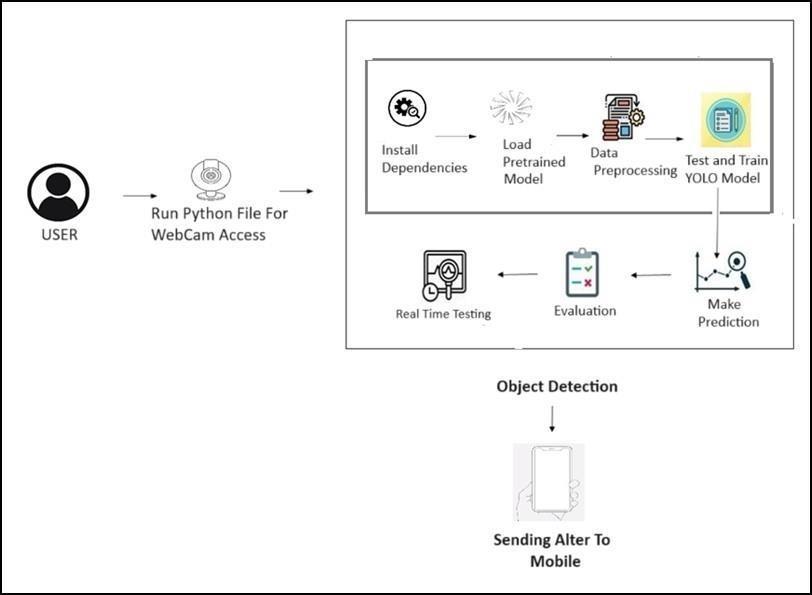
The initial step involves executing a Python scriptthatutilizesOpenCVorasimilarlibrarytoaccess the webcam. This allows the system to capture a live video feed that will be used for real-time object detection.Beforerunningthemaincode,it'sessentialto install the required libraries and dependencies. This typically includes libraries like OpenCV for computer vision tasks, NumPy for numerical computations, and requests for sending alerts. After, a pretrained YOLO (YouOnlyLookOnce)modelwhichistrainedonacoco dataset is loaded. YOLO is a popular 19 deep learning model known for its speed and accuracy in object detectiontasks.Thepretrainedmodelhasbeentrained onalargedatasetcalledCOCODatasetandcandetecta variety of objects. Data Preprocessing Before feeding the video frames to the YOLO model, it's essential to preprocessthem.Thismayincluderesizingtheframes to match the input size expected by the model, normalizing the pixel values, and possibly converting thecolorspaceifneeded.TestandTrainYOLOModelIf the pretrained YOLO model does not provide satisfactoryresultsforthespecificobjectdetectiontask, further training may be required. This involves using labeleddatasetstotrainthemodelonspecificobjectsor classesrelevanttothesmartalertingsystem.
OncetheYOLOmodelisloadedandready,itcan be used to make predictions on the live video feed. The modelwillanalyzeeachframeanddetectobjectspresent
p-ISSN: 2395-0072
in the scene along with their locations. After making predictions,thesystemcanevaluatethe performanceof the YOLO model. This typically involves calculating metricssuchasaccuracy,precision,recall,andF1scoreto assesshowwellthemodelisdetectingobjects.Withthe YOLO model in place, the system can perform real-time testingbycontinuouslyanalyzingthelivevideofeed.The modelshouldbeabletodetectobjectsastheyappearin thesceneandprovidealertsifnecessary.
When a specific object or event of interest is detected,thesystemcantriggeranalert.Thisalertcanbe sentviavariouscommunicationchannels,suchasemail, SMS, or through a mobile app. In now, continuously detect objects in the environment using the pre-trained YOLO model. Whena newobjectisdetected,generateanalert message indicating the presence of the object. Message Sending: Send the alert message to predefined mobile phone numbers using the Fast2SMS API or a similar service.Waitforaconfirmationoracknowledgmentfrom theusertostopsending alertsfor the detectedobject.End Monitoring:Stopmonitoringandsendingalertswhenthe userstopstheexecutionbyEscKey.
YOLOseesthewholepictureduringtrainingandtesttime and therefore fully integrates the content of the classes and their appearance. YOLO learns automated presentationsofobjectssothatwhentheyaretrainedin naturalimagesandtestedinart,thealgorithmsurpasses otheradvancedacquisitionmethods.
NowthatwehaveunderstoodwhyYOLOissuchaviable foundation, let’s get into its practical reality. In this section, Imentionedthestepsfollowed by YOLO to find itemsincertainimages.
• TheYOLObeginswithtakingainputimage:
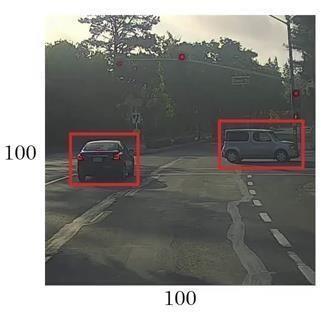
Fig. Creating bounding boxes for objects
• Theframeworkfurtherdividesaninputinto differentgrids:
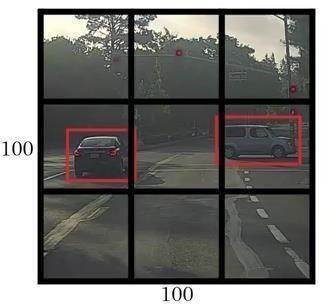
Fig. Grid Creation
• Characterizationandconstraintsareappliedtoeach gridintheimage.YOLOpredictsresponsibilityboxes and their comparing object learning openings (if accessible,obviously).
• Truth be told, right? How about we separate each progression so we can get a clearer comprehension of whatwehaverecentlyperused.
• We need to move the marked data to the model to shape it. Assume we split the picture into a matrix size3X3andthereisasumof3classesthatweneed thingstobeisolatedinto.AssumethePedestrian,Car, andMotorcycleclassesindividually. Inthismanner,foreverycelloftheframework,
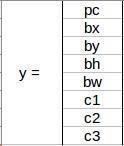
Fig. Labels of detected objects
• where, the pcintablespecifiesisanobject exists in position or not the bx and by and bh and bw also specifyabindingboxifoccurringanobjectandalso for c1 and c2 and c3 also represent the classes. therefore,ifaninputisacarsuppose,thenc2willbe valueof1andc1andc3willbegoingto0,andgoon. Forexample,ifselectthe1stboxinaboveexample:

Fig. image with no objects
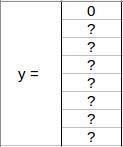
• Andtherewasnoarticleinthisabovematrix,pcwill be0andthepointymarkforthisframeworkwillbe:
Labels of zero object image
2395-0072
Before compose the name y of this framework, it is significantthatweinitiallyseehowYOLOdecidesifthere trulyissomethinginthematrix.Intheimageabove,there are two items (two vehicles), so YOLO will take a point betweenthetwoarticlesandthesearticleswillbegiven to the framework that contains the point between the two articles.Themarkofthefocalpointoftheleftlatticeand thevehiclewillbe:

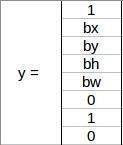
Fig. Car object detection with labels
• Sincethereissomethinginthislattice,thepcwillbe
equivalent to in this manner, for every one of the 9 lattices,wewillhaveamostextremeyieldvector.This yieldwillhavea3X3X8shape.Sonowwehavethe establishment picture and it compares to the predeterminedvector.19Wewillleadforwardand in reverse transmissions to prepare our model. During the test stage, we move the picture to the modelandpushitaheaduntilwegettheoutcomey. Tokeepthings basic,Iclarifiedthisutilizinga 3 X3 framework here, however normally in true circumstances we take bigger lattices. Regardless of whether a thing broadens more than one matrix, it mightbeallottedtoonelatticewhereitsmainissue is.Wecanlessentheoddsofdifferentitemsshowing up on a similar network cell by expanding the quantityoflattices
• pointsaredeterminedcomparativewiththenetwork cell we are managing. Consider the correct focus frameworkcontainingthevehicle:

Fig. Bounding box of car object
• Therefore,pointswillbecalculatedinrelationtothis matrix.Thenithas:
Fig. Labels of detected object
Volume: 11 Issue: 05 | May 2024 www.irjet net
Then point pc = 1 and alsothere is something in matrix anditissomeone’scar.Now,
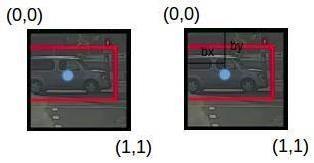
Fig. Finding Centre of bounding box
bhtheproportionofthetallnessofthecouplingboxred boxinthemodelabovetothestatureoftherelatinglattice cell,whichtousisaround0.9.Alongtheselines,bh=0.9. bwthenormalwidthoftheassociatingboxandthewidth of the framework cell. Thusly, bw = 0.5 (roughly). The markforthismatrixwillbe:
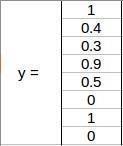
Fig. calculation of different labels
Noteherethatbxandbywillstayadistancesomewhere in the range of 0 and 1 as the middle point will consistently exist in the lattice. While bh and bw can be multipleifthesizeofthecouplingboxismoreprominent thanthesizeofthematrix.
Inthefollowingsegment,wewilltakeaganderatcertain thoughts that can help us make this calculation work better.
Crossing point over Union and Non-Max Suppression
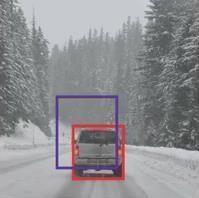
Herearesomeprovocativefeeds -howmightwedecide whether an anticipated box gives us a positive (or negative)impact.ThatistheplacewheretheIntersection overUnioncomesin.Figurestheconnectionbetweenthe genuine restricting box and the anticipated restricting box. Consider the genuine and prescient responsibility boxesofavehicleasdemonstratedasfollows:
p-ISSN: 2395-0072
Here,theredboxisagenuinerestrictingboxandtheblue boxisthethingthatisanticipated.Howmightwedecide whether a decent expectationor not? TheIoU,orUnion Crossroads, will compute the intersection at the intersectionofthesetwoboxes.Thatspotwillbe:
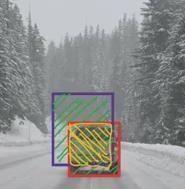
Fig. IOU calculation
IoU=Meetingplace/Unionspot, IoU=Yellowboxarea/Greenboxarea
• IntheeventthattheIoUisabove0.5,wecansay that the expectationis adequately exact. 0.5is the constraintofthecontentionwehavetakenhere, however can be changed relying upon your particularissue.Asamatterofcourse,thebigger thebreakingpoint,thebettertheexpectation.
• There is just a single method to improve your YOLOyield-Non-MaxPressure.
• Perhapsthemostwidelyrecognizedissueswith object identification calculations is that as opposed to getting an item once, they can get it againandagain.Considertheimageunderneath:
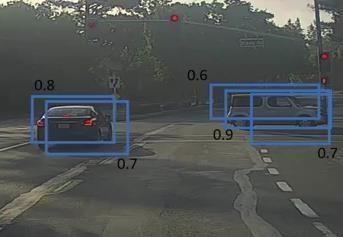
Fig. Detecting multiple objects with coordinates Here, vehicles are recognizedmore than once. TheNonMax Suppression Process tidies up this so we can get a solitaryidentificationofeverything.Weshouldperceive howthesefunctions.
1. Its beginnings by taking a gander at the open doors related with every obtaining and afterward takes the greatest one. In the figure above, 0.9 is likely, so a crate withalikelihoodof0.9willbechosenfirst:
Volume: 11 Issue: 05 | May 2024 www.irjet.net
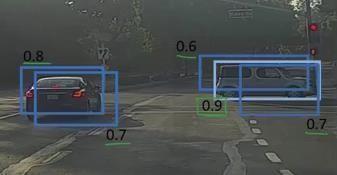
Fig. Examining first object’s bounding boxes
2. Now, examine all the remaining boxes in the image. Boxes with high IoU and current box are compacted. Hence, boxes with a likelihood of 0.6 and 0.7 will be squeezedinourmodel:
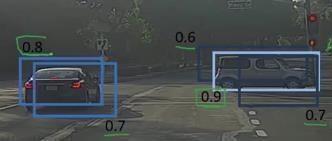
Fig. Examine 1st object’s another bounding box
3. After the containers are squeezed, select the following box of all the cases with the most elevated possibility,itis0.7forus:
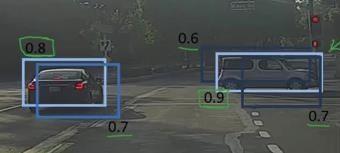
Fig. Examine 2nd object’s bounding boxes
4.Itwill likewisecheck theIoUofthiscontainerandthe excessboxesandpressthecaseswiththetopIoU:
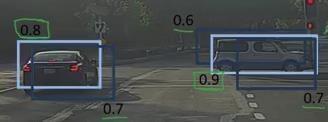
Fig. Examine 2nd object’s another bounding box
5.Werecurrentthesemeansuntilallthecontainershave been chosen or squeezed and get the last restricting boxes:
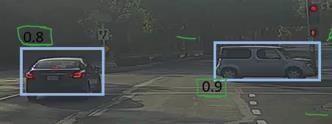
Fig. Object detection based on confidence score
HereisthethingthatNon-MaxSuppressionimplies.We takeboxeswithextraordinarypotentialandpressboxes extremelynearnon-maxopenings.Letusrapidlysumup
p-ISSN: 2395-0072
thefocuseswehavefoundinthissegmentwithrespect tothenon-Maxconcealmentcalculation:
Disposeofallcaseswithnotexactlyorequivalenttothe edgerecentlydepicted(state,0.5).
Fortheleftoverboxes:
• Select the container with the most elevated likelihoodandacceptthatastheyieldforecast
• DisposeofsomeotherboxwithIoUbiggerthan the breaking point and the yield box from the aboveadvance
• Rehashstage2untilallthecratesareviewedas anexpectationofreleaseordisposedof
• There is another way we can improve the presentationoftheYOLOcalculation
We've seen that every framework can highlight just a single thing. In any case, imagine a scenario in which there are an excessive number of things in a single matrix. That can regularly occur. Furthermore, that drivesustomoorboxes.Thinkabouttheaccompanying picture,separatedbya3X3network:
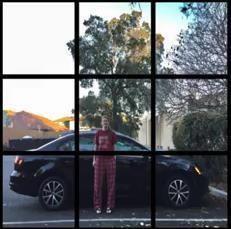
Fig. Grid formation
• Wesupplantedtheitemandtookaganderatits area, allotting the item to the relating network inthemodel.
• over, the midpoint of the two articles lies in a similar framework. This is the way genuine bundlingboxeswillresemble:
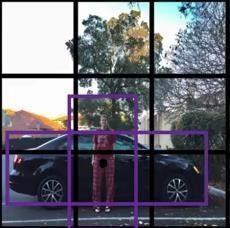
Fig. Anchor box creation
Wewilljustgetoneofthetwoboxes,eitherviavehicleor by individual. In any case, in the event that weuse stop boxes,wecan pull outbothboxes!How would we dothis?
Tobeginwith,wedepictaheadoftimetwodistinctshapes called suspension boxes or anchor box shapes. We can generallybuildthequantityofanchorboxes.Ihavetaken twoheretomaketheideamoreobvious:
International Research Journal of Engineering and Technology (IRJET)
Volume: 11 Issue: 05 | May 2024 www.irjet.net
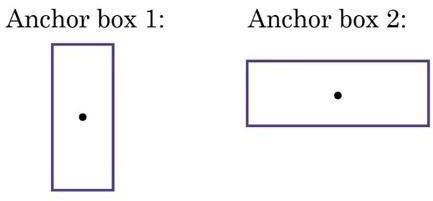
Fig. Anchor box centers
This course is the thing that the YOLO mark without anchorboxesresembles:
Fig. Object labels for single object
Whatdoyoufigurethemark ywill beontheoffchance thatwehavetwoanchorboxes?Ineedyoutopausefora minutetothinkaboutthispriortoperusingfurther.The namewillbe:
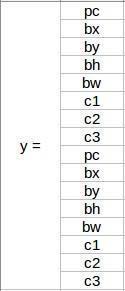
Fig. Object labels for both objects
Theinitial8linesarefortheanchorboxandtheexcess8 arefortheanchorbox2.Theitemsaregivensuspension boxes dependent on the comparability of the coupling boxesandthestateoftheanchorbox.Theyieldforthis situation, ratherthan3X 3 X8(utilizinga 3 X3 matrix andsegments3),itwillbe3X3X16(sinceweutilize2 anchors). In this way, for every framework, we can discoveratleasttwothingsdependentonthequantityof anchors.Howaboutwesumupallthethoughtswehave composed up until now and connection them to the system.
This project is carried out to analyze the performance of DetectionwithYOLOandtorecorditspropertiesunder various test conditions. The condition will vary by changingthefollowingparameters.
•ColorofImage.
•QuantityofImage.
•VariousImagedistances.
•DifferentImagesize.
p-ISSN: 2395-0072
The above-mentioned conditions are tested in this setuptodeterminetheperformanceofObjectDetection using YOLO. The following properties of YOLO are measured with the practical experiment of the device setup.Theyare
•Efficiency
•Security
•Capacity
Intheobjectdetectionmodule,thesystemuses a pretrained deep learning model, such as YOLO (You Only Look Once), to detect objects in real-time video streams. This module processes the video frames, identifies objects, and draws bounding boxes around them. The alerting module is responsible for sending notifications to the user's mobile phone when specific objects are detected. It uses Fast SMS Service to send alerts, ensuring timely communication of important events. Together, these modules enable the system to detectobjectsofinterestandnotifytheuser,enhancing situationalawarenessandenablingpromptaction.
Picturearrangementincludesanticipatingtheclassofone itemina picture. Confinement of anitem alludes toseeing theareaofatleastonearticlesinapictureanddrawinga crate brimming with their width. Article securing consolidates these two capacities and is restricted and isolatesatleastoneitemsinthepicture.
Article securing, a fundamental task in computer vision, playsacrucialroleinvariousapplicationssuchasobject detection,imagesegmentation,andsceneunderstanding. Itinvolvesidentifyinganddelineatingtheboundariesof objects within an image, typically by drawing bounding boxes around them. This process enables machines to understand and interact with visual data, facilitating taskslikeobjectrecognition,tracking,andclassification. Bycombiningthecapabilitiesofobjectclassificationand localization,articlesecuringprovidesafoundationalstep towards more complex visual understanding tasks, enabling machines to interpret and respond to visual informationinamannersimilartohumans.
International Research Journal of Engineering and Technology (IRJET)
Volume: 11 Issue: 05 | May 2024 www.irjet.net
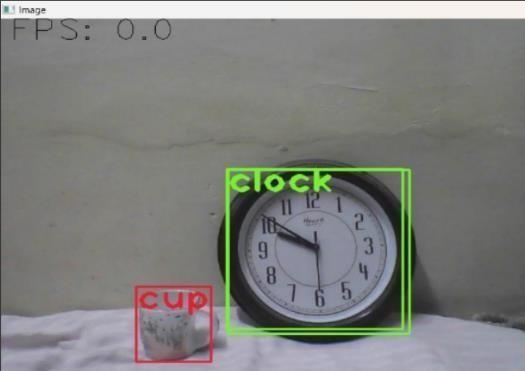
Inthisimageitrecognizesthemultipleobjectslikeclock and cup with good and fine accuracy this makes sense that it doesn’t matter how many objects are there. The maingoalistofindanddetecttheobjectindividuallywith highaccuracy.
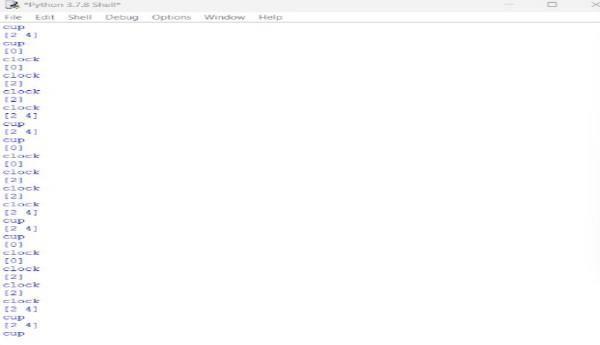
Theimageshowsthesuccessfulresultsafterdetecting multiple objects, including, clock and cup. This demonstrates the model's ability to detect and classify various classes of objects simultaneously, essential for applicationsliketrafficsurveillanceandsafety.
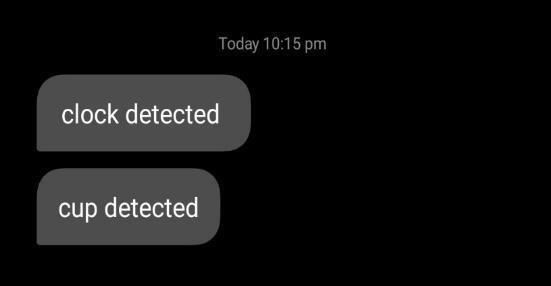
Afterdetectingclockandcupobjects,thesystemhas sentamessageasanalertornotification,indicatingthat the objects have been detected. This functionality demonstratesthe real-time capabilitiesofthesystem in identifyingandrespondingtospecificobjectsofinterest, which can be crucial for applications such as security monitoring, inventory management, or environmental sensing.
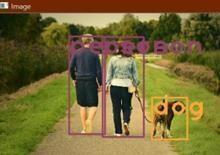
p-ISSN: 2395-0072
Even though the image was taken from backside the recognizer that means the YOLO algorithm that takes everysideaccuracyandgridcalculationsothatitknown for best algorithm for object detection with good accuracy.
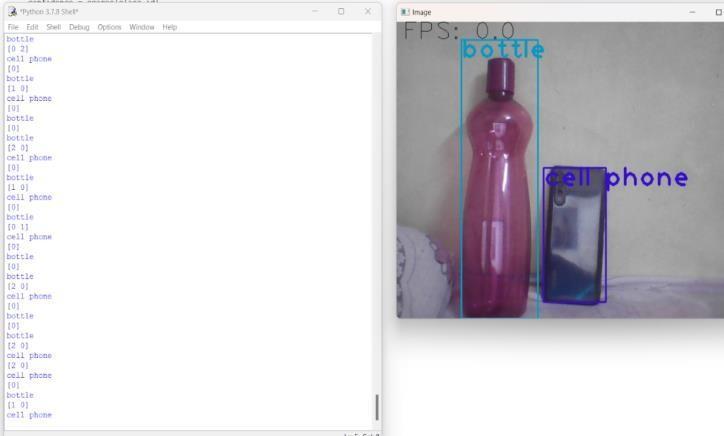
The fig illustrates the detection of a mobile phone as an objectbythesystem,withthedetectionresultandframes persecond(fps)displayedinthePythoninteractiveshell.
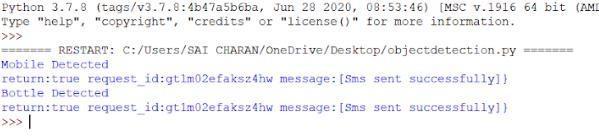
The fig indicates the successful approval of the request tosendtwodifferentmessages,confirmingthesystem's readiness totransmitthespecifiedalerts.
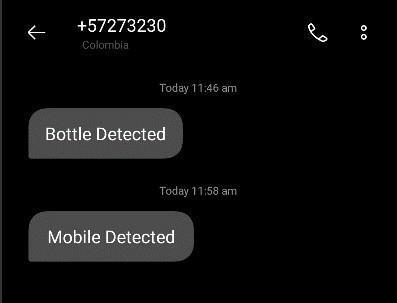
Fig. Acknowledgement of sent Message

11 Issue: 05 | May 2024 www.irjet net
The results of the project demonstrate the successful implementationofthesmartalertingsystemusingrealtime object detection with deep learning. The system effectivelydetectsandclassifiesvariousobjects,suchas clocks,cups,mobilephones,andbottles,inlivewebcam video streams with high accuracy. The ability to detect multipleobjectssimultaneously,asshownintheresults, highlightsthesystem'srobustnessandreliabilityinrealworldscenarios.
The system demonstrates its real-time capabilities by promptly sending alerts or notifications upon detecting specificobjectsofinterest.Thisfunctionalityiscrucialfor applications requiring immediate action or response, such as security monitoring or inventory management. Thesuccessfultransmissionofmessages,asindicatedin theresults,confirmsthesystem'sabilitytointeractwith external devices or services, enhancing its utility and versatility.
The high accuracy and efficiency of the object detection algorithm,particularlytheYOLOalgorithm,areevidentin theresults.Thealgorithm'sabilitytodetectobjectsfrom variousanglesandperspectives,asdemonstratedinthe results, makes it a suitable choice for object detection tasks requiring comprehensive coverage and precision. Overall, the results showcase the effectiveness and practicalityofthesmartalertingsystem,highlightingits potential for deployment in various real-world applications requiring object detection and alerting functionalities.
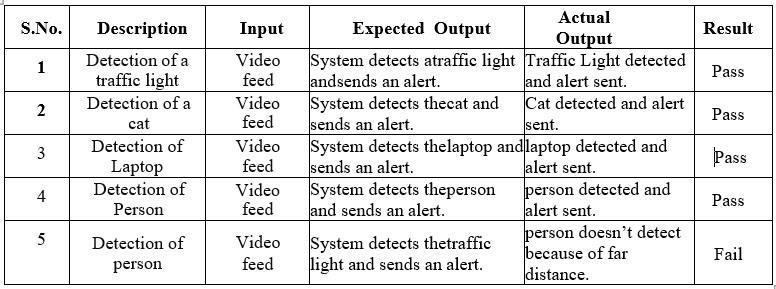
Thedevelopmentofourproject,representsasignificant advancement in safety and security technology. By combining state-of-the-art object detection algorithms with real-time alerting mechanisms, we have created a system that can accurately identify and respond to potential threats in various environments. The use of deep learning techniques, such as the YOLO (You Only
p-ISSN: 2395-0072
LookOnce)algorithm,allowsforfastandefficientobject detection, ensuring that alerts are triggered promptly. Our system's integration with the Fast SMS Service enables immediate alert delivery to mobile phones, enhancing situational awareness and enabling quick responses to emergencies. Overall, our project contributes to the enhancement of safety and security measures,makingenvironmentssaferforeveryone.
The system's ability to detect multiple objects simultaneously and send alerts in real-time adds to its effectivenessinscenarioswherequickactionisessential, such as traffic monitoring or crowd surveillance. The seamlessintegrationoftheobjectdetectionsystemwith thealertingmechanismensuresthatpotentialthreatsare identifiedandaddressedpromptly,minimizingtheriskof incidents or accidents. Additionally, the system's flexibility allows for easy customization and scalability, making it suitable for deployment in a wide range of environmentsandapplications.
In conclusion, our project represents a significant step forward in leveraging deep learning and real-time technologies for enhancing safety and security. By providingareliableandefficientmeansofdetectingand respondingtopotentialthreats,oursystemcontributesto creating safer and more secure environments for individuals and communities. The successful implementation and testing of our project demonstrate its potential for real-world applications and its capacity tomakeapositiveimpactonsafetyandsecuritypractices.
[1]M Kristo et al., “Thermal Object Detection in Difficult WeatherConditionsUsingYOLO”,2020.
[2]M Haroon et al., “Multi Sized Object Detection Using SpaceborneOpticalImagery”,IEEE,2020.
[3]W Fang et al., “Tinier-YOLO: A Real-Time Object DetectionMethodforConstrainedEnvironments”,2019.
[4]S Birogul et al., “YOLO Object Recognition Algorithm and ‘‘Buy-Sell Decision’’ Model Over 2DCandlestick Charts”,2020.
[5]W Wu et al., “Machine Vision Inspection of Electrical ConnectorsBasedonImprovedYolov3,”2020.
[6]Q Xu et al., “Research on Small Target Detection in Driving Scenarios Based on Improved Yolo Network,” 2020.
[7]X Wang et al., “SO-YOLO Based WBC Detection with FourierPtychographicMicroscopy,”2018.
[8]KJKimetal.,“Multi-ScaleDetectorforAccurateVehicle DetectioninTrafficSurveillanceData,”2019.

International Research Journal of Engineering and Technology (IRJET) e Volume: 11 Issue: 05 | May 2024 www.irjet net p-ISSN: 2395-0072

[9]VPaidietal.,“Deeplearning-basedvehicleoccupancy detectioninan openparkinglotusingthermal camera,” 2020.
[10]S Guennouni et al., “Multiple object detection using OpenCVonanembeddedplatform”,2014.
[11]M Kushal et al. “ID Card Detection with Facial RecognitionusingTensorFlowandOpenCV,”2020.
[12] S. Harini et al., “Object Detection Using Yolo and TensorFlowusingMachineLearning”,2020.
[13]KEYOU GUO et al., “Real-Time Vehicle Object DetectionMethodBasedonMulti-ScaleFeatureFusion”, 2019.
[14]Tanvir Ahmad et al., “Object Detection through ModifiedYOLONeuralNetwork”,2019.
[15]Satish Dekka, D ManendraSai, Mohammad Rafi, MaddalaRamaDurgaApparao,TalachendriSuryamand Gatte Ravindranath “Machine Learning Techniques Based PredictionforCropsinAgriculture”,2023.
[16] Satish Dekka, Dr. K. Narasimha Raju, Dr. D. ManendraSai, Mr. Mohammad Rafi “Model to Detect BreastCancerBasedOnPatientSymptoms”,2022.