
International Research Journal of Engineering and Technology (IRJET) e-ISSN: 2395-0056 p-ISSN: 2395-0072
Volume: 11 Issue: 05 | May 2024 www.irjet.net
International Research Journal of Engineering and Technology (IRJET) e-ISSN: 2395-0056 p-ISSN: 2395-0072
Volume: 11 Issue: 05 | May 2024 www.irjet.net
Shivangi Gandhi1 , Dinesh Kamani2 , Sravan Gavara3 , K.S Ayush 4
1Assistant Professor, Dept. of computer science, Parul University, Gujarat, India 2345UG student, Dept. of computer science, Parul University, Gujarat, India
Abstract – Data theft is a big problem in current tech world as many cyber threats are increasing day to day. How and why these thefts are happening after having some many protections in this modern world. In this paper we will begin by going over how we created the essential resource group for the honeypot. After that, we will walk you through setting up a log analytics workspace and a virtual honeypot computer to collect data from the honeypot. After the data has been collected, we will walk you through configuring Sentinel to interact with the Log Analytics Workspace and retrieve the information. Subsequently, we will utilize the IP geolocation of the unsuccessful login attempts from all across the world to create a Sentinel dashboard
Key Words: sentinel, Log Analytics workspace, honeypot, IP geolocation
UsingMicrosoft'sAzureplatform,wewillbuildupalabfora honeypotinthisproject.Wewillalsocoverhowtoaggregate thedatacollectedbythehoneypotintoMicrosoftSentinela security information and event management (SIEM) application.Asecuritytoolcalledahoneypotisdesignedto enticeandapprehendpossibleattackersbyseemingtobea helpfulnetworkcomponent.Byputtingupahoneypotlabon Azure,youcansimulateanetworkenvironmentandobtain insightful data about potential dangers and malicious activity.Afterthedatahasbeencollected,itcanbesentto Microsoft Sentinel for analysis and storage. Sentinel is a cloud-based SIEM application that helps you monitor and managesecuritythreatsthroughoutyourcompany.[1]The honeypot system records and tracks the movements of intruderswithinthesystem,sendingtheinformationtothe systemadministratorandsecuritystaffwhohavedeployed and set up the spyhole. The information gathered may be essentialforestablishingdefensesagainstdifferentkindsof attacks,particularlythosethataremorerecent. Theuseof honeypots offers a practical way to improve a system's securityanddependabilityandaidsengineers,scientists,and researchers in developing a plan of defense against cyberattacks.[2]Ahoneypotisasecuritytooldesignedtobe probed, attacked, orcompromised.Itwassuggested thatany interaction detected be automatically interpreted as maliciousactivity,andtheadministratornetworkusesthe reportsgeneratedbythemalicioussourcetoascertainthe identity, reasons for the intrusion, and methods of the hacker.[3]Ahoneypotisakintothewetcementusedtofind
footprintsinyourhome;youmayuseittoseeifburglarsare testing your home security by rattling your door locks.[4] DependingonthetypeofHoneypotsysteminstalledwithin infrastructure,itsgoalistorecordanypotentialdestructive action by an attacker. Honeypot systems can be used to detect several forms of malicious activity, including automated attacks by malicious bots, known vulnerability exploitation,webapplicationattacks,andtheexploitationof out-of-date software and systems.[5] Industrial control systems (ICT) are at much greater danger from cybersecuritythreatsinthe lastseveral years,mostlyas a result of nation-states and cybercriminals becoming more active.Attackersarenowmoredangerousandskilledthan ever,anditcanbedifficulttoidentifythemintimeforaction.
BeforeWeconfiguredAzureSentinel(SIEM)andlinkeditto an operational virtual machine that acts as a honeypot in ordertofinishthisproject.TheprojectcomprisesofanAzure SentinelonSIEMframeworkCyberAttacksmapconfigurethe AzureLogAnalyticsWorkspacesothatgeographicdatafrom custom logs can be imported. (country, state or province, latitude,andlongitude).tomapgeodata inAzureSentinel, Log Analytics Workspace custom fields were arranged. ConfiguretheAzureSentinelspreadsheet(Microsoft'sSIEM) todisplayglobalattackdata(RDPbruteforce)basedonthe precise location and scale of the strike on a global map.[1][2][3] Any honeypot system's primary goal is to detectintrusions andgain detailed knowledge aboutthem. It mayalsoinvolvemitigatingattacks.Onemethodforahandful of these can be accomplished by integrating the honeypot idea into IDS and IPS.[6] A honeynet is an assortment of differenthoneypots.Theseareuniquenetworksdesignedto enticepotentialattackers.Ahoneynet'spurposeistogather data regarding malicious activity. The investigators subsequently examine this recorded data to obtain the pertinent information.[5] SIEMs may typically gather, compile,store,andcorrelateeventsproducedbyamanaged infrastructure.Astheycollecteventsfromvarioussensors (firewalls, intrusion detection systems, antivirus software, etc.),correlatetheseevents,andprovidesyntheticviewsof the alerts for threat handling and security reporting, they serve as the foundation of contemporary security operations centers[4,5].Asidefromtheseessentialfeatures,thecurrent systems differ greatly from one another, which typically reflectsthevariousmarketsinwhichSIEMsarefound.
Volume: 11 Issue: 05 | May 2024 www.irjet.net
Typically, there are several ways to carry out a particular operationorlaunchanattackinthefieldofcybersecurity.It is crucial to determine the type of route that an intruder would have taken to complete the mission. Finding the potential entrances to the virtual machine was somewhat difficultforus.Orwhatarethechancesthatunauthorized individualswerepickedtocompromisetheVM'scredentials
The below figure describes Setting tup the Azure Sentinel (SIEM)andconnectit toa livevirtual machineactingas a honeypot.Wewillobserveliveattacks(RDPBruteForce) fromallaroundtheworld.WewilluseacustomPowerShell scripttolookuptheattackersGeolocationinformationand plotitontheAzuresentinelMap.
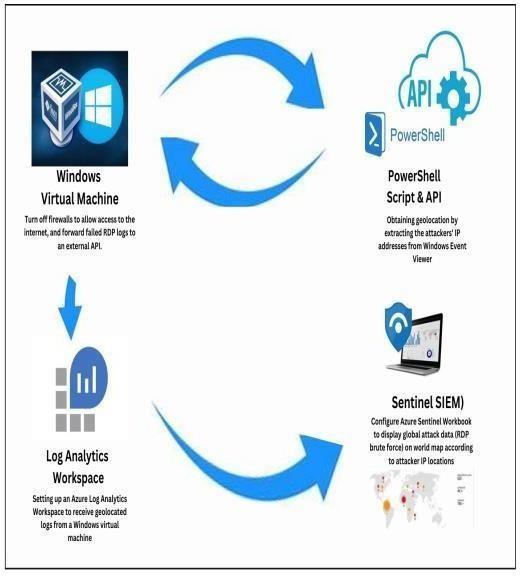
Nowadaysweareseeingsomanycyberattackersaregoing tostealourdatabyenteringintoournetworkweprevent thisbyusingthisproject.
Step 1: CreateAzureSubscriptionIt’seasytosignupforan Azuresubscription;justvisit https://azure.microsoft.com andstartafreetrial.Isignedinaftercreatingittoviewthe AzureDashboard.
Step 2: Theresourcegroupenablesthegroupingofallthe resourcesforthislabsothattheyallhavethesamelifecycle. Understanding this is crucial because, once the lab was finished,I wouldhave to deactivatethe resource group in ordertostoptheresourcesfrombillingmeforservices.In the Azure Dashboard, the resource group can be created separatelyoratthesametimeasthevirtualmachine.The formationoftheResourceGroupandtheVMaredepictedin thenextgraphicasoccurringsimultaneously.
Technology (IRJET) e-ISSN: 2395-0056 p-ISSN: 2395-0072
Step 3: Thenextstepwastodisablethefirewallsanddesign aspecialnetworksecuritygroupthatwouldmakethevirtual machinediscoverabletohackerseverywhere.Byopeningall the ports, this honeypot will be visible to attackers doing reconnaissance around the globe, leaving it vulnerable to attacks. They will then make several different attempts to hackthesystemfromthere.MostpeoplewillattemptBrute Forceattacks.I’llbeusingthosetogathermoreinformation from the attacks, such as the Latitude and Longitude dependingontheIP,andmore,sincetheseattackswillresult inasignificantnumberoffailedauthenticationaudits.
Step 4: Thevirtualmachinewilltakeawhiletodeployonce ithasbeencreated.I’mgoingtobeputtinguptheresource thatwillstorethoseunsuccessfulRDPlogonattemptsfrom theBruteforceattacksthroughoutthisperiod.Alog analyticsworkspaceiswhatthisis.Thisresourcewillalsolet ustouseSentinel,whichwillbuildaspreadsheetthatmaps theinformationacquiredusingthelogsinthisworkspace.
Step 5: After the VM was established, I had to turn on DefenderforCloudsothatitcouldgatheralloftheVM’slogs.
The “All Events” collection was enabled in the Data CollectionsettingsafterIactivatedDefenderforCloudonthe LogAnalyticsWorkspace.
Step 6: Now all I had to do was click “Connect” after selectingthevirtualmachinefromthelistofworkspacedata sourcesinthevirtualmachineandconnectingittothelog analyticsworkspace.
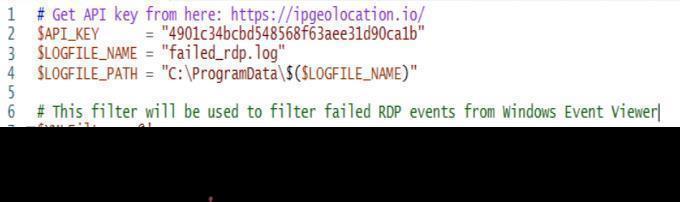
Step 7: IconnectedtothevirtualmachineusingRDPanda strongpasswordtobegincollectingtheliveattacks.ThenI hadtosetituptogatherthefailedlogoneventsfromEvent Viewer and gather the IP address, hostname, attempted username,andotherinformationforeachevent.Also,Ihad to ask for the latitude and longitude data based on the IP addressinordertogetthisdatafromeachoccurrenceinreal time. I accomplished this by making the following API queriestoanIPgeolocationprovider
Step 8: Observe Event viewer Logs in VM. And Turn of WindowsFirewallonVM.
Step 9: A PowerShell script written by us carried out the entireprocedurebysearchingforEvent4625(AuditFailure) intheEventViewerlogoneventthroughanXMLfilter,then grabbing the necessary data. The exact same script would then make an API request based on the IP, obtain the returned values, and add them to a single line, commaseparatedentryonaprivatelogfile.
Step10:GetGeolocation.ioAPIKey13RunScriptTogetGeo Datafromattackers.
International Research Journal of Engineering and Technology (IRJET) e-ISSN: 2395-0056 p-ISSN: 2395-0072
Volume: 11 Issue: 05 | May 2024 www.irjet.net
Step 11: IhadtoimportthecustomlogintoLAWafterithad beenestablishedandwasreadyforconnectionstobemade inordertosaveitandtrainLAWtoseparatetherawdata into custom fields for processing. I imported them by selecting“makenewcustomlog”from the“CustomLogs”tab intheLAW.
•Youcanprovideasamplelogwhenaskedforone byprovidinga.txtor.logfilecontainingsampleentries producedbythePowershellloginthevirtual machine.
•Thefollowingstepdisplayssomesamplelogentries afterimportation.Iwillchoosethelocationofthe customlogontheVMunder“collectionpathways”so thattheLAWmayaccessitinreal-timeandstoreit there.Thelocationofmypersonallog,calledfailed rdp.log.
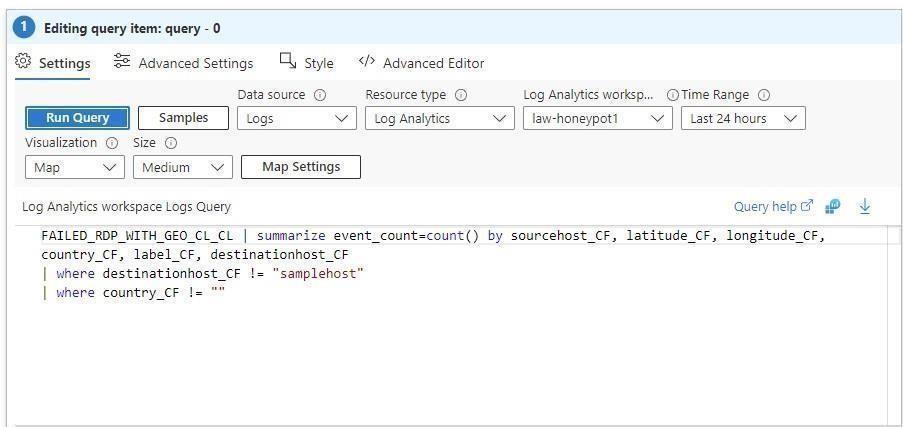
Step 12: I had to extract the data from the custom log consistentlyafteritwasimportedintotheLAWsothatthe LAW would know which sets of data matched which. For instance, I needed to quickly extract the Latitude and LongitudesothatIcouldsimplymapthisdataonSentinel usingaKusto-QueryLanguage(KQL)query.Thefollowing screenshotillustratesthequeryreturningalloftherawdata collectedintothatcustomlog.Ithenpickedthe“RawData” columnwiththerightmousebuttonandchose“NewCustom Field”
•Although the extractions do not effect the entries retrospectively,inmyinstanceIwaitedtoolongto constructtheextractionsforthecustomfields,which resultedinsomeof the entriesnot being properly mapped.Tofixthis,Isimplymadeanewcustomlog, insertedtheidenticalsample,andextractedthedata for latitude, longitude, etc. in the samemanner. Finally,Ijustcopiedthefreshentriesfromtheold log into the new log so that the LAW could also extractthosefields.
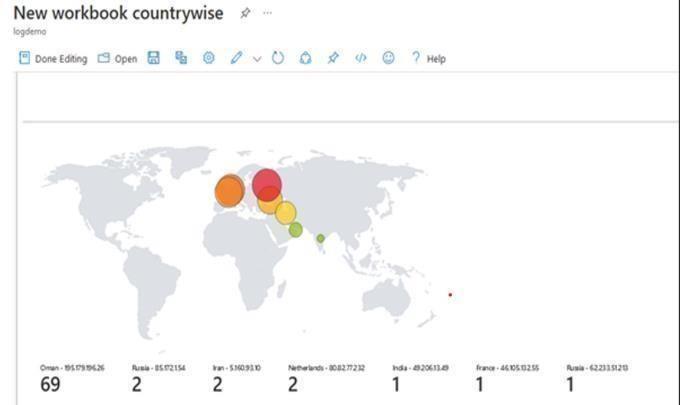
Step 13: NowthatIhadtheApplicationimporting,saving, andextractingtherawdatafromthecustomlog,thescript writingthecustomlog,andtheVMwaitingforconnections,I simplyusedallofthosecomponentstoconstructaSentinel Worksheet that connected it all together. I made the spreadsheet in Sentinel, and then I started selecting everything to display the attacks on a map using KQL. Sentineloffersavarietyofdatavisualizationoptions,butfor this lab I choose the Map visualization, which opens a rightsettingssidebar where custom fields may be entered to controlhowthedataismappedinrealtime.Followingare someillustrationsofwhatthatprocedureentails:ThisKQL query was the last one that I used to summarize the informationintheSentinelworksheet
Thefinalcheckonthesentinelmaplookslikethis:
Securitydetectionscanstillbeimproveddynamicallywith this knowledge. For example, workbooks can be set up to automaticallyactivatespecificdefensesandadjustthemin real time based on the amount of threats that Microsoft Sentinel'shoneypotdetects.Forexample,onemaycreatea blacklisttoblockallconnectionsfromaspecificIPaddress orasubsetofIPaddressesiftheyarepersistentlytryingto breakintothehoneypotusingbruteforceattacks.
The company would be protected against brute force and password spraying assaults because it would be hosting Businessestakeactionagainsttheseassailants.TheIPcould be taken off the network by the SIEM.blacklistshouldthe attackers move to other resources using distinct IP addresses.
International Research Journal of Engineering and Technology (IRJET) e-ISSN: 2395-0056 p-ISSN: 2395-0072
Volume: 11 Issue: 05 | May 2024 www.irjet.net
1. What is Microsoft Azure Sentinel-SIEM: 6. WORKING INFORMATION
Microsoft Sentinelisacloud-nativesecurityinformation And event management (SIEM) software that leverages artificial intelligence (AI) built-in to assist in quickly analyzing massive amounts of data across an organization. With Microsoft Sentinel, you can quickly analyze millions of records by combining data from many sources, such as users, servers, apps, devices, and apps that are hosted on-site or in the cloud. For simple onboarding of well-known security solutions, it has built-in connectors. With support for open standard formats like CEF and Syslog, you may get data from any source.
Collect dataatcloudscale acrossallusers,devices, applications, and infrastructure, both on-premises andinmultipleclouds
Detect previously uncovered threats and minimize false positives using analytics and unparalleled threatintelligencefromMicrosoft
Investigate threats with AI and hunt suspicious activities at scale, tapping into decades of cybersecurityworkatMicrosoft
Respond to incidents rapidly with built-in orchestrationandautomationofcommontasks
You can use Microsoft Sentinel for security event analysis incloudandon-premisesenvironments.Commonusecases include:
Visualizationoflogdata
Anomalydetectionandalerting
Investigationofsecurityincidents
Proactivethreathunting
Automatedresponsetosecurityevents
All data, including entries made by unauthorized parties, canbe sent. Triageall entries first, thensend the highestranking government personnel, such as police departments or cybercrime authorities, the entries that posethegreatestriskandharm.
Make sure you communicate all relevant information to higher authorities in accordance withthelevelofdanger.
Onecanalsousethisprojecttogetexpertisein theSIEMfieldorlogeventstriageanalysis.
[1] PrafulNair,VishakNair,KaranNair,Prof.K.SCharumathi (2020). Implementation of Honeypotto Trap and Track CyberAttacks((IRJET),Volume:07,Issue:11.
[2] Nadiya El Kamel, Mohamed Eddabbah, Youssef Lmoumen, and Raja Touahni (2020). A Smart Agent Design for Cyber Security Based on Honeypot and Machine Learning (WILEY, HINDAWI), Volume 2020, ArticleID8865474.
[3] C. MooreA. Al-NemratC. MooreA. Al-Nemrat (1January 2015).An Analysis of Honeypot ProgramsandtheAttack Data Collected(Springer International Publishing),Available at https://core.ac.uk/reader/219374523.
[4] Rahul koul, J. W. Bakal, Sahil Dhar (July- 2017) Modern Attack Detection Using Intelligent Honeypot (IRJET), Volume:04Issue:07.
[5] Gustavo Gonzalez-Granadillo, Susana Gonz ´ alezZarzosa and Rodrigo Diaz(12 July ´ 2021).Security Information and Event Management (SIEM): Analysis, Trends, and Critical Infrastructures(MDPI),Sensors 2021, 21, 4759. available at https://www.mdpi.com/1424-8220/21/14/4759.
[6] Abhishek Mairh, Debabrat Barik, Kanchan Verma, Debasish Jena(January 2011).Honeypot in network security: A survey (researchgate.net), DOI:10.1145/1947940.19480 Available https://dl.acm.org/doi/10.1145/1947940.1948065
[7] Manikandan K, Shambhavi Rai(February 15 2020). A Review on Honeypots (IRJET), Volume: 07 Issue: 01Avaliable https://www.slideshare.net/irjetjournal/irjeta-review-on-honeypot
[8] Maitri Shukla, 2Pranav Verma, 1 ME Research Scholar, Assistant Professor 1Department of Computer Engineering SOCET, Ahmedabad, India Honeypot: Concepts, Types and Working . Available at IJEDR1504100.pdf
BIOGRAPHIES

Shivangi Gandhi Assistantprofessor Schoolofcomputerscience ParulUniversity
International Research Journal of Engineering and Technology (IRJET) e-ISSN: 2395-0056 p-ISSN: 2395-0072
Volume: 11 Issue: 05 | May 2024 www.irjet.net



VenkataDineshKamani
Student
School of computer science
Specialized in cyber security
ParulUniversity
Srinivashan Ayush Kalapaurical
Student
School of computer science
Specialized in cyber security
ParulUniversity
Sravan Kumar Gavara
Student
School of computer science
Specialized in cyber security
ParulUniversity