
International Research Journal of Engineering and Technology (IRJET) e-ISSN: 2395-0056
Volume: 11 Issue: 05 | May 2024 www.irjet.net p-ISSN: 2395-0072
International Research Journal of Engineering and Technology (IRJET) e-ISSN: 2395-0056
Volume: 11 Issue: 05 | May 2024 www.irjet.net p-ISSN: 2395-0072
Saurabh A Pahune1, Noopur Rewatkar2
1Cardinal Health, Dublin OH 43017, USA saurabh.pahune@cardinalhealth.com
2Christian Brothers University, Memphis TN 38104, USA nrewatka@cbu.edu
Abstract - Considering the advancement of industries into the era of quantum computing, new possibilities emerge for enhancing complex structures like supply chains. This study investigates the possibilities of utilizing quantum-enhanced Generative Adversarial Networks (GANs) to transform supply chain and operations management (SCOM). Our objective is to improve transportation efficiency, warehouse management, distributionprocesses,inboundlogistics,andretailandchannel logistics by combining quantum computing breakthroughs with GANs. The paper explores the fundamental principles of quantum computing and GANs, emphasizing their collective capacitytotackle the complexities ofsupplychain difficulties. We aim to investigate the ability of GANs to construct more precise models and identify optimal solutions for supply chain optimization. This will involve enhancing training efficiency, optimizing skills, and incorporating quantum computing modeling.QuantumGenerativeAdversarialNetworks(QGANs), which rely on quantum computing, are predominantly employed for the purpose of generating images and synthesizing data. However, they can also be modified to do languagemodelingtasks.Thisresearchisexpectedtoresultin substantialcostsavings,improvedproductivity,anddecreased delays across the supply chain. These outcomes will facilitate breakthrough advancements in SCOM.
Key Words: Quantum computing, Generative Adversarial Networks (GANs), Supply chain, Operations management, Transportation efficiency, Warehouse management, Distribution processes,Inboundlogistics,Retail,Channel logistics,Optimization, Quantum-enhanced,Complexity, Training efficiency, Cost savings, Productivity, Delays.
Supplychainoptimizationcanbecategorizedintothree essential stages,eachofwhichhasa vitalfunctioninthe overalleffectivenessoftheprocess.
The design phase is centered around developing an efficient supply chain network that takes into account severalelements,includingtheplacementoffacilities(such as manufacturing plants, warehouses, and distribution centers), the movement of products between these
facilities, and the overall strategic goals of the business. Thisstageincludestheexaminationofmarketdemand,the establishmentofsupplysources,andtheformulationand arrangementofmanufacturingprocesses.
In the planning phase, a strategic supply chain plan is created to efficiently manage the balance between supply and demand. It encompasses the strategic managementofinventories,thecoordinationofassets,and the optimization of product delivery, services, and information flow between suppliers and customers. The main goal of this phase is to guarantee the efficient operationofthesupplychainandfulfilltherequirementsof thecompanyanditsconsumers.
The execution phase involves the implementation and supervision of supply chain activities, which include warehouseandinventorymanagement,transportationand logistics,andworldwidetrademanagement.Italsoentails utilizingexecution-orientedapplicationsandsystems,such asreal-timedecisionsupport,supplychainvisibility,and order management systems. This phase guarantees the efficientoperationofthesupplychainandensuresthatitis inlinewiththestrategicobjectivesestablishedduringthe designandplanningphases[1].
Thissubsectionoffersafundamentalintroductionto quantumcomputingandGenerativeAdversarialNetworks (GANs),explainingtheirimportanceintransformingsupply chainoptimization.Thistextdelvesintothecoreprinciples of quantum computing, emphasizing its ability to effectivelymanageintricate computationsandefficiently solveoptimizationproblems.Furthermore,itexploresthe notion of Generative Adversarial Networks (GANs), explainingitsabilitytoproduceartificialdataandenhance modelsthroughadversariallearning.Thepurposeofthis subsection is to create a theoretical structure for comprehending the following conversation on the application of quantum-enhanced GANs for optimizing supply chains. The search results indicate the following importantinformationaboutthe utilizationof QuantumEnhanced Generative Adversarial Networks (Quantum
International Research Journal of Engineering and Technology (IRJET) e-ISSN: 2395-0056
Volume: 11 Issue: 05 | May 2024 www.irjet.net p-ISSN: 2395-0072
GANs)forimprovingsupplychainprocesses:
1) Quantum Algorithms for Optimization: The search results offer a thorough summary of the present status of research in quantum optimization algorithms,theirpotentialinfluenceonsupplychain optimization,andthesignificance ofbenchmarking andsimulationindevelopingthistopic[2].Quantum computing will transform computational finance. Quantum Approximate Optimization technique (QAOA)isapopular quantum computing technique because it can solveawiderangeofcombinatorial optimization problems, from graph coloring to portfoliooptimization.AlthoughQAOAisdifficultto studytheoretically,simulationcanhelpcomprehend itsperformance.Sinceonlyafewquantumalgorithms haveshownspeedups,numericalstudiesarecrucial in optimization hence A robust numerical scaling study must consider enormous systems. This encourageshigh-performancesimulations[3].
2) Quantum GANs for Generative Modeling: The study introduced a novel approach to enhance GANs by incorporatingquantumcircuitsinthegeneratorand classicaldiscriminators.Theresultsshowedthatthis quantum-enhanced GAN framework outperformed traditional GANs in generating images. [4]. Deep Neural Network training methods like Contrastive Divergence(CD)andbackpropagationtaketimedue to Gibbs sampling’s slow mixing. A quantum sampling-based approach achieved equivalent or superior accuracy with fewer generative training iterations, but further research is needed to determine if other data sets improve similarly. [5]. UsingGenerativeAdversarialNetworks(GANs),this study investigates how classical and quantum computing paradigms can be integrated. By using methodsforrepresentingquantumdata,ithopesto speedupthetrainingprocess.Topicscoveredinthe research include scalability, error correction techniques, and hardware limitations. This study representsasignificantadvancementinthe fieldof quantum-enhancedmachinelearningandafirststep inthedirectionofusingtheprocessingcapabilityof quantum systems [6]. This study not only investigates the use of Quantum-Enhanced GenerativeAdversarialNetworks(QGANs)forsupply chainoptimizationbutalsoexaminesrecentresearch, such as ’Accelerating Neural Network Training: A BriefReview’,togaina betterunderstandingofthe latest advancements in neural network training methods[7].
Thisproposed project aims to investigate the capacity ofquantum-enhancedGenerativeAdversarialNetworks (GANs)tooptimizedifferentfacetsofthesupplychain, including:
• Enhancingtheefficiencyoftransportation
• Improvingtheefficiencyandcoordinationof warehouseoperationsandthetransportationof goods.
• Enhancingtheefficiencyofinboundlogistics
• Optimizing retail and channellogistics.
The literature was obtained from the specified bibliographic databases, Dimensions. We collected Publications from the Dimensions AI citation databases. Dimensionisabibliographicdatabasethatprovidesusers withaccesstoavastcollection ofresearcharticles,grants, clinicaltrials,patents,andpolicydocuments.
A. Search strategy
This query collects different forms of the key terms associated with the investigation of Quantum-Enhanced GenerativeAdversarialNetworksandtheoptimizationof supplychainprocesses.
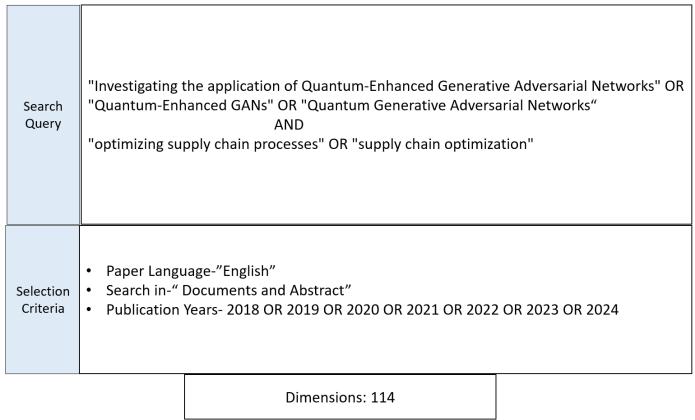
(” Investigating the application of Quantum-Enhanced GenerativeAdversarialNetworks”OR”Quantum-Enhanced GANs” OR ”Quantum Generative Adversarial Networks”) AND (”optimizing supply chain processes” OR ”supply chainoptimization”)
Relevantarticleswereidentifiedwhenthesearchquery keywordswereinthetitle,abstract,orkeywords.Excluded from consideration were papers authored in languages other than English or categorized as different types of documents.Forthisbibliometricanalysis,wehaveutilized 114papersasthebasisforourselectioncriteria(Figure: 1).
International Research Journal of Engineering and Technology (IRJET) e-ISSN: 2395-0056
Volume: 11 Issue: 05 | May 2024 www.irjet.net p-ISSN: 2395-0072
Thisstudypresentstheinitialexperimentalvalidationofa completelyquantumGenerativeAdversarialNetwork(GAN) thatachievesaNashequilibriumwithprovenoptimality.The researcherssuccessfullyreducedunidentifiedmistakesinthe quantumGANexperimentandverifiedtheeffectivenessof errorreductionthroughsimulationsinvolvingupto18qubits [8].
Asperthegivenquery,wehaverecognizedthefollowing trendsonthepaperthatarebeingutilizedinthesupplychain process by utilizing quantum Generative Adversarial Networks(QGANs).
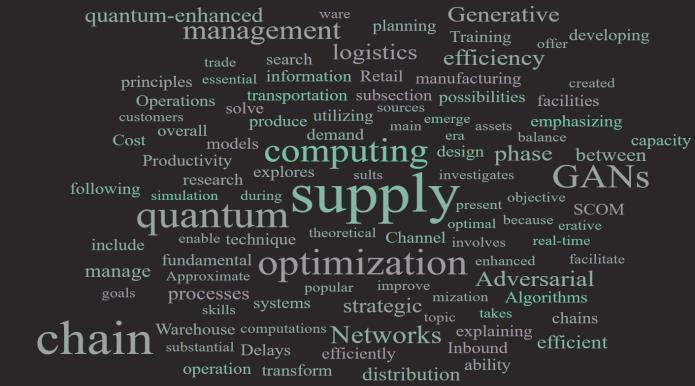
The word cloud shows article term frequency. Larger wordsinthecloudappearmoreofteninthetext.Thispicture summarizesthearticle’sprimaryideasandthemes,revealing theauthor’smaininterests.Thewordcloudcanalsoassist readersidentifykeytermsandconcepts,makingthearticle’s contentandrelevanceclearer(Figure:2).
of
A. Analyzing data collection and paper trends.
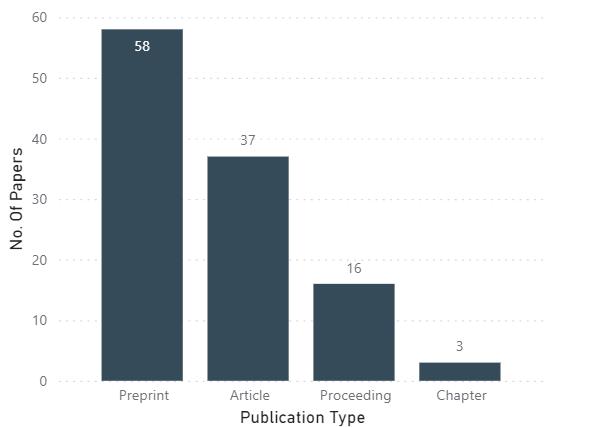
InFigure:3,Wehaveperformedacomprehensivestudyof papersobtainedfromavarietyofpublishingtypespertaining to this subject. This includes 58 preprints, 37 articles, 15
International Research Journal of Engineering and Technology (IRJET) e-ISSN: 2395-0056
Volume: 11 Issue: 05 | May 2024 www.irjet.net p-ISSN: 2395-0072
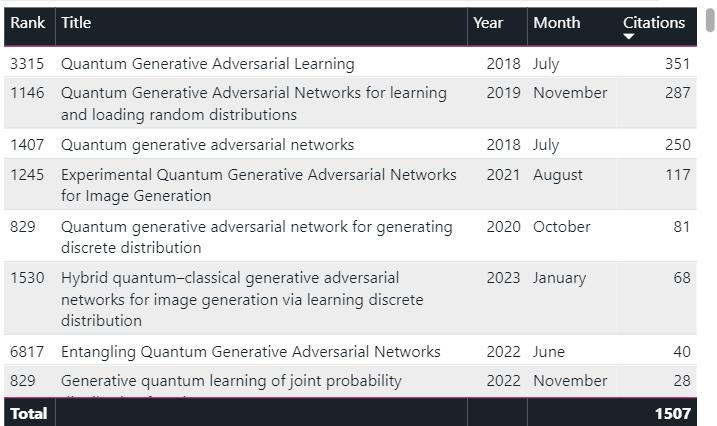
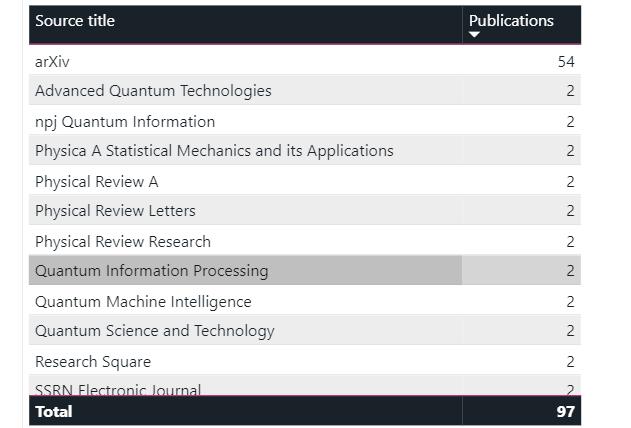
proceedings, and 3 chapters which come from the Dimensions database using the given query mentioned. Figure:4Representsthetopmostcitedpapersinthisareaof research.Intheyear2018[9]mostcitedpaper,thispaper presents the notion of quantum generative adversarial networks(QGANs),inwhichthedatacanbeeitherquantum states or conventional data, and the generator and discriminator are equipped with quantum information processors. The quantum adversarial game reaches its distinctivefixedpointwhenthegeneratorgeneratesstatistics that are identical to the data. The quantum case is characterizedbyitssimplicityandefficiency,demonstrating asignificantexponentialadvantageoverclassicaladversarial networks.Figure:5investigatesthesourcetileofthepaperin thisareaofresearch.
Withtheprogressofindustriesintotheeraofquantum computing,therearenewopportunitiestoimproveintricate systems such as supply chains. This study explores the potential of employing quantum-enhanced Generative AdversarialNetworks(GANs)torevolutionizesupplychain andoperationsmanagement(SCOM).Ourgoalistoenhance the efficiency of transportation, warehouse management, distribution processes, inbound logistics, and retail and channel logistics by integrating quantum computing advancementswithGANs.
Theresearchexaminesthecoreprinciplesofquantum computingandGANs,highlightingtheircombinedability toaddresstheintricaciesofsupplychainchallenges.Our objectiveistoinvestigatehowimprovedtrainingefficiency, optimization abilities, and the ability to handle complex modeling in quantum computing might enhance the performanceofGANs.Thiswillallowthemtogeneratemore accuratemodelsanddiscoveroptimalsolutionsforsupply chainoptimization.
This study is anticipated to yield significant cost reductions, enhanced efficiency, and reduced disruptions throughoutthewholesupplychain.Theseresultswillenable significantbreakthroughsinSCOM.
Themainobjectiveofthisresearchistoexaminetheuseof quantum-enhanced generative adversarial networks (QGANs)4 in optimizing supply chains. However, it is important to acknowledge the wider backdrop of technological progress in the healthcare industry. By incorporating LLMs and generative AI approaches into healthcareworkflows,itispossibletooptimizeoperations, boost decision-making processes, and improve overall efficiencyinthehealthcaresupplychain[10],[11].
Theenhancedtrainingefficiencyofquantumcomputing (QCeff)canbeexpressedas

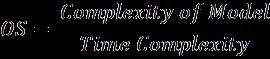
Theoptimizationskills(OS)ofquantumcomputingcanbe representedbythefollowingequation:
Thecapacitytohandleintricatemodeling(CM)ofquantum computingcanbedefinedas:
Theobjectivefunctionforsupplychainoptimization(Obj) canbeformulatedas:
Quantum GANs have the capability to produce optimal solutionsforintricatesupplychainoptimizationchallenges, encompassingtaskslikeidentifyingeffectiveshippingroutes, improvingwarehousearrangement,andselectingthemost advantageous combination of suppliers, distributors, and vendors[12].QuantumGANshavetheabilitytolearnfrom existing optimal solutions and generate new solutions to complexsupplychainproblems,potentiallyoutperforming traditionalmethods.”QGANs,agenerativemodelingtoolthat reliesonquantumcomputing,aremostlyemployedforthe purpose of generating images and synthesizing data. Nevertheless, they can also be modified for language modeling.Thisessaypresentsacomprehensiveexamination of different Large Language Models (LLMs) used in many fields, such as finance with a focus on specific tasks, multilingual language processing, biomedical research, vision-language integration, and code language models. In addition, the paper discusses important obstacles in the advancement of chatbots and virtual assistants, such as enhancing natural language processing abilities and addressingethicalandlegalpredicaments[13]
Scientistsarenowtacklingtechnologicalobstaclesrelated tothemergingofquantumandclassicalcomputing.These issues include limitations in quantum hardware, the developmentoferrorcorrectingsystems,andtheneedfor scalability.QuantumGANshavetheabilitytogreatlyimprove trainingefficiencyandgenerativequality.Thiscouldresultin substantialbreakthroughsinsupplychainoptimizationand otherfields[12].
International Research Journal of Engineering and Technology (IRJET) e-ISSN: 2395-0056
Volume: 11 Issue: 05 | May 2024 www.irjet.net p-ISSN: 2395-0072
Potential future research in this topic may involve investigating other uses of quantum enhanced GANs in optimizing supply chains, including practical implementations and case studies. Moreover, conducting inquiries into the scalability and practical viability of quantum computing technologies for supply chain management could offer useful insights for the implementation of these technologies in the business. Furthermore,progressinquantumcomputinghardwareand algorithmshasthepotentialtounlocknovelopportunitiesfor improvingtheeffectivenessandproductivityofsupplychain optimizationmodels.
Quantum-EnhancedGenerativeAdversarialNetworkshave the potential to significantly transform supply chain optimization by utilizing the distinct characteristics of quantum computing. As the industry progresses, incorporatingthesesophisticatedmethodsintosupplychain management systems has the potential to significantly enhanceefficiency,reducecosts,andimproveoverallsupply chainresilience.
Finally, we would like to convey our gratitude to our colleagues,friends,andfamilymembersfortheirsteadfast support and encouragement during this undertaking. Theirsupportandcomprehensionhaveplayedacrucialrolein maintainingourdriveanddedicationtothisscientificendeavor.
We recognize and value the combined endeavor of all individualsinvolvedinfacilitatingthisstudy.
[1] F. Jhonathan, “Supply chain optimization: The key to business efficiency and sustainability.” https://www.inecta.com/blog/supply- chainoptimization-the-key-to-business-efficiency-andsustainability, 2023. [Online;accessed30-April-2024].
[2] A. Abbas, A. Ambainis, B. Augustino, A. Ba¨rtschi, H. Buhrman, C. Coffrin, G. Cortiana, V. Dunjko, D. J. Egger, B. G. Elmegreen, et al., “Quantum optimization: Potential, challenges, and the path forward,” arXiv preprintarXiv:2312.02279,2023.
[3] B.G.T.A.R.atJPMorganChase,“Acceleratingquantum op- timization research by algorithm specific scalable gpu simula- tion.” https://www.jpmorgan.com/technology/technologyblog/quantum- optimization-research,2023. [Online; accessed30-April-2024].
[4] P.-L. Dallaire-Demers and N. Killoran, “Quantum generativeadversarial networks,” Physical Review A, vol.98,no.1,p.012324,2018.
[5] S. H. Adachi and M. P. Henderson, “Application of quantum annealing to training of deep neural networks,” arXiv preprint arXiv:1510.06356, 2015.
[6] S. Nokhwal, S. Nokhwal, R. Swaroop, R. Bala, and A. Chaudhary, “Quantum generative adversarial networks:Bridgingclassicalandquan- tumrealms,” arXiv preprint arXiv:2312.09939,2023.
[7] S. Nokhwal, P. Chilakalapudi, P. Donekal, M. Chandrasekharan,S. Nokhwal, R. Swaroop, R. Bala, S. Pahune, and A.Chaudhary, “Acceleratingneural network training: A brief review,” arXiv preprint arXiv:2312.10024,2023.
[8] M. Y. Niu, A. Zlokapa, M. Broughton, S. Boixo, M. Mohseni, V. Smelyanskyi, and H. Neven, “Entangling quantum generative adver- sarial networks,” Physical review letters, vol. 128, no. 22, p.220505, 2022.
[9] S. Lloyd and C. Weedbrook, “Quantum generative adversarial learning,” Physical review letters, vol. 121, no. 4, p. 040502,2018.
[10] S. A. Pahune, “A brief overview of how ai enables healthcaresector ruraldevelopment,”2024.
[11] S. Pahune and N. Rewatkar, “Large language models and generative ai’s expanding role in healthcare,” 2024.
[12] F.Jhonathan,“Howquantum-enhancedgenerativeAI could help optimize supply chains.” https://www.sdcexec.com/softwaretechnology/emergingtechnologies/article/22867588/zapata-computinghow-quantumenhanced-generative-ai-could-helpoptimize-supply-chains,2023.[Online;accessed30April-2024].
[13] S.PahuneandM.Chandrasekharan,“Severalcategories of large lan- guage models (llms): A short survey,” arXivpreprintarXiv:2307.10188,2023.