
International Research Journal of Engineering and Technology (IRJET) e-ISSN: 2395-0056
Volume: 11 Issue: 05 | May 2024 www.irjet.net p-ISSN: 2395-0072
International Research Journal of Engineering and Technology (IRJET) e-ISSN: 2395-0056
Volume: 11 Issue: 05 | May 2024 www.irjet.net p-ISSN: 2395-0072
Aysha M Sadikh1, Bindhu C A 2
1MPlan Student, Dept of Arch, Govt college of Engineering Thrissur, Kerala, India
2Assoc Professor, Dept of Arch, Govt college of Engineering Thrissur, Kerala, India
Abstract - The redefinition of urban recreation for active lifestyles is a critical endeavor in contemporary urban planning and design. As sedentary lifestyles become more prevalent, urban spaces need to evolve to encourage physical activity and foster healthier living. This abstract delves into the multifaceted aspects of redefining urban recreation, emphasizing the integration of spaces that promote active engagement. The process involves a comprehensive analysis of urban layouts, identifying opportunities to create pedestrianfriendly environments, designate green spaces, and establish recreational facilities that cater to diverse physical activities. Planners must consider factors such as safety, accessibility, and inclusivity to encourage active lifestyles across age groups and abilities. Additionally, technology integration, such as smart infrastructure and fitness apps, plays a role in enhancing the overall experience of urban recreation. The redefined urban landscape seeks to not only address health concerns associated with sedentary behavior but also to cultivate a sense of community, social interaction, and overall well-being through thoughtfully designed spaces that inspire and support active living. Thus, this study mainly focusses on the planning of active recreation in urban areas for public health outcome. The studyis limitedonlyto active recreational activities of walking, bicycling and outdoor gym. As for the method, based on background study and literature review, the factors, variables, and challenges ofactive recreationplanning were identified.
Key Words: Urban Recreation, Active Lifestyle, Urban Planning, Sedentary Lifestyle, Healthier Living
1.INTRODUCTION
ThewordRecreationisanothertermextensionofthebasic word, Recreate. The term Recreate, refers to “to create a new”.Inmostgeneral sense,Recreation meansthatto recreatesomethingnewinpeopleandsomethingthathasbeen lostduringpeople’snon-leisuretime.Recreationisabody andmindactivitywhichgivesrelieffromtensionandfatigue Regular, uninterrupted work schedules or activities can leave a person physically and mentally exhausted and stressed. Recreational activities relieve fatigue, give new energy,andshapetheattitudetowardslife. Recreationis the experience gained through freely chosen participationinphysical,social,intellectual,creative, and spiritual activities that enhance the well-being of individualsandcommunities(CPRA,2015)Leisurecanbe defined as the time getting apart from a person’s work,
family,andsocietywhichisusedforhisownindividualwills as for either relaxation, diversion, or acquiring his knowledge and involvement is social institution, social participation.Itisafreetimeafterthenecessitiesoflife.It maybeassociatedwithstrenuousactivityorlackthereof.In short,leisureisthetimeapersonearnsbyfreelydoingwhat he or she likes. A person must be educated to be able to devotehisfreetimetomeaningfulpursuits.Nowadays,the technologicaladvancementhasshiftedthehumanpriorities. People tends to prefer enjoying passive recreational activities rather than active recreations like sports. The lifestyleofwork-academicalsopushpeopletowardspassive recreational activities. The several studies show that, the present society has physical inactivity which turns to lifestylehealthissuesevenamongwithinyoungsters.Thus, thisresearchpapermainlyfocussesontheplanningofactive recreationinurbanareasforpublichealthoutcome.
Regularactiverecreationprovidessignificantbenefitsfor health. Physical inactivity is the one of the leading risks factors for non-communicable death rates. A noncommunicablediseaseisone,thatisnottransmittedby infection or from another person but is usually caused by unhealthybehaviorinlifestyles.Noncommunicablediseases (NCDs)includeillnessesincludingcancer,diabetes,chronic respiratory disorders, and cardiovascular diseases (heart diseaseandstroke).Peoplewhoarephysicallyinactivehave a 20% to 30% higher risk of death than those who are physicallyactive.Regularphysicalactivityimprovesmuscle andcardiopulmonaryhealth,improvesboneandfunctional health,and protectsagainsthighblood pressure,coronary artery disease, stroke, diabetes, and many types ofcancer, including breast and colon cancer., reducing the risk of depression.
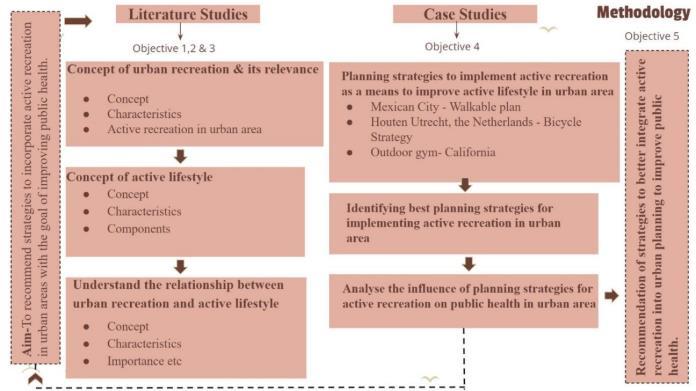
Torecommendstrategiestoincorporateactiverecreation inurbanareaswiththegoalofimprovingpublichealth.
1. To study the concept of urban recreation and its relevance.
2.Tostudythecomponentsofactivelifestyle.
International Research Journal of Engineering and Technology (IRJET) e-ISSN: 2395-0056
Volume: 11 Issue: 05 | May 2024 www.irjet.net p-ISSN: 2395-0072
3.Tostudytherelationshipbetweenurbanrecreationand activelifestyle.
4.Toanalyzehowactiverecreationcanbeincorporatedin the urban planning process for urban public health outcomes.5.Todevelopasetofrecommendationsonhowto better integrate active recreation into urban planning to improvepublichealth.
2. LITERATURE STUDY
Recreation is refreshment of people's minds and bodies through non-compulsory free time activities, usually in contrast to or as a diversion from day-to-day routines. Recreation activities may be pursued for many purposes, including physical and mental fulfilment, personal recognition,stimulation,learning,andsocializing.Recreation takesplaceinmanyphysicalsettingsrangingfrombuildings (homes, museums, recreation centers, movie houses) to completely natural environments (mountains, rivers, seashores)Therecreationsettingsdiscussedhere,however, are in or near urban residential areas, usually within one hour'straveltimeDesignatedneighborhood,communityor regionalrecreationareasareoftenimportantdeterminantsof urbanlanduseanddevelopmentofcommunitydefinitionand ofsociallife.
People expect balanced, well-distributed systems of recreation land available at neighborhood, community, regional,State,andnationallevelsRecreationandopenspace landsshouldberecognizedasessentialcomponentsofurban growthandofeffortstorevitalizeourcitiesOpenspaceareas with unique ecological, cultural, or resource production values should be protected wherever found, but not necessarily through public acquisition. People expect convenientandwell-maintainedrecreationfacilitieswhich accommodateawiderangeofindoorandoutdoorrecreation activities and programs. People expect urban recreation programs to serve all segments of the urban population. People also want programs to be sensitive to the special needs of many Americans who are senior citizens,
handicapped, or disadvantaged; to recognize the cultural diversityofourcommunities;andtoprovideabroadrangeof year-roundopportunitiesforeducational,social,cultural,and recreational activities. People expect park and recreation deliverysystemstobewell-run,well-financed,andwell-used Provision of good recreation services requires good management techniques, sound planning and research, adequate and capable staff, good coordination among providers,andcarefulbudgetingMaximumandefficientuse of recreation facilities and programs requires that theybe known by potential users and that they be accessible and safe, People expect well financed and cost-effective recreation services maximum services at the lowest possiblecost.
Inthisfastpacedandtechnologicallyadvancedgeneration, tensionandbusynessaboundsinthelivesofmanynations. We all need some recreation. Recreation is that which recreatesandrenews.Recreationshouldbeatimetothink new thoughts, not ponder old ills. Recreation's purpose is not to kill time, but to make life, not to keep a person occupied,buttokeepthemrefreshed;nottoofferanescape fromlife,buttoprovideadiscoveryoflife.
•Recreationoccursduringleisure
• Recreation is as different as people are different; it is extremelywideandvaried
• Recreation is activity; it is some sort of action as distinguishedfromrest
• Recreation must be voluntary; it cannot be ordered, imposed,orforced
•Recreationhasnosingleform;itoffersavarietyofchoices withendlesspossibilities
•Recreationisflexible;itcanbeorganizedorunorganized;it canbeenjoyedinagrouporalone
•Recreationtooneindividualmaybeworktoanother
•Recreation involvesan individual'sattitude, motive, and incentive
•Recreationmayoccurornotoccur;aspecificactivitymay be recreation for an individual at one time, but not at anothertime
•Recreationisnecessaryinorderforanindividualtohave balancedgrowth
•Recreationandworkarenotthesamething;althoughan individualmaybeveryhappyinhisjob,itisnotpossiblefor thatindividual'sworktobehisrecreation
Regularphysicalactivityisproventohelppreventandtreat noncommunicable diseases (NCDs) such as heart disease, stroke,diabetesandbreastandcoloncancer.Italsohelpsto prevent hypertension, overweight and obesity and can improve mental health, quality of life and well-being. In
International Research Journal of Engineering and Technology (IRJET) e-ISSN: 2395-0056
Volume: 11 Issue: 05 | May 2024 www.irjet.net p-ISSN: 2395-0072
additiontothemultiplehealthbenefitsofphysicalactivity, societiesthataremoreactivecangenerateadditionalreturns oninvestmentincludingareduceduseoffossilfuels,cleaner air and less congested, safer roads. These outcomes are interconnected with achieving the shared goals, political priorities and ambition of the Sustainable Development Agenda2030.1ThenewWHOglobalactionplantopromote physical activity responds to the requests by countries for updatedguidance,andaframeworkofeffectiveandfeasible policyactionstoincreasephysicalactivityatalllevels.Italso responds to requests for global leadership and stronger regionalandnationalcoordination,andtheneedforawholeof society response to achieve a paradigm shift in both supporting and valuing all people being regularly active, accordingtoabilityandacrossthelifecourse.Theactionplan was developed through a worldwide consultation process involvinggovernmentsandkeystakeholdersacrossmultiple sectorsincludinghealth,sports,transport,urbandesign,civil society,academiaandtheprivatesector.
The 19th century was one of the remarkable periods of development.InEnglandduringthistimerapiddevelopment changed the rural area to urbanized, industrialized cities. This affected the structure of society. The industrial revolutionwitnessedtechnological,scientific,andindustrial innovations of steam engines, railways, machines etc. All theseleadtounpredictableexpansionofgoodsproduction through factory system. There were significant societal consequences,includingthedehumanizationofwork,child labor,pollution,andtheexpansionofcitieswithhighratesof sickness,squalor,andpoverty.Ruralliving,wherefarmwork requiredlonghours,extremelylowpay,andvulnerabilityto all weathers, also included child labor and poverty. The employees'healthandwellbeingdeclinedastheIndustrial Revolutionprogressed.Inthe19thcentury,amovementfor sanitaryreformthateventuallyresultedinthefoundationof public health institutions emerged in England,thecountry wheretheIndustrialRevolutionanditsdetrimentaleffectson health were first seen. London's population quadrupled between1801and1841,whereaspopulationalmosttripled. Rising mortality rates accompanied such expansion (Elizabeth,2005).
ThePublicHealthActof1848establishedaGeneralBoardof Healthtofurnishguidanceandaidinsanitarymatterstolocal authorities,whoseearliereffortshadbeenimpededbylackof a central authority (Elizabeth, 2005). The board had authoritytoestablishlocalboardsofhealthandtoinvestigate sanitary conditions in particular districts. Since this time several public health acts have been passed to regulate sewageandrefusedisposal,thehousingofanimals,thewater supply,preventionandcontrol ofdisease,registrationand inspection of private nursing homes 12 and hospitals, the notificationofbirths,andtheprovisionofmaternityandchild welfareservices(Elizabeth,2005).
Toreducelocalautomotivetrafficandencouragedriverswith destinations beyond the area to utilize the large, straight routes that delineated its limits, the community's small tree lined streets intentionally twisted inward. The area aroundPerrywasmadeforstrolling.Nohomewasgreater than a quarter mile away from the closest park, shops. Radburn,NewJersey,designedbyClarenceSteinandHenry Wrightwithclearseparationsbetweenautomobileandfoot traffic. (Wells & Donofrio, 2019) In their 1928 design for Redburn,NewJersey,architectsHenryWrightandClarence Stein enhanced the notion of neighborhood units by incorporatingparkswithpedestrianandbicycletraffic.The front of each housing unit was orientated to face a central green area, which served as both the focal point and the organizing concept of the entire layout. They did this by flipping17theusualresidentialsiteplan.Alongwithbeing socialandrecreationalfeatures,thecyclingandpedestrian trails that wound through the open area served as direct routes to Redburn’s school and shops. Hence it can be understoodthaturbanplanningisakeycontributortopublic health. Through this, it is evident that the from historical perspectivetothepresenturbanplanninghasasignificant roleinhealthbenefits.
Inthemiddleofthe19thcentury,theideaofboostinghealth inurbanpopulationsbyreducingexposuretodiseasecausing factorswasfirstputintoexistence.Thenegativeimpactsof 20 urbanizations and industrialization gave the first indicationofintimaterelationbetweenurbanplanningand healthbenefits.Duringindustrialization,theplannerswere trying to reduce harmful impacts of such congestion, pollution, unhygienic conditions etc. But at present, the currentissueofsocietyisphysicallyinactivepeople.Hence thescenariohasbeenchanged,thevisionofurbanplanners haschangedtoanotherhealthissuesofsociety.Manypeople were concerned in how physical, social, environmental variables could encourage more active, healthier cultures considering physical inactivity, obesity, and the associated healtheffects.Eventhoughithaslongbeenknownthatbeing outsideisassociatedwithmoreintensephysicalactivitythan beingindoors,recentstudyhaslookedathowneighborhood characteristics may be related to physical activity. From numerousstudiesherearethesomeoftheimplicationsof urbanplanningonpublichealth.
Thefirsteffectofpublichealthconcernsonurbandesignis therequirementtocombatillness.Housingthatwassuitable and essential services like security were lacking in the burgeoning industrial citiesof the 19th century.Industrial employees were housed in small quarters with little ventilation or natural light. Typhoid fever, cholera, yellow fever, and TB were all common in this setting and caused severehumanandfinancialharm.Inthe19thcentury,health
International Research Journal of Engineering and Technology (IRJET) e-ISSN: 2395-0056
Volume: 11 Issue: 05 | May 2024 www.irjet.net p-ISSN: 2395-0072
reformers' work helped to highlight the need for illness management.Theirgoalwastorestoresunlight,cleanwater, open spaces, and fresh air to the city. So, the unhygienic conditions of urban poor lead to urban planners to take a quickactiontoreducediseases.Byproperplanningwecould controlpublicdiseasesandtheplanninghelpstoregeneratea healthy community. Urban planning provides healthier environment. When the surrounding we live become healthier,thepeoplewelivealsobecomemoreactivewhich leadstocompacthealthissues.
Urban planners have long been concerned with measures thatreduceinjuriesduetoaccidents.Theaccident-reduction policiesthataremosttraditionallyalignedwiththeconcerns of planners include such issues as traffic control and planning,pavementstandards,planningforfire21stations andstandardsforplaygroundequipment.Amoreeffective approachrecognizestheinteractionbetweenhumansandthe environment. Theaccident reduction is notonlyabout the trafficcontrol,butitalsoassociatedwiththeequipmentwe use in a public area. Even a footpath design with incorporatingdisablefriendlydesigns,seniorcitizenfriendly surroundingalsoimpactsonthehealthbenefitsbyreducing unknownaccidents.
Creatingsafeareasinsomeshapeoranotherhaslongbeena goal ofurbanplanners.However,plannersnowconfronta newproblemascrimeratesincreaseandmorepeopleworry about their safety. Improving the design, planning, and administration of public spaces so that they are visible, accessible,andwell-utilizedbythepublicisonestrategyto counteracttheatmosphereoffearanddesolationinpublic areas. Building regulations and other measures have significantlyincreasedcommunitysafety.Planningmayhelp to create safe surroundings, as evidenced by laws that prohibit the use of asbestos in construction materials and thosethataimtoreducehouseholdaccidentsviadesign.
2.4.4
Urbancommunitiesnowseemmorefragmentedbecauseof urbandevelopmentinitiatives.Fragmentationhastwosides; on the positive impact the communities are getting development opportunities through the development projects.Ontheitherhandthefragmentationinverselyeffect theurbanfabric.Thecreationofurbanvoidsistheoneofthe adverseeffectsoffragmentation,thusthecommunityfeelless safetytoengageincommunalactivities.
Eventhoughthesustainableplanningimpactsanurbanarea inahealthyway,theotherplanningareaofdevelopmentmay cause adverse effect on urban areas. The planning of
industriesandtransportationplanningcontributespollution toit.Butthethingisthatasitsnegativeaspects,italsohas solution as sustainable planning areas to balance the aftereffects.Urbanplanning22bothcontributestopollution of the air, water, and other forms while also helping to preventit.Alargeportionoftheindustrializedworldnow reliesmostlyonautomobilesfortransportation.
2.4.6
The urban planning gives more planned green spaces in urbanareaplanning.Whilethedevelopmenthappens,atthe sametimegreener,activespacesarecreating.Thosespaces impacthealthywellbeing.Thestreetattractiveness,comfort, visuallyappealingareastendspeopletobemoreactiveinthe society.
Planning of open parks, green spaces along with considerationofeveryagesegmentofsocietytendspeopleto socially active. Being a socially active community helps to reduce health issues causing by physical and mental inactivity.Theprovisionsofsocialactiveplaces,aplacefor communityactivityengagesdifferentsectorsofpeopleata place. In such places the knowledge exchange, communal activitiesetc.willhappenswhichmakepeopletoengagein activity.
Thegreaterrateofphysicalactivityisdemonstratedbythe proximity of recreational areas. Numerous studies have demonstratedthatthosewhohaveaccesstorecreationareas withfacilitiesforphysicalexercisearemorelikelytoreach recommendedlevelsofphysicalactivityandarelesslikelyto develop other diseases like obesity. For health benefits peopletendstoliveinhavingrecreationalfacilities.Thus,the differentlandusedevelopmentwillhappen.
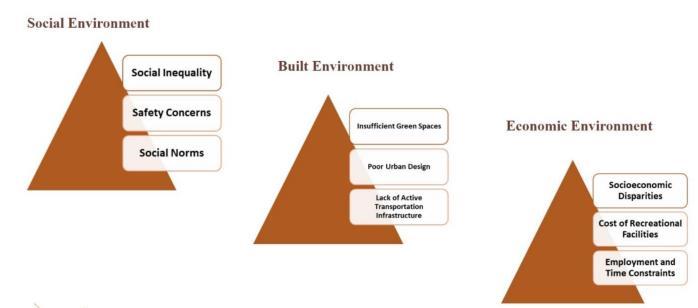
Fig-2:Challenges
2.5.1
Numerous elements of the social environment, including socioeconomic position and equity, are known to have an
International Research Journal of Engineering and Technology (IRJET) e-ISSN: 2395-0056
Volume: 11 Issue: 05 | May 2024 www.irjet.net p-ISSN: 2395-0072
impactonphysicalexerciseparticipation.Thetendencyfor socioeconomic class to be negatively correlated with recreationalphysicalactivitymaybedue tolower-income people having less free time and less access to parks and gyms. Culture has an impact on attitudes and ideas about whoshouldexerciseandwhatkindsofphysicalactivityare suitableforcertainsexes,agegroups,andsocialgroupings. When family, friends, co-workers, and others are there to supportandencouragethem,peoplearefarmoreinclinedto beactive.Opportunitiestoimprovesocial cohesivenessin neighborhoods,communities,andregionsareprovidedby physicalexercise.
2.5.1.1
Socialinequalityposesasubstantialchallengetopromoting physicalactivityinurbanplanning.Disparitiesinaccessto recreational facilities, safe public spaces, and active transportation options disproportionately affect marginalized communities. Limited resources, unequal distributionofamenities,andsafetyconcernscontributeto anenvironmentwherecertainpopulationsfacebarriersto engaginginphysicalactivity.Addressingsocialinequalityin urbanplanninginvolvescreatinginclusivespacesthatcater to the diverse needs of residents, fostering a sense of community,andensuringthatallindividuals,regardlessof socioeconomic status, can benefit from the health advantagesassociatedwithactivelifestyles.
2.5.1.2
Safetyconcernspresentaformidablechallengetopromoting physicalactivityinurbanplanning.Fearofcrime,poorlylit areas,andinadequateinfrastructurecompromisethesafety ofpublicspaces,discouragingindividualsfromengagingin outdoor activities. These safety issues disproportionately affect vulnerable populations, limiting their access to recreational spaces and hindering active lifestyles. Urban planning strategies must prioritize the creation of secure environments, incorporating well-lit pathways, visible policing, and community engagement to alleviate safety concerns. By addressing these challenges, urban planners canfosterinclusivespacesthatencouragephysicalactivity andenhancetheoverallwell-beingofresidents.
2.5.1.3
Social norms in the social environment pose a significant challengetopromotingphysicalactivityinurbanplanning. Prevailing cultural attitudes and societal expectations can contribute to sedentary behaviors, influencing how individuals perceive and prioritize exercise. Traditional norms emphasizing convenience and motorized transportation over active modes contribute to a lack of pedestrian-friendly spaces. Overcoming this challenge involvesreshapingsocietalperceptionsofphysicalactivity, promotingaculturalshifttowards prioritizinghealth,and integrating urban planning strategies that align with
changing norms to encourage active lifestyles for all membersofthecommunity.
The built environment includes all structures, areas, and componentsthathumanscreateorchange,aswellasland usepatterns.Thiscomprisesbuildingssuch asresidences, schools, offices, green spaces, parks, recreation areas, commercial areas, and transportation networks. A component of urban planning called urban design is concerned with providing an attractive environment for people to live, work, and play in. Physical activity engagementmaybeinfluencedbothadverselyandfavorably by the built environment. For instance, people may make walkingafunpartoftheirdailylivesinneighborhoodsthat are walkable. Residents have opportunities to mingle and enjoyactiveoutdoorrecreationingreenspacesandparks. The layout of the streets, the usage of the land, the transportation system, and the placement of recreation centers, parks, and public buildings are all aspects of the builtenvironmentthatmayeitherpromote.
2.5.2.1
Insufficientgreenspaceinthebuiltenvironmentpresentsa formidablechallengetopromotingphysicalactivityinurban planning.Overcrowdedurbanareaswithlimitedaccessto parks and green areas restrict opportunities for outdoor exercise and recreational activities. The scarcity of green spaces not only hinders individuals' ability to engage in physicalactivitybutalsodiminishestheoverallwell-beingof communitiesbydeprivingresidentsofcrucialconnections with nature. Urban planners must prioritize the incorporation of green infrastructure, parks, and recreational spaces to create environments that facilitate exercise, enhance mental health, and contribute to a healthierandmorevibranturbanlandscape.
Poorurbandesignwithinthebuiltenvironmentemergesas asignificantchallengetofosteringphysicalactivityinurban planning.Inadequateinfrastructure,disjointedlayouts,anda lack of pedestrian-friendly spaces deter individuals from incorporating physical exercise into their daily routines. Unfriendly urban designs often prioritize motorized transportation over active modes, contributing to a sedentarylifestyle.Theabsenceofwell-connectedsidewalks, bike lanes, and accessible recreational facilities limits opportunities for residents to engage in regular physical activity.
Thelackofactivetransportationinfrastructureinthebuilt environment poses a substantial challenge to promoting physical activity in urban planning. Incomplete or
International Research Journal of Engineering and Technology (IRJET) e-ISSN: 2395-0056
Volume: 11 Issue: 05 | May 2024 www.irjet.net p-ISSN: 2395-0072
inadequatecyclinglanes,sidewalks,andpedestrian-friendly pathways hinder the adoption of active modes of transportation,discouragingindividualsfromincorporating physicalactivityintotheirdailycommutes.Poorconnectivity andunsafeconditionsforwalkingorcyclingcanresultina heavyrelianceonmotorizedtransportation,contributingto sedentarylifestylesandassociatedhealthissues.Addressing this challenge involves prioritizing the development of comprehensiveandwell-maintainedactivetransportation networks, ensuring that urban designs support safe, accessible, and convenient alternatives to sedentary commuting. By fostering a built environment that encourageswalkingandcycling,urbanplannerscanplaya pivotal role in promoting healthier and more physically activecommunities.
2.5.3
Theeconomicenvironmentposesamultifacetedchallengeto promoting physical activity in urban planning. Economic disparities can result in unequal access to recreational facilities, fitness resources, and well-maintained public spaces, limiting opportunities for physical exercise, particularly in economically marginalized neighborhoods. High costs associated with gym memberships, sports facilities,orparticipationinorganizedactivitiescanfurther exacerbate disparities in access. Additionally, areas facing economicchallengesmaylackthefinancialresourcesneeded forthedevelopmentandupkeepofparksandinfrastructure conducive to physical activity. Overcoming this challenge requires an inclusive approach in urban planning, with a focus on equitable distribution of resources, affordable recreationaloptions,andstrategiesthatensureindividuals from all economic backgrounds can partake in active lifestylesforimprovedoverallhealthandwell-being.
2.5.3.1
Socioeconomicdisparitywithintheeconomicenvironment emerges as a pronounced challenge to fostering physical activityinurbanplanning.Unequalaccesstoresourcesand opportunitiesresultsindisparatelevelsofphysicalactivity, witheconomicallymarginalizedcommunitiesfacingbarriers to engaging in recreational activities. Limited financial means often restrict access to fitness facilities, organized sports, and well-maintained public spaces, hindering the ability of individuals in lower socioeconomic brackets to adopt active lifestyles. Addressing this challenge requires targeted efforts in urban planning to ensure equitable distribution of recreational resources, affordable fitness options, and the creation of inclusive environments that accommodatethediverseneedsofcommunities,regardless ofeconomicstatus.
2.5.3.2
The cost of recreational facilities within the economic environmentstandsasaformidablechallengetopromoting
physicalactivityinurbanplanning.Highmembershipfees, admission costs, or charges for participation in organized sportsandfitnessprogramscanactassignificantdeterrents, limitingaccessforindividualswithlowerincomelevels.This economicbarrierexacerbatesdisparitiesinphysicalactivity opportunities, as those in economically disadvantaged communitiesmayfinditfinanciallychallengingtoengagein recreational activities. Addressing this challenge requires urban planners to prioritize affordable and inclusive recreational options, fostering environments where all residents,regardlessofeconomicstatus,canaccessfacilities thatpromotephysicalwell-beingandcontributetohealthier, moreactivecommunities.
Employment and time constraints in the economic environmentpresentasubstantialchallengetoencouraging physical activity in urban planning. Demands of modern workschedulesoftenleaveindividualswithlimitedtimeand energy for exercise. The pressure to balance employment commitments,especiallyinurbansettingscharacterizedby hecticlifestyles,canresultinsedentarybehaviorsandalack ofengagement in physical activities.Urbanplannersmust recognize this time-related barrier and strive to create accessible recreational spaces and active transportation optionsthataccommodatediverseschedules.Additionally, promoting workplace wellness initiatives and integrating physical activity into daily routines can help address the challengeoftimeconstraints,fosteringahealthierandmore activeurbanpopulation.
International Research Journal of Engineering and Technology (IRJET) e-ISSN: 2395-0056
Volume: 11 Issue: 05 | May 2024 www.irjet.net p-ISSN: 2395-0072
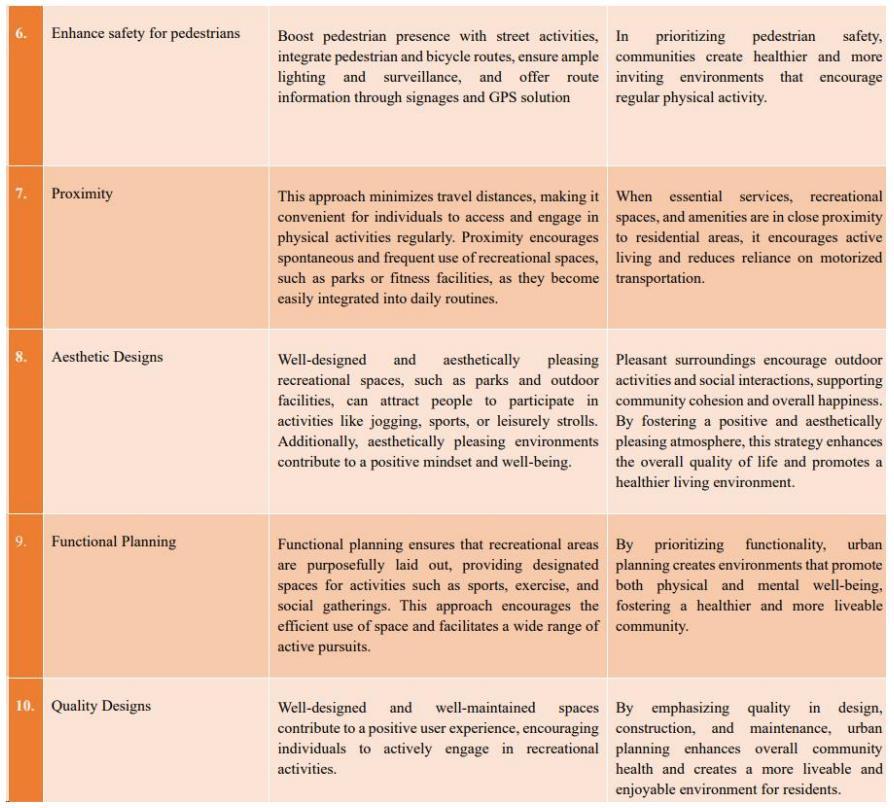
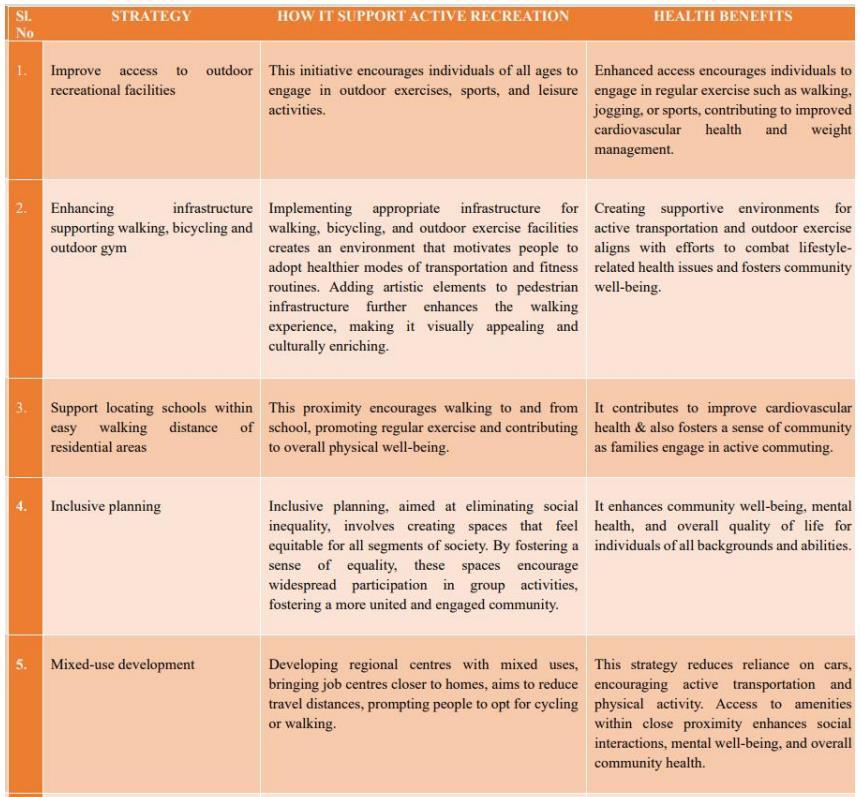
Toencouragepeopletoengageinactiverecreationthereisa need to create communities that are activity-friendly environments for recreational physical activity which promote walking and bicycling. This includes planning neighborhoodsandrecreationalamenitiesthatmakeitmore fun for people to get up and get active. It goes beyond a simpleissueofpersonalpreferencetobephysicallyactive. Peoplearemorelikelytoengageinphysicalactivityduring their free time when they live in circumstances that encourageit.Ifwalkingissafe,fun,aestheticandlesstraffic peoplewillusethespacetosocialize,forfunandenjoyment. Environments that encourage physical activity, motivates more individuals to choose this way of life. The urban planningshouldconsiderpeopleofallagesandabilitiesto accesseasilyandsecurelyenjoywalking,biking,andother types of active transportation and entertainment in environmentsthatare"ACTIVITYFRIENDLY."
[1] AafidGulam.“Recreation-NeedforandImportanceof Modern Society.” International Journal of Physiology, NutritionandPhysicalEducation,2016.
[2] Australian State/Territory and Federal Governments. “National Sport and Active Recreation Policy Framework,”June10,2011.
[3] Barasch, Stephen B. “The Social and Behavioural CharacteristicsofRecreationalFacilitiesPlanning.,”n.d., 161.
[4] Boarnet,MarlonG.“AboutThisIssue:Planning’sRolein BuildingHealthyCities:AnIntroductiontotheSpecial
Issue.” Journal of the American Planning Association, November26,2007.
[5] Bornstein, Daniel, and William Davis. “The Transportation Profession’s Role in Improving Public Health.” Institute of Transportation Engineers Journal 84(July1,2014):19–24
[6] Wells,Nancy,andGregDonofrio.“UrbanPlanning,the NaturalEnvironment,andPublicHealth.”Encyclopedia of Environmental Health (Second Edition), January 1, 2019,286–96.
[7] Wrensch,Jesse-Lee.“TheDifferencebetweenaPolicy, Procedure,StandardandGuideline.”Michalsons(blog), March11,2020.