
International Research Journal of Engineering and Technology (IRJET) e-ISSN: 2395-0056
Volume: 11 Issue: 05 | May 2024 www.irjet.net p-ISSN: 2395-0072
International Research Journal of Engineering and Technology (IRJET) e-ISSN: 2395-0056
Volume: 11 Issue: 05 | May 2024 www.irjet.net p-ISSN: 2395-0072
Sakshi Bohra1, Sneh Sinha2 , Riddhi Bora3, Savitri Chougule4
1 Student, School of Engineering, MIT ADT University, Pune, Maharashtra, India
2 Student, School of Engineering, MIT ADT University, Pune, Maharashtra, India
3 Student, School of Engineering, MIT ADT University, Pune, Maharashtra, India
4 Professor, School of Engineering, MIT ADT University, Pune, Maharashtra, India ***
Abstract - Efficient multi-modal summarization (MMS) is crucial in the era of huge digital data due to the increase in multimedia content. In order to automatically compress several content forms text, images, audio, and videos related to particular issues, this paper offers an extractive multi-modal summarizing approach. Closing semantic gaps between modalities is the main goal. This approach tries to improve salience, non-redundancy, readability, and coverage in producing textual summaries by selecting transcribing audio, employing neural networks for simultaneous text-image representation, and optimizing submodular functions. The review talks about the progress made in Automatic Text Summarization (ATS), with a focus on Extractive and Abstractive techniques and the function of the Text Rank algorithm. It also investigates video summarization using a viewer-centered computational attention model, providing a substitute for intricate video semantic analysis in the summation of multimodal content. Most notably, ongoing one area of work that is presently being developed is the translation of the summary text into other languages.
Key Words: multimedia model, summarization, text, audio, language translation, neural network
WithSnapSummaries,aninventivewaytospeedupinformationretrievalispresented.Itoffersconcisesummariesofmultiple documents.Ourapproachcompressesavarietyofcontentintoclear,in-depthsummariesbyusingsophisticatedalgorithms. Snap Summaries seeks to maximize efficiency and accessibility by providing users with a concise and all- encompassing summaryofvariousdocumentsthroughtheuseofstate-of-theartmulti-modalsummationtechniques.
AnubhavJangraetal[11]Multi-modalsummarizationisrequiredtoextractimportantdatawhileeliminatingredundant informationbecausethecurrentexplosionofmultimediacontenthasmadeitdifficulttoextractmeaningfulinformation.This methodgivesamorethoroughportrayalbyofferingavarietyofviewpointsandprovidingmoretangiblereinforcementfor concepts.Nevertheless,thisworkfocusesontextimage-videosummarygeneration(TIVS)throughadifferentialevolutionbased multi-modal summarizing model (DE-MMS-MOO), whereas previous research largely focused on uni-modal summarization(textorimages).Throughmultiobjectiveoptimization,themodelmaximizesconsistencybetweenmodalities and cohesion within them, providing a general framework that may be tailored to different optimization strategies. This innovative model addresses the problem of asynchronous data without alignment among various modalities by taking multimodalinputandproducingvariable-sizemultimodaloutputsummariesthatincludetext,photos,andvideos.
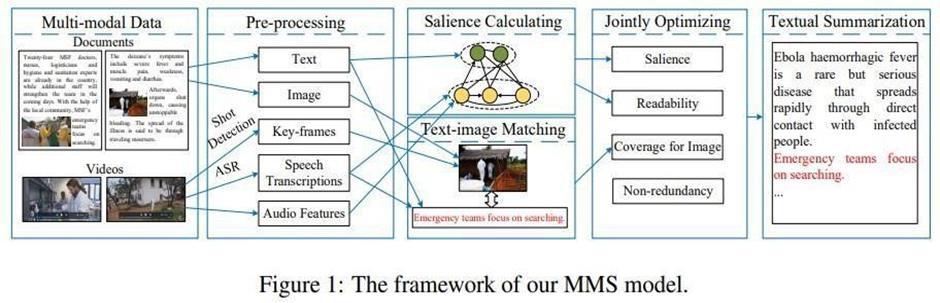
Haoran Li et al[9] Efficient information retrieval is challenged by the exponential rise of multimedia data. Text summariesareprovidedbyMulti-ModalSummarization(MMS),whichallowsuserstoquicklyunderstandthemainpointsof multimediacontentwithouthavingtogothroughlengthydocumentsorfilms.Thisworkpresentsanovelmethodforcreating textsummariesusingasynchronoustext,images,audio,andvideoonagivensubject.However,bridgingthesemanticgap betweenmultiplemodalitiesforMMSisasubstantialdifficultyduetotheheterogeneousnatureofmultimediadata.
MAST,anewmodelforMultimodalAbstractiveTextSummarization,ispresentedbyAmanKhullaretal.[10].Ituses data from a multimodal movie that includes elements of text, audio, and video. A innovative extractive multi- objective optimizationbasedmethodologyisproposedbyAnubhavJangraetal.[11]togenerateamulti-modalsummarythatincludes text,graphics,andvideos.
International Research Journal of Engineering and Technology (IRJET) e-ISSN: 2395-0056
Volume: 11 Issue: 05 | May 2024 www.irjet.net p-ISSN: 2395-0072
Overtime,imageprocessinghasattractedalargenumberofspecialistsfromdiversefields.Theyhavebeenworkingon theidentificationandcategorizationofdifferentmalignantillnesses,suchaskidneyandbraintumors,andtheyhavesuggesteda numberofcutting-edgemethodstogetthegreatestoutcomes.AbualigahL.andothers
[1]Textsummarizationisbecomingincreasinglyimportantduetotheamountofdigitaldataavailable.Itiscrucialtofind aquickandefficientmethodforsummarizinglengthytextswithoutlosinganyoftheirimportantinformation.Themaingoalisto keeptheimportantcontentofthetextwhilecondensingitintoamoremanageableformat.
G. Kumar Vijay et al. 2 The primary objective of automatic text summarization is to extract pertinent and concise informationfromvastamountsofdata.Theamountofinformationavailableontheinternetisvastandconstantlyexpanding, makingitdifficulttogatherthemostimportantdatafromitquickly.Utilizingautomatictextsummarizationfacilitatesusers' abilitytoextractkeyinformationfromvastamountsofdata.
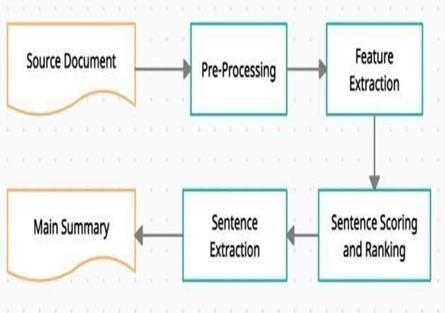
The method is proposed by Pratibha Devi Hosur et al. [3] and incorporates unsupervised learning into automatic text summarization.Theoverallpictureoftextsummarizationusingnaturallanguageprocessing(NLP)ispresentedinthispaper.It involves the following steps: input text document, preprocessing, lesk algorithm, and summary generation. The results, computations, conclusion, and suggested system of the lesk algorithm. Gaikwad, Deepali K. et al. [4] The study examines extractiveandabstractiveapproachestotextsummarization,describingthemethodsemployed,howwelltheywork,andthe benefitsanddrawbacksofeachapproach.Ithighlightstheimportanceof textsummarizationincommercial and research contexts.Comparedtoextractivemethods,abstractivesummarizationproducesmoreappropriateandmeaningfulsummaries, butitismorecomplexbecauseitrequireslearningandreasoning.Thestudydrawsattentiontothepaucityofresearchon abstractive approaches in Indian languages, suggesting significant prospects for additional investigation and better summarizationstrategiesinthisfield.
Srinivasandcolleagues[6]putforthamethodforsummarizingdatausingkeyframes.Therearethreestepsinthe process.1)Determinewhichframeisthekeyframe;2)Scoretheframes;and3)Removeduplicateframes.Aframe'sscoreis determinedbyfactorssuchasquality,representativeness,uniformity,andstaticanddynamicattention.Next,thescoreis normalizedtofallbetween0and1.Theframesaregiventheirweightsinthefollowingstep.Thearrangementoftheweights givesthehighestweighttotheframeswithhigherscores.Thedotproductofthescoreandtheweightisthenusedtodetermine
International Research Journal of Engineering and Technology (IRJET) e-ISSN: 2395-0056
Volume: 11 Issue: 05 | May 2024 www.irjet.net p-ISSN: 2395-0072
thefinalscore.Theframesareplacedindescendingorderofscore,withthehighest-scoringframereceivingthetopspot.The framewiththehighestrankingisdesignatedasthekeyframe,andthedifferencebetweenthekeyframeandthechosenframeis computed.Itischosenasthemainframeifthedistanceislarger.Redundancyiseliminatedusingadifferentalgorithmafterkey frameextraction.Imagesingrayscalearecreatedfromthechosenkeyframes.Forthoseframes,thehistogramsarecalculated, and the Euclidean distance between the frame pair is applied. The key frame is selected when the distance exceeds the threshold.
AsystematicreviewandclassificationofvideoabstractiontechniqueswascarriedoutbyTruongetal.[7].Theirwork concentrated on offering a methodical classification of approaches to video abstraction and summarizing currently used techniques. This paper is a useful resource for comprehending the landscape of video summarization techniques and is especiallybeneficialforthoseseekinganorganizedoverviewofthedevelopmentsinthefield.
Anapproachonreal-timesurveillance video with alarmfacility wasproposed by Deepika etal.[8].After the livevideo is recorded,itisdividedintoframesandpreprocessedusingvariousmethods,suchasbrightnessandcontraction.Theimageis compressedusingJPEGimagecompressionbeforebeingstoredinthesystem.
HaoranLietal.[9]useAutomaticSpeechRecognition(ASR)toobtainspeechtranscriptionsfortheaudiodatafoundin videos, then they devise a method to use these transcriptions selectively. Using a neural network to learn the joint representationsoftextsandimages,wecanidentifythetextthatisrelevanttoanimageforvisualinformation,suchaskey framesextractedfromvideosandimagesfoundindocuments.Thisallowsfortheintegrationofvisualandauralelementsintoa textsummary.
AmanKhullaretal.'sintroductionoftheaudiomodalityforabstractivemultimodaltextsummarization[10].analyzing thedifficultiesinapplyingaudiodataandappreciatingitsroleintheproducedsynopsis.Theintroductionofabrand-new, cutting-edgemodelcalledMASTforthemultimodalabstractivetextsummarizationtask.
ToaddresstheTIVSproblem,AnubhavJangraetal.[11]suggestadifferentialevolutiontechniquebasedonmulti-objective optimization.Thesuggestedmethodreceivesatopiccontainingseveraldocuments,photos,andvideosasinputandproducesan extractivetextualsummaryalongwithafewkeyphotosandvideos.
SamplepapragraphDefineabbreviationsandacronymsthefirsttimetheyareusedinthetext,evenaftertheyhavebeendefined intheabstract.AbbreviationssuchasIEEE,SI,MKS,CGS,sc,dc,andrmsdonothavetobedefined.Donotuseabbreviationsinthe titleorheadsunlesstheyareunavoidable.
Afterthetextedithasbeencompleted,thepaperisreadyforthetemplate.Duplicatethetemplatefileby usingtheSaveAs command,andusethenamingconventionprescribedbyyourconferenceforthenameofyourpaper.Inthisnewlycreatedfile, highlightallofthecontentsandimportyourpreparedtextfile.Youarenowreadytostyleyourpaper.
Text Summarization
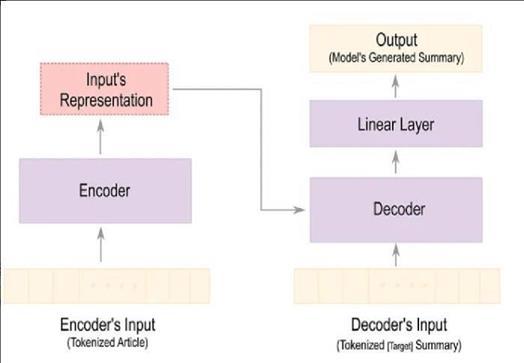
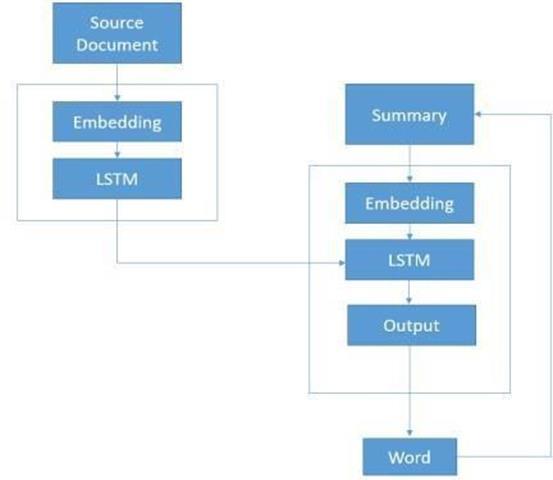
AclassofneuralnetworkarchitecturesknownasSequence-to-Sequence(Seq2Seq)modelisfrequentlyemployedforavariety ofnaturallanguageprocessingapplications,includingtextsummarization.Anencoderandadecoderarethetwomainpartsof the Seq2Seq model. Text summarization involves the encoder processing the input text and the decoder producing the summary.ThisisabasicoverviewoftextsummarizationusingSeq2Seq:
1. Datapreprocessing
Theprocessoftextsummarizationentailscompilinganarticledatasetalongwiththesummariesthatgowithit.Boththetarget summariesandtheinputtext(articles)areformattedforthemodelafterthetexthasbeentokenized.
2. BuildingtheModel
•Encoder:
• Word-by-word processing of the input sequence (article) results in the embedding of each word into a highdimensionalvectorrepresentationbytheencoder.RecurrentNeuralNetwork(RNN)orLongShort-TermMemory (LSTM):
International Research Journal of Engineering and Technology (IRJET) e-ISSN: 2395-0056
Volume: 11 Issue: 05 | May 2024 www.irjet.net p-ISSN: 2395-0072
• Thesequential informationoftheinputtextisthencapturedbyfeedingthesewordembeddingintoanRNNorLSTM.
• HiddenState:Theencodeddatafromtheinputsequenceisrepresentedbytheencoder'sfinalhiddenstate.
•Decoder:
InputSequence(Summary):Afterreceivingtheencodeddatafromtheencoderinitsoriginalhiddenstate,thedecoderstartsto producethesummary.
Conditional Probability: Based on the context and previously generated words, the decoder predicts the next word in the summaryateachtimestep.
AttentionMechanism(Optional):Toenhanceperformance,itispossibletoincorporateanattentionmechanismthatenablesthe modeltogenerateeachwordinthesummarybyfocusingondistinctportionsoftheinputtext.
3. TrainingtheModel:
Thedecoderistrainedtopredictthenextwordinthesummaryateachtimestepbymeansofteacherforcingonadatasetof articlesandthesummariesthatcorrespondtothem.
-Usingalossfunctionlikecross-entropy,thetraininggoalistominimizethedifferencebetweenthetargetsummaryandthe predictedsummary.
4. Inference:
Inthisstage,summariesofrecentlypublishedarticlesareproducedusingthetrainedmodel.
Anumberofmethods,includingtheuseoftransformer-basedarchitectures(BERT,GPT,etc.)andreinforcementlearningto improvethegeneratedsummaries,canbeappliedtoimproveSeq2Seqmodelsforsummarization.
Video Summarization
Sequence-to-sequencevideosummarizationemploysLongShortTermMemory(LSTM)networks,whereanLSTMmodelanalyzes individualvideoframesorsegmentsandproducesasuccinctsummary.
Here'sabroadrundownoftheprocess:
1. Data Preparation:Assembleadatasetoftrainingvideos.Segmentandorganizevideosintoframes.These framesorsegmentswillbetheinputdatafortheLSTMmodel.
2. Sequence Representation: Convert the frames or segments into a format that is compatible with LSTMs. Presentingeachframeasanimageorfeaturesequencecouldbeonewaytoachievethis.Sequencethesegmentsor framesto producetheinput sequencesfortheLSTMmodel.Eachsequence wouldrepresenta segmentofthe movie.
International Research Journal of Engineering and Technology (IRJET) e-ISSN: 2395-0056
Volume: 11 Issue: 05 | May 2024 www.irjet.net p-ISSN: 2395-0072
3. Model Architecture: CreateanLSTMbasedarchitecture.Thisusuallyinvolvesanencoder-decodersetup,where the encoder LSTM processes the input sequences and the decoder LSTM uses the learned representations to producethesummary.
4. Training: UsethevideosequencesandtheirsummariestotraintheLSTMmodel.To producethesummary,the modelistrainedtoencodeanddecodedatafromvideosegments.
5. Evaluation: Determine how well the generated summaries match the ground truth or human-generated summariesbyevaluatingthemodel'sperformanceusingmetricslikeRougeScore,F1Score,orhumanevaluation.
Ourworkpresentsa novelmethodfortextualsummarizationfromvarioussources,includingaudio,video,andtext,which outperformsexistingstate-of-the-artmodels.Specifically,weaimtoproducethoroughtext-basedsummarieswithouttheneed for explicitimagealignment.Theapproachwesuggestlaysthegroundworkforfurther researchthatfocusessolelyontextual content.
Our developed metrics are a useful tool for assessing the textual output of multimodal sources, even though our current methodologyisflexibleandbasedondifferentialevolution.Weachievethebestresultsintextualsummarizationfromvarious mediasourcesbytacklinganasynchronousMultimodalSummarizationtask.Toputitbriefly,ourworkestablishesamethodfor textualsummarizationacrossavarietyofsourcesandcreatesthefoundationforthoroughtextualsummaries.Ourframework's flexibilityandtheusefulassessmentmetricsprovideafoundationforfurtherdevelopment.Theincorporationofalanguage translationtoolwillenhancethepotentialimpactandcapabilitiesofourresearchasitadvancesinourproject.
[1] AbualigahL.,BashabshehM.Q.,AlaboolH.,&ShehabM.(2020).TextSummarization:ABriefReview.,InRecentAdvancesin NLP:TheCaseofArabicLanguage(pp.1-15).
[2] G. Vijay Kumar , Arvind Yadav, B. Vishnupriya, M. Naga Lahari, J. Smriti, D. Samved Reddy (Year Unavailable).‖ Text_Summarizing_Using_NLP‖.InM.Rajeshetal.(Eds.),"RecentTrendsinIntensiveComputing."Publisher.
[3] PratibhaDevihosur,NaseerR."AutomaticTextSummarizationUsingNaturalLanguageProcessing"InternationalResearch JournalofEngineeringandTechnology(IRJET)Volume:04Issue:08,Aug-2017.
[4] DeepaliK.Gaikwad,C.NamrataMahender,"AReviewPaperonTextSummarization",InternationalJournalofAdvanced ResearchinComputerandCommunicationEngineering‖.Vol.5,Issue3,March2016
[5] Aruna Kumara B, Smitha N S , Yashaswini Patil, Shilpa P , Sufiya, Text Summarization Using RankingAlgorithm‖, InternationalJournalofComputerSciencesandEngineering‖.Vol.-7,SpecialIssue-14,May2019
[6] Srinivas,M.,Pai,M.M.,&Pai,R.M.(2016).AnImprovedAlgorithmforVideoSummarization–ARankBasedApproach. ProcediaComputerScience,89,812-819.
International Research Journal of Engineering and Technology (IRJET) e-ISSN: 2395-0056
Volume: 11 Issue: 05 | May 2024 www.irjet.net p-ISSN: 2395-0072
[7] Truong, B. T., & Venkatesh, S. (2007). Video abstraction: A systematic review and classification. ACM transactions on multimediacomputing,communications,andapplications(TOMM),3(1),3.
[8] Deepika,T.,&Babu,D.P.S.(2007).MotionDetectionInReal-TimeVideoSurveillancewithMovementFrameCaptureAnd AutoRecordinInternationalJournalofInnovativeResearchinScience.EngineeringandTechnologyAnISO,3297
[9] HaoranLi,JunnanZhu,CongMa,JiajunZhang,ChengqingZong,etal.2017.Multimodalsummarizationforasynchronous collectionoftext,image,audioandvideo.
[10] AmanKhullar,UditArora,etal2010.MAST:MultimodalAbstractiveSummarizationwithTrimodalHierarchicalAttention
[11] AnubhavJangra,SriparnaSaha,AdamJatowt,MohammadHasanuzzamanetal2018.Multi-ModalSummaryGeneration usingMulti-ObjectiveOptimization.
[12] Patel,M.,Chokshi,A.,Vyas,S.,&Maurya,K.(2018)."MachineLearningApproachforAutomaticTextSummarizationUsing NeuralNetworks".InternationalJournalofAdvancedResearchinComputerandCommunicationEngineering.
[13] Falaki, A. A. (2021, December 14). How to Train a Seq2Seq Text Summarization Model with Sample Code (Ft. Huggingface/PyTorch).TowardsAI.
2024, IRJET | Impact Factor value: 8.226 | ISO 9001:2008