
International Research Journal of Engineering and Technology (IRJET) e-ISSN:2395-0056
Volume: 11 Issue: 05 | May 2024 www.irjet.net p-ISSN:2395-0072
International Research Journal of Engineering and Technology (IRJET) e-ISSN:2395-0056
Volume: 11 Issue: 05 | May 2024 www.irjet.net p-ISSN:2395-0072
Rajat Suman1, Sahil Dhiman2, Dr. Rajeshwar Singh Banshtu3
1Research scholar, National Institute of Technology Hamirpur, Himachal Pradesh 177005 India.
2P.H.D scholar, National Institute of Technology Hamirpur, Himachal Pradesh 177005 India.
3Associate Professor, National Institute of Technology Hamirpur, Himachal Pradesh 177005 India.
Abstract The textile sector, renowned for its substantial impact on worldwide greenhouse gas emissions, is progressively engaged in researching methods and technologies to enhance its environmental efficiency. The textile and garment business is a major global sector, but it is also a significant contributor to environmentaldeteriorationduetoitsmanufacturingand distributionoperations.Environmentalcontaminationisa pervasiveworldwideprobleminthecontemporaryworld. Rapidglobal industrializationisnow occurring,leading to significant contamination of water and air. The textile industryisrecognisedasoneofthemostenvironmentally damaging industries in the world and is frequently associated with problems related to pollution of the environment. The textile sector accounts for about 14.5% ofIndia'sGDP.Indiahasbecomeaworld-classhubforthe production of synthetic fabrics, particularly those containing mixed fibres, such as cotton and synthetic, in polyester/viscose fabrics. It has been discovered that the industry operates in accordance with the norms and requirements. In this situation, environmental impact assessments could provide a helpful framework to help apparel and textile industries lessen their environmental impact
Keywords Textile industry, Health hazards, Industry Pollutionenvironmentallyfriendly
The recent significant growth in the world economy has also led to a noticeable increase in spending. While a fraction of this rise in consumptionis essential for people to maintain their livelihoods, the other fraction is superfluous. Just as with wealth, the distribution of consumption is likewise exhibiting inequalities. Although per capita consumption has risen in most places worldwide, the extent of these increases varies greatly across people, resulting in considerable differences in the size of the benefits. The most affluent unions globally represent86%ofpersonalconsumptionexpenditures,but the destitute only spend a mere 1.3%. An person living in NorthAmericatypicallyearnsanincomethatisaround65 times higher than that of someone in Bangladesh, and about 20 times more than that of someone in China or India. Presently, the expenditures of 100 million persons
dwellingineconomicallydevelopedcountriesareequalto the consumption of more than one billion individuals living in impoverished places globally, only to meet their fundamentalneed(Sangeetha,Bet.al2013).Thisinstance presents a predicament due to its dual conflicting manifestations, which both significantly tax the world's ecology. Individuals experiencing resource insufficiency arecompelledtomakeimmediatechoicesthatoftenresult in detrimental long-term environmental impacts in order to meet their fundamental requirements. Low consumption and poverty lead to a number of environmental issues, such as cyanide fishing, which puts SoutheastAsianimpoverishedfishermen'sreefecosystem in jeopardy, and African farmers who burn trees to make rice bread, which destroys forests and exacerbates poverty and deprivation by speeding up erosion and desertification. The use of advanced production technologies to fulfill growing consumer needs has significantly elevated the significance of production activities in the global environment. The advent of advancing technology has resulted in several issues such as environmental contamination, including contamination of the air and water, ozone layer thinning, and shrinkage of green areas. Conversely, a prevailing public sentiment hasarisen,particularlyinwealthynationsthatareattuned to these issues. Measures are being taken to balance industrialization with environmental preservation. Evidenceindicatesthattheexpensesassociatedwithpostpollution cleanup surpass those of pre-pollution cleanup, and it is not practical to completely restore the damaged ecological balance following pollution. This prompted a conversation on the topic of "how can we achieve industrialization while simultaneously safeguarding environmental values" rather than debating the relative importance of development vs the environment. The expansion of environmental concerns has been significantlyinfluencedbytheadvancementsinthetextile industry and other industries, which have occurred alongside technical breakthroughs in recent years. The primary environmental consequence in the textile sector isseenviathereleaseofsubstantialquantitiesofchemical pollutants into the surrounding ecosystem (Singh, R et. al 2020). Additional significant challenges include increased air pollution, air pollution from solid waste generation, formation, and increased usage of chemicals and water. The earliest connections between the textile and apparel
International Research Journal of Engineering and Technology (IRJET) e-ISSN:2395-0056
Volume: 11 Issue: 05 | May 2024 www.irjet.net p-ISSN:2395-0072
sectors and environmental issues are chemicals used in the cultivation of natural fibres and pollutants emitted during the manufacture of synthetic fibres. The fibres are thenprocessedthroughaseriesofproceduresthatrequire alotofenergy,water,anddifferentchemicalstocreatethe finished textile product.This literature study delves into the textile industry's environmental problems and suggests that cleaner and more sustainable production methods might be the solution. A lot of thought has gone intotheconceptofcleanerproduction,withaneyetoward howitrelatestosustainability.
The textile industry is a major contributor to environmental problems, impacting several areas of the ecosystem throughout its entire lifespan, including raw material production, manufacture, distribution, usage, and disposal (Kant, R. 2011). The textile sector is related with manysignificantenvironmentaleffects:
Water Consumption and Pollution: The textile industry is highly reliant on water, particularly in thecultivationof cotton, which necessitates substantial water use. Furthermore, the dyeing and finishing procedures of textiles need significant amounts of freshwater and generatewastewaterincludingacombinationofchemicals, dyes, and other contaminants that have the potential to pollute rivers, lakes, and oceans if not adequately cleaned (Migoet.al2018).
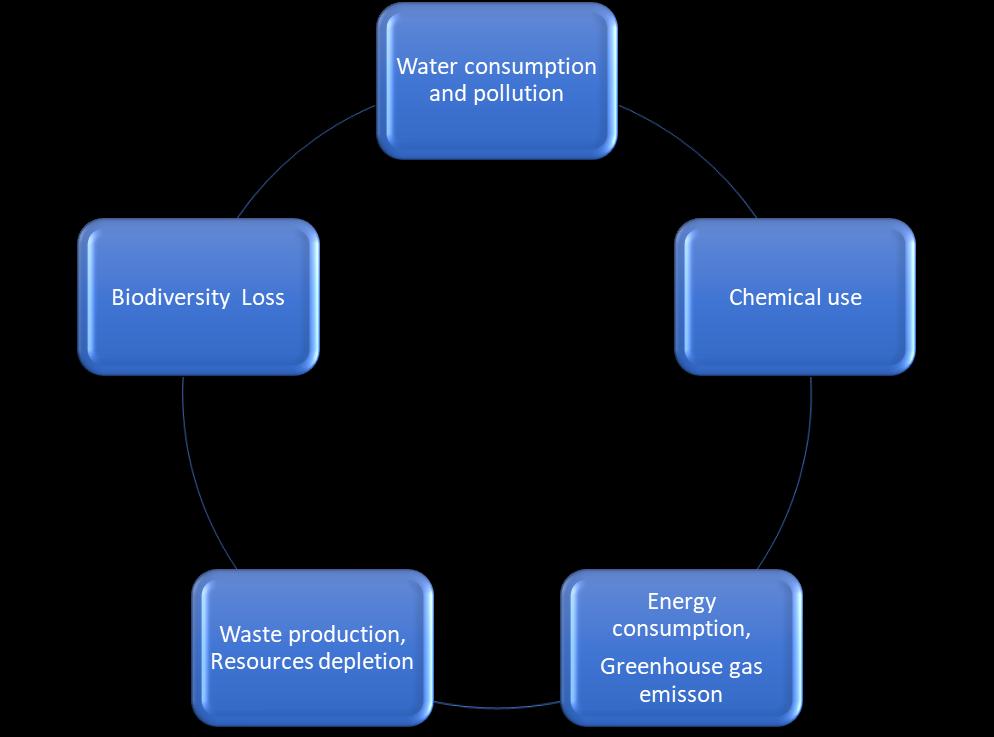
Chemical Use: A variety of chemicals, such as dyes, bleaches, and finishes, are used in the textile industry. Numerous of these substances are hazardous and can contaminate water and soil. Workers handling these substances are also at risk of exposure, which can lead to healthissues(Kolekar,etal2008).
Energy Consumption: The textile sector is characterized by high energy use, especially throughout the production and manufacturing stages. When fossil fuels are used as a source of energy, greenhouse gases are released into the atmosphere. These gases play a major part in the phenomenonofglobalwarmingandclimatechange.
Waste Production: Textile production generates significant amounts of waste, including off-cuts, fiber waste, and chemical waste. Furthermore, because clothing has a short lifespan, the fast fashion model has increased theamountoftextilewaste.Alargeportionofthisgarbage is burned or dumped in landfills, both of which have an adverseeffectontheenvironment.
Greenhouse Gas Emissions: Atmanypointsinthetextile lifecycle, the sector contributes to the global warming problem. A large portion of the textile industry's contribution to climate change comes from the emissions produced during production, the transportation of products, and the use of raw materials, particularly syntheticfibersderivedfrompetrochemicals.
Resource Depletion: Raw materials used in textile manufacture are often obtained in an unsustainable manner.Themanufactureofsyntheticfibersrequiresfossil fuels,whilethecultivationofcottonmaydegradelandand reducelocalwatersupplies.
Biodiversity Loss: The loss of habitat and biodiversity may result from the growth of agricultural area for fiber production, such cotton growing. In addition, aquatic life and other species may be negatively impacted by the contaminationofecosystemswithchemicalsanddyesused intextileproduction.
Efforts are being made within the industry to mitigate these impacts through sustainable practices, such as the use of organic materials, water-efficient technologies, ecofriendly dyes, and recycling and up cycling of textile materials (Hossain, L., et. al 2020). Consumer awareness and demand for sustainable products also play a crucial roleindrivingchangeintheindustry
2.1 Sustainable Practices and Innovations in Cleaner Production for Environmental Stewardship:
As environmentalconcernsrise,companiesare embracing greener manufacturing methods to lessen their ecological imprint and promote sustainability. Renewable energy sources, water-saving technology, recycling, and the usage of eco-friendly products are all part of these programs' effortstolessenourimpactontheenvironment.Improving manufacturing processes to decrease material waste and encourage product recycling and upcycling is one way to waste reduction. The use of less harmful chemicals in production helps clean up the environment by lowering pollutionlevelsinbothsoilandwater.Toconservenatural
International Research Journal of Engineering and Technology (IRJET) e-ISSN:2395-0056
Volume: 11 Issue: 05 | May 2024 www.irjet.net p-ISSN:2395-0072
resources and biodiversity, enterprises are using sustainable sourcing strategies to procure raw materials (Hubler, et al 2013). In addition to satisfying legislative demands,byfocusingontheenvironment,theseinitiatives want to boost their company's reputation, save expenses, and meet customers' increasing demand for eco-friendly products. In the long run, they want to make money, too. Tackling the urgent global environmental concerns of our day requires a shift towards greener industrial practices and environmental sustainability if we are to construct a strong and sustainable future. It stresses the need of preserving natural resources, lowering the environmental impact of industrial activity, and making sure the environment is healthy and sustainable. If we want to movetowardaneconomythatcansupportbotheconomic developmentandenvironmentalprotection,thisstrategyis essential.
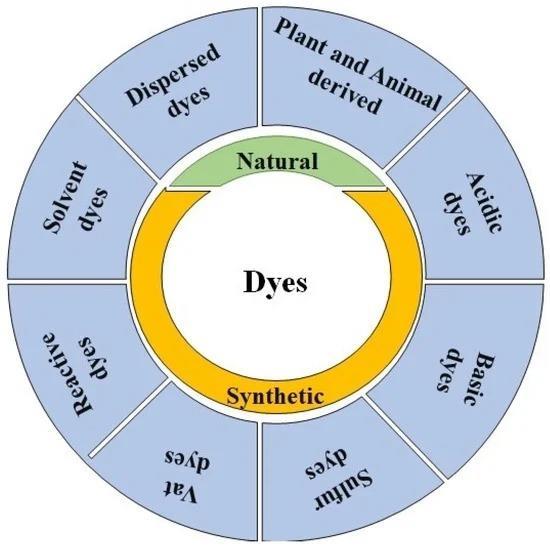
The environmental impact of dyes, particularly synthetic dyes used in the textile industry, is significant and multifaceted,affectingbothecosystemsandhumanhealth. Dyesarereleasedintowaterbodiesthroughthedischarge of untreated or poorly treated industrial effluents Water quality is harmed by this pollution, which also raises COD and BOD levels and hinders aquatic plants' ability to photosynthesise. Dyes can leach into the soil from water, affecting soil quality, plant growth, and the health of terrestrial ecosystems. Workers in dye manufacturing and processingfacilitiesmaybeexposedtoharmfulchemicals, leading to health issues such as allergies, skin conditions, and even increased cancer risk. The broader population may also be affected through exposure to contaminated water and food (Imtiazuddin, S. M et. al 2018). The production of dyes, especially synthetic ones, is resourceintensive, requiring significant amounts of water and energy, which contributes to the depletion of these vital resources and increases the carbon footprint of the industry. Efforts to mitigate the environmental impact of dyes include developing and implementing cleaner production technologies, such as water recycling and treatment systems, using natural dyes, and adopting less toxicsyntheticdyes.
PraveenKumarMettal(2014),saidthatoccupationallung disease is first. Occupational cancer leads work-related illnesses,followedbycardio–visiondiseases,reproductive disorders, neurotoxicity, noise-induced hearing loss, dermatological conditions, and psychiatric disorders. Cottonprocessingandspinningworkersareexposedtoso much dust that they get byssinosis, or brown lung. Breathlessness, coughing, wheezing, and pressure in the chest are symptoms of this illness. dermatitis (atopic eczema), consequences of endotoxins, Dusts from raw cottonandflaxfibreprocessinghavelongbeenassociated with a number of chronic health effects, including obstructive lung disease (asthma, bronchitis), interstitial lung diseases (follicular bronchiolitis), lung fibrosis (asbestosis), lung cancer and mesothelioma, and pulmonary disorders (byssinosis). Over time, high noise levels from spinning wheels, weaving looms, and other sources can harm the eardrum and result in hearing loss. Continuous exposure to noise may also cause tiredness, absenteeism, aggravation, anxiety, efficiency loss, pulse rate and blood pressure abnormalities, and sleep disturbances. Osteoarthritis in the knee, carpal tunnel syndrome, and forearm tendonitis are musculoskeletal problems that can result from significant weight lifting and moving big textile rolls and warp beams. The textile business exposes its workers to a variety of occupational healthrisks,suchastheuseofchemicalsintheoperations ofdyeing,printing,andfinishing;dustandfibreexposure; and ergonomic obstacles. Workers are at risk of respiratory issues, chemical-related illnesses, skin diseases, and musculoskeletal disorders due to repetitive tasks and poor workplace ergonomics. Noise from heavy machinery can lead to hearing loss, and lack of proper safety measures can result in accidents and injuries. Addressing these health hazards requires stringent safety protocols,protectiveequipment,adequateventilation,and
International Research Journal of Engineering and Technology (IRJET) e-ISSN:2395-0056
Volume: 11 Issue: 05 | May 2024 www.irjet.net p-ISSN:2395-0072
regular health monitoring to ensure a safer
Mitigation Strategy Description
1. Wastewater Treatment
2. Cleaner Production
3. Sustainable Materials
4. Regulation Compliance
Implementationofadvanced treatmenttechnologiestoremove pollutantsbeforedischarge.
Adoptionofeco-friendly productionprocesses,suchas waterlessdyeingandorganic fibersourcing.
Substitution of conventional materials with sustainable alternatives, such as recycled fibers.
Enforcement of strict environmental regulations and standards to ensure industry accountability.
The textile and garment industries have a substantial impact on the economies of emerging nations. The industrial sector is the first phase of the process of industrialization and is a prominent component of Turkey's economy, making about 22% of its export revenue. Turkey's largest employer is the textile sector, which provides jobs to about 2 million people. The necessityofaddressingtheindustrialization'sacceleration, the growing global population, the decreasing availability of clean water resources, the rising energy costs, and the environmental challenges has necessitated the development and utilization of environmental processes and chemicals in various sectors, including the textile industry (Hossain, L et.al 2020). This industry, which significantly contributes to water consumption, energy usage, and wastewater generation, is particularly affected by stringent environmental regulations. Several chemical compounds included in textiles volatilize into the atmosphere, while others dissolve in the wastewater released into the environment, and others adhere to the cloth and are absorbed by human skin. According to the National Institute of Health (NIH) chemical list, several substances used in fabric manufacture are directly linked to health issues. According to a publication in Business WeekonJune5,2005,itisprojectedthatthepercentageof individuals with chemical allergies would increase to 60% by the year 2020.The compounds that elicit worry while persisting in the environment might exhibit the following
attributes: persistence (resistant to degradation), bioaccumulation (accumulating in living organisms), and toxicity(Al-Ghoutiet.al2010).Thesubstancesincludedin this attribute may also be referred to as Persistent, Bio accumulative, and Toxic compounds (PBTs) and/or Persistent Organic Pollutants (POPs). Assessing the environmental friendlinessof the wholechemicalsusedin textiles is a challenging task. One of the causes for these issues is the abundance of different dyestuffs used in coloring operations. The Color Index International catalogues a total of 27,000 goods categorized under 13,000ColorIndexGenericNames. Duringtheperiodfrom 1985 to 1995, a comprehensive evaluation of varied toxicity reduction was carried out in North Carolina. This assessment revealed that several compounds associated with wet treatment and known to be harmful were found tobereoccurring.
4.1 Effects of pollution from the textile industry on others
During textile processing, extraneous elements and residues from the textile industry are released into the environment. While some residues are produced during the production or processing of products, others are unprocessed raw materials. Pollution in industrial development is associated with process inefficiencies. Water, soil, and air pollution brought on by the textile industry's inefficiencies can have an impact on humans, aquaticlife,andplantations(Mia,R.,etal.,2019).Thishas acascadingeffectthatputshumansandotherlivingthings indangerasthe ecosystem isimpacted.Impacton People Chemical contamination in the textile sector has an effect onpeople'shealth.Bothair andwaterpollutioncanharm people's respiratory systems. A type of illness called respiratorydiseaseisonethatcanresultinconditionsthat threaten the lungs or respiratory system, such as asthma, lung cancer, and chronic obstructive pulmonary disease (COPD).Lungcancerisoneofthemanyharmful effectsof air pollution on human health. The chemical activation of methaneandchlorineinairleadstolungcancer.Nitrogen oxide pollutants (NOx) originally came in some non-toxic types in smaller amounts but oxidized and formed pollutant gases by reacting with hydrocarbons in the presence of sunlight which cause asthma and respiratory problems (Jaganathan et.al., 2014). According to a survey that was conducted in cluster control areas with 639 villagers, it is reported from the survey data that 67% of thevillagershaveflu,cough,bronchitis,COPD,andasthma, 56% have respiratory problems and 77% have fever (Parvin, F et.al., 2020). Studies have shown a correlation between elevated levels of particle air pollution and reduced lung function or alterations in respiratory symptoms, including cough, runny nose, shortness of breath, wheezing, and asthma (Yaseen & Scholz, 2018).
International Research Journal of Engineering and Technology (IRJET) e-ISSN:2395-0056
Volume: 11 Issue: 05 | May 2024 www.irjet.net p-ISSN:2395-0072
Furthermore, substantial respiratory morbidity might arise due to severe air pollution. Prior studies have revealedexacerbatedrespiratorysymptomsthatmaylead to higher short-term mortality and cancer rates. The presenceofexcessiveamountsofchromiumandcopperin soilduetopollutionfromthetextileindustrymayresultin a high concentration that poses a threat to human health. Thiscanlead to conditions suchasanaemia, renal failure, and cerebral edema (Manzoor, 2006). In addition, water pollution in this business may also lead to allergies, dermatitis, skin irritation, cancers, and human mutations (Sakamotoet.al.,2019).Thepollution emanatingfromthe textile industry has extensive ramifications that beyond mere environmental deterioration, affecting human health, economy, and society on a broad scale. Below is a comprehensive analysis of the impact of pollution caused by the textile industry on several facets of life and the environment:
Human Health: The release of toxic chemicals and dyes into water bodies from textile processing not only harms aquatic life but also poses significant health risks to humans. Contaminated water sources can lead to various healthissues,includingskinrashes,respiratoryproblems, and even more severe diseases when people consume contaminated water or food. Workers in the textile industry are particularly at risk, facing exposure to hazardous substances that can lead to chronic health conditions.
Aquatic Life and Biodiversity: The release of chemical effluents and dyes into rivers and seas has a significant detrimental effect on aquatic ecosystems. These contaminants have the potential to reduce oxygen concentrations in water, resulting in the formation of areasdevoidoflifewhereaquaticorganismsareunableto thrive. Moreover, harmful substances may build up in the food chain, impacting many species and resulting in a declineinbiodiversity.
Soil Degradation and Agriculture: Chemical and heavy metal leakingintosoilmayreduceitsfertilityandquality, which in turn reduces agricultural yields. Soil pollution has further negative effects on plant life, including crop failureanddiminishedfarmland.
Air Quality: When textiles are made, they release a lot of pollutants into the air, including particulate matter, volatileorganiccompounds(VOCs),andothers.Becauseof this, air quality may decline, which is bad for people's lungsandaddstoglobalwarming.
Economic Impacts: The environmental degradation caused by textile industry pollution can have significant economic consequences. Cleanup of polluted water sources, treatment of pollution-related illnesses, and restoration of damaged ecosystems may all add up to a hefty pricetag. Pollutionalsothreatensthe wayof lifefor
those who work in industries that rely on natural resources,suchfarmingandfishing.
Social Impacts: Environmental pollution from the textile industry can exacerbate social issues, including inequality and displacement. Communities that rely on natural resources for their livelihoods may face economic hardships, and there may be increased health disparities duetounequalaccesstocleanwaterandhealthcare.
The pollution from the textile industry underscores the need for sustainable practices, stricter environmental regulations, and greater corporate responsibility to mitigate these adverse effects. Initiatives like adopting cleaner production technologies, wastewater treatment, and recycling, along with international cooperation and community engagement, are crucial steps towards minimizingtheenvironmentalandsocialimpactsoftextile industrypollution.
The textile industry's pollution has significant and wideranging effects on human health, economic stability, and societal welfare in addition to the environment. Toxic chemicals and dyes released into water bodies threaten aquaticlife,seriouslyjeopardisehumanhealth,andreduce biodiversity. Soil degradation from these pollutants compromises agricultural productivity and affects plant life. Air quality is also impacted by emissions of volatile organic compounds and particulates, contributing to respiratory problems and climate change. Economically, the costs associated with cleaning up pollution, treating health conditions, and restoring ecosystems can be substantial, while socially, communities dependent on natural resources face hardships and displacement. The pervasive effects of textile pollution highlight the urgent need for sustainable industry practices, improved environmental policies, and global cooperation to safeguard health, preserve natural resources, and ensure economicandsocialstability.
[1] Al-Ghouti,M.A.,Li,J.,Salamh,Y.,Al-Laqtah,N.,Walker, G., & Ahmad, M. N. (2010). Adsorption mechanisms of removing heavy metals and dyes from aqueous solution using date pits solid adsorbent. Journal of Hazardous Materials,176(1),510–520.
[2] Hossain, L., & Khan, M. S. (2020). Water Footprint management for sustainable growth in the bangladesh apparelsector.Water,12(10),2760.
[3] Hubler, J., and Metz, K. (2013). Soil Washing, Geoengineer.org,” The International Information Center forGeotechnicalEngineers,USA.(accessedJan.04,2021).
International Research Journal of Engineering and Technology (IRJET) e-ISSN:2395-0056
Volume: 11 Issue: 05 | May 2024 www.irjet.net p-ISSN:2395-0072
[4] Praveen Kumar M, Mugundhan.K, Visagavel.K (2014), OCCUPATIONAL HEALTH & SAFETY IN TEXTILE INDUSTRY,IJRET: InternationalJournalofResearchin EngineeringandTechnology,Volume:03SpecialIssue:11
[5]Imtiazuddin,S.M.,Tiki,S.,&Chemicals,A.V.M.(2018). Impact of textile wastewater pollution on the environment.PakistanTextileJ,10,38-39.
[6] Yaseen, D. A., & Scholz, M. (2019). Textile dye wastewater characteristics and constituents of synthetic effluents: a critical review. International Journal of EnvironmentalScienceandTechnology,16(2),1193-1226. Advance online publication. https://doi.org/10.1007/s13762-018-2130-z
[7] Parvin, F., Islam, S., Akm, S.I., Urmy, Z., & Ahmed, S. (2020). A study on the solutions of environment pollutionsandworker’shealthproblemscausedbytextile manufacturingoperations.BiomedicalJournalofScientific &TechnicalResearch,28(4),21831-21844.
[8] Jaganathan, V., Cherurveettil, P., Chellasamy, A., & Premapriya, M. S. (2014). Environmental pollution risk analysisandmanagementintextileindustry:a preventive mechanism.EuropeanScientificJournal.
[9] Kant, R. (2011). Textile dyeing industry an environmentalhazard.Nat.Sci.,4(1),22–26.
[10]Kolekar,Y. M.,Pawar,S.P.,Gawai, K.R.,Lokhande, P. D., Shouche, Y. S., & Kodam, K. M. (2008). Decolorization and degradation of Disperse Blue 79 and Acid Orange 10, by Bacillus fusiformis KMK5 isolated from the textile dye contaminated soil. Bioresource technology, 99(18), 89999003.
[11] Manzoor, S., Shah, M. H., Shaheen, N., Khalique, A., & Jaffar, M. (2006). Multivariate analysis of trace metals in textile effluents in relation to soil and groundwater. Journalofhazardousmaterials,137(1),31-37.
[12] Mia, R., Selim, M., Shamim, A. M., Chowdhury, M., Sultana, S., Armin, M. & Naznin, H. (2019). Review on various types of pollution problem in textile dyeing & printingindustriesofBangladeshandrecommandationfor mitigation. Journal of Textile Engineering & Fashion Technology,5(4),220-226.
[13]Migo,V.P.,Mendoza,M.D.,Alfafara,C.G.,&Pulhin,J. M. (2018). Industrial water use and the associated pollution and disposal problems in the Philippines. In Water Policy in the Philippines (pp. 87-116). Springer, Cham.
[14]Sakamoto,M.,Ahmed,T.,Begum,S.,&Huq,H.(2019). Water pollution and the textile industry in Bangladesh: flawed corporate practices or restrictive opportunities?. Sustainability,11(7),1951.
[15]Sangeetha,B.M.,Rajeswari,M.,Atharsha,S.,Saranyaa, K., & Ramya, S. (2013). Cotton dust level in textile industries and its impact on human. International Journal ofScientificandResearchPublications,3(4),1-6.
[16]MrSingh,R.,Glick,B.R.,&Rathore,D.(2020).Roleof textile effluent fertilization with biosurfactant to sustain soil quality and nutrient availability. Journal of EnvironmentalManagement,268,110664